Safe Travel Tips: Avoiding Common Tourist Scams
Ever wonder why so many tourists get scammed, even with lots of warnings? Up to 30% of travelers report encountering some form of tourist scam during their trips. Knowing the right safe travel tips can save your trip from turning bad.
Scams like the “gold ring” and “friendship bracelet” are common. But there are ways to stop these scams. Learning about these scams is the first step in protecting yourself. For safe travels, knowing how to avoid these scams is key.
Recognizing the “Too Good to Be True” Deals
When you travel, it’s easy to get drawn to amazing deals. But these can trick you into spending more. It’s key to know the usual travel scams to keep your trip fun and smooth. Watch out for cons like the “found” item trick and pushy sellers on the streets. Knowing about these traps can save you lots of money.
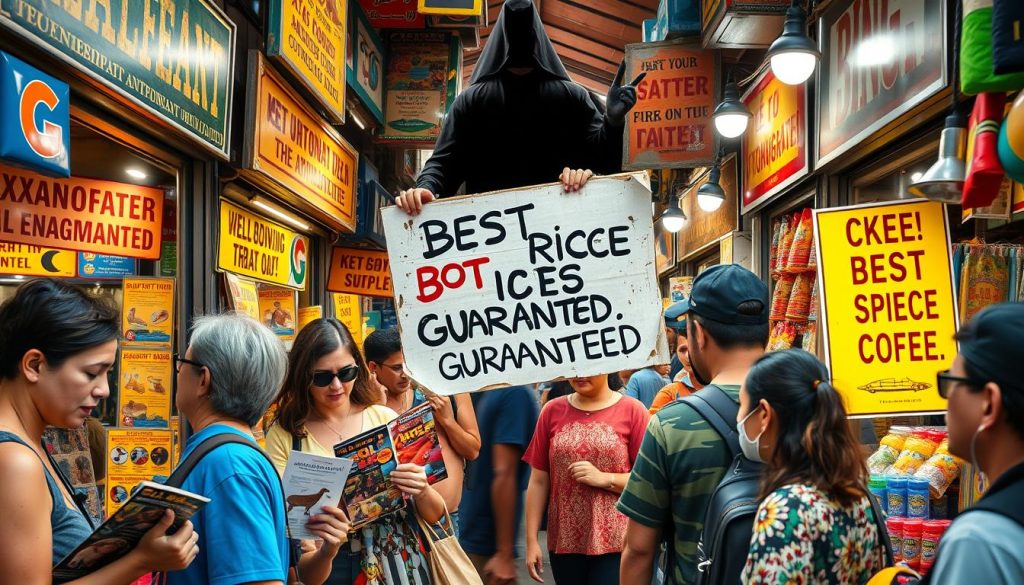
The “Found” Ring
A common tourist scam is when someone pretends to find a valuable ring. They show it to you, acting like you dropped it. Then, they ask for a reward for finding it, selling a fake ring to tourists. Always question it when strangers hand you “found” items. It’s a sign of a well-known travel scam.
The “Friendship” Bracelet
The “Friendship” Bracelet scam is also widespread. People come up, trying to put a bracelet on you as a sign of friendship. But once it’s on, they demand money for it. If this happens, it’s best to say no firmly. About 64% of travel scams happen this way, using pressure to make you pay.
Salesperson in Distress
Then, there’s the “Salesperson in Distress” trick. A vendor looks sad and asks for your help, saying they’re in a money crisis. They use your kindness to trick you into giving them money. Spotting these schemes can keep you from being scammed.
| Scam Type | Description | Warning Signs |
|---|---|---|
| “Found” Ring | Scammer claims to find a valuable ring and offers it for a reward. | Unsolicited approach, insistence on payment. |
| “Friendship” Bracelet | Forces a bracelet on you and demands payment. | High-pressure sales tactics, aggressive behavior. |
| Salesperson in Distress | Pretends to be in financial trouble to solicit funds. | Overly emotional plea, insistence on immediate aid. |
Remember these scam alert tips to protect yourself from tourist scams. Staying aware and careful will help make your travels worry-free and fun.
Money Handling Tips to Prevent Scams
Traveling is thrilling, but safety must come first. By using safe money handling habits, you can avoid common scams. This makes your trip more fun. Being careful is essential since up to 80% of tourists run into scams. This includes fake items and stolen credit card details.
Slow Count in Shops and Restaurants
The “Slow Count” is a common scam. Here, sellers count your change slowly, making you think it’s correct. Sadly, 65% of people don’t count their change. Always count your change yourself at the cashier.
Switcheroo Currency Trick
In this scam, a seller might swap your bill for a smaller one, pretending you gave them less. They end up with more money. To stop this, show your bills’ value clearly. Always count and double-check what you hand over, especially in crowded spots.
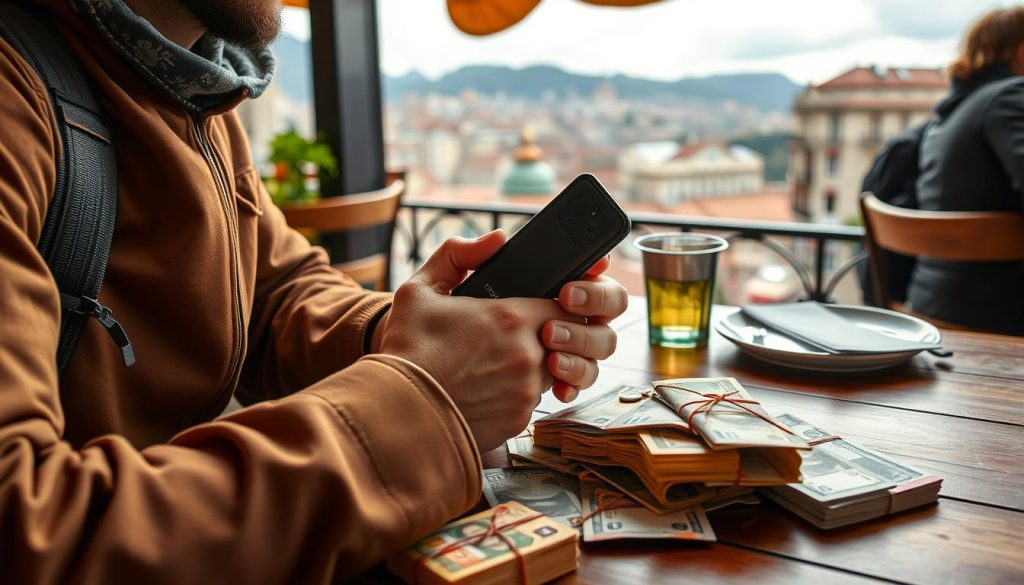
Talkative Cashiers and Card Safety
Watch out for chatty cashiers. They might distract you, while another person steals your card info. Keeping your credit cards safe is crucial in new places. About 40% of travelers don’t know about card skimming risks. This can happen at ATMs or when you’re paying for something. Always cover the keypad when typing your PIN and watch your card closely.
| Scam Type | Occurrence Rate | Prevention Tips |
|---|---|---|
| Slow Count | 65% | Count your change yourself before leaving |
| Switcheroo Currency Trick | Significant but unrecorded data | Show bills clearly and confirm the amount |
| Card Skimming | 40% | Cover keypad, watch your card |
Using these tips can lower your risk of being scammed. Stay vigilant and have a safe trip.
Common Tourist Scams in Popular Destinations
Traveling to popular tourist spots means you need to watch out for street scams and distractions. These are tricks used by locals and criminals to fool travelers. Knowing about these common scams can keep you safe as you enjoy new places.
Beggars with a Hidden Agenda
In big cities like Paris and Venice, beggars might actually be part of a scam network. They use distraction tricks so other pickpockets can steal from you. To stay safe, avoid talking to street beggars and keep an eye on your things.
Food and Drink Spills as Distractions
Busy places are perfect for scammers who “accidentally” spill things on you. While you’re distracted, someone else might steal from you. If this happens, stay calm, check your stuff, and only get help from friends.
The “Helpful” Local Offering Assistance
Sometimes, a friendly local might offer to help you but they’re actually tricking you. You might end up in a shop being pushed to buy expensive things, or even robbed. Always double-check any help you get with reliable sources.
Young Thief Gangs in Urban Areas
Big cities attract groups of young thieves. They distract you while stealing your valuables. Keeping your belongings safe and being aware of your environment helps avoid trouble.
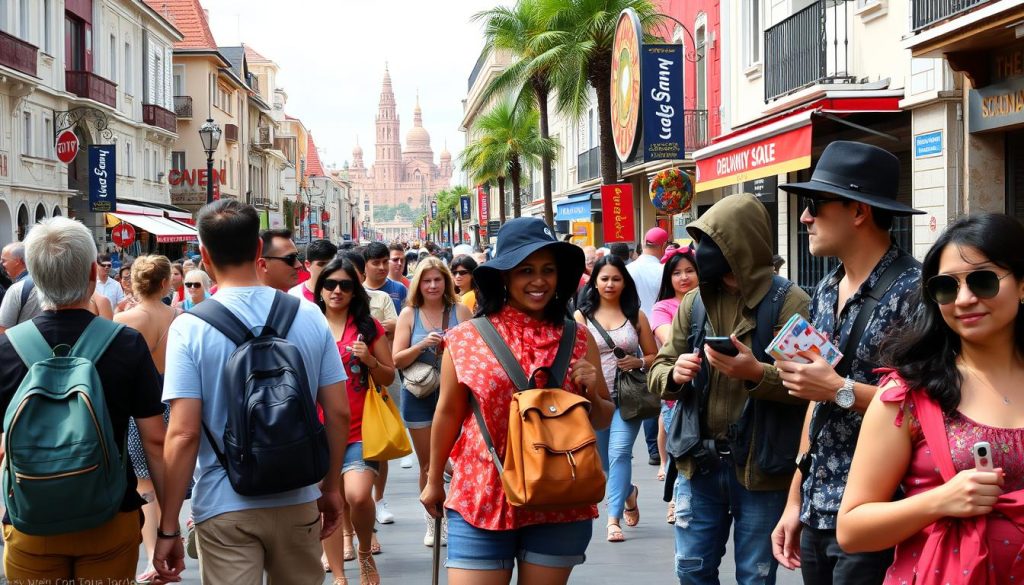
Knowing about these scams is a big step in keeping yourself safe during your travels. Being cautious and informed makes your trip enjoyable and free from scams.
Avoiding Common Tourist Scams and Staying Safe
Going to new places is thrilling, but it’s vital to prepare to stay safe. By using good travel safety tips, you can keep away from scams and have a fun trip without worries.
- Look out for scam signs like too-good-to-be-true offers or urgent deals. About 30% of travelers say such deals made them rush into decisions, increasing scam chances.
- Before you go, look up scams common at your destination. 70% of travelers who skip this step are more likely to be scammed.
Handling your money wisely is key to avoiding tourist scams. 57% of people prefer credit cards for bookings for better fraud protection. This tactic can prevent big problems and keep your money safe.
“Reports from the Federal Trade Commission (FTC) highlight that over 18,000 travel scams were reported in 2021 alone, with travelers losing an average of $1,300 per incident.”
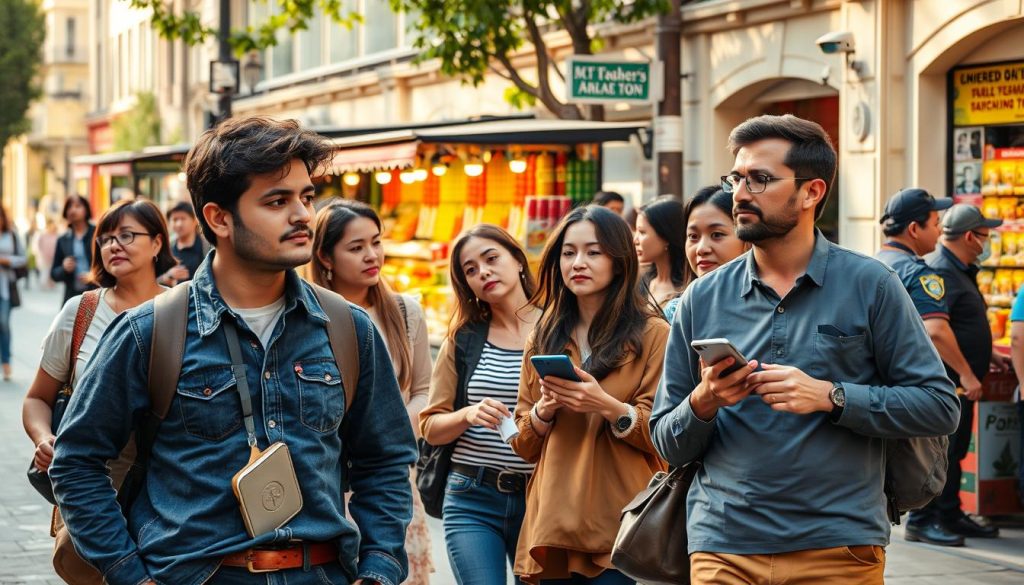
Knowing what’s around ATMs is also crucial. ATMs in dark or secluded spots see 40% more fraud and theft. Choose ATMs in busy, well-lit places or inside banks to lower risks.
Be careful when dealing with vendors and service providers. 65% of travelers face scams involving street vendors or taxis overcharging. Always set prices before and pick trustworthy services.
| Common Scams | Preventive Measures |
|---|---|
| ATM Skimming | Inspect ATMs, prefer bank branches |
| Street Vendor Overcharging | Agree on prices beforehand, use reputable services |
| Phony Police Inspections | Verify identity, stay cautious |
| Counterfeit Tickets | Purchase from official sources |
Being careful and informed is essential to stop tourist scams. Use digital wallets to protect your cards and financial info. Also, stay off public Wi-Fi for private transactions to avoid a 70% higher risk of data theft.
Getting help from travel advisors can make your trip safer. Demand for their help goes up 50% during busy times. They’re crucial for dodging scams and planning safe travels.
Online Travel Scams to Watch Out For
As we plan trips online more often, the threat of online travel scams grows. These tricks aim to steal money from unknowing travelers, ruining their plans. Knowing about these scams can help you be smart and avoid getting tricked.

“Free” Vacation Offers
Fake vacation offers are a common scam. They promise “free” vacations but hide extra costs in the small print. Scammers use official-looking emails and websites to attract victims. Always check the source’s reliability and read all details before believing such offers.
Robocalls About Vacation Deals
Illegal robocalls might offer you a great vacation for less. These calls usually say you’ve won a free or cheap luxury trip. To stay safe, see these calls as warning signs and don’t respond to them.
Phony Travel Document Services
Some scammers pretend to offer quick visa or passport services. Instead, they charge a lot for fake or useless documents. Always visit official government sites to check your travel paper needs. If a service sounds too good to be true, it probably is a scam.
Staying alert is crucial because travel scams can be complicated and diverse. The table below shows how much money you could lose in different scams:
| Scam Type | Potential Loss |
|---|---|
| Fake Vacation Offers | Hidden fees amounting to hundreds of dollars |
| Illegal Robocalls | Costs for non-existent vacation packages |
| Phony Travel Documents | Fees for forged or invalid documentation |
How to Safeguard Your Belongings
Traveling is fun, but you need to keep your things safe while exploring. You can use different travel security products to protect your stuff. Let’s look at how to guard your personal items and important papers during your travels.
Using Money Belts and Secure Bags
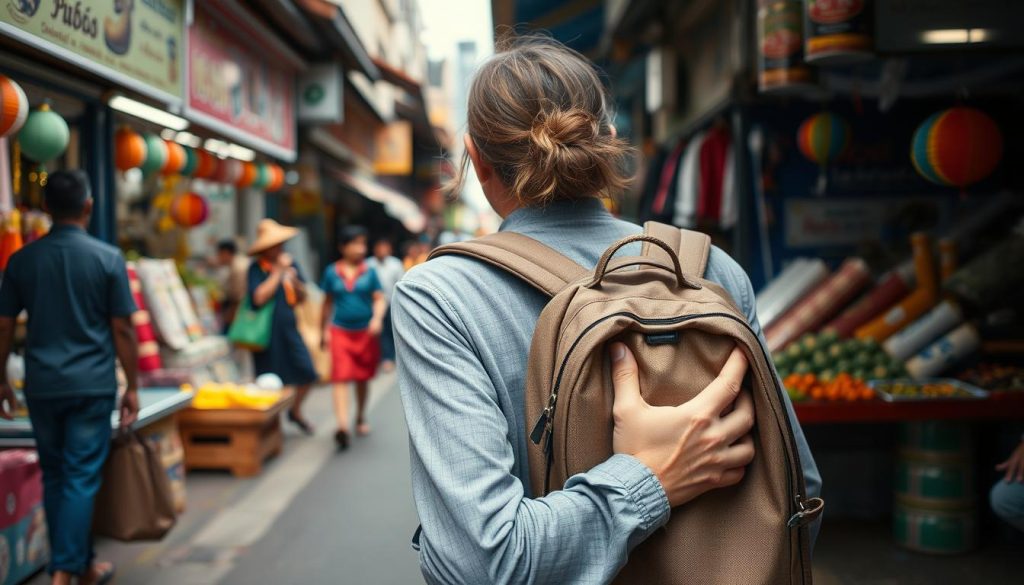
Using money belts and secure bags is a smart move. They let you keep cash, cards, and important papers close, which helps avoid theft. Try to get bags that have features like cut-proof straps and locks on the zippers to keep your things even safer.
Staying Vigilant in Crowded Areas
Be extra careful in busy places like markets or festivals. About 75% of pickpocketing happens in such spots. It’s crucial to watch what’s around you and not get distracted. Hold your bags where you can see them and show you’re paying attention to deter thieves.
Keeping Copies of Important Documents
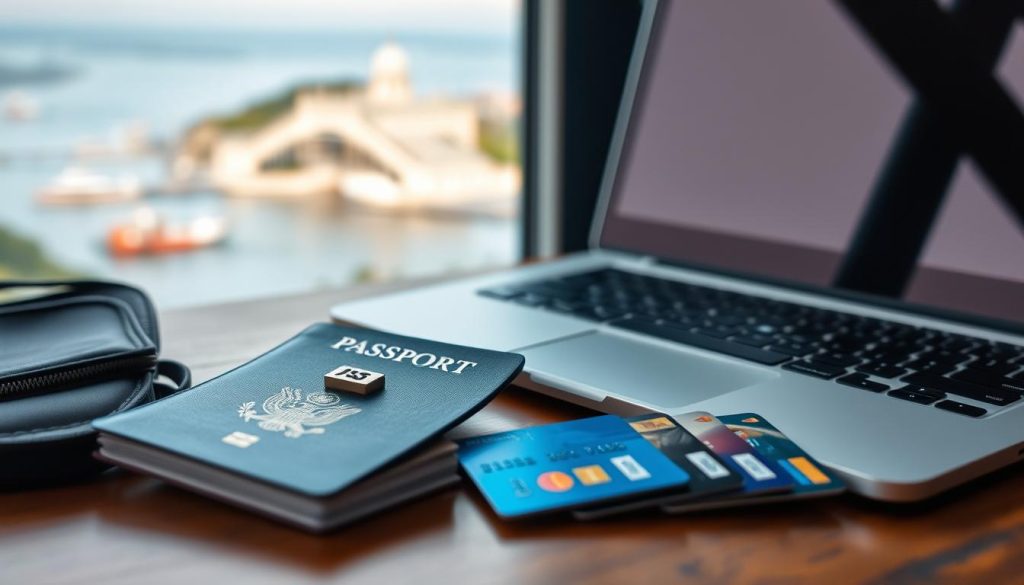
It’s important to keep your documents safe when traveling. Sadly, only 20% of travelers copy their important papers before leaving, which is risky. Always have backups of your passport and insurance in a different spot from the real ones. Also, putting digital copies in secure online storage is a smart idea.
Beware of Fake Officials and Authorities
Travelers often meet people pretending to be officials. Knowing these scams helps keep you safe. Learn about the most common tricks to not become a victim.
Phony Police Inspections
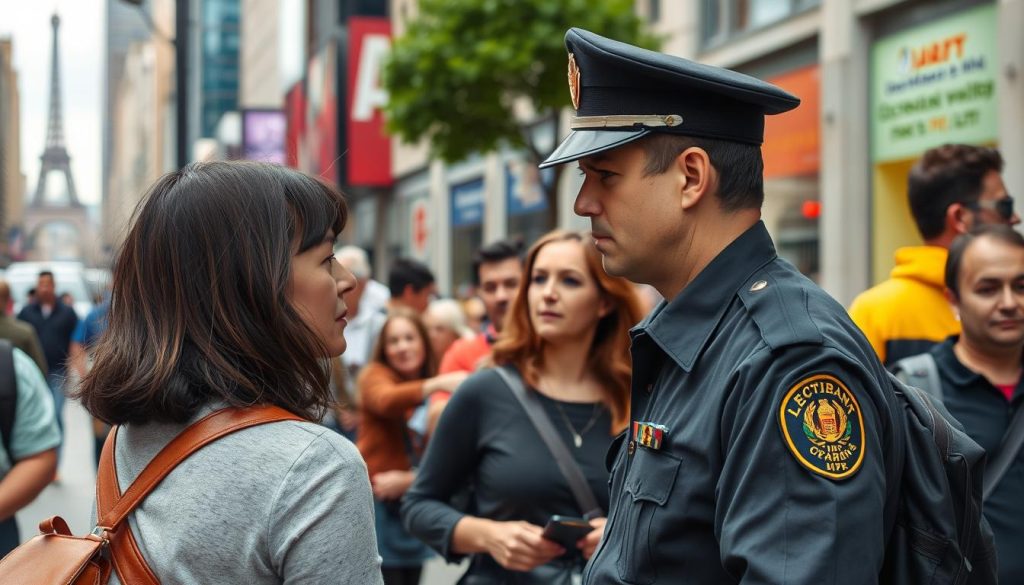
Meeting fake officials is scary for travelers. Scammers, acting as police, might say they need to check your stuff. They usually pick tourists who look lost.
To avoid fake checks, always ask to see ID. If unsure, ask to go to the nearest police station.
Hotel Room “Inspectors”
Some pretend to be hotel inspectors. They might say they need to check your room. Real hotel staff plan these visits ahead. If someone knocks, call the front desk to check if they’re real.
Fake Charity Petitions
Charity scams are also common. Scammers might ask for donations with sad stories. Always check if the charity is real before giving money. Real charities can prove they are authentic.
Being aware and cautious is key. Stay informed and listen to your instincts when dealing with strangers.
Tactics for Safe Online Hosting and Booking
Booking your stay and travel online can be risky if not done carefully. This guide will teach you how to make safe online bookings, choose trustworthy travel rentals, and plan your trips securely.
Identifying Trustworthy Rental Listings
Look for trustworthy travel rentals by checking their credibility. Look for the Super Host badge on Airbnb, which shows verified hosts that are reliable. Also, comparing prices on trustworthy sites helps spot scams. Scams usually have prices that are too low. Don’t wire money because it’s not safe; use secure payment options instead.
Securing Legitimate Charter Flights
Be careful when booking charter flights. Check the charter company’s reputation through reviews and certifications to avoid scams. Skip deals that look too good to be true. Only book through official sites or trusted platforms for safe online bookings.
Verifying Booking Agencies
When planning your travels securely, it’s important to check booking agencies well. Use sites like TripAdvisor for reliable reviews. A lack of clear contact info or references is a warning sign. Avoid scams by staying away from offers that are much cheaper than the usual.
Here’s a snapshot of important travel safety stats:
| Scam Type | Reported Incidents | Percentage |
|---|---|---|
| Booking Scams | 55,330 | – |
| Vacation Rental Scams | – | 30% |
| Transportation Scams | – | 40% |
| Tour Scams | – | 25% |
By taking these steps and understanding these stats, you can steer clear of problems when booking travel online. This ensures your trip is both safe and fun.
Scam Awareness and Prevention While Socializing
Going abroad is fun, but be cautious when making new friends. Scams targeting tourists are everywhere. It helps to know the signs of danger.
This makes your journey safe and fun.
The Attractive Flirt
It’s great to meet new folks when traveling. But watch out for the “Attractive Flirt” scam. A charming person might start talking to you. They might distract you so their friends can steal from you or trick you into paying a lot for drinks. Always hang out in busy, well-known places to stay safe.
Broken Camera or Device Scam
If someone says you broke their electronics, don’t panic. They often make a big deal of it, asking for money right away. Keep cool and offer to call the cops instead. This can stop the scam and keep you safe.
Scams Involving Group Activities
Doing things in groups can be extra fun, but it can also be risky. Bad guys sometimes join tours to trick people. Like fake guides taking you to places you shouldn’t be. Or selling you fake tickets. Always book with companies you trust and check if the guides are real. This helps you avoid being scammed.
- Make sure tour guides and organizers are who they say they are.
- Don’t buy expensive drinks at places you don’t know.
- Book group things only through safe, known websites.
| Type of Scam | Description | Prevention Tips |
|---|---|---|
| Attractive Flirt | An attractive individual engages you in an effort to pickpocket or overcharge for drinks. | Stick to reputable venues; avoid isolating with strangers. |
| Broken Device Scam | Scammer accuses you of damaging their device, demanding immediate compensation. | Remain calm and suggest calling local authorities. |
| Group Activity Frauds | Scammers infiltrate group activities to execute frauds or unauthorized detours. | Book through trusted platforms; verify organizer credentials. |
Protecting Your Financial Information While Traveling
Traveling comes with its own set of financial security challenges. It’s vital to protect yourself from scams and hackers during your trip. Here are important tips on using secure internet connections, staying away from public Wi-Fi for financial tasks, and alerting your bank about your travels.
Using Secure Internet Connections
Before doing any online transactions, make sure your internet is secure. Hackers love unsecured networks where they can grab your important info. Use a VPN to protect your online activities. This makes it tough for bad guys to spy on you.
Avoiding Public Wi-Fi for Transactions
It’s risky to use public Wi-Fi for online banking or shopping. These networks are easy targets for thieves. They use tricks to steal your info. Use your phone’s data or private Wi-Fi for financial stuff to stay safe while traveling.
Setting Up Travel Alerts with Your Bank
Setting up bank alerts is a smart way to keep your money safe. Tell your bank when and where you’re traveling. They can then watch for suspicious activity. This helps you catch any wrong charges quickly.
| Action | Benefits |
|---|---|
| Use Secure Internet Connections | Encrypts data, reducing the risk of hacking |
| Avoid Public Wi-Fi for Transactions | Minimizes data interception risks |
| Set Up Travel Alerts with Your Bank | Provides real-time alerts for unauthorized transactions |
Being informed and careful is key to keeping your money safe on trips. Use these strategies for a worry-free vacation without financial issues.
Conclusion
Knowing about tourist scams can make your trip better. Cities like Barcelona, Rome, and Paris have lots of pickpockets. Wear money belts and use secure bags to keep your stuff safe. Also, be careful in Bangkok and Mexico City, where fake taxis and police are common. Always stay alert and understand the local culture.
It’s vital to protect your personal and financial info, especially while traveling. Airports and hotels have seen a spike in cyber-attacks thanks to unsafe Wi-Fi. Always use secure internet and avoid public Wi-Fi when you’re handling money matters. Choose trusted booking sites and watch out for tricky currency charges that affect many travelers.
Be aware of scams like the “free gift” trick, bump and steal, and imposters as cops, especially in busy spots. These scams often target new visitors or those who seem lost. To avoid trouble, know about these scams before you go, use ATMs in safe places, and prefer paying with a credit card instead of cash. Staying informed and prepared will help you have a safer, more fun trip.