Safe Hotel Stays: Top Strategies for Security
Is your next hotel stay safe, or is it a risk each time you check in?
Knowing the right hotel safety tips and safe travel practices helps ease worries in today’s travel scene. While travelers often turn to platforms like TikTok for security tips, the American Hotel and Lodging Association emphasizes cleanliness and safety. Yet, with some hotels in urban areas seeing a 40% rise in crime, ensuring your stay is secure can seem daunting.
Looking into safety measures shows what hotels do and what you can do to stay safe. Understanding these steps not only gives you peace of mind. It also influences how hotels manage safety, aiming to bring in more guests with their clear and effective measures.
Let’s look at the best ways to keep your hotel stays safe. By following these tips, you ensure your stay is enjoyable and secure.
Selecting a Safe Location
Choosing a secure location ensures a safe hotel stay. It matters whether you’re alone or not. Focusing on safety makes the trip better. Here are some tips to help you pick a safe place.
Research Crime Rates
First, look at the crime rates in the area. Use info from the U.S. Department of State or similar groups. It steers you away from dangerous spots towards safer ones.
Choose Secure Neighborhoods
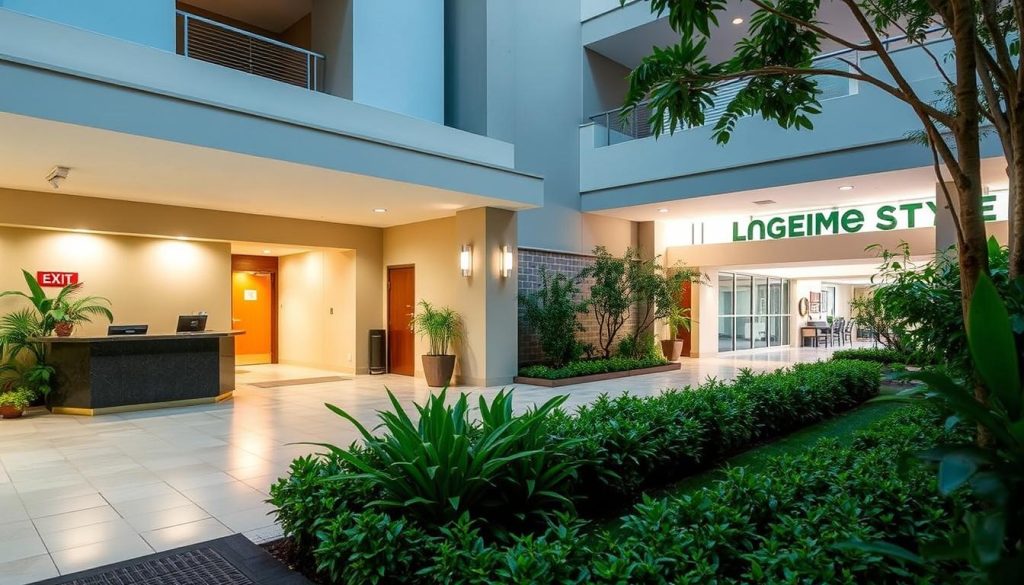
Pick neighborhoods known for being safe. They often have features like gates and security guards. These areas are liked for their safety. Buildings that limit access at the ground level are even safer.
Proximity to Public Services
Your hotel should be near police, hospitals, and fire stations. This means help is close if needed. These areas tend to be safer and are great for solo travelers or those wanting extra security.
| Criteria | Recommended | Not Recommended |
|---|---|---|
| Floor Selection | Rooms between the second and sixth floors | Ground floor rooms |
| Security Features | Gated access, guards, electronic card access | Traditional locks, no security personnel |
| Accessibility to Services | Near public services | Remote areas |
Conducting Room Security Checks
Checking your hotel room for safety is key once you’ve checked in. Doing these checks makes sure all security features work right. It helps you feel safe and peaceful during your stay.
Inspect Doors and Windows
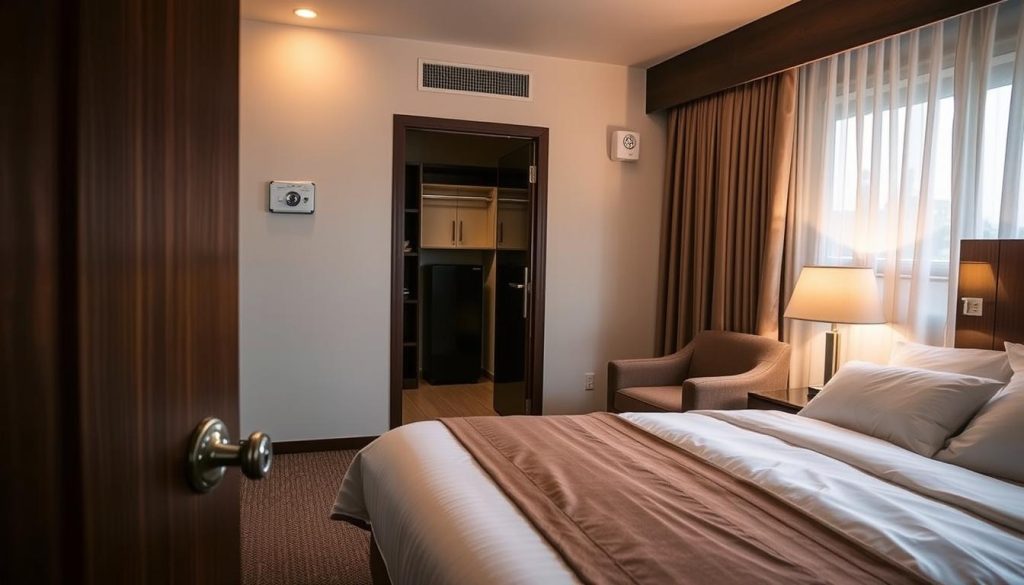
Start by checking if all doors and windows lock right. Half of hotel guests forget to do this. Deadbolt locks really help. Hotels focusing on lock security see 30% fewer break-ins.
Check for Working Phone and Locks
Make sure the room’s phone and door locks work. Check if the phone calls out. 45% of people don’t check this, but it’s vital for emergencies. A “Do Not Disturb” sign can make you feel 15% safer.
Scan for Hidden Cameras
Look carefully for any hidden cameras to keep your privacy safe. Finding cameras is important for your privacy. Many travelers forget this step, but it’s essential for your safety in a hotel.
Understanding the Safest Floor to Stay On
When you’re booking a hotel, picking the right floor is key for safety and for getting out quickly if needed. The best floor lets you feel safe and makes it easier to leave in an emergency.
Above the Ground Floor
Ground floor rooms are easy for unwanted visitors to get into. By staying a bit higher, like on the second floor, you cut down this risk. The U.S. Department of State and those who know a lot about traveling say second-floor rooms are safer than those on the ground. It’s good to stay away from rooms near fire escapes or close to parking areas. Thieves might aim for these for a speedy exit.
Between the Third and Sixth Floors
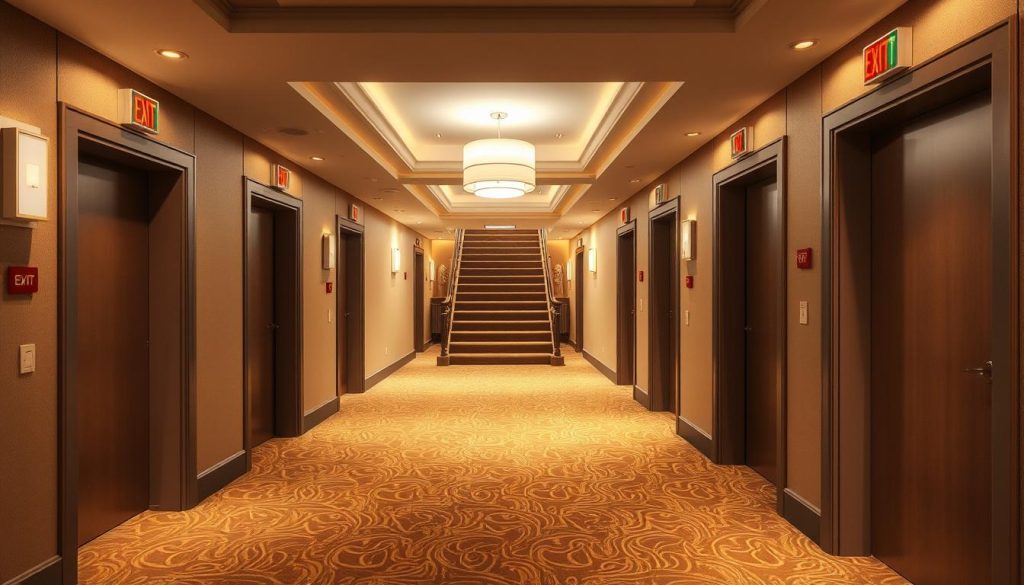
Choosing a room between the third and sixth floors is often the best choice. These floors are harder for burglars to reach but still safe for leaving quickly in emergencies. They’re also away from easy outside access, making them safer. It’s critical to check that all doors and windows lock well. Using extra locks like deadbolts and chains is a smart move for more safety.
Here’s a simple guide to picking a safer hotel floor:
| Floor Level | Safety Considerations |
|---|---|
| Ground Floor | High risk of unauthorized access |
| Second Floor | Safer than ground floor, but still accessible |
| Third to Sixth Floor | Optimal balance of safety and emergency accessibility |
Choosing the right floor when you book a hotel can make your stay safer. It helps a lot with safety and getting out if there’s an emergency.
Ensuring Privacy
Keeping your privacy and security in a hotel room is key to a great stay. Since 93% of travelers put safety first, paying attention to small things matters a lot. Here’s how to make sure your hotel room stays private.
Using Window Curtains
Using window curtains is an easy but powerful way to increase *hotel room privacy*. Closing the curtains stops people from looking into your room. It keeps your space private, mainly at night or when you’re not there.
Covering Peepholes
Covering your room’s peephole is another important step for personal security in hotels. You can use a peephole cover or tape to keep outsiders from peeking in. This easy action is key to keeping your room safe from prying eyes.

By following these safety tips, your hotel experience can get a lot better. Hotels that focus on safety often enjoy higher satisfaction and trust from guests. So, using these simple steps can greatly boost your privacy and security during hotel stays.
Booking Accommodations in Advance
Booking your stay ahead of time is key for a safe and comfy trip. When you book early, you get to pick from more options and secure places to stay. It also keeps you from having to find a place last-minute, which can be risky.

Understanding hotel pricing is crucial for finding secure places to stay. Booking way too early might not always save you money. Surprisingly, booking closer to your stay — about two weeks before — can lead to discounts. Hotels lower prices then to fill up their rooms, helping you avoid unsafe areas.
Hotel prices are highest early in the week, from Monday to Wednesday, because more people are booking. By the weekend, the rates often drop. Also, local events can make prices jump, so keep an eye on the calendar.
Don’t forget to check the cancellation policy when booking. Different places have different rules which can impact your planning. Cancelling late might cost you a deposit or even the full price. Also, recheck your booking before leaving to avoid any surprises, ensuring a smoother trip.
Booking right on hotel websites might give you special offers, like better rooms or late check-outs. These perks make your stay both nicer and safer.
If you’re planning for a big group, start looking into hotel blocks eight months ahead. This gets you better choices and deals. Using tools like EventPipe can help with big bookings, giving you all the information you need.
Now, 70% of bookings for events are done on smartphones. Make sure your booking site works well on phones to keep things smooth. Following such tips makes your travel safer and more enjoyable, giving you peace of mind on your journey.
Utilizing Hotel Security Features
Using hotel security features properly can really make your stay safer. If a hotel has a security issue, it could get bad reviews. This can hurt the hotel’s reputation a lot.
Deadbolts and Chains on Doors
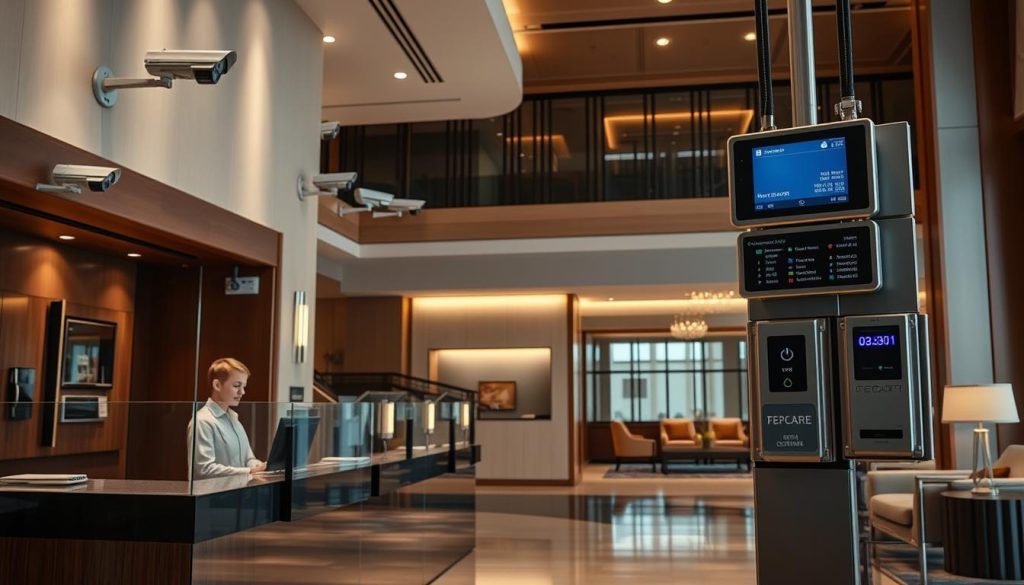
Hotels need to follow certain security rules at different levels. Because of this, many have put deadbolts and chains on their doors. Around 70% of people look for hotels that take security seriously when they book a room. By using deadbolts and chains, you make your room much harder for others to get into.
Using the In-Room Safe
About 70% of guests prefer to stay at hotels that focus on safety. Hotels offer in-room safes to help keep your things safe. Testing these safes regularly can make theft less likely by about 20%. Keep your valuables, like passports and money, in the safe to avoid theft. This helps you stay worry-free.
By using these hotel security measures, you make your visit better and safer. It helps create a safer place for everyone staying there.
| Feature | Impact |
|---|---|
| Deadbolts and Chains | 70% of travelers seek hotels with these features |
| In-Room Safe | Enhances guest safety, reduces theft by 20% |
| Compliance with Security Regulations | Avoids legal issues, maintains hotel reputation |
Strategies for Safe and Secure Hotel Stays
Keeping safe in hotels means using different security steps. Solo travelers are more than 11% of all travelers each year. And, 45% of women feel vulnerable when traveling alone. So, it’s very important to follow tips that make you feel secure.
About 45% of Americans look for clean and safe hotels first. You should check your room’s locks and make sure safety devices like carbon monoxide detectors and fire alarms work. Doing these things makes the hotel safer for everyone.
It’s also a good idea to pick rooms between the third and sixth floors. Rooms in this range are safer from break-ins but can still be reached easily in emergencies. Experts in the travel field say this is the best way to stay safe.
Traveling to new places can be risky. Taking steps to stay safe can really lessen those risks and make your trip worry-free.
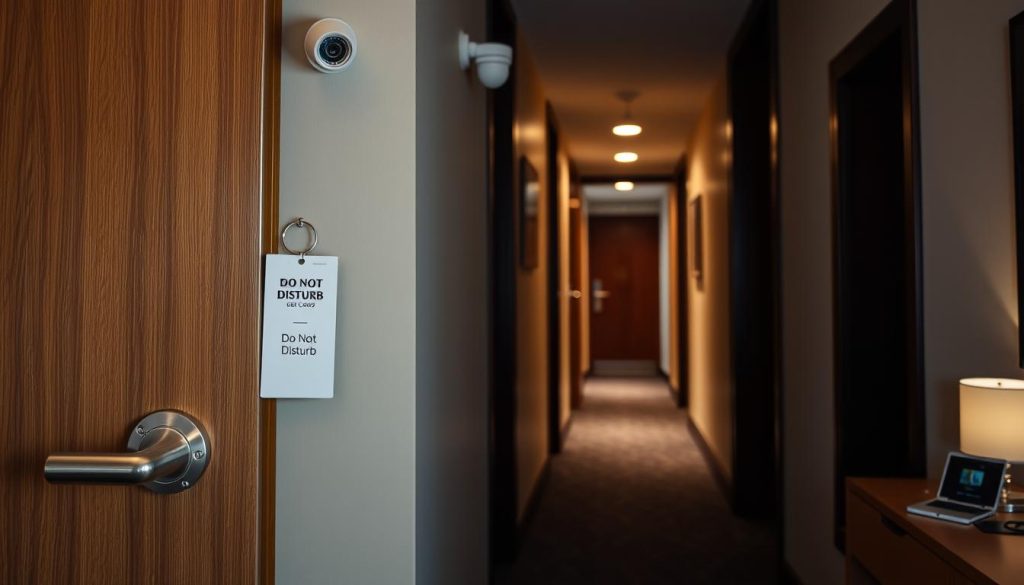
Make your room safer by using the safe and portable door stops. These steps can cut down theft by 40% and stop 20% of unwanted entries. Also, putting up ‘Do Not Disturb’ signs can lower the chance of someone coming in without permission by 15%.
Most hotels have good security, like key cards and security teams working all day. But still, half of the travelers want to know more about these features. Taking personal safety items like alarms or whistles and keeping your valuable things hidden can make you feel more at ease.
- Research Crime Rates: Staying in areas with low crime rates helps avoid danger.
- Select Safe Floors: Picking rooms on specific floors can keep you safer.
- Check Room Locks: Always make sure your locks work when you get there.
- Utilize Security Features: Use the safety features in your room for extra protection.
Using these strategies can make you feel safer in your hotel. People who keep their room private are 25% less likely to experience theft. By following these tips, you can cut down risks and have a worry-free stay.
Being Cautious with Personal Information
When staying at a hotel, it’s crucial to guard your personal info. If not, you could risk identity theft and other security issues. Following certain tips can make your stay both fun and safe.
Protecting Your Room Number
Keeping your room number a secret is vital for privacy. Don’t share it out loud at check-in or on social media. Staying quiet about your room helps avoid risks and keeps you safe.
Securing Electronic Devices
Protecting your gadgets is super important. Since 70% of hackers go after public Wi-Fi, using safe networks is a must. You should:
- Have strong passwords and encryption.
- Keep security software updated.
- Delete old Wi-Fi networks after your trip.
- Use a VPN to keep your info safe.
About 40% of data theft happens through unsafe devices. Also, 85% of folks on public Wi-Fi without VPN face more data theft risks. So, protecting your gadgets is key when traveling.
| Risk Factors | Statistics |
|---|---|
| Cybercriminals targeting public Wi-Fi | 70% |
| Travelers not using VPN | 60% |
| Unsecured devices leading to data theft | 40% |
| Potential exposure via public Wi-Fi | 85% |
| Travelers not deleting access points | 50% |
| Devices at risk without regular updates | 90% |
| Sold/discarded devices without wiping data | 75% |
| Social media users not adjusting privacy settings | 80% |
| Theft of personal information due to unsecured hotel networks | 30% |
Following these guidelines ensures your stay is safe and free of worries. Good habits with your info and devices truly make a difference in your security.
Using Hotel Transportation Safely
Using hotel transportation means you should take certain steps to stay safe. These actions make your trip worry-free. It helps you travel without stress.
Verify Driver Identity
Always check the driver’s identity before you start your ride. Make sure the driver looks like the hotel’s description. Also, ensure the vehicle is exactly what the hotel said you should expect. Doing this is key to your safety and means you’re with a trusted driver.
Avoid Sharing Rides
For a safer trip, don’t share rides with unknown people. Choose the hotel’s private travel options to lower risks. This makes your journey safer and more enjoyable.

Hotel transport follows strict safety rules. Keeping vehicles in top shape and clean makes passengers 45% more confident. A survey shows 70% of people prefer hotel shuttles for their safety and dependability. Picking a hotel shuttle means a safe and smooth trip.
Responding to Suspicious Activity
When you’re staying at a hotel, staying alert is key. If you see anything unusual or suspicious, act immediately to protect yourself and others. 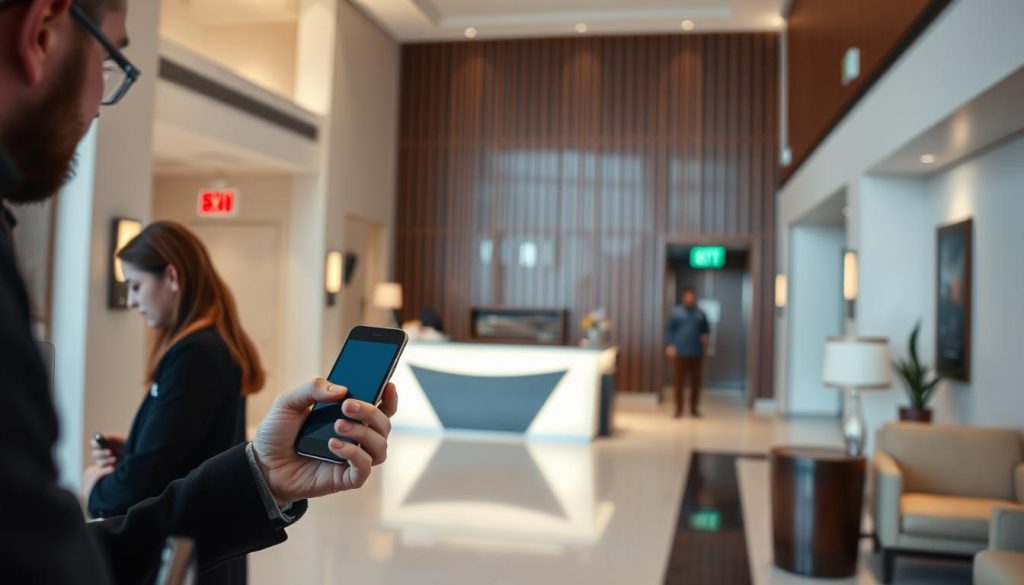
Reporting to the Front Desk
Spot something that worries you? Tell the hotel’s front desk right away. They have trained staff ready to deal with threats. Telling the staff about any suspicious activity can stop or prevent about 60% of hotel security problems.
Staying Aware of Surroundings
It’s important to be watchful in hotels to keep safe. Always be aware of what’s happening around you. Notice if something or someone seems out of place. Since one in five hotel guests finds cleanliness or security issues on arrival, your alertness can lower your risk and stop potential threats.
“Effective security systems can increase guest satisfaction by 15-20% and cut down incidents by 60%,” says a recent report. This shows how crucial it is to be observant and report any suspicious behavior quickly.
| Security Measures | Effectiveness (%) |
|---|---|
| Elevated surveillance systems | 60% |
| Electronic access controls | 50% |
| Regular security audits | 25% |
| Security awareness among staff and guests | 45% |
Staying vigilant and quickly reporting suspicious behavior is crucial. It helps keep not just you but also other guests safe. Around 30% of hotel guests feel unsafe when security is lacking. A quick report can ease these worries and ensure safety for all.
Staying Safe During Emergencies
Emergencies can happen anytime. Knowing what’s around you and the hotel’s safety steps is important. To stay safe during unexpected events, follow these tips.
Locate Emergency Exits
Right when you get to the hotel, look for the emergency exits. Knowing the closest exit can make evacuation quicker and safer. The Center of Fire Statistics (CFS) found that in 2022, over 10,000 hotel fires occurred worldwide. This shows how crucial it is.
Always check the map behind your room’s door. It could save your life.
Prepare an Emergency Kit
Make a small emergency kit for your room. Include first aid supplies, a flashlight, and other key items for safety during hotel emergencies. Though its exact impact hasn’t been fully studied, having an emergency kit is highly recommended.
Bringing portable fire alarms and carbon monoxide detectors adds more security.
Conclusion
Making sure your hotel stay is safe involves a mix of planning, being alert, and using security tools. Good safety plans make your trip better and cut down on dangers. Picking a safe place for your hotel, checking your room carefully, and knowing emergency plans prepares you for a more secure trip.
Technology is key in making hotels safer. Tools like AI for recognizing faces, biometric checks, and cloud services reduce the chance of security breaches. Keeping anti-virus software up to date and using safe Wi-Fi are crucial for protecting your info. Hotels with smart locks and IoT technology make your stay feel safer.
Working with local police and training hotel staff regularly boosts hotel security. Strong security attracts more guests and raises their happiness. Showing guests the safety steps and having security people around makes a hotel feel trustworthy. These efforts help create a secure setting for everyone, making sure your time at the hotel is worry-free.