Quickly Adapt to Different Time Zones – Simple Tips
Have you ever wondered why some travelers easily adjust to new time zones while others don’t? Learning to adapt quickly can really make your travels better. Up to 30% of travelers get jet lag, so knowing how to adjust is key. Can simple tips make you feel right at home, anywhere in the world?
Traveling across time zones brings challenges like jet lag, making it hard to enjoy your trip. Preparing well and knowing how to adapt are key to dealing with time zone changes. No matter if you’re flying east or west, knowing the right tricks can help you adjust to new time zones fast.
Understanding Jet Lag and Its Symptoms
Jet lag happens when your body clock doesn’t match the local time after flying across time zones. If you cross three or more time zones, you might feel off. One in three people flying long distances face this issue.
Symptoms like trouble sleeping or feeling out of sorts can show up right after you arrive. They could last for days or even weeks. How long you have symptoms depends on how far you traveled and your health.
Mental and Physical Symptoms
Dealing with jet lag is tough because it affects both your body and mind. You might feel mixed up, get annoyed easily, or have a hard time focusing. Your body could also feel worn out, with sore muscles, cramps, and other issues.
It usually takes about a day to adjust for each time zone you crossed. But if your sleep cycle gets really messed up, it could lead to serious health issues. This includes higher chances of getting diabetes, feeling depressed, or even some types of cancer.
Impact on Your Travel Experience
Jet lag can really change how you experience your trip. Feeling tired and cranky can make sightseeing tough. It can also affect how you connect with the local culture. The longer and further you travel, the tougher it gets.
Things like flying a long way, stopovers, and the local day and night cycle can make jet lag worse. Not drinking enough water and not getting the right light can make you feel even more tired. It’s important to drink plenty of fluids and manage when you get sunlight to help deal with jet lag.

| Factors | Influence on Jet Lag |
|---|---|
| Number of Time Zones Crossed | More time zones crossed results in more severe symptoms |
| Direction of Travel | Eastward travel tends to cause worse symptoms than westward travel |
| Age of Traveler | Older adults may require more time to recover |
| Flight Details | Longer distances and multiple layovers can exacerbate symptoms |
| Light Exposure | Properly timed light exposure can ease adaptation to new time zones |
How Circadian Rhythms Affect Time Zone Adjustment
Your body’s circadian rhythms are key to adjusting to new time zones. These inner clocks control your sleep, hormones, body heat, and when you get hungry. They work on a 24-hour cycle. This makes them super important for dealing with jet lag.

The Role of Light Exposure
Getting sunlight is vital for keeping your circadian rhythms on track. Natural morning light works best because our bodies have adapted to the day and night cycle. But, artificial light, especially the blue kind from screens, can mess with these rhythms. To adjust your internal clock when you travel, try to catch some rays during the day and cut down on screen time at night.
Disruption and Realignment of Your Internal Clock
Jumping time zones can throw off your internal clock, causing jet lag. Symptoms include trouble sleeping, feeling tired during the day, upset stomach, and trouble thinking. Over 31 million people in the U.S. face this each year. After flying east, your body adjusts by about 57 minutes each day. Flying west, it takes around 92 minutes per day to adjust. Changing when you eat and how much light you get can help speed up this process.
For those who travel a lot, understanding these points is crucial. Long-term health issues can arise from constant disruptions to your circadian rhythm. Managing when you eat and your exposure to light makes adapting to new time zones easier.
| Influence | Factors |
|---|---|
| Circadian Rhythms | Sleep-Wake Cycles, Hormone Release, Body Temperature |
| Light Exposure | Morning Sunlight, Artificial Light from Digital Devices |
| Adjustment Strategies | Meal Timing, Light Exposure Management |
How can I quickly adapt to different time zones?
Making a smooth transition to a new time zone is crucial for a great travel experience. Planning before your trip and making gradual changes to your routine can help a lot. They can lessen jet lag’s effects.
Importance of Pre-Travel Preparation
Before you leave, try to adjust your sleep and daily habits to match the new time zone. Since up to 30% of travelers feel jet lag after crossing five or more time zones, planning is important.
Try doing things at times that fit the new zone, like eating and sleeping. Getting your sleep pattern steady can cut sleep problems by half.
Gradual Adjustment Before Departure
Adjusting your body’s clock before you go can make the shift easier. Studies say changing your sleep times by 30-60 minutes helps you adjust faster. It might take 2 to 4 days to get used to going east and 1 to 2 days for west.
Adjusting your sleep gradually has big benefits:
- One week before travel: Change your sleep time by 15 minutes to match your destination’s time zone.
- Four days before travel: Add another 30 minutes to that adjustment.
- Two days before travel: Increase the change to 45–60 minutes, getting closer to the new time zone.
Also, getting some sunlight in the morning can reset your internal clock. Just 15-30 minutes of sun when you wake up can help you adjust to the new time zone.
Best Practices for Adjusting to New Time Zones Quickly
Getting used to a new time zone can be hard. But, you can make it easier by following certain steps. These steps help your body’s clock match the new local time quicker.
Staying Awake Upon Arrival
When you get to your destination, stay awake until it’s time for bed there. This helps reset your body’s clock. If you get there in the afternoon, don’t nap, even if you want to. Staying up can make adjusting your sleep easier.

Keeping awake when you arrive helps your body clock align with the local time sooner. Being outside is good because natural light tells your body it’s time to adjust.
Maintaining a Sleep Schedule
After arriving, keeping a regular sleep schedule is key. Try to sleep and wake up at the same time every day. This supports a steady body clock. Without this, getting used to a new time zone might take longer.
For a better sleep schedule, try these tips:
- Avoid big meals and caffeine before bed.
- Make sure your sleeping space is dark, quiet, and cool.
- If needed, use earplugs and eye masks.
Here’s what can happen if you keep versus don’t keep a sleep schedule:
| Maintaining Sleep Schedule | Not Maintaining Sleep Schedule |
|---|---|
| Faster adaptation to new time zone | Slower adjustment, more than 7 days |
| More regulated circadian rhythms | Disrupted sleep patterns, making you tired |
| Improved overall travel experience | More travel tiredness and possible jet lag |
Using these best practices, you can get used to a new time zone faster. This makes your travels more pleasant and comfortable.
Time Zone Adjustment Tips for Frequent Travelers
Traveling a lot means having to get used to new time zones often. There are good ways to make this easier, keeping you healthy and efficient on the road. Using time zone adjustment tips is key for this.
Getting direct sunlight for 15 to 30 minutes when you wake up helps reset your circadian rhythms. If you’re going east, avoid bright light at night to get used to going to bed earlier. Changing your sleep time a bit each day before you leave, like 30 to 60 minutes more, can also make jet lag symptoms easier to handle.
It’s important to keep a good sleep routine to fight jet lag. Sleeping in a cool, dark, and quiet place and not using phones or computers before bed helps a lot. Taking melatonin in small amounts, 1-5 mg, can also sync your body to a new timezone. But, remember it’s a supplement, so effectiveness might vary.
Knowing if you’re traveling west or east matters for planning. Going east, where time feels shorter, is usually tougher on your body. Eastward travel means changing your plan to make adjusting easier, like sleeping earlier. Traveling west is a bit easier since you “gain” time, letting you stay up a bit longer with less trouble.

Short naps during the day are also helpful. A quick 20-minute nap can make you feel refreshed without making you too sleepy later. Watching how much coffee you drink will also keep you sharp without messing up your sleep at night.
By following these easy time zone adjustment tips, frequent travelers can shift time zones smoother. This makes traveling less hard on your body and improves your trips.
Strategies to Cope with Jet Lag Effectively
Traveling through different time zones upsets your body clock, leading to jet lag. This issue can stick around for several days. To deal with jet lag, focus on sleep management, caffeine use, and keeping hydrated. By following these simple tips, you can lessen jet lag’s impact and adjust faster to new time zones.
Short Naps and Caffeine Management
Taking short naps and controlling your caffeine consumption are smart ways to handle jet lag. Studies show a brief nap of 15-20 minutes can boost alertness without messing up your sleep at night. But long naps can make it hard to get used to the new time zone. It’s also vital to watch how much caffeine you have. For example, 300 mg of slow-release caffeine has been found to keep you alert, especially when flying east, while still allowing you to sleep well.
Hydration and Avoiding Alcohol
Keeping hydrated is important in fighting jet lag. Long flights often lead to not drinking enough water, making jet lag worse. Make sure to drink lots of water before, during, and after your flight. Staying away from alcohol is crucial too, as it can dehydrate you and ruin your sleep. Drinking enough water will keep your energy up and lessen the effects of jet lag.
| Strategy | Benefits |
|---|---|
| Short Naps (15-20 min) | Regains alertness without disrupting nighttime sleep |
| 300 mg Slow-Release Caffeine | Enhances alertness, particularly for eastbound travel |
| Staying Hydrated | Reduces travel fatigue and jet lag symptoms |
| Avoiding Alcohol | Prevents further dehydration and supports better sleep quality |
Use these strategies to better manage jet lag symptoms and boost your travel experience. To cope with jet lag, balance your sleep, caffeine, and water intake, and avoid alcohol. This will help you easily adapt to new time zones.
Travel Time Zone Strategies for Eastward and Westward Travel
Traveling across many time zones is tough, affecting your body’s clock. Using the right strategies for eastward or westward journey helps lessen jet lag. Knowing the difference improves your trip a lot.
The “East is a Beast, West is Best” Rule
The saying “East is a Beast, West is Best” shows eastward travel’s big challenges. Traveling east means adjusting your sleep ahead, making jet lag worse. It’s tougher to sleep earlier than to stay awake later. For example:
- Athletes going to Japan from Western Europe deal with 6–8 hour eastward time changes.
- But, those coming from North America to Japan have an 8–11 hour westward time difference.
Practical Tips Based on Travel Direction
Here are some smart tips for adjusting to new time zones:
| Travel Direction | Recommendation | Reason |
|---|---|---|
| Eastward Travel | Begin adjusting sleep schedule 1-2 hours earlier a few days before departure | Gets your body ready for earlier sleep, reducing jet lag |
| Westward Travel | Adjust sleep schedule later by 1-2 hours | Makes aligning with new time zones easier, easing the shift in your body’s clock |
| Eastward Travel | Expose yourself to bright light in the morning upon arrival | Helps reset your internal clock to match the local time |
| Westward Travel | Seek bright light in the evening of your destination | Delays your circadian rhythms for later sleep times |
| Both Directions | Avoid naps longer than 20-30 minutes | Keeps you on track with the local time zone |
| Both Directions | Stay hydrated | Drinking water fights jet lag, as dehydration worsens it |
Using these tips can make switching time zones smoother and improve your journey, no matter if you’re heading east or west.
Quick Adaptation Techniques During Long Flights
Adapting quickly during long flights is key to feeling good and beating jet lag. It’s smart to pick the right seats, sleep well on the plane, and move around. These steps make it easier to adjust to new time zones.
Choosing the Right Seat
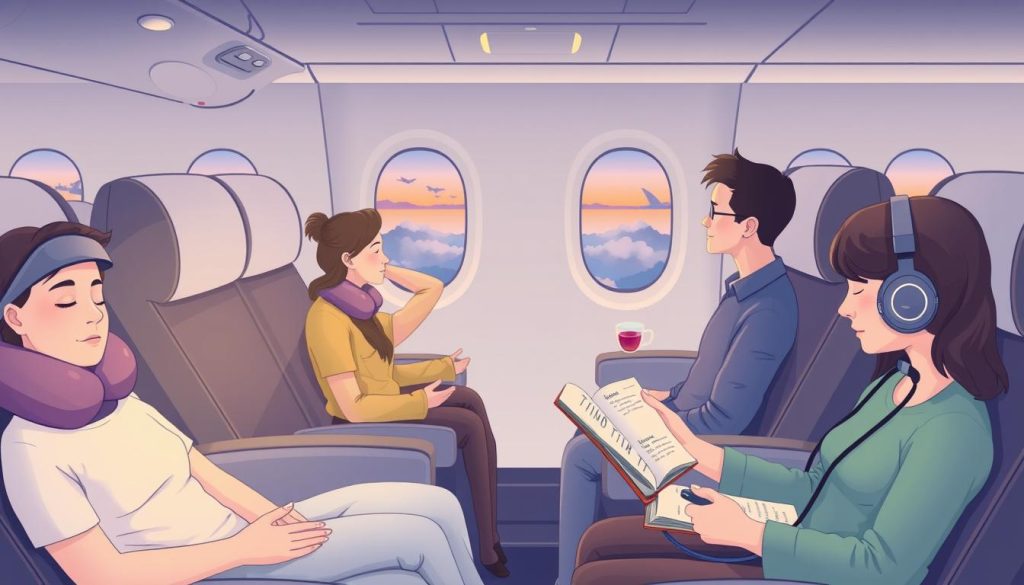
When choosing flight seats, think about leg space, how close you are to bathrooms, and if your seat leans back. Seats in business or premium economy are comfier. They let you relax and sleep better. Plus, picking a window seat means fewer interruptions from other passengers, making it easier to sleep.
Sleeping on the Plane
Sleeping on planes helps fight jet lag. Try to sleep when it’s night where you’re heading. For example, on a 16-hour flight to New Zealand, using business-premier seats can make your sleep better. Don’t nap for more than 30 minutes to avoid feeling even more tired when you land. Sleeping according to your destination’s night time helps you adjust faster.
Keeping Active and Stretched
Staying active on flights cuts down on discomfort and helps your blood flow. Doing light stretches or walking around every few hours is good for you. The Mayo Clinic says daylight and moving around after you land help you get used to a new time zone. Also, drink lots of water to avoid getting dehydrated and to keep your energy up.
| Flight Duration | Time Zone Difference | Recommended Seat | Suggested Activities |
|---|---|---|---|
| 2 hours (Chicago to LA) | 2 hours | Economy, window | Short naps, stay hydrated |
| 10 hours (LA to London) | 8 hours | Premium, recline options | Stretch, hydrate, sleep schedule |
| 8 hours (London to Chicago) | 6 hours | Business-class, sleep kit | Walk, short rest periods |
| 16 hours (Chicago to NZ) | 17 hours | Business-premier, flatbed | Full sleep cycle, light exercise |
Utilizing Melatonin and Supplements for Time Zone Acclimatization
Traveling across different time zones often leads to jet lag. The right supplements can make your body adjust quicker. Melatonin stands out as an effective jet lag supplement.

Benefits of Melatonin
A review in 2002 looked at 10 studies on melatonin. It reduced jet lag in 9 out of 10 cases. It worked well for people crossing five or more time zones.
Another review in 2014 involved over 900 people. It showed melatonin was better than a placebo in six out of eight trials. This was for reducing jet lag symptoms.
For jet lag, doses from 0.5 mg to five mg are effective. It’s best to take melatonin 30 minutes to two hours before bed. If crossing five or more time zones, take it at the local bedtime when you arrive. Keep taking it for four more days. It’s not as helpful for westward travel, though, because adjusting to earlier time zones is tougher.
| Melatonin Dosage | Effectiveness |
|---|---|
| 0.5 mg | Improved sleep quality |
| 5 mg | Faster sleep onset, improved sleep |
Other Natural Sleep Remedies
Besides melatonin, natural sleep remedies like lavender oil and tart cherry juice help with jet lag. Lavender calms you, helping you sleep better. Tart cherry juice has natural melatonin, which helps adjust your sleep-wake cycle.
Drinking plenty of water and cutting down on caffeine and alcohol help too. It’s crucial to get sunlight and avoid screens before bed. These actions keep melatonin levels healthy.
“Jet lag commonly affects air travelers who cross five or more time zones,” reinforcing the need for effective jet lag supplements and natural remedies.
Effective Morning Routines to Combat Jet Lag
Adjusting to a new time zone is tough. Yet, effective morning routines for jet lag can help a lot. Getting natural light and doing some exercise can speed up setting your internal clock. This reduces the bad effects of sleep problems from traveling.
Exposing Yourself to Natural Light
Natural light is great for setting your body’s clock after flying across many time zones. It helps make melatonin, which controls when we sleep and wake up. Try to be in the sunlight for 20–30 minutes each morning. This can really lessen jet lag symptoms.

Incorporating Exercise
Exercise also helps with jet lag in the morning. It boosts your energy and mood. This makes it easier to start your day. Just 20 minutes of working out, walking fast, or jogging can help a lot. Exercise makes you feel more alive and alert by waking up your body.
Mixing these habits into your routine makes adjusting to new time zones smoother. Here’s some tips to get the most out of your mornings for beating jet lag:
| Activity | Benefit |
|---|---|
| Natural Light Exposure | Helps control melatonin and gets your internal clock in sync. |
| Morning Exercise | Raises energy, improves mood, and helps you stay alert. |
| Hydration | Keeps you refreshed and helps fight tiredness. |
Beginning your day with sunlight and some exercise can greatly ease jet lag. Small changes in your morning can make a big difference in how you feel all day.
Meal Planning to Manage Time Zone Changes Efficiently
When traveling across time zones, an important aspect is meal planning for jet lag. Eating at the right times helps adjust your body’s clock. This makes the transition easier.
Timing Your Meals Appropriately
Studies show that timing meals resets your internal clock just like sunlight does. Eating according to the local time of your destination helps your body adjust. For instance, planning your meals to fit New York’s schedule before flying from San Francisco is wise.
Jet lag can affect your brain like a minor head injury. Eating regularly, no matter the time zones, can reduce these effects. Missing meals or eating randomly can mess up your metabolism and mood.
Eating According to Local Time
Eating with the local time helps adjust quicker. If you reach London at noon but feel it’s midnight, have lunch, not breakfast. This convinces your body it’s midday and adjusts your internal clock faster.
Research indicates that eating on a local time schedule reduces jet lag symptoms. These symptoms can last up to three days after arrival. The CDC suggests eating small, regular meals and using caffeine strategically for better alertness.
Airline meals are often high in carbs and preservatives. Choose high-protein meals before flights and light foods after landing. This helps digest food better and adjust meal times to new time zones.
By planning your meals for jet lag and eating on local time, you make the transition smoother. It minimizes fatigue, productivity loss, and stomach problems.
Adjusting Back to Your Home Time Zone Post-Travel
Coming home from an exciting trip can be tough, just like getting used to a new place. To handle this post-travel adjustment well, start shifting your schedule back to your normal time zone before you even head home. This step is key to getting back into your daily life smoothly.
One rule for getting back to your usual time zone is to give yourself about a day for each time zone you’ve crossed. So, if you went through three time zones, you might need three days to adjust. Knowing your body’s clock might not match the 24-hour day exactly can help set realistic expectations for this change.
Once you’re back, live by your local time right away. If you went east, which can be harder, try to get plenty of sunlight in the morning. This signals your body to wake up and adjust. Even if it’s cloudy, outside light is way brighter than indoor lights and helps a lot.
Having a regular sleep schedule is crucial. Aim to sleep and wake up at your normal times. Use morning light and dim lights at night to help your body reset. Also, try to skip caffeine and big meals in the evening to sleep better at the right time.
Below is a simple guide to help with your post-travel adjustment:
- Slowly change your sleep schedule by 30-60 minutes each day before coming home.
- Get a lot of natural light in the morning and less light in the evening.
- Keep a steady sleep routine as soon as you return.
- Steer clear of caffeine and heavy meals in the evening.
Following these tips can help you smoothly switch back and lessen the impact of adjusting back to your home time zone on your life. By doing these, you’ll quickly feel and perform your best again.
Conclusion
Being able to quickly adjust to new time zones is key for travelers wanting the best experience. It helps to know about jet lag and how to avoid it. Our body clock is controlled by neurons in our brain, making regular schedules and smart planning important.
To prepare for time zone changes, start adjusting your routine a few days before your trip. Change your watch to your destination’s time zone before you leave. Shift your sleeping and eating times gradually. This helps lessen the effects of time changes. Make sure to get sunlight when you arrive and avoid screens before bed to keep your circadian rhythms stable.
Using these tips can help you avoid jet lag, stay productive, and feel good. Drinking water, staying active, and sometimes using supplements like melatonin are important too. Keeping a regular sleep and meal schedule helps match your body’s clock to the local time. This guide to beating jet lag is meant to make traveling to different time zones easier and more fun.