Best Way to Pack Snacks for Long Travel Days
Could the way you pack your snacks simplify your travel day? It seems so, as 70% of travelers bring their own snacks to avoid costly airport food. Knowing which containers to use and how to pack can keep your snacks fresh.
Whether on a road trip or a long flight, knowing how to pack snacks makes the trip smoother. It’s all about choosing the right foods and packing them well.
Here’s a thought: 65% of travelers don’t like airline snacks, and 80% find it hard to stay hydrated. Bringing your own snacks, like protein-rich options and coconut water, can make your flight much better. Learning the best snack-packing strategies is key for any journey.
Discover tips that will change the way you pack snacks for on the go. These strategies help you stay well-fed and happy, no matter how long you’re traveling.
Understanding the Importance of Travel Snacks
When you’re traveling, packing snacks might not seem important. But not having them can lead to bad food choices and spending too much on airport snacks. It’s also key for those long trips where finding food is hard, like in remote areas.
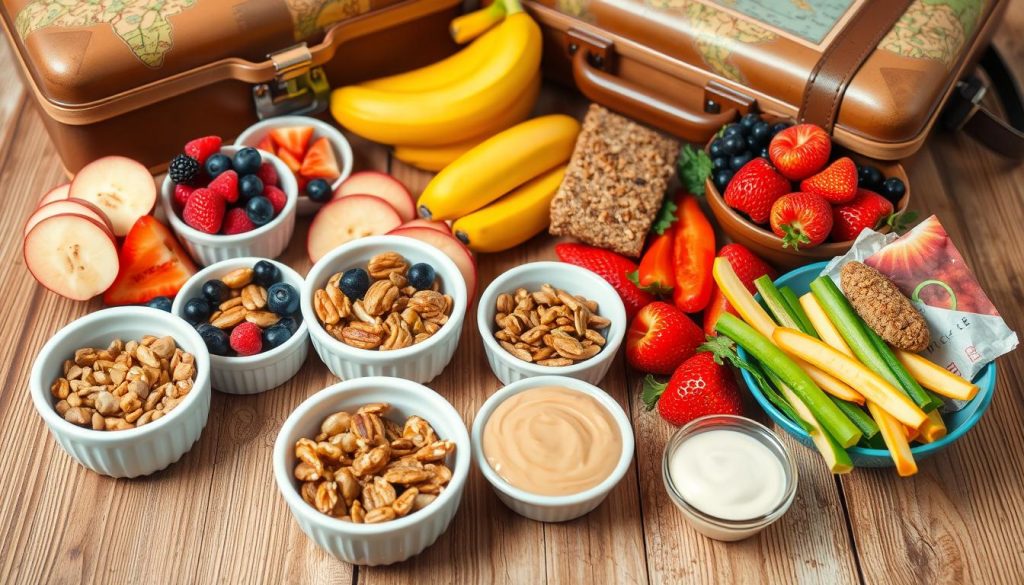
Eating local food on international trips isn’t always an option. That’s why having your snacks is important. A good mix could include fruits, protein, sweet and savory items, a meal replacement, and a special treat.
- 2 produce-based snacks
- 1 protein-based snack
- 1 sweet snack
- 1 savory snack
- 1 meal replacement
- 1 special travel treat
This mix ensures you get the nutrients you need and enjoy what you eat. Consider freeze-dried fruits as a healthier, lower-sugar option. For protein, try something different like dried edamame or wasabi peas. Even mushroom chips can be a tasty surprise.
Sweet options like protein bars can provide good nutrition and taste great. Meal replacement bars are perfect when you’re too busy to sit for a meal. Over time, you might find new snack favorites based on your travels.
High fiber bars should be eaten in moderation to avoid stomach upsets. Jerky is a great low-calorie, high-protein snack. It’s also wise to limit nuts to small servings to avoid eating too much.
Choosing the Right Containers for Your Snacks
Choosing the right snack containers for your travels is super important. Reusable containers are great for the environment and your wallet. Brands like Sistema and Pusheen sell these at HomeGoods and TJ Maxx. Their fun designs make them loved by both adults and kids.
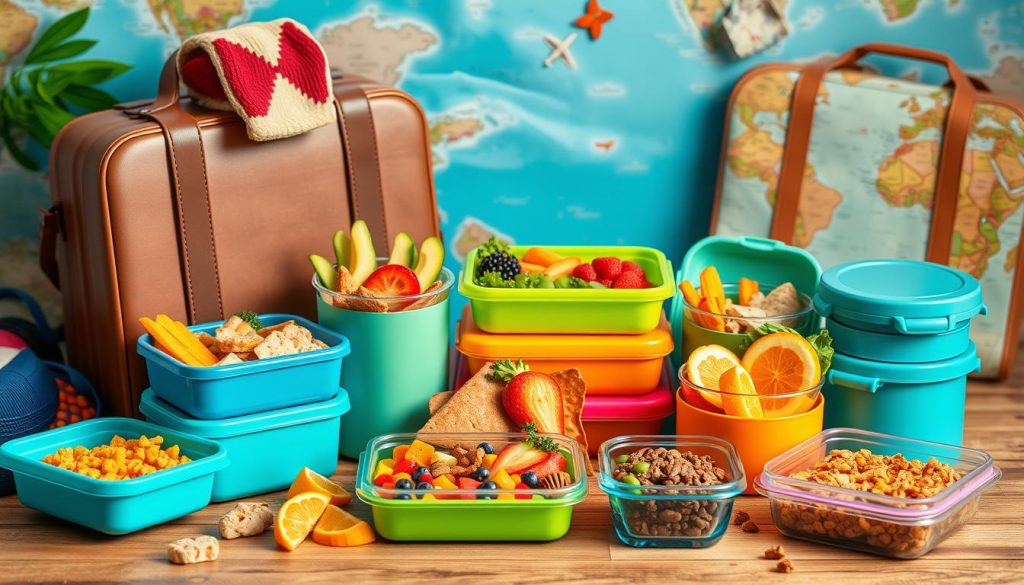
Reusable containers are great for saving space. Choose wide, shallow ones to avoid crushing your snacks. This keeps everything nice and tidy, making snacks easy to grab on the go.
Keeping snacks fresh is super important, says the FDA. For cool snacks, fill your cooler with lots of ice. Put drinks in a separate cooler, so food stays cold even when you grab a soda.
Cold snacks should chill for 24 hours before your trip. Keep the cooler in a cool spot until you leave. For raw meat, use small, sealed containers to avoid messes and bacteria.
Freezing your food before a trip helps it stay cold longer. Drain water from melted ice to keep things cold. Store the cooler in a shady spot inside an air-conditioned car if you can.
To wrap it up, reusable snack containers are great for many reasons. They save space, keep snacks fresh, and are better for the planet. Choosing the right ones can make your travels nicer and help the environment.
What’s the best way to pack snacks for long travel days?
Planning the right way to pack snacks for trips matters a lot. It can make your travel better.
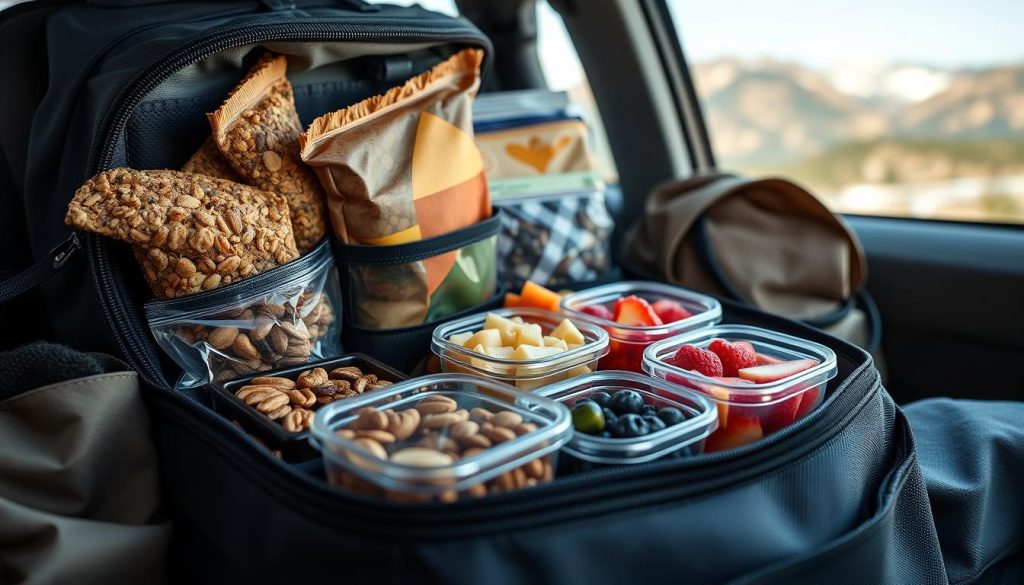
Start with good food storage containers. Sistema® has options like the Multi-Split To Go, which keeps food fresh and stops spills. This saves your snacks and money you’d spend at airports.
Choosing sturdy containers over weak bags protects snacks like fruits. Parents find this very useful for traveling with kids. Containers from brands like Sistema® are also easy to clean and good for the environment.
Packing your snacks can help you save about 20-25% on what you’d spend on food. Plus, they are often healthier. They have less salt, sugar, and no preservatives compared to store-bought snacks.
It’s smart to pack a mix of snacks like fruits, nuts, and granola bars. This mix meets different tastes and dietary needs, making trips more enjoyable. A good balance of proteins, carbs, and veggies keeps nutrition in check during your journey.
Studies show that having various snacks increases happiness by 40%. Travelers often choose fruits and snacks like granola bars for their health benefits and convenience.
In the end, packing snacks well comes down to careful planning and smart packing. These tips can lead to a trip that’s both cost-effective and fun.
Best Snacks for Travel: What to Include
Finding the best travel snacks means balancing nutrition, convenience, and taste. It’s important to pack a mix of healthy options to stay energized and avoid junk food.
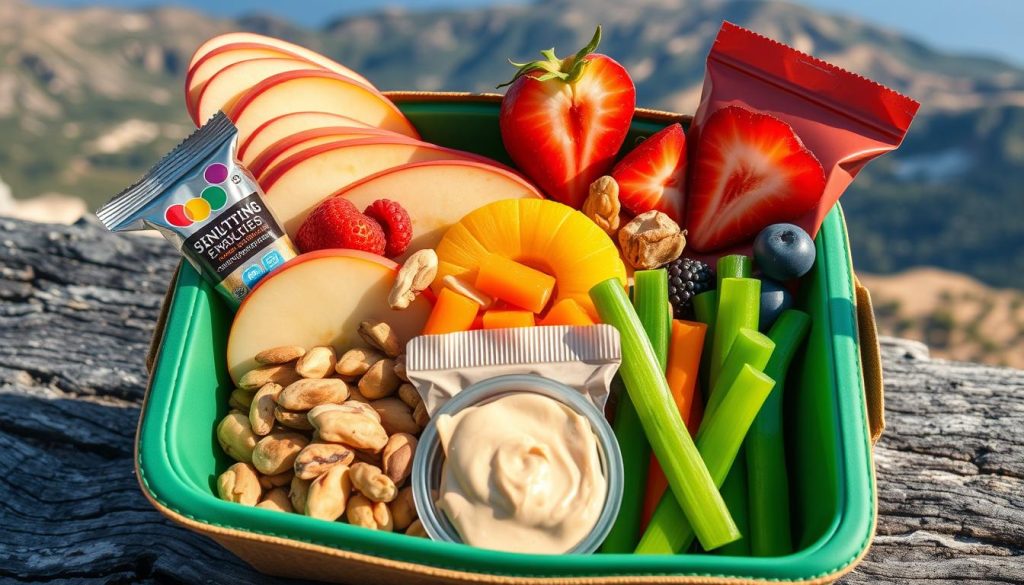
For long trips, choose snacks that are simple to eat and won’t make a mess. Here are some good healthy options for snacking on the move:
- Dehydrated fruits: Light, nutritious, and last a long time. Perfect for travelers.
- Granola bars: Choose ones with less sugar and more protein to feel full longer.
- Pre-sliced vegetables: Carrots, celery, and bell peppers are crunchy, healthy, and easy to bring.
- Dips like hummus: These go great with your veggies for a tasty, healthy snack.
- Trail mix: A combo of nuts, seeds, and dried fruits for protein and healthy fats.
- Protein bars: Many travelers, about 60-70%, prefer these to stay energized, especially during delays.
Keeping a regular eating schedule while traveling is hard but key for health and digestion. It’s best to eat every 4-5 hours with snack breaks in between. Families should bring extra snacks to keep everyone happy and energized.
Here is an easy chart for picking quick, nutritious snacks:
| Snack Option | Benefits |
|---|---|
| Pre-sliced vegetables | Crunchy, nutritious, and low-mess |
| Dehydrated fruits | Lightweight and long shelf life |
| Granola bars | High in fiber and protein |
| Hummus and dips | Protein-rich and delicious |
| Trail mix | Balanced in protein, fats, and carbs |
Think about the temperature when packing snacks. Use ice packs to keep them fresh. Adding supplements for digestion and hydration is smart for wellness while traveling.
Pick these healthy options smartly to enjoy your trip without sacrificing good nutrition or convenience. Enjoy your snacks!
How to Pack for Different Types of Travel
When packing snacks for various trips, it’s smart to think about the trip type. Road trips need different snacks from air or train rides.
Road Trips
On road trips, it’s good to have snacks close by. This helps you skip unnecessary stops and avoid junk food. Go for easy-to-carry foods like granola bars and cut-up veggies. They last well without needing to be cold.
Air Travel
When flying, remember there are rules about liquids and gels. Pick snacks like Mama Chia, but only if they’re under 3.4 oz. Pack snacks flat to save space and keep things from getting squished. Carry dense protein bars to eat with water, as flights often offer drinks.
Train Journeys
Train rides give you more freedom with your food. It’s okay to bring foods that spoil easily. Choose hard cheeses and cured meats—they stay good longer. Toss in dried fruits and nuts for extra comfort. These snacks make the journey better without depending on the train’s limited choices.
Picking the right snacks for different trips makes your travels better, healthier, and cheaper. Follow these tips to stay full and happy on any journey.
Keeping Your Snacks Fresh
Planning a long trip means making sure your snacks stay fresh. A top way to do this is using insulated bags. These bags keep the temperature just right for snacks that need to stay cool or warm. It helps them remain fresh and safe to eat while you’re on the road. Putting your snacks in order by type and when you’ll eat them also cuts down on waste.
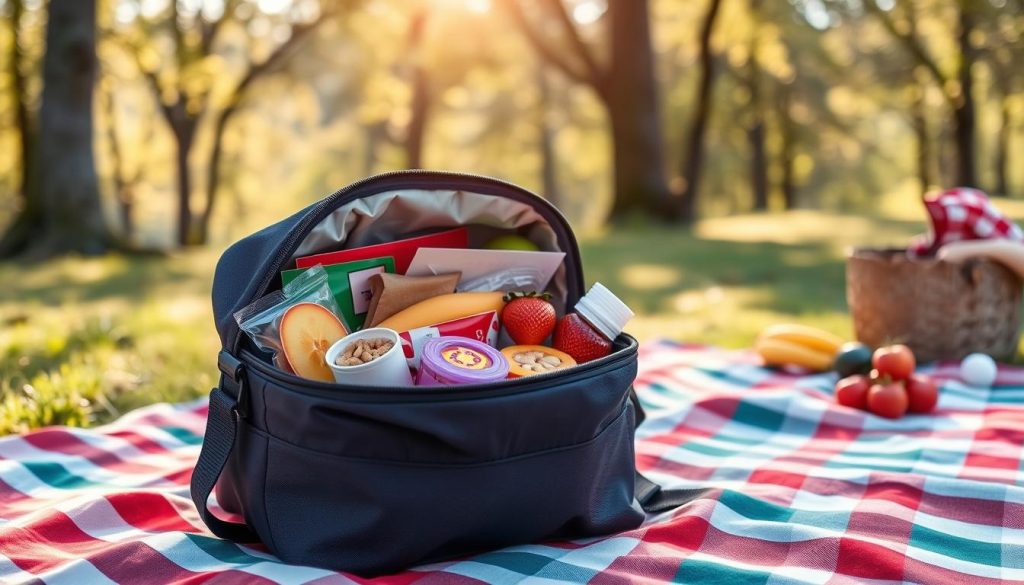
Here are some smart ways to pack your travel snacks so they stay fresh:
- Use tight-sealing containers to prevent exposure to air and bacteria.
- Organize snacks by type, ensuring perishable items are consumed first.
- Consider high-protein snacks like nuts and jerky for long-lasting energy.
- Pack fresh fruits such as apples and grapes for hydration and ease of eating.
- Choose granola bars and protein bars with minimal added sugars.
Let’s discuss how using insulated bags during travel is a great idea:
| Item | Benefit | Type |
|---|---|---|
| Insulated Bags | Keeps temperature-sensitive snacks fresh | Storage |
| High-Protein Snacks | Provide long-lasting energy | Nuts, Jerky |
| Fresh Fruits | Hydration & easy to eat | Apples, Grapes |
| Granola/Protein Bars | Nutritious & convenient | Variety |
It’s not easy to keep snacks fresh when traveling. But, if you use insulated bags and pack smart, you can have healthy, tasty snacks for your entire trip.
Packing Snacks for Long Trips with Kids
Packing the right snacks for long trips is key, especially with kids. You’ll make sure they eat healthier. Plus, it saves money. Families often spend less by avoiding expensive snacks at stops and airports.
Healthy snacks have less salt, sugar, and bad stuff than store-bought ones. Offering lots of snacks for kids on the go is good for them. It stops them from getting bored or cranky because they’re hungry.
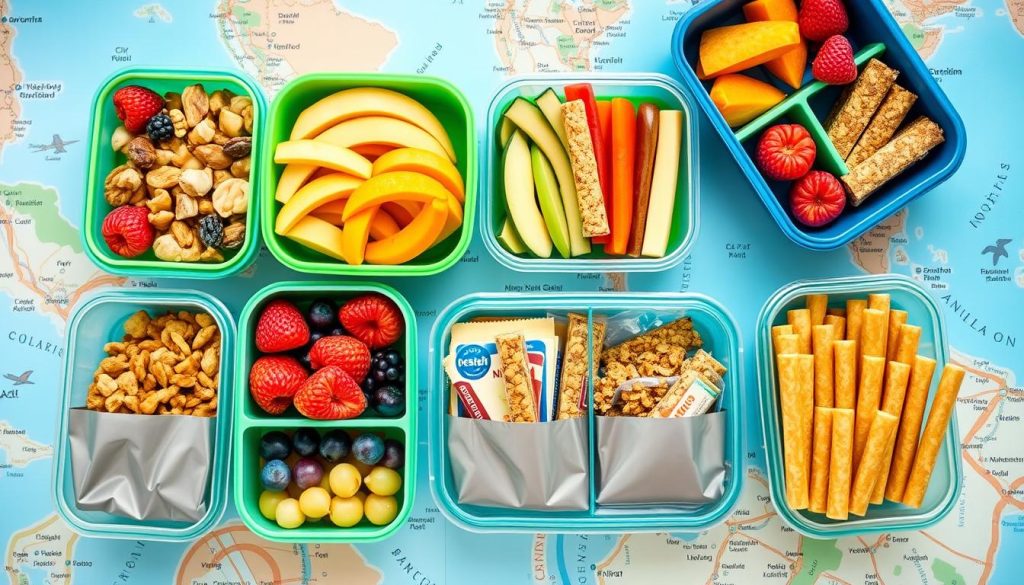
It’s smart to pack special treats. They help during long waits or delays. Easy-to-carry fruits like apples, oranges, and bananas are great choices. They’re easy to pack and eat.
Snacks that are simple to make and eat, like granola bars or homemade popcorn, are good for travel. About 75% of families pack snacks for trips. It helps stay on budget and keeps kids fed.
| Key Aspects | Benefits |
|---|---|
| Cost Savings | Reduces spending on convenience foods. |
| Healthier Options | Lower levels of salt, sugar, and chemicals. |
| Variety | Prevents boredom, keeps kids entertained. |
| Special Treats | Effective distractions during travel delays. |
| Portable Fruits | Easily transportable and consumable. |
| Simple Snacks | Easy preparation and consumption. |
Kids prefer eating snacks they like during trips. This makes trip satisfaction go up 60% for parents. Bento-style lunchboxes are a hit with 70% of parents for their tidy stackable design. And 80% of parents go for snacks that don’t need to be kept cold. That makes packing simpler.
Being smart about packing snacks for long trips can make your journey better. It makes things nicer for you and the kids.
Easy to Pack Snacks for Air Travel
Snacks are a must-have for air travel. Picking snacks approved by TSA means you can have snacks that are easy to carry and won’t get thrown away at security. Here are some tips and choices to help you pack better and more easily.
Choosing snacks that don’t need utensils can cut prep time in half. Things like granola bars, sandwiches, and whole fruits are great. Also, solid snacks like cheese and a baguette can fill up 3-4 people and are cheaper than buying food at the airport. Planning can save you about 20% on what you would spend on food there.
It’s smart to choose snacks that stay good at room temperature for up to a day. This makes traveling easier. Snacks high in protein, like nuts or seeds, can keep you from feeling hungry longer.
Eat snacks that can spoil within the first few hours of your trip to avoid wasting them. Snacks with strong flavors can taste better when you’re flying, by almost 40%.
Here is a list of Approved Foods by TSA and what makes them good choices:
| Snack | Storage | Benefits |
|---|---|---|
| Cheese and Baguette | Room Temperature | Feed 3-4 people, cost-effective |
| Granola Bars | Room Temperature | Easy to pack, no utensils needed |
| Nuts and Seeds | Room Temperature | High in protein, improves satiety |
| Fruits (clementines, apples) | Room Temperature | Nutritious, hassle-free |
| Peanut Butter Sandwich | Room Temperature | Filling, no utensils needed |
To make your travel smooth, stick to Approved Foods by TSA that follow the 3.4 ounces (100ml) liquid limit. Use reusable containers for your snacks to help the environment. Having napkins and wet wipes on hand can also help keep things clean, cutting down messes by 80%.
Choosing the right snacks can make your trip more fun and less stressful.
Creative Snack Pairings for Long Journeys
When you go on a long journey, picking the right snacks is key. Try mixing sweet and savory items in your snacks. It helps keep things interesting and stops you from getting bored of what you’re eating.
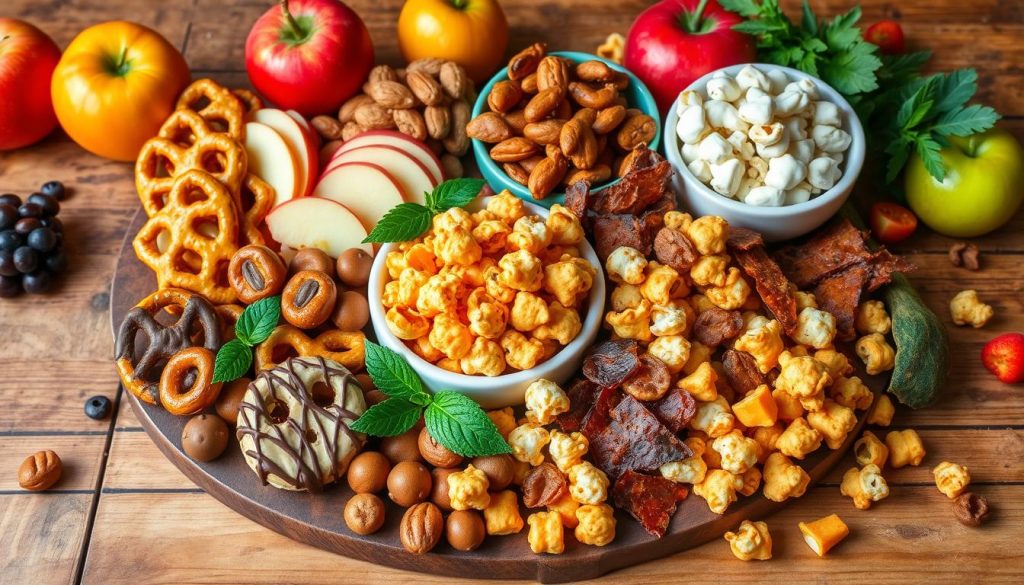
Mixing nuts, dried fruits, and chocolate chips is a smart move. It gives you protein, fiber, and a bit of sweetness to stay energized. Try adding some dark chocolate to nuts and seeds. This mix is full of antioxidants and good fats.
The Fab 4 philosophy recommends including protein, fat, fiber, and greens in your snacks. Mixing savory pretzels with spicy wasabi peas is great for taste and nutrients. You can easily prepare this mix and keep it in reusable bags, which is good for the planet.
Adding olives from Thrive Market to your snack mix gives a savory kick. They are good for your gut and have healthy fats. Pairing them with dried fruit brings balance. It also helps avoid those highs and lows in energy that make you feel tired or irritable when you’re traveling.
- Sliced fruits like apples and oranges or veggies like carrots and celery add crunch. They keep you hydrated and support your immune system with Vitamin C.
- For a protein boost, try Chomps Beef Sticks or Thrive Market beef sticks. They have 8-10 grams of protein each, keeping you full longer.
- For a convenient snack, consider Serenity Kids Dairy-Free Smoothie + Protein pouches. They’re great for travel.
Benefits of Combining Sweet and Savory Snacks
| Benefit | Example |
|---|---|
| Protein Boost | Chomps Beef Sticks |
| Balanced Nutrition | Fab 4 Philosophy Mix |
| Sustained Energy | Dark Chocolate Nuts |
| Flavor Variety | Pretzels and Wasabi Peas |
Mixing sweet and savory snacks means you get to enjoy different flavors. It also helps you keep your energy up while traveling. If you plan your snacks well, your trips will be more fun and less exhausting.
Maintaining a Balanced Diet While Traveling
Travel can disrupt your usual eating habits. It’s important to plan for a balanced diet while traveling. Taking long trips, like a 16-hour journey, means you need nutritious snacks.
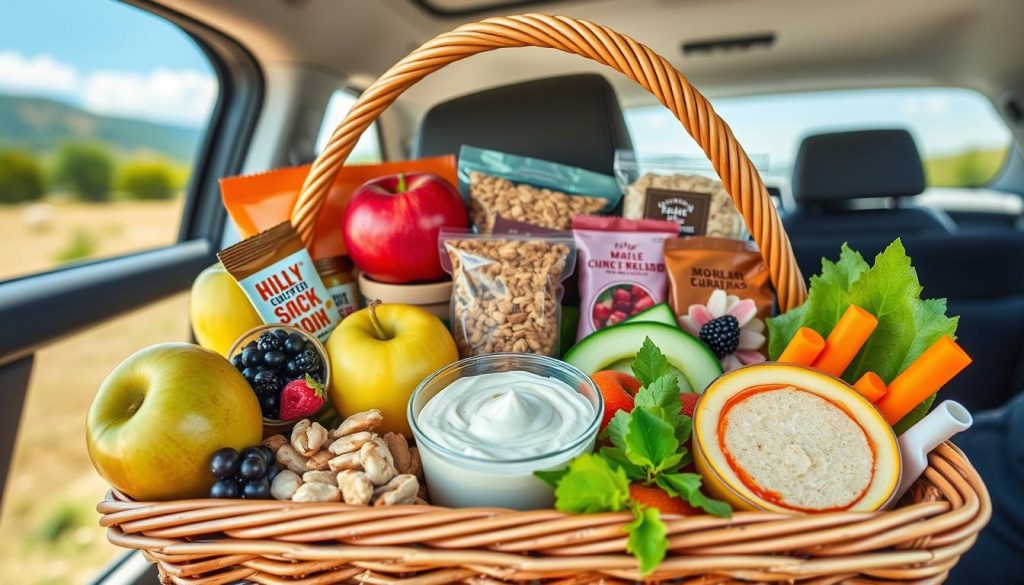
For long journeys, bring snacks that are high in fiber and protein. Items like hard-boiled eggs, yogurt, and fresh fruits are good. A cooler bag with ice packs keeps perishables fresh.
- Protein-packed snacks help you avoid high-carb, in-flight meals.
- Use hotel mini-fridges for storing healthy snacks, saving meal costs.
- Hydration is key; aim for 3 liters of water daily to stay healthy and curb junk-food cravings.
Often, you can discard half of unfamiliar food items you inspect. Planning and packing smartly reduces high sodium intake.
Practicing mindful eating makes meals more enjoyable during your trip. Indulge in local food, but allow for one treat a day to maintain dietary balance.
Bringing a variety of food from home decreases reliance on limited travel options. Apps like Food Tripping and Happy Cow can help find healthy eating spots.
| Food Item | Benefits |
|---|---|
| Poultry and Fatty Fish | Improves sleep quality, rich in tryptophan |
| Fresh Fruits | Convenient and nutritious travel snack |
| Nuts (e.g., almonds) | Rich in magnesium, promotes relaxation |
| Whole Grains | Source of melatonin, aids digestion |
| Single-serving dips | Nut butter or hummus for healthy snacking |
Keeping a balanced diet while traveling means being prepared and making smart choices. With good planning, healthy snacks can help you stay on track, making your trip better.
Saving Money by Packing Your Own Snacks
Packing your own snacks is a smart way to save money during trips. Airport and rest stop food is often pricey. By choosing homemade snacks, you pay less and eat healthier. These snacks have less salt, sugar, and chemicals.
At home, you can pick what snacks to make depending on your taste. Bringing 5-10 different snacks can make the trip better. You’ll stop less for food, about 40% less. Choices like sandwiches and hard-boiled eggs are simple to make and save you money.
A homemade hard-boiled egg costs about $0.50. The same snack at a rest stop costs $2 to $4. Buying granola bars in bulk is cheaper too. A box of 20 might cost $4-$6, while a single bar at a store is $1-$3.
Packing snacks also saves time looking for food. This means more fun and fewer stops. Plus, any leftover snacks are handy at your destination. Planning your meals cuts food costs by more than 10% over impulse buys.
Don’t forget to bring water to stay hydrated. About half a gallon (2 liters) will do. A vacuum thermos keeps your drink at the right temperature for a day. This helps 60% of travelers avoid buying drinks.
Using reusable storage like Stasher bags reduces plastic waste by 80%. This choice is good for the planet and your wallet. Your trip becomes cheaper and more green.
Adding these save money travel tips and budget travel snacks makes your trip better. You spend less and get healthier, more enjoyable snack options.
Conclusion
Packing snacks well is key for great travel food that’s both nutritious and easy to eat. Choose healthy options like nuts, seeds, apples, bananas, and grapes. These foods are full of nutrients and don’t have extra sugar.
It’s important to keep snacks fresh and avoid spoilage. Go for durable fruits like apples and oranges, and watch out for added sugars in dried fruits. If you need protein, try protein bars, jerky, or make your own energy balls. These help keep your energy up on long trips.
Smart packing makes traveling better. Use containers that won’t leak, pack snacks in single servings, and carry an insulated bag. Bring dry snacks like roasted nuts and homemade trail mix for a quick boost. With these tips, your travel snacks will be easy and healthy.