Navigating Public Transport in Foreign Cities
Have you ever thought about how knowing public transport can change your travel game in a new city?
Using buses, subways, trams, and ferries in other places lets you see the local way of life. It saves you money and helps you skip traffic jams. In cities like New York and London, figuring out the local transport can cut your travel costs in half compared to taking taxis. With some research and planning, public transport can become an easy and fun part of your trip.
Buses are everywhere in big cities around the world. Trains and metros let you zip through large cities easily when it’s very busy. Trams, especially in cities like Amsterdam and Prague, stop often and are great for getting through the city center. In coastal cities, ferries connect places and offer beautiful views, making your trip even better.
Public transport is usually faster than cars in heavy traffic because trains and metros don’t have to deal with road congestion. But remember, public transport might not run late at night. On weekends and holidays, services might be less frequent. Ticket prices also vary a lot, so getting a daily or weekly pass can save you money.
Navigation apps like Google Maps and Citymapper are changing the way we travel on public transport. They give you live directions and updates. This can make your travel less stressful by 25% and cut down on getting lost by 30%. Using these apps can really make navigating public transport in foreign cities much easier.
Understanding Different Types of Public Transportation
Cities worldwide have many ways to get around. You can find subway systems like in New York or vast ferry networks where the water is everywhere. It’s important to know the public transport options: buses cover big areas, subways are fast for city travel, trams offer slow scenic routes, and ferries let you cross water.
Buses
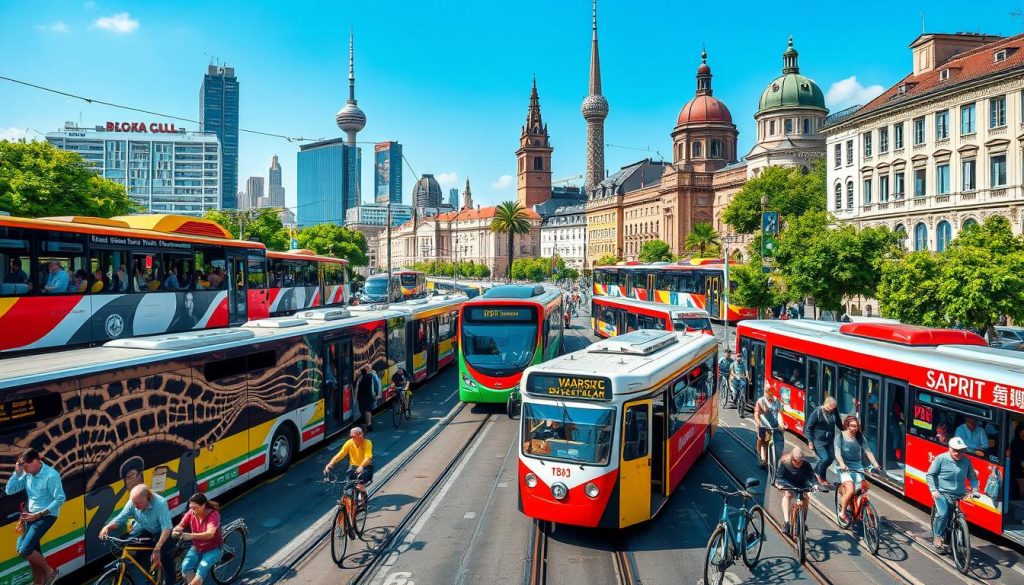
Buses help people travel far in cities at a low cost. In Germany, you can buy different bus tickets like single, day, or group ones. There are also discounts for students. Many cities around the world use this system.
Subways
Subways get you around cities fast. New York and Tokyo are known for having efficient systems. Germany’s train system, including a fast route from Berlin to Munich, shows how well it can work. Getting to know the subway is key for city life.
Trams
Trams are for enjoying the view while moving between parts of a city. Berlin uses trams along with other transport to make getting around easier. They add charm to historical cities.
Ferries
In cities near water like Istanbul and Sydney, ferries are important. They are a fun way to see the city from a different angle. Ferries work well with buses and trains, making travel smooth. You can often use the same travel card on many types of transport.
| City | Public Transport | Unique Features |
|---|---|---|
| New York | Subway, Buses | 24/7 service, MetroCard |
| Berlin | Trams, Trains, Buses | Punctual schedules, Bahncard discounts |
| Istanbul | Ferries, Buses | Istanbulkart for convenient access |
| Sydney | Ferries, Trains | Opal card, scenic ferry routes |
Important Preparations for Public Transportation in Foreign Cities
Getting around in a foreign city can feel like a big task. But knowing a few important things can make it easier. It’s key to know what transport options are there, when they run, and if they are accessible.

Researching Transportation Options
Start by learning about the city’s transport options. Cities like New York (MTA) and Chicago (CTA) offer buses, subways, and bikes. Other places might have trams and ferries. About 70% of travelers find these systems hard to use. So, doing your homework helps a lot.
In big cities, a single ride might cost you $2.00 to $3.00 USD. Day passes are about $5.00 to $15.00 USD. Now, many cities let you manage rides through apps. This makes paying and keeping track of your travel much simpler.
Understanding Running Times
Public transport hours can differ a lot. Most services run from 6 AM to 11 PM, giving you 17 hours a day. But, some buses in big areas run longer. For instance, Germany’s transport is 95% on time. Knowing these details is important for early flights or off-peak travel.
Apps like Google Maps and Citymapper are lifesavers for over 85% of travelers. They give live updates on when buses or trains will come. This helps you stay on track if there are any schedule changes.
Accessibility Considerations
Accessibility is key, especially for those with disabilities. Transportation systems are adding features like ramps, elevators, and reserved seats. In cities like Tokyo and London, they’re working hard to help those who need it. In places where you need to tap out, 15% of first-timers get confused. It’s helpful to know these rules ahead of time.
Some spots still use cash, needing exact change. This shows why knowing local currency is vital. Nowadays, 60% of big transport systems use digital passes. Some, like Ireland’s LEAP card, offer discounts for mobile payments. If you grab a LEAP card at the airport, you’ll save money.
By planning ahead and understanding these tips, you can easily use public transport in foreign cities. This will make your trip better and lower stress.
Using Transit Apps for Convenient Travel
Learning how to act on foreign public transport can be tough. But using transit apps makes it easier. They give you the info you need to move around unknown cities without trouble. You get updates and plans for your routes, making your journey smoother.
Benefits of Google Maps
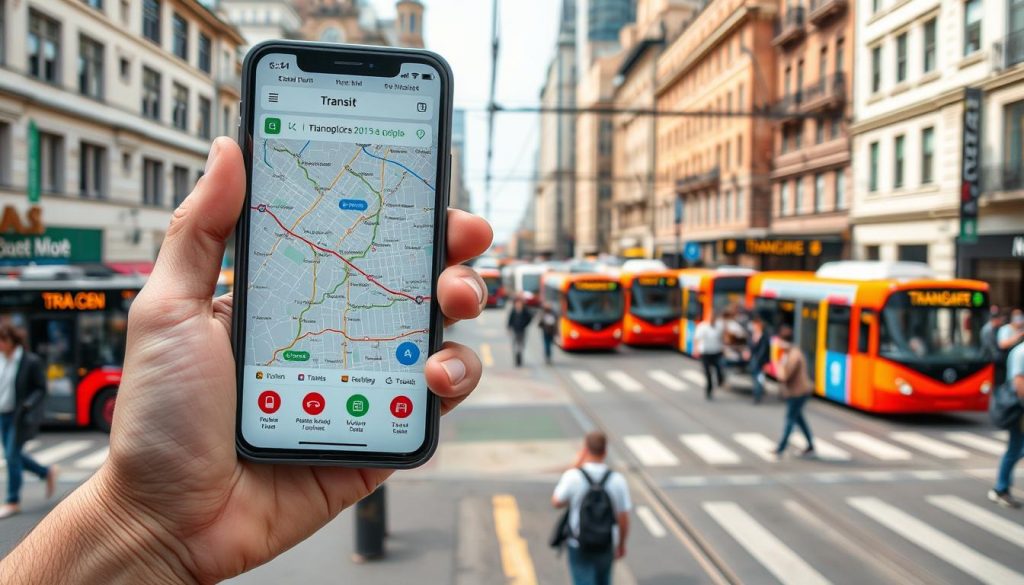
Google Maps is a perfect tool for getting around with public transport anywhere. It offers updates, the best routes, and maps you can use offline. These features help you keep moving even when you can’t connect to the internet. Also, it works well with local transport systems, making it easy to understand how to travel the right way in new places.
Advantages of Citymapper
Citymapper is designed for city travelers and is highly rated. It gives information in real-time, plans out your trip with different transport options, and guides you step by step. It shows you the quickest ways and means to get where you’re going. Also, its easy-to-use interface and current updates are super helpful when using transit apps.
Local Transit Apps
Apps made for local transit are specially tailored for individual cities, making your trip even smoother. Take the Tokyo Subway Navigation app, for example. It has maps, station details, and schedules for Tokyo’s complex subway. Using these local apps adds to your journey, giving you important tips and keeping you polite on public transport abroad.
Effective Ticketing Strategies
Understanding the ticketing system for public transportation abroad can make your travel experience better. It’s important to know how to buy tickets, learn about the different passes, and use contactless payments. These steps help make your travels smooth and easy.
Buying Tickets Online vs. In-Person
Travelers need to decide whether to buy tickets online or in-person. Buying online is convenient because you can do it from anywhere, even before you get to your destination. Countries have noticed that selling tickets online brings in 20% more money than the old ways.
Also, people are very happy with online tickets, especially in the U.K., where 79% of train passengers like how easy it is to get information.

Types of Passes and Their Benefits
Different passes for public transport abroad offer various benefits. You can choose from daily, weekly, or monthly passes. These can save you money and make traveling easier. For example, cities with integrated tickets see a 40% jump in people using different types of transport together. This shows how effective and satisfying such options are for travelers.
Contactless Payment Options
Contactless payments have changed the way we use public transport. You can pay with a credit card or mobile phone, which means no more paper tickets. This method meets what travelers expect and need today. Cities with these systems see more people using public transport, like a 15% increase in bus use with the addition of easy-access buses.
| Benefit | Statistical Impact |
|---|---|
| Integrated Ticketing | 40% increase in multi-modal transport usage |
| Online Ticket Sales | 20% higher revenue stream |
| Accessibility | 15% increase in bus ridership |
| Customer Satisfaction | 79% satisfaction rate for information accessibility |
Safety Tips While Using Public Transport Abroad
Traveling by public transit in other countries means putting safety first. As many as 40% of travelers face theft or scams. Being careful can lower your risks a lot.
Staying Alert and Aware
Keeping an eye on your surroundings keeps you safe. This is vital in crowded spots where thieves are more active. The Byrna SD Pepper Kit is a popular choice for personal safety, its use growing by 25%.
Traveling when it’s not busy can also cut theft risks by 20%. This happens because there are fewer people around.
Avoiding Pickpockets
Pickpockets are a big problem, especially on busy transit. Using anti-theft bags can make stealing 40% less likely. If you dress like the locals, your risk drops by 30%.
Knowing local ways increases how safe you feel by 35%. This shows the power of blending in and understanding the culture.

Booking Tickets from Reputable Sources
Buying tickets from reliable places is key. Fake tickets mean losing money and facing scams. Use official sites or trusted counters for your ticket needs.
Knowing some of the local language makes things 60% safer. It helps in getting your message across and following travel tips better.
Below is a table highlighting effective ways to enhance safety while using public transport abroad:
| Safety Measure | Effectiveness |
|---|---|
| Using Anti-theft Backpack | Decreases theft risk by 40% |
| Traveling During Non-peak Hours | Reduces theft chance by 20% |
| Blending with Local Fashion | Reduces theft risk by 30% |
| Using Personal Safety Devices | Popularity increased by 25% |
| Learning Basic Local Phrases | Makes travelers feel 60% safer |
| Knowing Local Customs | Increases safety perception by 35% |
Using these tips can make your public transport travels safer and more enjoyable. Remember, your safety is the top priority when you’re in a foreign country.
Public Transportation Etiquette to Keep in Mind
Traveling by public transport in new places can make your trip richer. It’s important to follow local customs to travel well and show respect.

Respecting Local Customs
When abroad, knowing local customs for public transport is key. For example, in Bangkok, giving your seat to Buddhist monks is respectful. In Japan, people hold their bags on laps or overhead to save space. It’s also polite to let others off before you get on. These tips are part of a bigger transportation in foreign cities guide to remember while traveling.
Giving Up Seats
Globally, it’s good manners to offer your seat to the elderly, disabled, pregnant, or those with young kids. In Taipei, certain seats are reserved for these folks. This practice is also seen worldwide to ensure those in need get to sit.
Food and Beverage Policies
Another key point is knowing the rules about eating and drinking. Some places are OK with light snacking, while others ban it to keep things clean. For example, eating on trains is usually a no-go in Tokyo, but in New York City, a quick snack is common. Knowing these rules from your transportation in foreign cities guide can help you fit in better.
Remember these tips to navigate public transportation smoothly anywhere. Respect the customs, give up your seat when needed, and follow local eating rules. This way, your travel will be nicer for you and those around you.
Making a Backup Plan for Emergencies
Traveling abroad means you must be ready for the unexpected. A good backup plan can change the game during emergencies. This approach helps you manage unpredictable situations better.
Knowing Alternatives
Understanding your transport options is crucial. If a problem arises, knowing other forms of transport can save the day. For example, if buses are delayed, knowing subway or tram options helps a lot. Sadly, only 10% of people travel with a detailed Emergency Action Plan (EAP).
Getting Local Contacts
Local friends or contacts can be very helpful. They can offer tips on public transport or help during emergencies. Since 70% of countries have unique emergency numbers, it’s vital to know these. Having a list of local hospitals and clinics is also a smart move.

Understanding Local Language Basics
Knowing the local language, even just a bit, can make a big difference. Solo travelers, especially, may feel safer knowing a few key phrases. With 20% of business travelers struggling with language, learning important phrases is essential.
Overall, a solid emergency plan should include knowing transport options, having local contacts, and understanding some of the language. This prep lets you handle emergencies abroad with more confidence.
| Emergency Aspect | Statistics |
|---|---|
| Travelers with an EAP | 10% |
| Countries with Different Emergency Numbers | 70% |
| Travelers Facing Communication Barriers | 20% |
Preparing for Public Transportation in Foreign Cities
Getting ready to use public transportation in new places is key for a good trip. Learning the ins and outs of local transit systems can make traveling easier.
Research is the first step to get public transportation under your belt. Knowing your way around buses, subways, trams, and ferries is crucial. Take São Paulo as an example, where you can choose from over 1,337 bus routes. A bus ride costs about USD $0.78, and taking the metro is around USD $0.89. It’s also the biggest city in the Western and Southern Hemispheres for public transit, serving over 22 million people daily.
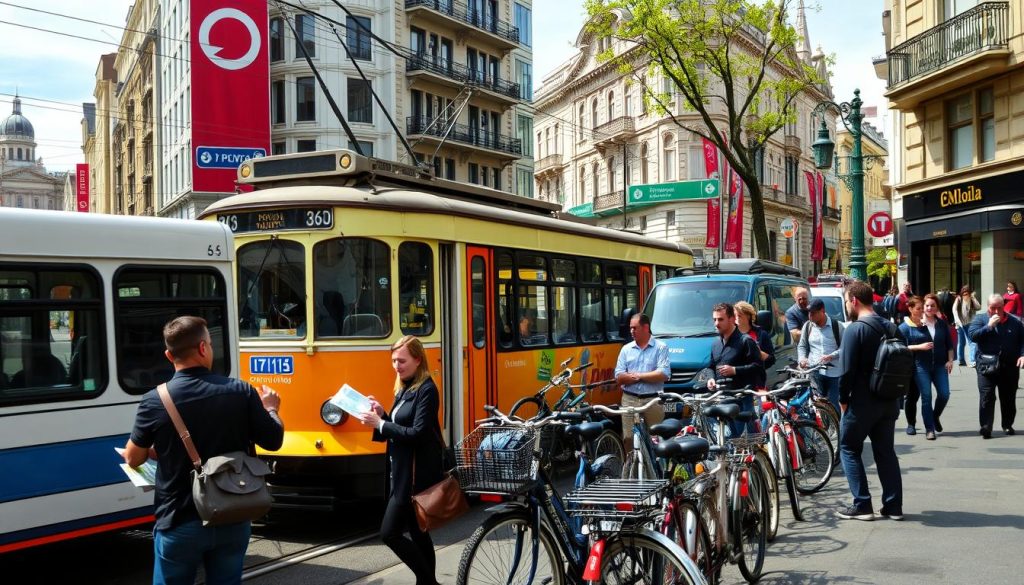
Planning your trips early can cut down on stress. Seoul, for instance, has an easy-to-follow transport system with different buses for various needs. Tools like Google Maps or Citymapper offer live updates and help plan your route, improving your journey.
Understanding local etiquette and rules is super important. Being nice, like giving your seat to someone in need and following food rules helps make your ride better. Seoul has a special bus service at night, from 12 AM to 4 AM. Tourists often find subways easier than buses there.
Safety measures are something you can’t ignore. Keeping an eye out, especially in busy spots to avoid pickpockets, is smart. It’s best to buy tickets from trusted places and use contactless pay when you can.
Ticket management helps make traveling smoother. Knowing about different passes can save you money. In Seoul, you can get a discount when making up to four transfers in 30 minutes. Having a transport card like T-money or Cash-bee makes things cheaper and easier.
| City | Public Transportation Options | Standard Fare (USD) | Special Features |
|---|---|---|---|
| São Paulo | Buses, Metro | $0.78 – $0.89 | Largest metro area, 7 million daily users |
| Seoul | Buses, Subways | Varies | Transfer discounts, real-time data, late-night buses |
Conclusion
Getting around in foreign cities with public transport can be easy and fun. You just need the right tips to go from feeling overwhelmed to having a blast. Learn about the different types of transport – buses, subways, trams, and ferries. This way, you can pick what suits your travel plans and budget best. Make sure to research well, use apps like Google Maps and Citymapper, and check if it’s easy to use for everyone.
Knowing how to buy your tickets can save you time and money. Decide if you should buy them online or in person. Understand the different types of passes and use contactless payment if you can. Staying safe is very important. So, always be aware of your surroundings, watch out for pickpockets, and only buy tickets from trusted places. Following the local public transport rules shows respect for the people and their customs.
Always have a backup plan for emergencies. Have local emergency numbers and learn some key phrases in the local language. With these tips, you’ll get better at using public transit in other countries. This will make your trips more enriching. Mixing planning with the ability to adapt turns challenges into chances for deeper understanding and fun.