Flight Delayed or Canceled? Know Your Options
Have you ever been stuck at the airport, looking at a “Flight Delayed” sign, unsure of what to do next? Many U.S. flights get delayed or canceled due to weather, mechanical problems, or crew issues. It’s helpful to know that airlines like Delta must sometimes provide compensation and meal vouchers for big delays.
It’s important to understand your rights when facing a delayed flight. Knowing about flight delay compensation can make these situations less stressful. Here are the first steps to take when you find out your flight is delayed or canceled. You’ll also learn about the compensation you might be entitled to.
Common Causes of Flight Delays and Cancellations
Knowing why flights get delayed or canceled can help you prepare better. It lets you know what can I do if my flight gets delayed or canceled. Let’s explore the main reasons behind these disruptions:
Weather
Weather significantly impacts flight schedules. It causes 30% of all delays. Bad weather, like storms, snow, and fog, can stop flights to keep everyone safe.

Air Traffic Control Issues
Air Traffic Control (ATC) is vital for keeping flights moving safely. But, ATC issues can cause big delays. Problems with computers account for 15% of cancellations, and a lack of air traffic controllers leads to 12% of delays. These issues can make delays worse across the country.
Mechanical Problems
Mechanical issues can also delay or cancel flights, even though they’re less common. Airlines focus on safety first, so they fix even small issues before flying. This can make flights late but keeps everyone safe.
Crew Availability
Crew availability issues often lead to delays and cancellations. Laws about how long crew members can work make sure flights are safe, but they can change schedules. For example, if a delay happens, it might mean a crew member can’t work the next flight. This is a bigger problem during busy travel times and holidays.
| Airline | On-Time Arrival Rate | Controllable Cancellations |
|---|---|---|
| Delta Air Lines | 83.61% | 0.4% |
| Hawaiian Airlines | 79.68% | 2.5% |
| United Airlines | 79.1% | 2.0% |
| American Airlines | 77.26% | 2.7% |
| Southwest Airlines | 77.67% | 0.7% |
| Allegiant Air | 77.64% | 0.4% |
| JetBlue Airways | 70.61% | 0.5% |
| Frontier Airlines | 72.03% | 2.6% |
| Alaska Airlines | 74.34% | 0.4% |
| Spirit Airlines | 73.13% | 1.1% |
Knowing why flights get canceled or delayed can reduce stress when plans change. It helps you know what can I do if my flight gets delayed or canceled and manage the situation better.
How to Check Your Flight Status
Knowing your flight status keeps you calm and helps you make quick travel adjustments. Flights often get delayed or canceled for many reasons. So, it’s important to use modern tools and resources to stay informed.
Airline Notifications
Many airlines send updates through email, SMS, or their mobile apps. If you sign up for these notifications, you’ll get real-time info on your flight. This way, you’ll know about any delays or cancellations right away.
Flight Tracking Apps
Apps like FlightAware, Flightstats, and Flight Radar give detailed info on flights. They show updates about departures, arrivals, and gate changes in real-time. Features also include historical data and live flight maps.

Airline Websites
Almost all airline websites have a section for checking your flight’s status by entering your flight number or destination. This online check lets you know about any changes quickly. This helps you stay ready without needing to be at the airport.
| Airport | General Arrival/Departure Delays |
|---|---|
| Portland International Airport (PDX) | 15 minutes or less |
| Seattle-Tacoma International Airport (SEA) | 15 minutes or less |
| San Francisco International Airport (SFO) | 15 minutes or less |
| San Jose International Airport (SJC) | 15 minutes or less |
| Los Angeles International Airport (LAX) | 15 minutes or less |
| San Diego-Lindbergh Field Airport (SAN) | 15 minutes or less |
| Phoenix Sky Harbor International Airport (PHX) | 15 minutes or less |
| Salt Lake City International Airport (SLC) | 15 minutes or less |
| Denver International Airport (DEN) | 15 minutes or less |
| Kansas City International Airport (MCI) | 15 minutes or less |
| Dallas/Ft Worth International Airport (DFW) | 15 minutes or less |
| Minneapolis-St Paul International/Wold-Chamberlain Airport (MSP) | 15 minutes or less |
| Lambert-St Louis International Airport (STL) | 15 minutes or less |
| Memphis International Airport (MEM) | 15 minutes or less |
| Chicago OHare International (ORD) | 15 minutes or less |
| Chicago Midway Airport (MDW) | 15 minutes or less |
| Indianapolis International Airport (IND) | 15 minutes or less |
| Nashville International Airport (BNA) | 15 minutes or less |
| Cincinnati/Northern Kentucky International Airport (CVG) | 15 minutes or less |
| Detroit Metropolitan Wayne County Airport (DTW) | 15 minutes or less |
| Hartsfield-Jackson Atlanta International Airport (ATL) | 15 minutes or less |
| Cleveland Hopkins International Airport (CLE) | 15 minutes or less |
| Pittsburgh International Airport (PIT) | 15 minutes or less |
| Charlotte Douglas International Airport (CLT) | 15 minutes or less |
| Orlando International Airport (MCO) | 15 minutes or less |
| Washington Dulles International Airport (IAD) | 15 minutes or less |
| Raleigh-Durham International Airport (RDU) | 15 minutes or less |
| Fort Lauderdale/Hollywood International Airport (FLL) | 15 minutes or less |
| Ronald Reagan Washington National Airport (DCA) | 15 minutes or less |
| Baltimore-Washington International Airport (BWI) | 15 minutes or less |
| Philadelphia International Airport (PHL) | 15 minutes or less |
| La Guardia (LGA) | 15 minutes or less |
| John F Kennedy International Airport (JFK) | 15 minutes or less |
| General Edward Lawrence Logan International Airport (BOS) | 15 minutes or less |
Arriving at the Airport if Your Flight is Delayed
When your flight is delayed, it’s key to use your time well at the airport. Even if there’s a delay, make sure to arrive two hours before a domestic flight. And three hours before an international one. Sometimes delays get sorted out faster than you’d think.
It’s important to keep up with your flight’s status. Use the airline’s app, website, or customer service to get updates. The U.S. Department of Transportation makes sure airlines tell you about changes. They might email, text, call, or message you through the app. This keeps you in the know and ready to adjust.
If your delay is long, airlines often put you on the next flight. Knowing what to do if a flight is canceled helps you stress less: stay informed, get in touch with customer service, and have your travel papers ready.
Using airline or third-party lounges makes waiting easier. These lounges give you free food, drinks, and Wi-Fi. It makes the wait more bearable.
Here are tips based on flight types and how long the delay is:
| Flight Type | Delay Duration | Entitled Assistance |
|---|---|---|
| Short-haul | More than 2 hours | Assistance |
| Medium-haul | More than 3 hours | Assistance |
| Long-haul | More than 4 hours | Assistance |
| All flights | More than 5 hours | Full Refund Option |
Passenger Rights and Compensation
It’s important to know your rights if your flight gets canceled or delayed. Airlines in the U.S. have to take care of passengers when there’s a travel hiccup.
Refunds for Cancellations
Were your plans changed by a flight cancelation or a big delay? If so, and you don’t fly, airlines have to give you your money back. This is true for domestic flights delayed over three hours and international ones delayed over six. They must refund credit card payments in seven days and other methods in 20 days.
Compensation Policies
The rules in the U.S. aren’t the same for every flight delay, but there are laws for big wait times. For instance, if you’re stuck on the tarmac over three hours for domestic flights or four for international, you should be allowed to leave the plane. Plus, after waiting two hours like this, you get snacks and water.
Meal and Hotel Vouchers
For long delays, big airlines in the U.S. often offer cash, meals, or a place to stay if you’re stuck overnight. This promise includes rides if needed and kicks in after three-hour delays for meals or vouchers. But remember, cheaper airlines might not offer the same.
The U.S. Department of Transportation (DOT) requires big airlines to provide meals or vouchers if delays pass three hours.
Knowing your rights makes dealing with flight changes easier. It helps make your journey smoother, even when things don’t go as planned.
What to Do in Case of Bad Weather
Dealing with flight delays because of bad weather is tough. Bad weather often disrupts flights, affecting many travelers. Learning how to manage these delays can save you time and lower your stress. It might even get you to your destination faster.
Monitor Weather Patterns
The first step is to keep an eye on the weather. Watch the weather at both your departure and arrival airports closely. Use trusted weather websites and apps for updates. Knowing about possible weather problems ahead of time helps you make better travel plans.
Change Flight Options
Sometimes, you can’t avoid bad weather, and changing your flight becomes necessary. Many airlines have policies that let you change flights without extra fees when bad weather is expected. Ask your airline about other routes or flight times to dodge bad weather.
Proactive Changes by Airlines
Some airlines change flights beforehand to lessen disruptions. They might reschedule, reroute, or combine flights. Keep up with your airline’s notifications. If they offer alternatives, take them for an easier trip.
Here’s a quick guide on how weather can affect flight compensation:
| Flight Distance | Delay Duration | Compensation Amount |
|---|---|---|
| Under 1500 km | 3 hours or more | €250 |
| 1500 km to 3500 km | 3 hours or more | €400 |
| Over 3500 km | 3 hours or more | €600 |
Airlines don’t have to pay compensation for delays caused by severe weather. But, they must show they did everything possible to reroute passengers quickly. Always check the airline’s policies and know your rights to handle these situations well.
What can I do if my flight gets delayed or canceled?
Flight delays and cancellations are common, affecting 20% to 25% of U.S. flights each year. Knowing how to rebook yourself and contact customer service can help a lot. Understand these steps to handle the situation better.
Self-Rebooking
Many airlines offer digital tools for easy flight disruptions handling. You can often rebook through the airline’s app or website. This avoids long phone waits. Check for alternate flights directly in the app.
If your international flight is delayed over six hours, you might get a refund, as stated by U.S. Department of Transportation rules.
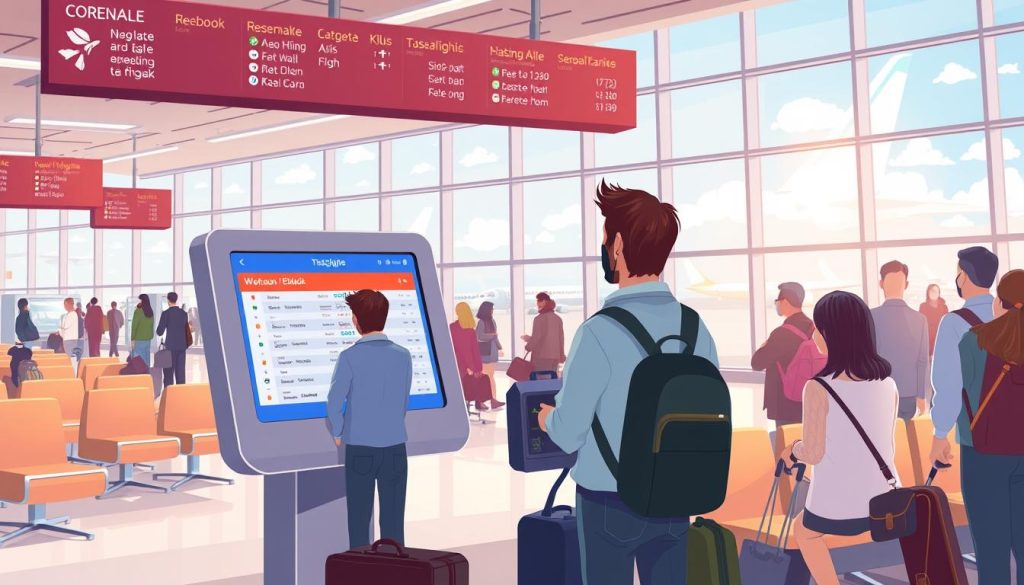
If your flight is auto-rebooked, no extra steps are needed if you’re okay with the new plan. Some airlines provide quick live chat or text support. Here’s how different rebooking methods compare:
| Method | Benefit |
|---|---|
| Mobile App | Quick and convenient access to rebooking options |
| Website | Comprehensive information and rebooking capabilities |
| Live Chat/Text | Real-time assistance without waiting on hold |
Reaching Customer Service
If you can’t fix your issue with self-rebooking, contacting customer support is key. Airlines offer many ways to reach them. Try different contact methods like international call centers or social media for quicker help.
Airlines are now offering more ways to contact them, not just phone calls. For short delays, it’s better to stay on your flight. But for longer ones, you might need more help.
If your flight’s delay or cancellation requires compensation, look into the airline’s policies. Delta, for instance, offers hotel stays for delays they’re responsible for over three hours. Weather delays don’t count for this benefit.
For refunds, airlines must issue them quickly, within seven days for cards and 20 days for cash. Always check your airline’s policy to solve issues efficiently.
Using Airline and Third-Party Lounges
When your flight is delayed or canceled, airline lounges access can make waiting better. You can get in through frequent flyer status, credit card benefits, or buying passes. These lounges are quiet escapes from the busy airport.
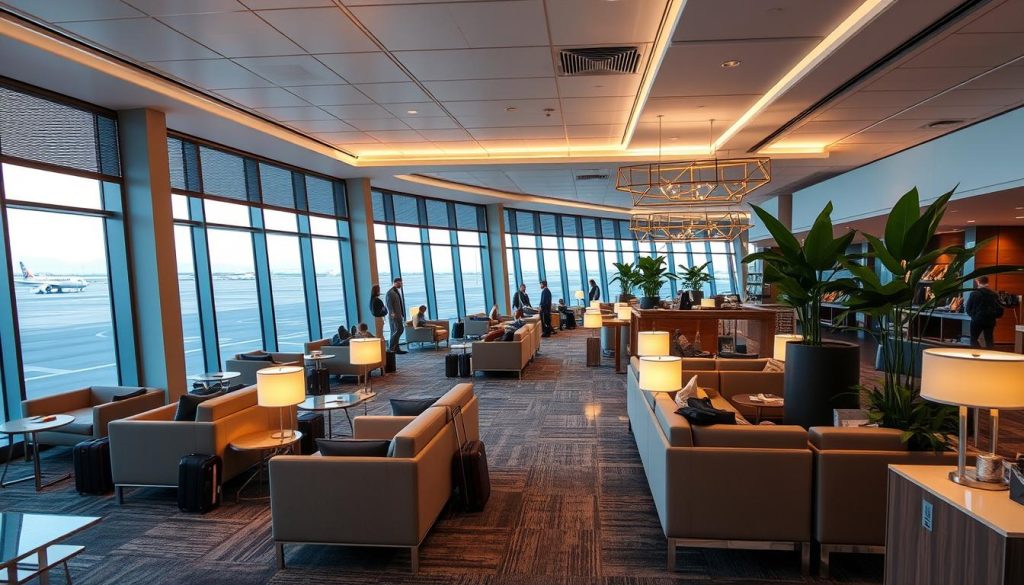
Big airlines like Delta, American Airlines, and United have great lounges. They offer free food and drinks, fast Wi-Fi, and help with flights. Airline lounges access makes your wait better and more productive.
If you can’t get into an airline lounge, third-party airport lounges are great too. Groups like Priority Pass or Plaza Premium have lounges at big airports. They have similar comforts. Buying a day pass or joining their club lets you in, giving you a comfy spot to relax. These places often have showers, perfect for long waits or delays.
Third-party airport lounges also help with flights. They give updates and help with rebooking. This means less time in customer service lines. Both airline and third-party lounges give peace and help, making delays easier to handle.
Having airline lounges access or using third-party airport lounges changes how you wait. They’re really helpful when flights are delayed or canceled. You can rest, recharge, and use your time well during travel problems.
Exploring Alternative Routes and Transportation
When your flight gets canceled or delayed, looking at other ways to travel is key. Knowing your options makes dealing with travel problems easier and cheaper.
Nearby Airports
Thinking about other airports near you is smart. Sometimes, flying from a different airport can get you there faster than waiting for a new flight. Big cities like New York, Los Angeles, and Chicago have several airports with various schedules and airlines.
Rental Cars and Ground Transportation
Options like rental cars, buses, shuttles, plus Uber and Lyft, can be good choices. Renting a car can be fast for trips within the country. Plus, many places let you rent a car one way, so you can leave it near where you’re going.
Train Options
Trains are another choice, with their own benefits. Amtrak connects many big U.S. cities, giving a smooth and comfy ride. Trains can avoid the delays flights face. Also, train stations are usually downtown, which is handy for last-minute trip changes.
| Transportation Mode | Advantages | Disadvantages |
|---|---|---|
| Nearby Airports | Flexible schedules, multiple carriers | Possible additional travel time to airport |
| Rental Cars and Ground Transport | Direct travel, no additional flight cancellations | Possible higher costs, driving fatigue |
| Train Options | Reliable schedules, city-center locations | Longer travel times |
Knowing all your travel choices, like different ways to go and other airports, can help a lot when flights get messed up. Being ready to change your plans means you can still get to where you’re headed with less trouble.
Utilizing Travel Insurance Coverage
Having the right travel insurance helps a lot when you face unexpected delays or cancellations. Flight delay insurance coverage can pay you back for vital needs like food, places to stay, and getting around. It’s a backup that keeps you from paying too much from your pocket during surprises.

Companies such as Allianz, American Express, and Berkshire Hathaway offer different insurance plans. Their policies often cover “trip delay,” which starts working when delays are over a certain time, usually 3 to 12 hours. For example, Allianz’s OneTrip Prime plan gives up to $800 per trip. This money helps cover costs when you’re stuck waiting longer than planned.
It’s key to know what your travel insurance covers. It generally includes:
- Flights delayed more than the minimum time your policy says.
- Costs you can’t get back if your trip is interrupted or canceled for reasons like illness, natural disasters, or if the airline stops service.
- Other ways to travel if your connecting flights are dropped.
Travel insurance also offers “Cancel for any reason” (CFAR) options. But, you must cancel at least 48 hours before leaving. Important credit card perks come from cards like those from Chase. They offer up to $500 back per ticket if delays are over 12 hours, and up to $10,000 per person for canceled trips.
To make the most of your insurance, let your travel providers know within 72 hours if something goes wrong. Below, you can see how different travel insurance plans compare:
| Provider | Coverage Limit (Delay) | Notes |
|---|---|---|
| Allianz OneTrip Prime | Up to $800 per trip | Activates after 5 hours delay |
| Berkshire Hathaway ExactCare Value | $500 | Basic plan coverage |
| Travelex Travel Basic | Starting at $500 | Basic plan details |
| Chase Premium Card | Up to $500 per ticket | For delays longer than 12 hours |
Airline Customer Service Dashboard
The U.S. Department of Transportation (DOT) has created a new Airline Customer Service Dashboard. This tool shows how good airlines are at serving customers. It comes after looking closely at how airlines handle problems, helping travelers when flights get canceled or changed a lot.
Starting September 1, 2023, this dashboard provides info on the major airline services in the U.S.. It helps you see what airlines do for passengers when there are issues. Here’s a comparison of what some airlines promise:
| Airline | Meal Guarantee | Hotel Accommodation | Refund Policy |
|---|---|---|---|
| Delta Airlines | Yes | Yes | Automatic cash refunds for cancellations |
| Southwest Airlines | Yes | Yes | Prompt refunds for all ticket types |
| Allegiant Air | No | No | Refunds on request |
| American Airlines | Yes | Yes | Cash refunds for non-refundable tickets |
Before this dashboard, airlines rarely promised free meals or hotels on their own. Now, most airlines will cover meals and many will offer hotel stays for issues they’re responsible for.
The Biden-Harris Administration insists on automatic cash refunds for big flight changes or cancellations. This is key since Delta Airlines faced issues for not handling cancellations well. This dashboard can really help travelers facing flight problems. It shows the DOT wants to make sure travelers get clear info on refunds and rights for big flight changes.
Conclusion
Flight delays or cancellations are tough, but knowing your rights helps. Always check your flight status. Use airline notifications, flight tracking apps, or their website. This info helps you plan ahead.
When flights get delayed or canceled, understand your rights. This includes refunds, and policies on meals or hotels. Being proactive helps too. Keep an eye on the weather and look at other travel options. Travel insurance and customer service tools can also support you during changes.
The aim is smoother travel, even when surprises happen. Stay informed and ready to act. This way, you manage flight issues with less stress. Whether it’s due to weather or technical problems, these steps help you adjust and find solutions.