Nature on the Move: Best Destinations for March Wildlife Migrations
Have you ever wondered why March is so special for nature shows? It’s when we witness the grand cycles of nature. Wildlife enthusiasts find March perfect to see animal migrations. These migrations offer stunning scenes and a chance to learn. This makes it great for both nature lovers and photographers. You’ll find amazing places from East Africa’s Great Migration to California’s coast.
Imagine watching two million wildebeest, zebras, and antelopes move through Tanzania and Kenya. Or seeing majestic gray whales near California’s coast. Each place has its own beauty and supports conservation.
Ready to explore the best spots for wildlife migrations in March? The next parts will show you the most exciting migrations worldwide. They’ll give you tips on the best places for an unforgettable March wildlife experience.
The Great Migration in East Africa
The Great Migration in East Africa is an incredible wildlife event. Every year, over 1.5 million wildebeest, 500,000 zebras, and various antelopes make a dangerous journey. They travel across Tanzania’s Serengeti and Kenya’s Maasai Mara.
This journey is a fierce struggle for survival. Nature lovers get to see these animals at their best. They also explore top wildlife spots on earth.
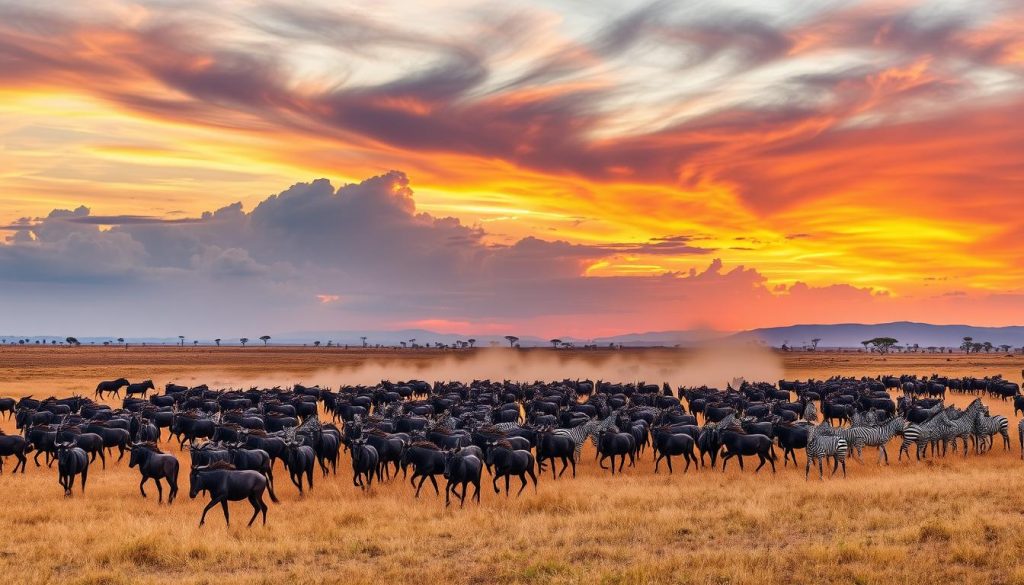
Wildebeest and Zebra
Everything starts in late January and February. Around 400,000 wildebeest calves are born in just a few weeks. This means about 8,000 new calves every day.
By April, the herds move northwest to the central Serengeti, with zebras following. The grasslands become alive as wildebeest lines stretch out.
In May, the migration is in full swing, heading towards the Moru Kopjes. When June and July come, they face a huge challenge – the Mara River. One wrong step can mean danger from crocodiles in the water.
By August, the herds have reached the north. As autumn comes, they go south, crossing the Mara River again. They move towards the southern Serengeti. By December, they are ready for the next calving season.
Predators on the Prowl
Predators follow the herds closely. Lions, cheetahs, and hyenas are very active. This makes it a great time for watching wildlife. These predators show their hunting skills, adding excitement to watching nature.
- January-February: Calving season in the southeastern Serengeti.
- April-May: Moving northwest, herds visible near Moru Kopjes.
- June-July: Risky crossings at the Mara River.
- August: Herds spread throughout Northern Serengeti and Maasai Mara.
- September-October: Return journey across the Mara River heading eastward.
- November-December: Migration back to southern Serengeti, preparing for new calving season.
The Great Migration shows how wildlife can adapt and survive. Millions of people watch this event every year. It’s truly amazing to see.
| Period | Location | Activity |
|---|---|---|
| January – February | Southeastern Serengeti | Calving Season |
| April – May | Moru Kopjes | Northwest Migration |
| June – July | Mara River | River Crossing |
| August | Northern Serengeti, Maasai Mara | Grazing |
| September – October | Mara River, Eastern Serengeti | Return Journey South |
| November – December | Southern Serengeti | Preparing for Calving |
Gray Whales off the California Coast
From March to May, the migration of gray whales is an excellent chance to see wildlife along the California coast. These amazing animals travel a 12,000-mile journey from Baja California to Alaska. People watching from places like Monterey and Half Moon Bay will enjoy seeing them pass by.
Prime Viewing Locations
For the best views, places like Point Reyes Lighthouse, Bodega Head, and Point Lobos State Natural Reserve are ideal. In March and April, you can take guided tours for a closer look at gray whales and their babies. Spots like Point Arena-Stornetta Unit and Fort Funston are great for seeing mothers and their calves together.
Importance of Conservation Efforts
Keeping gray whale populations safe is critical for their future. Although they are not currently at high risk, there are about 26,000 gray whales facing challenges. They struggle with dangers like getting caught in fishing gear and changes in their Arctic food supply due to climate change. Supporting conservation can help deal with these threats.
In 2019, a large number of gray whales washed ashore, leading NOAA to announce an Unusual Mortality Event. This raised concerns for their survival.
Watching and reporting whale activity is very important too. It helps experts keep track of how gray whales are doing. Through everyone’s help, we can protect the future of these whales along the California coast. This effort ensures that watching these majestic animals remains a joy for all.
| Migration Detail | Information |
|---|---|
| Average Speed | 5 miles per hour |
| Distance Traveled Per Day | About 75 miles |
| Weight of Fully Grown Gray Whales | Over 36 tons (72,000 pounds) |
| Weight of Newborn Calves | 1,500 pounds |
| Length of Newborn Calves | 15 feet |
| Nursing Period for Calves | Approximately seven months |
Birdwatching Hotspots in California
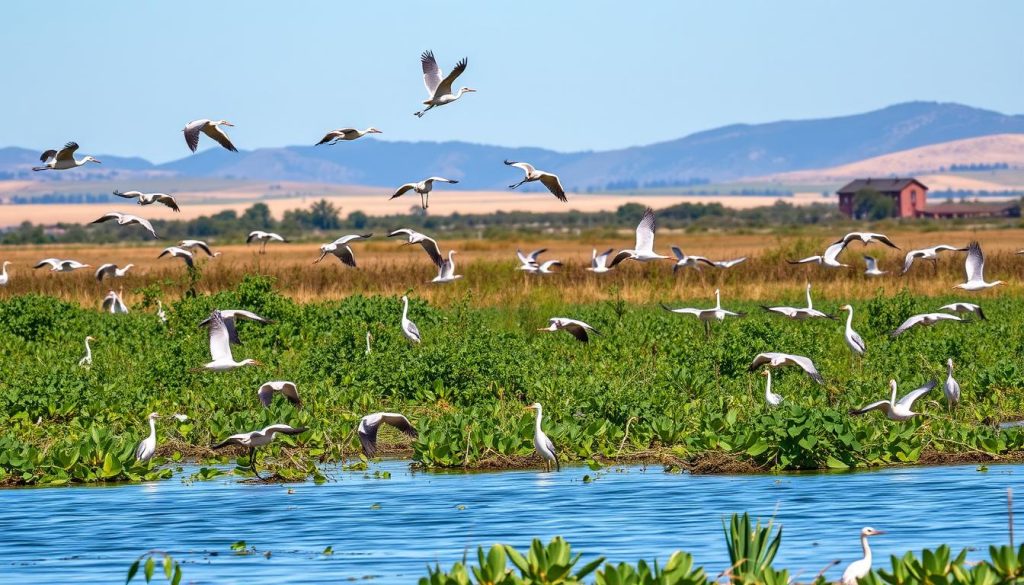
California is key for bird migrations, especially along the Pacific Flyway. This path is full of important bird species, giving birdwatchers many chances to see different birds. It’s great for both new and expert birdwatchers. They find memorable moments here, especially in March.
The Pacific Flyway
Every year, over 350 bird species travel through California’s Pacific Flyway. Famous spots like Point Pinos in Monterey and the Sacramento National Wildlife Refuge are here. People can see herons, egrets, and bald eagles, among others. These places are crucial as they support lots of birds, especially with the fall salmon runs affected.
Cosumnes River Preserve
The Cosumnes River Preserve is a top place for birdwatching. It attracts many migratory birds with its various habitats. From sparrows to waterfowl, birdwatchers see many species here. It’s an important site for wildlife lovers, easy to get to for many in California, especially in March.
Migratory Salmon in Northern California
Exploring wildlife migration viewing in March is an amazing adventure. This is especially true in Northern California. Here, rivers are full of migratory salmon. Among them, the Chinook Salmon are very important. They join the spring runs in the Sacramento River. This creates exciting moments for nature lovers.

The California Coastal Chinook Salmon faced a threat since 1999. Their numbers have fallen. But, organizations like The Nature Conservancy are bringing hope. They’ve done great work, especially in Butte Creek.
Here’s a detailed table showcasing the different salmon species and their statuses:
| Salmon Species | Status | Notes |
|---|---|---|
| California Coastal Chinook | Threatened | Federally listed since 1999 |
| Central Valley Spring-run Chinook | Threatened | Most abundant historically, listed in 1999 |
| Coho | Critical | Declining since the mid-20th century |
| Winter-run Chinook | Low | Only 200 spawners in the 1980s |
The revival of these salmon populations shows in key areas:
- Conservation group efforts.
- Restoration projects like those at Butte Creek.
- Raising environmental awareness and teaching about it.
Spring nature trips to Northern California are perfect for this. You don’t just enjoy nature excursions, but you also help protect these fish. Seeing the wildlife migration in March is breathtaking. Plus, you support the conservation of these essential species.
Monarch Butterflies’ Long Journey
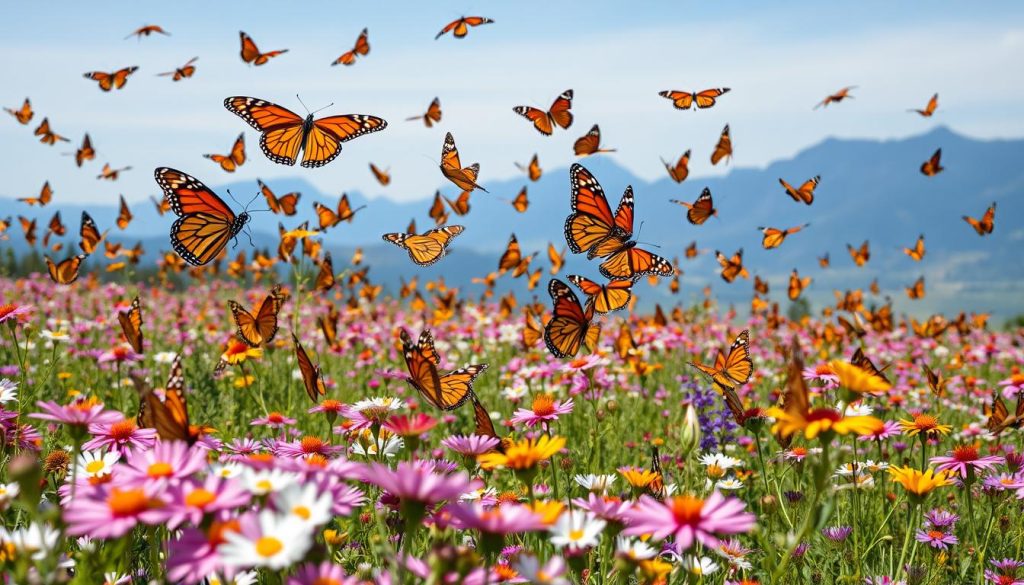
Every year, monarch butterflies undertake a breathtaking journey. They travel from Mexico to the northern parts of the US and Canada. This migration relies on nature’s signals like the Earth’s magnetic field and a succession of generations. It’s a truly marvelous event to witness.
Migration Patterns
The distance monarchs migrate is impressive. Monarchs on the east side of the Rocky Mountains fly up to 3,000 miles to reach central Mexico. Those on the west head to California’s coast. They can speed along at 10 to 30 miles per hour. Some even travel 80 miles in a day by catching cold fronts. The migrating monarchs live up to nine months, much longer than the summer monarchs’ two to six weeks.
It’s vital to keep an eye on these migrations. They tell us how the monarch populations are doing. The Coastal Virginia Wildlife Observatory in Virginia counts and tags monarchs from September to October. This helps us understand their journeys better.
Interesting Statistics:
- In early November, monarchs start heading to Mexico and begin their return north in March.
- Western monarchs leave California in February and March, spreading across the Central Valley.
- Scientists found 536 genes linked to monarch migration. This helps them fly more efficiently.
Best Places to Spot Monarchs
Seeing monarch butterflies is an incredible experience. In California, places like Natural Bridges State Beach in Santa Cruz are perfect for watching them. Another great spot is the Pismo State Beach Monarch Butterfly Grove. Here, thousands of monarchs gather in eucalyptus trees during winter.
Attending local events can also improve your experience. For example, Iowa’s Monarch Madness Day draws many enthusiasts. They tagged 250 monarchs in one day and almost 500 throughout the season. These events help with conservation and offer a chance to learn more about monarchs.
| Location | Season | Activities |
|---|---|---|
| Coastal Virginia Wildlife Observatory | September to October | Tagging and Counting Monarchs |
| Pismo State Beach, CA | October to February | Observing Overwintering Clusters |
| Iowa, Monarch Madness Day | September | Tagging Events |
Seeing the monarchs migrate is an unforgettable experience. Joining in on tagging or visiting their winter homes is inspiring. It’s a breathtaking and educational adventure.
Caribou Migration in Alaska and Canada
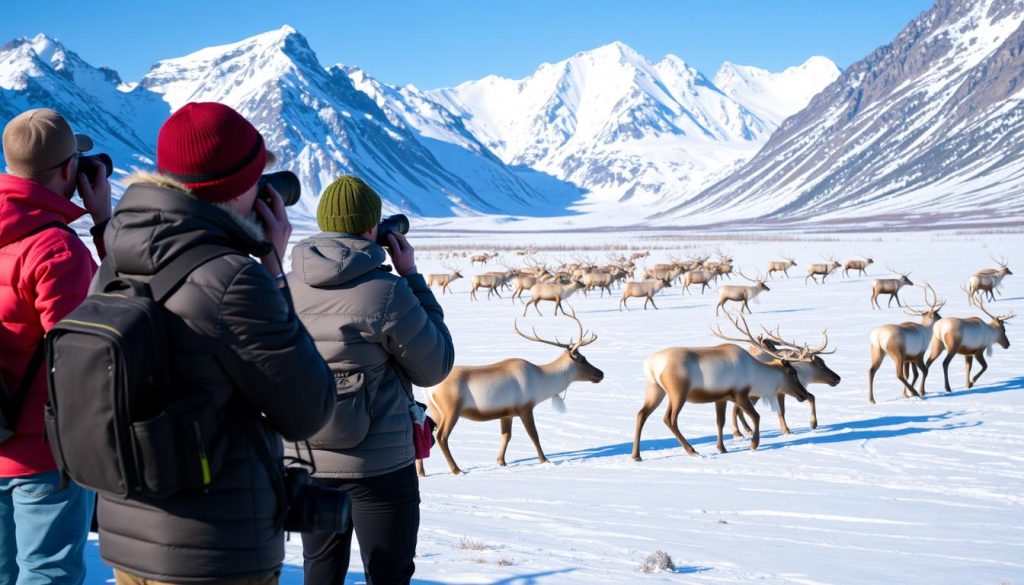
Seeing caribou herds move across Alaska and Canada is amazing. These animals take a tough trip to find new feeding areas and avoid predators. But, caribou migration now faces new challenges, making it crucial for those interested in viewing migratory species.
Challenges Faced During Migration
The journey of caribou is full of obstacles. Climate change is changing their usual paths, affecting their access to key grazing lands. On top of that, human activities are invading their spaces, making migration harder.
Here’s a brief look at the yearly events affecting caribou and others in the area:
| Month | Activity |
|---|---|
| February | Arctic and red foxes roam widely for food, while wolverines give birth in snow dens. |
| March | Arctic foxes start breeding, and caribou begin their journey to coastal plain birthing areas. |
| May | Beluga whales move along northern Alaska’s coast; female caribou and their young also migrate. |
| June | Caribou give birth on the wet tundra; young Arctic foxes are born. |
| July | Male caribou group together to avoid bugs; young Arctic foxes leave their dens. |
| August | Caribou head back to foothills; muskoxen start their mating season in the Arctic National Wildlife Refuge. |
| September | Arctic and red foxes change color; male caribou show mating behavior as the groups move to winter areas. |
Those who love wildlife and watch these migrations see caribou’s strength against many challenges. The chance to watch caribou and other species during these times shows the beauty of watching migratory species in their own world.
Sandhill Cranes Returning to California
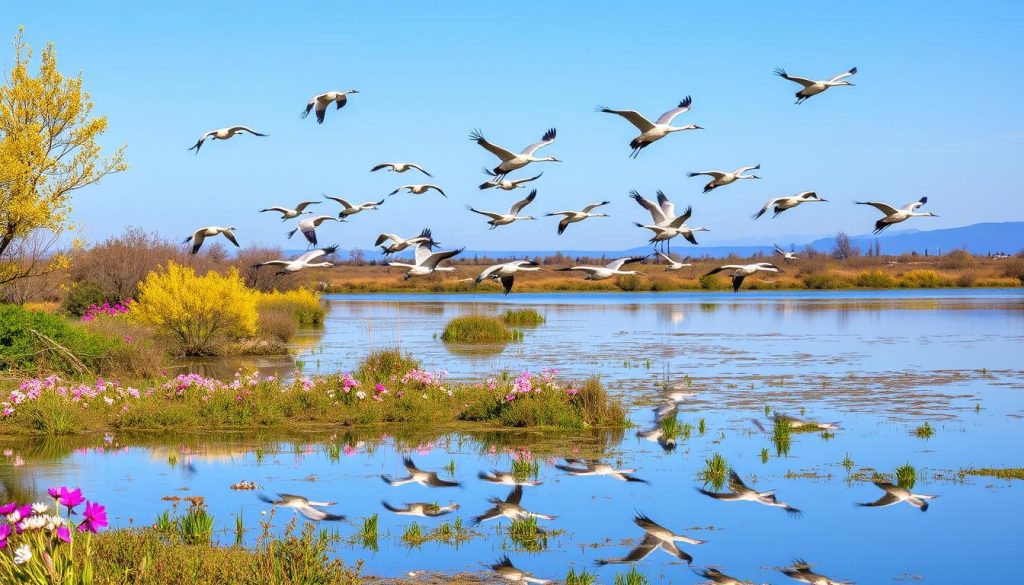
The Sandhill Cranes’ return to California is a spectacular event for bird lovers. These birds make their way to the state’s fields and wetlands each March. They stand up to 5 feet tall and have a wingspan of almost 7 feet.
Top Viewing Spots
California is home to top spots for watching the Sandhill Cranes. The Cosumnes River Preserve and Carrizo Plain are among the favorites. The Preserve is known for crane conservation and viewing. The Lodi Sandhill Crane Festival also attracts many people. It’s now in its 26th year.
Behavior and Characteristics
Sandhill Cranes are known for their unique behaviors and traits. These birds are famous for forming lifelong pairs and performing dances. They eat a varied diet, including insects, plant roots, and grains.
The females usually lay 1-3 eggs, and the males primarily take care of them. They prefer roosting in shallow waters. For breeding, they choose open marshlands for safety. Their lifespan of up to 30 years and strong family ties interest wildlife fans.
| Characteristic | Details |
|---|---|
| Height | 4.5 – 5 feet |
| Weight | 6 – 12 lbs |
| Wingspan | 6 feet 7 inches |
| Lifespan | 20 – 30 years |
| Breeding Age | 2 – 5 years |
| Diet | Insects, aquatic plant roots, rodents, eggs, cultivated grains |
| Number of Eggs | 1-3 |
| Incubation | Males primarily |
Wildlife Migration Viewing in March
March is a great time for those who love wildlife. There are many places to see animals start their migrations. One of the best spots is Cheyenne Bottoms in Kansas. It is a wetland that hosts over 250,000 waterfowl and thousands of shorebirds every year.
Over 356 bird species have been spotted in Cheyenne Bottoms. This makes it a hotspot for birdwatching. It’s so important for nature that it’s named a “Wetland of International Importance” by the Ramsar Convention. Only 34 places in the U.S. have this title.
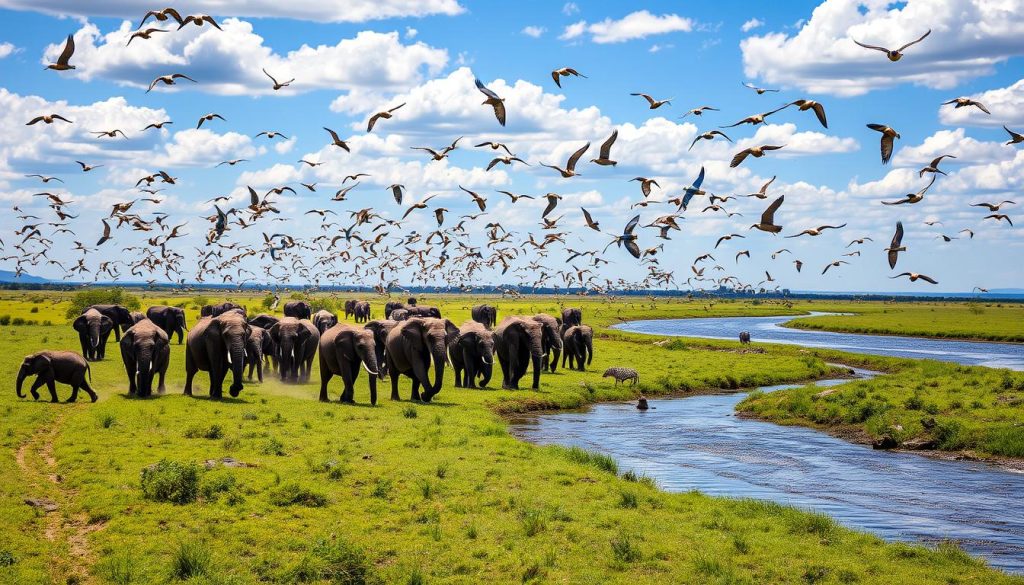
The Platte River in Nebraska is famous for its sandhill cranes. More than a million of these birds gather here in March. The Crane Trust even offers guided wildlife tours to get a closer look. They keep everyone updated on the best times and places to watch these birds.
The Crane Trust also has VIP tours for a special experience. They have cabins right by the river for excellent views. Remember to watch birds responsibly. Always stay at approved areas and try not to bother them.
In late March, the Nebraska Sandhills are great for spotting some rare wildlife. You can see whooping cranes, which are endangered, and prairie chickens doing their colorful dances. These birds also visit Cheyenne Bottoms and the Quivira National Wildlife Refuge.
Having the right equipment makes wildlife viewing better. Don’t forget to bring binoculars, a camera, a birding guide, and warm clothes. This ensures you stay warm and ready. Many of these places offer tours that everyone can join, including those with disabilities.
Sea Turtles Nesting in Zanzibar
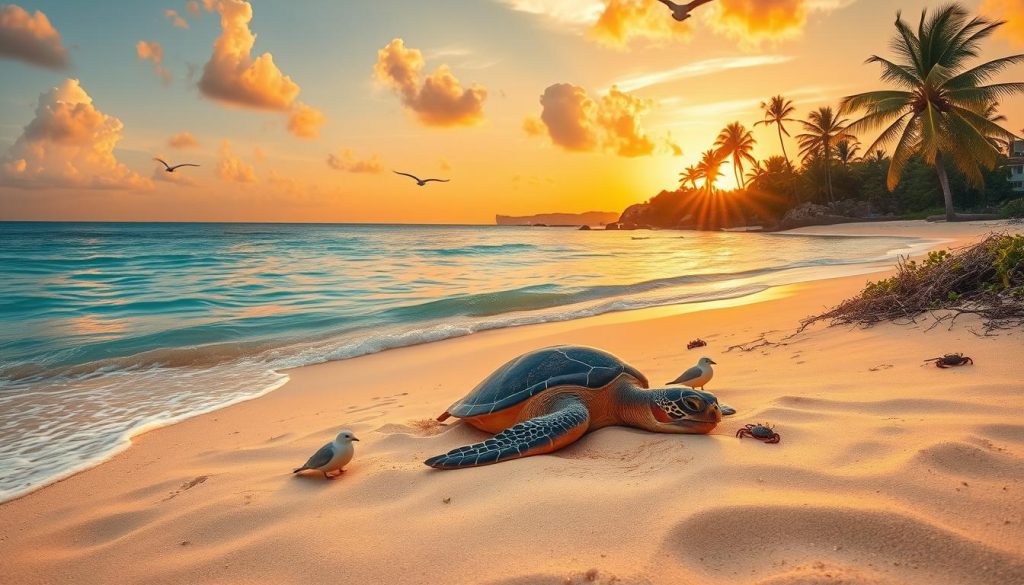
Every year, the pristine shores of Zanzibar showcase the nesting rituals of endangered sea turtles. This makes it a top destination for wildlife viewing. Only green and hawksbill turtles nest on these shores out of the five species found in Tanzania. Conservation efforts work hard to protect these sites for the turtles’ future.
Breeding and Nesting Sites
Mnemba Island is a prime spot to see these majestic turtles nest during nature trips. Green turtles, the most seen species here, nest between February and July. Hawksbill turtles nest from December to April, during the northeast monsoon.
Unfortunately, four turtle species in Tanzanian waters are endangered. This includes leatherback and loggerhead turtles. Their numbers are dropping due to habitat loss, poaching, and accidental catches in fishing nets.
It’s crucial to protect these turtles’ nesting sites. Consistent conservation work aims to reduce these threats. Nature excursions that are responsibly conducted help support this work. They also let visitors see firsthand the efforts to save these amazing sea turtles. Zanzibar stands out among the top destinations for wildlife viewing because of this.
Ngorongoro Crater in Tanzania
The Ngorongoro Crater is a UNESCO World Heritage Site. It is a paradise for people who love wildlife. With deep caldera and diverse habitats, it’s great for watching Africa’s wildlife closely. You can go on guided tours to see animals up close.

Species to Observe
In the Ngorongoro Crater, you’ll see lots of lions, one of Africa’s densest lion populations. There are also wildebeest, zebras, and rare black rhinos around. It’s a chance to see endangered animals, like wild hunting dogs and golden cats, in the wild.
Seasonal Migration Patterns
Migration in the crater depends on the rains and the growth of grass. From November to August, expect to see herds moving. Wildebeest, zebras, and gazelles move across the Serengeti. Watching these animals with a guide can teach you about their life cycles.
The crater has many predators. This makes it a good place to see animals hunting, any time of the year.
The best time for wildlife in the crater is from June to October, the dry season. Animals gather around water, so they’re easier to spot. January and February are also good, especially during the Serengeti’s calving season. There are fewer tourists and lots of newborn wildebeest, which attract predators.
Conclusion
Reflecting on the migrations we’ve seen, March is a special window into nature’s resilience and beauty. The Great Migration in East Africa is a sight to behold. Over 1.5 million wildebeest, zebras, and gazelles travel over 1,800 miles. They move between the Serengeti and the Maasai Mara, showing us the cycle of life and survival.
From California’s vibrant coastlines to the Pacific Flyway’s busy skies, the chances to see wildlife are plenty. Gray whales, diverse birds, majestic monarch butterflies, caribou, and sandhill cranes show nature’s determination. These spectacles highlight the beauty in the never-ending struggle for survival.
As we enjoy these migrations, we must remember the importance of conservation. The future of these natural wonders relies on our efforts. Guided safaris, conservation work, and responsible tourism protect these views in March. By caring for these ecosystems and understanding migration, we help keep nature’s spectacles alive for future generations.