Ladakh’s Lunar Landscape: A High-Altitude Adventure
Ever thought of walking on a landscape that feels like the moon? Welcome to Ladakh, India. Its wild terrain and sheer beauty are a test for even the most experienced adventurers. This hidden spot, high in the mountains, blends stunning sights with deep cultural history. It’s a top choice for anyone looking for a one-of-a-kind adventure high up.
Since the 1970s, Ladakh has slowly opened up for travelers. It offers a trip where you can wander for hours without seeing anyone else. But what makes Ladakh’s moon-like landscapes so mesmerizing? And why is keeping tourism sustainable important here? In this piece, we’ll explore Ladakh’s geological wonders. Plus, learn about the efforts to keep its treasures safe.
Introduction to Ladakh
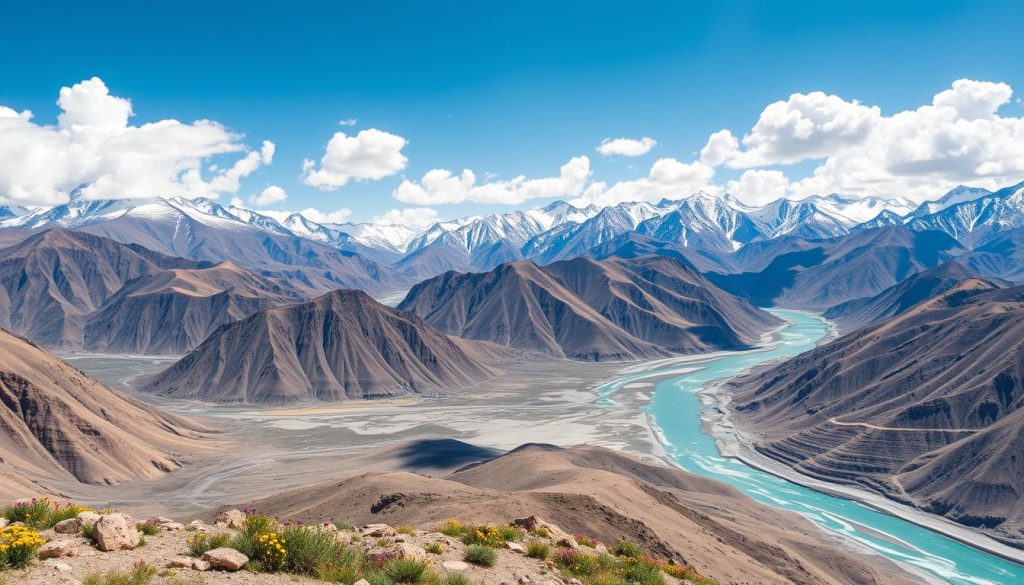
Ladakh is in the far north of India, with a stunning high-plateau and the Himalayas. It covers an area of 59,146 square kilometers (22,836 square miles). Known for its geography and culture, it attracts many visitors each year.
Geographical Overview
The landscape of Ladakh is amazing, with barren lands and snowy peaks. The highest point is the Saltoro Kangri at 7,742 meters (25,400 feet). The Indus River is at the lowest point, 2,550 meters (8,370 feet). Its position in the Himalayas makes it great for exploration.
Rupshu’s elevation is around 13,500 feet (4,100 meters), showing diverse terrains. Despite low rainfall, some valleys support crops like wheat and barley. This shows the hardiness of Ladakh’s people.
Significance and Appeal
Ladakh’s culture is rich and influenced by Tibetan traditions. Its monasteries and festivals show off Buddhist heritage. The region’s art and traditions are seen in temples and the Hemis Festival.
The mix of spiritual Tibetan culture and Himalayan adventures draws visitors. Leh, the main city, is a starting point for tourists. The area faces climate issues but remains popular.
Ladakh offers natural beauty and cultural depth. From its landscapes to its Buddhist connections, it’s full of wonders to see and experience.
Arriving in Leh
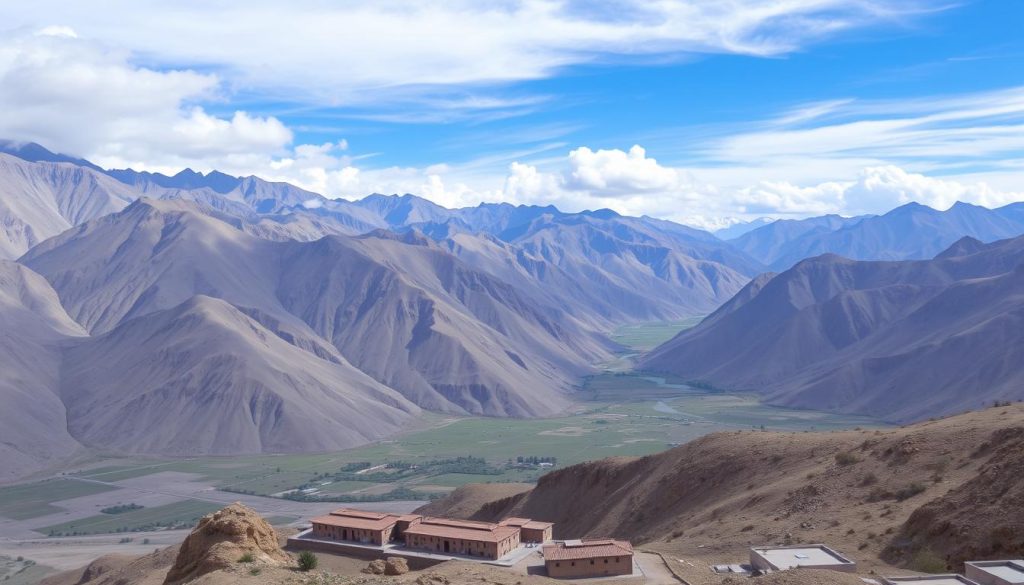
Leh is seen as the starting point for many exploring Ladakh. Nestled at 3,500 meters, this town provides a peek into the beautiful, tough landscapes of the area. It is perfect for those who love adventure or seek a peaceful retreat. Leh opens the door to many exciting journeys.
First Impressions
Entering Leh, you notice the shift from city life to calm mountains right away. The blue skies, clean air, and wide Himalayan views are stunning. You can reach Leh by various paths, including the Manali-Leh route or the Srinagar-Leh highway.
Flights from cities like Delhi and Chandigarh make Leh reachable throughout the year. Kushok Bakula Rimpochee Airport makes getting to Leh smooth.
Acclimatizing to the Altitude
Adjusting to Leh’s high altitude is key for a great adventure. It’s smart to take it slow for the first few days. This lets your body get used to the thinner air before you start exploring.
Travel companies suggest trips ranging from 3 to 22 days. This time helps you acclimate while enjoying short, easy activities in Leh. It’s crucial for safety and getting the most out of your visit.
| Route | Distance | Accessibility |
|---|---|---|
| Manali to Leh | 490 km | July to October |
| Srinagar to Leh | 434 km | June to November |
| Flight from Shimla | 40 minutes | Year-round |
Planning your Leh stay well lets you see its best parts. Trekkers and bikers often pick July and August. That’s when paths are open, making it the best time for adventure. Smart planning lets you safely enjoy Leh Ladakh’s amazing sights.
Exploring the Vibrant Leh Town
Leh is a mesmerizing place, perched at 11,400 feet. It’s packed with history and Tibetan culture. Think grand Leh Palace and peaceful Shanti Stupa, all set against high-altitude scenery.
Leh Palace
The Leh Palace is stunning, resembling Lhasa’s Potala Palace. It offers great views of Leh and the mountains. Inside, discover stories of royal lives and enjoy breathtaking views.
Shanti Stupa
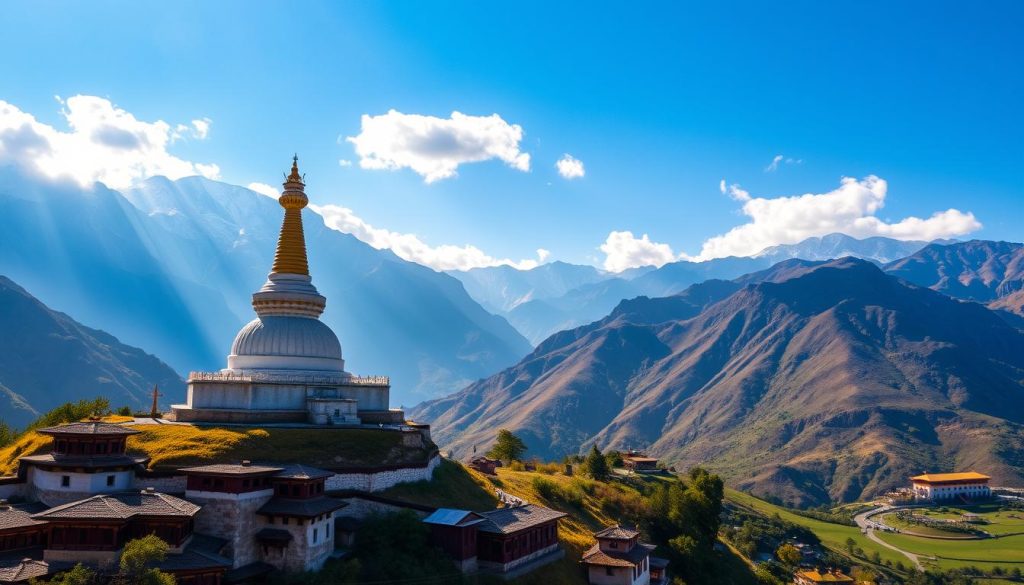
At 14,000 feet, the Shanti Stupa stands proud. It was built for world peace and shows off Tibetan culture. It’s perfect for finding peace or capturing sunrise and sunset photos.
Local Markets and Culture
Leh’s markets are full of energy. They blend Tibetan and Ladakhi traditions beautifully. You’ll see colorful crafts, jewelry, and Tibetan items. Wandering here, you’ll feel part of Leh’s vibrant daily life.
| Item | Details |
|---|---|
| Tour Availability | May to September |
| Cost per Person | $6,235 |
| Internal Airfare (Delhi-Leh-Delhi) | $390 |
| Included in Land Price | Permits, transportation, accommodations, meals, excursions, bilingual guide |
| Not Included | International airfare, internal India airfare, tips, insurance, excess baggage charges, personal items, alcohol |
Monasteries of the Indus Valley
The Indus Valley holds ancient monasteries rich in Tibetan culture. These places are more than just worship spots. They’re centers for art, history, and spirituality. Explore Alchi Monastery, Likir Monastery, and Lamayuru with us.
Alchi Monastery
Alchi Monastery stands out with its stunning murals and unique Kashmiri-style architecture. Lotsawa Rinchen Zangpo founded it, and it features three main parts: Dukhang, Sum-tsek, and the Manjushri Temple. Unlike others in Ladakh, it’s built on flat land. Visitors love its ancient art and peaceful feel.
Likir Monastery
Likir Monastery, set up by Tibetan monks, has a museum filled with Tibetan treasures. It’s home to a magnificent gold Buddha statue, a sign of the region’s religious spirit. With many monks living there, it offers a peek into Buddhist life.
Lamayuru: The Moonland of Ladakh
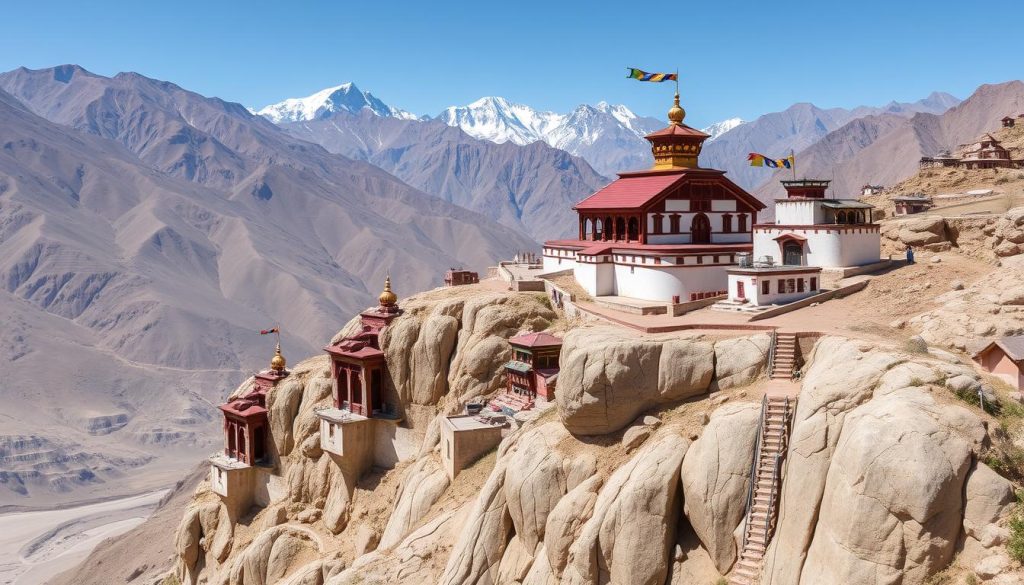
Lamayuru is called Moonland for its moon-like landscape. It beautifully frames Lamayuru Monastery, one of Ladakh’s oldest. This place draws visitors with its extraordinary location and history. The rough terrain and mysterious aura make Lamayuru a haven of peace and beauty.
Trekking Adventures in Ladakh
Going on an adventure travel in Ladakh changes you. It offers a unique experience in the Himalayas’ magical landscape. The Markha Valley trek is a highlight in this area.
Markha Valley Trek
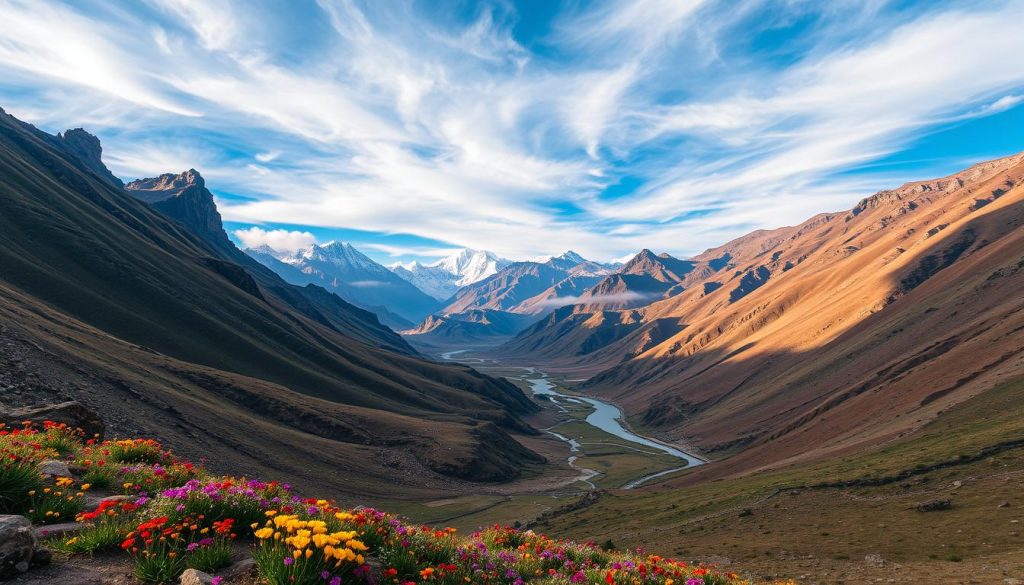
The Markha Valley trek is a favorite for trekking in Ladakh. It takes you through the Himalayas’ stunning scenery. Your trip starts in Leh, Ladakh’s capital. It’s 11,482 feet above sea level, readying you for the adventure.
This trek takes you through beautiful Ladakhi villages. You get a peek into the local culture here. These villages are perfect for resting and meeting friendly locals who live a traditional lifestyle.
Experiences Along the Trek
On the Markha Valley trek, you’ll see unique wildlife. This includes spotting snow leopards in Hemis National Park. The park is home to about 200 of these amazing animals. The landscapes are breathtaking, from Nimaling’s lush oasis to Kongmaru La pass’s high points.
Let’s look at some key spots and activities in adventure travel in Ladakh:
| Destination | Altitude | Highlights |
|---|---|---|
| Leh | 3,500m | Cultural acclimatization, local markets |
| Hemis National Park | Varies | Snow leopard spotting |
| Kongmaru La Pass | 5,150m | Spectacular views of the Himalayas |
The Markha Valley trek ends in a feeling of true accomplishment. It’s known as one of the toughest and most beautiful treks globally. The stunning nature and cultural experiences make it an adventure you’ll never forget.
Discovering Nubra Valley
Nubra Valley is a must-see for its stunning views and one-of-a-kind adventures. It’s around 120 kilometers from Leh and reached via the amazing Khardung La Pass. Sitting at about 10,000 feet, it’s great for getting used to the elevation. This place has both lush valleys and sandy dunes. It also offers cool places to visit and fun things to do.
Khardung La Pass
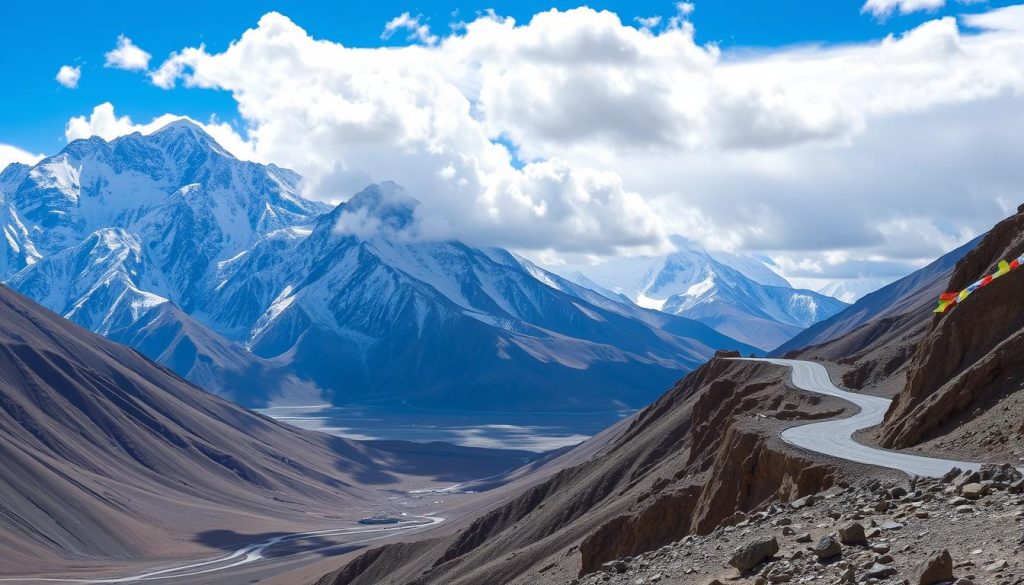
Khardung La Pass sits high at 5,389 meters above sea level. It’s known as the highest road you can drive on in the world. This pass is not just a way to get to Nubra Valley. It’s an adventure with amazing mountain and valley views. Driving from Leh to Nubra Valley here is an experience you won’t forget.
Diskit Monastery
Diskit Monastery is over 700 years old and a must-see in Nubra Valley. It’s perched on a hill, offering peace for those seeking quiet. The monastery’s big Maitreya Buddha statue is 32 meters tall. It stands over the valley and lets you see everything. Guests here can join in Buddhist rituals and enjoy the peaceful setting.
Unique Experiences in Hunder
Hunder is a small village known for its sand dunes and double-humped Bactrian camels. Riding these camels is a special adventure, like being in a desert in the mountains. The village is also a starting point for visiting Turtuk. Turtuk was once part of Pakistan’s Baltistan and is rich in culture. Visiting offers a peek into the area’s deep heritage.
| Place | Key Highlights | Best Time to Visit |
|---|---|---|
| Khardung La Pass | Highest motorable road, breathtaking views | May to August |
| Diskit Monastery | 700-year-old monastery, 32-meter tall Buddha statue | May to August |
| Hunder | Sand dunes, Bactrian camel safari | May to August |
To truly enjoy Nubra Valley, plan to stay at least one night. This gives time to explore its beauty and try unique things. Discover Khardung La Pass, Diskit Monastery, or camel riding in Hunder. Nubra Valley offers an adventure you’ll always remember.
Natural Wonders of Pangong Lake
Welcome to Pangong Lake, a breathtaking high-altitude saltwater lake. It sits at 14,270 feet in Ladakh. A significant part extends into China, and the rest is in India. To visit, Indian tourists need an Inner Line Permit (ILP), while foreigners must have a Protected Area Permit (PAP).
The ideal time to see Pangong Lake’s beauty is from May to September, thanks to the pleasant weather. Its beauty captivated many after featuring in the Bollywood movie “3 Idiots”. This boosted its fame greatly.
Spectacular Views
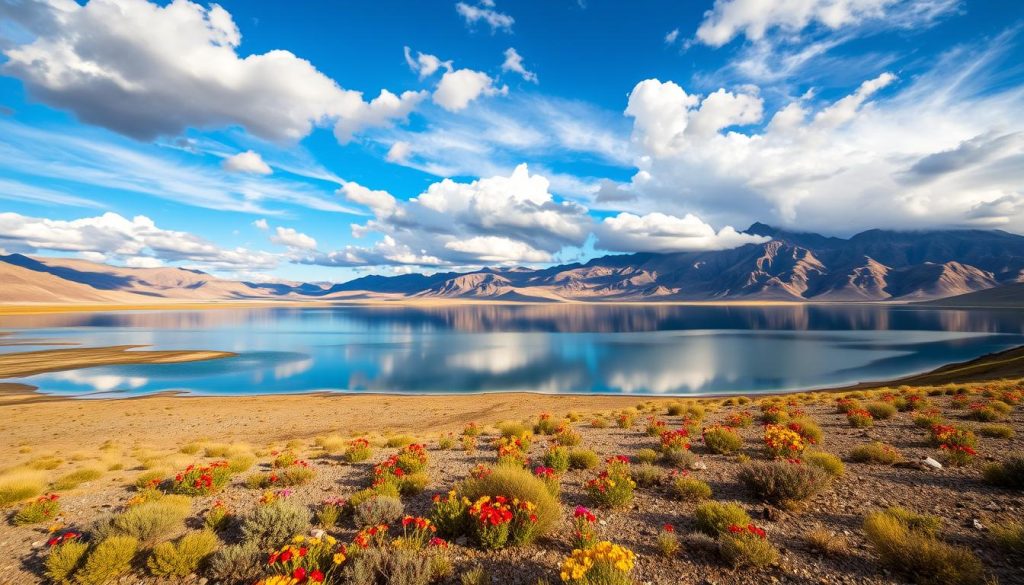
Pangong Lake presents breathtaking views in Ladakh. Its clear, salty waters shift in color from blue to green. This contrasts beautifully against the rugged mountains of Ladakh.
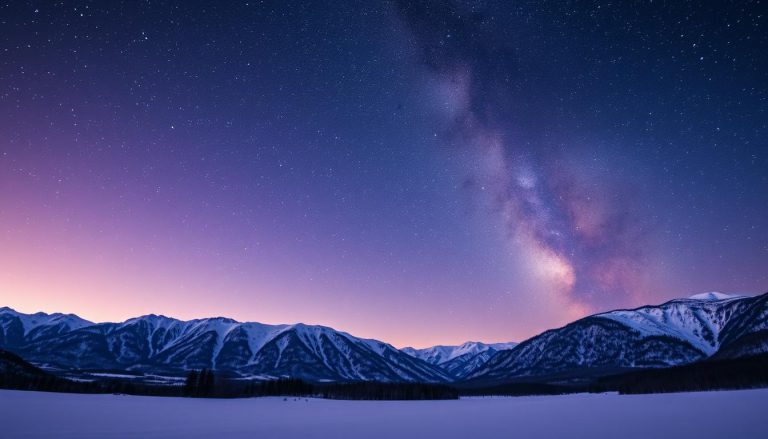
The lake stretches over 134 kilometers in length and is 5 kilometers wide. This makes it one of the largest in High Asia. The route to the lake goes through Chang La Pass, a high motorable road. The area is also perfect for stargazing and photography, thanks to its clear skies and peaceful ambiance.
Flora and Fauna
Pangong Lake, despite its saline water and sparse vegetation, attracts many wildlife enthusiasts. In summer, migratory birds like the Black Necked Cranes and Seagulls visit. Small animals, such as rodents, are also seen near its shores.
However, swimming here is not advised because of the cold water and high altitude. Despite this, Pangong Lake remains a must-visit for its surrounding natural beauty.
| Feature | Details |
|---|---|
| Location | Straddles India and China |
| Altitude | 14,270 feet above sea level |
| Best Time to Visit | May to September |
| Popular Route | Via Chang La Pass (17,688 feet) |
| Permits Required | ILP for Indian tourists, PAP for foreign tourists |
| Notable Wildlife | Black Necked Cranes, Seagulls, Rodents |
| Convenient Airports | Leh Airport with direct flights from Delhi, Mumbai, Srinagar, Chandigarh |
The Significance of Ladakh, India
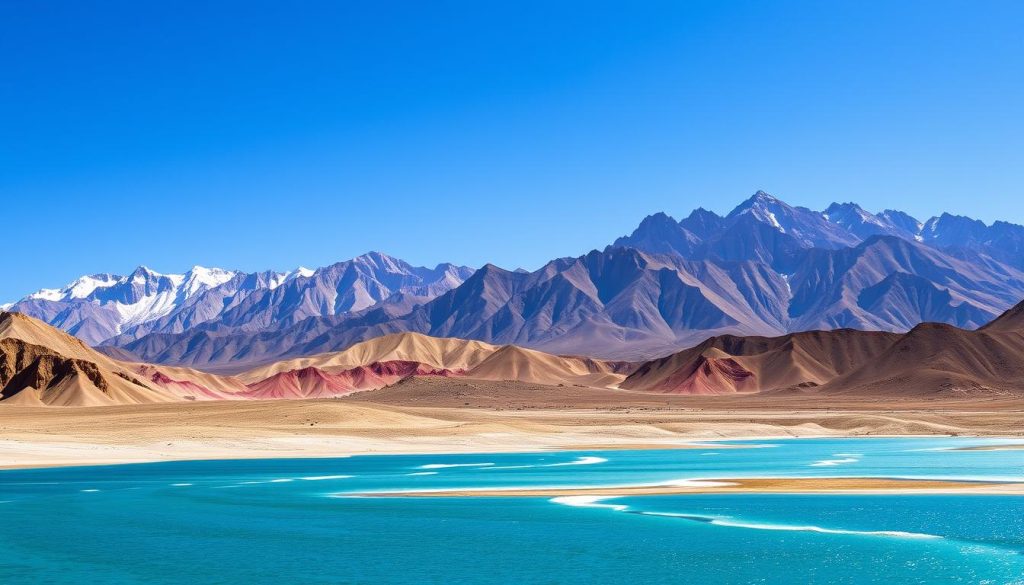
Ladakh is a place of great beauty and a long history. It lies in India’s far north, showing off geological marvels and the deep influence of Tibetan culture. The stunning landscapes add to the rich culture that is part of the area’s history.
Cultural Heritage
Ladakh’s cultural significance is closely linked to its geography. It sits where many old trade routes met. This mix has created a unique blend of traditions, especially from Tibetan culture. Places like the Thiksey and Hemis Monasteries are key for Buddhist art and culture. The yearly festivals draw visitors from all over, showing off the area’s lively traditions and spirituality.
Geological Marvels
The geological importance of Ladakh is huge. It shows the power of nature with its mix of dry deserts and green valleys. Studies of Ladakh show its wide genetic mix, adding parts from many regions of Asia. A study with 220 swab samples from men found notable genetic diversity, with ten main Y haplogroups found.
| Haplogroup | Percentage |
|---|---|
| D | 32% |
| R | 22% |
| O | 19% |
| H | 11% |
The D1a1-N1 haplogroup is the oldest found, going back about 42,200 years. This shows Ladakh as an important place for human life and genetic development for thousands of years.
Ladakh is a wonder, where geology and culture mix together. This fusion helps us understand this unique, high-altitude place better.
Conclusion
Going to Leh Ladakh is more than a holiday. It’s about experiencing a world where nature and culture mix beautifully. Since becoming a Union Territory in 2019, Ladakh has shown its diverse landscapes. The area spans from Buddhist Leh to Muslim-majority Kargil, each with its rich culture and breath-taking sceneries.
Ladakh has more to offer than just its scenic beauty. The local people, with their hopes and challenges, add a deep layer to the place’s charm. The Leh Apex Committee and Kargil Democratic Alliance have been fighting for constitutional safeguards. They want to protect the area’s tribal people, who make over 90 percent of the population. Sonam Wanchuk, famous for his hunger strike, calls attention to Ladakh’s need for autonomy and cultural preservation.
Visiting Ladakh, you’ll see incredible sights like Pangong Lake and the Indus Valley’s monasteries. You’ll learn about the locals’ strength in facing tough conditions, which adds meaning to your trip. When you leave, you’ll take home not just photos but a deep respect for Ladakh’s spirit. This magical place might make you want to come back, just like many others.