
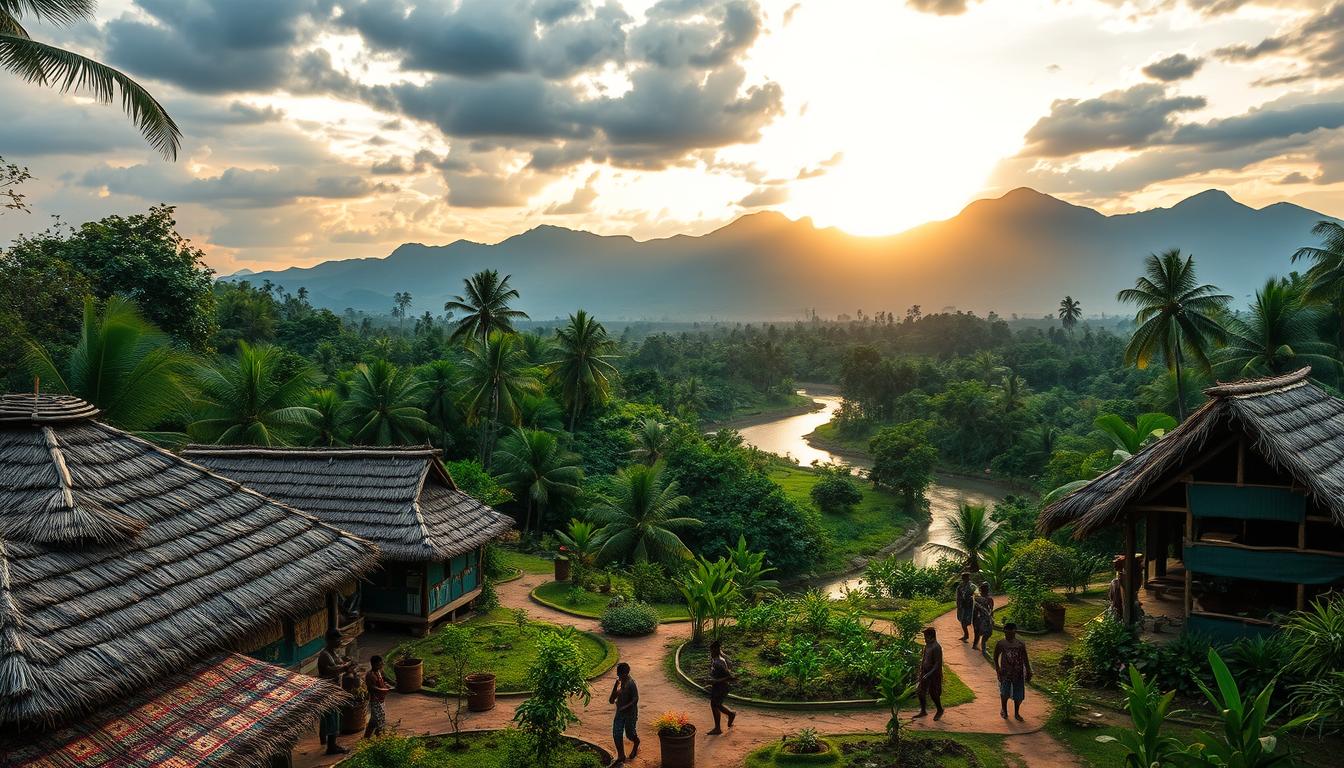
Indigenous Communities You Should Visit Near Iquitos
Thinking about visiting indigenous communities near Iquitos? You might wonder what it’s like to see the traditional ways of Amazonian tribes. In Peru, about 20,000 Shipibo-Konibo live, making up 8% of the indigenous people. Their culture is unique, with women leading the community and being the main artists.
Visiting these communities can be very rewarding. You’ll learn about the history and culture of tribes like the Shipibo-Konibo and Yagua. By supporting them through tourism, you help keep their heritage alive. So, what can you expect from your visit, and how can you make it the best experience?
Understanding the Amazon’s Indigenous Heritage
Exploring the native peoples of the Peruvian Amazon reveals a world of diverse cultures and traditions. The Amazon rainforest, covering over six million square kilometers, is home to more than 60 indigenous communities. Each community has its own customs and way of life. The Asháninka people, with about 90,000 individuals, are a key part of this heritage.
These communities have a deep understanding of medicinal plants. They use the Amazon’s plants to treat many illnesses. This knowledge shows their resourcefulness and is valuable to the modern world. 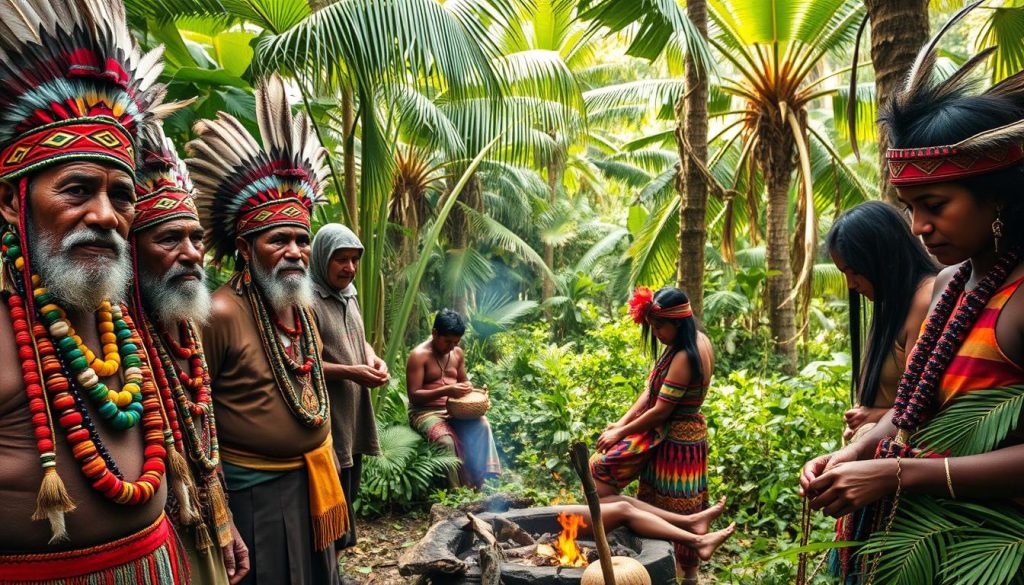
Some important facts about the indigenous communities in the Peruvian Amazon include:
- Over 60 indigenous communities exist in the Peruvian Amazon rainforest.
- The Asháninka people are one of the largest indigenous groups in Peru, with approximately 90,000 individuals.
- Indigenous communities possess intricate knowledge of numerous medicinal plants, utilizing them to treat various ailments.
As you learn about the native peoples of the Peruvian Amazon and ethnic groups in Iquitos, you’ll appreciate their cultural importance. Their traditional lifestyles and customs are a vital part of Peru’s heritage. It’s crucial to preserve and respect their way of life.
Most Accessible Indigenous Communities Near Iquitos
When you visit Iquitos, you can see the indigenous villages in Loreto region. These places give you a peek into the Amazonian communities’ traditional lives. The Bora and Kukama communities are two examples near Iquitos.
These villages are easy to reach by guided tours and boat trips. You can explore the Amazon and Itaya rivers. You might get to:
- Learn about traditional medicine and local plants
- Join in traditional ceremonies and celebrations
- See local artisans making handmade crafts and skills
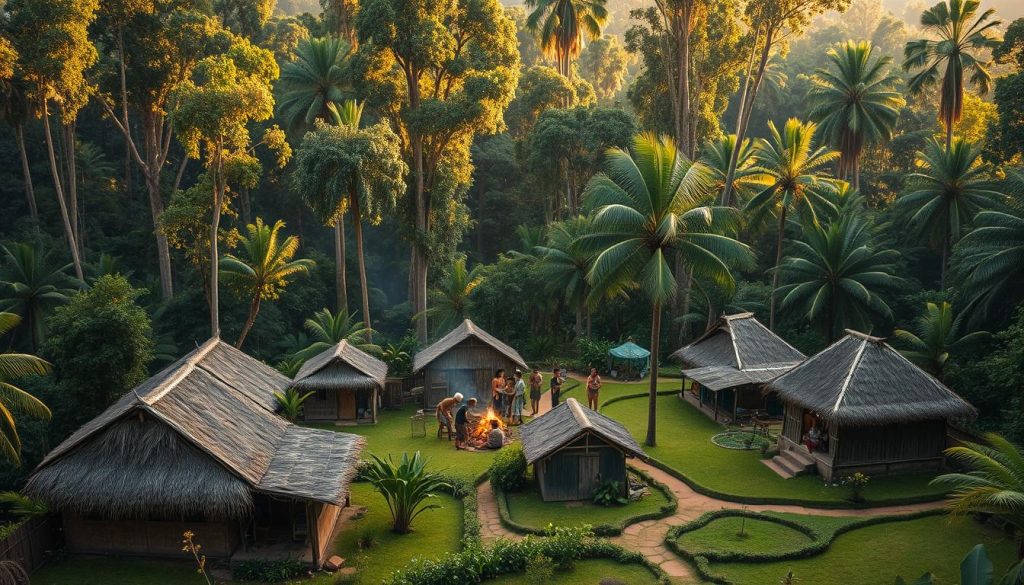
Visiting indigenous villages in Loreto region helps the local economy. It also lets you learn about the Amazonian communities’ rich culture. By choosing responsible tours and respecting local customs, you can make a positive difference.
Traditional Customs and Daily Life
Visiting native communities near the Amazon River lets you see their traditions and daily life. These communities often live in extended family groups, with many generations together. For example, in the Yagua community, family life revolves around the river. They fish and hunt there to feed their families.
Traditional ceremonies and celebrations are key to these communities’ culture. The Shipibo-Conibo community is famous for its colorful art, weavings, and paintings inspired by nature. You can join these ceremonies and learn about their importance. It’s a great way to dive into the local culture.
Some activities you can experience in these communities include:
- Participating in traditional ceremonies and celebrations
- Learning about artisanal crafts and skills, such as weaving and painting
- Visiting local markets and trying traditional foods
- Taking part in community activities, such as music and dance demonstrations
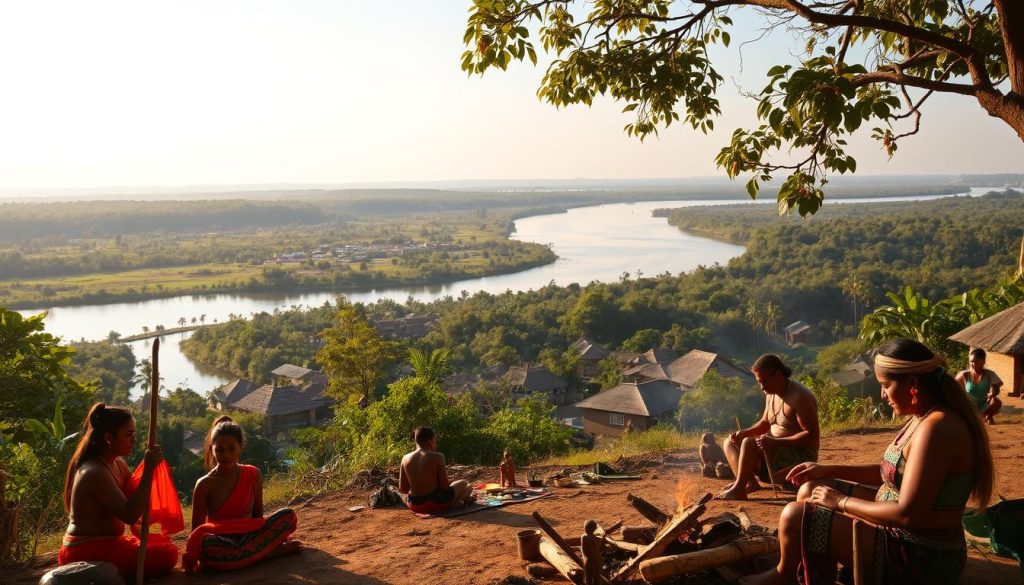
To truly appreciate the traditions and daily life of these communities, you must be respectful and sensitive. This way, you can build strong connections with the people you meet. You’ll also gain a deeper understanding of their way of life.
Planning Your Visit to Indigenous Villages
Getting ready to visit indigenous communities near Iquitos? It’s key to plan well. With 55 villages in Peru, including 51 in the Amazon, pick the best for your trip. The Kukama Native Community, with over 2,000 people, is a big and famous spot.
Think about when you want to go and what you want to do. The dry season, from April to December, is best for the Amazon. This is when most tourists come, from May to August. You can find packages from 3 to 6 days, visiting places like the Jíbaro and Alamas tribes.
To reach these communities, take a motocaro to Porto de Bella Vista Nanay. Talk to tour operators there. Always respect the local ways and traditions. Here are some tips:
- Learn about the community you’ll visit and their customs
- Follow the community’s rules and traditions
- Support local businesses and tour operators
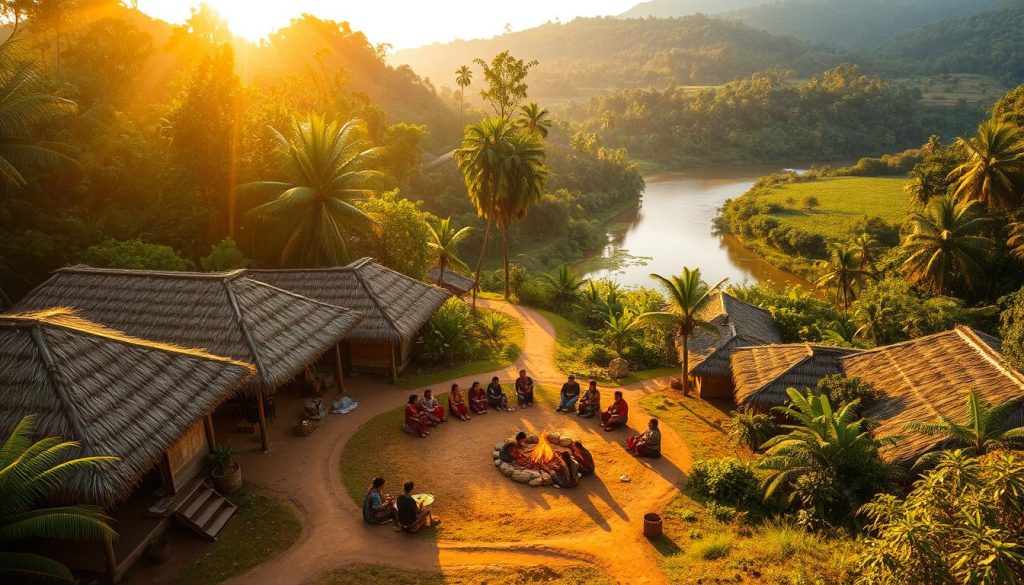
By planning well and being respectful, you’ll have a special and meaningful visit. Stay updated on the best times and activities. And don’t hesitate to ask local tour operators for help.
Cultural Etiquette and Responsible Tourism
When you visit indigenous communities near Iquitos, it’s key to respect local customs and traditions. The Amazonian tribes and native peoples of the Peruvian Amazon have special cultural practices. These should be valued and kept alive. As a responsible tourist, you can positively impact by being aware of your actions and respecting their way of life.
Supporting homestays and community-based tourism programs can help local families. For instance, the Ccaccaccollo Women’s Weaving Co-op has seen family incomes rise by up to 30% thanks to visitors. By backing these efforts, you help foster cultural exchange and understanding between visitors and the native peoples of the Peruvian Amazon.
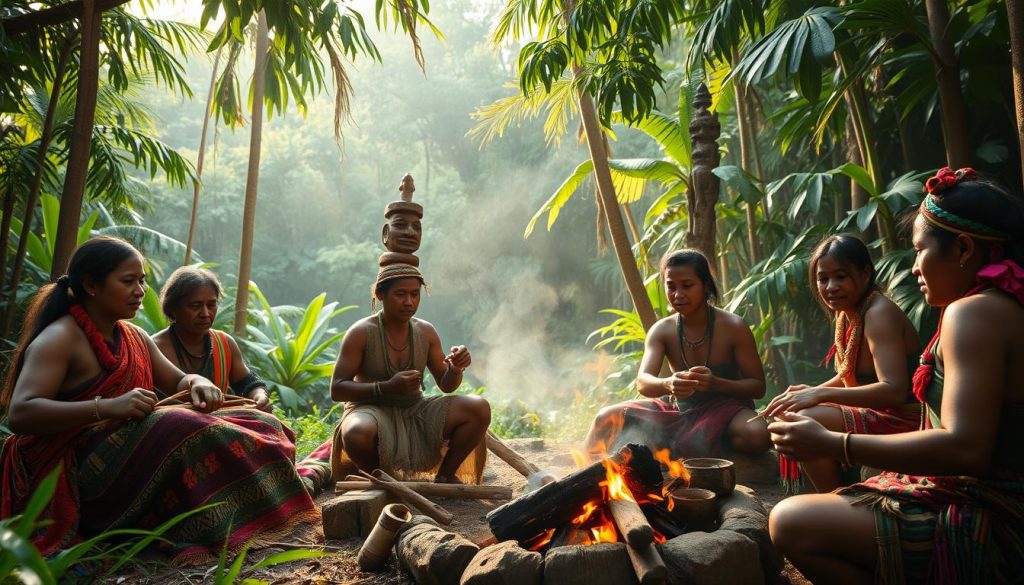
- Respect local customs and traditions
- Ask permission before taking photos or videos
- Support local businesses and community-based tourism initiatives
- Be mindful of your environmental impact and reduce waste
By following these tips and being a responsible tourist, you help protect the cultural heritage of Amazonian tribes. You also promote cross-cultural understanding and exchange.
Best Times to Visit Indigenous Communities
When planning a visit to indigenous villages in Loreto region, it’s key to pick the best times. This ensures a memorable and respectful visit. The native communities near the Amazon River have a special bond with their environment. Knowing the seasons can make your visit better.
The dry season, from June to September, is the best time to visit. It has lower humidity and clearer skies for spotting wildlife. The rivers are also lower, making it easier to explore and do outdoor activities. On the other hand, the rainy season, from November to March, can make traveling harder.
Some important festivals happen in the region, like the Fiesta de San Juan in June and the Carnaval Amazónico in February or March. These events are a great way to see the local culture and traditions of the indigenous communities.
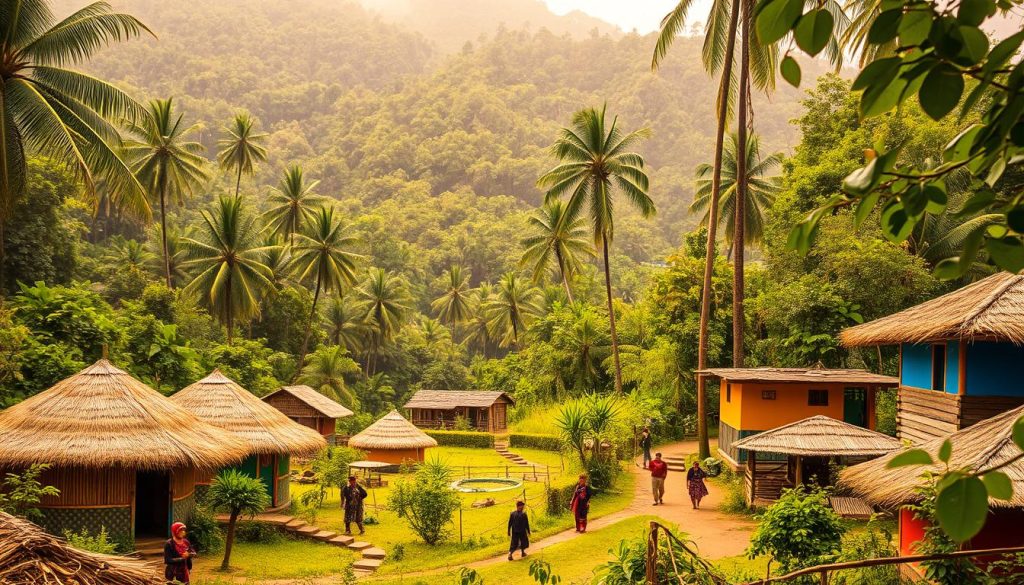
- Seasonal weather patterns: The dry season is ideal for outdoor activities, while the rainy season can be more challenging.
- Festival calendar: Plan your visit around local festivals and events to experience the unique culture and traditions of the indigenous communities.
- Responsible tourism: Be respectful of the local environment and communities, and choose tour operators that prioritize sustainability and responsible tourism practices.
By thinking about these points and planning well, you can have a rich and meaningful visit. You’ll get to see the beauty of indigenous villages in Loreto region and the native communities near the Amazon River.
Local Guide Services and Tour Options
When you visit indigenous communities near Iquitos, getting a local guide is key. They know the area, customs, and traditions of the Amazonian tribes. This lets you dive deep into the local culture. Jorge, for example, gave great insights and help during a trip to the indigenous villages.
There are many tour choices, from 3-day to 6-day all-inclusive jungle tours. These include places to stay, food, local transport, and guides who speak both languages. Some top picks are:
- Maniti Eco-Lodge’s 3-day jungle tour package, priced at $459
- Maniti Eco-Lodge’s 5-day jungle tour package, priced at $725
- Iquitos: 6-Hour Wonderful Wildlife Guided Tour, priced from £141.79 per person
These tours let you see the Amazon jungle, meet indigenous communities near Iquitos, and learn about their ways. By choosing a local guide and a trusted tour company, you’ll have a trip to remember.
Supporting Indigenous Communities Through Tourism
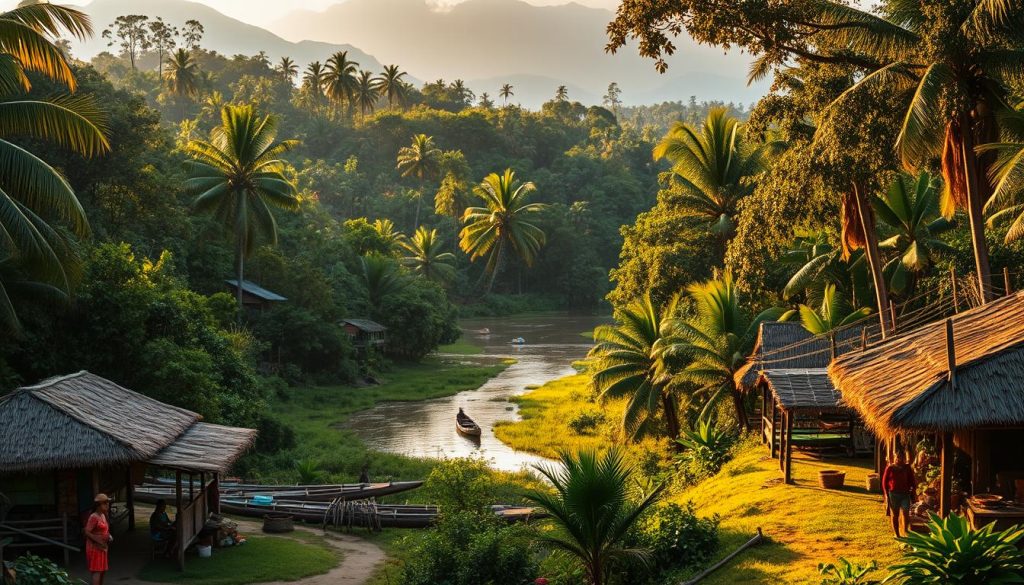
Exploring the native peoples of the Peruvian Amazon shows how tourism helps their lives. Visiting ethnic groups in Iquitos boosts the local economy. It also helps keep their cultural heritage alive.
Income from visitors and craft sales is crucial for these communities. It lets them live their traditional lives.
Community-led tours in Iquitos support local development. They also help the environment by protecting the Amazon’s ecosystems. This lets native peoples share their knowledge with visitors.
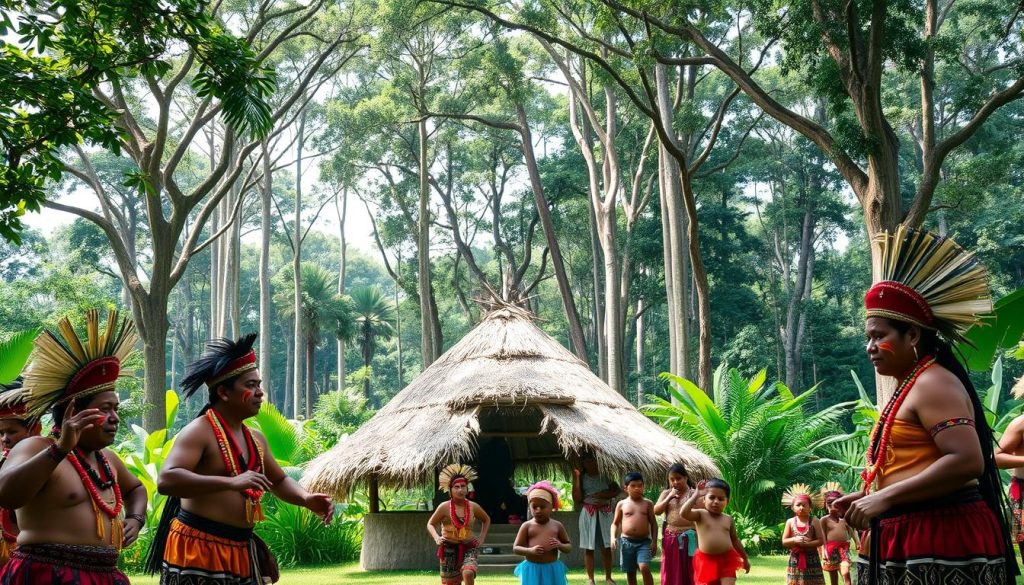
- Economic benefits: Income from tourism helps communities invest in education, healthcare, and infrastructure.
- Cultural preservation: Tourism encourages the preservation of traditional customs, languages, and practices.
- Conservation efforts: Community-led conservation projects protect the Amazon’s biodiversity and natural resources.
Your support through tourism is key to preserving the Amazon’s culture. Your visit can make a big difference in the lives of these communities. It helps ensure their traditions and way of life continue for future generations.
Conclusion: Preserving Amazon’s Living Heritage
The indigenous communities near Iquitos are a living link to the Amazon’s rich culture. Their ways of life are threatened by deforestation, climate change, and modernization. Your visit can help save this precious legacy.
By choosing responsible tourism, supporting local conservation, and learning about their traditions, you can make a difference. The Shipibo, for example, have kept their ancient practices alive for centuries. Over 150 of their communities still thrive today.
Your trip can have a big impact. You can buy local crafts, join cultural events, or help spread the word about protecting the Amazon’s indigenous heritage. Together, we can save the Amazonian tribes’ legacy and respect their deep connection to this unique, endangered place.





