Famous Shrines & Religious Sites in Multan
Multan, known as the “City of Saints,” is full of fascinating shrines, temples, and mosques. Pilgrims from all over come to see its spiritual wonders. The city’s many mausoleums and Sufi shrines show Islam’s mystical side.
The Tomb of Shah Rukn-e-Alam stands tall as a pre-Mughal masterpiece. The peaceful Bahauddin Zakariya Tomb and lively Darbar Shah Shams Sabzwari Alaihrehma are also must-see sites.
Visitors can experience Sufism’s sights, sounds, and rituals here. However, it’s important to check travel advisories and security updates before visiting Multan.
Multan: The City of Saints
Multan, known as the “City of Saints,” is a spiritual hub in Pakistan. It houses many shrines, temples, and mosques that draw pilgrims worldwide. Multan’s religious heritage is rooted in Sufism, focusing on inner spiritual discovery.
Visitors can explore the city’s Sufi darbars (shrines) and experience unique spiritual practices. These sites offer a glimpse into the rich traditions of Sufism in Multan.
Security Concerns and Travel Advisory
Multan faces security concerns due to military installations and potential sectarian violence. Foreign travelers often need armed guards when visiting the city. This requirement may deter some independent travelers from overnight stays.
Visitors should check recent travel advisories before planning a trip to Multan. Day trips might be a safer option for those concerned about security measures.
Understanding Sufism and Darbars
Sufism, Islam’s mystical branch, is central to Multan’s religious culture. The city’s darbars, or Sufi shrines, are worship centers and places of spiritual discovery. These mausoleums often house revered Muslim saints.
Devotees engage in song, dance, and meditation to connect with the divine. Visitors can witness unique rituals and traditions within these sacred spaces. This experience offers insight into Sufism’s role in Multan’s religious heritage.
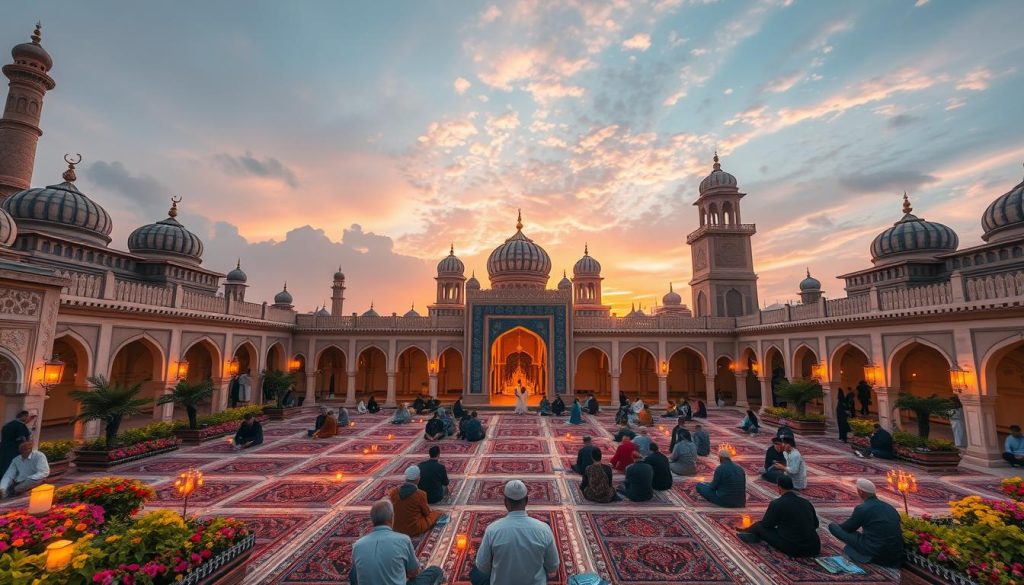
Tomb of Shah Rukn-e-Alam
The Tomb of Shah Rukn-e-Alam is a pre-Mughal masterpiece in Multan. Built from 1320 to 1324, it showcases early Tughluq architecture. Its massive octagonal dome reaches 100 feet high, visible for miles.
The tomb’s intricate brickwork features vibrant blue and white ceramic tiles. This striking contrast has amazed visitors for centuries. It stands as a symbol of Multan’s rich architectural and cultural heritage.
Architectural Marvel and Cultural Center
The tomb is more than just a beautiful structure. It’s a cultural hub where devotees honor the Sufi saint. People gather here for traditional rituals and ceremonies.
Each year, hundreds of thousands visit the shrine. The annual Urs celebrations attract pilgrims from all over South Asia.
Influence on South Asian Architecture
This mausoleum has greatly impacted South Asian architecture. It inspired similar tombs and shrines across the region, especially in Delhi.
The octagonal layout, towering dome, and use of red brick became iconic. These features shaped the design of sacred spaces throughout the subcontinent.
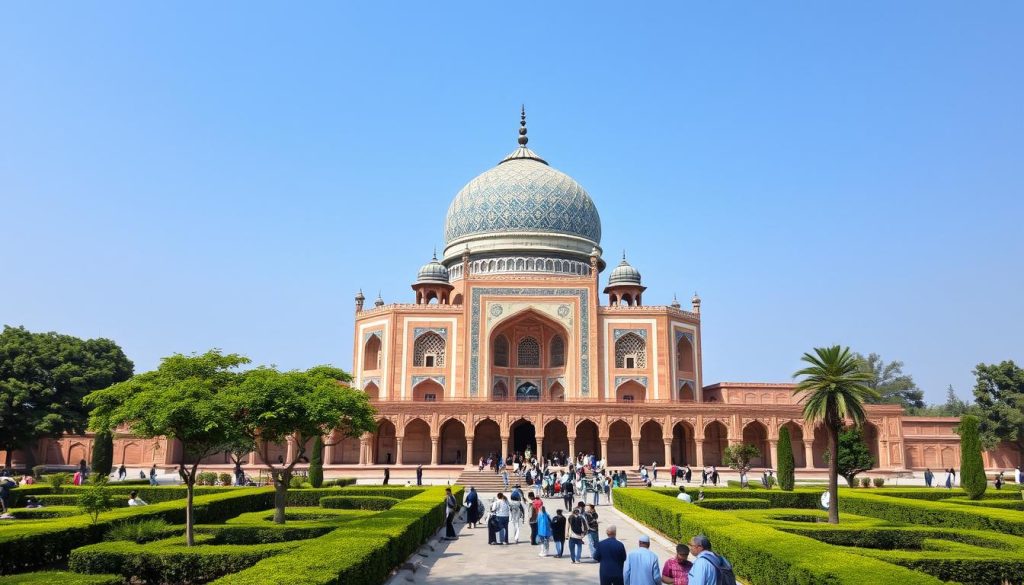
| Architectural Features | Significance |
|---|---|
| Octagonal dome | The massive octagonal dome stands at an impressive height of 100 feet, making it a prominent landmark visible from miles away. |
| Intricate brickwork and ceramic tiles | The tomb’s exterior is adorned with intricate brickwork and vibrant blue and white ceramic tiles, creating a striking visual contrast. |
| Pre-Mughal Tughluq architecture | The Tomb of Shah Rukn-e-Alam is considered one of the earliest examples of Tughluq architecture in the region, predating the Mughal era. |
| Influence on South Asian architecture | The design and construction of this mausoleum have inspired the creation of similar tombs and shrines throughout South Asia, becoming a hallmark of the region’s religious architecture. |
“The Tomb of Shah Rukn-e-Alam is a true architectural marvel, a testament to the rich cultural heritage of Multan and a seminal influence on the broader landscape of South Asian architecture.”
Bahauddin Zakariya Tomb
The Shrine of Bahauddin Zakariya is a notable Sufi mausoleum in Multan. It sits near the famous Tomb of Shah Rukn-e-Alam. This 13th-century tomb has its own cultural and architectural importance.
The shrine offers a unique look into Sufi traditions and rituals. It may be smaller, but it’s just as significant to visitors.
Sufi Traditions and Rituals
Inside the domed structure, devotees show deep respect in special ways. They offer flowers and toss pink petals onto Bahauddin Zakariya’s casket. These acts reveal the devotional culture of Multan’s sacred sites.
Qawwali Nights and Spiritual Gatherings
The tomb is a center for spiritual activity, especially during qawwali nights. These events happen in the shrine’s courtyards after sunset. Muslims from all over Multan come to enjoy the music.
People sit on the ground, swaying to the harmonium’s rhythmic melodies. These devotional songs create a captivating atmosphere. Worshippers connect with the divine through music and movement.
Visitors can immerse themselves in this unique cultural experience. It’s a chance to see Sufi traditions up close.
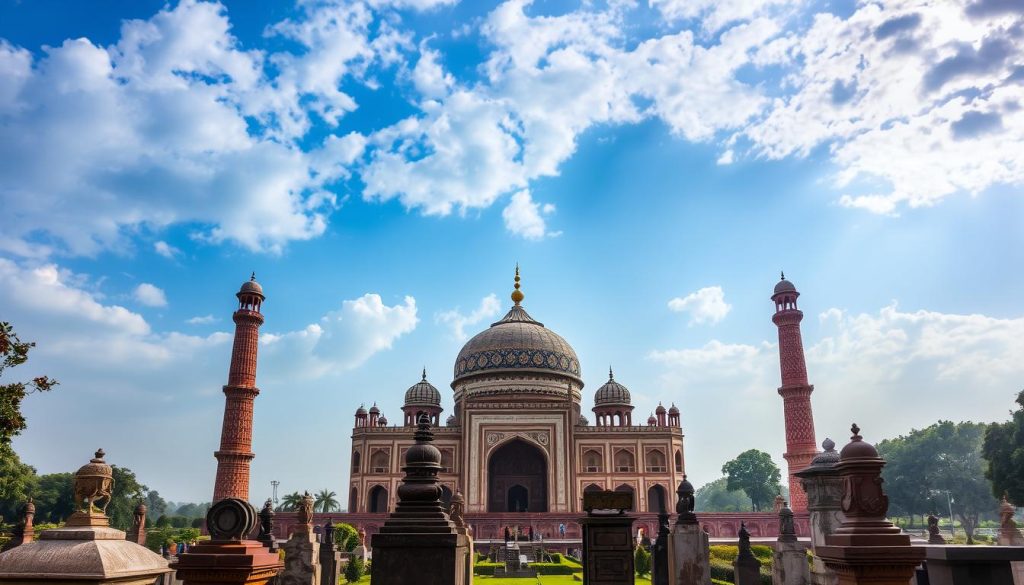
“The Tomb of Bahauddin Zakariya serves as a vibrant gathering place where the traditions and rituals of Sufism come alive, offering visitors a unique and immersive cultural experience.”
Are there any famous shrines or religious sites in Multan?
Multan, the “City of Saints,” boasts a rich collection of famous shrines and religious sites. These sacred places attract visitors worldwide, showcasing Multan’s deep spiritual heritage.
Some notable Multan shrines and religious sites in Multan include:
- The Tomb of Shah Rukn-e-Alam, a pre-Mughal architectural marvel with a towering octagonal dome. It draws over 100,000 pilgrims annually.
- The Bahauddin Zakariya Tomb, offering insights into Sufi traditions and rituals in Multan.
- The Tomb of Hamid Ali Khan, housing a madrasa (Islamic school) within its walls.
- The Darbar Peer Hazrat Yousaf Shah Gardez, featuring beautiful turquoise tiles. It showcases Multan’s distinct Multan historical sites and Multan monuments.
- The Tomb Hazrat Hafiz Jamal Ullah Multani, known for its Mughal-era murals.
These sacred Multan attractions reflect the city’s spiritual roots. They captivate visitors seeking to explore Pakistan’s rich religious and cultural tapestry.
| Shrine or Site | Notable Features | Significance |
|---|---|---|
| Tomb of Shah Rukn-e-Alam | Octagonal dome, towering structure | Pre-Mughal architectural marvel, attracts over 100,000 pilgrims annually |
| Bahauddin Zakariya Tomb | Sufi traditions and rituals | Glimpse into Multan’s Sufi heritage |
| Tomb of Hamid Ali Khan | Madrasa within the complex | Combines religious education and spiritual significance |
| Darbar Peer Hazrat Yousaf Shah Gardez | Turquoise tiles | Showcases Multan’s distinct architectural style and historical sites |
| Tomb Hazrat Hafiz Jamal Ullah Multani | Mughal-era murals | Preserves the city’s Mughal-era heritage and monuments |
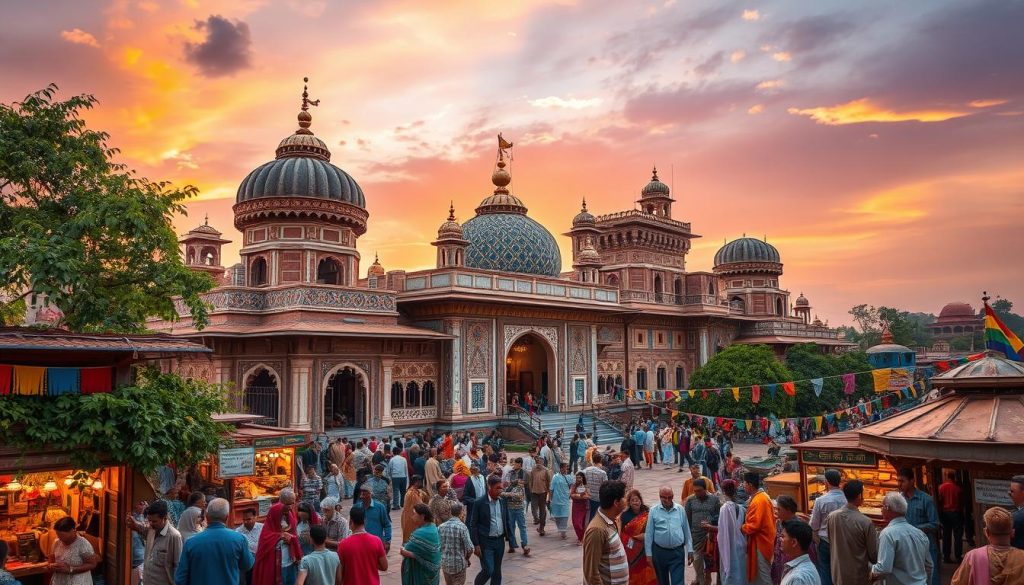
“Multan, the ‘City of Saints,’ is a treasure trove of spiritual and cultural heritage that captivates visitors from around the world.”
Tomb of Hamid Ali Khan
The Tomb of Hamid Ali Khan rests in Multan Fort. It’s a hidden gem, serving as both a mausoleum and an Islamic school. This site offers a peek into Multan’s blend of Sufi spirituality and Islamic education.
Jamia Masjid Ghousia Hamidia Complex
The Jamia Masjid Ghousia Hamidia stands next to the tomb. It’s a grand mosque that’s part of the complex. As you enter, you’ll hear young scholars reciting the Quran.
Their voices echo through the halls. This madrasa, inside the mausoleum, helps preserve Islamic knowledge in Multan.
Madrasa and Islamic Education
This tomb is more than just a Sufi devotion site. It’s also a hub for Islamic learning. Visitors can see students memorizing Quran verses, fully absorbed in their studies.
The madrasa’s presence shows the strong link between faith and education here. In Multan, spiritual and scholarly pursuits exist side by side.
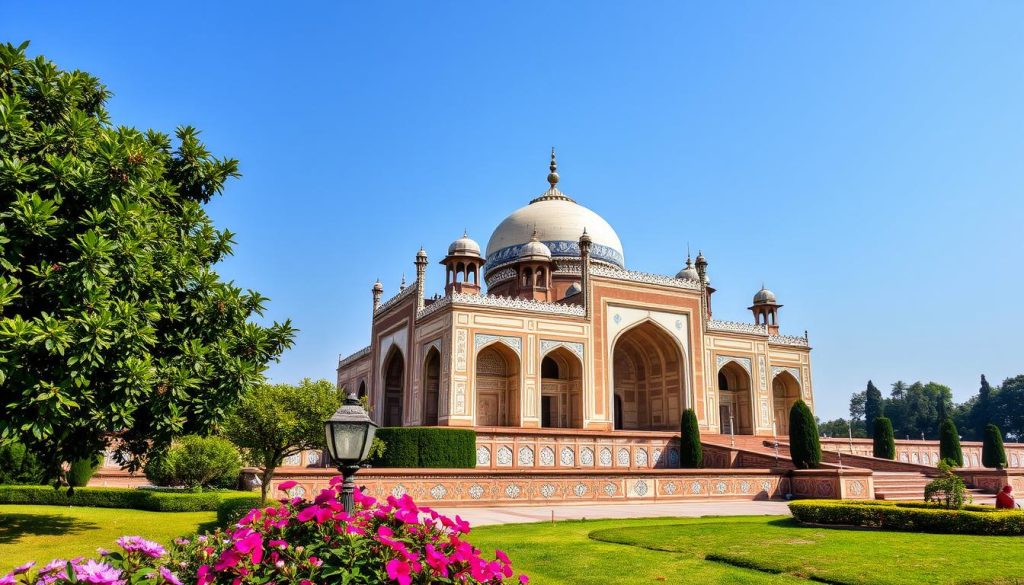
This complex showcases Multan’s rich religious heritage. It blends respect for Sufi saints with dedication to Islamic learning. The result is a unique and fascinating spiritual landscape.
Darbar Peer Hazrat Yousaf Shah Gardez
The Darbar Peer Hazrat Yousaf Shah Gardez is a hidden gem in Multan’s busy bazaar. This Sufi shrine showcases the city’s architectural mastery. Its stunning turquoise tiles adorn the crypt and surrounding walls.
A modest gateway leads to a spacious courtyard. Towering spires and marble graves create a peaceful atmosphere. Visitors can experience serenity and reflection in this sacred space.
Architectural Beauty and Turquoise Tiles
The shrine offers photographers a chance to capture intricate details. Vibrant turquoise tiles contrast beautifully with white marble. This display showcases Multan’s renowned architectural skills.
Security Concerns and Sectarian Violence
The Darbar has been a target of sectarian violence and terrorist attacks. Police presence at the complex reflects ongoing security concerns. Guards may discourage extended visits due to these issues.
This heightened security balances devotion with public safety needs. Visitors should be aware of the local security situation. It’s important to follow authorities’ guidance when exploring this religious site.
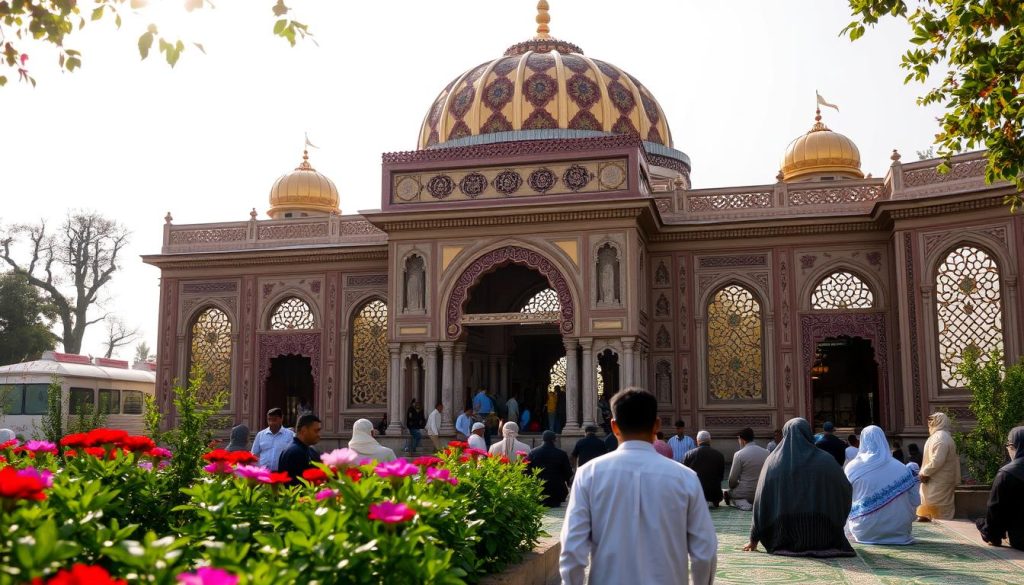
Tomb Peer Syed Hamid Shah Gillani
The Tomb Peer Syed Hamid Shah Gillani is a unique religious site in Multan. It’s set along a busy walkway, blending sacred and everyday life. Visitors can see the mix of culture right on the street.
The narrow streets leading to the tomb are full of life. Merchants sell goods, locals rush by, and devotees enter the shrine. This creates a lively scene for people-watching.
You can see Multan’s cultural tapestry unfold before your eyes. The past and present merge in this bustling area. It’s a rare chance to feel the city’s heartbeat.
The tomb shows Multan’s lasting spiritual importance. Sacred and secular life dance together here. You’ll gain insight into the city’s rich heritage and people’s devotion.
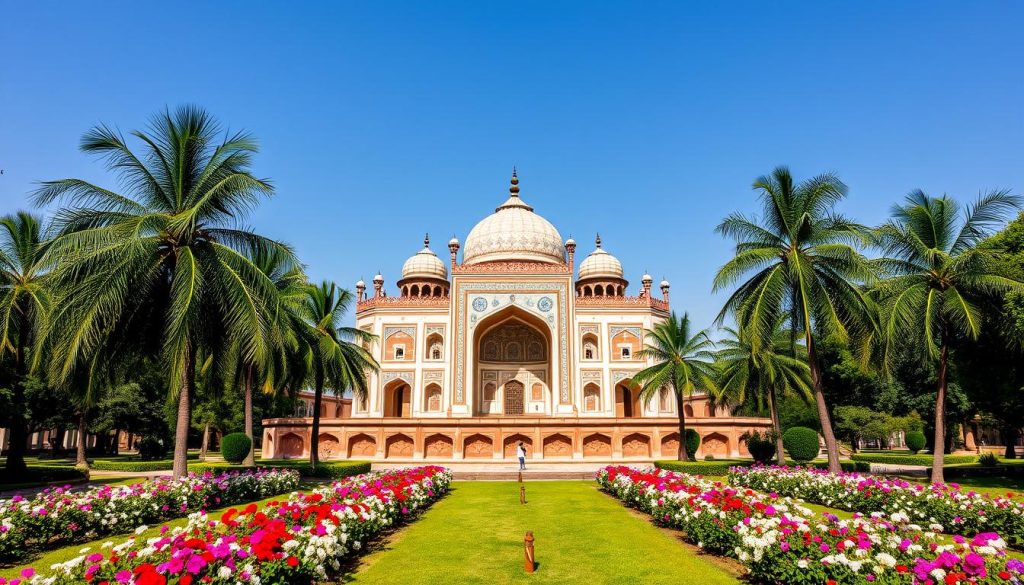
“The tomb is a living, breathing part of Multan’s everyday life, a constant reminder of the enduring power of faith and the resilience of a city that has weathered the passage of time.”
Hanifa Masjid
The Hanifa Masjid stands in Multan’s lively Chowk Bazaar. It’s a peaceful spot amid the busy marketplace. Visitors can find quiet here, away from the noisy crowd.
Respite from the Chowk Bazaar
Inside Hanifa Masjid, calm replaces the bazaar’s chaos. It’s a haven for those seeking peace. Here, people can escape the overwhelming sights and sounds of Multan’s commercial district.
Students Studying the Quran
Hanifa Masjid is both a place of worship and Islamic education. Visitors may see students memorizing the Quran. Their voices create a captivating sound within the mosque.
Visitors should not disturb studying students. However, locals often welcome outsiders to listen to recitations. This offers a glimpse into Multan’s religious education scene.
The mosque serves as both sanctuary and learning center. It shows the importance of spiritual spaces in Multan. Hanifa Masjid reflects the city’s rich religious heritage.
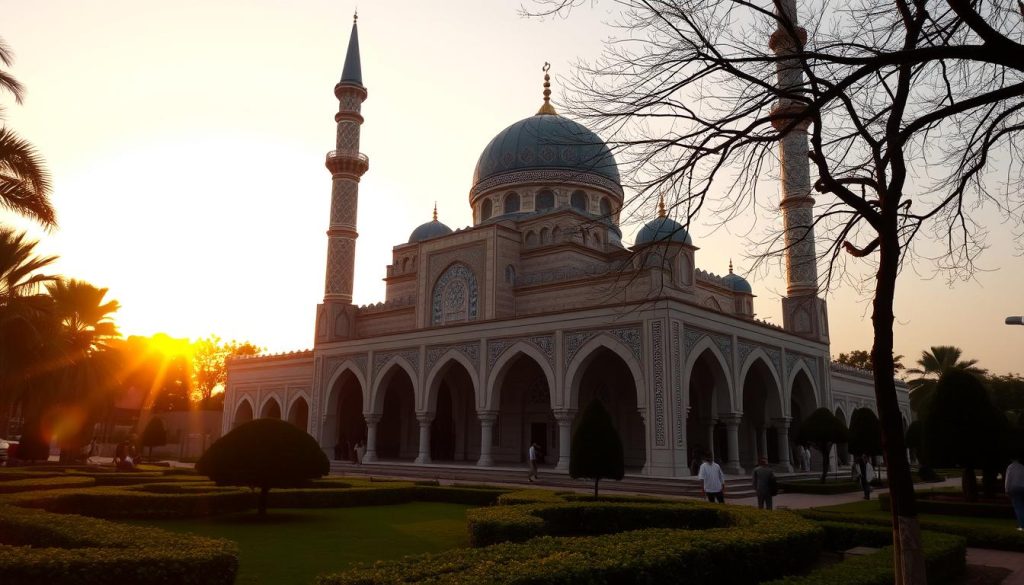
“The Hanifa Masjid is a microcosm of Multan’s unique blend of the sacred and the secular, where the serenity of religious devotion coexists with the vibrant energy of the city’s cultural and commercial heart.”
Darbar Shah Shams Sabzwari Alaihrehma
The Darbar Shah Shams Sabzwari Alaihrehma is a key cultural center in Multan. It’s not as grand as Multan Fort, but it’s vital for Sufi rituals. Devotees gather here for spiritual practices, unlike other tourist-focused sites.
Massive courtyards and a spiritual bazaar surround the shrine. These create a lively atmosphere where Multan’s cultural heartbeat thrives. Visitors can experience rich Sufi rituals passed down through generations.
Legends and Miracles Associated with the Shrine
The Darbar Shah Shams Sabzwari Alaihrehma holds many Sufi legends. Stories of the saint’s spiritual powers have captivated people for centuries. These tales are woven into the darbar’s rituals and ceremonies.
One famous story tells of the saint’s miraculous cooking. He asked the sun to come closer to heat a meal for a hungry disciple. Surprisingly, the sun obeyed his request.
These legends add to the mystical aura of this sacred Multan religious site. They continue to inspire visitors and devotees alike.
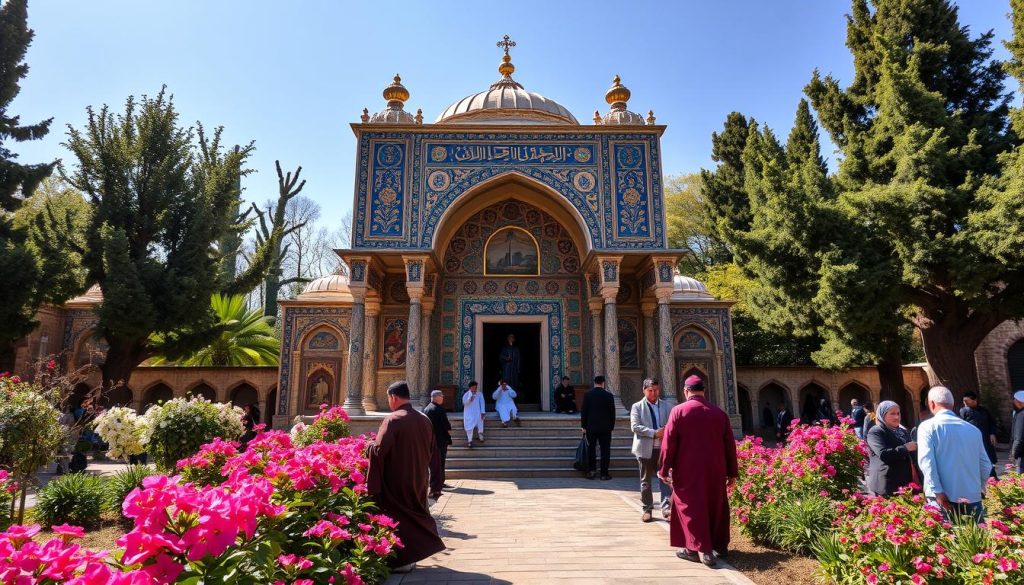
“The Darbar Shah Shams Sabzwari Alaihrehma is not just a place of worship, but also a repository of legends and miraculous stories associated with the Sufi saint buried within its walls.”
Tomb Hazrat Hafiz
The Tomb of Hazrat Hafiz Muhammad Jamal Multani graces Multan’s heart. Built in 1747 AD, it honors a renowned scholar, poet, and Sufi saint. This sacred site showcases Multan’s deep spiritual roots.
The mausoleum boasts a fortification-like wall and marble platform. Its congregational hall features a timber roof. These elements create a serene atmosphere for visitors.
Hafiz Jamal passed away in 1811 at 66 years old. He was known for his wisdom, poetry, and devotion to Sufi teachings.
The tomb’s grounds exude a sense of history and reverence. Sufi followers gather here for spiritual rituals and guidance. They draw inspiration from Hazrat Hafiz Muhammad Jamal Multani’s lasting legacy.
This site reinforces Multan’s reputation as the “City of Saints”. It stands as a beacon of the city’s enduring spiritual identity.