Explore Unique Cultural Experiences in Punakha
Did you know Bhutan is a hidden gem filled with unique cultural experiences? Punakha, at the heart of Bhutan, is a treasure trove of history and tradition. It’s perfect for anyone wanting to dive into its vibrant culture.
The town is surrounded by breathtaking landscapes. You’ll find amazing festivals, ancient temples, and the warm local communities. It’s a chance to see Bhutan in a new light and understand the importance of preserving culture.
Tourism in Bhutan has skyrocketed, from 200 visitors in 1974 to over 100,000 today. Places like Punakha offer a deep look into the local way of life. You can join in on cultural events that show the true spirit of Bhutan or see how farmers live in this magical valley.
Every moment here is an invitation to something extraordinary. Are you ready to discover the heart of Bhutan in Punakha?
Punakha: A Cultural Jewel of Bhutan
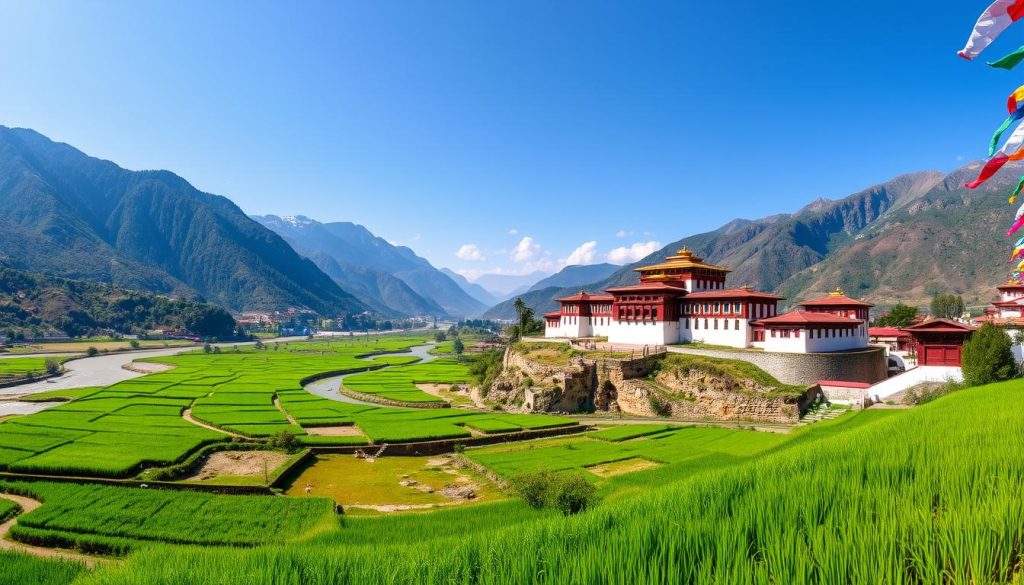
Punakha was once Bhutan’s capital and now shows off the country’s rich culture. It’s in the west, where rivers Mo and Pho Chhu meet. The town is surrounded by beautiful rice fields and green hills.
The Punakha cultural highlights mix history with nature, making it a cultural gem. It’s a place where history and beauty come together.
The Punakha Dzong is a stunning example of Bhutan’s architecture. Built in 1637, it hosts royal and religious events. It’s a showcase of Punakha cultural heritage during the Punakha Tshechu festival.
Chimi Lhakhang, or the Fertility Temple, is another treasure. It’s famous for helping childless couples. The Khamsum Yulley Namgyal Stupa, built in 2004, adds to the valley’s spiritual beauty.
Punakha is full of activities. River rafting on the Pho Chhu River is exciting. It lets you see the area’s beauty up close.
Punakha Dzong: The Architectural Marvel
The Punakha Dzong is a key part of Bhutan’s rich culture and architecture. Built in 1637, it shows the unique style of Bhutanese design. It’s not just beautiful; it’s also a key part of Bhutan’s history, hosting many royal events.
Historical Significance of Punakha Dzong
Punakha Dzong is very important in Bhutan’s history. It was the first king’s royal seat, Ugyen Wangchuck, who was crowned here in 1907. It was built by Zhabdrung Ngawang Namgyal, showing the growth of Bhutanese architecture.
The dzong has seen many ceremonies, like royal weddings and Buddhist rituals. This makes it a place of great cultural and historical value.
Exploring the Dzong’s Unique Features
The Punakha Dzong is known for its beauty and function. It sits at the meeting of two rivers, at 1,200 meters high, with amazing views. Inside, you’ll find detailed woodwork and colorful murals, attracting art lovers and pilgrims.
- The central utse or tower, which is six stories high, adorned with golden spires and intricate designs.
- The spacious courtyards that facilitate various religious and cultural festivities, including the renowned Tshechu Festival.
- Protected relics and national treasures that reflect Bhutan’s spiritual lineage, enhancing the cultural impact of this architectural marvel.
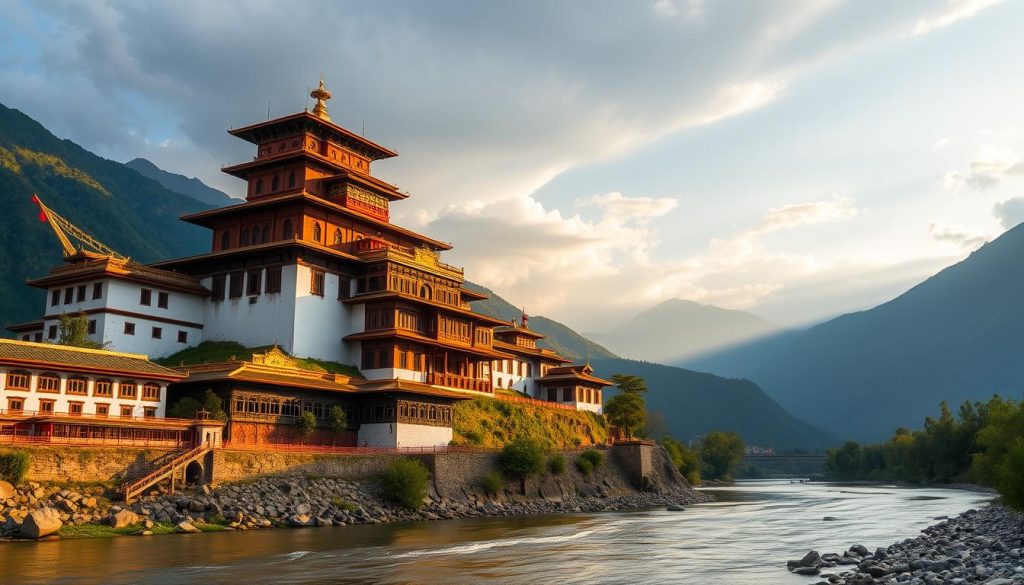
Visiting Punakha Dzong lets you see its amazing art and architecture. It helps you understand Bhutan’s culture better.
What are the unique cultural experiences in Punakha?
Punakha is a vibrant hub of Bhutanese culture. It offers many unique cultural experiences. These experiences truly show the essence of this remarkable region.
By engaging with the local community, you dive into the rich tapestry of Punakha’s cultural traditions. You get to participate in customs and practices that have shaped the area for centuries.
Festivals Celebrating Bhutanese Culture
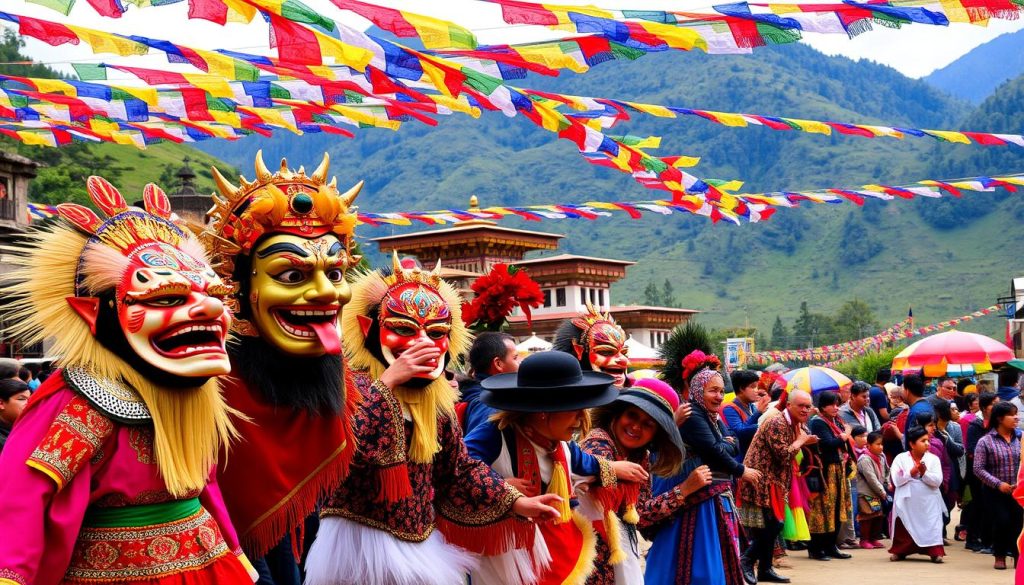
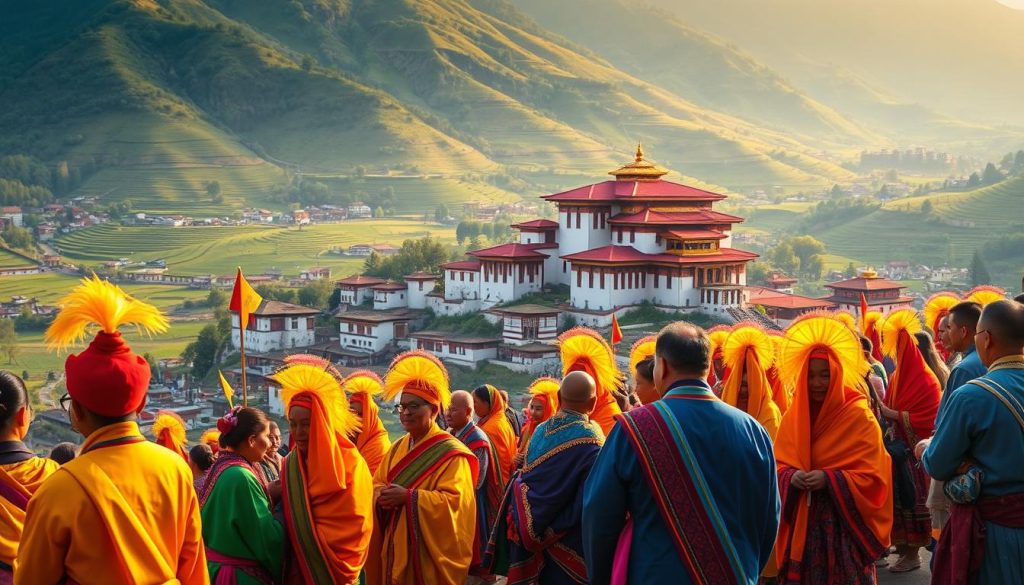
Punakha’s traditional festivals are a great way to see colorful celebrations. The Punakha Tshechu is one of the most notable. It features mesmerizing masked dance performances and traditional attire.
These events entertain and educate about historical narratives in Bhutanese life. By attending, you learn about community values and spiritual beliefs.
Cultural Traditions and Rituals
Punakha is also rich in cultural traditions and rituals. You can engage in practices like spinning prayer wheels. This helps you understand the region’s spiritual landscape.
Being part of these traditions lets you connect with the essence of Bhutanese culture. It’s a meaningful way to experience Punakha’s unique cultural experiences.
Visiting the Fertility Temple: Chimi Lhakhang
Chimi Lhakhang, known as the Fertility Temple, is a key spot in Punakha, Bhutan. It’s dedicated to Drukpa Kunley, a famous saint known for his unique approach to Buddhism. People visit for spiritual blessings, focusing on fertility, and are amazed by the temple’s cultural symbols.
Importance of Phallic Symbols in Bhutanese Culture
Phallic symbols are big in Bhutanese culture at Chimi Lhakhang. They stand for fertility, good luck, and keep evil spirits away. The tradition of carrying a wooden phallus around the temple three times during blessings shows how these symbols are valued. Drukpa Kunley’s teachings mixed humor with sacred practices, making these symbols special.
Exploring Chimi Lhakhang, you’ll see traditional Bhutanese design. Its golden roof, detailed woodwork, and prayer wheels are stunning. Inside, you’ll find Drukpa Kunley’s statue and other deities in colorful murals.
Every year, thousands of pilgrims come to the fertility temple for blessings. The hike through rice fields is peaceful, adding to the temple’s spiritual feel. It’s important to respect the culture here; visitors should be quiet and dress modestly.

| Key Information | Details |
|---|---|
| Opening Hours | 6:00 AM – 6:00 PM |
| Best Visiting Seasons | March to May (Spring) and September to November (Autumn) |
| Required Attire | Modest clothing covering shoulders and knees |
| Photography | Not allowed inside the temple |
| Nearby Attractions | Punakha Dzong, Khamsum Yulley Namgyal Chorten, Punakha Suspension Bridge |
Khamsum Yulley Namgyal Chorten: A Spiritual Quest
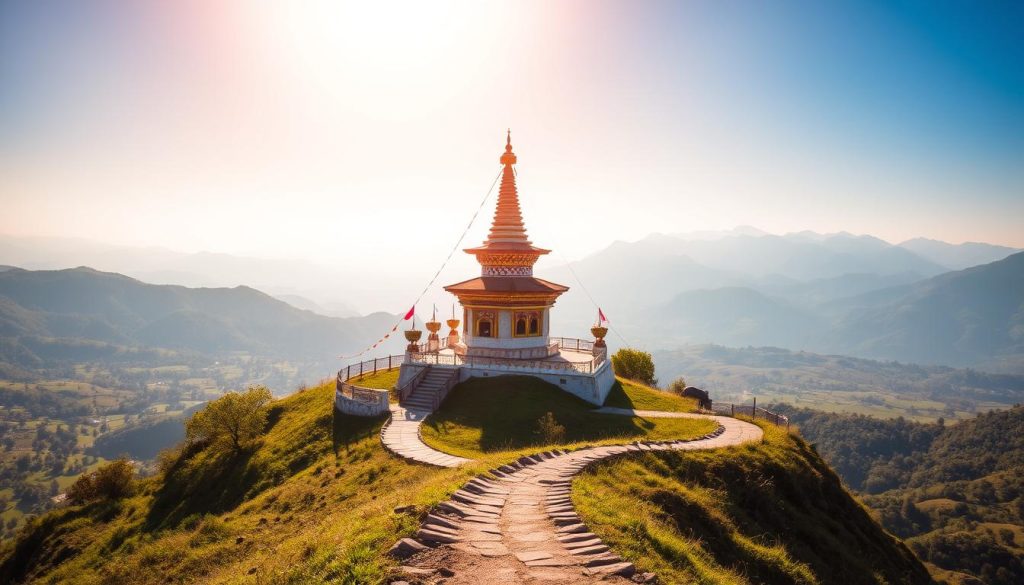
The Khamsum Yulley Namgyal Chorten is a symbol of deep faith and architectural wonder. It was built from 1999 to 2004, guided by Her Majesty the Queen Mother Ashi Tshering Yangdon Wangchuck. This stupa celebrates the fourth King of Bhutan and represents victory over the three realms.
Visiting the Khamsum Yulley Namgyal Chorten is a journey that takes about 1 to 1.5 hours. You’ll walk through the stunning Punakha Valley. The path includes an iron bridge and trails with rice paddies and pine trees.
At the chorten, you’ll find a peaceful spot for reflection. The chorten’s designs are detailed, with 103 sculptures of Vajrakilaya. It’s a place to think about peace and harmony.
The best times to see the Khamsum Yulley Namgyal Chorten are spring and autumn. Spring is full of flowers and great for outdoor fun. Autumn has nice weather and beautiful leaves, making it less crowded.
Punakha Tshechu: The Grand Festival
The Punakha Tshechu is more than a festival; it’s a lively celebration of Bhutan’s culture. It happens in early March. This grand festival honors Guru Rinpoche, the second Buddha.
The event takes place in the beautiful courtyards of the Punakha Dzong. This is the largest dzong in Bhutan. It offers a stunning setting for the festival’s activities.
Activities During the Tshechu Festival
Visitors can dive into many activities during the Tshechu festival. These activities show off the region’s deep cultural heritage. Some key events include:
- Sacred masked dances (cham) performed by monks and local artists, telling stories of Bhutan’s history.
- Traditional songs and music that echo the community’s rich artistic expressions.
- Ritual ceremonies that provide insights into Buddhist teachings, reinforcing the festival’s spiritual significance.
- Colorful parades that celebrate the community’s unity and the joy of its heritage.
Importance of Mask Dances
The mask dances are a highlight of the Punakha Tshechu. These performances are filled with history and serve two purposes. They entertain with vibrant colors and intricate choreography.
They also educate attendees about important historical events and spiritual teachings. The dances tell the story of struggles against Tibetan invaders and honor Guru Rinpoche’s teachings. They help keep the culture alive for younger generations.
Experience Local Life in Punakha Valley
Exploring Punakha Valley lets you dive into a rich cultural scene. Ritsha Village is a prime spot to see community life and farming up close. These practices are key to Bhutanese culture.
Exploring Punakha Ritsha Village
Walking through Ritsha Village, you’ll see how locals live their days. You can talk to them and learn about their traditions. The village’s old ways of life make it a special place to visit.
Traditional Farming Practices
Seeing traditional farming in Punakha Valley shows the bond between people and land. The terraced fields are a testament to hard work over the years. By joining in, you’ll understand the value of this heritage in the community.

| Activity | Description | Duration |
|---|---|---|
| Community Cooking | Learn to prepare traditional Bhutanese dishes with local ingredients. | 2 hours |
| Farming Experience | Participate in planting and harvesting crops with local farmers. | Half day |
| Cultural Craft Workshops | Engage in local crafts such as weaving and pottery. | 1-3 hours |
| Local Festivals | Experience vibrant celebrations showcasing traditional music and dance. | Variable |
The Sacred Sangchhen Dorji Lhuendrup Nunnery
The Sangchhen Dorji Lhuendrup Nunnery is a place of peace and spirituality in Bhutan. It was opened in 2015 by His Holiness the Je Khenpo. This nunnery sits on a hill overlooking the Punakha Valley.
It’s a place where nuns learn and help others. They grow together in a supportive environment. This helps everyone to grow and find harmony.
When you visit, you can feel the calm. You’ll see nuns doing their daily prayers. There’s a big bronze statue of Avalokiteshvara, the symbol of kindness. It attracts many who seek enlightenment and connection with Bhutan’s spirit.
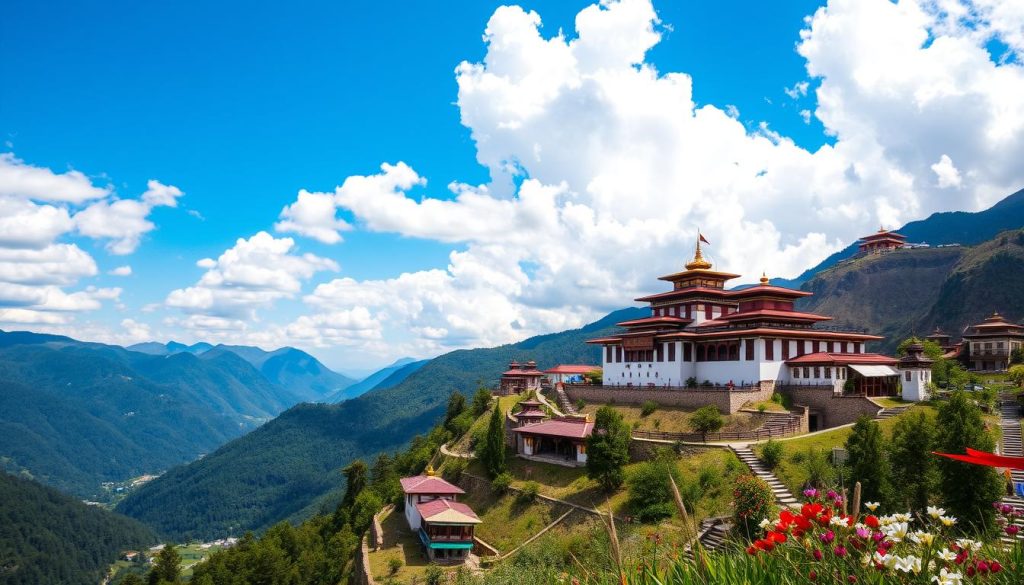
Visiting this nunnery is a chance for self-reflection. The beautiful views are perfect for meditation. It’s a way to escape the busy world and find peace.
Bhutan is focusing more on wellness tourism. Places like the Sangchhen Dorji Lhuendrup Nunnery are key to this effort.
| Features | Description |
|---|---|
| Year Inaugurated | 2015 |
| Location | Punakha Valley, Bhutan |
| Main Attraction | Statue of Avalokiteshvara |
| Focus Areas | Spiritual education, Community service |
| Visitor Experience | Meditation, Reflection, Cultural interaction |
People from all over want to experience Bhutan’s culture. The Sangchhen Dorji Lhuendrup Nunnery is a top spot. Bhutan’s focus on sustainable tourism and happiness shows in this sacred place.
Punakha’s Food Culture: A Gastronomic Adventure
Punakha’s food culture shows off Bhutan’s rich heritage and tasty traditions. As you wander through this beautiful valley, you’ll find many flavors and dishes. Each one tells a story of local ingredients and cooking ways.
Exploring Punakha’s food scene is a joy. You can try traditional dishes, visit lively local markets, and enjoy street food.
Traditional Dishes to Try in Punakha
In Punakha, trying authentic dishes is a must. Ema Datshi, the national dish, is a spicy chili and creamy yak cheese mix. It shows off Bhutan’s bold flavors.
The chili peppers in Ema Datshi can be very hot, sometimes over 200,000 Scoville Heat Units. This makes it exciting for those who love spicy food.
Buckwheat pancakes are another must-try. They’re gluten-free and full of protein. Buckwheat has been grown here for over 4,000 years. For meat fans, Phaksha Paa is a tasty stir-fry with dried pork, spices, and red chilies, served with red rice.
Exploring Local Markets and Street Food
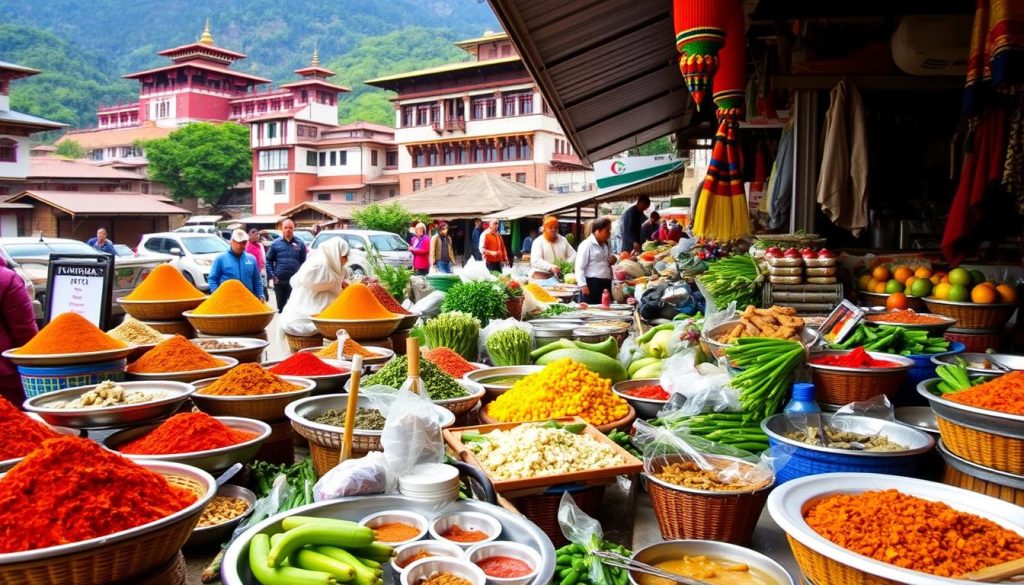
Punakha’s local markets are full of fresh produce, spices, and crafts. Here, you can talk to locals, learn about Bhutan’s food history, and find special ingredients like wild asparagus, or Norsha. It’s packed with nutrients and connects you to the area’s nature.
Street food vendors add to the fun, offering quick, tasty meals. Enjoying these dishes lets you meet local vendors and feel Punakha’s community spirit. Whether it’s a spicy chili dish or fresh pancakes, Punakha’s food culture is unforgettable.
Best Times to Experience Punakha’s Culture
Timing your visit to Punakha is key to diving into its rich culture. The best times are spring, from March to May, and autumn, from September to November. These seasons offer mild weather and stunning natural beauty, perfect for exploring local traditions and festivities.
Spring brings a lively atmosphere with temperatures between 64-77°F (18-25°C). It’s the time for blooming flowers and festivals like Punakha Tshechu. The gentle rain makes the scenery even more beautiful.
Autumn is another great time, with clear skies and temperatures from 60-70°F (16-21°C). It’s filled with traditional festivals that showcase Bhutanese culture. You can enjoy the colorful foliage while learning about local customs.
Winter (December-February) brings a calm to Punakha, with temperatures from 50-61°F (10-16°C). The snow-capped mountains add to the beauty, though cultural activities might be fewer. Summer (June-August) is warmer, with lush greenery, but heavy rainfall might limit outdoor activities.
| Season | Average Temperature (°F) | Weather Conditions | Cultural Highlights |
|---|---|---|---|
| Spring (March – May) | 64-77 | Vibrant with blooming flowers, light rain | Punakha Tshechu festival |
| Summer (June – August) | 75-79 | Warm, heavy rainfall, lush greenery | Tranquil ambiance |
| Autumn (September – November) | 60-70 | Clear skies, cool nights | Traditional festivals |
| Winter (December – February) | 50-61 | Pleasant days, snow-capped mountains | Serene landscapes |
Conclusion
Punakha is a unique cultural tapestry, woven with historical sites, vibrant festivals, and rich traditions. This Bhutanese gem offers many cultural experiences for adventurers and culture lovers. The majestic Punakha Dzong, measuring 180 m in length, is a must-see. The Punakha Tshechu festival is another highlight, showcasing the town’s vibrant culture.
Exploring Punakha’s local community and stunning surroundings deepens your understanding of its culture. You can hike to the revered Chimi Lhakhang or experience Bhutan’s unique cultural practices. Each visit lets you connect more deeply with the traditions of this region.
Your trip to Punakha is more than just seeing sights—it’s a chance to dive into a culture that values sustainability and authenticity. As you explore Punakha, let its charm and unique experiences captivate you. Remember, preserving its cultural legacy for future generations is crucial.