Ideal Season for Punakha Festivities & Culture
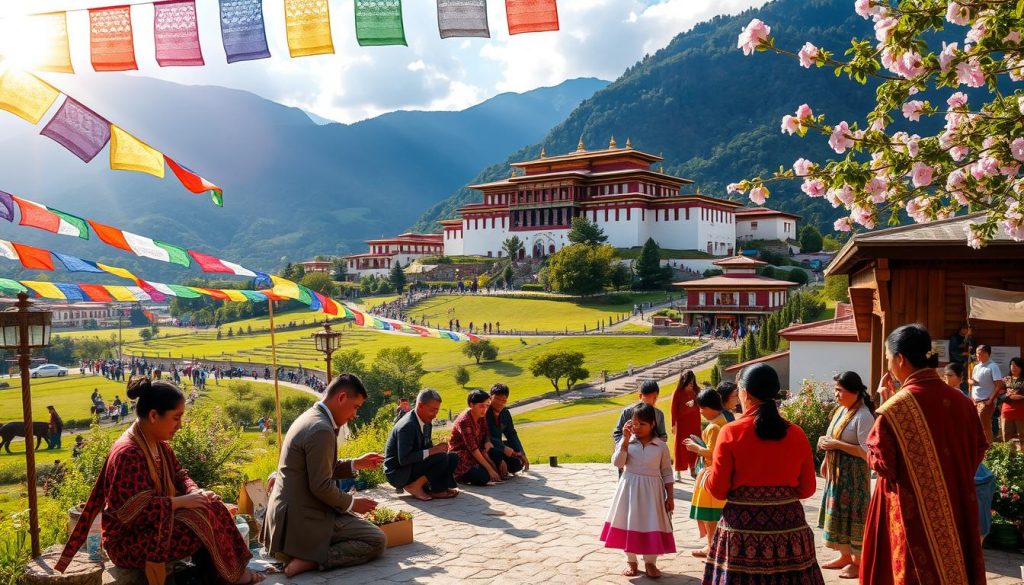
Ever wondered when is the best time to see Bhutan’s vibrant culture? The festivals and activities in Punakha change with the seasons. Each season offers a unique glimpse into local traditions.
Spring brings stunning flowers, while autumn is filled with lively celebrations. Each season adds a new layer to Punakha’s charm.
The best time of year to experience Punakha’s culture and festivals makes your trip even better. It helps you understand the local way of life. You’ll get to dive into Punakha’s cultural activities and see how the Punakha festival season is a big part of life here.
Every festival is a chance to experience Bhutan’s heritage in beautiful settings. It makes every moment special.
Understanding the Seasons in Bhutan
Bhutan has a rich and varied climate due to its unique geography. It has four seasons: Spring, Summer, Autumn, and Winter. Each season offers different travel experiences. Knowing Bhutan’s climate helps plan your trip, focusing on cultural events.
Overview of Bhutan’s Climate
The southern plains near India have a subtropical climate. They are hot and humid in summer, mild in winter. Central valleys, like Punakha, have a temperate climate. Summer temperatures are warm, while winters are cold.
The northern region is home to the Himalayas. It has alpine conditions with cold winters and lots of snow.
Spring in Bhutan (March-May) is warm with blooming rhododendrons. It’s a favorite time for travelers. Summer (June-August) brings heavy rains, making landscapes green. Autumn (September-November) is the best season, with clear skies and cool temperatures. Winter (December-February) has cold temperatures in the highlands and mild weather in the valleys.
How Seasons Affect Travel Plans
Seasons greatly impact travel plans in Bhutan. Spring and Autumn attract the most tourists due to cultural festivals. Summer rains may scare some off, but off-season travel can be cheaper. Winter offers quiet adventures, away from crowds.
For festival-goers, Spring or Autumn visits are best. Knowing the seasons can make your trip more rewarding, enriching your experience in Punakha.

The Allure of Spring in Punakha
Spring in Punakha starts in March and ends in May. It brings mild temperatures and vibrant plants. The daytime temperature is between 22°C (72°F) and 25°C (77°F). This makes it perfect for exploring the area.
Clear skies let you see the beauty of places like the Punakha Dzong. It’s covered in blooming jacaranda trees.
Weather Conditions during Spring
The weather in Punakha during spring is lovely. It has plenty of sunshine and moderate temperatures. This makes it great for outdoor activities.
People enjoy walking and hiking in the lush landscapes. They also love the fresh air.
Cultural Festivals in Spring
Spring is full of festivals, like the Punakha Tshechu. It’s famous for its dances and rituals. The festival usually happens in March.
It draws both locals and tourists. They want to see the Bhutanese culture. The Punakha Drubchen is another highlight. It features mask dances and happens at the same time as the Tshechu.
Activities to Experience
Spring in Punakha offers more than just festivals. There are exciting activities to try. Here are some:
- Hiking to the famous Taktsang Monastery, a 4-5 hour round trip.
- White-water rafting on the beautiful rivers nearby.
- Bird watching to see Himalayan species in their natural habitat.
- Cultural tours to learn about Punakha’s history and traditions.
Spring in Punakha is not just about beautiful views. It’s also a time for making memories through culture and outdoor activities.

Summer: A Quieter Time to Visit Punakha
Summer in Punakha, from June to August, offers a unique travel experience. The area is lush and culturally rich. Heavy rainfall transforms the scenery, making it beautiful for those who venture out.
Let’s explore the summer weather in Punakha and the local cultural activities. These reveal the heart of Bhutan’s summer experiences.
Summertime Weather in Punakha
The summer weather in Punakha has temperatures between 20°C (68°F) and 28°C (82°F). Visiting means you should be ready for constant rain and possible travel disruptions. Carry waterproof clothing to stay comfortable while exploring.
Local Cultural Activities in Summer
Summer, despite the rain, offers chances to dive into vibrant cultural activities. The Haa Summer Festival is a highlight. Visitors can:
- Explore Bhutanese crafts, like weaving and pottery.
- Taste traditional local food at the festival.
- Join cultural performances that show local music and dance.
This quieter time has fewer tourists. You can enjoy monasteries and homestays, immersing yourself in authentic Bhutanese culture. Summer cultural activities can create lasting memories as you connect with the local way of life.
| Activity | Date | Description |
|---|---|---|
| Haa Summer Festival | July | A celebration of Haa’s unique cultural heritage with local food, crafts, and performances. |
| Homestay Experience | June to August | Stay with local families to learn about daily life and traditions in Bhutan. |
| Monastery Visits | All Summer | Explore serene monasteries, often less crowded, providing a peaceful atmosphere for reflection. |
Summer in Punakha offers diverse experiences. You can seek adventure, cultural engagement, or tranquility. It deepens your understanding of Bhutan’s rich traditions amidst vibrant natural beauty.
Autumn: The Peak Season for Cultural Experiences
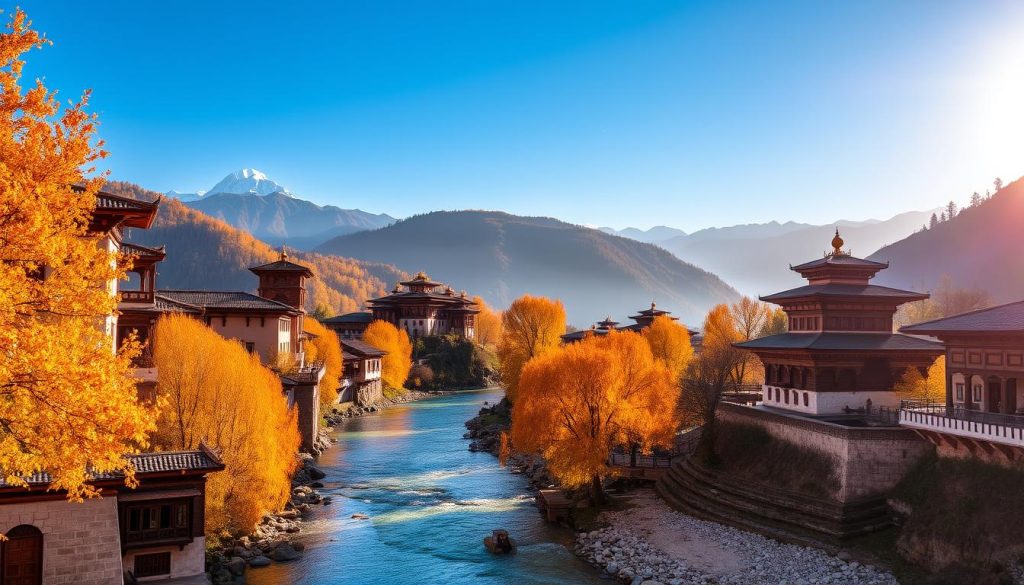
Autumn in Bhutan, from September to November, is perfect for travelers. The weather is crisp and clear, making it great for exploring. In Punakha, the autumn weather is mild, with temperatures between 14°C and 25°C. This means less rain and amazing views of the Himalayas.
This climate is ideal for both tourists and locals. It’s a time when everyone can enjoy the outdoors.
Favorable Weather Conditions during Autumn
Autumn brings a pleasant climate. It’s the best time for outdoor activities like hiking and trekking. The trails around Punakha are filled with colorful leaves, offering stunning views.
The temperatures are comfortable, and the humidity is low. This makes it perfect for sightseeing.
Major Festivals Celebrated in Autumn
Autumn is full of colorful festivals in Bhutan. The Punakha Tshechu in autumn is a highlight, with its mask dances and ceremonies. These events give a glimpse into Bhutan’s culture and traditions.
The Thimphu Tshechu in September and the Wangdue Tshechu in October add to the festive atmosphere. These festivals let visitors experience the lively ceremonies and spirituality of Punakha.
Activities to Enjoy During This Season
Autumn offers many adventures and cultural experiences. You can visit the famous Punakha Dzong or hike to the Tiger’s Nest Monastery. Cycling through the green landscapes is another great way to enjoy the scenery.
Trying archery, Bhutan’s national sport, is a unique experience. It gives you a chance to learn about local traditions during this lively season.
Winter Season: Unique Experiences Await
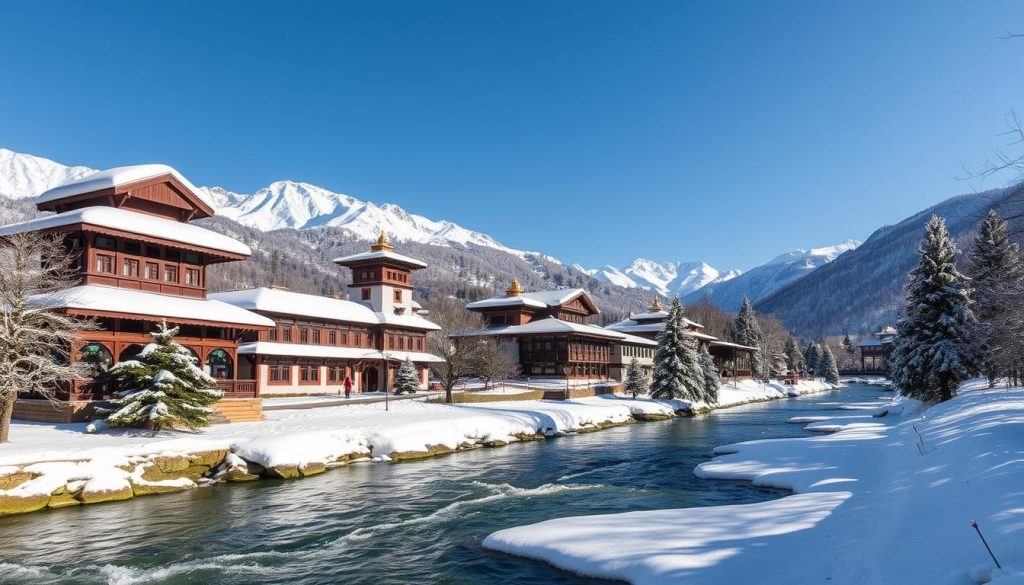
Winter in Punakha runs from December to February. It offers a special view of the area’s landscape and culture. The weather can be quite cold, with days ranging from 4°C (39°F) to 18°C (64°F).
Nights often get below freezing. Snowfall is common, turning the area into a beautiful winter wonderland.
Winter Weather Conditions
The cold season has its own charm. Snow on temples and dzongs makes for stunning views. These attract photographers and nature lovers.
With fewer tourists, you can enjoy these sights alone. This makes it perfect for those who love peace and quiet. Plus, the lower prices make it a great time to travel.
Opportunities for Cultural Engagement in Winter
Even though it’s low season, winter offers special chances to engage with local culture. Events like the Druk Wangyel Tshechu showcase Bhutan’s traditions. These festivals let you dive into local culture, seeing vibrant dances and rituals without the usual crowds.
Bird watching for the endangered Black-Necked Crane is also exciting in winter. It’s a great activity for nature lovers in Punakha.
Best time of year to experience Punakha’s culture and festivals?
Punakha is known for its vibrant festivals all year round. Each season offers a special chance to dive into local traditions. Knowing about spring and autumn festivals can make your visit even better.
Spring Festivals: A Deep Dive
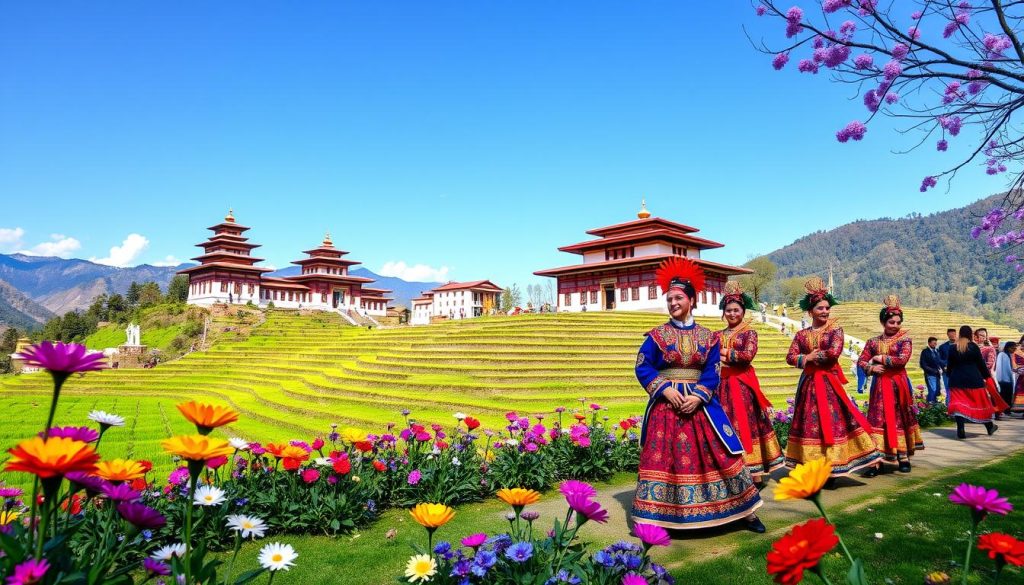
Spring festivals in Punakha, like the Punakha Tshechu and Punakha Drubchen, happen in February and March. These events attract many people to the beautiful Punakha Dzong. You’ll see colorful costumes and exciting performances.
These festivals are deeply connected to the region’s history and religion. By joining in, you can really get to know Bhutanese culture.
Autumn Festivals: Highlights and Recommendations
Autumn is the best time for cultural experiences in Bhutan. The Thimphu Tshechu and Wangdue Tshechu happen in September and October. These festivals offer a chance to see traditional music, dance, and stories.
Going to these festivals lets you see the spiritual side of Bhutan. It makes your trip even more meaningful.
Visitor Insights and Experiences
Many visitors to Punakha love the spring and autumn festivals. They praise the locals’ warm welcome. People share how they learned about Bhutan’s culture by joining in the celebrations.
Experiencing these festivals gives you a deeper understanding of Punakha’s rich culture.
Punakha’s Cultural Events throughout the Year
The Punakha festival calendar is a rich tapestry of cultural events. These festivals, based on the lunar calendar, draw visitors from all over Bhutan. Throughout the year, you can dive into the local culture through various traditional events in Punakha.
Overview of the Punakha Festival Calendar
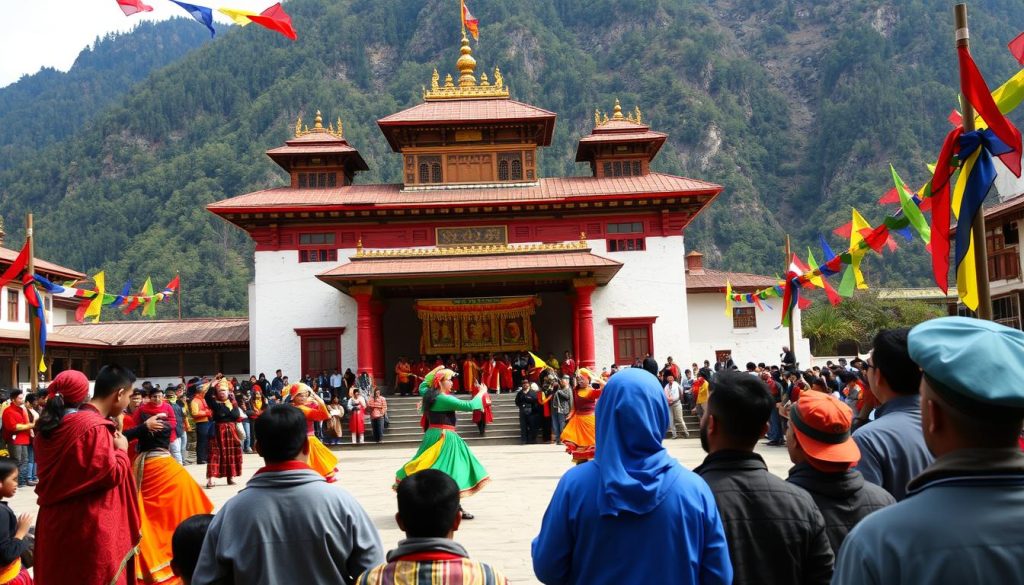
Punakha is famous for its colorful festivals, with the Punakha Tshechu being the main event. This festival, held at the Punakha Dzong, spans three to five days in February or March. It includes masked dances, sacred rituals, and performances honoring Guru Rinpoche.
The Tshechu is more than a religious event. It celebrates the unity and strength of the local community.
- Punakha Drubchen: Precedes the Tshechu, showcasing preparations and rituals.
- Paro Tshechu: A popular five-day festival in spring, occurring in March or April.
- Thimphu Tshechu: A three-day festival celebrated in the fall, usually in September or October.
- Black-Necked Crane Festival: Celebrated annually in November, highlighting preservation efforts.
Traditional Events and Activities Worth Exploring
Punakha offers more than just festivals. It has traditional events that give you a deeper look into local life. Activities like archery competitions and traditional dances let you connect with Bhutan’s culture. Each activity strengthens community bonds and shows off local craftsmanship.
- Archery Competitions: Witness or participate in Bhutan’s national sport.
- Local Craft Exhibits: Engage with artisans and learn about traditional handicrafts.
- Community Dances: Experience lively traditional dances often performed during events.
Cultural Traditions in Punakha
Punakha’s vibrant culture is deeply connected to its festivals. These events highlight the religious significance of festivals in Bhutan. They show the community’s identity and beliefs through rituals. Knowing these customs will make your visit to Bhutan more special.
Religious Significance of Festivals
The festivals in Punakha are key to the local culture. The Punakha Tshechu, held in February or March, honors Guru Rinpoche for three days. It shows Bhutan’s spiritual zeal and the importance of cultural traditions.
The festival ends with the Serda, a procession that remembers a 17th-century war against Tibet. This makes it stand out among Bhutanese festivals.
Local Cultural Practices and Their Importance
Exploring the local culture in Punakha lets you see traditions passed down through generations. You’ll see dress codes and communal prayers that keep Bhutan’s identity alive. These practices show respect for nature and community, highlighting the importance of cultural traditions.
By joining in these events, you help keep these traditions alive. You also connect more deeply with the land and its people.
| Festival | Time of Year | Key Features | Historical Connection |
|---|---|---|---|
| Punakha Tshechu | February/March | Honoring Guru Rinpoche, Mask dances, Serda | Covers the 17th-century Tibetan war |
| Punakha Dromche | February/March | Reenactment of 17th-century battle | Remembrance of Tibetan conflict |
| Paro Tshechu | March | Mask dances at Rinpung Dzong | Showcasing local beliefs and history |
| Black Necked Crane Festival | November | Awareness and conservation | Cultural significance of wildlife conservation |
Conclusion
Visiting Punakha in Spring or Autumn offers a rich cultural experience. Spring is lively with festivals, while Autumn has perfect weather and beautiful landscapes. Each season has its own charm, like the Paro Tsechu in Spring and the Thimphu Tshechu in Autumn.
The mix of history, tradition, and community spirit makes each season unique. Enjoying these experiences deepens your connection to local traditions. You’ll understand Bhutanese life better. Spring temperatures range from 15°C to 25°C, and Autumn’s are between 10°C to 25°C, making it ideal for everyone.
Planning your trip around these festivals makes your journey better. It also helps keep these cultural traditions alive for future generations. Exploring Punakha’s heritage, like during its festivals, will give you unforgettable memories.