Unique Cultural Experiences in Thimphu Unveiled
Ever wondered what makes a country’s culture special? In Bhutan’s heart, Thimphu stands out. It’s a city filled with traditions, lively festivals, and a strong will to keep cultural values alive. Here, you can see a unique way of life.
This capital city is rich in Thimphu cultural heritage. It invites you to try unique cultural activities that show the nation’s spirit. You can join in on Tshechus festivals or try real Bhutanese food. There’s so much to do in Thimphu’s cultural world.
Walking through Thimphu, you’ll see a mix of old and new. Local traditions live on, surrounded by beautiful nature. So, what awaits you in Thimphu? Get ready to use your senses and experience the real Thimphu.
Introduction to Thimphu’s Cultural Richness
Thimphu is a shining example of cultural richness and traditional beauty in Bhutan. Founded in 1961, it’s the capital city and a key center for the economy, education, and healthcare. Here, you can see how modern and old traditions blend together.
The city sits at about 2,320 meters (7,610 feet) above sea level, making it even more special. Getting to Thimphu from Paro International Airport takes just about an hour. This makes it easy for visitors to dive into the local culture.
Thimphu is known for its deep traditions and practices that focus on happiness. The people’s love for their King is evident in their warm welcome. The city comes alive during Thimphu cultural festivals, showcasing the vibrant spirit and heritage of Bhutan. Exploring Thimphu’s culture opens your eyes to the heart of this amazing country.
What are some unique cultural experiences in Thimphu?
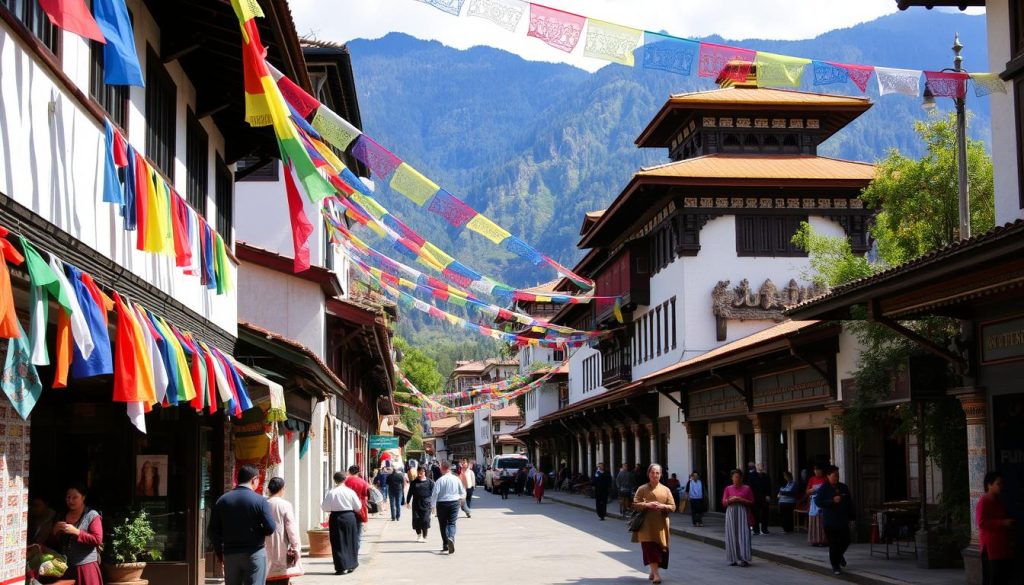
Thimphu, the capital of Bhutan, is full of cultural experiences. Visitors can dive into local traditions. These traditions show the daily lives and customs of the Bhutanese people.
When in Thimphu, look for activities that let you connect with these traditions. It’s a great way to see the city’s heart.
Exploring Local Traditions
Visiting cultural sites in Thimphu is a great way to engage with local traditions. The Textile Museum is a must-see. It shows traditional wedding garments and textiles, highlighting weaving techniques.
The Folk Heritage Museum offers a peek into rural life. It has historical artifacts and tools that tell stories of Bhutan’s agriculture.
For a hands-on experience, try paddy planting or archery. The Changlimithang Stadium is perfect for watching archery tournaments. It’s a place to feel the local competitive spirit.
Engaging with Bhutanese Festivals
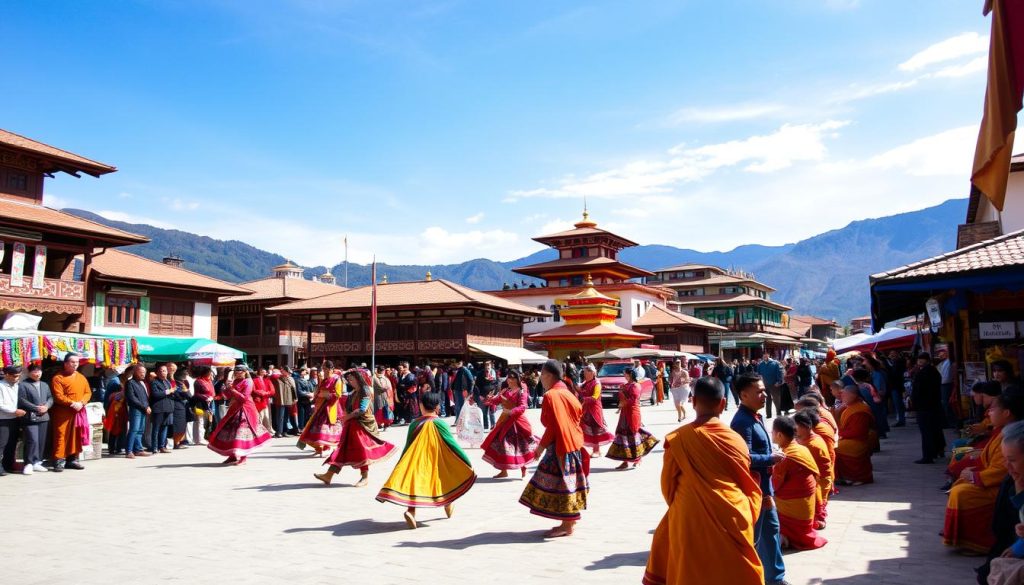
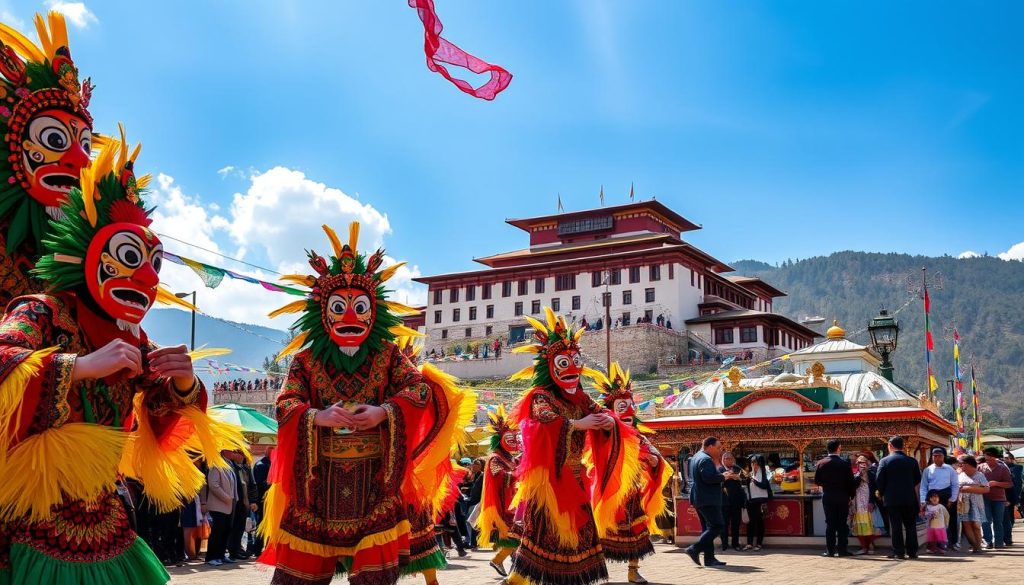
The Tshechu events in Thimphu are vibrant and full of culture. You can see masked dances called Cham. These dances are performed by monks and laymen in colorful costumes.
The Thimphu Tsechu at Tashichho Dzong in September is a highlight. It draws locals and tourists, offering a chance to feel the Bhutanese culture.
Participating in Thimphu’s traditional events makes your visit richer. It helps you understand Bhutan’s incredible heritage.
| Experience | Location | Description |
|---|---|---|
| Textile Museum | Thimphu | Showcases traditional textiles and garments, including those of the 4th Dragon King. |
| Folk Heritage Museum | Thimphu | Provides insights into rural life and historical artifacts. |
| Archery | Changlimithang Stadium | Experience the excitement of Bhutan’s national sport. |
| Thimphu Tsechu | Tashichho Dzong | An annual festival with traditional dance performances and community participation. |
Traditional Bhutanese Festivals in Thimphu
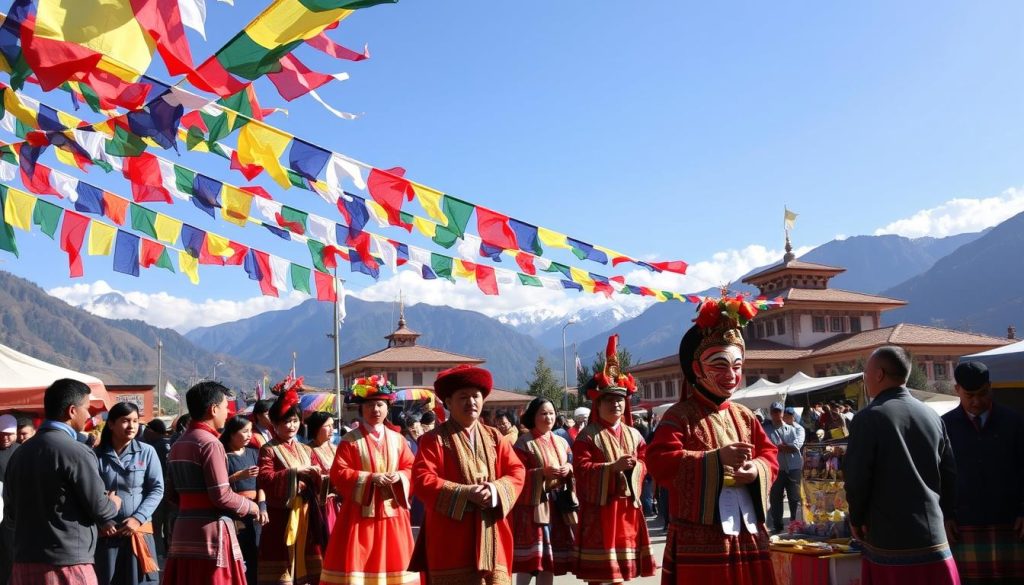
Thimphu’s cultural festivals show off Bhutan’s rich traditions. They highlight the country’s deep spirituality and lively culture. These events draw both locals and tourists, eager to dive into Thimphu’s cultural scene.
The Tshechu festivals are a key part of Bhutan’s culture. They are held in cities like Thimphu every year. These festivals honor important figures and bring people together.
Significance of Tshechu Festivals
Tshechu festivals are more than just celebrations. They are cultural events that happen in cities like Thimphu. They take place on special lunar dates to honor historical and religious figures.
During the Thimphu Tshechu in autumn, thousands gather at Tashichho Dzong. They watch masked dances, called *cham*, and join in religious ceremonies. These festivals help keep Bhutanese traditions alive and teach values like compassion and respect.
Cultural Performances During Festivals
Cultural performances at Thimphu festivals showcase Bhutan’s artistic side. The dances and costumes tell stories from Bhutan’s folklore and Buddhist teachings. The *cham* performances feature masked dancers acting out old stories that teach moral lessons.
Watching these performances gives a deep look into Bhutan’s culture. It makes your visit to the festivals a memorable experience.
Must-Visit Cultural Landmarks in Thimphu
Thimphu is a treasure trove of cultural landmarks that you must see. These places are not just beautiful but also carry deep historical and spiritual meanings. Exploring Thimphu’s culture will give you a deeper understanding of Bhutan’s heritage.
Understanding the Architectural Grandeur
The buildings in Thimphu show off Bhutan’s rich history. They mix practicality with beauty. For example, Tashichho Dzong, known as the “Fortress of the Glorious Religion,” hosts the famous Thimphu Tshechu festival.
Here, you can see traditional dances and rituals that draw thousands every year. The Buddha Dordenma statue is another must-see. It stands at 51.5 meters tall and has over 125,000 Buddha statues inside. It’s a masterpiece of art and a symbol of Buddhist philosophy.
The Role of Dzongs in Bhutanese Culture
Dzongs are key in Bhutan’s culture and government. Tashichho Dzong, for instance, has been the government’s seat since 1952. It combines government work with sacred spaces. These fortress-monasteries are centers for monastic life and showcase Bhutan’s architectural beauty.
Simtokha Dzong is another important dzong. It’s known as the first ancient fortress in the Kingdom. It shows how these structures blend monastic and administrative functions, telling Bhutan’s cultural story.
Participating in Traditional Bhutanese Dance Performances
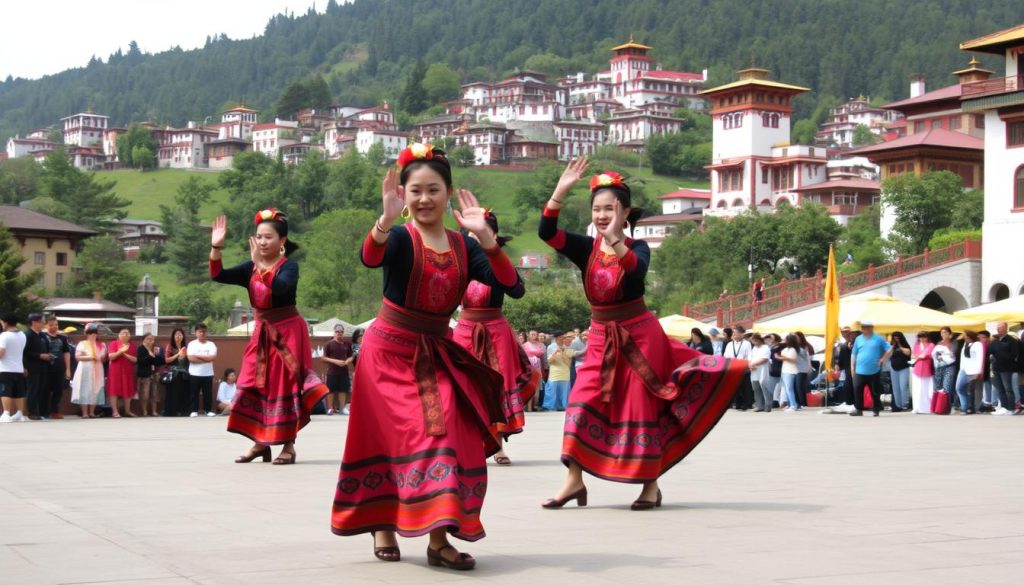
Dive into the lively world of Bhutanese dance in Thimphu. These shows open a window to Bhutan’s rich culture. You’ll see the detailed moves and lively tunes that make each dance special. Taking part in these activities lets you see the beauty and deep meaning of each dance.
The Vibrancy of Dance and Music
Bhutanese dance has many styles, like Cham, Zhungdra, and Boedra. Cham dance is special, with masked dancers doing complex moves. They tell stories filled with tradition and myths. The costumes, from bright silk robes to fancy headdresses, show the dance’s cultural importance.
Traditional Bhutanese festivals, or tshechus, are perfect for these dances. Local groups perform amazing shows that touch everyone. The music, with sounds from the drangyen and dramyen, makes the event joyful. Joining in these dances lets you feel closer to Bhutan’s culture.
| Dance Style | Description | Key Features |
|---|---|---|
| Cham | A masked dance that dramatizes religious stories. | Intricate moves, masks, and vibrant costumes. |
| Zhungdra | A court-style dance often performed by formal troupes. | Graceful movements and traditional attire. |
| Boedra | A dance influenced by southern Bhutanese culture. | Rhythmic steps with a lively musical accompaniment. |
Joining in Bhutanese dance shows is a special way to celebrate Bhutan’s creativity and community. It adds depth to your understanding of Bhutanese culture.
Sampling Authentic Bhutanese Cuisine
Bhutanese food is a mix of bold flavors and unique ingredients. It’s influenced by Tibet, India, and China. When you explore Thimphu’s culture, trying traditional dishes is a must. These meals not only feed you but also share stories of Bhutan and its people.
Popular Dishes You Must Try
- Ema Datshi: A spicy chili and cheese stew, this dish epitomizes the love for heat in Bhutanese culinary tradition.
- Phaksha Paa: A savory pork dish prepared with radish and greens, perfect for those who enjoy hearty meals.
- Momos: Steamed dumplings filled with either meat or vegetables, a culinary favorite that offers comfort in every bite.
- Kewa Datshi: A delightful combination of potatoes and cheese, cooked in a spicy chili sauce.
- Suja: Butter tea, an iconic beverage, often enjoyed with meals.
Dining Experiences in Local Restaurants
Eating at local restaurants in Thimphu is a treat for your taste buds. It also helps you understand Bhutanese customs better. Many places show Thimphu’s traditional events, making your meal more special. Cultural performances can turn a simple dinner into a memorable event.
Restaurants often serve staple grains like red rice, buckwheat, and maize. This gives you a taste of Bhutan’s authentic nutrition.
| Dish | Price Range (BTN) |
|---|---|
| Ema Datshi | 100 – 500 |
| Kewa Datshi | 100 – 500 |
| Phaksha Paa | 400 – 500 |
| Jasha Maroo | 300 – 450 |
| Shakam Paa | 300 – 350 |
| Goep | 100 – 300 |
Exploring Bhutan’s food is a warm and welcoming experience. Whether you try meaty dishes or vegetarian options, each meal gives you a real taste of Bhutan. The flavors and the dining atmosphere make your journey through Thimphu’s culture complete.
Shopping for Local Handicrafts and Souvenirs
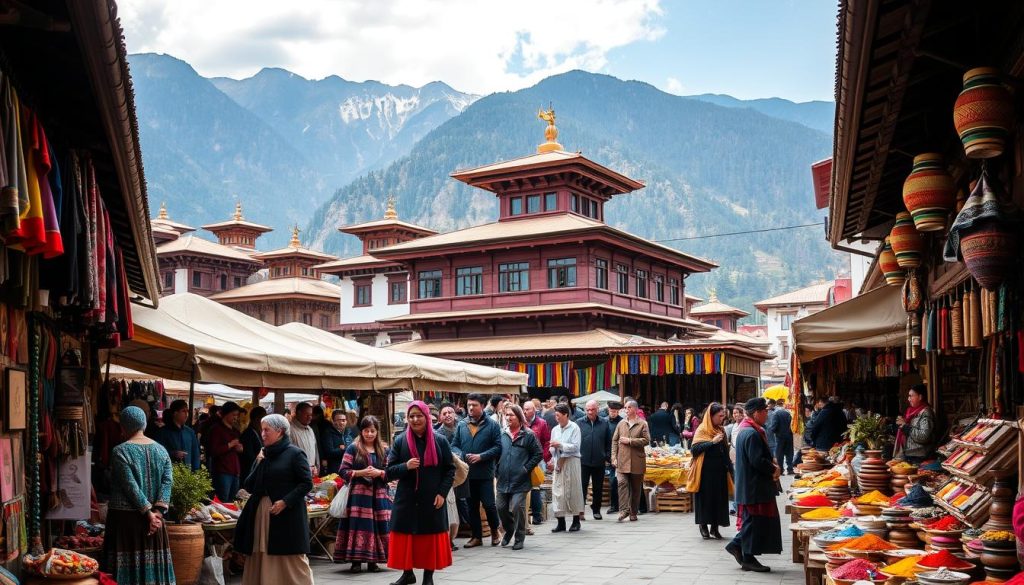
Thimphu is a lively place for shopping, blending new and old markets. You’ll find many local handicrafts that show off Bhutan’s rich culture. Each item tells a story, making it a special keepsake that shows the Thimphu cultural heritage.
Highlighting Local Artisans and Their Crafts
Artisans in Thimphu are proud of their work, using old techniques. Here are some highlights of Thimphu’s handicrafts:
- Textiles: You’ll find beautiful handwoven clothes, like ghos and kiras.
- Jewelry: Unique pieces often use gemstones like turquoise and lapis lazuli.
- Wooden Carvings: Wooden masks and sculptures are important in festivals.
- Paper Products: Items made from recycled lokta, like cards and lamps, are popular.
- Craft Bazaar: A great place to find prayer beads, brass statues, and more.
Where to Shop in Thimphu
For a true taste of Thimphu cultural activities, check out the markets and stores. They offer both old and new handicrafts. Key places to visit include:
| Location | Offerings | Highlight |
|---|---|---|
| Centenary Farmers Market | Fresh produce, local snacks, handmade handicrafts | Variety of organic products and local delicacies |
| Norzin Lam | Textiles, jewelry, paper products | A bustling street with friendly vendors |
| Gagyel Lhundrup Weaving Centre | Handwoven woollens, traditional bags | Authentic Bhutanese craftsmanship |
| Voluntary Artist Studio | Traditional and contemporary artworks | Showcasing the rich artistic talent of Bhutan |
| Craft Bazaar | Prayer beads, textile products, wooden bowls | Diverse range of authentic Bhutanese crafts |
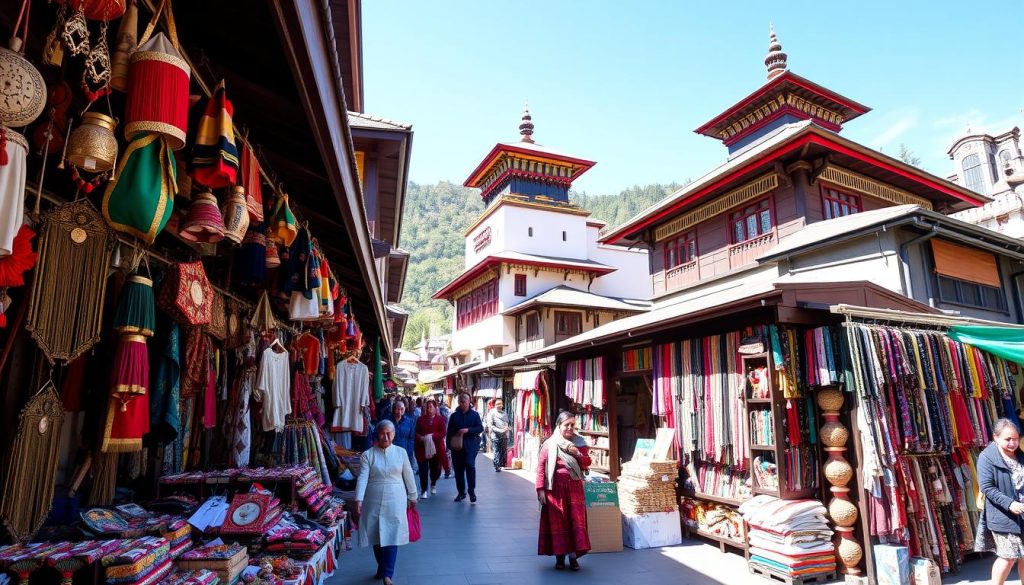
When you’re at these markets, don’t be afraid to bargain. Being polite with vendors makes the experience better. Shopping in Thimphu not only gets you unique items but also helps you appreciate Bhutan’s cultural heritage.
Immersive Cultural Experiences in Thimphu
Exploring Thimphu’s cultural heritage can create lasting memories. You can dive into Bhutanese traditions through various activities. These include scenic hikes to ancient monasteries and joining in on local events.
Hiking to Local Monasteries
Hiking to monasteries like Tango and Cheri offers stunning views and spiritual depth. These spots are rich in history and offer a glimpse into Bhutanese Buddhism. Walking through these places, you’ll feel the calm and beauty of nature.
Participating in Traditional Archery
Traditional archery is a key part of Bhutanese culture. It’s a chance to learn about Bhutan’s history and community spirit. You can watch or try it yourself during Thimphu’s cultural events. It’s a great way to connect with locals and understand their traditions.
These activities deepen your appreciation for Thimphu’s culture. Whether you’re hiking to monasteries or trying traditional sports, Thimphu offers unforgettable experiences. It showcases its unique cultural heritage in a meaningful way.
Visiting Thimphu’s National Memorial Chorten
The National Memorial Chorten is a key landmark in Thimphu. It honors the late King Jigme Dorji Wangchuck. Many people visit, making it a center for Thimphu’s cultural activities.
Locals come to pray and walk around the Chorten. This creates a vibrant atmosphere filled with devotion.
The Chorten’s carvings are full of symbols from Bhutan’s Buddhist heritage. Walking around, you’ll see the detailed designs. Watching locals practice their faith gives you a peek into Bhutan’s traditions.
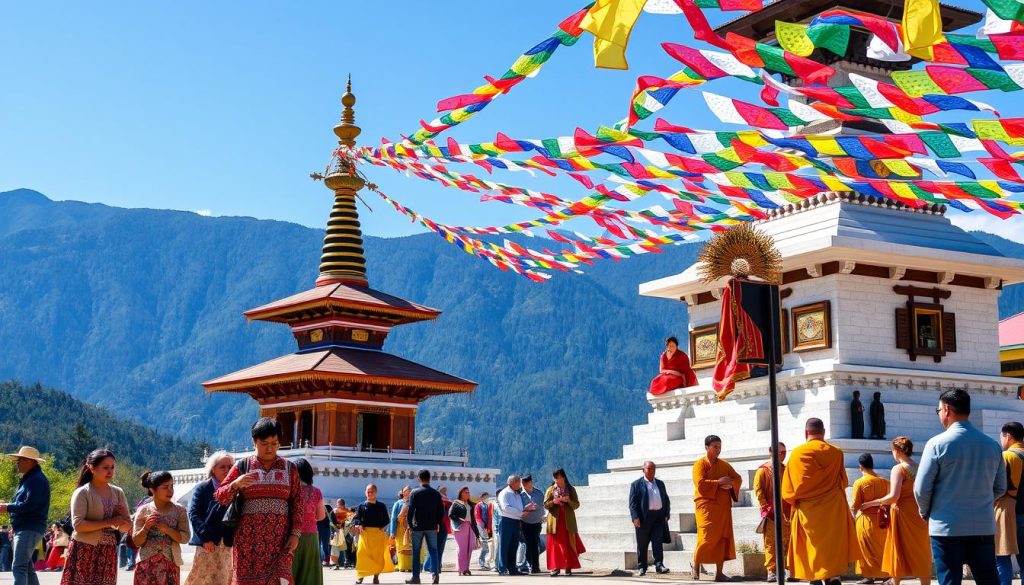
To see the National Memorial Chorten, you’ll need to pay BTN 300, about ₹2250 for foreigners. This fee lets you explore the Chorten and the area around it. Seeing these practices up close will deepen your understanding of Buddhist customs in Bhutan.
| Attraction | Entry Fee (BTN) | Entry Fee (₹) |
|---|---|---|
| National Memorial Chorten | 300 | 2250 |
| Tashichho Dzong | 300 | 2250 |
| Folk Heritage Museum | 200 | 1500 |
| Textile Museum | 150 | 1125 |
| Centenary Farmers’ Market | Free | Free |
| National Institute for Zorig Chusum | 100 | 750 |
| Royal Takin Preserve | 100 | 750 |
| Simtokha Dzong | 300 | 2250 |
Visiting the National Memorial Chorten enriches your experience in Bhutan’s capital. It shows the spiritual and cultural richness of this nation.
Exploring the Buddha Dordenma Statue
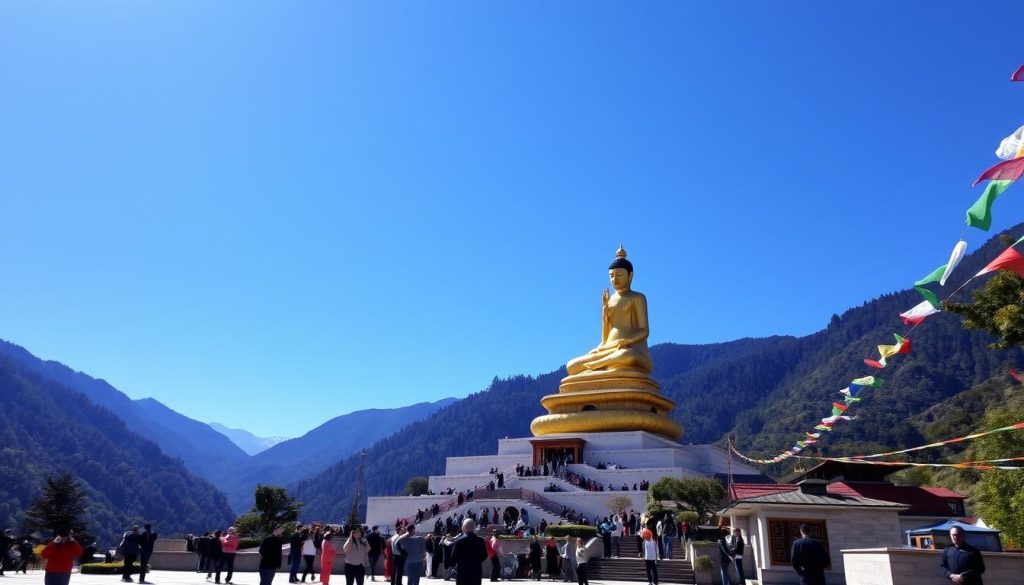
The Buddha Dordenma Statue is a symbol of peace and prosperity in Thimphu. It stands 54 meters tall, making it one of the world’s largest Buddha statues. The statue overlooks the Thimphu Valley, creating a stunning view.
Visiting this site is a must for those exploring Thimphu. It offers breathtaking views, rich history, and spiritual significance.
Significance and Symbolism
The Buddha Dordenma was built from 2006 to 2015. It took nearly a decade to complete, with help from artisans and engineers from around the world. The statue symbolizes peace, happiness, and prosperity, key values in Bhutanese culture.
Inside, you’ll find 125,000 smaller Buddha statues. They are made of bronze and gold, each representing blessings and peace.
Visiting Buddha Point lets you admire this masterpiece and learn about Thimphu’s cultural heritage. You can get there by car, bus, tour, or walking if you’re nearby. Its accessibility makes it a favorite among tourists and locals.
The best times to visit are early morning or late afternoon. This way, you can see the statue’s grandeur without the crowds. The views of the Himalayas and the city are unforgettable, making it a highlight of Thimphu.
Lessons in Bhutanese Heritage at Tashichho Dzong
Tashichho Dzong is a symbol of Bhutan’s heritage, mixing practical use with beauty. It’s not just a government building but also a monastery. It shows the deep connection between Bhutan’s history and its spiritual life.
Visitors get to see the rich history and traditions of Bhutan. This place is a treasure trove of knowledge about the country’s past and present.
The Role of the Dzong as a Government Complex
The dzong is key in Thimphu’s cultural scene. It was first built in 1261 and has been rebuilt several times, most recently in the 1960s. Today, it’s the heart of Bhutan’s government, where the king and officials work.
Walking through its gardens and enjoying the views, you’ll see Bhutan’s dedication to its traditions. The dzong also welcomes visitors, giving a peek into Bhutan’s governance.
Local Customs and Etiquette When Visiting Thimphu
Exploring local customs in Thimphu makes your visit better. Knowing and following traditions shows you value Bhutanese culture. It also helps you get along well with the locals. Here are key practices to remember for Thimphu cultural activities.
How to Respect Bhutanese Traditions
- Dress modestly: Make sure your shoulders and knees are covered, mainly when visiting temples.
- Respect rituals: Take off your shoes before entering any religious site.
- Avoid negative gestures: Don’t point with your feet or touch religious items.
- Engage respectfully: Be polite to locals to deepen your cultural experience.
- Observe ceremonies: Keep quiet and behave well during traditional rituals.
Following these tips helps make Bhutan’s welcoming vibe even better. Knowing Thimphu’s local customs makes your trip more rewarding. It also helps you connect with the Bhutanese people on a deeper level.
| Practice | Explanation |
|---|---|
| Dressing modestly | Covers shoulders and knees when visiting temples or cultural sites. |
| Shoe removal | Required before entering sacred spaces. |
| Gestures | Avoid pointing with your feet or touching heads. |
| Local interaction | Engage with the community in a friendly and respectful manner. |
| Quiet during ceremonies | Show respect by maintaining silence during rituals. |
Conclusion
Thimphu is a city full of unique cultural experiences that show the true heart of Bhutan. The Thimphu Tshechu festival is a highlight, with its traditional dances and music. It tells the story of Bhutan’s history in a beautiful way.
Trying local foods like Ema Datse is a must. Every corner of the city invites you to explore its rich heritage. You can learn about Thangka paintings or enjoy the weekend market’s friendly vibe.
Thimphu is full of unforgettable moments. Visit the National Memorial Chorten or the Buddha Dordenma Statue for a peaceful experience. Interacting with local artisans and watching traditional performances lets you see the effort in keeping Bhutan’s traditions alive.
Going on hikes to historic monasteries or watching an archery contest gives you a closer look at Bhutanese life. These experiences make your visit more than just sightseeing. They let you dive deep into Bhutan’s culture.
Planning your trip with these experiences in mind makes it special. Every moment, from trying new foods to enjoying festivals, adds to your journey. These memories will stay with you forever.