Explore Traditional Crafts Mandalay – Artisan Secrets
Imagine the secrets of Mandalay’s artisans revealing skills passed down for centuries. These skills shape the city and show its culture’s heart. Mandalay, Myanmar’s second-largest city, is alive with traditional crafts.
The Mahamuni Pagoda and Kuthodaw Pagoda are just the start. They are filled with Buddhist pilgrims and sacred scriptures. The city is a treasure trove of Burmese handicrafts.
Traditional crafts in Mandalay are more than just beauty. They tell stories of history and heritage. Artisans practice Panchi and Pantamaut, connecting past and present.
Exploring this craft scene, you’ll find more than just beautiful items. You’ll see a rich tapestry made by talented individuals. They work hard to keep their craft alive in a changing world.
Introduction to Mandalay’s Craft Scene
Mandalay is Myanmar’s second-largest city, known for its rich arts. The city’s markets and craftsmanship give visitors a peek into its cultural heritage. Skilled artisans make beautiful items like wood carvings, kalaga tapestries, and gold-leaf works. These workshops keep alive traditions passed down through centuries.
The Kuthodaw Pagoda is home to 729 marble slabs with Buddhist scriptures, called the ‘World’s Biggest Book.’ The Shwenandaw Monastery, with its stunning woodcarvings, is the only building from the royal palace left. Visitors can meet artisans and see the hard work that goes into each piece.
Mandalay Hill offers stunning views of the city and the Irrawaddy River. It’s also a great spot to watch the sunset. Nearby, Taungthaman Lake is perfect for sunset views, with the world’s longest teak footbridge nearby.
Pyin Oo Lwin, a former British hill station, has colonial-era buildings and diverse ethnic tribes. The Botanical Gardens cover 432 acres of plants. There, you can see colorful flowers and fresh produce at a lively market. You can also learn about bamboo weaving, basketry, and fan making.
Zegyo Market is Mandalay’s oldest and most important market. It’s full of handcrafted jewelry and traditional textiles. You can try mohinga and coconut pancakes and enjoy the spice market’s lively atmosphere. Talking to local vendors helps support the local economy and keeps cultural crafts alive.
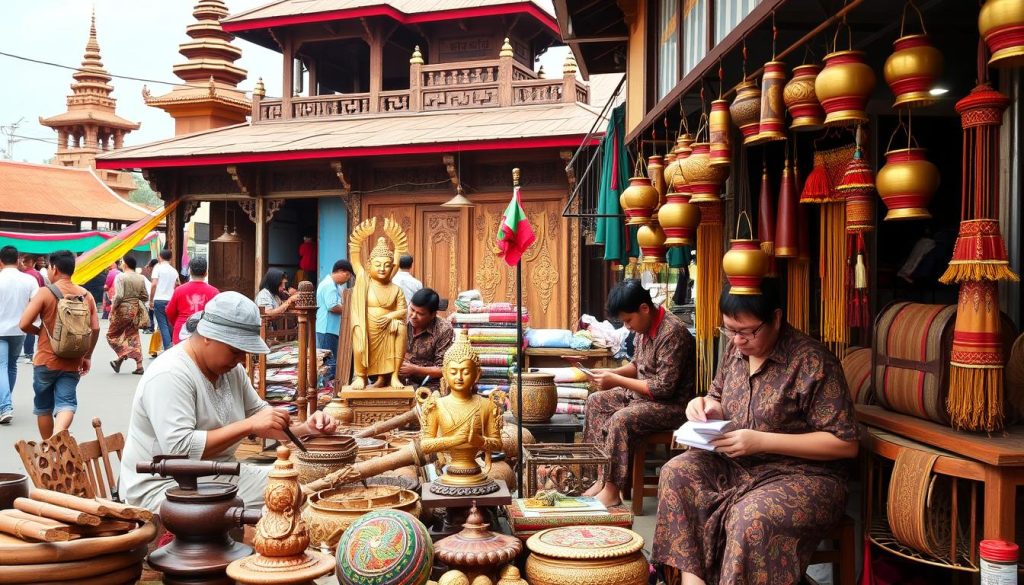
Exploring the Cultural Heritage of Mandalay
Mandalay’s cultural crafts weave a rich history and artistry into a vibrant tapestry. It is Myanmar’s cultural heart, filled with traditions that stretch back centuries. With a population of about 1.3 million, it’s the second-largest city, offering a lively scene with many Burmese handicrafts.
The Mahamuni Temple is a highlight, home to the revered Mahamuni Buddha statue. This statue, covered in 15 centimeters of gold leaf, shows centuries of devotion. Artisans in Mandalay make gold leaf as thin as seven millionths of an inch, used for both religious offerings and crafts.
The Kuthodaw Pagoda and Mandalay Palace are symbols of the city’s rich past. They house treasures like the world’s largest book, made of 729 marble slabs with Buddhist teachings. Visitors come to admire their beauty and learn about Mandalay’s cultural stories.
Local artisans keep traditions alive through wood carving, lacquerware, and kalaga tapestries. These pieces reflect the artisans’ creativity and the Burmese people’s stories. Exploring Mandalay’s cultural crafts offers a chance to see the local artistry and community spirit.
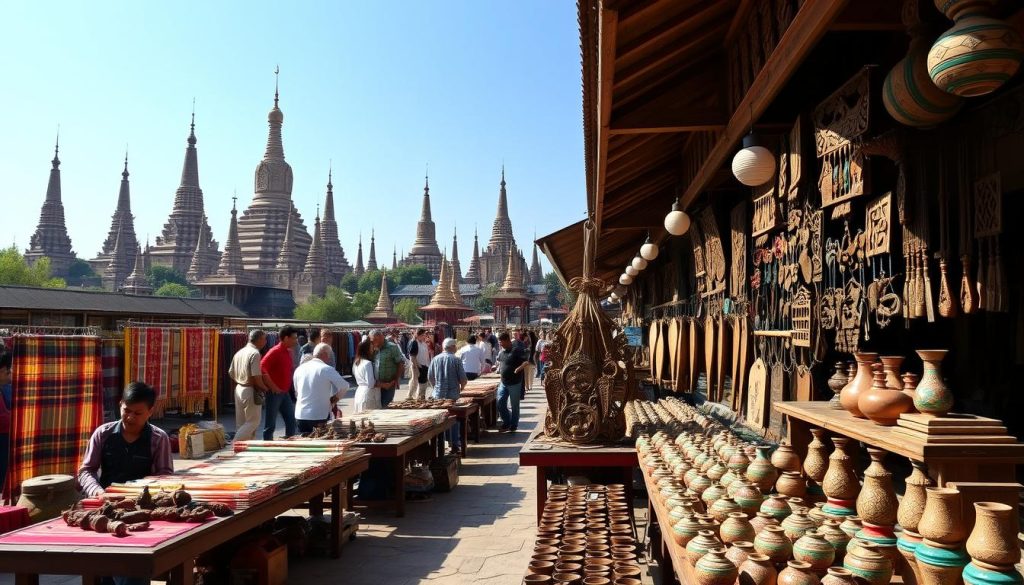
Traditional Crafts Mandalay: A Deep Dive into Artisanal Skills
In Mandalay, you’ll find a world of artisanal products that hold deep cultural value. Each craft is a piece of history, passed down through generations. Local artisans spend years perfecting their skills, keeping their art alive.
Pottery is a big deal in Mandalay. Skilled potters turn clay into stunning, useful items. The dedication of these craftspeople is evident in every piece. From pottery to embroidery, each craft tells a unique story, boosting the local economy and heritage.
Want to learn more about these crafts? Mandalay offers workshops and demonstrations. By engaging with artisans, you gain a deeper understanding of their work. You also help keep these ancient techniques alive. So, be sure to explore the wide range of traditional crafts available.
While in Mandalay, take time to see artisans at work. Their skills showcase the traditions of this lively city. It’s a chance to appreciate and honor Mandalay’s rich cultural heritage.
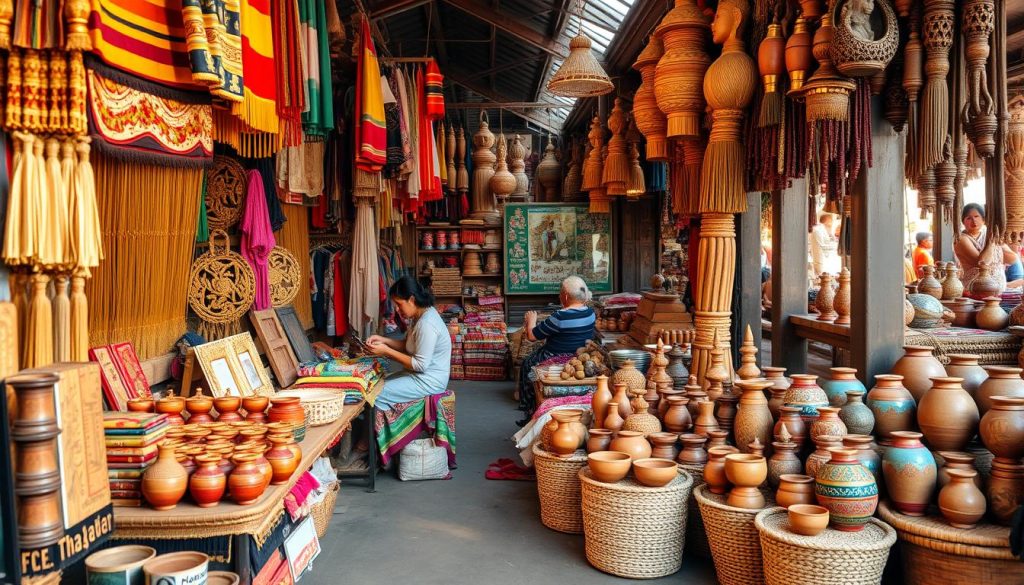
The Intricate Art of Weaving in Mandalay
Weaving is a key part of Mandalay’s artistic spirit. It shows centuries of tradition and skill. Local artisans use traditional techniques to make fabrics that tell stories and add to the culture.
Methods like backstrap and loom weaving are key. They make fabrics that are both useful and beautiful.
Traditional Weaving Techniques Mandalay
The weaving methods in Mandalay go back generations. They show a deep cultural heritage. Backstrap weaving lets artisans make detailed patterns in textiles.
Loom weaving is more structured. It makes fabrics like silk and cotton. These methods show the artisans’ skills and help keep traditions alive.
Handmade Souvenirs Mandalay: What to Look For
Looking for handmade souvenirs in Mandalay makes your visit special. It reminds you of the city’s craftsmanship. Here’s what to find:
- Vibrant tapestry fabrics – These have detailed designs and colors.
- Traditional longyi (sarongs) – These garments have patterns that show cultural importance.
- Hand-woven bags – These bags are stylish and practical. They support local artisans.
These items are great souvenirs. They remind you of your visit and help support Mandalay’s textile heritage.

| Item | Description | Source |
|---|---|---|
| Tapestry Fabrics | Colorful textiles often featuring traditional designs. | Local artisans |
| Longyi | Traditional sarong worn by both men and women. | Craft workshops |
| Hand-Woven Bags | Stylish bags made using traditional weaving techniques. | Handicraft markets |
Discovering Local Craft Workshops Mandalay
Local craft workshops in Mandalay offer a unique chance to dive into the area’s rich artistic heritage. These workshops play a key role in keeping alive the traditional crafts that have been passed down for generations. By taking part, you get to see the detailed steps of various crafts up close. You also gain a deeper respect for the skill and hard work of local artisans.
Hands-On Experiences with Artisans
Artisans often welcome you into their workshops, making for a memorable and interactive time. You can try your hand at crafts like weaving, pottery, and making gold leaf. These hands-on experiences teach you not just the techniques but also the cultural importance of each craft.
- Weaving: See the fine artistry in creating detailed patterns and try weaving your own piece.
- Pottery: Get hands-on and make unique pottery items, learning about ancient methods.
- Gold Leaf Production: Learn the careful process of making gold leaf, a key craft in Mandalay.
By participating in local craft workshops in Mandalay, you help the local economy and build real connections with artisans. This way, you gain a deeper understanding of Mandalay’s rich craft traditions and the stories behind each artisan’s work.
| Craft Type | Experience Highlights | Skills Learned |
|---|---|---|
| Weaving | Engage in creating traditional textiles | Understanding patterns and textile techniques |
| Pottery | Hands-on crafting of clay pottery | Shaping and glazing techniques |
| Gold Leaf Production | Demonstrations and crafting | Precision in creating gold leaf |
The Timeless Tradition of Traditional Pottery Mandalay
Traditional pottery in Mandalay is a big part of the area’s culture. This craft has grown over centuries, with special techniques and styles passed down through families. Skilled artisans create both useful and decorative items, showing off Mandalay’s rich heritage.
Watching pottery-making is truly fascinating. Local artists turn clay into different shapes, each piece showing their personal touch and traditional designs. The pottery is then fired in old kilns, built with local materials and kept by families for generations. This shows how important traditional pottery is in Mandalay, mixing art with local traditions.
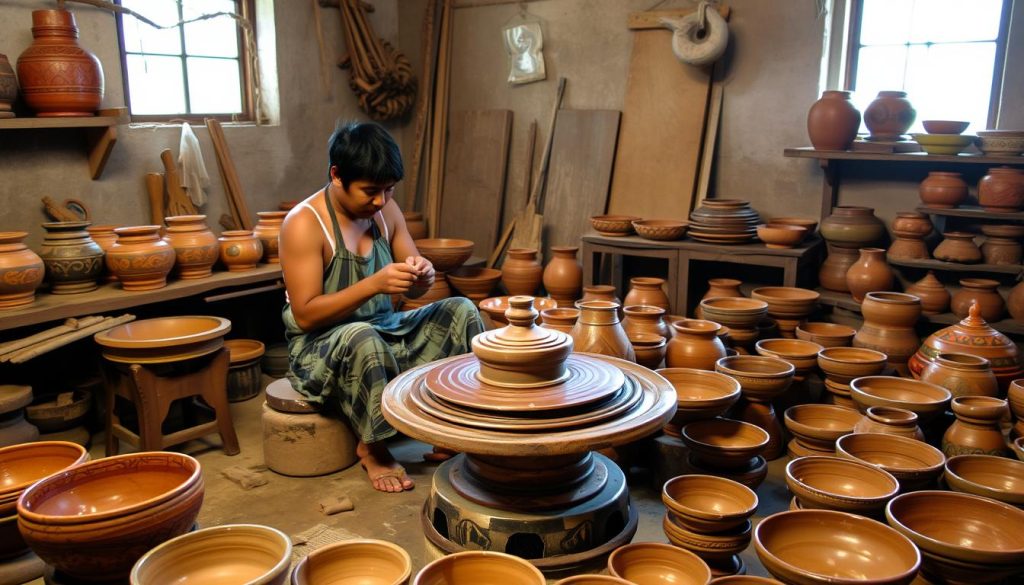
Mandalay’s pottery makers make many items, like beautiful vases, bowls, and jars. Each piece has its own story, making them more than just objects. They are works of art that help the local economy, showing how vital pottery is to Mandalay’s culture and business.
More people are loving handmade items, and Mandalay is a great place to see this. Visitors can learn from the artisans and see how they keep this ancient art alive. Traditional pottery in Mandalay shows the lasting value of handmade crafts, deeply rooted in Myanmar’s history.
Gold Leaf Hammering: A Vital Craft in Mandalay
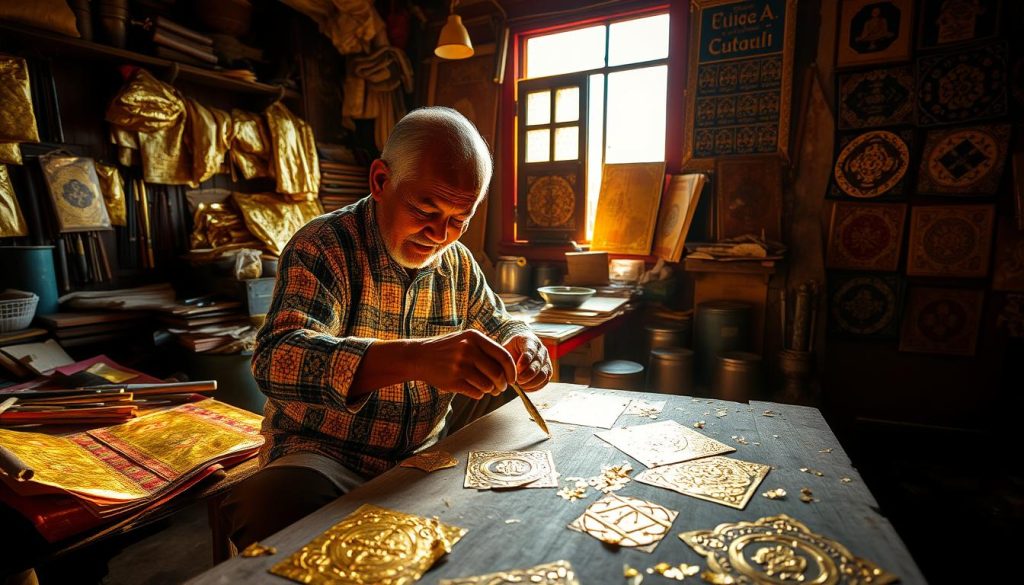
You step into the world of gold leaf hammering in Mandalay, a craft deeply rooted in the area’s culture. This art form involves turning gold bullion into thin sheets through hard work. Artisans show their skill and dedication by hammering gold.
This method is not just practical but also holds deep cultural and artistic value. It’s a key part of Burmese traditions.
The Process of Gold Leaf Making
Making gold leaf is a detailed and hard process. It starts with heating gold until it’s soft. Then, artisans use a special hammer to flatten it into thin sheets.
They must be very precise, as any mistake can ruin the work. These thin sheets are then protected between bamboo or paper. They’re used to decorate temples, statues, and other sacred objects.
Uses of Gold Leaf in Burmese Culture
Gold leaf has many uses in Burmese culture, all with spiritual significance. It’s often used on Buddha statues, pagodas, and other religious items. This shows respect and veneration.
By gilding these items, people not only make them beautiful but also gain merit. This is important in Buddhist beliefs. Gold leaf is also used in festivals and ceremonies, showing the mix of art and spirituality in Mandalay.
This craft is important for many families in Mandalay. It helps the local economy and keeps this tradition alive.
Exploring Burmese Handicrafts in Mandalay
Mandalay is known for its rich culture, highlighted by its Burmese handicrafts. The city’s streets and markets are filled with traditional crafts. These items, like lacquerware, wooden crafts, and marionettes, show the skill of local artisans.
Visiting local craft workshops lets you see how these items are made. For example, the King Galon Gold Leaf Workshop shows how gold leaf is made. You can also check out Aung Nan Myanmar Handicrafts for wooden items or the Zaygyo Market for handmade goods.
Burmese handicrafts are not just beautiful but also tell stories of the land and its people. Kalaga tapestries, made from luxurious materials, show the unique styles of Burma’s ethnic minorities. Older kalaga pieces may have imperfections, but these add to their charm.
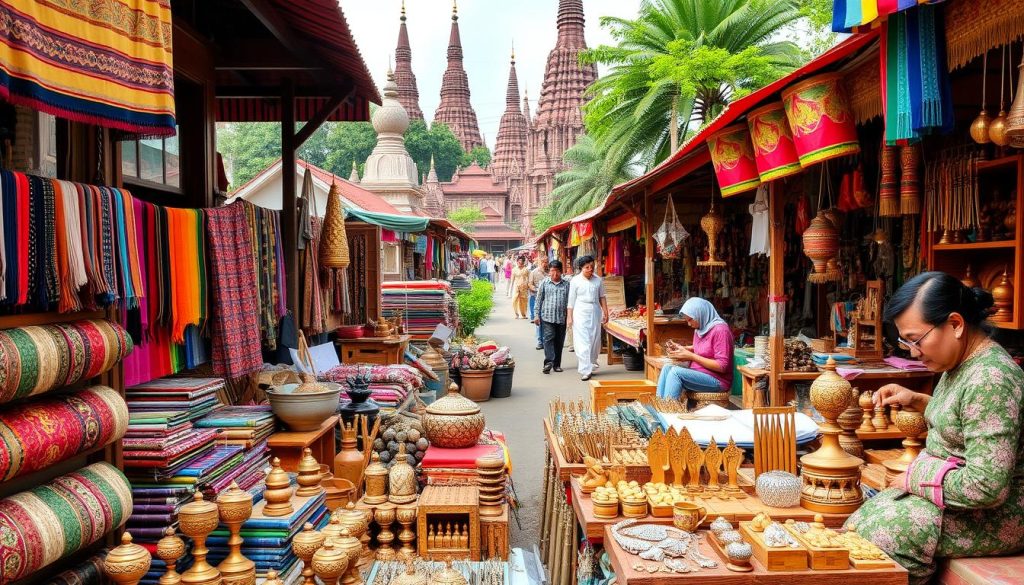
Exploring Mandalay’s workshops and markets will make you appreciate its traditional crafts more. Each piece tells a story of this remarkable region’s spirit and history.
The Secrets Behind Stone Carving in Mandalay
Stone carving is a treasured tradition in Mandalay, known for its stunning Buddha sculptures. It’s a blend of centuries-old tradition and spiritual expression. Artists spend their lives mastering this art, sharing Buddhist teachings through their work.
Admiring Buddha Sculptures by Local Artisans
Explore Mandalay’s stone carving scene by visiting local workshops. Here, skilled artisans create breathtaking sculptures. These pieces are not just beautiful but also carry deep religious meaning.
Each chisel mark on the sculptures shows the artisans’ dedication and skill. It’s a sight to behold.
Don’t miss the Shwenandaw Monastery, famous for its architectural wonders. Nearby, a temple houses the world’s largest book, made of stone carvings. Chinese immigrants have also influenced local stone carving, adding new techniques.
At the Mahamuni Buddha Temple, watch as men apply gold leaf to the statue. This act shows the deep spiritual bond between art and devotion in Mandalay.
The city’s lively traffic adds to its charm, unlike Yangon. In the evenings, enjoy comedy, puppetry, and dance shows. Smaller venues offer a more intimate cultural experience.
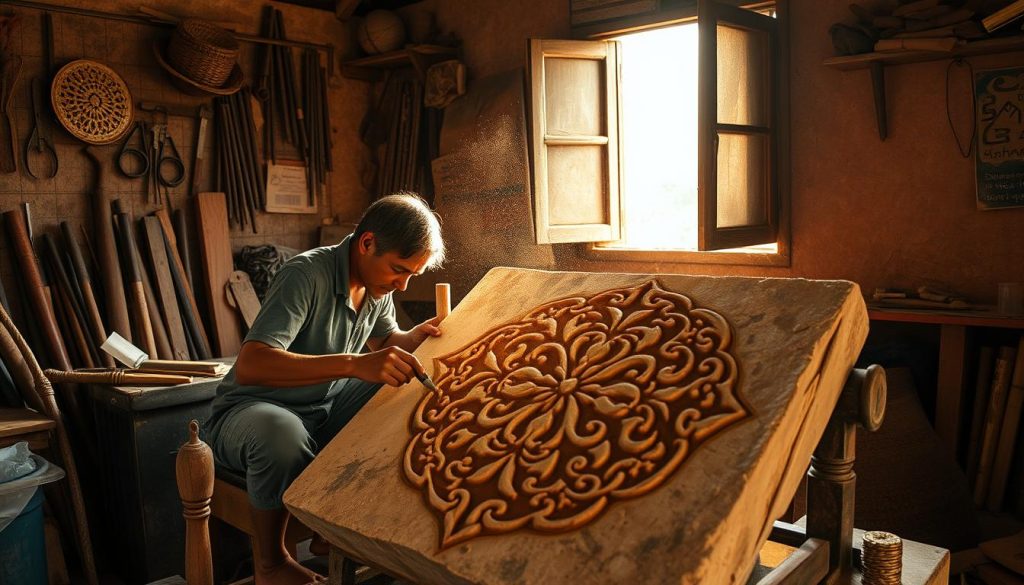
Myanmar’s sculpture tradition uses wood, stone, and plaster, influenced by Buddhism since the 11th century. Sadly, many wood sculptures from earlier times have not survived. But the Yatanapon period (19th century) is known for its exceptional craftsmanship.
Burmese Buddhist sculpture shows diversity in Buddha’s postures, each telling a story. The reclining buddhas in Pagan and Mandalay are famous for their artistry. Viewing stone works of Buddha’s life offers insights into Mandalay’s historical craftsmanship.
The legacy of stone carving in Mandalay is alive and well. It invites both art lovers and spiritual seekers to explore its beauty and meaning.
Marionette Puppetry: A Unique Mandalay Tradition
Marionette puppetry in Mandalay is a key part of Myanmar’s culture. It has been around for over 500 years. This art form uses wooden puppets to tell stories from Myanmar’s history and folklore.
The Mandalay Marionette Theater was started in 1986 by Ms. Ma Ma Naing and Ms. Naing Yee Mar. It works hard to keep this art alive. The theater also supports other traditional arts like dance and music.
Seeing a show at the Mandalay Marionette Theater is unforgettable. You’ll see puppets like the Handmaiden, which has over 30 strings. Learning about these puppets and their stories makes you appreciate the craft more.
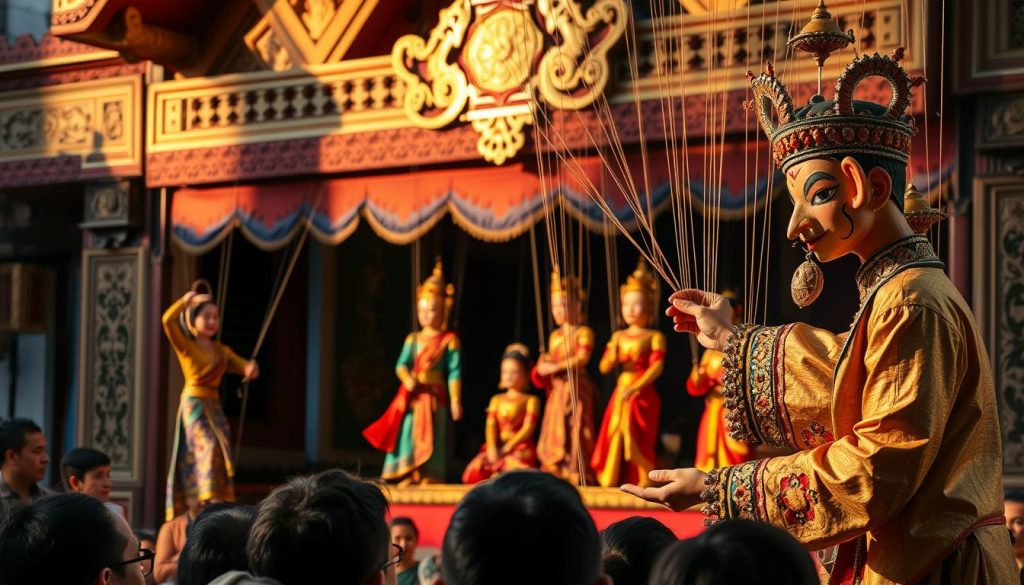
More people are interested in cultural tourism, making the theater a place for interactive learning. Visitors often stay to learn about puppet making and how to control them. This helps them connect with Myanmar’s rich traditions.
This art has been more than just entertainment. It has taught people about literature, history, and religion. Puppeteers were highly respected in royal courts. When you visit Mandalay, think about buying a marionette as a souvenir. It’s a way to take a piece of Myanmar’s culture home.
Digital marketing and social media have helped the theater reach more people. This has brought in more tourists and helped the local economy. It also supports jobs in crafts related to this amazing tradition.
Conclusion
Exploring traditional crafts in Mandalay is a journey filled with beauty and learning. You’ll see everything from intricate silk weaving to the art of gold leaf hammering. These crafts give you a peek into Myanmar’s rich culture.
As you watch artisans at work, you’ll see the beauty and importance of these crafts. They help keep Mandalay’s heritage alive. This is a chance to see the beauty of these crafts and their role in preserving history.
Mandalay’s workshops let you see the skills passed down through generations. By visiting, you support local artisans who work hard to keep these crafts alive. You can take home a piece of Mandalay’s history, making your memories even more special.
Exploring Mandalay’s traditional crafts makes your trip more than just a visit. It’s a chance to see the artistry and pride in the culture. Whether you’re admiring the craftsmanship or learning about the process, you help keep this tradition alive.