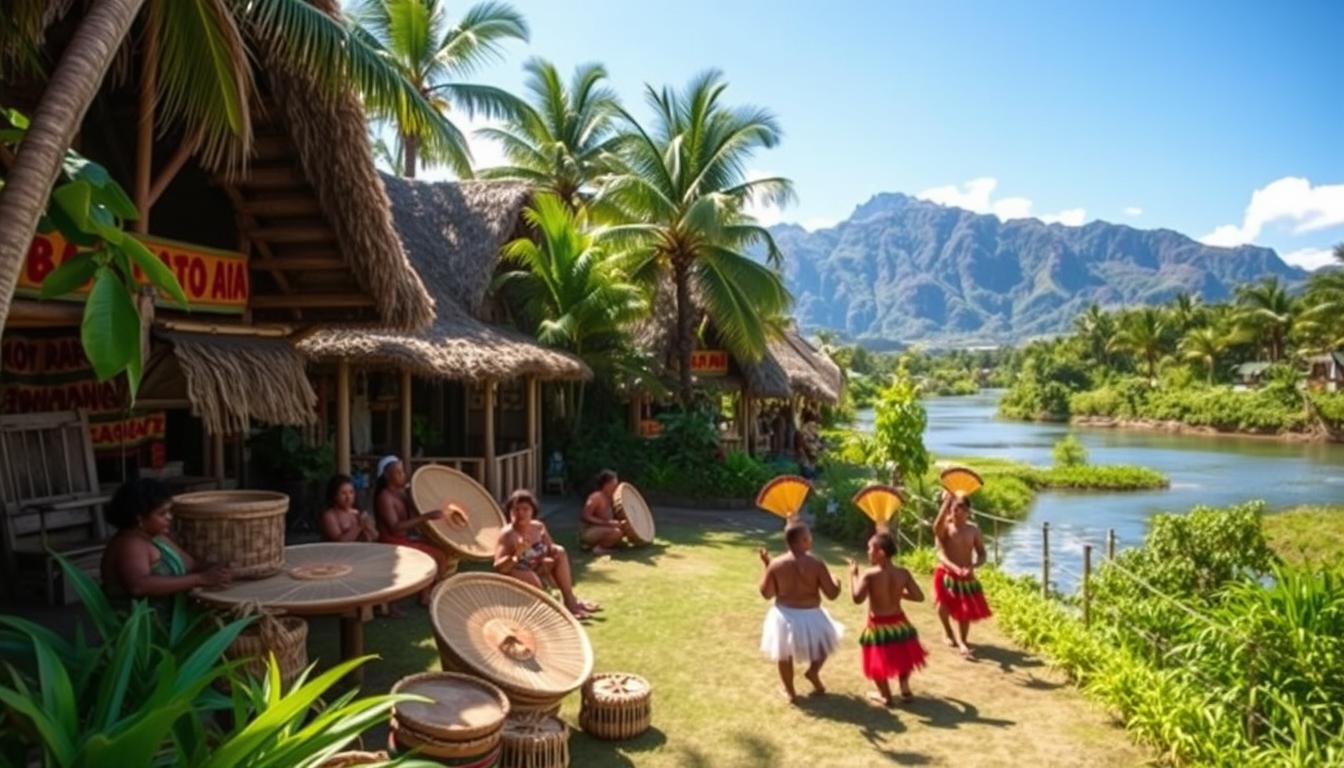
Explore the Vibrant Fiji Village Cultural Experience
Ever wondered what it’s like to dive into a Pacific Island culture? The Fiji Culture Village takes you to a world of rich heritage and customs.
Here, you can engage with local artisans and join in on traditional ceremonies. This gives you a deeper look into the local way of life. You’ll also enjoy vibrant cultural performances that highlight the island’s music, dance, and stories.
Exploring the village, you’ll see traditional Fijian architecture, taste local cuisine, and learn about long-standing practices. This Fiji Village cultural experience is perfect for those wanting a real cultural adventure.
The Rich Cultural Heritage of Fiji
Exploring Fijian villages reveals a rich cultural heritage shaped by history and traditions. These villages live out the indigenous Fijian way of life. They preserve traditional activities and customs through generations.
The Historical Background of Fijian Villages
Fijian villages have a long history seen in their architecture, customs, and performances. Knowing this history helps us understand the Fiji Culture Village’s cultural value.
Pre-Colonial Village Structure
Before colonial times, Fijian villages followed traditional practices and customs. They had a central meeting area and homes arranged in a specific pattern. Traditional Fijian activities like fishing, farming, and crafts were key to village life.
- Traditional fishing methods were used to catch fish and other seafood.
- Crops such as taro and yams were cultivated using traditional farming techniques.
- Local crafts, including wood carvings and woven baskets, were created using skills passed down through generations.
Evolution Through Colonial Times
The arrival of colonial powers changed Fijian villages. European customs and practices influenced their architecture and cultural practices. Indigenous Fijian traditions were adapted, creating a unique cultural heritage.
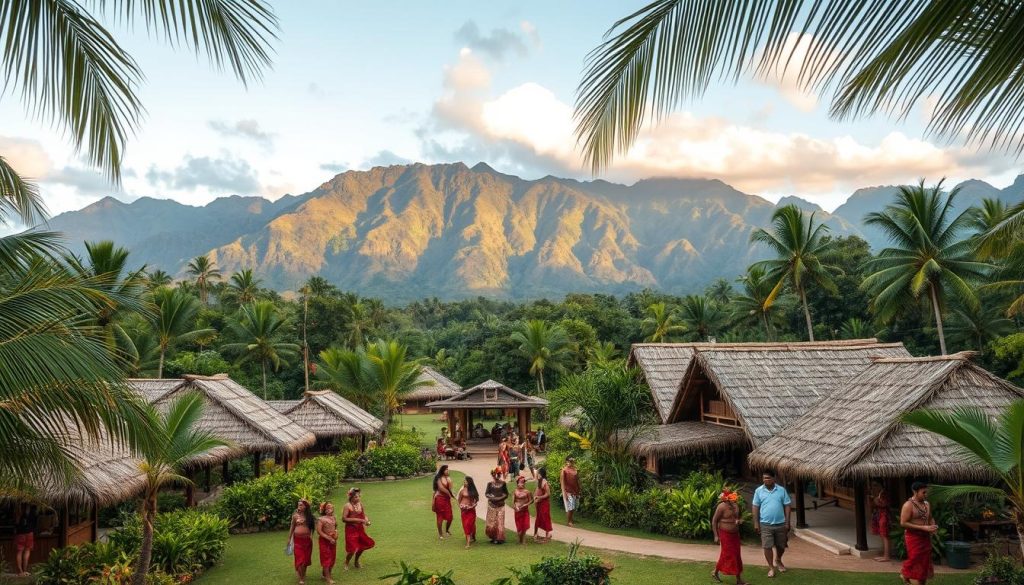
The Fiji Culture Village showcases Fiji’s rich cultural heritage. It highlights the history and traditions of Fijian villages. By exploring it, you’ll understand the cultural importance of traditional Fijian activities and indigenous Fijian traditions.
What Makes the Fiji Village Cultural Experience Unique
Dive into the vibrant Fijian culture with an authentic village tour. It’s more than just resort shows. This experience offers a real cultural immersion program. You’ll get to know local traditions and communities up close.
Authentic Cultural Immersion Opportunities
The Fiji Culture Village lets you try traditional activities. You can join in traditional craft demonstrations and Fijian cooking classes. Meet local artisans and learn about their crafts and their importance.
Differences from Resort-Based Cultural Shows
This experience is not like resort shows. It’s a real dive into Fijian culture. You can:
- Participate in traditional ceremonies
- Learn about Fijian customs and way of life
- Engage with the local community
A visitor said, “The Fiji Village tour was a highlight of our trip. It gave us a real look into local culture.”
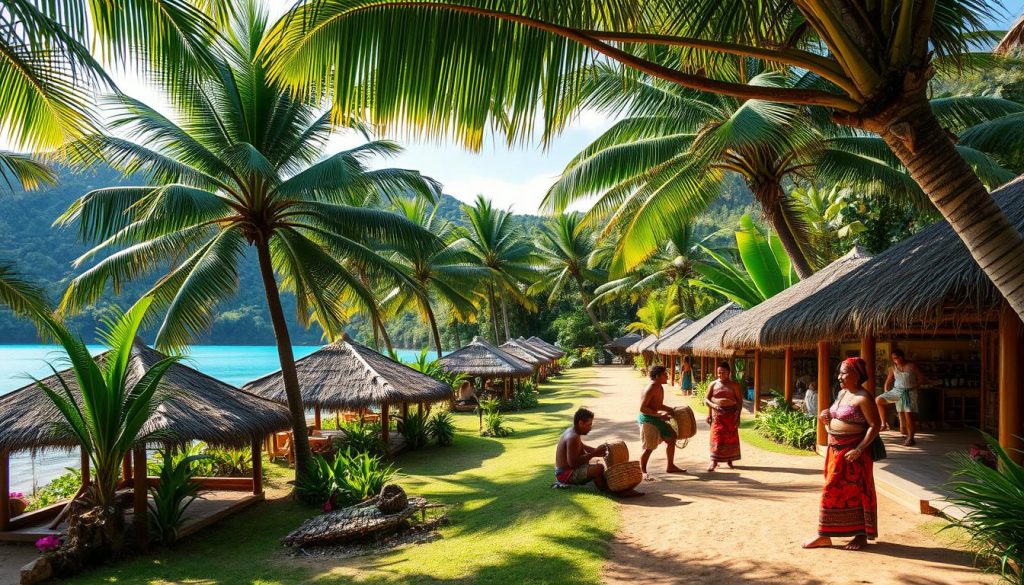
Choosing an authentic village tour helps local communities. It also helps keep Fijian traditions alive. This cultural immersion program is a great way to connect with Fiji’s heart.
Traditional Fijian Ceremonies You’ll Encounter
When you dive into Fijian village life, you’ll get to join in on traditional ceremonies. These events are key to the local culture. They offer a special cultural storytelling experience that lets you connect with the community and learn about Fijian traditions.
The Significance of the Kava Ceremony
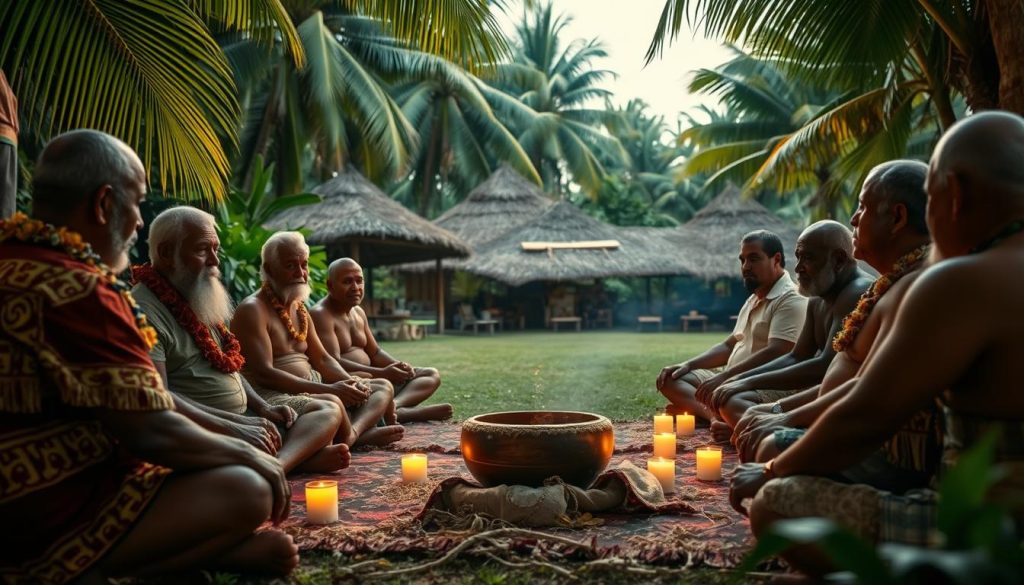
The Kava Ceremony is a big deal in Fijian villages. Yaqona (kava) is shared to show respect, friendship, and unity. In the ceremony, people sit in a circle. The kava is made and served in a special order, following old traditions.
Participating in the Sevusevu (Welcome Ritual)
When you arrive at a Fijian village, you’ll be greeted with the Sevusevu ceremony. This is a traditional welcome where you give Yaqona to the chief or elder. It’s a key part of Fijian culture, showing respect and thanks to the community.
Understanding the Cultural Importance of Yaqona
Yaqona, or kava, is very important in Fijian culture. It’s more than a drink; it’s a sign of peace, unity, and making things right. Knowing about Yaqona’s cultural value will make your cultural storytelling experience richer and help you understand Fijian traditions better.
By taking part in these ceremonies, you’ll learn more about Fijian village life. You’ll also make lasting connections with the local people. This experience will be a highlight of your cultural journey.
Immersive Cultural Activities in Fijian Villages
Fijian villages are a special place for cultural experiences. Here, you can try traditional crafts and join in ceremonies. It’s a chance to really get to know Fijian culture and its customs.
Traditional Craft Demonstrations
Seeing traditional crafts in a Fijian village is a highlight. It shows the skill and cultural importance of these crafts. You get to see how the Fijian people create their art.
Tapa Cloth Making
Tapa cloth making is a big deal in Fijian culture. It’s made from the bark of a special tree. You can watch how it’s made, learning about this important tradition.
Pottery and Weaving Techniques
You can also see pottery and weaving in Fijian villages. These crafts show the Fijian people’s creativity and resourcefulness. They make everything from useful items to beautiful textiles.
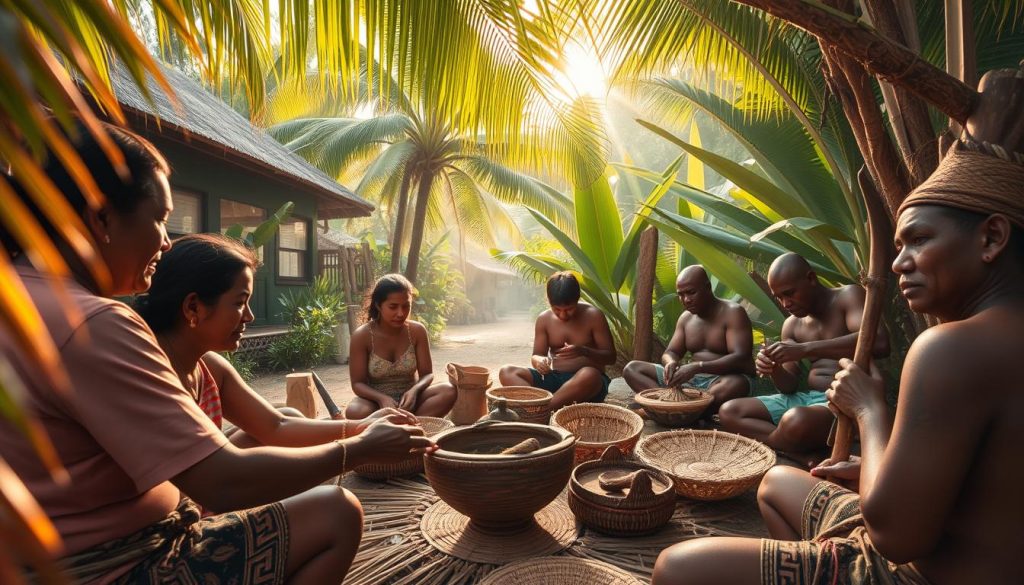
| Craft | Description | Cultural Significance |
|---|---|---|
| Tapa Cloth Making | Creating cloth from the bark of the paper mulberry tree | Used in traditional ceremonies and as a symbol of respect |
| Pottery | Shaping clay into functional and decorative items | Essential for daily life and ceremonial use |
| Weaving | Weaving fibers into textiles | Used in traditional clothing and as gifts |
These traditional activities offer a unique cultural encounter. They are both enriching and memorable. By taking part or watching, you’ll appreciate Fijian culture more.
Cultural Etiquette and Protocols for Visitors
Visiting Fijian villages requires understanding and respecting local customs. This is key for a meaningful experience. You’ll get to see indigenous Fijian traditions up close through a cultural immersion program.
Appropriate Dress and Behavior
Dressing modestly shows respect in Fijian culture. You should cover your shoulders and knees at least.
Clothing Recommendations
Men and women should wear loose, covering clothes. Avoid revealing clothing to respect local customs. Wearing a sulubulu, a traditional Fijian wrap, is a sign of respect during ceremonies.
Physical Gestures and Taboos
Knowing about physical gestures and taboos is important. For instance, don’t point your feet at people or sacred objects as it’s seen as rude. Be mindful of your body language to have a good interaction with locals.
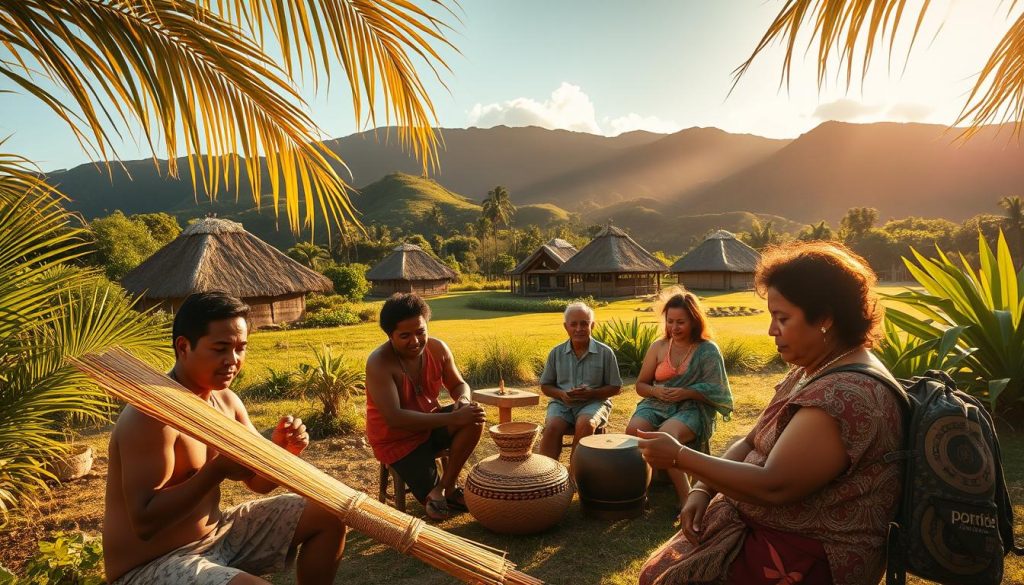
Respecting these cultural norms makes your visit to a Fijian village positive and enriching. It not only improves your cultural immersion program but also builds good relations with the local community.
Top Locations for an Authentic Fiji Village Cultural Experience
Several locations in Fiji are known for their rich heritage and welcoming communities. Each village offers a unique look into the traditional Fijian way of life. Some villages are famous for their dedication to preserving cultural heritage and welcoming visitors.
Navala Village in Ba Province
Navala Village, in Ba Province, is famous for its traditional bure architecture. Walking through the village, you’ll see thatched-roof bures built using old Fijian methods and materials. It’s a top spot for an authentic Fiji Village cultural experience.
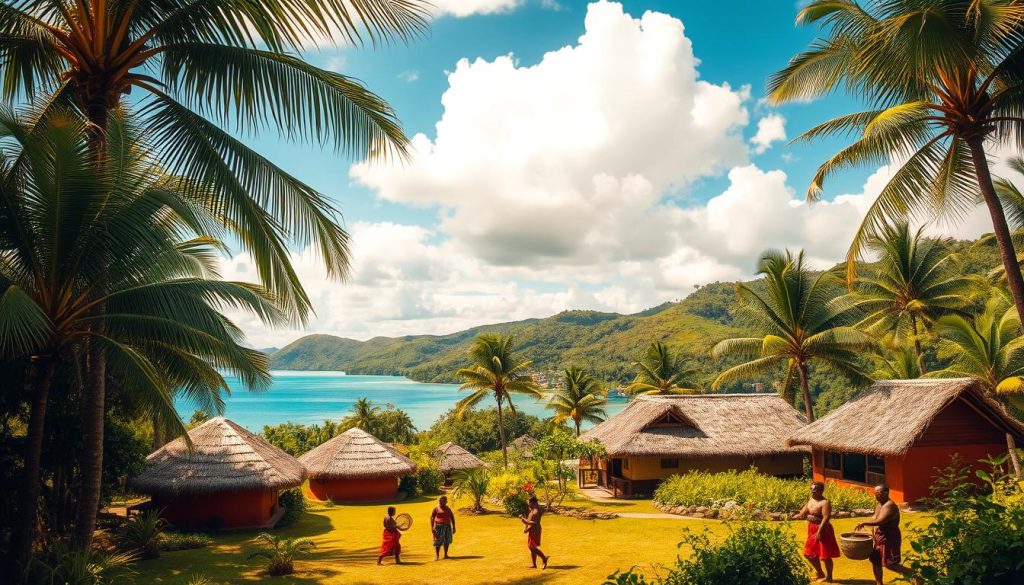
The traditional bures in Navala Village show the Fijian people’s resourcefulness and skill. They use thatched grass and wood from the area. These homes are built to last in the local climate.
Visiting Navala Village lets you connect with the local community. You can see traditional craft demonstrations and learn about keeping cultural heritage alive.
By visiting Navala Village, you help the local economy and support the community’s cultural traditions.
Planning Your Fiji Village Cultural Immersion Program
When planning your Fiji Village cultural immersion, you have two main choices: day tours and overnight homestays. Both offer unique ways to connect with the local community and dive into Fijian culture.
Day Tours vs. Overnight Homestays
Day tours give you a broad view of Fijian village life. You’ll see local villages, traditional ceremonies, and cultural shows. Overnight homestays, though, let you live with a local family and join in their daily life.
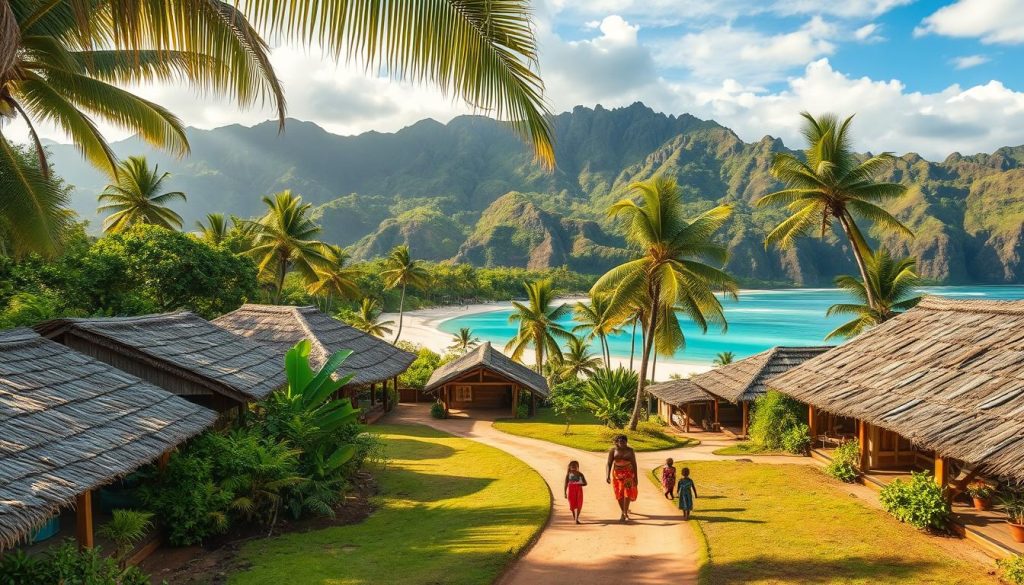
On a day tour, you’ll visit many villages and see traditional dances. You’ll also learn about Fijian customs. You’ll get to hear cultural storytelling experiences about the history and meaning of these customs.
An overnight homestay, by contrast, lets you dive deeper into immersive cultural heritage. You’ll live with a family, share meals, and help with daily tasks like farming or crafting.
Both options help you make real connections with the local community. Whether you pick a day tour or an overnight stay, you’ll help the local economy and support cultural preservation.
The choice between a day tour and an overnight homestay depends on what you want. Knowing what each offers helps you choose the best fit for your travel plans.
Preparing for Your Fiji Village Visit
Visiting a Fijian village is a unique cultural encounter that needs preparation. This ensures a respectful and enriching experience. It’s important to think about what you bring and how you behave during your visit.
Essential Items to Pack
Packing the right items is key for a comfortable and enjoyable visit. You’ll need both practical things and gifts for your hosts.
Practical Necessities
- Insect repellent to protect against mosquitoes and other insects
- Sunscreen for protection against the sun
- Comfortable clothing suitable for the tropical climate
- A water bottle to stay hydrated
Appropriate Gifts
Bringing gifts for your hosts shows respect and appreciation. Consider these options:
- Yaqona (kava) or other local beverages
- Handicrafts or other local products
- Non-perishable food items to share
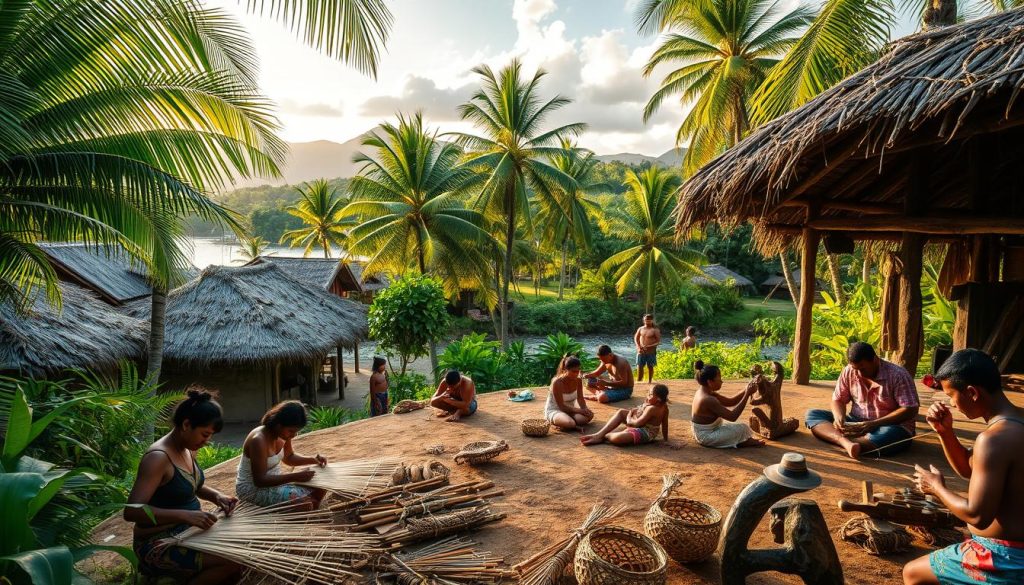
Being prepared with the right items and mindset is crucial. It ensures a positive and respectful Fijian village life experience. This thoughtful approach makes your visit better and helps in a meaningful cultural exchange.
Conclusion: Embracing the Spirit of Fiji Through Cultural Connection
Reflecting on your Fiji Culture Village visit, you now understand the local traditions. The village’s cultural program lets you dive into Fijian culture. You’ve experienced Fiji’s spirit up close.
Being part of the cultural program, you’ve learned about Fiji’s rich heritage. You’ve also helped keep Fijian traditions alive. This experience has deepened your respect for Fiji’s way of life and given you unforgettable memories.
The Fiji Culture Village is a place of deep cultural immersion. It lets you connect with local communities and learn about Fijian customs. Leaving Fiji, you’ll appreciate its culture more and feel a strong bond with the Fijian people.