
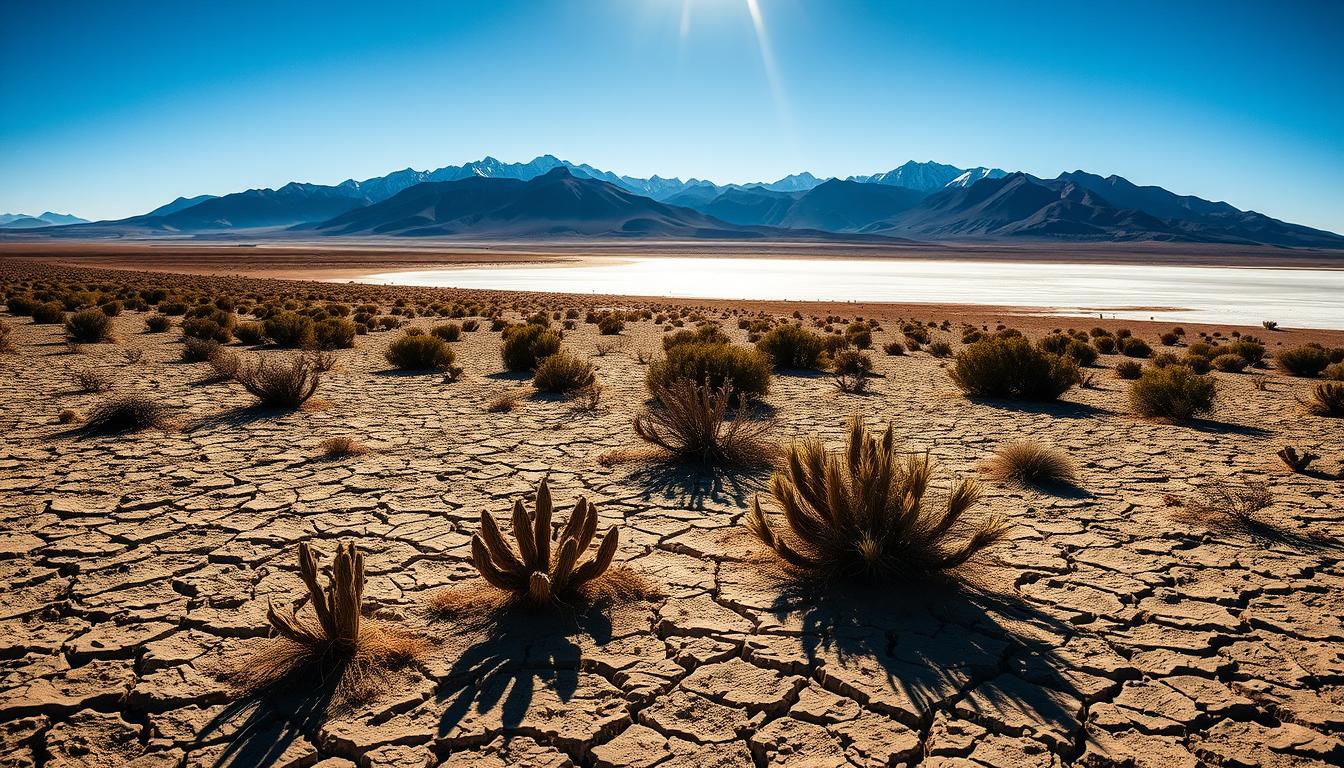
Explore the Must-See Atacama Photography Spots
What makes the Atacama Desert a paradise for photographers? Which spots should you prioritize for your next adventure? The Atacama Desert stretches about 1,000 kilometers, offering unique landscapes and photography opportunities. It’s an ideal spot for capturing stunning images.
With its rich cultural heritage and breathtaking natural beauty, you’ll find awe-inspiring photo spots. These will leave you in wonder.
When planning your trip to the Atacama Desert, consider the must-see photography spots. Places like the Altiplanic Lagoons, such as Miscanti, Miñiques, and Chaxa, are known for their turquoise waters and stunning landscapes. The Atacama Desert is the driest, non-polar place on Earth, making it a unique setting for your photos.
With the right guidance, you can make the most of your visit. Capture the best photo spots in Atacama.
Understanding the Atacama’s Unique Photography Potential
The Atacama Desert is perfect for photography. It has clear skies and low humidity. This makes it great for taking amazing pictures. Knowing the best spots and tips is key to capturing stunning images.
Plan your shoot for early morning and late afternoon. The light is soft and golden during these times. The Atacama’s unique light and diverse landscapes, like salt flats and sand dunes, offer endless photo opportunities. Follow these tips to take breathtaking photos of the region’s beauty.
What makes the Atacama special includes:
- Unique light conditions, with clear skies and low humidity
- Diverse geographic features, such as salt flats, geysers, and sand dunes
- Best shooting times, during the early morning and late afternoon
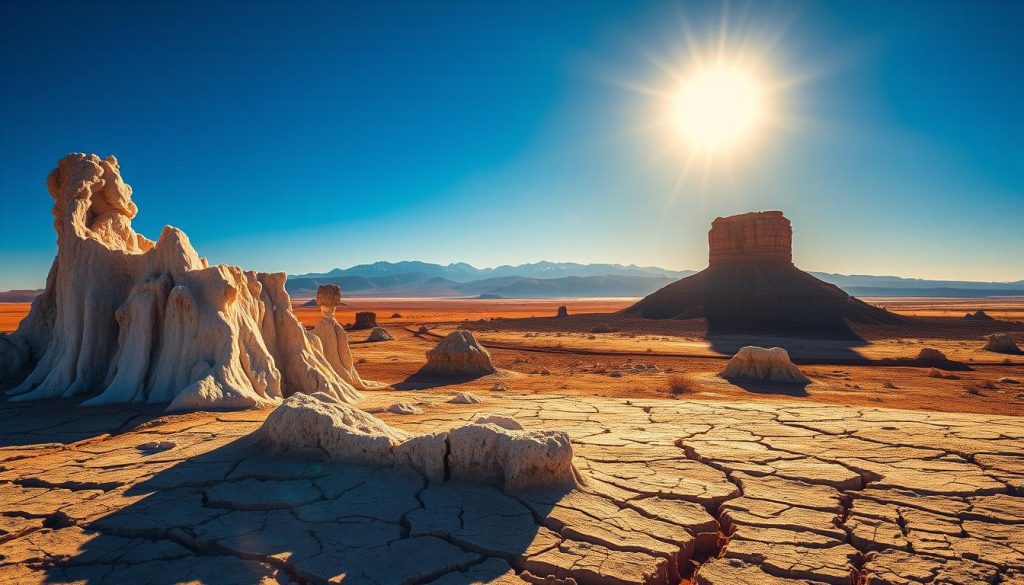
By understanding the Atacama’s unique photography potential, you can take stunning images. Follow the top photography spots in Atacama. With the right guide, your trip will be unforgettable.
Essential Photography Gear for Atacama Desert
Capturing the beauty of the Atacama Desert through Atacama landscape photography requires the right tools. The desert’s extreme weather and sandstorms need gear that’s tough. A strong tripod is key for stability in the wind, and a camera like the Sony A6500 can handle the rough conditions.
A versatile lens, like the Tamron 18-200mm f/4.5-5.6, is perfect for desert photography Atacama. It lets you shoot wide scenes and close-up details. Also, a good camera, lenses, and portable storage are must-haves to keep your work going.
Protecting your gear from the desert’s harshness is vital. You’ll need camera dust cleaners, sensor cleaning swipes, and microfiber towels. With the right gear and care, you can capture the Atacama’s unique beauty through your Atacama landscape photography and desert photography Atacama.
Some top picks for desert photography Atacama include the Olympus OM-D E-M1X for its weatherproofing. The M.Zuiko 300mm f4 lens is great for wildlife shots, like flamingos in the Atacama Salt Flat. Investing in the right gear and taking care of it makes your Atacama landscape photography and desert photography Atacama trips a success.
Best Times to Visit for Photography
Planning your trip to the Atacama Desert? It’s key to know the best times for photography. The Atacama is a top spot all year, with each season bringing its own photo opportunities. Look up the best places for photography in Atacama and plan your visit.
The Atacama is famous for its amazing landscapes and special features. Seasonal considerations are crucial for the best visit times. Spring (September to November) and autumn (March to May) are top seasons, with nice weather and clear skies. Summer (December to February) can be hot, while winter (June to August) is perfect for stargazing.
Here are some key factors to consider when planning your trip:
- Spring (September to November): Mild weather, clear skies, and wildflowers in bloom
- Autumn (March to May): Comfortable temperatures, fewer crowds, and scenic landscapes
- Summer (December to February): Longer days, but high daytime temperatures and potential crowds
- Winter (June to August): Cold nights, clear skies, and optimal stargazing conditions
By thinking about these points and looking up the best places for photography in Atacama, you can plan your trip. This way, you’ll capture amazing photos.
Top Atacama Photography Spots for Landscape Shots
Exploring the Atacama desert photography locations reveals stunning landscapes. The Valley of the Moon and the Salar de Atacama are among the best spots. They feature sand dunes, rock formations, vast salt flats, and colorful lakes.
Each spot in the Atacama desert has its own unique features. The Valley of the Moon offers a surreal scene with sand dunes and rock formations. The Salar de Atacama, with its salt flats and lakes, is perfect for reflecting the sky.
Some of the top Atacama desert photography locations include:
- Valle de la Luna (Valley of the Moon)
- Salar de Atacama
- El Tatio geysers
- Laguna Chaxa
- Piedras Rojas
These spots offer unique landscapes, geological formations, and wildlife. Whether you want to capture the Valley of the Moon’s vistas or the Salar de Atacama’s colors, the Atacama has it all.
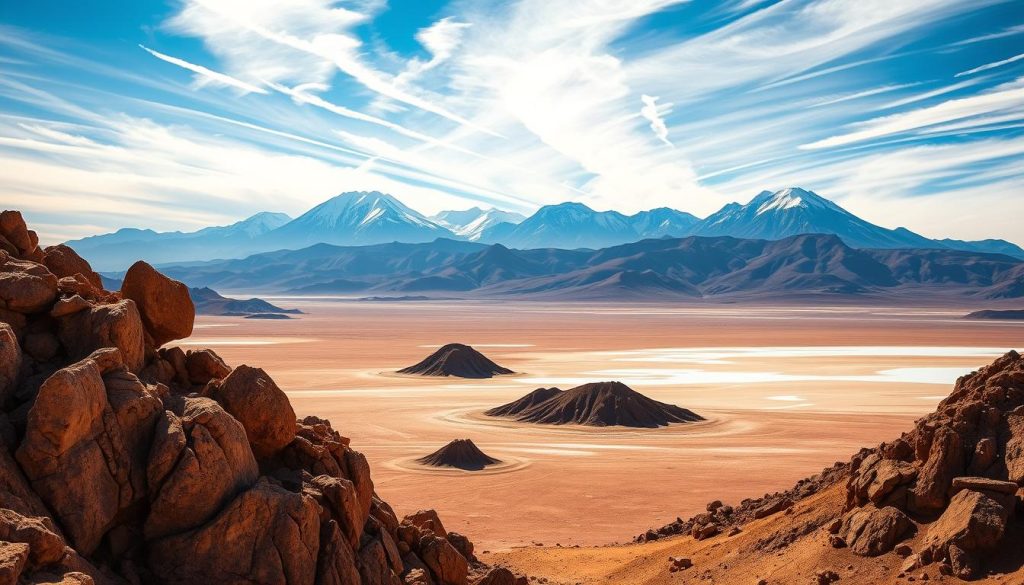
The Atacama Desert is a photographer’s dream. By visiting the top spots, you can take stunning photos that showcase the region’s beauty and diversity.
| Location | Description |
|---|---|
| Valle de la Luna | Stunning sand dunes and unique rock formations |
| Salar de Atacama | Vast salt flats and colorful lakes |
| El Tatio geysers | Geothermal field with over 80 geysers |
Valley of the Moon: Capturing Desert Textures
When you explore the Valley of the Moon, you’ll find amazing sand dunes and rock formations. It’s a perfect spot for Atacama photography tips and Atacama landscape photography. The best times to take photos are early morning and late afternoon. The light is soft and golden during these times.
When taking pictures, think about the desert’s textures and patterns. Look for interesting sand dunes, rocks, and salt flats. The Valley of the Moon has many viewpoints, like sand dunes, salt caves, and unique rocks. Here are some tips:
- Find interesting rock formations and patterns to add depth to your photos.
- Use the sand dunes to create leading lines or frames for your shots.
- Take advantage of the golden light during sunrise and sunset to capture warm and inviting images.
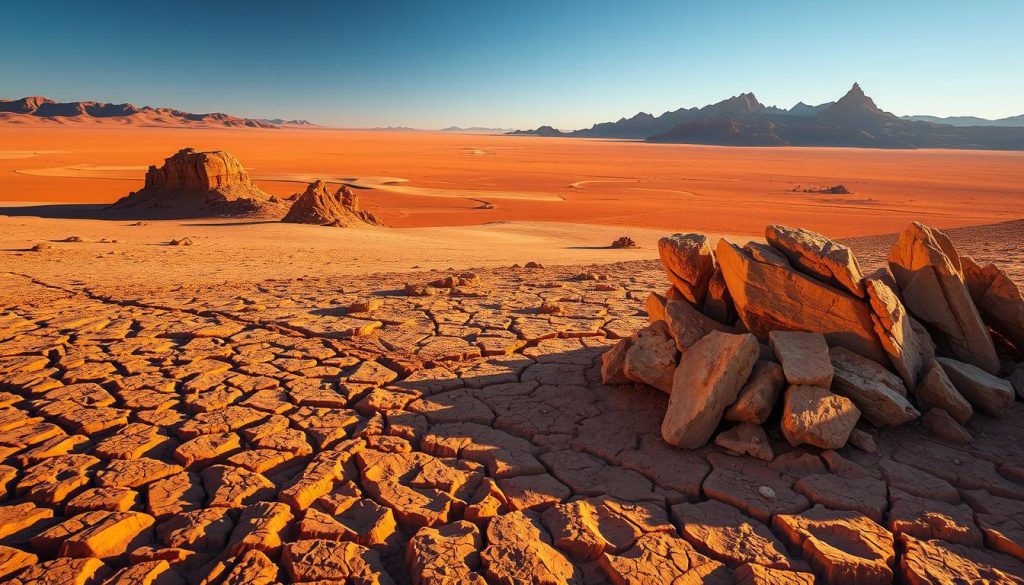
By following these Atacama photography tips and exploring the Valley of the Moon, you’ll capture stunning images. Remember to be patient and take your time to compose your shots. Don’t hesitate to try different angles and perspectives to add creativity to your photos.
El Tatio Geysers: Dawn Photography Guide
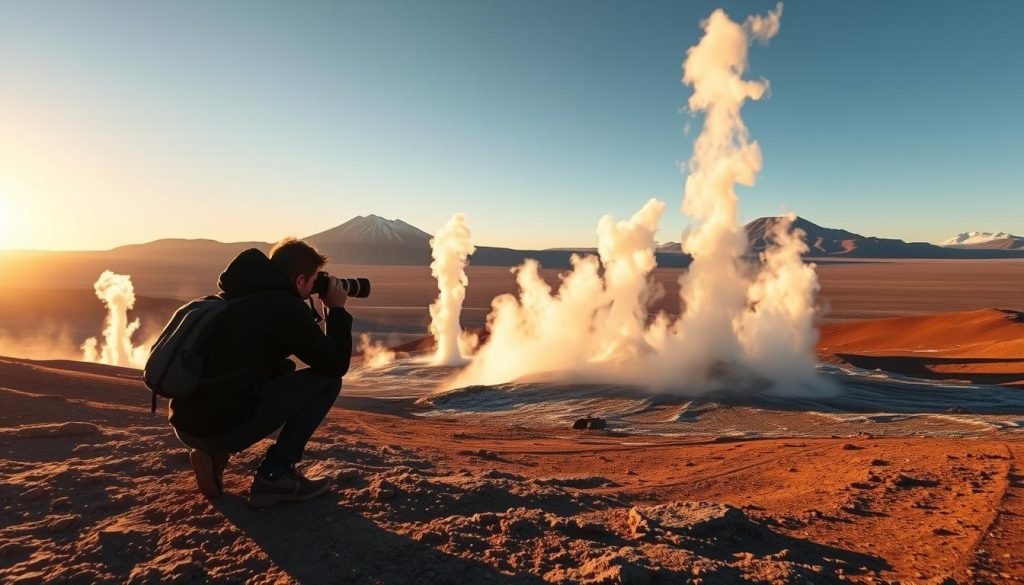
The El Tatio Geysers are a must-see in the Atacama, with their stunning views and great photo spots. They sit at 4,320 meters high, making them a unique spot. With 80 active geysers, it’s the third biggest in the world.
For the best photos, go at dawn. The light is soft and golden, perfect for capturing the geysers’ beauty.
Visiting the El Tatio Geysers means facing a tough climate and high altitude. The best time for photos is around 6 am. Then, the steam and gases from the geysers can reach up to 10 meters high.
To get the most out of your photos, follow these tips:
- Arrive early to capture the sunrise and the geysers’ peak activity
- Be mindful of the altitude and take necessary precautions to avoid sickness
- Respect the designated paths and avoid the scalding hot water
While taking photos, enjoy the amazing views around you. The Atacama offers many photo opportunities, from the geysers to the Andean highlands. With good planning, you can take amazing photos and remember this incredible place.
Photographing the Salt Flats and Flamingos
Exploring the best photo spots in Atacama reveals the Salar de Atacama’s vast salt flats and colorful lakes. To capture its essence, follow these Atacama photography tips. The area offers many shooting locations, each with its own unique character.
Photographing flamingos and wildlife requires understanding their habits and habitats. The Salar de Atacama is home to three flamingo types: Andino, James, and Chileno. Look for shallow water and abundant food sources for the best shots. 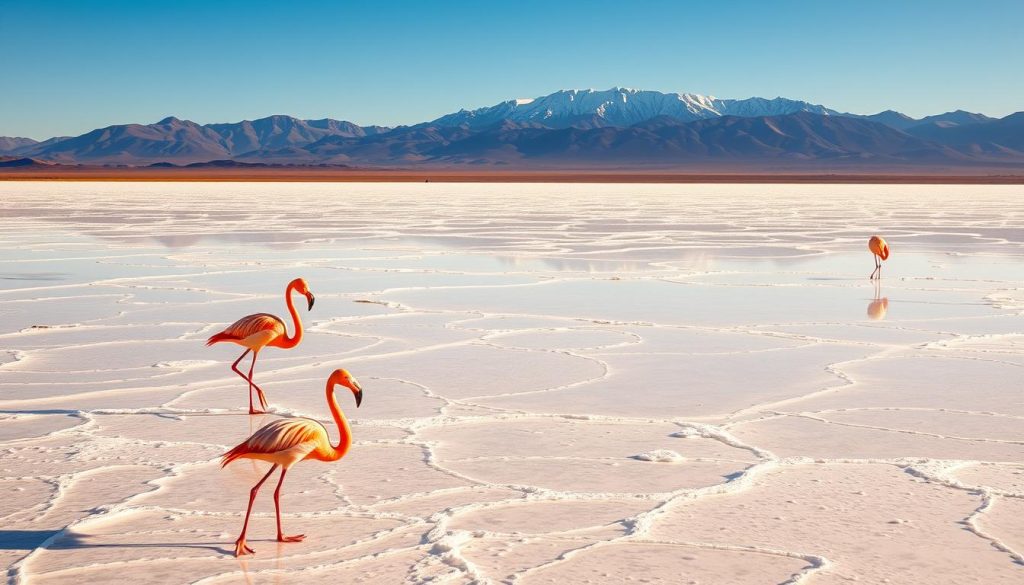
Managing reflections and glare is key when shooting the salt flats and lakes. The reflective water can create stunning effects but can be hard to capture. Use a polarizing filter or adjust your camera settings to reduce glare. By following these tips, you can capture the beauty of this incredible destination.
Some key considerations for photographing the salt flats and flamingos include:
- Shoot during the early morning or late afternoon to avoid harsh light
- Use a telephoto lens to capture the flamingos and other wildlife
- Experiment with different angles and compositions to add depth and interest to your photos
By combining these techniques with the right Atacama photography tips, you’ll create stunning images. These will showcase the beauty of this unique landscape.
Stargazing Photography in the Desert
The Atacama Desert is a great place for stargazing photography. Its clear skies and low humidity make it perfect for capturing the night sky. The best time to visit for stargazing is during the winter months when the skies are clearest.
The Atacama Desert is a paradise for stargazers and photographers. It’s home to half of the world’s ground-based astronomy projects. Popular spots include the Elqui Valley and the Observatorio Cerro Mamalluca, which offers tours.
For a unique experience, visit the Nayara Alto Atacama luxury lodge. It has a 16-inch telescope for nightly stargazing sessions. When photographing the night sky, use a wide-angle lens and a tripod for stability.
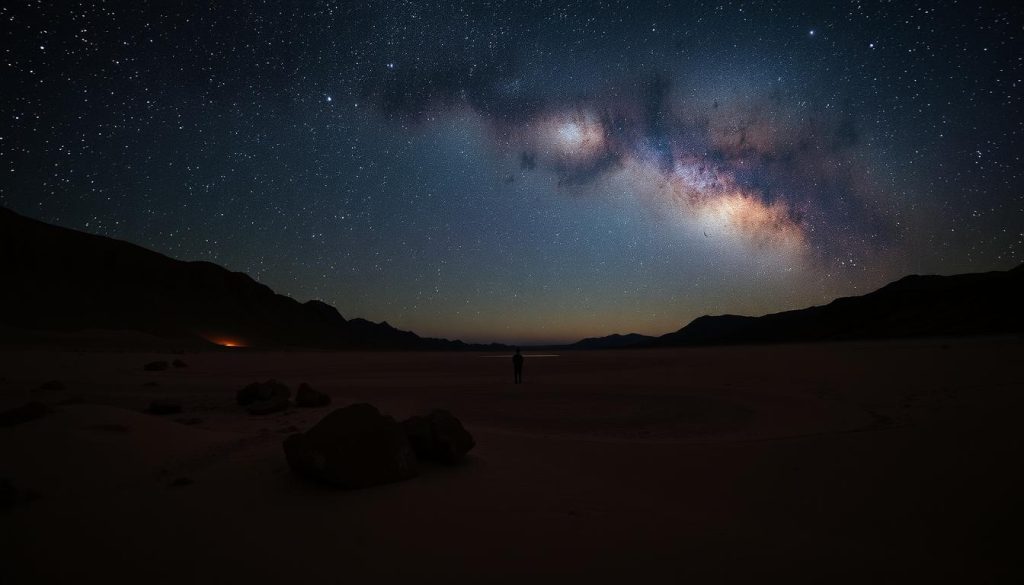
Visit local observatories like the Observatorio del Pangue for a great experience. It has the largest publicly-accessible telescope in the region. Guided tours with companies like SPACE are also available. The Atacama Desert is ideal for stargazing photography and desert photography.
Ancient Ruins and Cultural Sites
Exploring the Atacama desert photography locations reveals a rich cultural heritage. The stunning landscapes are mixed with historical significance. This makes it perfect for photographers and history lovers. You’ll see ancient ruins and cultural sites like the Pukará de Quitor and the Church of San Pedro.
These sites show the region’s fascinating past. The Pukará de Quitor is known for its unique architecture and views. The Church of San Pedro is famous for its beautiful architecture and history. To capture these spots, think about the light and the landscape around them.
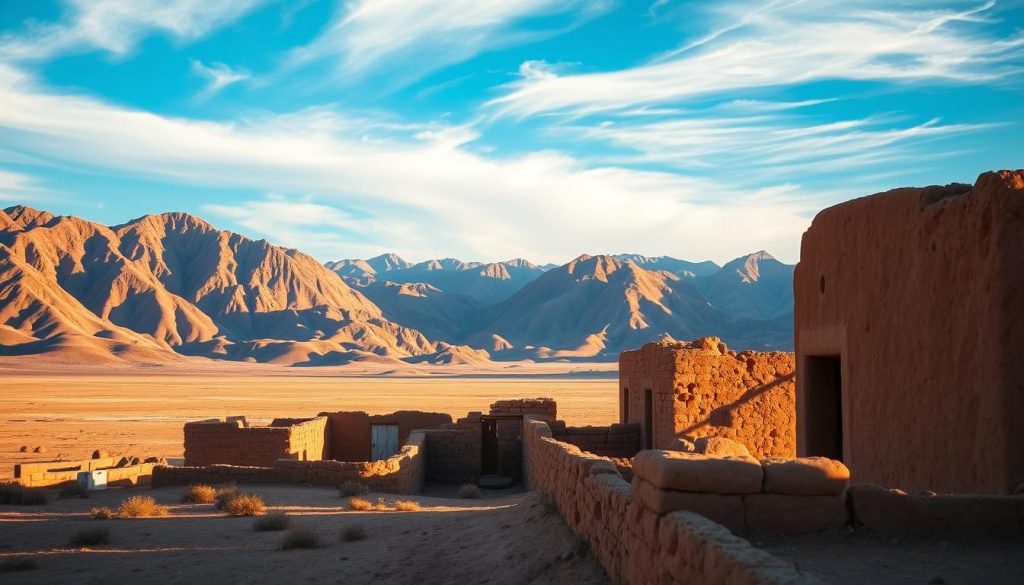
- Shoot during the golden hour for warm, soft light
- Try different angles and compositions to add depth
- Respect the sites and local culture, preserving the environment and history
Exploring the Atacama’s ancient ruins and cultural sites is rewarding. You’ll capture stunning images and learn about the region’s history. This makes your experience unforgettable.
Advanced Technical Tips for Desert Photography
Exploring the Atacama Desert comes with its own set of challenges. To take amazing photos, you need to know how to handle the extreme weather. Daytime temperatures can soar to 38° C (100° F), while nights can drop to -4° C (25° F). You’ll have to adjust your camera and how you shoot.
Managing the desert’s intense light is key. The harsh sun can be too much, but using a wide-angle lens and adjusting your camera settings can help. Also, keep your gear safe from sand and heat. Use a weather-sealed bag and UV filters to protect your lenses.
Here are some important tips to remember:
- Use a tripod for sharp photos, even in low light
- Remote triggers help avoid camera shake
- Clean your gear with compressed air after shooting in dusty areas
- Plan your shoots for the best light, using apps like the Photographer Ephemeris
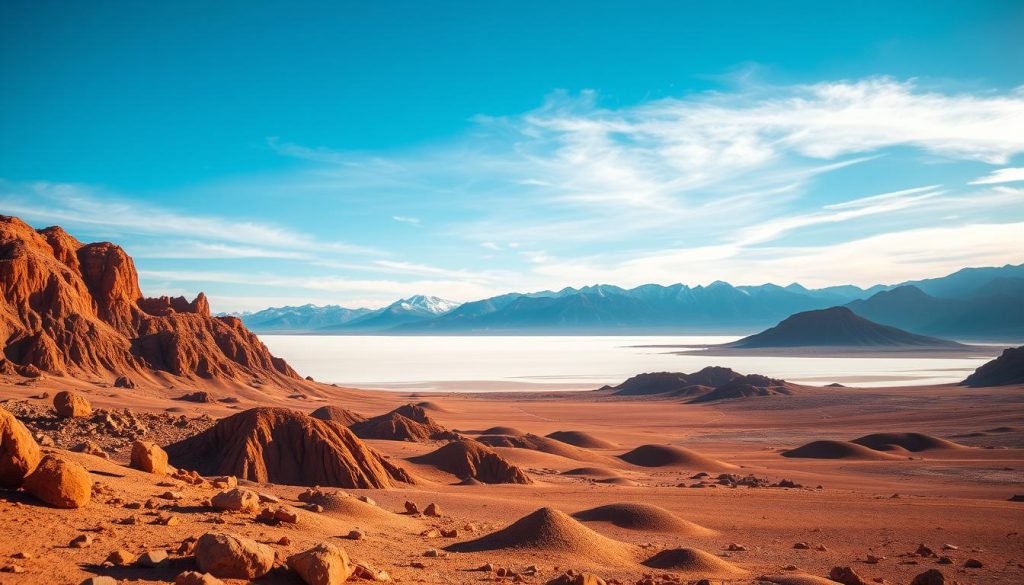
By using these advanced tips, you’ll be ready to capture stunning photos of the Atacama. Your photos will show off the desert’s beauty in a unique way.
Local Photography Tours and Guides
Exploring the best places for photography in Atacama? Join a local photography tour or workshop. These tours offer valuable insights and help you capture stunning shots. You’ll learn from experts in the Atacama Desert’s unique landscapes and wildlife.
Atacama has many photography spots. A local guide can show you hidden gems. Workshops and tours are great for both landscape and wildlife photography lovers. They include activities like sunrise and sunset shoots.
One notable tour is the 10-day workshop. It takes you to amazing places like Salinas Grandes and Salar de Arizaro. Professional photographers will help you improve your skills and capture stunning photos.
These tours offer free tutorials and guidance from experienced photographers. You also get 24/7 customer support and instant booking confirmation. Joining a tour lets you dive into Atacama’s best photography spots and make lasting memories.
Whether you’re an experienced photographer or just starting, the Atacama Desert is inspiring. Local guides and tours help you improve your photography skills. You’ll take home incredible photos of the Atacama’s landscapes and wildlife.
Conclusion: Making the Most of Your Atacama Photography Adventure
Starting your Atacama photography adventure is exciting. This desert is a dream for photographers. It has amazing spots, unique light, and rich culture.
The Atacama has incredible places like the Valley of the Moon and Geysers del Tatio. You’ll also find vibrant salt flats with flamingos. It’s a chance to grow as a photographer and learn new skills.
Be ready to capture the desert’s beauty. Bring the right gear and know how to handle the sand and heat. This way, you’ll take home photos that show the Atacama’s stunning beauty.





