

Explore Khmer Salt Farms & Pepper Plantations
Discover the hidden gems of Cambodia with a visit to traditional Khmer salt farms and pepper plantations. These industries are deeply embedded in Cambodian culture, providing a rich history of sustainable farming practices and premium spice production that spans centuries. Here, you will witness the authentic Khmer pepper and indulge in organic Khmer salt while supporting local communities and eco-friendly salt farms. Join us on a journey to explore the Khmer salt and pepper industry, where tradition meets innovation.
Traditional Khmer Salt Farms in Cambodia
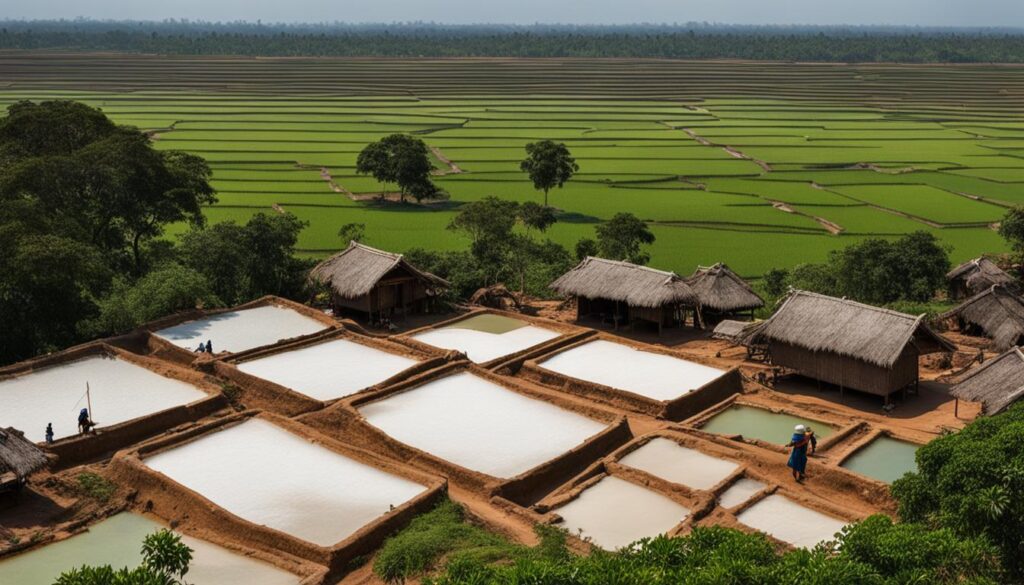
Traditional Khmer salt farms in Cambodia date back centuries and remain a vital part of the Khmer culture and economy. These salt farms are located in the coastal areas of Kep, Kampot, and Koh Kong provinces, where the sea salt production process has been passed down from generation to generation.
The salt is produced using eco-friendly and sustainable methods, with little impact on the environment. The salt fields are filled with seawater, which is then evaporated by the sun, leaving behind naturally-filtered salt. The salt is then collected and packaged for sale, with the flavor and texture varying based on the location and season in which it was harvested.
Khmer traditional salt production offers employment for many families in these coastal regions, supporting the local community and economy. By supporting local Khmer salt production, you are contributing to preserving this important cultural and economic tradition while enjoying a premium artisanal salt.
Benefits of Traditional Khmer Salt Farms
| Benefits | Description |
|---|---|
| Sustainable farming practices | Seawater is naturally filtered and evaporated by the sun |
| Eco-friendly production | Little impact on the environment |
| Authentic flavor and texture | Varies based on location and season of harvest |
| Supports local community and economy | Provides employment and income for families in coastal regions |
Pepper Plantations in Cambodia
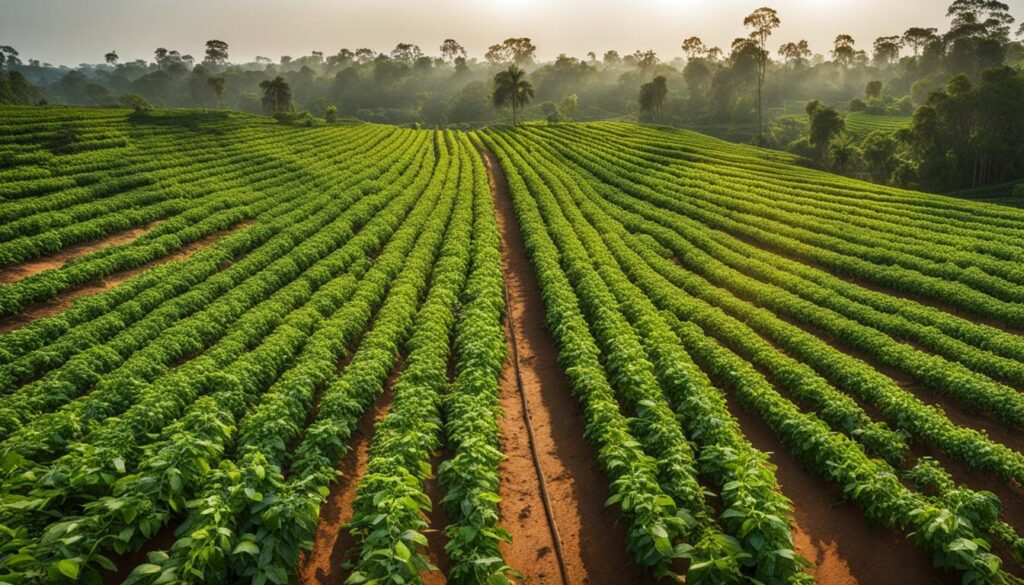
Cambodia’s pepper plantations are known for their high-quality, flavorful pepper. These plantations use sustainable farming practices to cultivate the pepper, ensuring the longevity of the industry while protecting the environment.
The Cambodian pepper industry has experienced a resurgence in recent years, with more and more farmers turning to sustainable methods of farming. By using methods such as intercropping and natural pest control, farmers are able to reduce their environmental impact while producing premium quality pepper.
One of the key factors in the success of Cambodian pepper is the unique terroir of the region. Cambodian pepper is grown in a variety of environments, from the lush forests of the northeast to the coastal plains in the south. This diversity of terroir gives Cambodian pepper its distinctive flavor and aroma.
“Cambodian pepper has a complex, fruity flavor with hints of citrus and honey. It pairs well with both sweet and savory dishes, making it a versatile spice in any kitchen.”
As the demand for sustainable and eco-friendly products continues to increase, Cambodian pepper is poised to become a global leader in premium pepper production. By supporting the sustainable farming practices of Cambodian pepper plantations, you can be a part of this movement towards a more environmentally conscious future.
The Legacy of Khmer Salt Farming
Khmer salt farming has been a part of Cambodia’s history for centuries, dating back to the Angkorian era of the 9th to 13th century. The salt produced by traditional Khmer salt farms was historically used as currency to pay taxes to the royal court. The process of making salt has been passed down through generations, with each family maintaining their own salt fields and producing salt for their own consumption and for trade in the local markets.
The importance of Khmer salt farming extends beyond the economic benefits it provides to the local community. It is a cultural symbol of Cambodia, representing the resilience and strength of its people. The salt fields have been featured in traditional Khmer art and literature, and the production methods have been recognized as a UNESCO Intangible Cultural Heritage.
The traditional Khmer salt farms use eco-friendly and sustainable practices that have been passed down for generations, ensuring that the salt produced is of the highest quality. Despite the rise of modern salt production methods, traditional Khmer salt farms remain an integral part of Cambodian heritage.
The Art of Khmer Pepper Cultivation
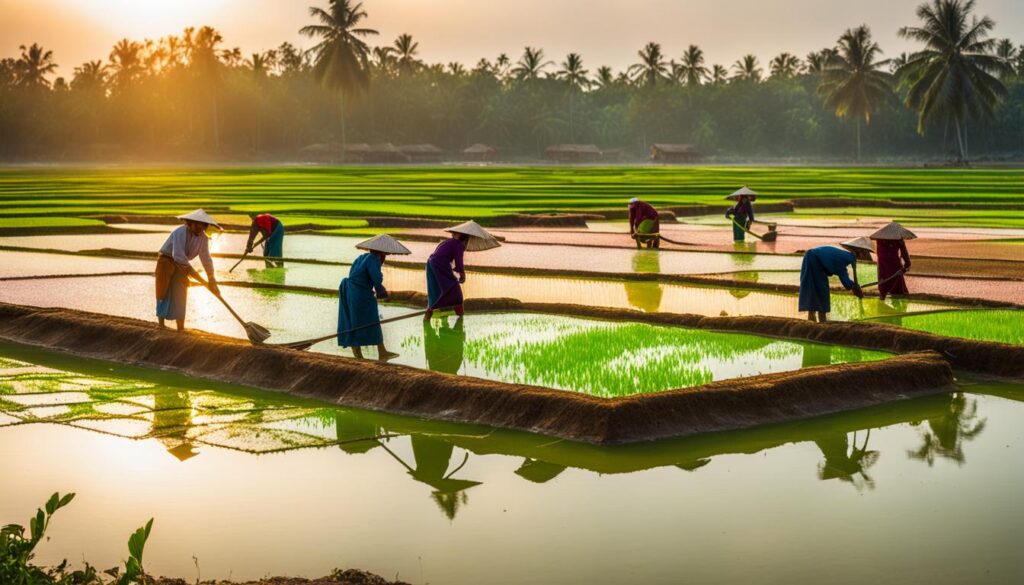
Khmer peppers are much sought-after for their unique flavor and aroma, and this is due in no small part to the art of Khmer pepper cultivation. The Cambodian pepper plantations employ a range of traditional techniques that have been refined over centuries to produce some of the best peppers in the world.
The farmers in these plantations use sustainable farming practices to ensure the longevity of the pepper industry. By employing eco-friendly methods, they protect the environment and maintain the quality and authenticity of Khmer pepper. These efforts are not only beneficial to the local community, but they also contribute to the global demand for premium spices.
One of the most interesting techniques used in Khmer pepper cultivation is the use of a unique trellis system. Known as ‘chase,’ this system involves training the pepper vines to grow vertically on bamboo poles. The resulting vines are stronger and produce more robust pepper pods that are packed with flavor.
In addition to the chase system, Cambodian pepper farmers also use a range of natural fertilizers and pest control methods that are gentle on the environment. This ensures a sustainable and eco-friendly approach to pepper cultivation that benefits both the local community and the planet.
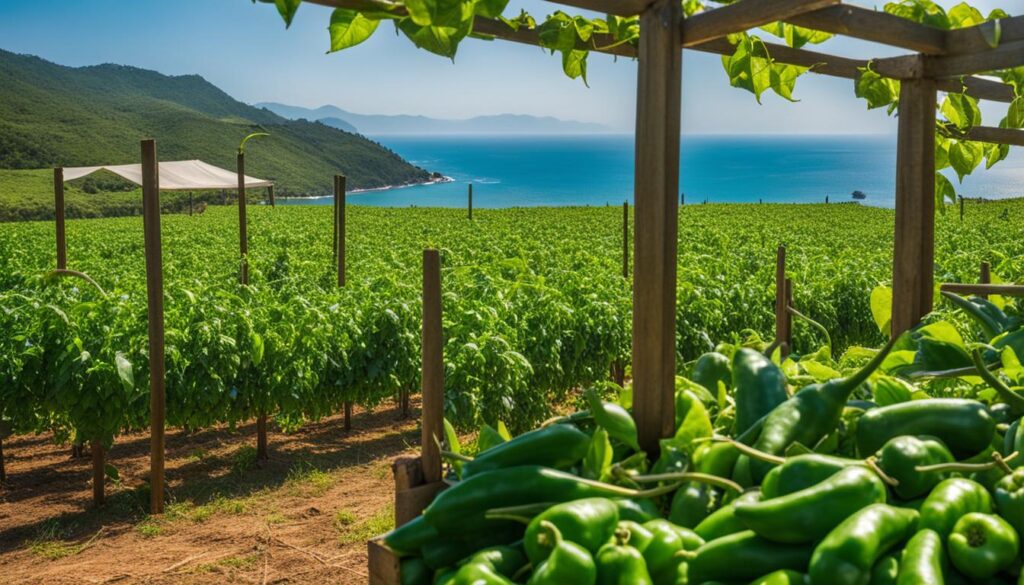
The Cambodian pepper plantations are a testament to the ingenuity and hard work of the local farmers who have perfected the art of pepper cultivation. By using sustainable farming practices and traditional techniques, they produce some of the most sought-after peppers in the world. These efforts not only benefit the local community but also contribute to the preservation of Cambodia’s rich cultural heritage.
Organic Khmer Salt Production
Khmer traditional salt production dates back centuries and has long been a vital part of Cambodia’s cultural heritage. Today, organic Khmer salt is in high demand as consumers seek healthier and more environmentally-friendly options. Organic Khmer salt is produced without the use of chemicals or additives, preserving the natural purity of the salt.
The organic production process involves collecting seawater in shallow ponds, which is then allowed to evaporate in the sun. As more water is evaporated, the salt concentration increases, and eventually, crystals form on the surface. The salt crystals are then collected and packed, ready for consumption.
Organic Khmer salt production is not only beneficial for the health of consumers but also sustainable for the environment. By avoiding the use of harmful chemicals, farmers are able to maintain the natural balance of the ecosystem.
“Organic Khmer salt production is essential to preserving the natural purity and health benefits of this prized ingredient.”
Authentic Khmer Pepper: A Gourmet Delight
If you’re looking for a unique and flavorful pepper, look no further than authentic Khmer pepper from Cambodia. With its distinctive taste and aroma, premium Khmer pepper has become a favorite among gourmet chefs around the world.
What sets authentic Khmer pepper apart from other peppers is its rich and complex flavor profile. It is characterized by a subtle sweetness and a tangy, citrusy note, with a mild heat that lingers on the palate. The unique taste of Khmer pepper is a result of the soil and climate in which it is grown and the traditional cultivation techniques used by Cambodian farmers.
Due to its exceptional flavor and aroma, authentic Khmer pepper has been in high demand in the international gourmet market. It is commonly used to flavor meat dishes, soups, and stews, as well as in marinades and rubs.
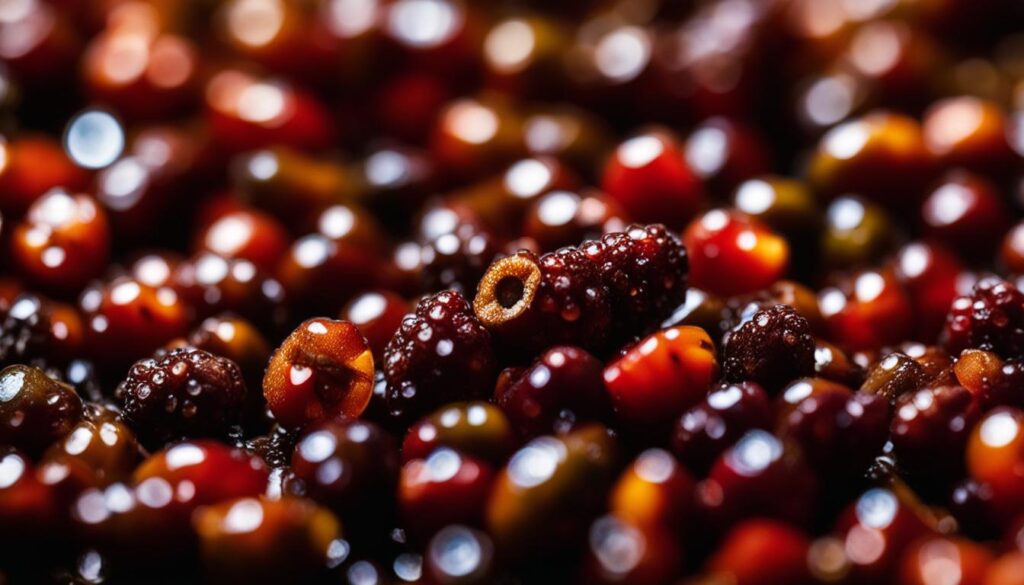
The premium quality of Khmer pepper is a result of the sustainable farming practices employed by Cambodian farmers. They use organic fertilizers and avoid the use of pesticides and chemicals, ensuring that the pepper is free from harmful toxins. Additionally, they hand-harvest the pepper berries at peak ripeness, ensuring the highest quality of the spice.
Whether you’re a professional chef or a home cook, authentic Khmer pepper is a must-try for anyone looking to add a new and exciting flavor to their dishes.
Sustainable Farming Practices in Khmer Salt and Pepper Industry
The Khmer salt and pepper industry is characterized by sustainable farming practices that prioritize the protection of the environment, the well-being of farmers, and the longevity of the industry. Farmers in Cambodia are committed to preserving the natural resources that support their livelihoods, while also producing high-quality and authentic Khmer spices.
Khmer salt farms have long employed eco-friendly practices that avoid the use of chemicals and artificial fertilizers. Instead, they rely on the natural elements of sun, wind, and rain to produce the salt. As a result, the traditional Khmer salt production is organic and chemical-free.
In pepper plantations, sustainable farming involves careful crop rotation, inter-cropping, and the use of green manure to maintain soil fertility. Farmers also engage in water conservation measures, such as drip irrigation systems and mulching. These practices not only ensure consistent yields but also help mitigate the effects of climate change.
The Khmer salt and pepper industry is committed to minimizing its carbon footprint by reducing energy consumption and waste. Many salt farms and pepper plantations use renewable energy sources, such as solar or hydropower, to operate salt pans and irrigation systems. Additionally, by promoting the consumption of locally grown Khmer spices, the industry reduces the carbon footprint associated with long-distance transportation.
“We believe that the future of Khmer salt and pepper industry lies in sustainable farming practices. By protecting the environment, we are not only securing our livelihoods but also ensuring that future generations can enjoy the benefits of these premium spices.” – Ryuth Soth, salt farmer
Supporting Local Communities through Salt Farms and Pepper Plantations
Did you know that Cambodia salt farms and Cambodian pepper plantations play a vital role in supporting local communities? The salt and pepper industries provide employment opportunities and economic benefits to the local people, making them an essential part of the country’s agriculture sector.
The salt farms and pepper plantations also contribute to the social well-being of the community by preserving and promoting traditional farming practices. They help maintain local heritage and cultural identity and serve as community hubs where farmers can exchange knowledge and expertise.
Beyond that, these industries also offer opportunities for local entrepreneurs and small businesses. The premium Khmer salt and pepper produced by these farms and plantations have attracted international attention, creating a platform for Cambodian producers to showcase their products on a global stage.
By supporting Cambodia salt farms and Cambodian pepper plantations, you not only enjoy premium-quality spices but also contribute to the welfare of local communities.
Preserving the Future: The Importance of Eco-Friendly Salt Farms and Pepper Plantations
The Khmer salt and pepper industry has a rich legacy and cultural significance in Cambodia. However, preserving this legacy requires a sustainable approach towards farming practices. Eco-friendly salt farms and pepper plantations play a critical role in maintaining the quality and authenticity of Khmer salt and pepper.
These eco-friendly salt farms rely on natural and chemical-free production methods to cultivate authentic Khmer salt. Compared to traditional farming practices, these farms are more environmentally friendly, contributing to a healthier ecosystem and protecting the local environment.
Similarly, sustainable farming practices in the pepper industry focus on long-term environmental and economic sustainability. These practices include using organic fertilizers, employing efficient irrigation systems, and investing in research and development of innovative and environmentally friendly technologies. These practices help farmers to maintain the quality of the pepper while preserving the integrity of the environment.
The importance of eco-friendly salt farms and pepper plantations goes beyond preservation. These practices also play a vital role in supporting the local communities and economies in Cambodia. By promoting sustainable farming practices and eco-friendly production methods, we can contribute to the preservation of the Khmer salt and pepper industry and ensure its continued growth and prosperity.
Conclusion
In conclusion, exploring traditional Khmer salt farms and pepper plantations in Cambodia can be a fascinating and educational experience. By supporting these industries, you are not only contributing to the local economy but also helping to preserve the cultural heritage of the Khmer people. You can learn about the centuries-old techniques used in salt and pepper production that have been passed down through generations.
Moreover, by choosing to consume organic Khmer salt and authentic Khmer pepper, you are not only supporting sustainable farming practices but also promoting healthy and environmentally-friendly products. By contributing to the eco-friendly salt farms and pepper plantations, you are helping to ensure that future generations can enjoy these premium spices.
By supporting local communities through their salt farms and pepper plantations, you provide valuable economic opportunities that directly impact the lives of the Cambodian people. You can learn firsthand about the social and cultural significance of these industries and support them for years to come.
Overall, keeping sustainable farming practices in mind, exploring traditional Khmer salt farms and pepper plantations is an incredible way to experience the unique history and culture of Cambodia and support the local economy. By backing these industries, you can make a positive impact on the world, one spice at a time.





