

Explore Frankincense Land Museum Insights
Ever wondered how frankincense’s scent shaped a region’s culture and economy for 2,000 years? The Frankincense Land Museum in Salalah, Oman, offers a deep dive into its Frankincense Land Museum history. It shows its deep connection to Omani culture.
This museum is more than just artifacts. It’s a 1-2 hour journey filled with interactive exhibits and guided tours. These experiences take you into the heart of frankincense’s story. Located in the UNESCO World Heritage site of Al Baleed Archeological Park, it reveals ancient frankincense practices and Oman’s vast maritime connections.
Visiting during the cooler months of October to February or in 2024 for cultural events? The museum is key to grasping frankincense’s role in Omani culture and trade.
The Unique Location of the Frankincense Land Museum
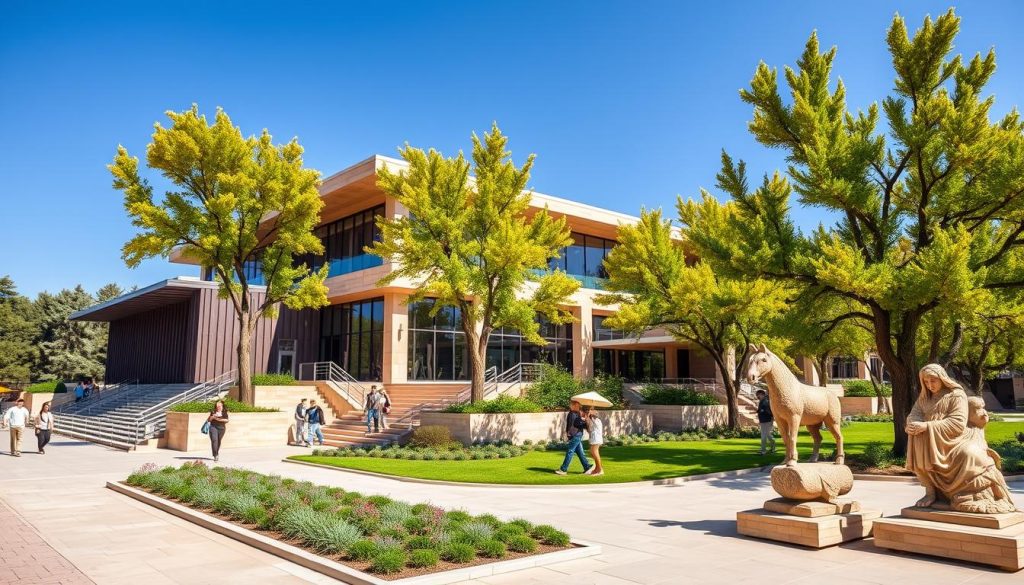
The Frankincense Land Museum is located in the beautiful Al Baleed Archaeological Park in Salalah, Oman. It is a UNESCO World Heritage Site, attracting many visitors. Here, you can dive into the history of frankincense, blending nature and culture.
Located on the park’s eastern edge, the museum offers stunning views of the Indian Ocean. The scenery around you makes your visit even more special. You can see both the indoor exhibits and the outdoor archaeological sites. These show the importance of frankincense in the past.

Al Baleed Archaeological Park is vast, showcasing Dhofar’s maritime history. You’ll see educational displays and natural beauty. Each step here connects the past to today.
Rich History of the Frankincense Land Museum
The Frankincense Land Museum history shows how frankincense trade shaped Oman’s economy and culture for thousands of years. The area where Boswellia trees grow was key in ancient trade routes. Since 3000 BC, trade in the Old World started in Mesopotamia, growing by 1000 BC.
By then, frankincense was known in Babylon, Egypt, Rome, Greece, and China. As you walk through the exhibits, you’ll see how southern Arabia sent over three thousand tons of incense to the Mediterranean by the second century. Frankincense was not just for its smell. It was also important in religion and medicine across many cultures.
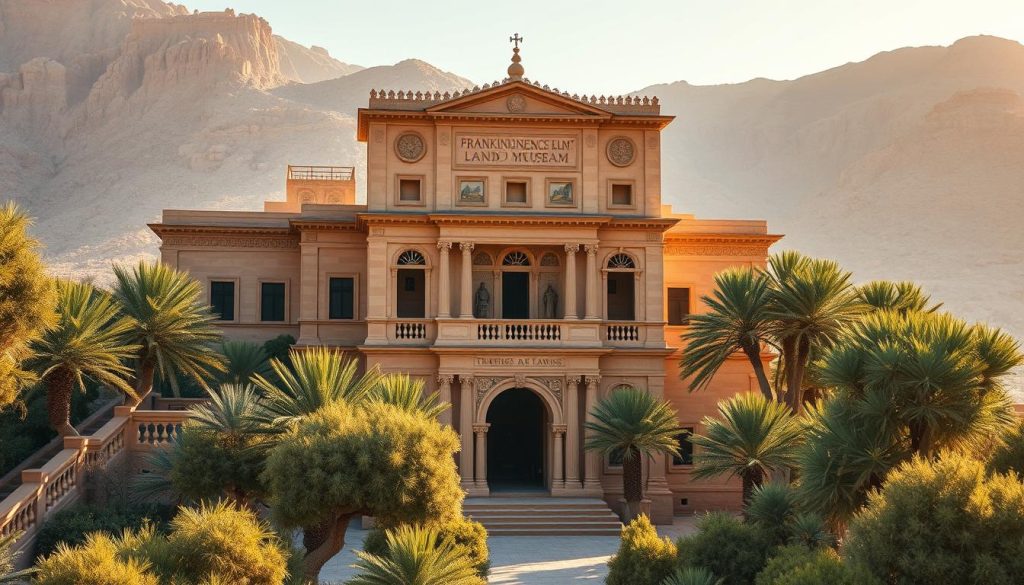
Oman’s maritime history is tied to frankincense. The coast around Salalah, with its beautiful beaches, helped in shipping and exporting. The Arabian Peninsula’s trade routes brought cultural exchanges that shaped the region. Visiting the Frankincense Land Museum lets you dive into this ancient trade’s history and its lasting effects on Oman and more.
| Time Period | Significance | Major Trading Partners |
|---|---|---|
| 3000 BC | Cradle of trade begins in Mesopotamia | Mesopotamia |
| 1000 BC | Valued commodity in major civilizations | Babylon, Egypt, Rome, Greece, China |
| 2nd Century AD | Southern Arabia ships over 3,000 tons annually | Medieval Mediterranean civilizations |
Frankincense Land Museum Exhibits Overview
The Frankincense Land Museum showcases a wide range of exhibits. These highlight the cultural heritage tied to frankincense trade. As you explore, you learn about the history and practical uses of this ancient item.
Interactive displays are a big part of the museum. They make the experience fun for everyone. You get to see how frankincense is harvested and processed, connecting you to Oman’s history.
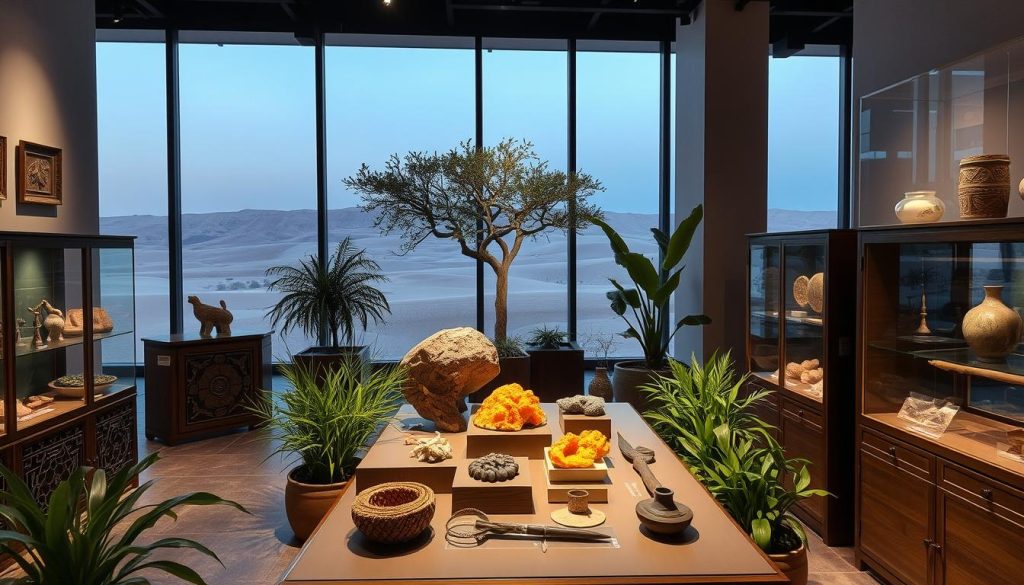
The museum also uses multimedia presentations and artifacts to teach visitors. These help you understand frankincense’s importance in Omani culture. It shows how it has played a key role for 2,000 years.
- Interactive displays catering to all ages
- Educational multimedia presentations
- Artifacts reflecting Oman’s rich cultural heritage
The museum gives a detailed look at the frankincense trade. It connects the past to the present. It offers insights into a trade that has deeply influenced the region’s identity.
Frankincense Land Museum Artifacts on Display
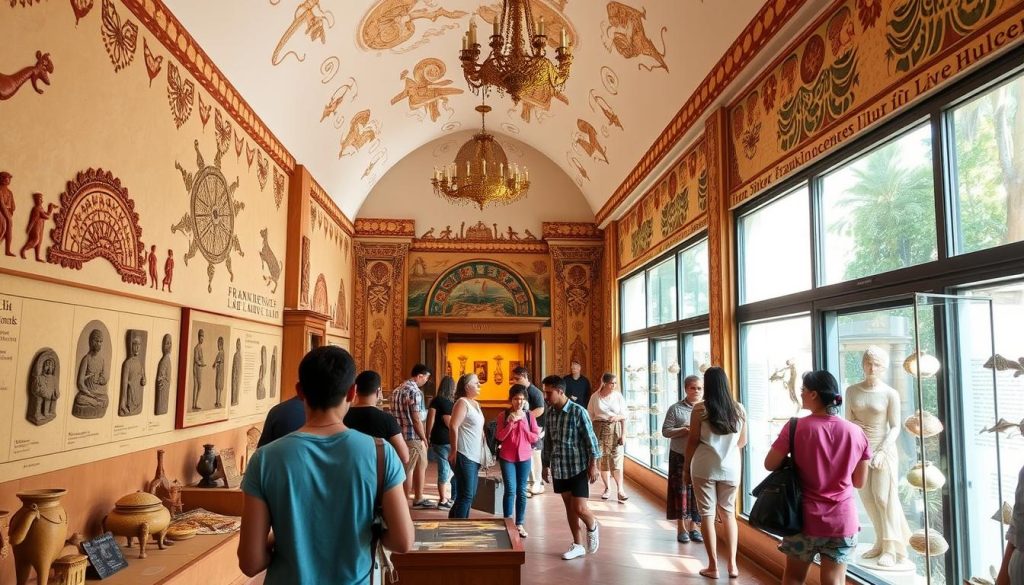
The Frankincense Land Museum in Oman is home to a stunning collection of artifacts. These Frankincense Land Museum artifacts show the importance of frankincense in Oman’s history. They give visitors a peek into the old ways of making and trading frankincense.
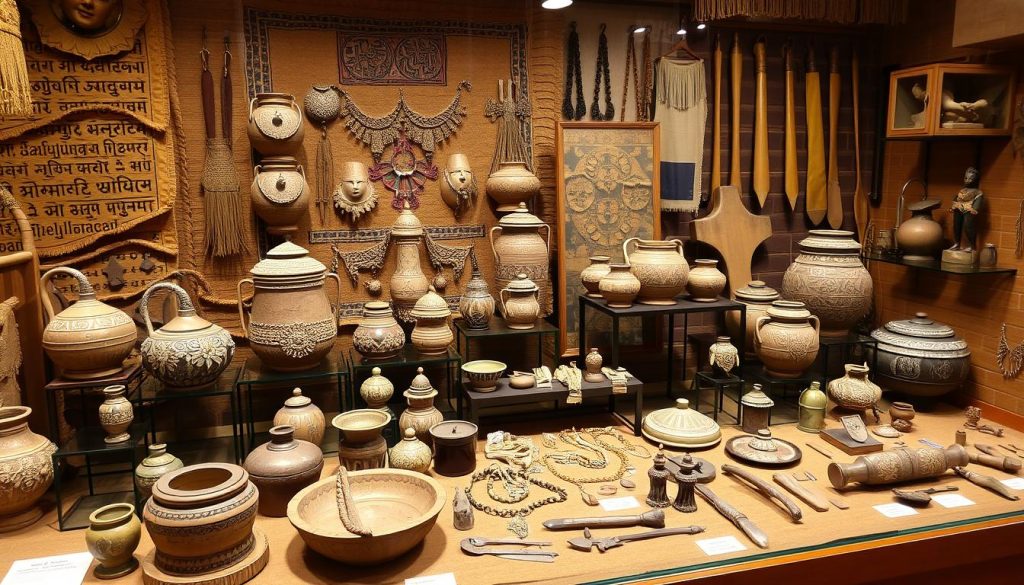
Visitors can see traditional tools used for frankincense extraction and processing. These tools help us understand how local harvesters worked in the past. The museum also has samples of frankincense resin, each with its own special qualities and uses.
The museum also has historical relics that tell the story of frankincense’s role in Oman’s economy. These items show how valuable frankincense was, even more than gold. They are key parts of Oman’s culture. Places like this museum are important for keeping these Frankincense Land Museum artifacts and their stories alive for the next generation.
| Artifact Type | Description | Historical Significance |
|---|---|---|
| Traditional Tool | Tools used for harvesting frankincense. | Provides insight into the ancient harvesting techniques. |
| Frankincense Resin | Samples of various types of frankincense resin. | Highlights the versatility and value of frankincense. |
| Historical Relics | Artifacts related to the frankincense trade. | Showcase the economic impact of frankincense on Oman’s development. |
Visiting the museum lets you appreciate the artifacts and the history they represent. It’s a chance to connect with Oman’s cultural heritage and the lasting impact of frankincense.
Frankincense Land Museum Insights into Dhofar’s Past
The Frankincense Land Museum takes you back in time to explore rich Dhofar history. It focuses on the ancient frankincense trade. For over 2,000 years, frankincense connected Dhofar to places like India, China, and East Africa. The museum shows how these routes affected economies and cultures worldwide.
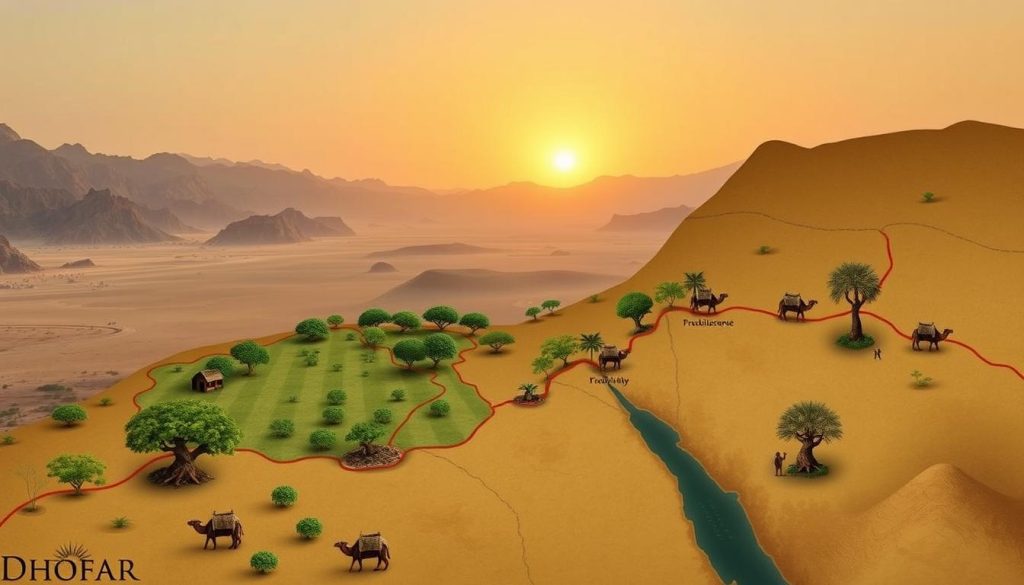
The museum also talks about UNESCO World Heritage Sites like Khor Rori, Al Baleed, Shisr, and Wadi Dawkah. These sites are key to understanding frankincense trading history. For example:
| Site | Description | Historical Significance |
|---|---|---|
| Khor Rori | Once a bustling trading port | Key hub for frankincense exporters |
| Al Baleed | Major archaeological site | Foundation for Dhofar’s maritime trade |
| Shisr | Caravan oasis | Significant stop for traders |
| Wadi Dawkah | Home to frankincense trees | Primary source for harvesting resin |
The museum shows how frankincense trade changed local societies. It brought wealth that shaped Dhofar’s culture, traditions, and festivals.
Visitors will enjoy a journey that lasts about one to two hours. Guided tours can make your visit even more meaningful. They help you understand how frankincense shaped Dhofar’s identity and trade.
Planning Your Visit to the Frankincense Land Museum
Visiting the Frankincense Land Museum is easy and rewarding. It’s a place where you can dive into Salalah’s history. Most visits take between 1 and 2 hours, giving you time to see everything.
The best time to go is from October to February. The weather is nice, with temperatures between 20°C and 30°C. The museum is open from Saturday to Thursday, so you have plenty of chances to explore.
Remember to check if there are any rules about taking photos. This helps keep the museum’s treasures safe.
| Feature | Details |
|---|---|
| Ideal Visit Duration | 1-2 hours |
| Recommended Visiting Season | October to February |
| Museum Opening Days | Saturday to Thursday |
| Guided Tour Availability | Yes, available |
| Photography Rules | Check for restrictions |
By keeping these tips in mind, your visit to the Frankincense Land Museum will be memorable. You’ll learn a lot about Salalah and its role in frankincense trade.
Frankincense Land Museum Tours and Activities
The Frankincense Land Museum offers many activities to learn about Omani culture and frankincense’s history. You can pick from different options to make each visit special.
Guided tours at the museum last 1-2 hours. This time lets you explore the exhibits fully. Visit Salalah from October to February for better weather, between 20°C to 30°C.
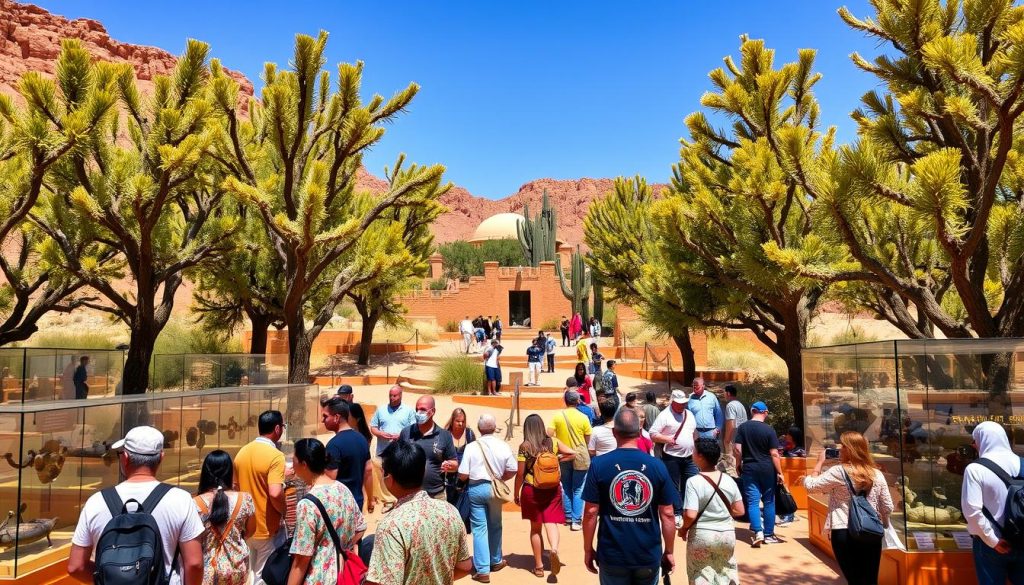
The museum is in the UNESCO World Heritage Site of Al Baleed Archeological Park. This location adds to the experience. You’ll see exhibits on Oman’s maritime history and trade with countries like India and China.
Here are some highlights of your visit:
- Frankincense Trail Tour: Learn about the ancient frankincense trade route.
- Omani Cultural Experience: Explore the Sultanate’s traditions and daily life.
- Archaeology and History Workshop: Discover findings related to frankincense trade.
- Frankincense Harvesting Demonstration: See traditional harvesting methods.
- Incense-Making Workshop: Make your own incense with traditional ingredients.
- 3D Documentary Screening: Watch multimedia presentations on frankincense’s history.
- Photography Exhibit: See stunning displays of Dhofar’s beauty.
- Children’s Discovery Zone: An interactive area for kids to learn about frankincense.
- Traditional Omani Music Performances: Enjoy live music that shows Omani culture.
- Documentary Film-Making Workshop: Learn to tell cultural stories through film.
For a quieter visit, go after the Salalah Tourism Festival, from July to September. This time offers a calm setting to enjoy the museum’s culture and heritage.
Unveiling Oman’s Maritime Heritage
Oman’s maritime history is rich and vibrant, deeply woven into its culture. The Frankie Land Museum maritime hall is at the heart of this story. It’s a space dedicated to showcasing Oman’s maritime heritage.
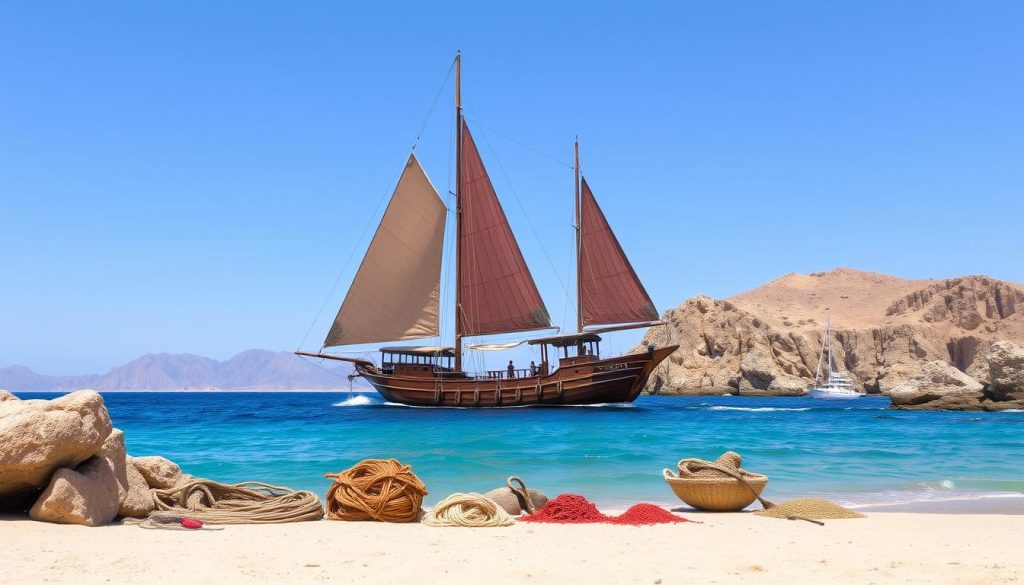
Here, you can see traditional Omani vessels that were key in trade and exploration. These exhibits give insights into Oman’s maritime events and trade with countries like India and China. You’ll learn how Oman used its location to become a major maritime power.
Visitors can see historical vessels that show off Omani shipbuilding skills. Each vessel has its own story, reflecting the era’s spirit of adventure. The maritime hall is a tribute to Oman’s trade achievements, with artifacts that highlight maritime commerce’s importance.
The Frankie Land Museum maritime hall is a treasure trove of maritime stories. It’s perfect for history buffs and anyone curious about Oman’s past. You’ll gain a deep understanding of how maritime connections have shaped Oman’s history and future.
Visitor Reviews of Frankincense Land Museum
Many visitors have great things to say about the Frankincense Land Museum. They love the Frankincense Land Museum reviews for the informative exhibits and interactive displays. The staff’s knowledge adds a lot to the experience, making tours even better.
The museum’s location in the Al Baleed Archaeological Park is a big hit. It’s not just educational; it’s also a beautiful place to visit. People also appreciate the museum’s unique focus, being the only one like it in southern Oman.
The Maritime Hall gets a lot of praise for showcasing Oman’s maritime history. Visitors say it does a great job of highlighting Oman’s historical ties with other countries. It’s a truly enriching experience.
Visitors recommend visiting from October to February for the best weather. A visit usually takes 1 to 2 hours. Many suggest going after the Salalah Tourism Festival for fewer crowds.
Conclusion
The Frankincense Land Museum is a key to understanding Oman’s history and frankincense’s role. It offers a deep dive into Oman’s culture and maritime past. Here, you can see how frankincense has shaped Omani society.
Visiting the museum lets you see the importance of frankincense in Oman’s history. It also shows the country’s vibrant traditions. The exhibits and programs make it a must-see for anyone interested in Omani heritage.
When planning your trip, don’t forget to visit the Frankincense Land Museum. It offers a rich view of Oman’s past. You’ll learn how frankincense trade influenced local economies and connected Oman to the world.





