Explore Authentic Bhutanese Weaving Workshops
Ever thought about how a simple thread can tell a culture’s story? In Bhutan, weaving workshops show the heart of this tradition. These workshops are more than making textiles; they connect you with the people and stories behind each piece.
Every home in rural Bhutan has a loom, showing weaving’s importance in family life. As you explore these workshops, you’ll learn old-world techniques and hear personal stories. These stories bring the textiles to life.
Introduction to Bhutanese Weaving
Bhutanese weaving is more than making fabric. It connects deeply to Bhutan’s culture and spirit. You can learn about this art in Traditional Bhutanese textile workshops. These workshops show the craftsmanship that makes Bhutan unique.
In these workshops, you can learn Bhutanese weaving techniques that have been passed down for generations. You’ll learn about the history and evolution of these methods. This gives you a deep understanding of the symbols in colorful textiles and intricate patterns.
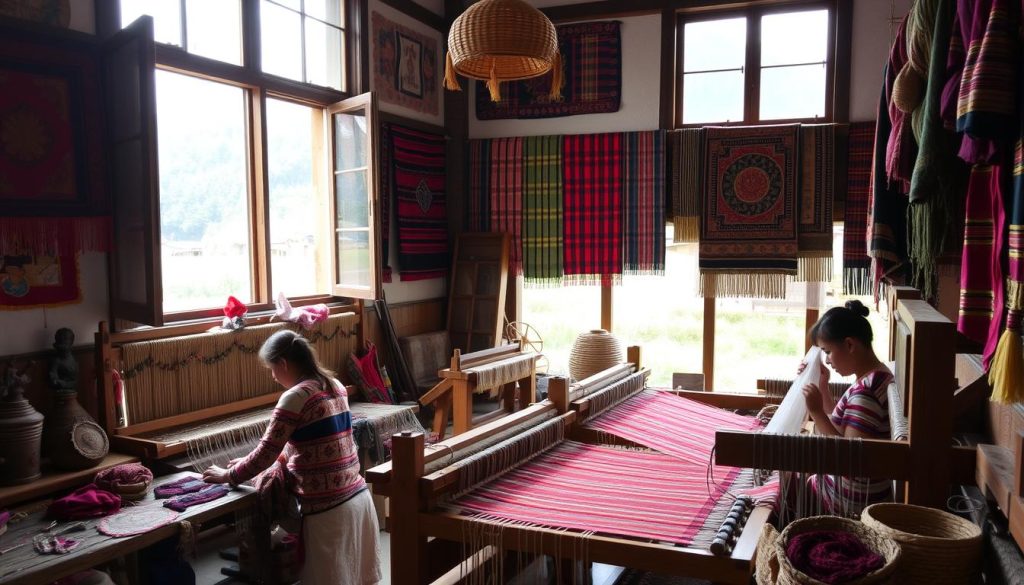
The materials used in Bhutanese weaving are varied. You’ll find synthetic yarns like Telecotton and the precious silk used in traditional kushü. Natural dyeing techniques are used, where colors come from local plants. This creates stunning dye palettes that add to the artistry of the woven pieces.
Workshops also show different loom styles, like the traditional back strap and looms from Tibet. Each loom type has its own weaving process and techniques. This lets participants explore different parts of this rich heritage.
By joining these workshops, you dive into a world where textiles tell stories. They represent Bhutan’s culture, nature, and spirituality.
The Significance of Weaving in Bhutanese Culture
Weaving in Bhutan is deeply rooted in cultural significance. It’s a key part of the country’s heritage. For centuries, weaving has shaped Bhutan’s society and culture. Each textile carries stories, passing down traditions and values.
Textiles in Bhutan mean a lot, showing social status or marking important events. Weddings and festivals are celebrated with special weavings. The designs and colors reflect the weaver’s culture, making each piece unique.
Weaving not only keeps traditions alive but also strengthens community bonds. Families and communities work together, teaching younger generations. This way, authentic Bhutanese weaving experiences bring people together.
Weavers are incredibly skilled. They can make two ghos or kiras a week, earning around Nu 8,000. But, making one piece can take from ten days to six months. Special patterns can make a piece worth Nu 40,000 to 75,000.
Even the youngest weavers, aged eight to ten, are learning in Khoma village. The Bhutan Textile Museum showcases the country’s weaving history. It offers a look at Bhutan’s unique antique textiles.
Girls aged 17 to 25 from eastern Bhutan study weaving at the National Institute of Zorig Chusum. They learn the Thagzo art of textile production. This is important for keeping Bhutan’s eleven traditional arts and crafts alive.
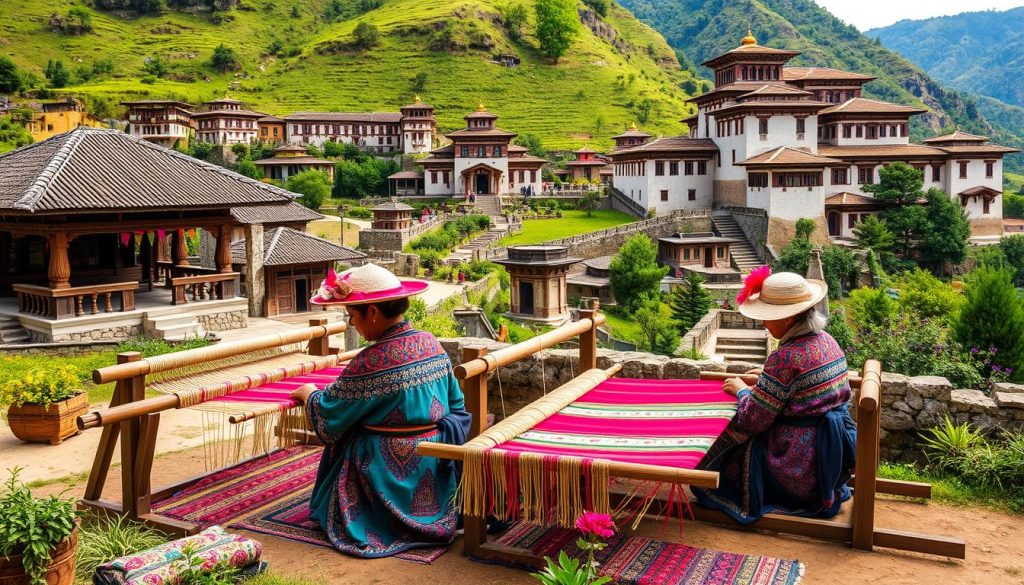
Weaving is a big part of rural women’s lives and the economy, mainly in Eastern Bhutan. Families often have looms, starting to weave early. Each region has its own special weaving, adding to Bhutan’s rich culture.
| Weaving Facts | Details |
|---|---|
| Weekly Production | 2 ghos or kiras |
| Income from Weaving | Nu 8,000 |
| Production Time for One Gho/Kira | 10 days to 6 months |
| Kishuthara Price Range | Nu 40,000 to 75,000 |
| Youngest Weavers’ Age | 8 to 10 years |
| Textile Museum Established | 2001 |
| Main Demographic for Weaving Education | Girls aged 17-25 |
| Institutes of Zorig Chusum | 2 (Thimphu and Tashiyangste) |
Authentic Bhutanese Weaving and Textile Workshops
Joining authentic Bhutanese weaving and textile workshops is a unique chance to dive into traditional crafts. These sessions teach you how to weave and share the rich history of Bhutanese textiles. You’ll work with local materials, learning the detailed steps to make beautiful woven pieces.
Experiencing Traditional Techniques
In Bhutanese handloom weaving classes, you’ll learn traditional techniques passed down through generations. You’ll discover how to dye with natural ingredients and weave with sheep wool and silk. This hands-on experience lets you create your own textile while appreciating the hard work in every fabric.
Master Weavers of Bhutan
Master weavers guide you in these workshops, boosting your skills and knowledge. They share their insights and show their craft, connecting you to Bhutanese culture. Seeing the passion and creativity in each piece deepens your understanding of this art.
Where to Find Weaving Workshops in Bhutan
Weaving workshops in Bhutan are a great way to learn about the country’s rich textile history. You can find locations for Bhutanese weaving classes all over, each offering a unique look into local traditions.
The Royal Textile Academy of Bhutan in Thimphu is a top spot. Opened in 2005, it has a weaving academy, a textile museum, and a conservation center. Here, you can learn traditional weaving, yarn dyeing, and how to mix old and new designs.
Bumthang is another great place for workshops, known for its historical and artistic fabrics. Khoma Village in the Kurtoe region is famous for its high-quality textiles and unique weaving styles. It’s perfect for getting a real taste of Bhutan’s weaving traditions.
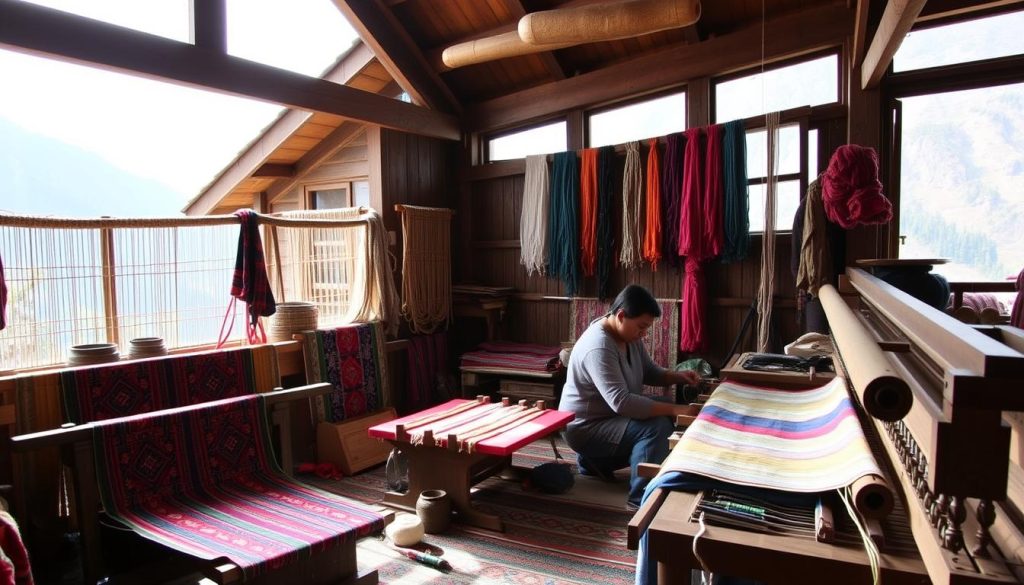
At these workshops, you’ll get to learn by doing. You’ll see how local artisans live and work. Many workshops also include visits to textile museums and centers. This shows the craft’s cultural value and ongoing traditions. Always choose classes with respected local artisans for the best learning experience.
Joining these weaving workshops in Bhutan is a rewarding experience. It connects you to the heart of Bhutan’s culture through its textiles.
What to Expect from Your Workshop Experience
Joining a Bhutanese weaving workshop is a deep dive into Bhutan’s textile heritage. You’ll get to learn hands-on from techniques that have been around for ages.
Hands-On Learning
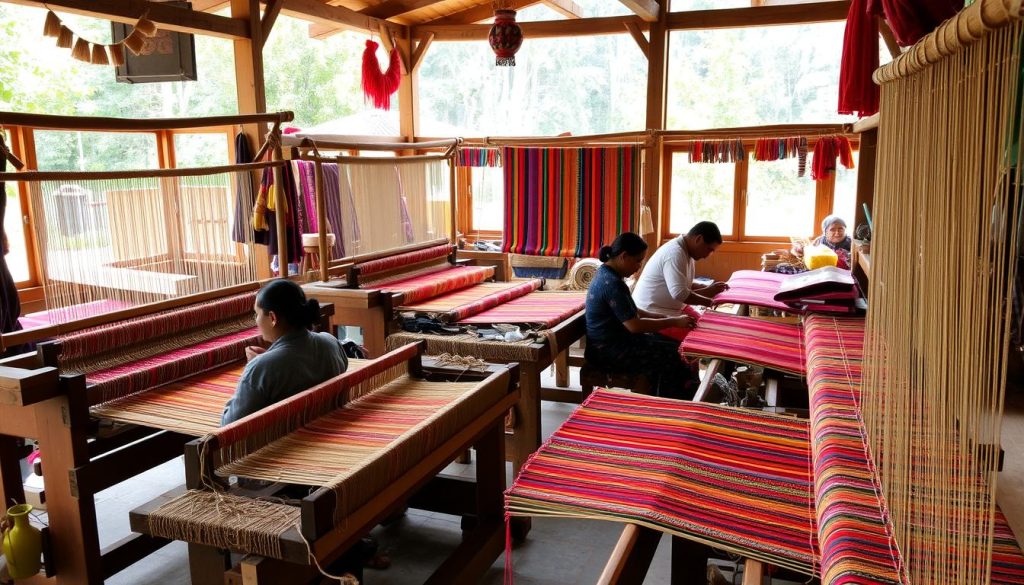
You’ll work with old looms and special yarns. These workshops last from two to five days. They’re perfect for beginners or those with some experience.
You’ll learn key skills like Bhutanese supplementary weft brocading. This is crucial for making detailed textiles.
Interaction with Local Weavers
Meeting local weavers is a big part of the workshop. They share their stories and the meaning behind their work. This connection helps you understand the culture and supports local artisans.
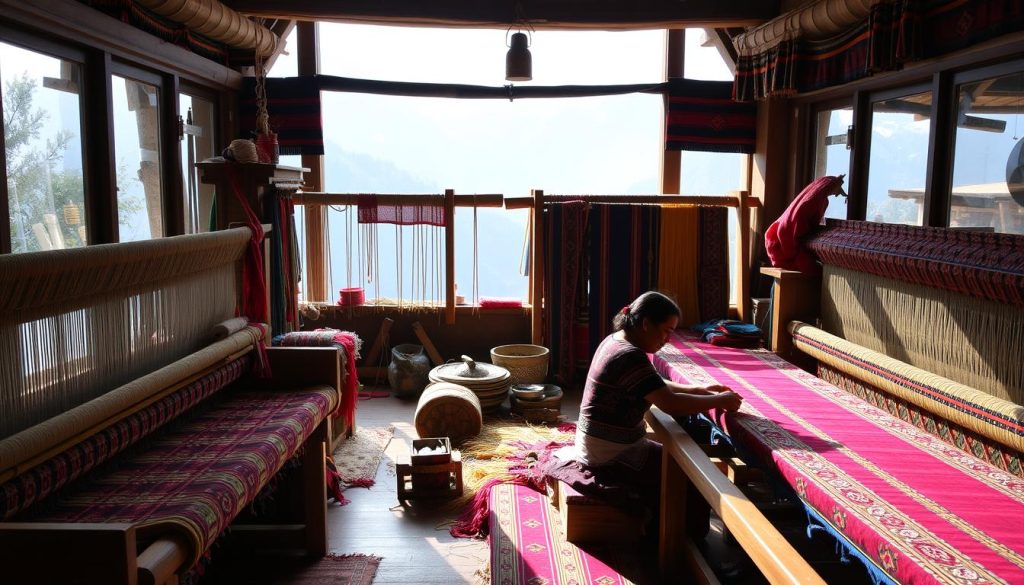
Visiting local festivals, like tsechu, adds to the experience. It shows textiles in their true setting. The workshops are flexible, leading to unexpected moments that show village life.
| Workshop Feature | Description |
|---|---|
| Duration | 2-day to 5-day sessions |
| Techniques Learned | Bhutanese supplementary weft brocading (sapma and thrima) |
| Community Engagement | Direct interaction with local artisans |
| Skill Level | Open to all, with prior weaving experience recommended |
| Festival Involvement | Participation in local tsechu festivals |
By the end, you’ll have new skills and a deep respect for Bhutanese textiles.
Bhutanese Handloom Weaving Classes: A Unique Perspective
Joining Bhutanese handloom weaving classes is a special chance to explore the art of textile making. You’ll learn from local artisans and see how nature and culture influence their work. These classes let you learn Bhutanese weaving techniques that have been passed down for generations, showing the rich history of Bhutan.
Weaving in Bhutan is more than just a craft; it’s a way to express culture. Women, who do most of the weaving, handle everything from spinning to dyeing with natural colors like Bhutanese indigo. This shows how the land affects the variety of textiles.
To make your learning experience better, consider these points:
| Aspect | Description |
|---|---|
| Techniques | You will learn diverse weaving techniques, including the use of back strap looms and card looms, peculiar to different regions. |
| Materials | Familiarize yourself with local materials such as wild silk, cotton, and natural dyes sourced from Bhutan’s flora. |
| Culture | Discover the cultural significance of textiles, including motifs that represent local beliefs and lifestyles. |
| Community | Engage with local weavers, which helps to elevate their traditional work while contributing to income generation and economic growth. |
Classes improve your skills in traditional textiles and make you appreciate the hard work and creativity in each piece. By embracing these unique handloom experiences, you connect with Bhutan’s vibrant culture and art.
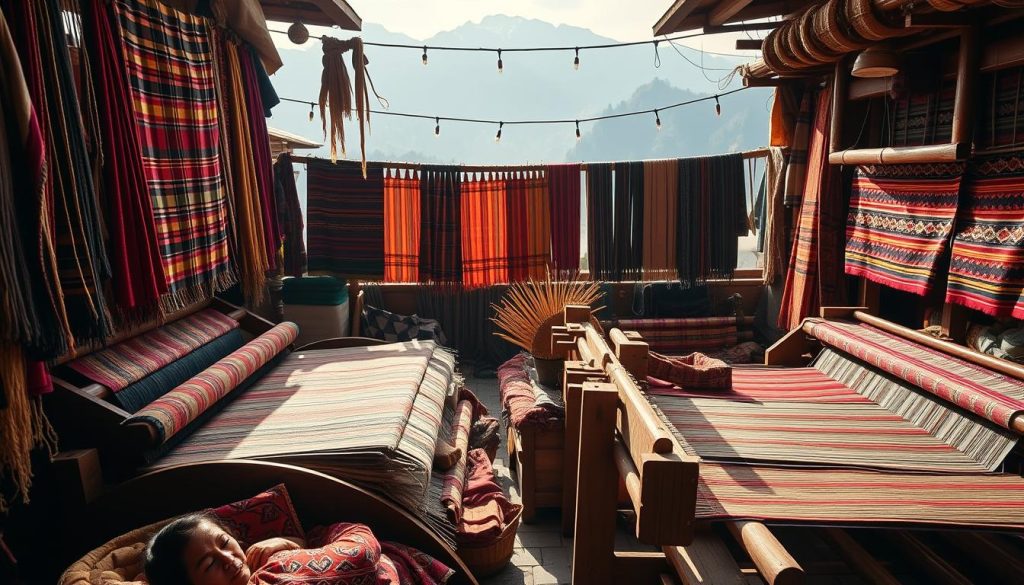
Cultural Textile Workshops in Bhutan
Cultural textile workshops in Bhutan connect ancient weaving traditions with modern techniques. Participants learn how these workshops mix old methods with new ones. This creates unique pieces that honor Bhutanese culture and meet global design tastes.
These workshops not only show authentic textile creation in Bhutan. They also start a conversation on keeping heritage alive while innovating.
Connecting Heritage with Modern Techniques
Comprehensive tour packages offer hands-on experiences like weaving, dyeing, and embroidery. You’ll learn from master weavers and see the craftsmanship behind Bhutanese textiles. Visiting handicraft villages lets you see artisans at work, making everything from wooden bowls to traditional paper.
Visitors can tailor their trips to focus on textile arts. Some packages give you special access to workshops with talented artists. You’ll also visit places like the Royal Textile Academy in Thimphu, showcasing Bhutan’s rich artistic heritage.
These tours include spiritual and symbolic experiences tied to textiles in Bhutan. The tours last 15 nights and 16 days. They have small groups of 6 to 10 people, exploring Paro, Thimphu, and Bumthang. You’ll learn about three traditional practices, deepening your understanding of Bhutanese culture.
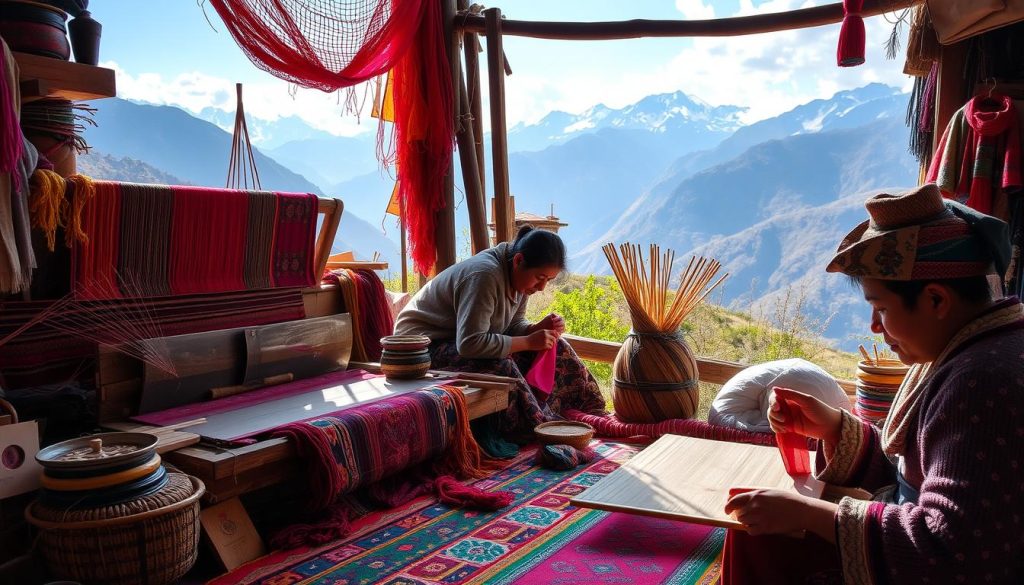
Workshops like dyeing in Punakha and weaving in Bumthang make your experience unforgettable. Working with local artisans supports communities and deepens your knowledge of Bhutanese textile heritage.
Exploring the Beauty of Handwoven Textiles in Bhutan
The handwoven textiles in Bhutan are truly stunning. They feature vibrant colors and intricate patterns. Each piece tells a story, rooted in local culture and nature.
In Bhutan, wearing traditional clothes is a must. Men wear a gho, a kimono-like robe. Women wear a kira, a rectangular garment made from three nine-foot loom lengths stitched together. This shows how important these textiles are in Bhutanese life.
The materials used in weaving, like silk and wool, show centuries-old techniques. Ashi Sangay Choden, the youngest queen and founder of the National Textile Museum, says these textiles reflect regional styles and social status. Each piece is unique, with vibrant colors and complex patterns.
Hand-loomed textiles are used as currency for bartering and trading, often at weddings and religious ceremonies. It takes time and effort to weave kiras and ghos, which can take around three months. Many rural women weave these textiles, finding economic independence while preserving cultural heritage.
The craftsmanship in Bhutan’s textiles attracts collectors and celebrities. Prices are comparable to haute couture. Artisans pour their passion and history into their work, enriching their lives and Bhutan’s cultural fabric.
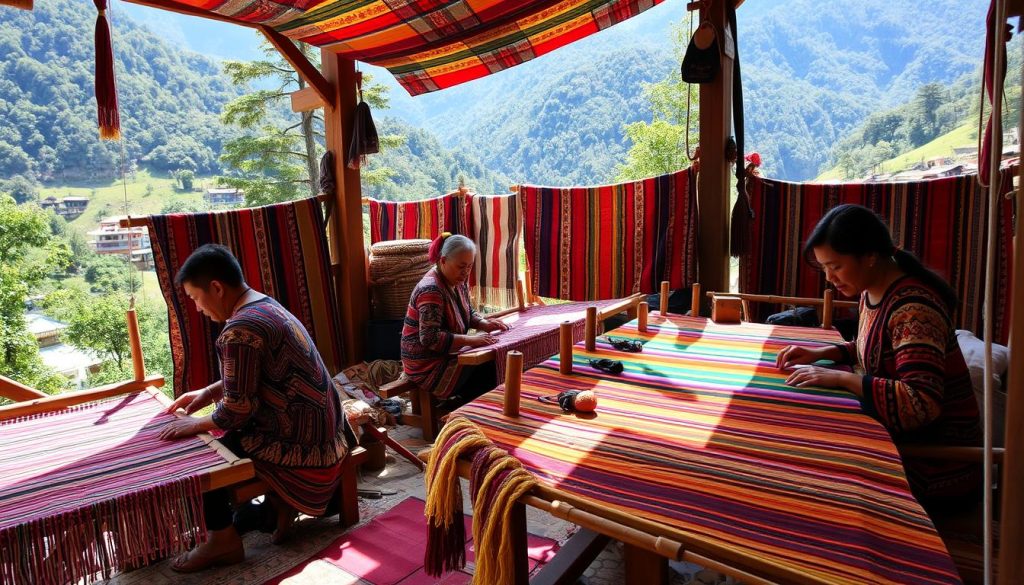
| Type of Textile | Materials Used | Average Weaving Time | Usage |
|---|---|---|---|
| Kira | Silk, Wool | 3 months | Traditional dress for women |
| Gho | Cotton, Wool | 3 months | Traditional dress for men |
| Textile Artwork | Diverse fibers | Varies | Home décor and gifts |
Planning Your Trip to Attend Weaving Workshops
Planning your Bhutanese weaving trip involves several key factors. The best times to visit often coincide with festivals and seasons. These times highlight the vibrant weaving traditions of Bhutan. It’s also important to understand visa requirements for a smooth entry.
Bhutan’s logistics can be challenging, more so for group travel. This requires careful planning to ensure a smooth experience.
- Best Months: Research the ideal months for attending weaving workshops, as this can impact availability.
- Visa Process: Ensure you have the correct visa documentation and understand the application process.
- Accommodation: Secure lodging that fits the timing of your workshops, ensuring comfort and accessibility.
- Transportation: Plan your routes, considering drive times such as the 1-1.5 hour journey from Paro to Thimphu and the scenic 3-hour drive from Thimphu to Punakha.
- Local Tour Operators: Contact operators who specialize in crafting memorable weaving experiences.
Traveling to Bhutan for weaving workshops offers a deep dive into local culture. Each region has its own weaving patterns and materials. For example, the Kurtoep women in Lhuentse are known for their intricate silk.
The diverse ethnic groups in Bhutan add to the richness of its textiles. This diversity makes Bhutan’s textiles truly unique.
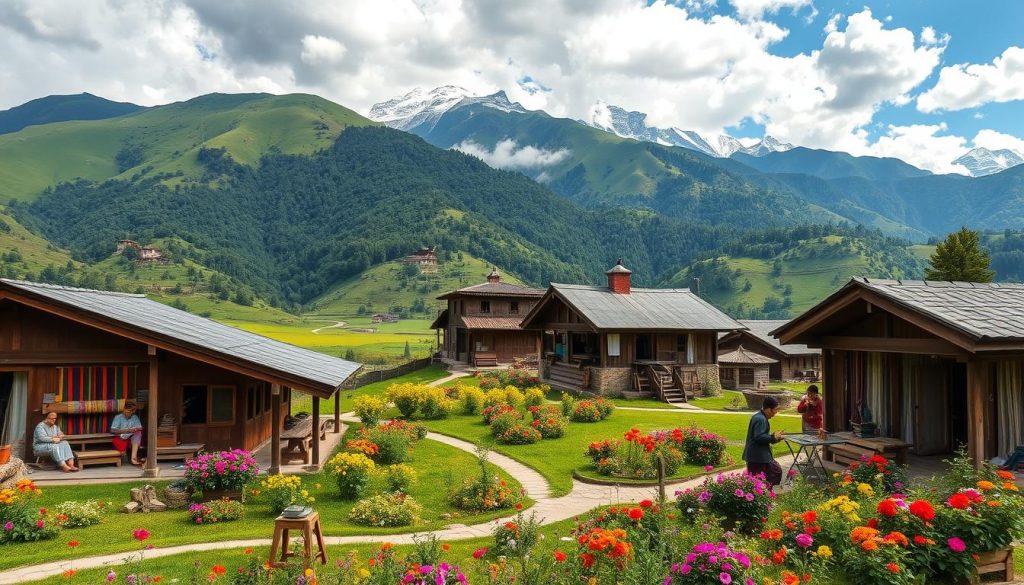
A good itinerary should mix workshops with exploring Bhutan’s stunning landscapes. Visit places like Tharpaling Monastery and explore the Chumey valley. This balance allows you to enjoy both the craftsmanship and the natural beauty of Bhutan.
Conclusion
Exploring Bhutan’s weaving culture is like diving into a world of tradition and skill. You learn the ancient techniques and understand the deep meaning behind each piece. It’s a chance to see the hard work and creativity that show off Bhutan’s history and its bond with nature.
Working with local artisans lets you connect with their community and values. It’s a way to support their work and help keep their traditions alive. This also helps the local economy and keeps their artistry alive.
These workshops are more than just learning; they’re a deep dive into Bhutan’s culture. You’ll leave with more than just crafts. You’ll have memories and connections that show the beauty of weaving and the people behind it.