Experience Manila’s Local Fast Food Culture
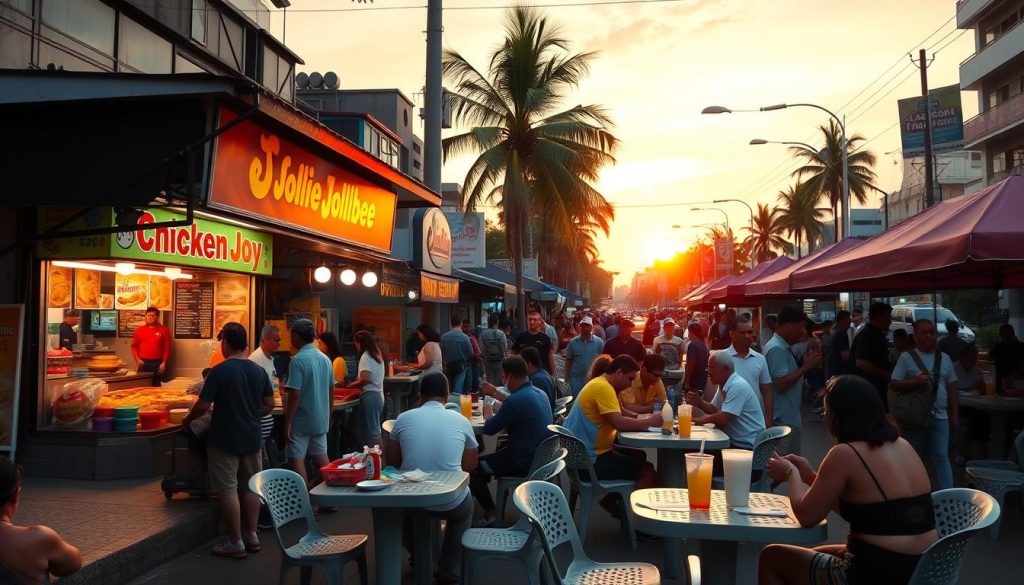
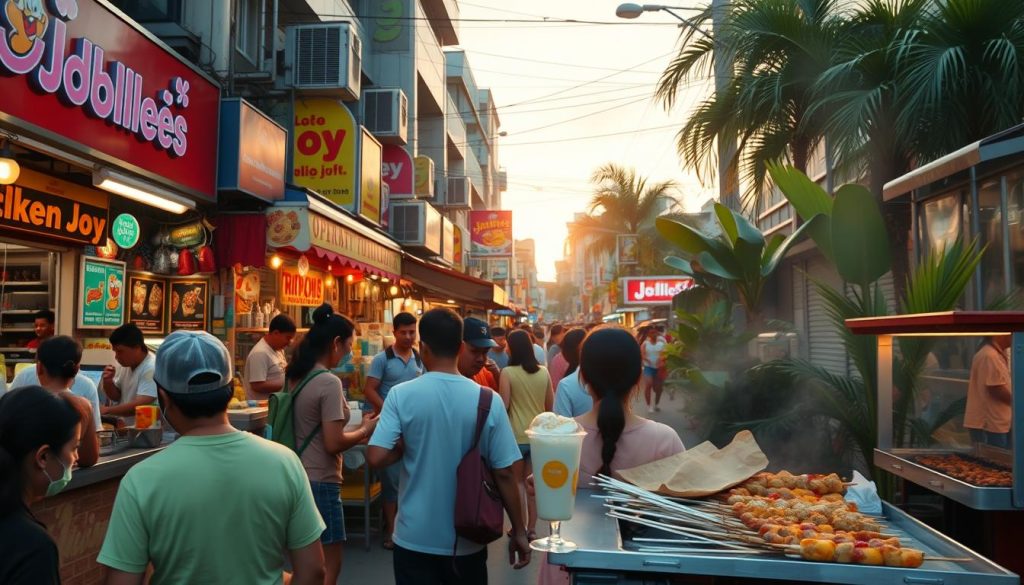
Manila’s streets buzz with sizzling street food and lively chatter. The city’s fast food culture is unique and exciting. It offers a blend of iconic Filipino chains and authentic street vendors.
This vibrant food scene lets you dive into local gastronomy. You’ll discover flavors that make Manila’s fast food special. Get ready to explore this dynamic culinary landscape!
Manila’s fast food world is diverse and exciting. You’ll find beloved chains that are part of the city’s culture. Street food here showcases the creativity of Filipino cuisine.
Friendly locals are eager to share their food traditions. Get ready for a tasty adventure! You’ll experience authentic flavors and the lively spirit of Manila’s fast food scene.
Eat with a Local
Dining with a friendly Filipino is an amazing way to experience Manila’s food culture. Filipinos are known for their warm hospitality and love of sharing culinary traditions. This approach offers access to authentic and delicious dining experiences in the city.
Connect with Friendly Filipinos
Filipinos are naturally welcoming to visitors. Chatting with locals at eateries or markets can lead to meal invitations. These connections offer local food experiences and cultural immersion beyond typical food tours.
Discover Authentic Food Experiences with Withlocals
For a curated authentic dining experience, try booking through Withlocals. This platform connects you with passionate local hosts eager to share culinary knowledge. You’ll gain an insider’s view of Manila’s food scene with Withlocals hosts.
These experiences will deepen your appreciation for Filipino cuisine. You’ll enjoy family recipes and learn about local food traditions.
“The food I had at my Withlocals host’s home was so much better than anything I found in the restaurants. It was truly authentic and made with love.”
Explore Manila’s Dampa Markets (Wet Markets)
Manila’s Dampa markets offer a peek into Filipino cuisine. These lively marketplaces showcase fresh local seafood. Visitors can select ingredients and have them cooked at nearby restaurants.
The Dampa Wet Market near the airport is a popular spot. Here, you can enjoy fresh seafood for about $6 per person. Stalls display an array of fish, crabs, lobsters, prawns, and scallops.
“Visiting the Dampa Wet Market is a must-do cultural experience in Manila. It’s where you can truly connect with the local food scene and find the freshest ingredients for your meal.”
Dampa markets also offer produce, spices, and other Filipino cuisine essentials. You can bargain with vendors and enjoy the vibrant atmosphere. These wet markets are key to Manila’s food culture.
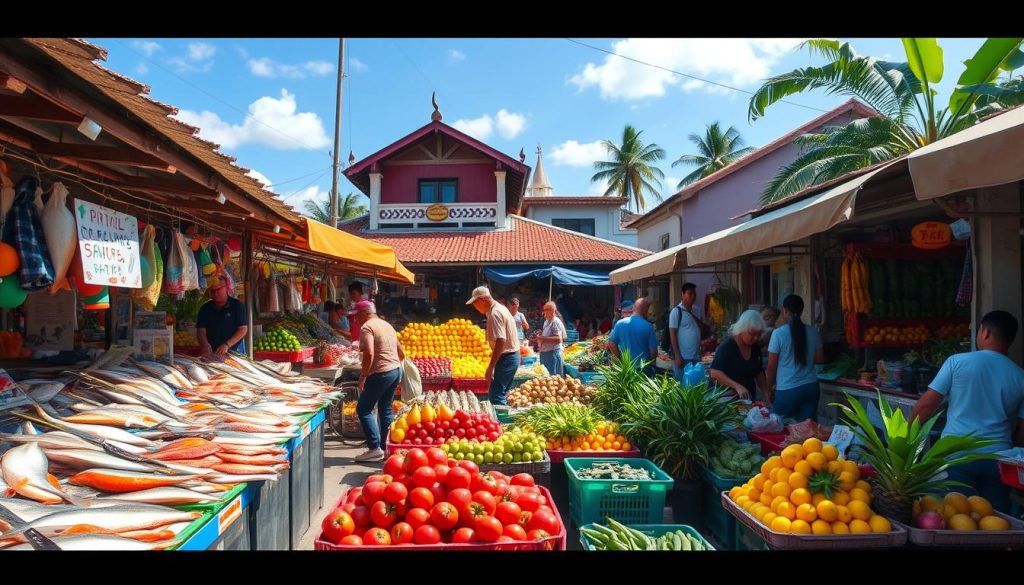
Dampa markets are perfect for foodies and culture enthusiasts alike. They showcase the energy and abundance of Manila’s culinary scene. A visit here will be a highlight of your Philippine adventure.
Savor International Cuisines in Manila
Manila’s vibrant food scene offers more than just local fast food. The city boasts a thriving international dining landscape. From Spanish tapas to Chinese dim sum, Manila’s culinary diversity is truly captivating.
Mexican Street Tacos at El Chupacabra
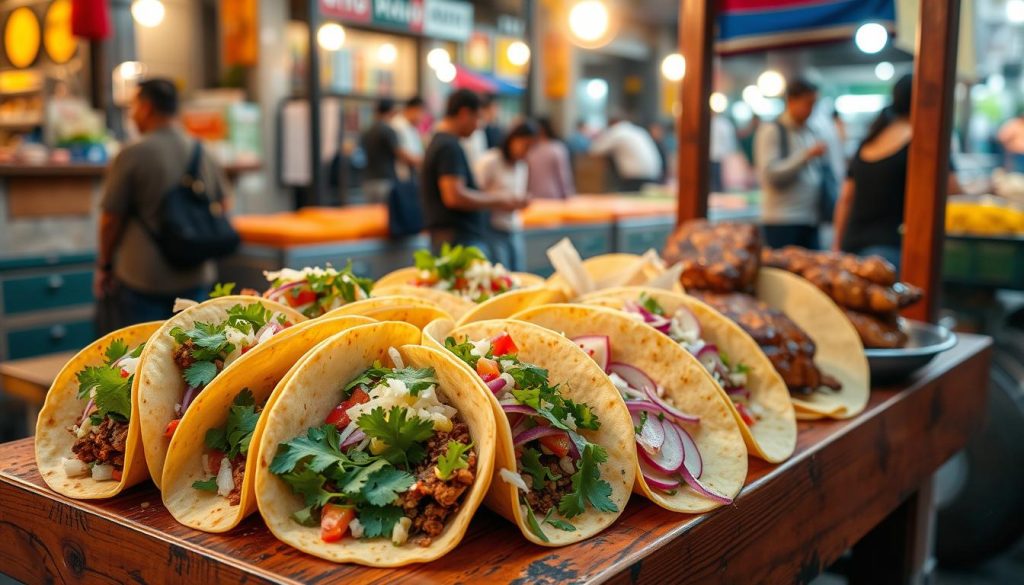
El Chupacabra stands out in Manila’s international food scene. This lively eatery serves up authentic Mexican street tacos that rival those in Mexico. Their menu features a variety of mouthwatering fillings.
Diners can enjoy succulent al pastor, crispy carnitas, and juicy carne asada. These fillings come in freshly made tortillas topped with vibrant salsas and tangy lime.
“The tacos at El Chupacabra transport you straight to the bustling street food stalls of Mexico City. It’s a true taste of international cuisine in the heart of Manila.”
El Chupacabra’s dedication to authentic Mexican food has made it a popular spot. Both locals and tourists flock here for a taste of culinary diversity.
| Dish | Description | Price |
|---|---|---|
| Al Pastor Tacos | Marinated pork, pineapple, onion, cilantro | ₱150 (per order of 3 tacos) |
| Carnitas Tacos | Crispy pork, onion, cilantro | ₱150 (per order of 3 tacos) |
| Carne Asada Tacos | Grilled steak, onion, cilantro | ₱150 (per order of 3 tacos) |
Craving international cuisine or authentic Mexican street food? El Chupacabra in Manila is the place to go. Your taste buds will thank you for this flavorful adventure.
How can I experience local fast food culture in Manila?
Manila’s fast food scene blends Filipino flavors with international influences. You can dive into this vibrant culture through various exciting ways. Dining with locals and exploring Dampa markets are great starting points.
Begin by connecting with friendly Filipinos. They love sharing their food culture and can guide you to hidden gems. Join a food tour or dine with a local host for an authentic experience.
Visit the lively Dampa markets next. These bustling wet markets showcase fresh, local ingredients. They’re the heart of Manila’s food scene and offer insights into culinary traditions.
Don’t miss out on international fast-food chains in Manila. They often add local twists to their menus. This fusion caters to the city’s diverse tastes.
Exploring Manila’s fast food culture is more than just eating. It’s about understanding the city’s rich culinary heritage. You’ll see how global and local flavors merge here.
| Fast Food Trend | Impact on Local Culture |
|---|---|
| Proliferation of Western fast-food chains | Challenging traditional Filipino eateries and influencing a generation’s food preferences |
| Adaptation of global fast-food menus to local tastes | Fostering a cultural exchange and adding a unique Filipino spin to international cuisine |
| Rise in popularity of Filipino cuisine globally | Renewed appreciation for traditional dishes and culinary heritage |
Manila’s fast food scene offers more than just quick meals. It’s a window into the city’s culinary traditions. You’ll witness the ongoing dialogue between global and local food cultures.
Authentic Filipino Flavors
Manila’s local eateries showcase a rich culinary heritage. Classic adobo offers sour and salty notes. The creamy, sweet halo-halo dessert highlights Filipino cuisine’s depth.
Filipino cuisine blends Spanish, Chinese, Malay, and American influences. It includes over a hundred ethnic groups across the archipelago. This results in diverse regional specialties.
Notable culinary traditions include Tagalog, Pangalatok, and Visayan. Ilocano, Kapampangan, Bicolano, Chavacano, and Maranao cuisines are also prominent.
Filipino food balances sweet, salty, and tangy flavors. Sourness is the most common taste profile. A typical Filipino breakfast, si-log, includes rice, egg, and a savory viand.
Longanisa, tocino, or tuyo are common breakfast meats. Dipping sauces called sawsawan are crucial to Filipino cuisine. They’re made with calamansi, soy sauce, vinegar, and chili.
“Filipino character is preserved and exhibited in the evolving and adapted cuisine that creatively incorporates endemic ingredients and local palates.”
The Philippines‘ diverse culinary landscape reflects its rich history. Foreign influences have shaped Filipino cuisine’s evolution. This unique fusion continues to captivate local and international palates.
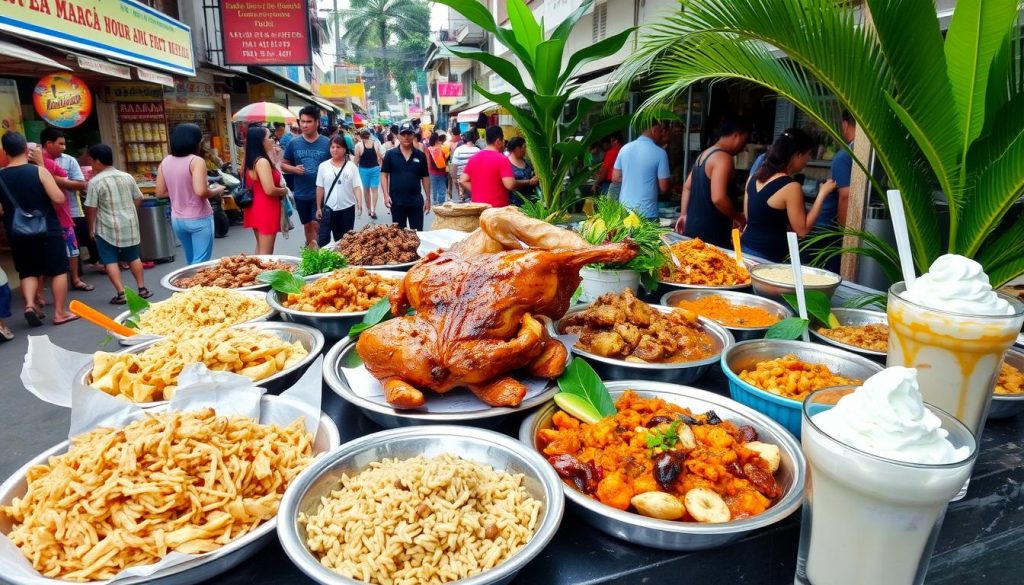
Iconic Fast Food Chains
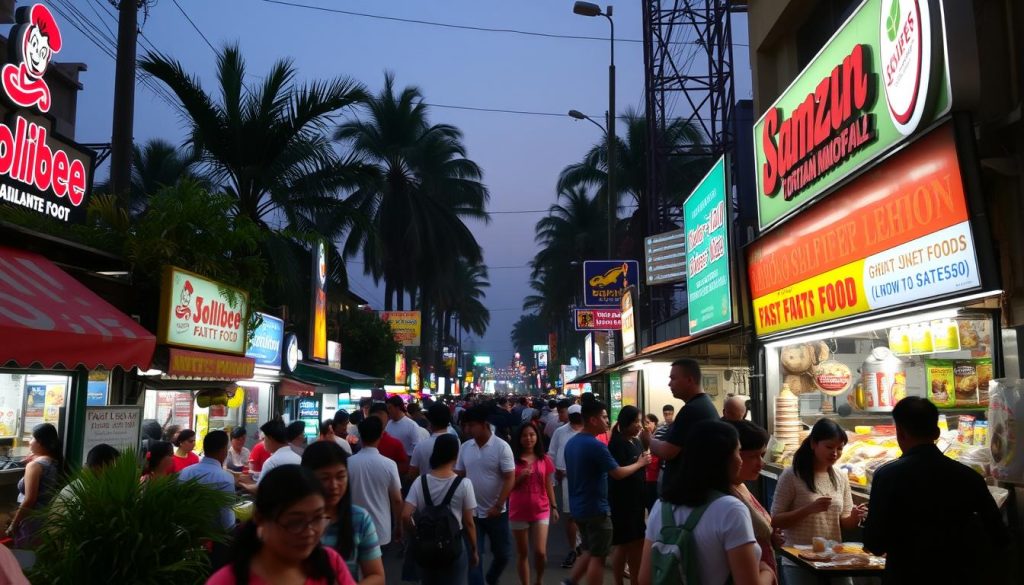
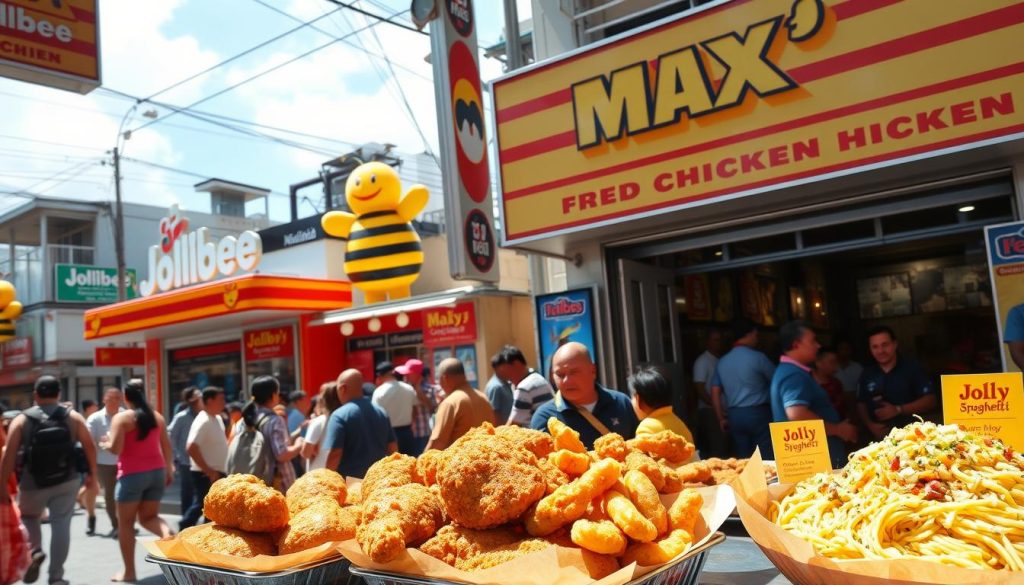
Manila boasts several iconic Filipino fast food chains. These eateries symbolize the country’s culinary identity. Jollibee and Max’s Fried Chicken offer unique flavors that define Manila’s thriving fast food culture.
Jollibee and Max’s Fried Chicken
Jollibee, the Philippines’ largest fast-food chain, has over 750 stores nationwide. It outperforms global giants like McDonald’s and Burger King in popularity. The brand’s menu varies by location, featuring favorites like Jolly Spaghetti and Chickenjoy.
Jollibee plans to expand to 150 U.S. stores within five years. They aim to attract Filipino-American communities and broader American audiences.
Max’s Fried Chicken has been a beloved Filipino institution since World War II. It’s famous for its golden-brown fried chicken, a staple of Filipino cuisine. With over 200 locations, Max’s is a must-try in Manila.
“Jollibee is seen as a symbol of nostalgia for homesick Filipinos, underscoring its significance beyond just being a fast food chain.”
Jollibee and Max’s Fried Chicken represent Filipino culture’s unique flavors and traditions. They’re essential stops for anyone seeking an authentic taste of Manila’s vibrant fast food chains.
Local Specialties and Street Food
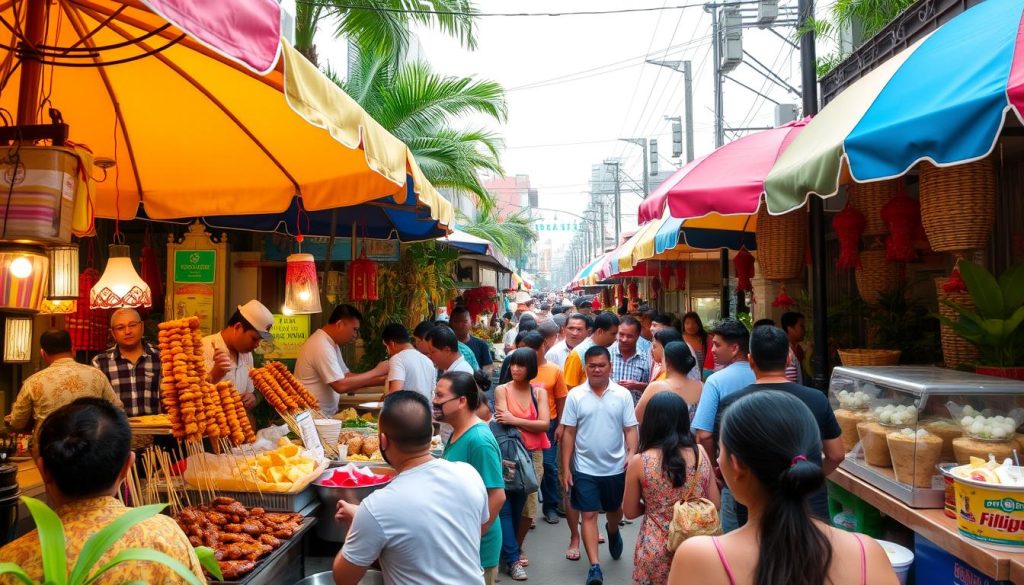
Manila’s streets burst with local specialties and tempting street food. From tangy kinilaw to hearty kare-kare, these offerings showcase unique Filipino cuisine. They provide a taste of Manila’s culinary soul.
Filipino street food falls into two main groups: “inihaw” (charcoal-grilled) and “tusok-tusok” (deep-fried). Street food carts move along sidewalks, drawing in hungry passers-by. This casual dining has gained popularity across all social classes.
Inihaw uses all parts of animals, including scraps from pig and chicken. Chicken and duck, at any stage, are common in street food. These local specialties offer a taste of Filipino cuisine.
“The pricing for a course in restaurants typically ranges from £2-3, with fancy restaurants going up to £8. In Makati, mains can go up to £20. Meals at turo-turos, local eateries serving traditional Filipino food, cost between £0.70 and £1.50, including rice.”
Filipinos love to eat all the time, enjoying authentic flavors and local specialties. The Philippines offers a wide range of fruits and vegetables. These often appear in street food dishes.
Pork is the main meat, followed by chicken. Other meats are eaten based on availability. “Lechon” (hog roast) is a popular choice for celebrations.
Innovative Filipino Cuisine
Manila’s food scene is evolving beyond traditional fast food. Talented chefs are reinterpreting local ingredients and techniques in groundbreaking ways. They’re elevating Filipino food and offering fresh perspectives on the country’s rich culinary heritage.
These innovative culinary visionaries are pushing boundaries of Filipino cuisine. They create modern interpretations that celebrate vibrant flavors and culinary creativity. Their work showcases the Philippines’ diverse gastronomic landscape.
Chefs are reinventing classics like adobo and sinigang. They’re also creating inventive takes on street food favorites. This approach challenges the status quo and introduces Filipino food to a wider audience.
Their gastronomic exploration delights locals’ taste buds. It also captivates international foodies eager to discover this innovative cuisine.
“Filipino cuisine is a mosaic of flavors, textures, and techniques that reflect the country’s rich cultural heritage. By embracing the past while crafting modern interpretations, we can elevate and celebrate the boundless potential of this unique culinary tradition.”
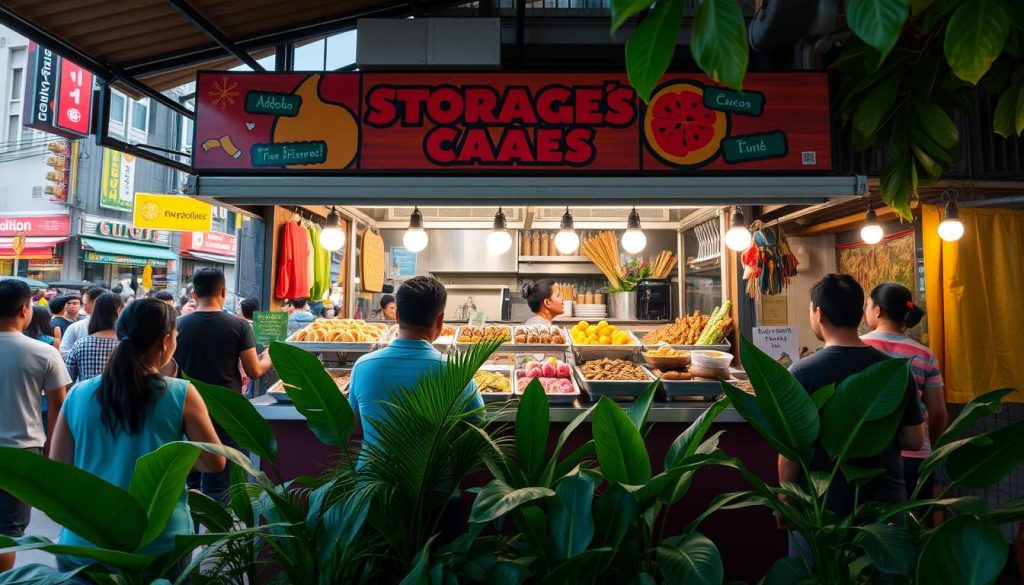
The global spotlight on Filipino food is growing brighter. Manila’s culinary innovators are leading this exciting movement. They showcase the depth and versatility of this vibrant cuisine.
This gastronomic renaissance appeals to both seasoned connoisseurs and newcomers. It demonstrates the endless possibilities in the Philippines’ dynamic and innovative food scene.
Conclusion
Manila’s fast-food scene reflects the city’s rich culinary heritage and cultural diversity. It’s a captivating tapestry that offers unique flavors and traditions. By exploring this dining landscape, you’ll gain a deeper appreciation for Filipino cuisine.
Your journey through Manila’s fast-food scene promises an immersive cultural experience. You’ll connect with friendly locals and explore bustling Dampa markets. You’ll also savor innovative fusion dishes that blend global influences with local tastes.
Each bite will transport you to the heart of this vibrant city. From iconic Jollibee to hidden street food stalls, you’ll discover Manila’s enduring love for food.
As you leave Manila, you’ll have a newfound respect for its culinary landscape. The city’s ability to blend global influences with local identity is remarkable. It showcases the enduring spirit of Filipino cuisine, which continues to captivate food enthusiasts worldwide.
“Manila’s fast-food scene is a gateway to experiencing the rich tapestry of Filipino culture, where every bite tells a story of the city’s past and present.”
Manila’s fast-food odyssey offers an unforgettable journey of cultural immersion and culinary discovery. It promises lasting memories for both seasoned travelers and curious foodies. Embrace the local flavors and savor every moment.
Additional Resources
Want to explore Manila’s fast food culture and Filipino cuisine? Check out these resources for a deeper dive into local flavors.
Visit the “A Taste of Manila” blog for an insider’s guide. It showcases top street food stalls and beloved fast food chains. Learn about iconic dishes like sizzling sisig and tangy sinigang.
The Philippines’ Department of Tourism website offers a “Manila Travel Guide. It recommends local markets and food tours. Discover regional variations of Filipino cuisine across the archipelago.
For a deep dive into Filipino food history, read “Kulinarya: A Guidebook to Philippine Cuisine”. This book explores the ingredients and techniques that shaped Filipino culinary traditions.