Eco-Friendly Initiatives in Islamabad: What to Know
Islamabad is leading a green revolution in Pakistan. The capital city is preserving nature and investing in renewable energy. These efforts are shaping Islamabad’s sustainable future.
Let’s explore the key eco-friendly projects making a difference in the city. These initiatives are transforming Islamabad’s urban landscape and environmental impact.
Islamabad is becoming a model for sustainable urban living. The city is embracing innovative eco-friendly initiatives. These projects are changing how people live and interact with their environment.
Environmental protection and green spaces are becoming the norm in Islamabad. The city’s vision for a greener future is slowly becoming reality.
Understanding the Need for Sustainable Development
Islamabad faces growing environmental challenges as it evolves. These issues include air pollution, water scarcity, and waste management problems. Addressing these concerns is crucial for the city’s long-term well-being.
Environmental Challenges Faced by Islamabad
Islamabad struggles with various environmental issues that threaten its future. Air pollution is worsened by vehicle emissions, industrial activities, and fossil fuel burning. Water scarcity is a major concern due to limited sources and climate change impacts.
The city’s waste management system can’t keep up with the growing population. These problems highlight the need for eco-friendly solutions to reduce Islamabad’s environmental impact.
The Importance of Eco-Friendly Initiatives
Sustainable practices can help Islamabad overcome its environmental challenges. They can also inspire other cities in the region. Eco-friendly efforts like renewable energy and green building standards can reduce the city’s carbon footprint.
These initiatives can improve residents’ quality of life. They also help preserve natural habitats and conserve resources. As Islamabad grows, eco-friendly practices become more important for its sustainable future.
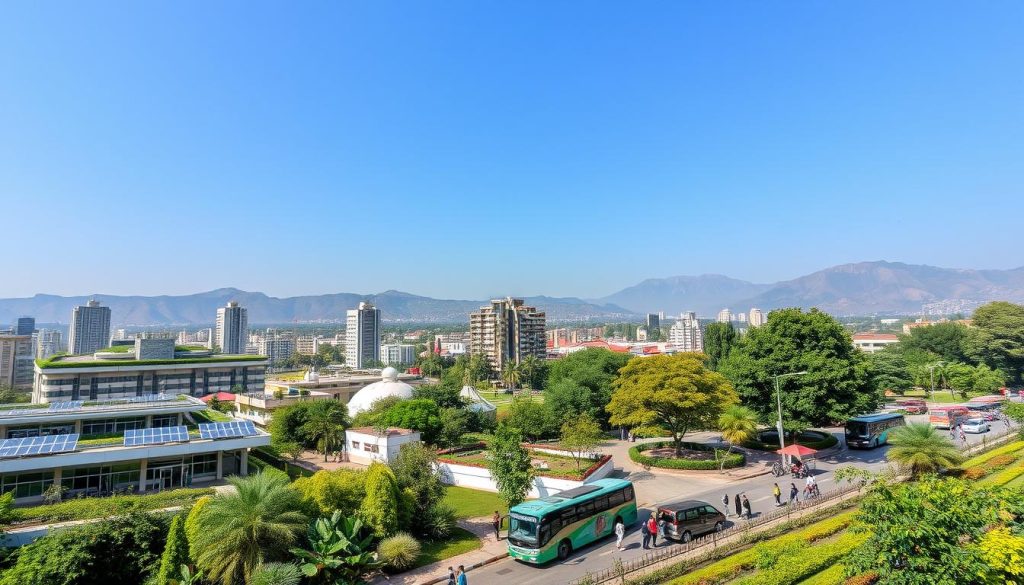
Are there any eco-friendly initiatives in Islamabad?
Islamabad, Pakistan’s capital, is implementing various eco-friendly initiatives. These efforts promote sustainable development and environmental protection. The city is creating a greener, more livable urban environment.
Here are some notable eco-friendly initiatives in Islamabad:
- Urban Forestry and Green Spaces – The city is increasing its green cover by planting trees. It’s also creating lush public parks to improve air quality and reduce urban heat.
- Waste Management and Recycling Programs – Islamabad has launched comprehensive waste management and recycling initiatives. These include specialized waste collection vehicles and recycling centers to reduce landfill waste.
- Renewable Energy Projects – The city is investing in solar power initiatives. Solar panels are being installed on government buildings. Residents and businesses are encouraged to use solar energy.
- Public Transportation Improvements – Islamabad is enhancing its public transportation system. Eco-friendly buses have been introduced. The city is developing bicycle-friendly infrastructure to promote sustainable travel.
These initiatives show Islamabad’s commitment to a sustainable future. They aim to improve the quality of life for residents. Islamabad is setting an example for other cities to follow.
“Sustainability is no longer about doing less harm, it’s about doing more good.”
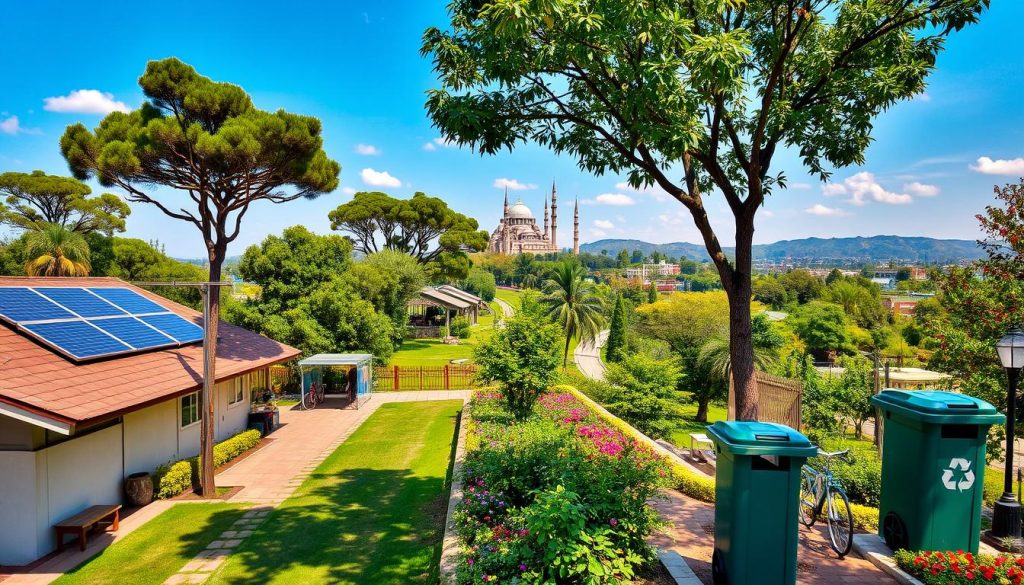
Islamabad’s Green Spaces and Urban Forestry
Islamabad, Pakistan’s capital, is famous for its Islamabad green spaces and urban forestry projects. These efforts beautify the city and protect natural habitats and biodiversity. The city’s parks, gardens, and tree-lined streets offer residents places to relax and play.
These green areas are vital sanctuaries for local wildlife. They provide shelter and food for animals in the urban setting.
Preserving Natural Habitats and Biodiversity
Islamabad works hard to protect nature within the city. These efforts help maintain the local ecosystem’s delicate balance. The city safeguards diverse plants and animals that call Islamabad home.
- Designation of protected areas and wildlife reserves to safeguard the habitats of endangered species
- Planting of native tree species to support indigenous wildlife and promote natural biodiversity
- Collaboration with local communities and educational institutions to raise awareness about the importance of preserving natural habitats
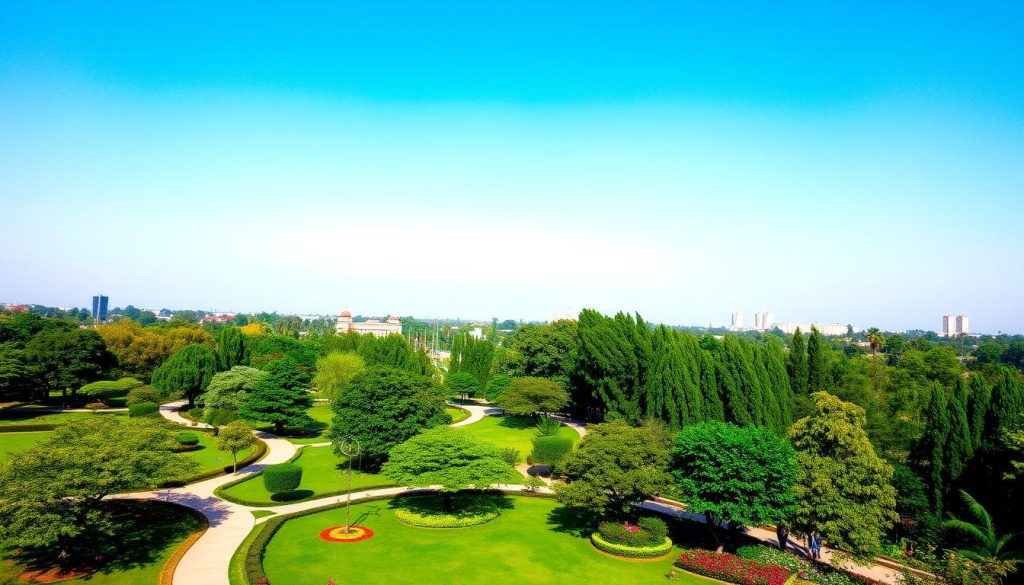
“Islamabad’s green spaces are not just aesthetically pleasing, but they serve as critical sanctuaries for the city’s diverse array of wildlife. Preserving these natural habitats is essential for maintaining the delicate balance of our local ecosystem.”
Islamabad’s focus on green spaces and urban forestry sets a great example. It shows how cities can grow while protecting nature and wildlife.
Recycling and Waste Management Programs
Islamabad has made great progress in tackling its waste management issues. The city has set up a thorough recycling program. It has also built modern waste management facilities for a cleaner environment.
Recycling centers have been established throughout Islamabad. These centers urge residents to sort their waste at home. People separate recyclables like paper, plastic, glass, and metal from organic waste.
This simple approach has reduced landfill waste significantly. It has also eased the burden on the city’s waste management system.
Islamabad has also created advanced landfill sites for non-recyclable waste. These facilities are designed to lessen environmental impact. They use cutting-edge systems for treating leachate and capturing methane.
By investing in sustainable practices, Islamabad is building a cleaner future.
| Recycling Rate | Landfill Capacity | Waste Diversion |
|---|---|---|
| 45% | 2.5 million tons | 60% |
The city’s recycling efforts have improved Islamabad’s cleanliness. They’ve also made residents more eco-conscious. The local government runs public awareness campaigns and educational programs.
These initiatives encourage people to adopt sustainable waste disposal habits. This paves the way for a greener, more livable city.
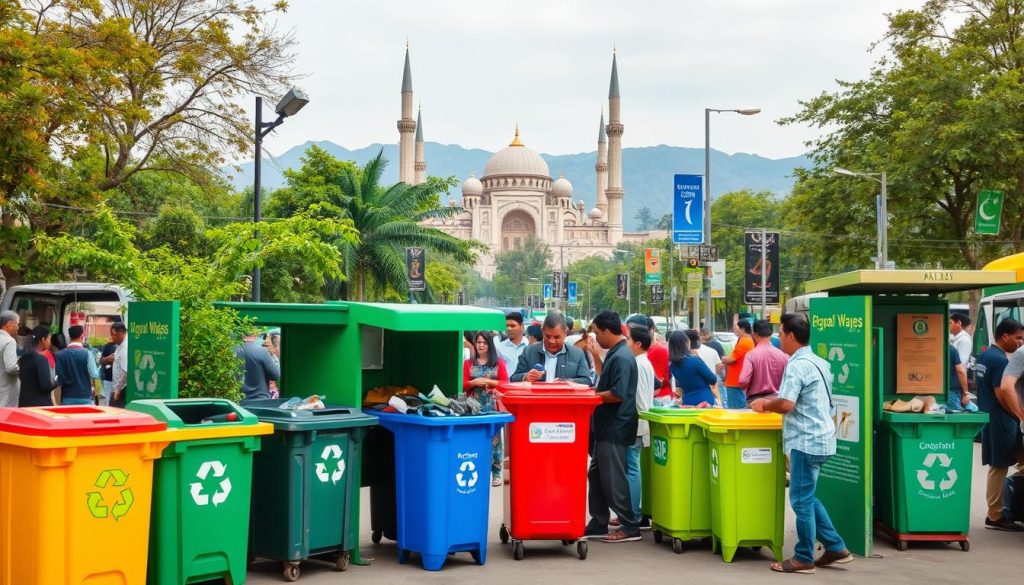
“Effective recycling and waste management programs are essential for creating a sustainable future. Islamabad’s initiatives in this regard serve as a model for other cities to follow.”
Energy Conservation and Renewable Energy Projects
Islamabad leads in eco-friendly initiatives. The city focuses on energy conservation and renewable energy projects. Local government aims to reduce carbon footprint and promote sustainable development.
Solar Power Initiatives in Islamabad
Islamabad installs solar panels on government buildings. This reduces reliance on non-renewable electricity sources. The city also develops solar parks to expand its renewable energy portfolio.
Energy-Efficient Building Codes and Standards
Islamabad has implemented energy-efficient building codes and standards. These promote eco-friendly structures. The codes encourage energy-efficient materials, design features, and technologies in new buildings.
These measures help reduce energy consumption and greenhouse gas emissions. Islamabad’s efforts set an example for other cities in Pakistan and worldwide.
Energy conservation and renewable energy projects address environmental challenges. They show Islamabad’s commitment to a sustainable future.
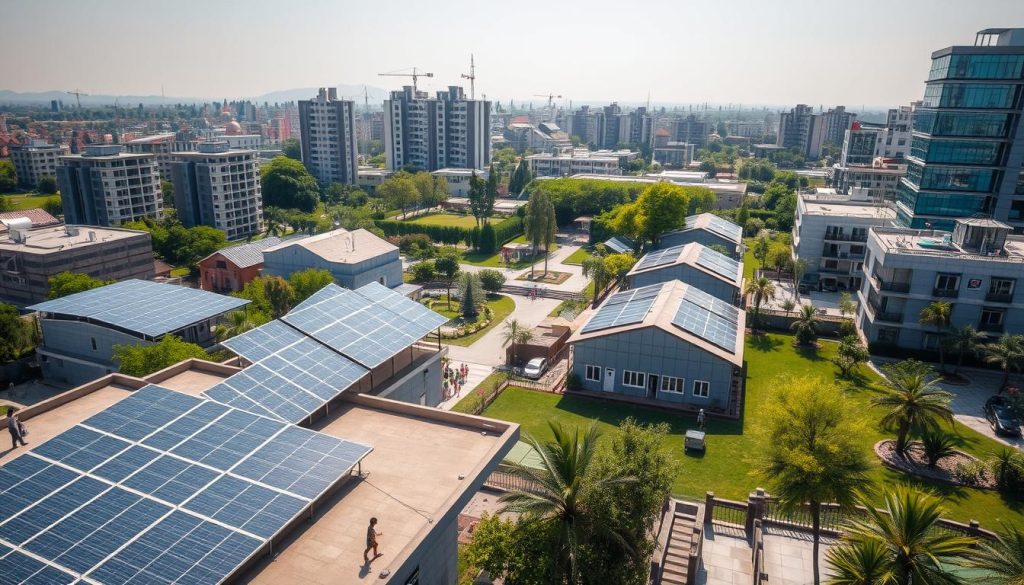
“Islamabad’s focus on renewable energy and energy-efficient building codes is a testament to its dedication to sustainable development and environmental protection.”
Public Transportation and Traffic Reduction Measures
Islamabad is tackling transportation issues with eco-friendly solutions. The city has expanded its public transit network, including the modern Islamabad Metro. This sustainable option has cut private vehicle use, easing traffic and lowering emissions.
The city promotes carpooling and ride-sharing programs. These measures reduce congestion and foster community spirit. They also encourage environmental responsibility among residents.
Promoting Cycling and Pedestrian-Friendly Infrastructure
Islamabad is investing in sustainable mobility options. The city has built dedicated bike lanes and well-maintained sidewalks. These improvements make it safer for people to explore on foot or by bike.
These initiatives aim to decrease private vehicle use. They also encourage a more active and healthy lifestyle in the community.
| Eco-Friendly Initiative | Impact |
|---|---|
| Islamabad Metro | Reduced reliance on private vehicles, lower emissions |
| Carpooling and Ride-Sharing Programs | Eased traffic congestion, promoted community and environmental responsibility |
| Cycling and Pedestrian-Friendly Infrastructure | Encouraged active transportation, reduced private vehicle usage |
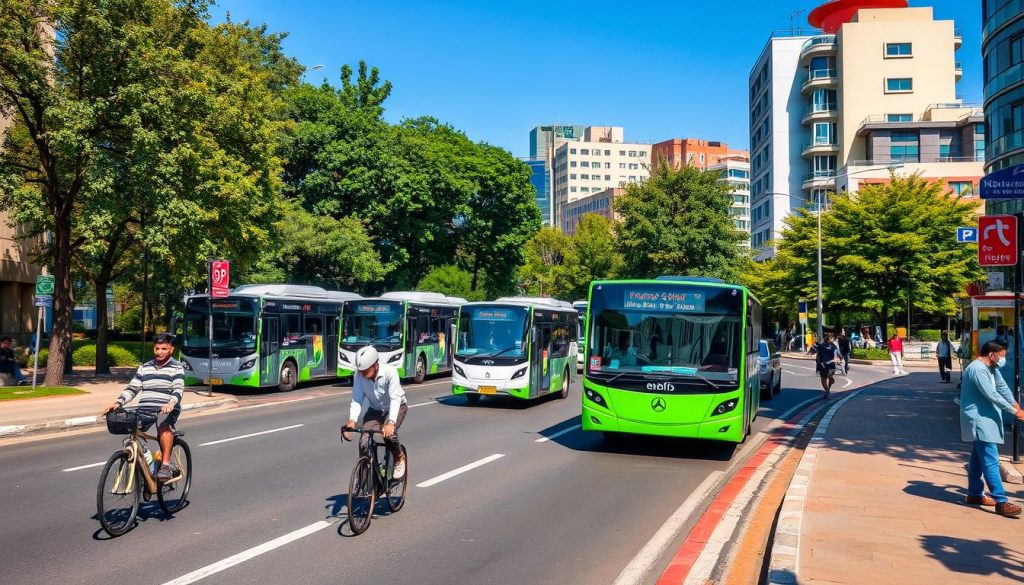
Islamabad’s eco-friendly transportation efforts are praiseworthy. The city invests in public transportation, cycling, and pedestrian-friendly infrastructure. These actions set an example for sustainable urban growth and a greener future.
Community Engagement and Education Programs
Islamabad’s eco-friendly initiatives go beyond policy changes. The city focuses on community engagement and education programs to raise awareness. These efforts empower citizens to protect the environment and contribute to Islamabad’s green transformation.
Key initiatives include awareness campaigns on environmental conservation. These use social media and local events to inspire action. Residents join tree-planting drives, recycling efforts, and beach cleanups, fostering community spirit.
Islamabad also hosts educational workshops and training sessions. These cover topics from renewable energy to sustainable waste management. By sharing knowledge, the city nurtures environmentally conscious citizens.
Community-driven initiatives are crucial to Islamabad’s engagement approach. Local groups lead sustainability projects tailored to their neighborhoods. These efforts build pride as residents shape their city’s future.
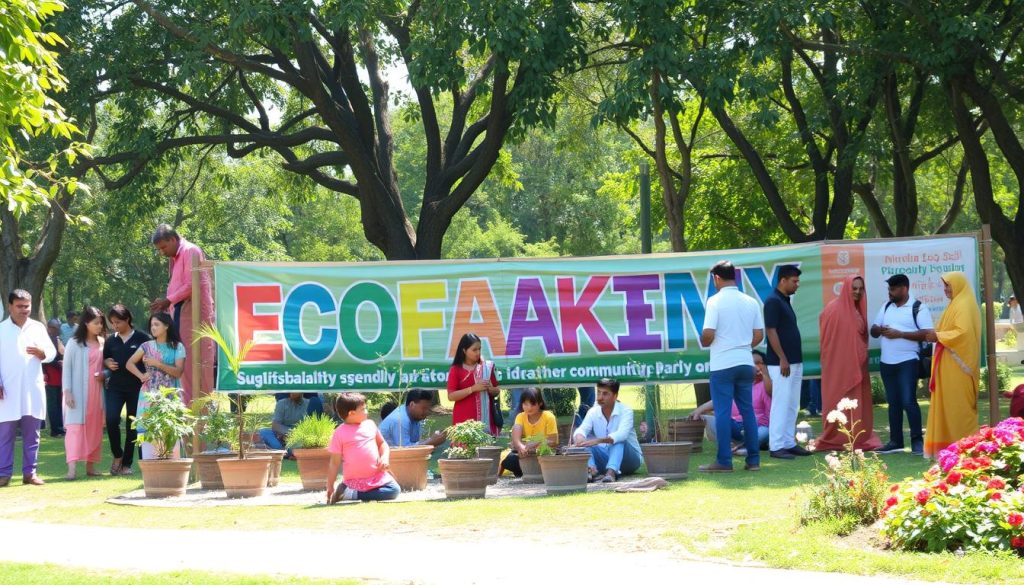
Islamabad’s approach ensures lasting impact on residents’ lives. The city fosters environmental stewardship through varied programs. This paves the way for a more sustainable future for all.
Collaboration with Private Organizations and NGOs
Islamabad’s eco-friendly initiatives involve partnerships with private organizations and NGOs. These collaborations bring in expertise and resources for green solutions. They also promote environmental stewardship and mobilize community support.
The Green Islamabad Foundation works on urban forestry and biodiversity conservation. They’ve partnered with local authorities to plant thousands of trees across the city. This has created lush green spaces and enhanced Islamabad’s urban landscape.
The Islamabad Chamber of Commerce and Industry encourages businesses to adopt eco-friendly practices. They offer incentives for companies investing in renewable energy. They also promote sustainability and waste reduction strategies in business operations.
- The Islamabad Recycling Association has improved recycling and waste segregation efforts. They’ve set up efficient collection and processing systems. This diverts valuable resources from landfills.
- The Sustainable Islamabad Network organizes clean-up drives and environmental awareness campaigns. They also conduct educational workshops to engage the public in eco-friendly initiatives.
| Organization | Contribution to Islamabad’s Eco-Friendly Initiatives |
|---|---|
| Green Islamabad Foundation | Urban forestry and biodiversity conservation |
| Islamabad Chamber of Commerce and Industry | Encouraging eco-friendly business practices, including renewable energy and waste reduction |
| Islamabad Recycling Association | Improving recycling and waste segregation systems |
| Sustainable Islamabad Network | Organizing community engagement activities, such as clean-up drives and educational workshops |
These collaborative efforts show a holistic approach to environmental challenges. They promote sustainable development in Islamabad. The city’s government, private organizations, and NGOs work together to achieve these goals.

Conclusion
Islamabad’s eco-friendly initiatives show its dedication to sustainable development. The city preserves natural habitats and invests in renewable energy. These efforts create a greener, more livable environment for residents.
Islamabad tackles its environmental challenges head-on. It sets an example for other cities in the region to follow. The city’s sustainable approach shapes a resilient future for all.
Urban forestry and recycling programs highlight Islamabad’s environmental stewardship. These initiatives contribute to a cleaner, healthier community. They also raise awareness about sustainability among locals.