Must-try Filipino Street Food in Manila? Explore Now!
Manila’s streets offer a tasty adventure into Filipino cuisine. The capital city brims with local delicacies that showcase the country’s food heritage. From daring balut to sweet banana cue, Manila’s street food scene is a flavor-packed journey.
Food explorers can dive into authentic tastes and cultural experiences. Get ready to discover unforgettable Filipino street food that’ll leave you wanting more.
Essence of Filipino Street Food Culture
Filipino street food is a window into the country’s rich cultural heritage. It offers visitors a taste of local life. The diverse offerings blend indigenous, Spanish, Chinese, and American traditions into a flavorful tapestry.
Street Food as a Culinary Gateway
Philippine streets buzz with aromas from savory grilled delicacies to sweet fried treats. These flavors tell a story of resilience and adaptability. Street food carts become social hubs, bringing people together from all backgrounds.
Diversity and Contrasting Flavors
Filipino street food showcases a mix of cultural influences. Balut, a duck embryo delicacy, stands as a cultural symbol. Barbecue and isaw (grilled chicken intestines) highlight the cuisine’s resourcefulness.
Sweet treats like halo-halo and taho represent the blending of diverse cultural influences. Halo-halo combines shaved ice, milk, beans, jellies, and fruits. Taho features warm silken tofu with syrup and sago pearls.
Savory standouts include sisig and sinigang na isda. Sisig is a sizzling mix of minced pork, chicken liver, onions, and chili peppers. Sinigang na isda is fish in sour broth. These dishes showcase the bold flavors of Filipino street food.
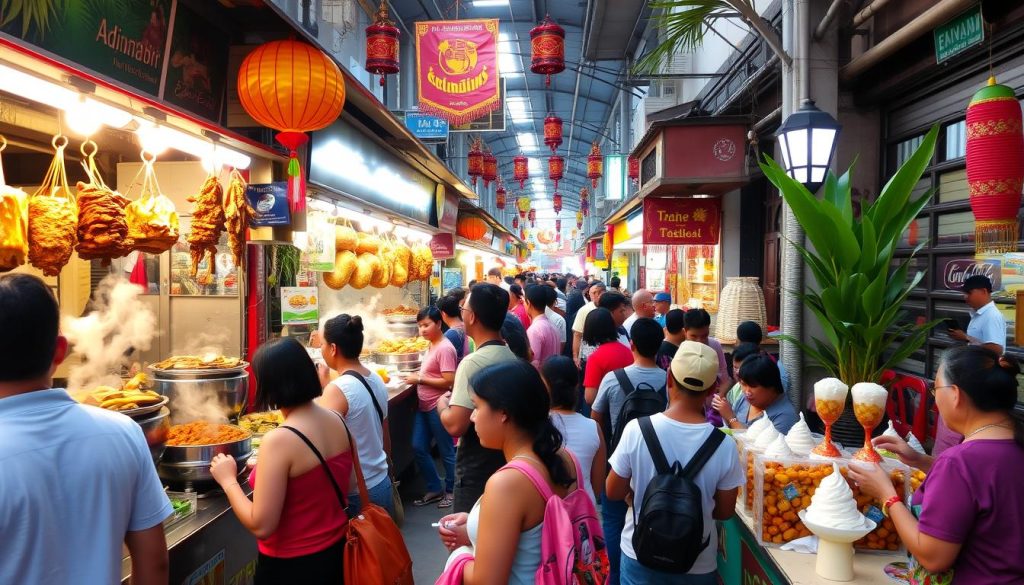
“Filipino street food is a tapestry of flavors, weaving together the rich cultural heritage of the archipelago and inviting visitors to explore the essence of the local way of life.”
Iconic Balut: A Daring Delicacy
Balut is a unique Filipino street food. It’s a partially developed duck embryo, boiled and eaten from the shell. This daring delicacy offers rich, savory flavors and interesting textures.
Balut’s Cultural Significance
Balut is more than just food in the Philippines. It represents Filipino creativity and love for unique flavors. Many believe it’s an aphrodisiac, often sold by street vendors at night.
Pateros, a town in Metro Manila, is famous for balut. Locals claim their balut is the best in the world. The town’s balut-making methods have been passed down for generations.
TV shows often feature balut as a dare. This shows how important it is in Filipino culture. Balut is part of daily life in the Philippines.
“Balut is considered the ‘national street food’ of the Philippines and is as popular as hotdogs in the United States.”
Balut’s unique taste has made it popular in Philippine cuisine. Its cultural importance adds to its appeal. As more people try it, balut may become known worldwide.

Must-try Filipino Street Food in Manila?
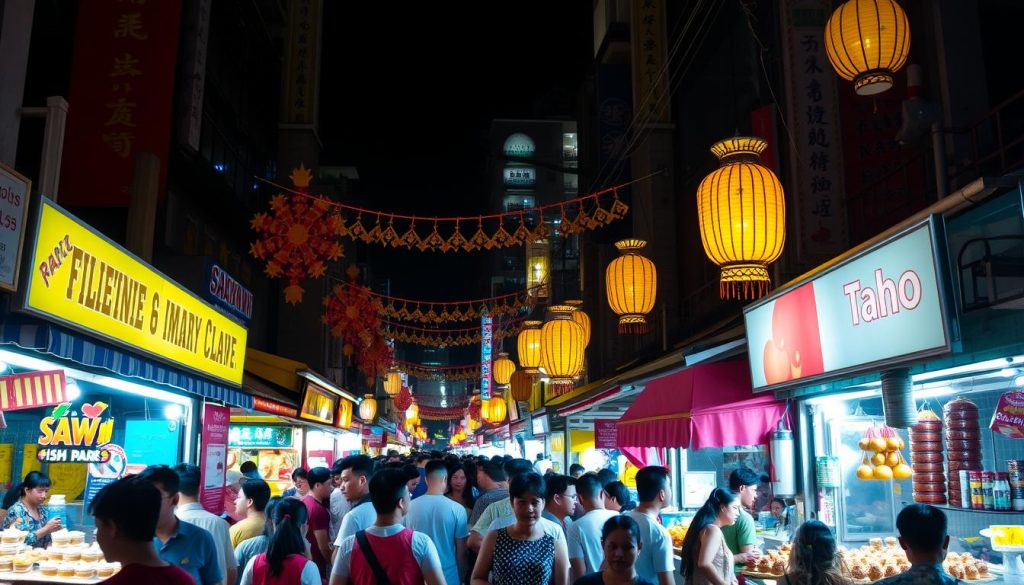
Manila’s streets offer a flavorful journey through Filipino culinary heritage. Food adventurers can explore smoky isaw and barbecue skewers, or sweet banana cue and turon. These bustling food stalls showcase Filipino resourcefulness and ingenuity.
Every bite of Manila’s street food tells a story. It reflects tradition, innovation, and the local community’s spirit. The diverse array of delicacies highlights Filipino culinary diversity and vendors’ passion.
| Filipino Street Food | Typical Price |
|---|---|
| Isaw (grilled chicken/pork intestine skewers) | Approximately 5 PHP ($0.10) per skewer |
| Barbecue (grilled meat skewers) | Varies by vendor, typically around 5 PHP ($0.10) per skewer |
| Banana Cue (fried banana with brown sugar) | Around 5 PHP ($0.10) per piece |
| Turon (fried banana spring roll) | Typically 5 PHP ($0.10) per piece |
| Kwek-Kwek (deep-fried quail eggs) | 3 for 12 PHP ($0.24) |
| Balut (fertilized duck egg) | Approximately 15 PHP ($0.30) per egg |
Taste the diverse flavors of Filipino street food in Manila. These local treats offer a glimpse into Filipino culture. Indulge in this unforgettable food experience and create lasting memories.
Savory Skewers: Isaw and Barbecue
Grilled skewers, called “inihaw” in the Philippines, are a beloved street food. Isaw (grilled chicken intestines) and barbecue (marinated meats) are popular choices. Their tasty flavors come from marinades with soy sauce, citrus, garlic, and local spices.
These Filipino street food skewers come with various dipping sauces. Spicy-tangy vinegar and sweet barbecue sauce add depth to the meal. The smoky char of grilled barbecue and unique texture of isaw are crowd-pleasers.
The marinade techniques and dipping sauces make these skewers irresistible. They’re sure to please your taste buds with their rich flavors.
| Dish | Price (Philippine Pesos) |
|---|---|
| Isaw (Grilled Chicken Intestines) | 5 per skewer |
| Barbecue (Marinated Pork/Chicken/Beef) | Varies based on type and size |
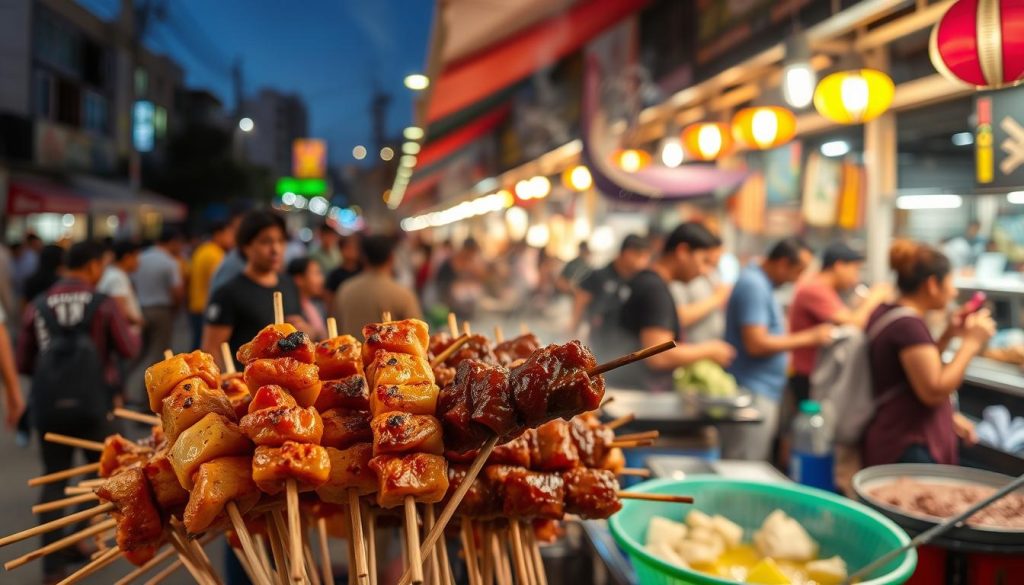
“The secret to the perfect isaw and barbecue lies in the marinade. It’s all about finding the right balance of flavors to create a mouthwatering experience.”
Fried Delights: Kwek-Kwek and Fish Balls
The Philippines offers a mouthwatering array of fried street food. Two beloved specialties are Kwek-kwek and fish balls. These tempura-style snacks capture the essence of Filipino culinary culture.
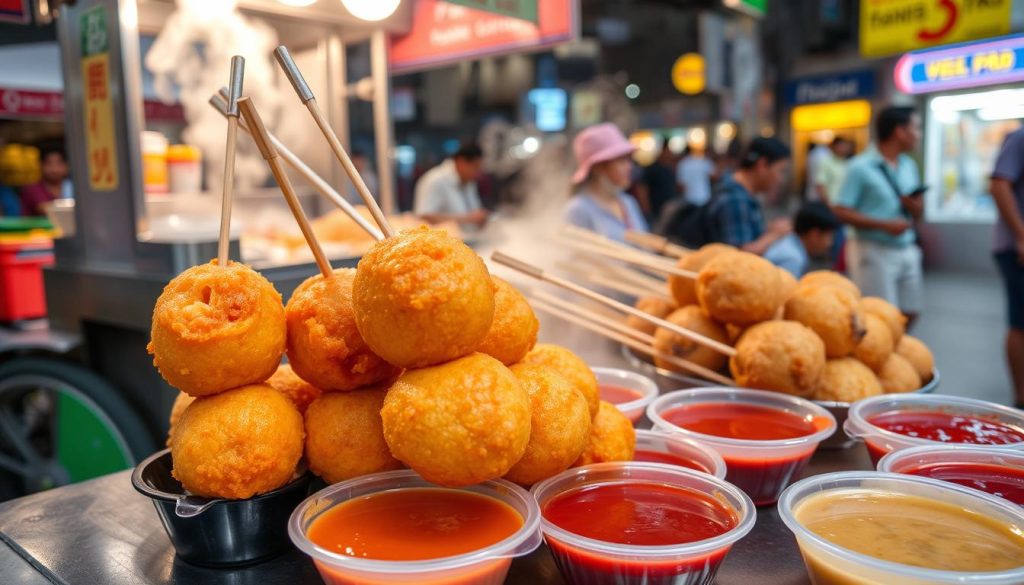
Kwek-kwek are hard-boiled quail eggs coated in bright orange batter. They’re deep-fried to a satisfying crunch, creating bite-sized morsels. Various dipping sauces accompany these treats, ranging from sweet to spicy.
Fish balls are equally popular, made from flour and flaked fish. These golden-brown spheres have a light interior and crispy exterior. Like Kwek-kwek, they come with an array of dipping sauces for customized flavor.
| Fried Filipino Street Food | Key Characteristics | Dipping Sauces |
|---|---|---|
| Kwek-kwek | Hard-boiled quail eggs coated in a vibrant orange batter and deep-fried | Sweet, spicy, tangy, garlicky |
| Fish Balls | Spherical treats made from a blend of flour and flaked fish, fried to a golden brown | Sweet, spicy, tangy, garlicky |
These fried delights are visually appealing and offer a satisfying crunch. They burst with flavor, exemplifying Filipino street food culture. Try both to experience the true taste of Philippine streets.
Sweet Temptations: Banana Cue and Turon
Filipino street food desserts offer irresistible charm with banana cue and turon. These fried sweet treats use saba banana, offering a taste of childhood. They showcase Filipino cuisine’s resourcefulness and creativity.
Banana cue is a skewered, deep-fried sweet plantain with caramelized brown sugar. It has a crispy exterior and soft, sweet interior. Turon is a spring roll with ripe saba bananas and jackfruit.
These Filipino street food desserts satisfy cravings for indulgent fried sweet treats. They’re rooted in Philippine culinary traditions, turning simple ingredients into street food sensations.
| Banana Cue | Turon |
|---|---|
| Skewered and deep-fried sweet plantain coated in caramelized brown sugar | Spring roll filled with ripe saba bananas and jackfruit |
| Crispy exterior, soft and sweet interior | Combination of sweet, ripe bananas and tropical jackfruit |
| Nostalgia-inducing Filipino street food dessert | Beloved fried sweet treat showcasing Filipino culinary creativity |
Banana cue and turon are must-try Filipino street food desserts. They offer sweet indulgence and traditional Filipino flavors. Try them for an irresistible taste experience.
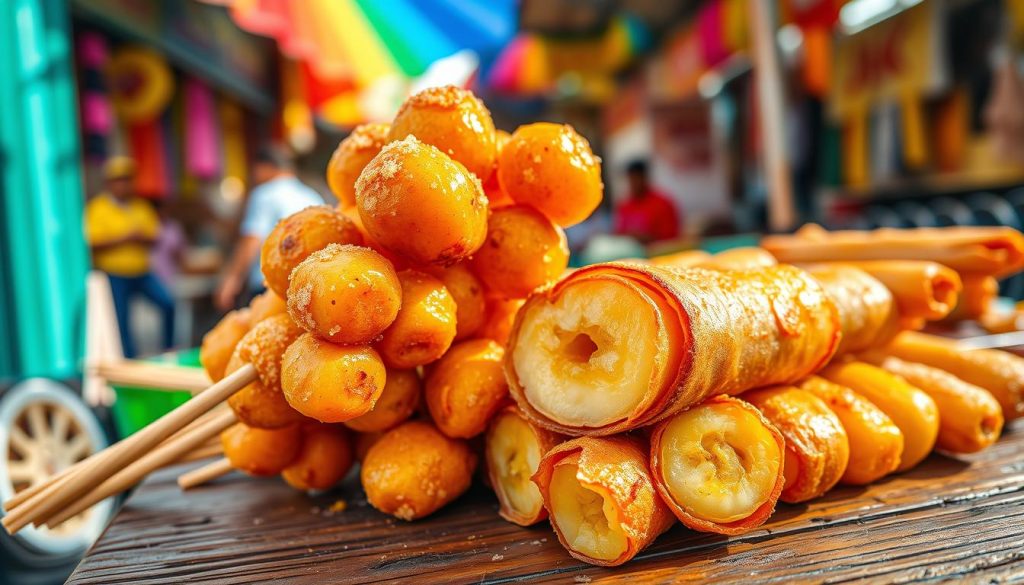
“The streets of Manila are not just about savory delights, but also an endless array of sweet temptations that capture the heart and soul of Filipino cuisine.”
Exploring the Flavors of Tradition
The Philippines’ street food scene offers a flavorful journey through its rich culinary heritage. From balut to taho, each dish reflects diverse cultural influences shaping Filipino cuisine. Bold flavors, ingenious use of traditional ingredients, and communal spirit showcase Filipino resilience and adaptability.
Manila’s bustling streets provide diverse food choices for exploring the local culinary scene. Street food tours offer cultural immersion, attracting food enthusiasts and adventure seekers alike. Knowledgeable guides share rich histories behind traditional dishes, enhancing the overall experience.
Savory isaw and daring balut highlight Manila’s vibrant street food. Crispy fried delights like kwek-kwek and fish balls satisfy cravings with various dipping sauces. Sweet treats such as banana cue and turon offer a perfect balance of flavors.
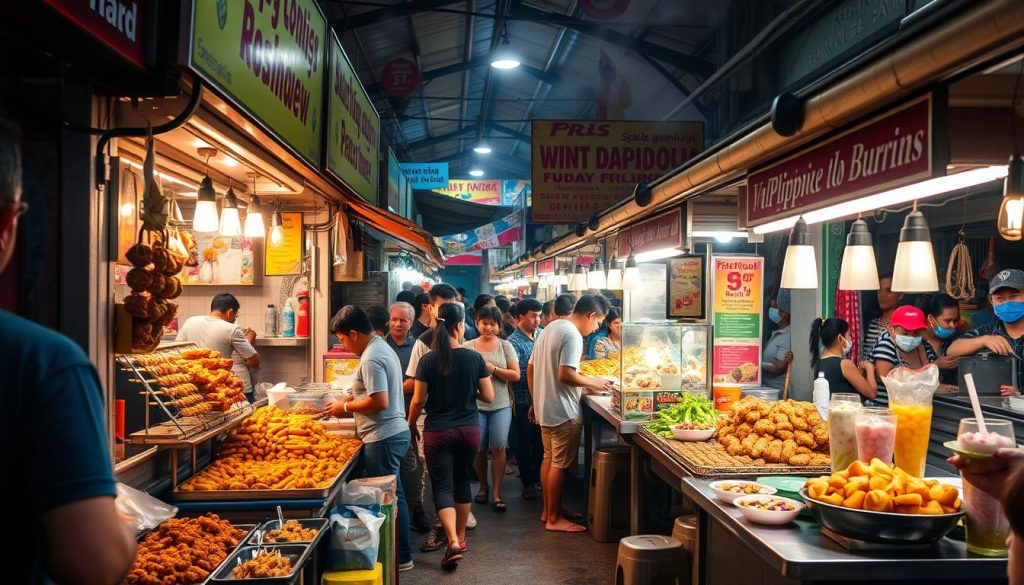
Manila’s street food scene invites you to savor flavors and explore Filipino culinary heritage. Each bite and shared experience reveals the country’s resilience and adaptability. Discover the flavors of tradition through this unique culinary adventure.
Conclusion
Manila’s street food scene offers a gateway to Filipino culture and cuisine. From daring balut to sweet banana cue, local delicacies invite you to savor flavors. These treats showcase the capital’s mouthwatering array of street food specialties.
Filipino street food highlights the people’s resourcefulness and culinary heritage. It provides a deeper appreciation for the country’s diverse flavors. This adventure leaves you craving more of Manila’s must-try street delicacies.
The streets of Manila offer a unique culinary experience. Foodies and curious travelers alike can enjoy this cultural journey. Let your taste buds guide you through Filipino street food’s unforgettable flavors.