Best Things to Do in Intramuros, Manila
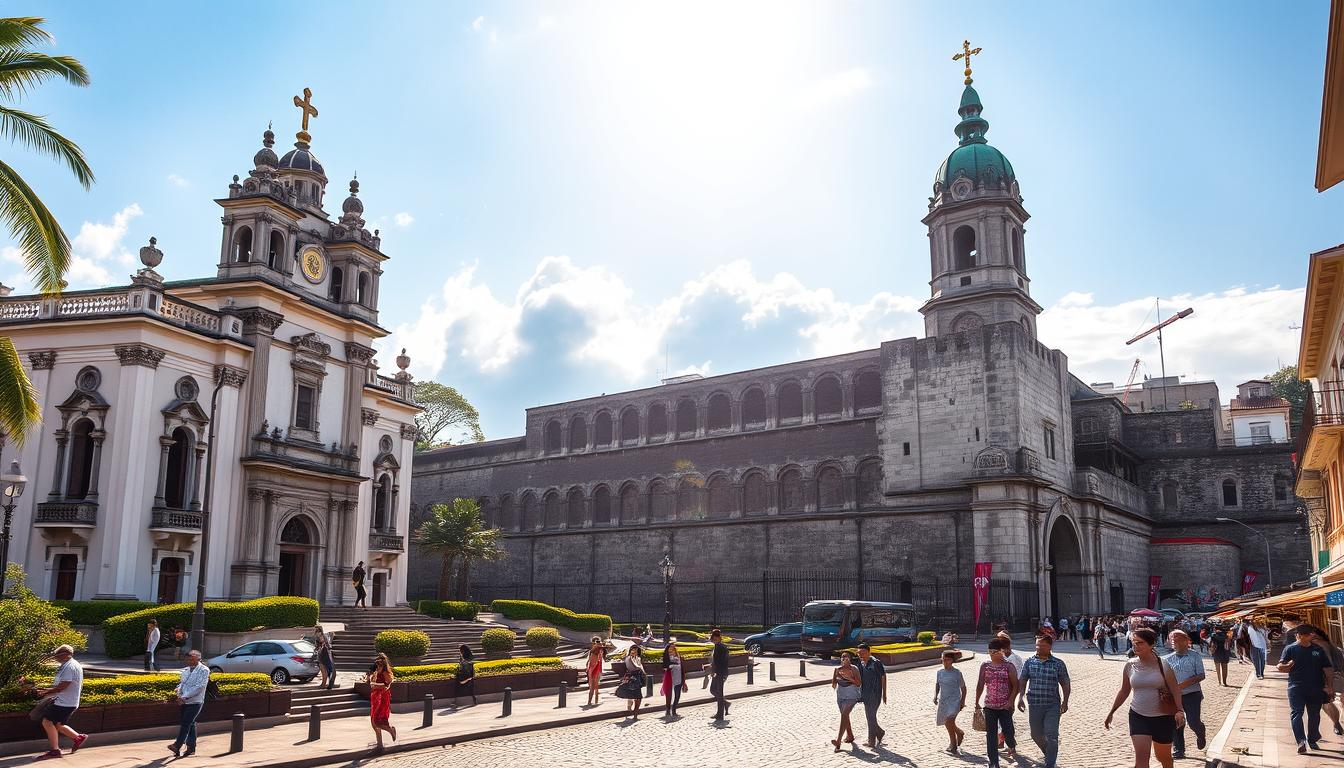
Intramuros, Manila’s historic “Walled City,” is full of hidden gems. This captivating neighborhood boasts iconic landmarks and cultural attractions. From the grand Manila Cathedral to the mighty Fort Santiago, Intramuros offers enchanting experiences.
History buffs and architecture fans will find plenty to explore here. The walled city provides an immersive journey through the Philippines‘ colonial past. Uncover the secrets of Intramuros’ vibrant history as you explore its remarkable attractions.
Discover the Walled City of Intramuros
A Brief History of Intramuros
Intramuros, Manila’s walled city, boasts a rich history dating back to the late 16th century. The Spanish built it as their Asian base. It was the center of Spanish rule in the Philippines for centuries.
The Spanish constructed universities, churches, and other notable structures within its walls. Its location at the Pasig River’s mouth made it a key trade hub.
After 1898, Intramuros became an American outpost until the 1941 Japanese invasion. The 1945 Battle of Manila nearly destroyed the city. Only San Agustin Church survived.
Iconic Landmarks and Attractions
Intramuros offers a glimpse into the Philippines’ colonial past through its many landmarks. Visitors can explore Fort Santiago’s dungeons and enjoy views of the Pasig River. The San Agustin Church showcases ornate Baroque interiors.
Other must-see sites include the Baluarte de San Diego and Palacio del Gobernador. The new Museo de Intramuros houses religious artifacts and colonial-era paintings. For a unique experience, try a kalesa ride or Bambike tour.
“Intramuros stands as a testament to the country’s complex colonial history and a must-visit destination for those interested in exploring Manila’s past.”
Intramuros captivates visitors with its unique charm and rich history. It offers insights into Manila’s past and the Philippines’ colonial era. This historic site promises an enlightening experience for all who visit.
Fort Santiago: Intramuros’ Mighty Garrison
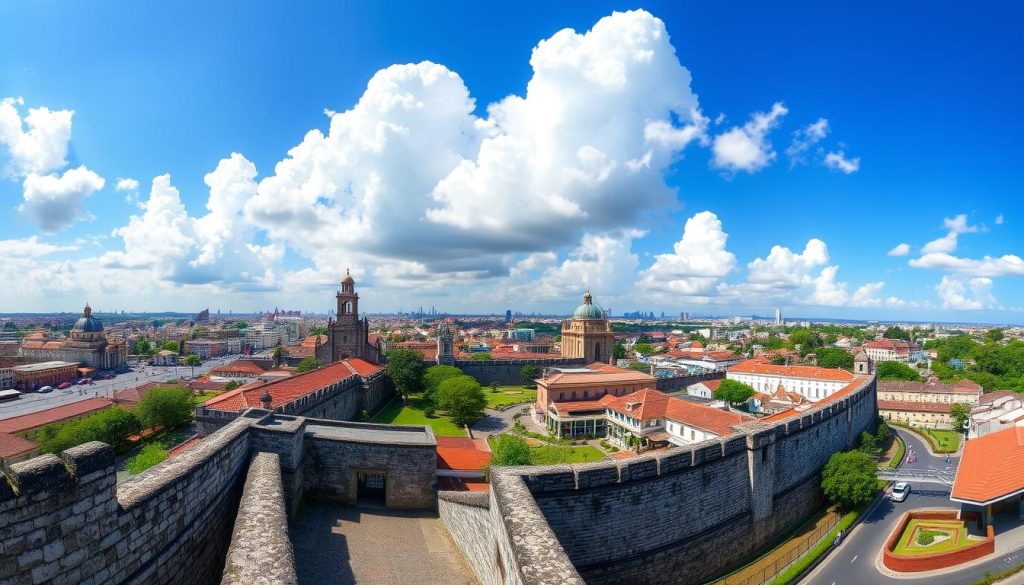
Fort Santiago is a must-see in Intramuros. This Spanish garrison once guarded the Pasig River with heavy cannons. It also stored valuable goods and held prisoners, including national hero Jose Rizal.
Now, Fort Santiago is a historical landmark. It has a visitor’s center and the Rizal Shrine. Visitors can explore dungeons, palisades, and ornate gates to learn about Intramuros’ past.
- The fort was built by the Spaniards in 1571 and underwent restoration after being damaged by the 1645 earthquake.
- It served as headquarters and a prison for various occupation forces, including Spanish, British, American, and Japanese.
- In 1950, Fort Santiago was declared a Shrine of Freedom, and restoration activities commenced the following year.
The Museo ni Rizal is a key feature of the fort. Jose Rizal was imprisoned here for 56 days in 1896. The museum was renovated in 2014, showcasing Rizal’s life and legacy.
“Fort Santiago is a historical landmark that offers a window into Intramuros’ storied past, from its Spanish colonial roots to its role in the Filipino struggle for independence.”
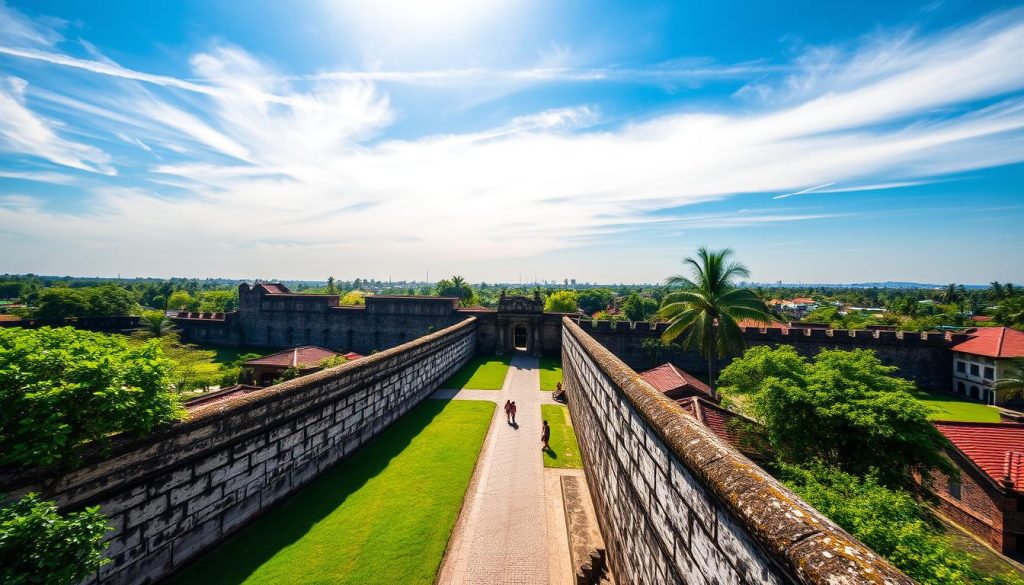
The fort’s grounds include the Rajah Soliman Theater. Renowned architect Leandro Locsin renovated it in 1967. This was where Rizal married Josephine Bracken in the Soldiers’ School chapel cell.
Visitors can explore Fort Santiago’s dungeons, palisades, and ornate reconstructed gates. These features help people understand Intramuros’ rich history. They also honor those who fought for Philippine independence.
San Agustin Church: The Resilient Baroque Masterpiece
The San Agustin Church, built in 1607, is the oldest stone church in the Philippines. It’s a Baroque gem in Intramuros, Manila. This church is part of a UNESCO World Heritage Site, surviving World War II’s destruction.
Architectural Grandeur and Cultural Significance
Italian architects designed the San Agustin Church’s interior, showcasing Baroque style. Visitors marvel at its spacious design, intricate details, and elegant Parisian chandeliers. The grand pipe organ and 17th-century choir seats make it a cultural treasure.
The San Agustin Church has weathered many challenges, including a fire in 1932. It even served as a concentration camp during World War II. Today, it stands as a symbol of Filipino resilience.
In 1993, UNESCO named it a World Heritage Site. The Philippine government declared it a National Historical Landmark in 1976. The San Agustin Church continues to amaze visitors with its beauty and history.
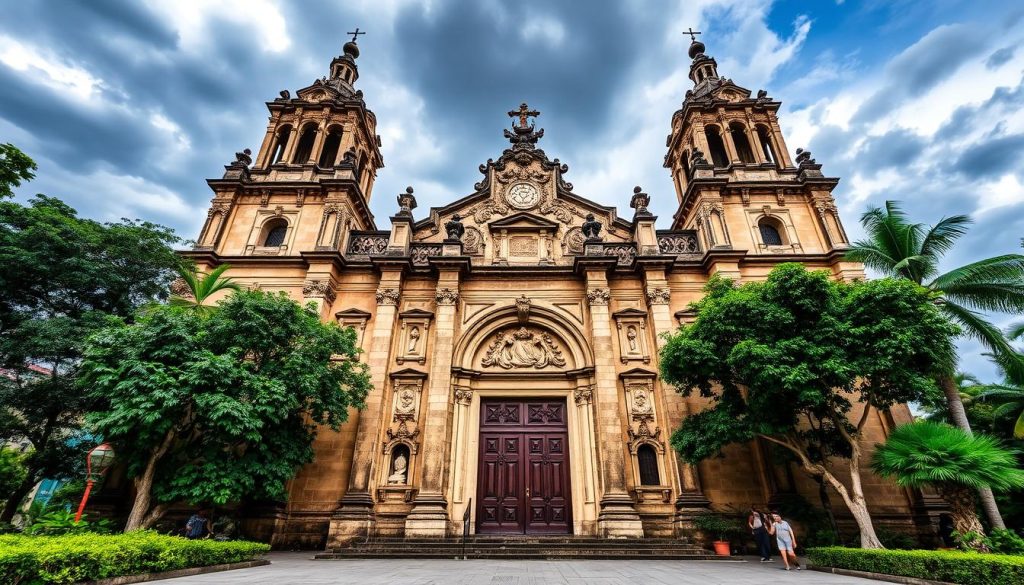
“The San Agustin Church is a true masterpiece, a testament to the enduring power of Baroque architecture and the resilience of the Filipino people.”
Manila Cathedral: A Spiritual Landmark
The Manila Cathedral is a spiritual beacon in Intramuros. This iconic Catholic church has a rich history dating back to 1571. The current structure, built in the 1950s, is the eighth version on this sacred site.
As an active place of worship, it hosts important religious ceremonies. It serves as the seat of the Archbishop of Manila. The cathedral has also been the site for several former Philippine presidents’ funerals.
The northwest facade replicates the previous structure. Visitors are captivated by artistically sculpted statues and over 130 stained glass windows. Its striking architecture is truly awe-inspiring.
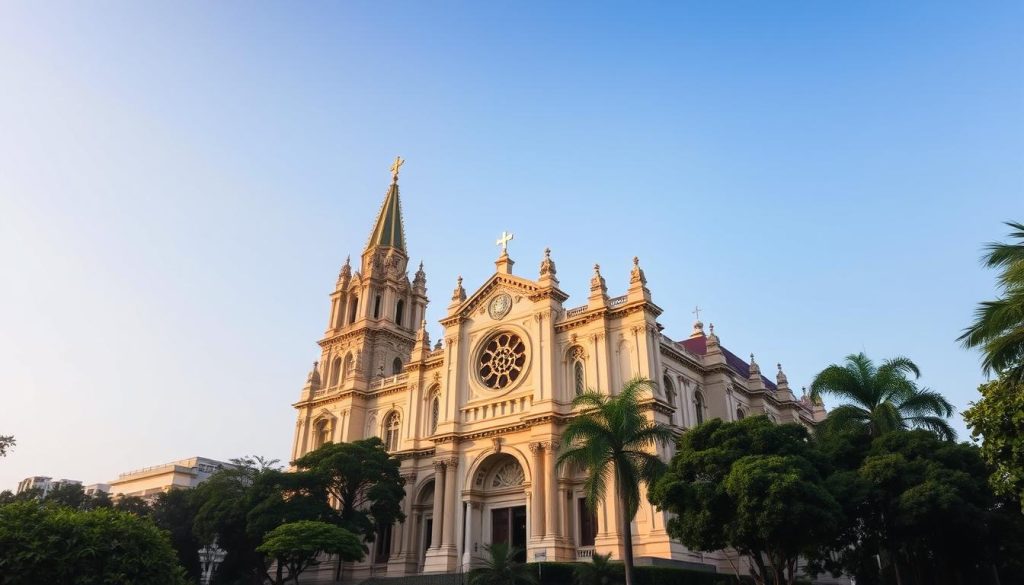
The cathedral can hold 2,000 people and covers 3,000 square meters. Its tower reaches 55 meters high, topped by a single dome. The entire complex spans 84.4 meters in length and 31.4 meters in width.
This grand structure is a beloved spiritual landmark in Intramuros. It stands as a testament to Filipino faith and resilience. Exploring the Manila Cathedral is essential when visiting Intramuros attractions in the Philippines.
What are the best things to do in Intramuros, Manila?
Intramuros, Manila’s walled city, brims with history and colonial architecture. This historic district boasts impressive Baluartes (bastions) and the fascinating Casa Manila museum. These attractions offer a glimpse into Manila’s rich past.
Exploring the Baluartes (Bastions)
Wandering along the Baluartes is a must-do in Intramuros. The Baluarte de San Diego showcases three concentric circles, highlighting Spanish defensive skills. Its remnants tell tales of past battles.
Nearby, Baluarte de San Andres boasts a massive wall and conical watchtower. These structures once guarded the Puerta Real (Royal Gate). From the ramparts, you can enjoy stunning views of the modern cityscape.
Glimpsing Colonial Life at Casa Manila
Casa Manila museum offers a peek into 19th-century Manila’s opulent colonial life. This renovated building sits across from the iconic San Agustin Church. Its design mimics a grand Spanish colonial mansion.
The museum’s exterior features vine-covered courtyards, quaint arches, and charming alleyways. Inside, you’ll find antique furniture and artifacts from Europe and the Orient. Casa Manila showcases the grandeur of colonial-era elite living.
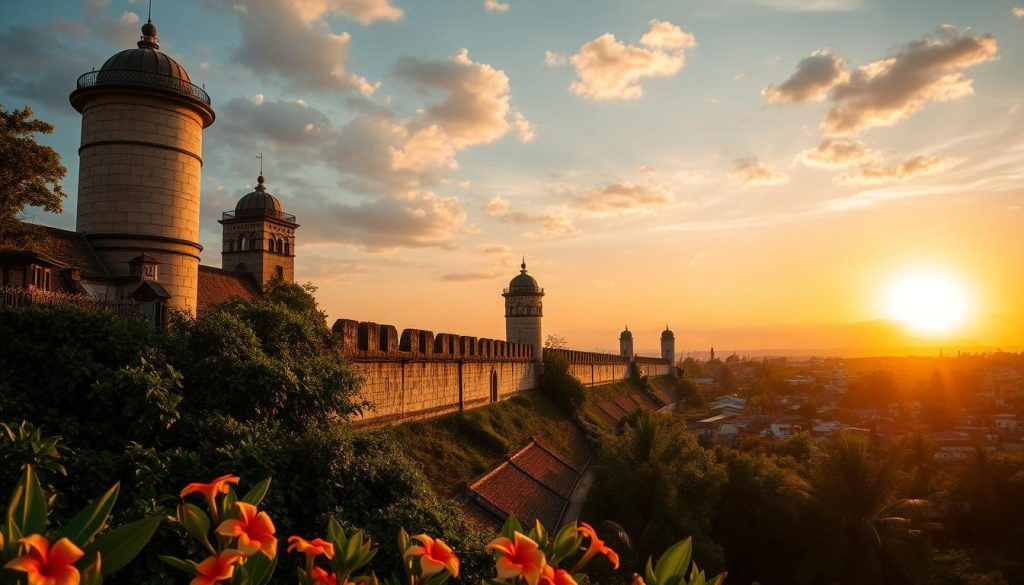
“Exploring the Baluartes and visiting Casa Manila are two of the best ways to truly appreciate the rich history and colonial charm of Intramuros, Manila.”
Cultural Immersion at Barbara’s Heritage Restaurant
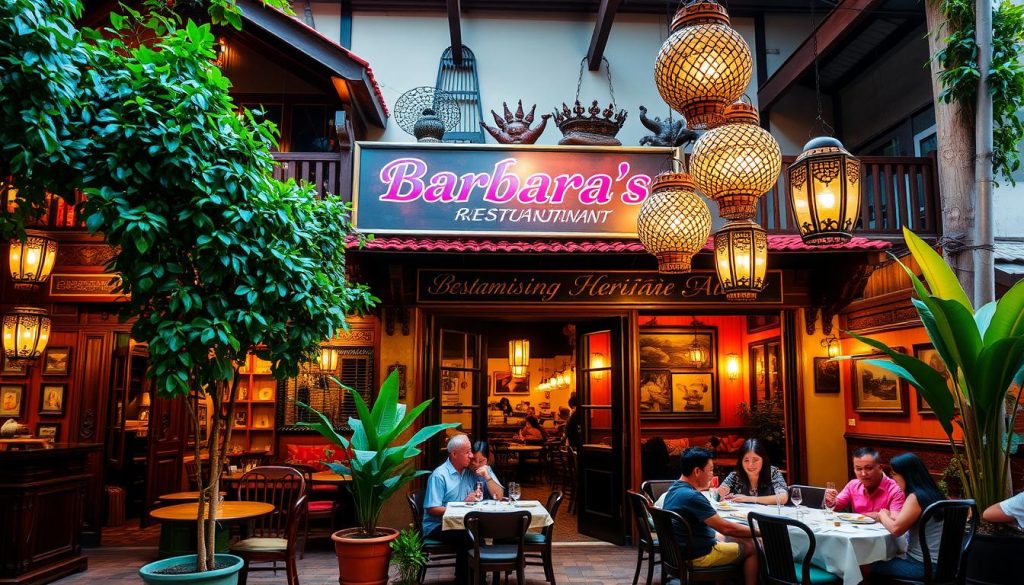
Barbara’s Heritage Restaurant offers authentic Filipino and Spanish cuisine in Intramuros. Since 1989, it has showcased rich culinary traditions within the Casa Manila museum grounds. The restaurant brings Filipino heritage to life through food and ambiance.
Barbara’s provides more than just great food. It offers a full cultural experience. The colonial-era setting takes diners back in time. An attic museum and art gallery highlight the country’s vibrant history.
Evenings at Barbara’s feature a special treat. Guests enjoy a traditional Filipino buffet with a lively cultural dance show. Live music and captivating choreography add to the festive atmosphere.
Barbara’s menu caters to various tastes. It serves hearty Filipino comfort foods and Spanish-influenced dishes. Intramuros offers diverse dining options for all preferences and budgets.
| Restaurant | Cuisine | Dining Experience | Price Range |
|---|---|---|---|
| Barbara’s Heritage Restaurant | Filipino-Spanish | Cultural immersion, buffet, and dance show | ₱150 – ₱1,000 |
| Ilustrado | Filipino-Spanish | Fine dining, dine-in, pick-up, and delivery | Varies |
| Patio de Conchinita | Filipino | Home-cooked, affordable | ₱150 – ₱500 |
| Ristorante delle Mitre | Italian | Quiet, homey ambiance | ₱300 – ₱800 |
| La Cathedral Cafe | International | Picturesque setting near Manila Cathedral | ₱200 – ₱700 |
Barbara’s Heritage Restaurant is a must-visit spot in Intramuros. It combines history, delicious food, and exciting entertainment. Guests leave with unforgettable memories of the Philippines’ vibrant culture.
Palacio del Gobernador: The Governor’s Palace
The Palacio del Gobernador sits within Intramuros’ historic walls. It was once home to Spanish colonial governors. An earthquake destroyed it in 1863, but it was rebuilt in 1976.
The palace keeps its captivating colonial style. It shows off Intramuros’ unique architectural beauty. Visitors can admire its grand structure and elegant design.
Historical Significance and Architectural Beauty
The Palacio del Gobernador is a key historical site. It reflects Intramuros’ grandeur during Spanish rule. The building’s colonial design features intricate details and elegant façades.
Visitors can imagine life in this impressive structure long ago. It offers a peek into Intramuros attractions and Philippine history. The palace brings the past to life.
Today, the palace houses administrative offices. Yet, it still fascinates with its colonial architecture. Visitors can explore its grand halls and admire its beauty.
The Palacio del Gobernador played a key role in Intramuros‘ heritage. Walking through it helps us understand its importance. It’s a must-see for history buffs.
“The Palacio del Gobernador stands as a testament to the grandeur and significance of Intramuros during the Spanish colonial era.”
Museo de Intramuros: Unveiling the Past
The Museo de Intramuros is a gem within the historic walls of Intramuros. Built on the San Ignacio Church ruins, it showcases the rich cultural heritage of the walled city. Visitors can explore the past and uncover stories that shaped Philippine history.
This three-story museum houses religious artifacts, colonial-era paintings, and historical depictions. Its design complements the area’s colonial Spanish architecture. The Intramuros Administration runs the museum, preserving the neighborhood’s legacy.
History buffs and art lovers will find the museum captivating. Galleries display intricate religious artifacts, offering insights into Philippine spiritual heritage. Colonial-era paintings provide glimpses into the daily lives of past Intramuros inhabitants.
The museum’s exhibitions transport visitors back in time. Its thoughtfully designed spaces immerse guests in the walled city’s fascinating history. A visit here will deepen your appreciation for the Philippines’ enduring cultural legacy.
| Attraction | Entrance Fee | Hours of Operation |
|---|---|---|
| Museo de Intramuros | Adults: Php 200 Students: Php 100 |
8:00 AM – 6:00 PM (Closed from 12:00 PM to 1:00 PM) |
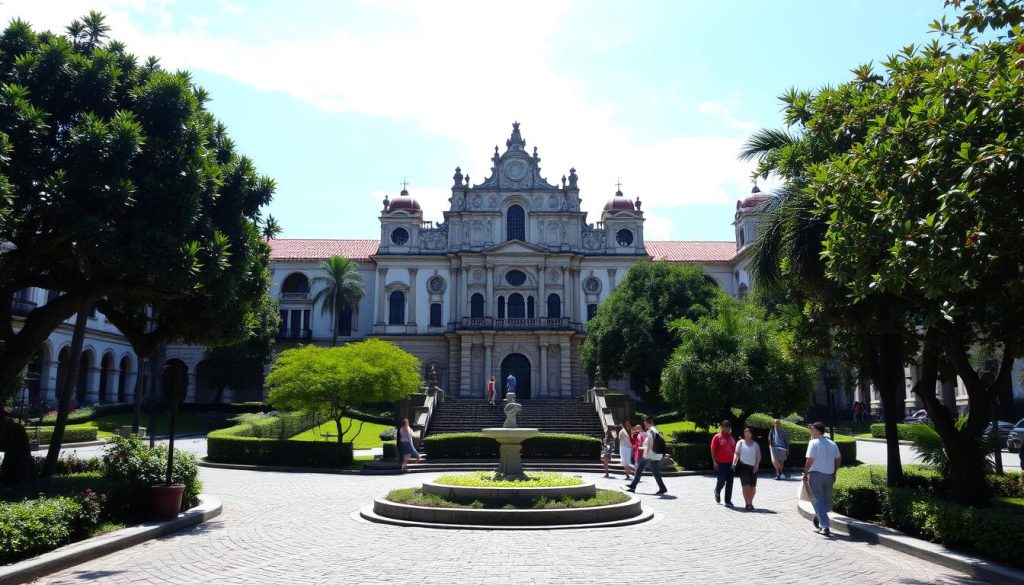
“The Museo de Intramuros is a must-visit for anyone interested in the rich history and cultural heritage of the Philippines. The museum’s carefully curated exhibits transport visitors back in time and offer a glimpse into the vibrant past of this iconic walled city.”
The Museo de Intramuros offers these highlights:
- Extensive collection of religious artifacts, including intricate statues, rare manuscripts, and ornate liturgical vestments
- Captivating colonial-era paintings that depict the daily life and customs of Intramuros’ residents
- Historical depictions and interactive displays that bring the past to life and showcase the evolution of the walled city
- Elegant architectural design that seamlessly blends modern museum elements with the colonial Spanish ambiance of Intramuros
The Museo de Intramuros appeals to history buffs, art enthusiasts, and curious travelers. Its walls hold captivating stories waiting to be discovered. A visit here will deepen your appreciation for Intramuros’ enduring legacy.
Bahay Tsinoy: Celebrating Chinese-Filipino Heritage
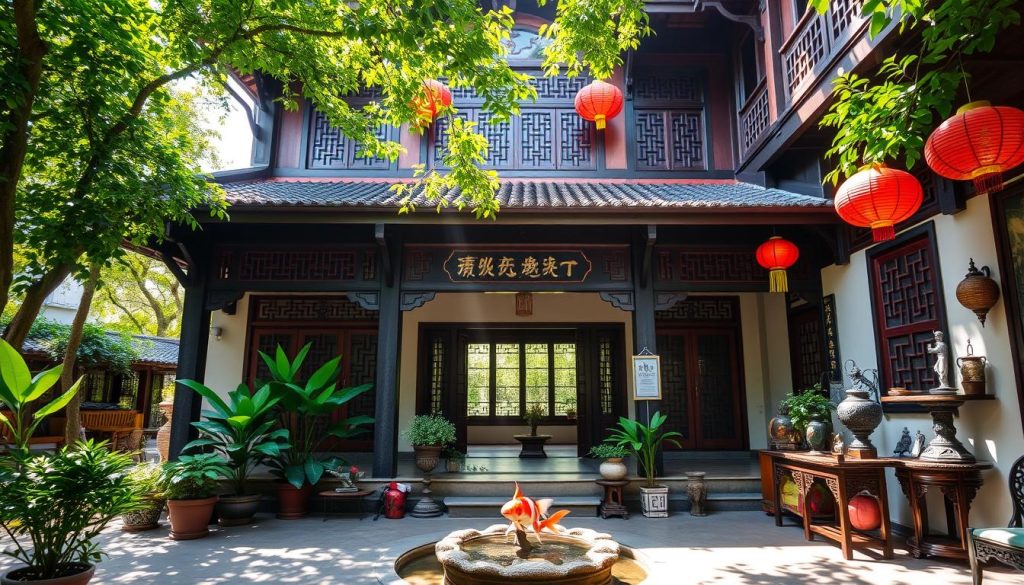
Intramuros, Manila’s historic walled city, showcases Spanish and Chinese influences. The Bahay Tsinoy museum celebrates the Chinese-Filipino community’s rich legacy. It highlights the enduring cultural ties between the Philippines and China.
The museum reopened after a two-year pandemic closure. It now occupies two floors with plans for expansion. Visitors can explore old Chinese newspapers from a toyo factory.
The museum features prints documenting Tsinoy history. Some prints cost up to P10,000, with rental fees of P30,000 each. A beautiful calligraphy of Jose Rizal’s Mi Ultimo Adios by a Chinese artist is on display.
Generous supporters have donated many artifacts and historical treasures. These include Teresita Ang-See’s annotation of “Sining ng Pakikidigma ni Sub Tzu”. The museum’s impact extends beyond its walls.
Recently, 68 graduating Tzu Chi scholars toured the museum. They learned about their Chinese-Filipino heritage. The tour corrected misconceptions about early Chinese migrants’ wealth. It highlighted their hardships and resilience in building prosperous lives.
The Bahay Tsinoy showcases the Chinese influence in the Philippines. It celebrates the cultural heritage woven into Intramuros and the country. The museum’s exhibitions and programs highlight the Bahay Tsinoy’s impact on Intramuros attractions and Philippine culture.
Plaza Mexico: Commemorating the Galleon Trade
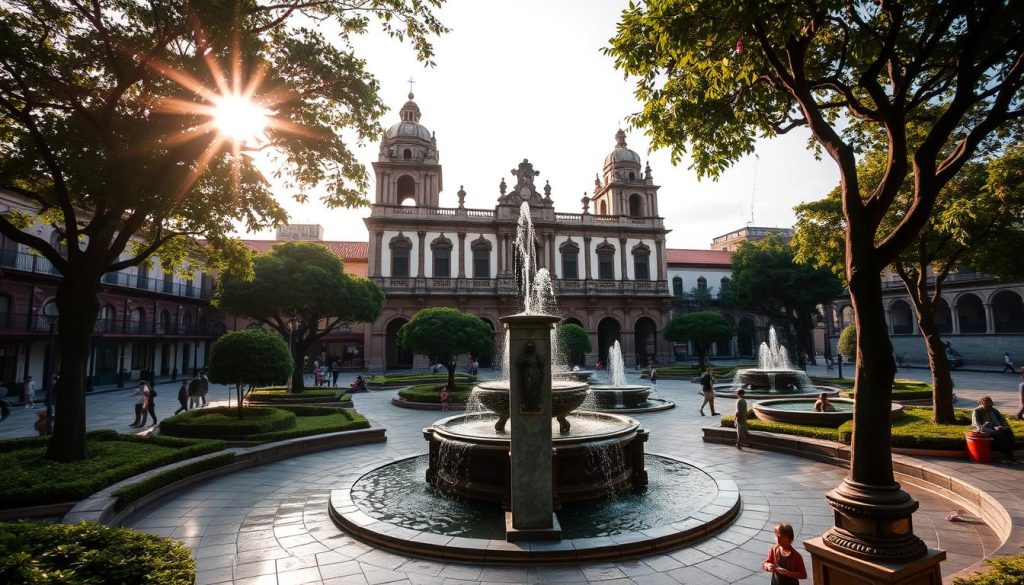
Plaza Mexico, a peaceful square in Intramuros, honors the famous Manila-Acapulco galleon trade. This historic trade route linked the Philippines to Mexico and the Americas for over 250 years. It facilitated a vast exchange of goods, people, and cultures.
The plaza faces the Aduana Building, once the Customs House. It reminds us of the trade network’s economic importance. Lush greenery and tall trees provide shade for visitors to relax and ponder.
Imagine the bustling activity that once filled this space. Merchants, sailors, and travelers passed through, carrying exotic goods and sharing stories. Plaza Mexico showcases the rich Intramuros attractions that have shaped Manila’s cultural landscape.
“The galleon trade between Mexico and Manila operated until 1815, connecting the Philippines to the rest of the world and facilitating the exchange of goods, ideas, and people.”
Plaza Mexico is now a peaceful oasis within bustling Intramuros. It offers a chance to appreciate the Manila-Acapulco galleon trade’s lasting impact. This square is a must-visit for anyone interested in Philippine history.
| Key Facts about the Manila-Acapulco Galleon Trade |
|---|
| – The galleon trade between Mexico and Manila operated until 1815 |
| – Manila has an urban and peri-urban population of more than 25 million people |
| – Manila is the locale where more than one-third of the Philippine national economy is grounded |
| – The establishment of a substantial Chinese community within the city was a result of the galleon trade |
| – The Binondo-Intramuros Bridge is being built as a symbol of collaboration between Manila and China’s Belt and Road Initiative, but its construction has provoked indignation among those concerned about preserving cultural heritage |
Conclusion: A Journey Through Time in Intramuros
Intramuros, Manila’s Walled City, showcases the Philippines’ complex colonial past. Its historic landmarks offer a unique dive into the country’s rich history. Visitors can explore Fort Santiago, the grand Manila Cathedral, and other attractions.
The Baluartes and charming Casa Manila reveal layers of Intramuros’ past. Barbara’s Heritage Restaurant adds flavors to the cultural experience. These sites help us understand the forces that shaped the Philippines over time.
History buffs and culture seekers will find Intramuros a must-visit in Manila. The San Agustin Church, a UNESCO World Heritage Site, stands as a testament to Philippine history. The Palacio del Gobernador once housed the Spanish colonial government.
These landmarks highlight the lasting impact of the colonial era. They also showcase the resilience and rich cultural heritage of the Filipino people. A trip through Intramuros offers a deep dive into Philippine history.