Eco-Friendly Bumthang: Sustainable Travel Practices
Have you ever thought about how your travels affect the environment and local people? In Bumthang, Bhutan, the answer is clear. This beautiful valley is not just home to ancient temples and rich culture. It also shows us how to travel in a way that protects the planet.
Here, you can learn about eco-friendly travel tips. You’ll see how your visit can help keep Bhutan green.
Bhutan is the only country in the world that’s carbon-negative. It keeps at least 60% of its land as forests. This protects its landscapes and animals.
Visitors to Bumthang can join in green travel practices. This lets you connect with local cultures while being kind to the environment. By choosing to travel responsibly, you help support jobs and keep the area’s heritage alive.
See how your careful choices can make your trip better. They also help keep this amazing valley a special place for the future.
The Importance of Sustainable Tourism in Bumthang
Sustainable tourism is key to keeping Bumthang’s landscapes and culture safe. It lets visitors enjoy the area while leaving a small mark on the environment. This way, nature and local people both win.
Being mindful of tourism helps travelers understand their role in protecting the environment and cultures. They help the local economy grow by choosing sustainable options. This includes following laws and reducing waste and energy use.
The results are clear. Tourism money goes back into improving local life and services. It also makes sure that those who rely on tourism get a fair share of the benefits.
When you visit Bumthang, think about how you can help. Responsible tourism creates wonderful memories and protects the area for others to enjoy in the future.
Understanding Bhutan’s Unique Approach to Sustainable Travel
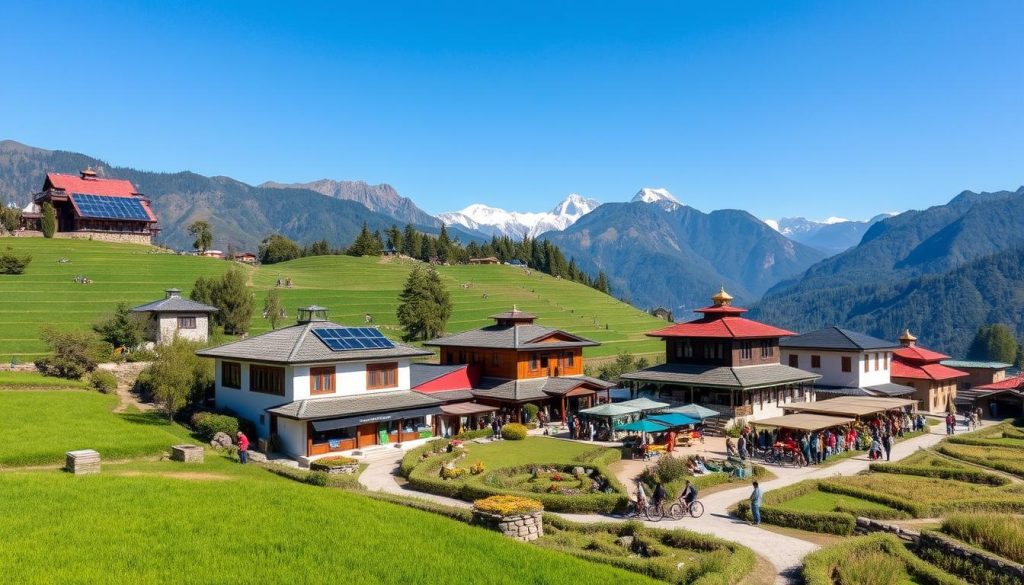
Bhutan focuses on sustainable travel linked to its Gross National Happiness (GNH) philosophy. This model values well-being and sustainability over economic growth. It shapes the country’s tourism, making sure it benefits both visitors and locals.
Forests cover about 75% of Bhutan, playing a key role in fighting climate change. They absorb around nine million tons of carbon each year. This shows Bhutan’s commitment to a balanced ecosystem and promoting eco-friendly travel.
Bhutan has 10 protected areas, including four National Parks and wildlife sanctuaries. The Wangchuck Centennial National Park is a haven for 134 bird species and large mammals like the Snow Leopard. This biodiversity supports sustainable travel, allowing visitors to enjoy hiking and birdwatching.
Travelers can explore various hiking trails, like the famous 3.5-mile Tiger’s Nest Trail. It offers stunning views and cultural experiences. The local cuisine, with dishes like Ema Datshi, also adds to the experience, supporting local economies.
Bhutan’s tourism rules are strict to keep travel low-impact. The government charges a daily tariff and fines for harmful practices. This encourages tourists to respect the environment and culture. Bhutan is a global leader in sustainable travel, blending environmental awareness with enriching experiences.
Bhutan’s Commitment to Carbon Neutrality
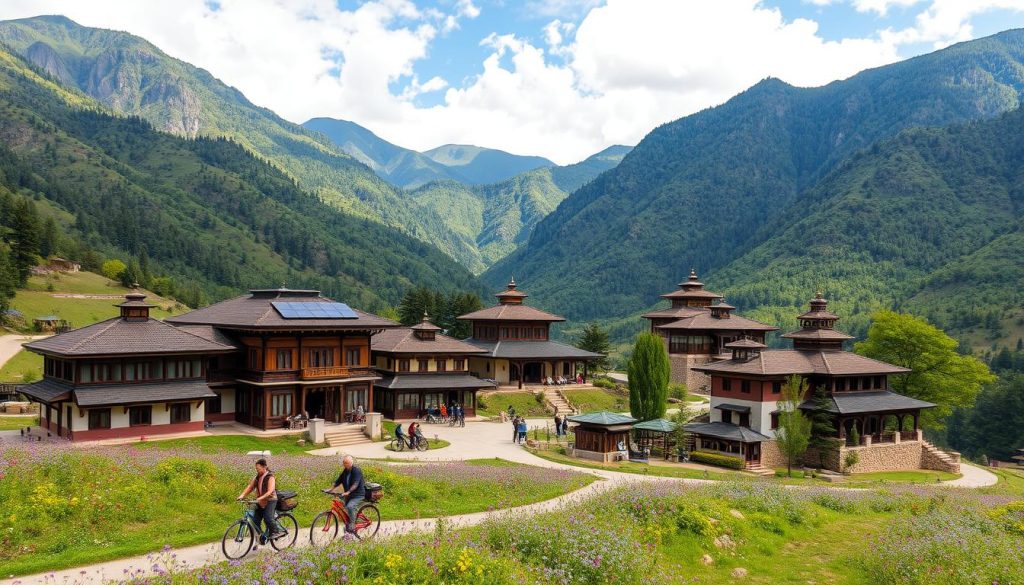
Bhutan is the only country in the world that is carbon-negative. It’s thanks to its strong focus on the environment and new ways of doing things. The country has forests covering over 70% of its land, more than it’s required by law.
This effort has made Bhutan carbon-negative and helped keep biodiversity strong. It’s a big deal for the environment.
Almost all of Bhutan’s electricity comes from hydropower, which means no carbon emissions. This clean energy lets Bhutan send extra power to its neighbors. It helps them cut down on carbon too.
The government supports sustainable tourism in Bhutan. It has a policy that keeps tourism high-value but low-impact. This way, Bhutan’s beauty stays untouched while helping the local communities.
Bhutan is also working on green transport. It wants to use electric vehicles and clean energy for public transport. Plus, it promotes organic farming and sustainable agriculture. These steps lower greenhouse gas emissions and ensure food is safe and healthy.
Bhutan has a small population of about 777,486 people. Its CO2 emissions per person are just 1.4 tonnes, much lower than other countries. Bhutan’s dedication to sustainability is a lesson for others who want to be carbon-neutral.

Eco-Friendly Initiatives in the Bumthang Valley
In the Bumthang Valley, both visitors and locals follow eco-friendly travel tips. This shows a strong commitment to sustainable tourism. Many efforts aim to lessen environmental harm, support local businesses, and keep cultural traditions alive.
One key effort is banning plastic bags. Travelers are encouraged to use reusable bags instead. This helps cut down on waste and keeps the area clean. Organic farming is also promoted, which protects local wildlife and lets visitors enjoy fresh food.
Homestays in the Bumthang Valley offer a unique cultural experience. They support local families and are becoming more popular. This shows a growing interest in authentic, eco-friendly stays.
Community-based tourism is also important here. About 70% of artisans are involved in tourism. This helps keep traditional crafts alive and strengthens the bond between tourists and locals.
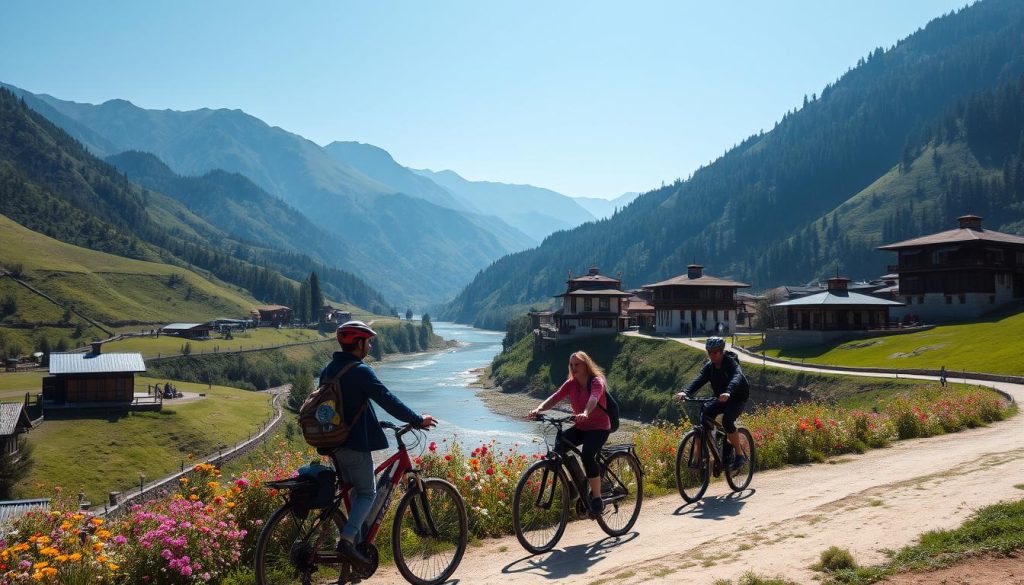
These efforts also boost local economies. Community tourism creates jobs and helps distribute income among residents. This has led to more employment opportunities in the tourism sector.
More visitors are now participating in conservation activities, up by over 60%. Programs like the Phobjikha Valley Conservation Area let tourists help protect wildlife. This makes their trip more meaningful and supports conservation.
Working with groups like Langur Eco Travels, travelers can enjoy sustainable experiences. Eco-lodges focus on using less energy and reducing waste. This ensures that each visit has a small environmental impact.
| Initiative | Impact |
|---|---|
| Plastic Bag Ban | Reduced waste and improved environmental health |
| Organic Farming Promotion | Preservation of biodiversity and support for local agriculture |
| Homestays | Authentic cultural experience and economic support for families |
| Artisan Engagement | Strengthening cultural heritage and craftsmanship |
| Conservation Programs | Increased tourist involvement in wildlife protection |
By joining these eco-friendly efforts, you help preserve the Bumthang Valley’s unique environment and culture. Your travel becomes both fulfilling and responsible.
Sustainable Travel Practices in Bumthang: How to Minimize Impact?
Traveling sustainably in Bumthang lets you enjoy its rich culture while helping the local community. By following ethical travel behaviors and respecting local customs, you positively impact the environment and economy. This beautiful region greatly benefits from your visit.
Respecting Local Customs and Traditions
Visiting Bumthang means diving into local customs and traditions. Knowing these customs helps you connect with the community respectfully. Join local festivals, visit religious sites with care, and learn about Bhutanese practices.
These actions make your trip better and support sustainable travel in Bumthang.
Supporting Local Businesses and Economy
Your travel choices affect the local economy. Try to eat at traditional restaurants, buy handmade crafts, and use local guides. Supporting local businesses creates jobs and keeps tourism money in the community.
This strengthens the local economy and shows the value of sustainable travel. It’s a key part of traveling ethically.
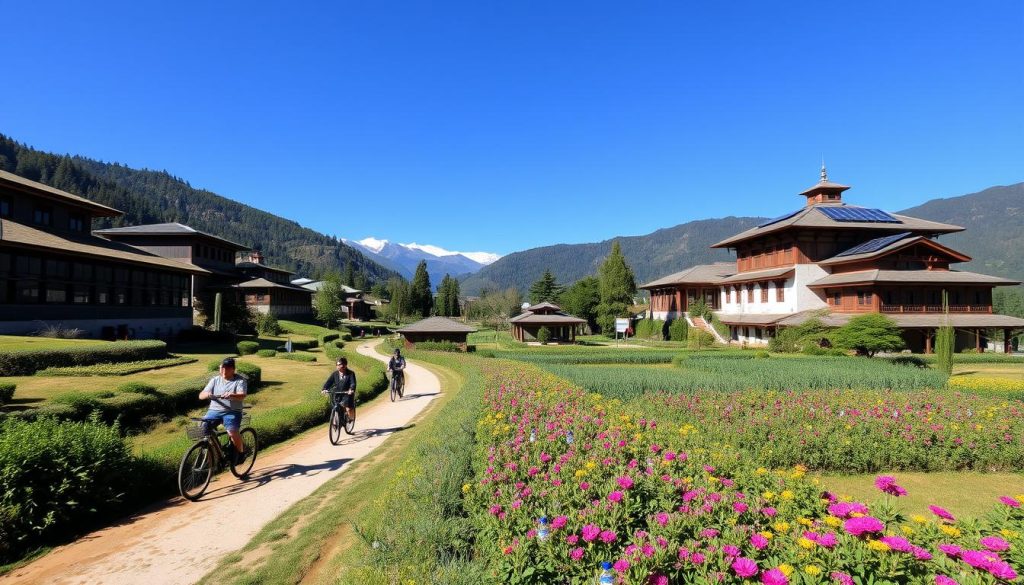
Choosing Eco-Friendly Accommodations
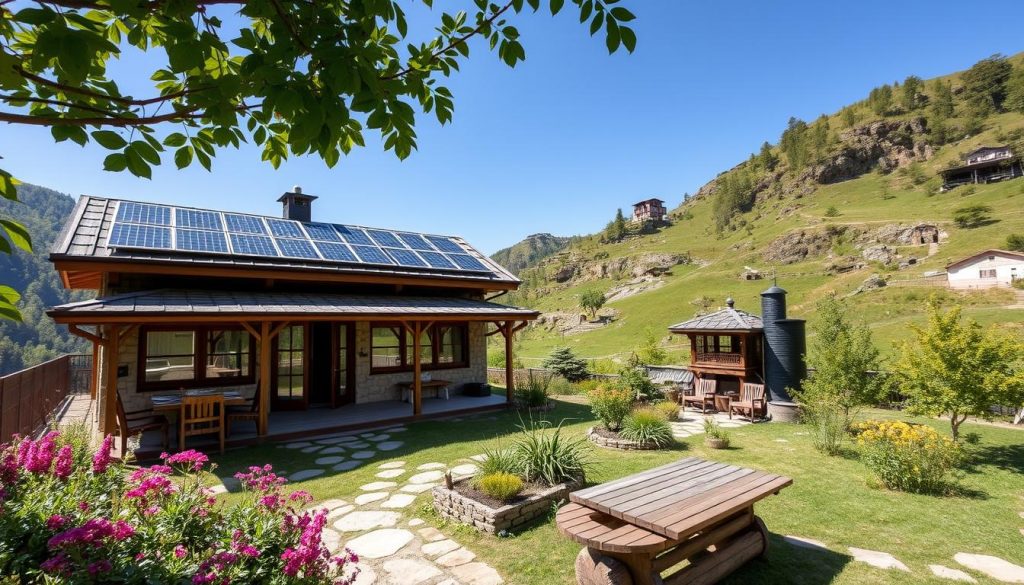
When you travel to Bumthang, picking eco-friendly accommodations is key. It helps you travel sustainably. Many resorts in Bumthang are dedicated to being green.
Top Eco-Friendly Resorts in Bumthang
Here are some top eco-friendly resorts:
- Phuntsho Chholing Lodge: It uses local materials and saves energy, showing true sustainable travel.
- Gangtey Lodge: It’s in a stunning spot and uses rainwater and renewable energy, leaving a small footprint.
Benefits of Staying in Sustainable Lodgings
Staying in eco-friendly places has many perks:
- Reduced Environmental Impact: You help cut down on carbon emissions by choosing energy-saving places.
- Authentic Experience: These lodgings show off local culture and design, making your trip more meaningful.
- Support for Local Economy: Your stay helps the local economy, supporting local artisans and workers.
Choosing eco-friendly places for your stay makes your trip better. It also helps Bumthang grow sustainably.
Responsible Travel Practices to Follow in Bhutan
Traveling responsibly is key to keeping Bhutan’s beauty and culture alive. As a traveler, you can help reduce your impact on the environment. This way, you can enjoy all that Bhutan has to offer while helping to protect it.
One big way to help is by reducing waste and using eco-friendly items. Carry a reusable water bottle and say no to single-use plastics. Also, choose local transport to cut down on emissions and support the community.
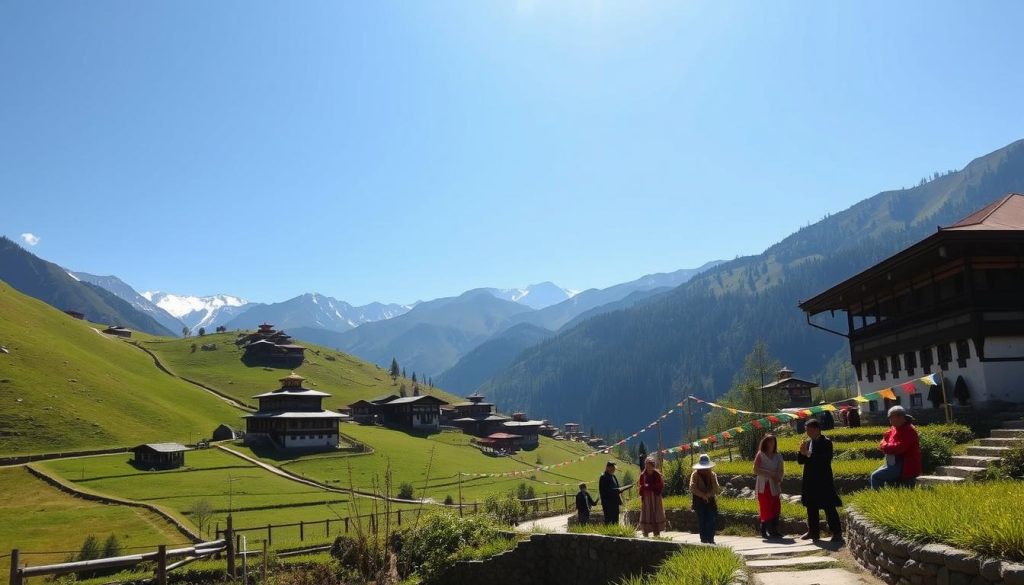
Respecting local customs and traditions makes your trip better. Learn a few words in the local language and wear traditional clothes at sacred sites. This shows you value the culture and helps build good relationships with locals.
Supporting local businesses helps the community financially. Buy souvenirs from local artisans, as their crafts are made in their free time. This way, you get unique items and help the local economy.
Lastly, think about helping out with community projects. Many tourism companies offer chances to volunteer or support green initiatives. This creates lasting connections and ensures your visit makes a positive difference.
Exploring Nature and Community-Based Tourism
Bumthang is famous for its beautiful landscapes and rich wildlife. It offers a unique chance to explore nature and support local communities. You can enjoy the outdoors while helping the local economy.
Visit national parks and get to know the locals. This way, you can learn more about Bhutanese culture. It’s a great way to connect with the place and its people.
National Parks and Biodiversity Conservation
Bhutan’s national parks are home to many different ecosystems. Over 50% of the country is protected. This means you can see wildlife in its natural setting.
You can go hiking or spot animals. Parks like Jigme Dorji National Park and Royal Manas National Park show Bhutan’s dedication to nature. Your visit helps protect endangered species and supports conservation.
Cultural Immersion Through Local Community Engagement
Community-based tourism lets you see local life up close. It also helps the local economy grow. You can stay with families, join cultural tours, or attend festivals.
By doing this, you support the community’s traditions. Studies show that tourism can improve living conditions. It’s a win-win for both visitors and locals.
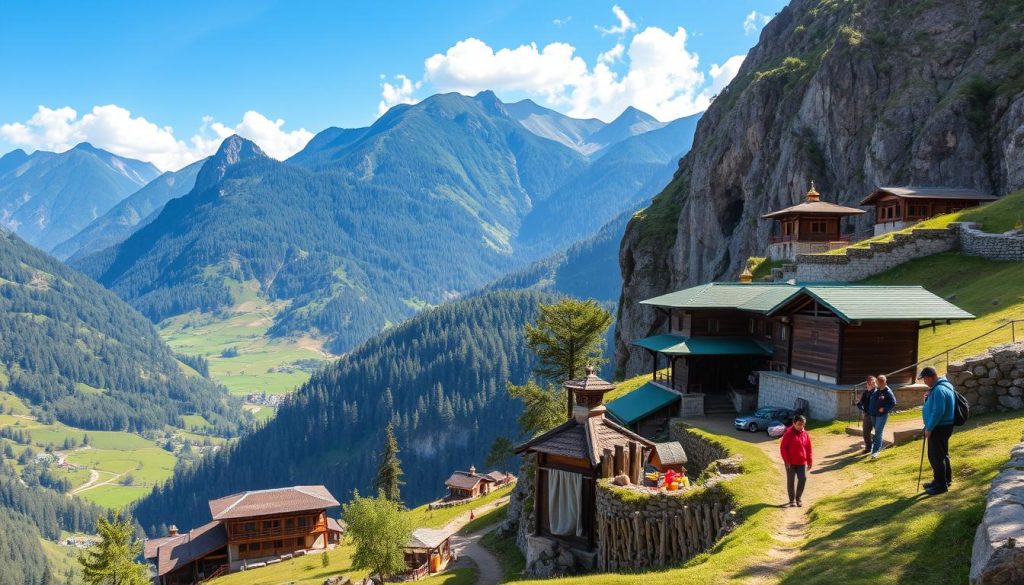
The Role of Mindful Tourism Approaches
Today, we all worry about how travel affects the environment. Mindful tourism is key. It makes travel more meaningful and helps protect the places we visit, like Bumthang.
Bhutan’s “High Value, Low Impact” tourism policy is a great example. It keeps visitor numbers low to protect culture and nature. By paying the Sustainable Development Fee, you help save Bhutan’s heritage. This fee, USD 100 per day, goes towards preserving ancient sites and festivals.
Here are some tips for mindful travel in Bumthang:
- Support Local Economies: Shop at local markets and eat at family-run restaurants. Your money helps the community.
- Respect Cultural Norms: Learn about local customs. Wearing the Gho or Kira shows respect for traditions.
- Choose Eco-Friendly Transport: Use public transport or eco-friendly options. Buses and taxis are safe and green.
- Immerse Yourself: Join local festivals and traditions. Experiences like the Thimphu Tshechu are enriching and support culture.
Your travel choices matter for Bhutan’s nature and culture. Mindful tourism lets you enjoy travel while caring for the environment. Bhutan plans to improve public transport, making eco-friendly travel even easier.
Conclusion
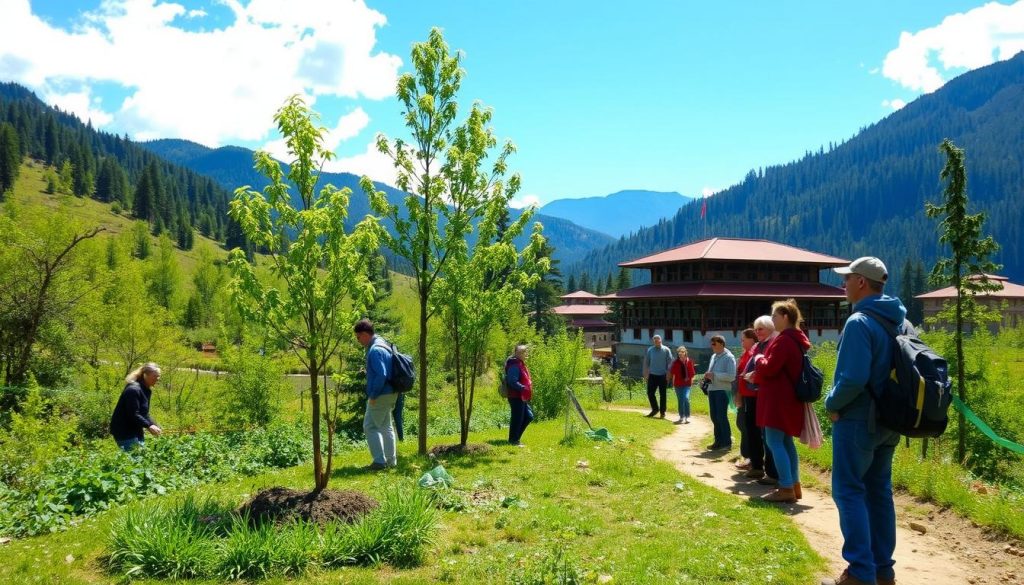
Reflecting on your trip to Bumthang, remember how important sustainable travel is. Bhutan is a carbon-neutral country, with over 71.4% of its land as forests. By traveling responsibly, you help keep this place beautiful and support the local people.
The Sustainable Development Fee you pay helps fund free education, healthcare, and conservation. By following the tips from your journey, like respecting local customs and staying in eco-friendly places, you make a big difference. This helps keep Bhutan a wonderful place for visitors in the future.
In a world where tourism can harm the environment, your choices in Bhutan are a great example. You can enjoy Bumthang’s stunning views while helping protect it for future visitors. This is a chance to make a positive impact on the world.