Chitwan National Park Conservation Efforts Explained
Ever wondered how to protect one of Nepal’s last untouched ecosystems? Exploring Chitwan National Park’s conservation shows a complex web of efforts to save its biodiversity. This UNESCO World Heritage Site, created in 1973, covers over 93,200 hectares. It’s a haven for wildlife like the one-horned Asiatic rhinoceros and the Bengal tiger.
But what’s being done to protect Chitwan National Park? Let’s dive into the world of wildlife and environmental protection in this amazing sanctuary.
Overview of Chitwan National Park
Chitwan National Park is a unique gem in Nepal, nestled at the Himalayas’ foothills. It covers 952.63 square kilometers. This park is known for its diverse ecosystems, including dense forests, vast grasslands, and complex river systems. It’s a haven for nature lovers and a treasure for the environment.
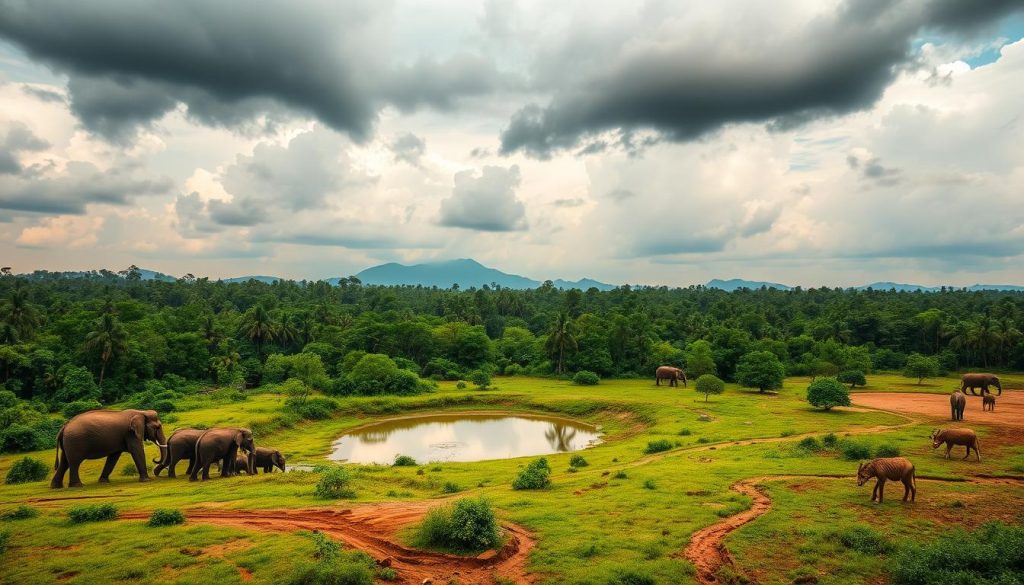
The park is home to over 50 mammal species, including the rare one-horned rhinoceros and the elusive Bengal tiger. It also boasts around 525 bird species. Amphibians and reptiles add to the park’s rich biodiversity. This makes it a top spot for wildlife enthusiasts and scientists.
Chitwan National Park was declared a national park in 1973 and a UNESCO World Heritage Site in 1984. It’s a key player in Nepal’s conservation efforts. Its connection to Parsa Wildlife Reserve makes it even more important for wildlife.
Importance of Biodiversity in Chitwan National Park
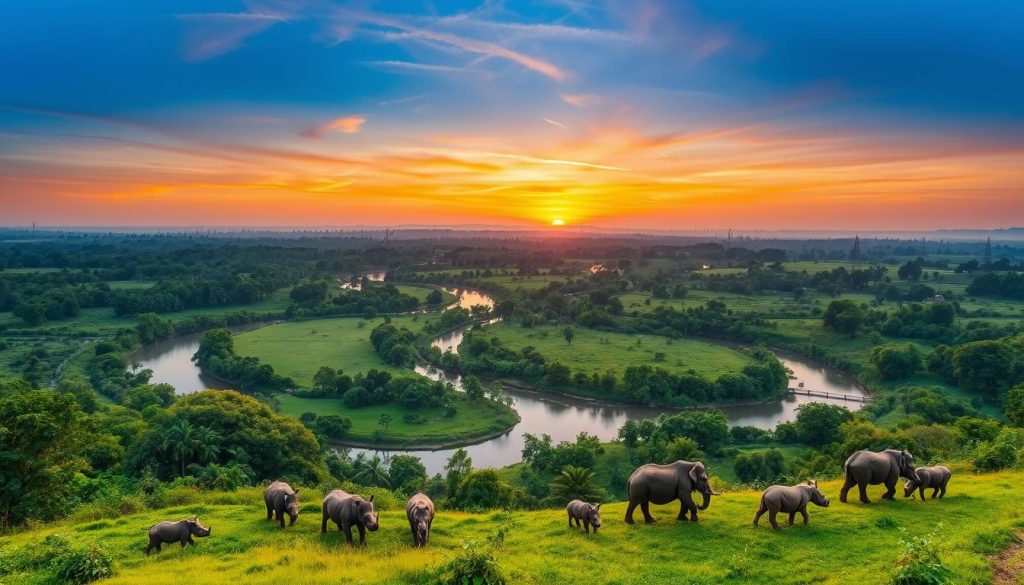
Biodiversity is key to healthy ecosystems. Chitwan National Park is a treasure trove of life, home to endangered species like the one-horned rhinoceros and Bengal tiger. It’s a haven for over 31% of Nepal’s mammals and 61% of its birds.
The park’s biodiversity does more than just save species. It keeps ecosystems balanced and resilient against climate change. It also supports local communities by providing clean water, pollinating crops, and offering resources for sustainable living.
Conserving biodiversity in Chitwan National Park protects wildlife and the complex relationships within ecosystems. This protection brings long-term benefits, like better tourism and more community involvement in conservation.

What conservation efforts are in place at Chitwan National Park?
Chitwan National Park has many conservation efforts. These efforts help the park’s environment and the people living nearby. They make sure wildlife and local development go hand in hand.
Community Involvement in Conservation
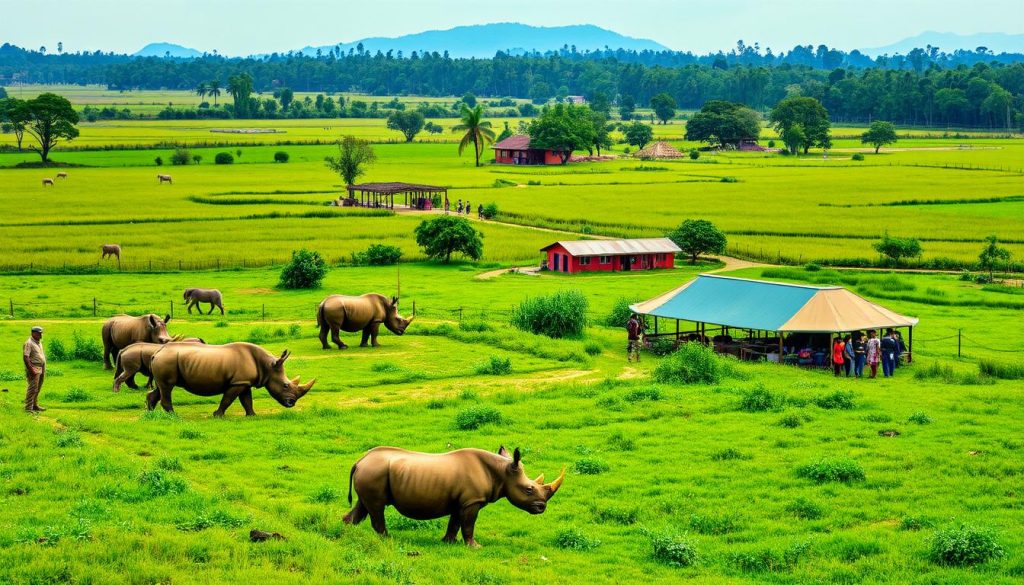
Your help is key to keeping Chitwan National Park healthy. The park works with local communities. They share park money to fund projects that help both nature and people.
This way, local people have a say in how to protect the park. It’s a win-win for everyone, as it supports both conservation and local needs.
Government Regulations and Protection Measures
The government has strict rules to protect the park. The National Parks and Wildlife Conservation Act of 1973 is a big part of this. It makes sure wildlife and their homes are safe.
The government also uses military to stop poaching. This has greatly helped protect endangered animals. Together, these efforts keep the park and its people safe.
| Conservation Effort | Description | Impact |
|---|---|---|
| Community Involvement | Local engagement in buffer zone management | Strengthens community ties and fosters sustainable practices |
| Government Regulations | National Parks and Wildlife Conservation Act of 1973 | Provides legal protection for wildlife and their habitats |
| Anti-Poaching Initiatives | Military deployment for wildlife protection | Reduces poaching incidents, protecting endangered species |
Wildlife Conservation Initiatives
Chitwan National Park is a shining example of wildlife conservation success. It has seen big wins in species recovery successes thanks to detailed plans. These plans tackle the reasons for decline and the challenges of keeping habitats safe.
Success Stories of Species Recovery
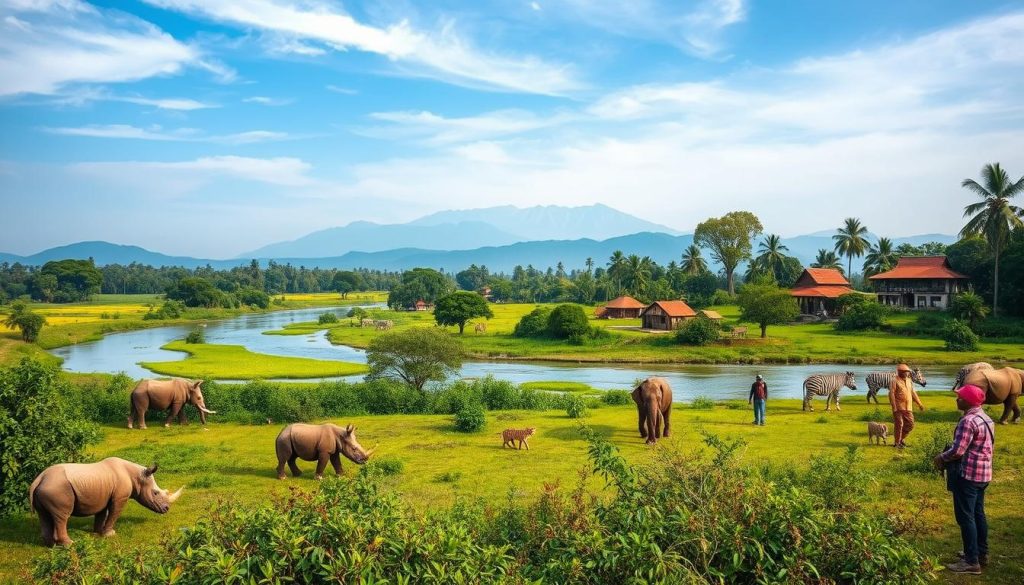
The comeback of the one-horned rhinoceros shows how well these efforts work. What was once a small group of about 150 has grown to over 750. This is thanks to focused recovery programs. Other animals, like the Asian elephant and many birds, are also doing better, proving the park is a safe haven for endangered species.
Anti-Poaching Strategies and Their Impact
Chitwan National Park has made big progress in wildlife protection thanks to anti-poaching initiatives. The park uses many strategies, like working with the Nepal Army and setting up community patrols. These actions have greatly reduced illegal hunting, making it safer for animals at risk. The Bengal tiger population, now over 230, is a clear sign of how strong enforcement can help endangered species grow.
Environmental Protection Practices
Chitwan National Park focuses on protecting the environment. It uses sustainable practices to keep the ecosystem healthy and diverse. Working with local communities is key to achieving these goals.
Sustainable Resource Management in Buffer Zones
The buffer zones around Chitwan National Park cover 729.37 square kilometers. Here, sustainable practices are used to manage resources well. Local communities help fix damaged lands, making resources more available.
These efforts are vital for reducing conflicts between humans and wildlife. They also improve the lives of local people.
Habitat Restoration Efforts
Habitat restoration is a big part of protecting the environment in Chitwan National Park. It aims to improve critical habitats and boost ecological health. These programs help wildlife survive climate change.
Thanks to these efforts, ecosystems are thriving. This benefits both animals and the people living nearby.
Chitwan National Park and Eco-Friendly Initiatives
Chitwan National Park is leading the way in eco-friendly efforts. It focuses on sustainable tourism, which helps protect nature. This approach also helps local communities by sharing the park’s benefits.
Tourism and its Role in Conservation
Sustainable tourism is key to saving Chitwan National Park. It attracts visitors who care about the environment. These tourists learn about the park’s wildlife and why it’s important to protect it.
Experiences in the park raise awareness. They show the beauty and importance of a healthy ecosystem. This helps tourists understand the need for conservation.
Community Revenue Sharing Models
Community revenue sharing is a big part of the park’s eco-friendly plans. About 38% of tourism income goes back to local communities. This helps fund projects that improve their lives.
It makes locals more involved in protecting the park. They feel a strong connection to their natural resources. This supports both environmental care and sustainable tourism.
Challenges Facing Conservation Efforts
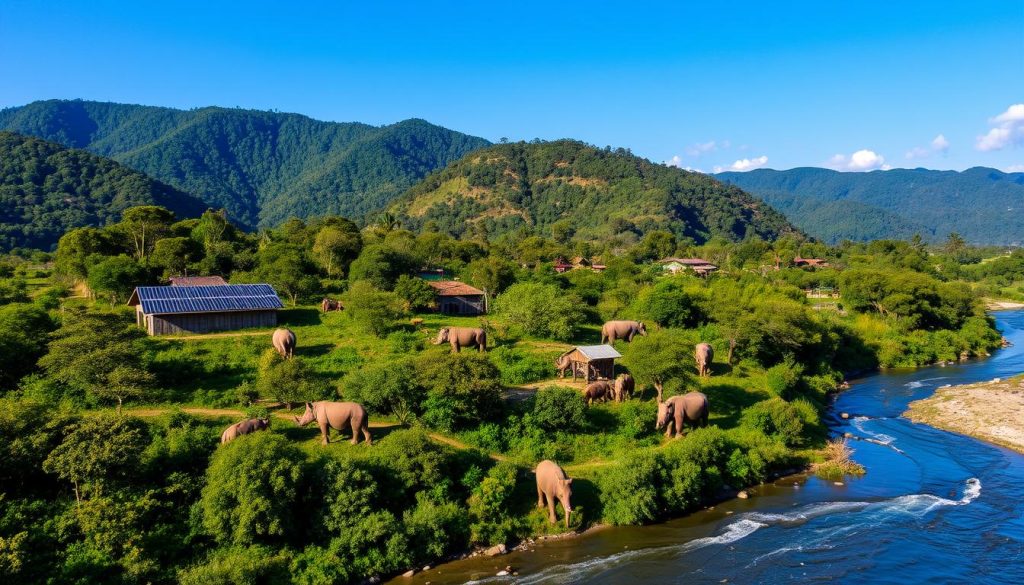
Chitwan National Park faces many challenges that threaten its biodiversity. Human-wildlife conflict is a big issue. It happens when wildlife, like elephants and rhinos, enter farmland, causing damage and injuries. It’s hard for farmers to protect their crops while keeping wildlife safe.
It’s important to find ways to solve these conflicts. This will help both wildlife and people live in harmony.
Human-Wildlife Conflict Issues
When wildlife, like elephants and rhinos, go into farmland, problems arise. Farmers struggle to keep their crops safe while respecting wildlife. Finding solutions to these conflicts is key to a peaceful coexistence.
Effects of Invasive Species
Invasive species are a big problem in Chitwan National Park. Plants like Mikania macrantha take over native habitats, pushing out local plants. This harms biodiversity and makes it hard to restore damaged areas.
Dealing with invasive species is crucial. It requires careful planning and management to keep the park’s ecosystem balanced.
Future Conservation Programs in Chitwan National Park
The future of Chitwan National Park’s conservation depends on new strategies. These plans will use current methods and add new ones. They will also work with the community and get more funding.
Proposed Policies for Enhanced Protection
New policies will focus on keeping the park’s nature safe. They will:
- Make anti-poaching efforts stronger to stop wildlife crime
- Set stricter rules for land use to protect habitats
- Teach local people more about conservation
Collaborations with International Conservation Organizations
Working with global groups is key to good conservation. These partnerships help share knowledge and use new methods. They include:
- Working together on research to track wildlife
- Training local experts in conservation
- Helping with projects to fix damaged habitats
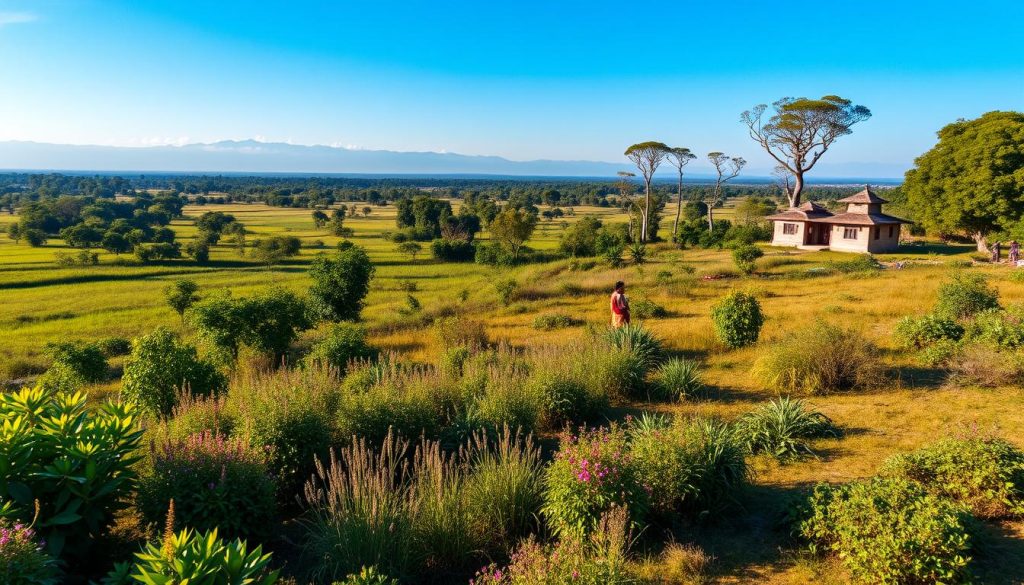
The next steps for Chitwan National Park aim for a balance between people and wildlife. With better policies and global help, we can face big challenges. This will help nature and people live together better.
| Conservation Focus | Current Status | Future Goals |
|---|---|---|
| Anti-Poaching Initiatives | Moderate effectiveness | Enhance enforcement and community patrols |
| Habitat Preservation | Ongoing restoration | Expand restoration efforts to critical areas |
| Community Engagement | Growing participation | Increase involvement in conservation practices |
Local Communities and Conservation Success
Local communities are key to saving Chitwan National Park, especially the Tharu indigenous groups. They work hard to protect their environment using old ways. Their efforts help spread the word and get younger people involved.
The Role of Indigenous Peoples in Preservation
Indigenous peoples do more than just help out in conservation. They are essential for keeping Chitwan National Park’s biodiversity and integrity. Their traditional ways help keep the balance in nature, protecting wildlife and resources. Their deep knowledge of ecosystems is crucial for conservation talks.
Community Forestry Initiatives
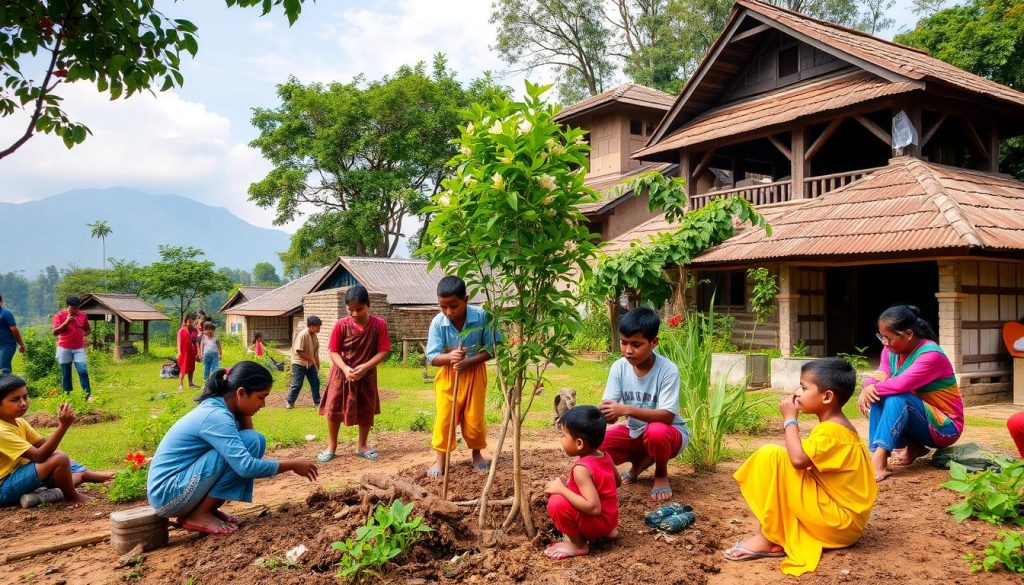
Community forestry is a big deal in Chitwan National Park. It lets local communities manage forests, meeting their needs and helping the environment. These efforts improve the area, creating a good balance between humans and wildlife.
| Initiative | Objective | Impact |
|---|---|---|
| Community Forestry | Manage local forest resources sustainably | Improved forest cover and biodiversity |
| Education Programs | Raise awareness of conservation issues | Enhanced community participation and support |
| Eco-Tourism | Provide alternative livelihoods | Revenue generation and conservation funding |
| Wildlife Monitoring | Track wildlife populations | Improved protection strategies and success rates |
The Role of Technology in Conservation
Technology is key in modern conservation, especially in Chitwan National Park. It helps in better monitoring and protecting wildlife and their homes. These tools bring many benefits that help a lot in conservation work.
Use of Drones and Monitoring Systems
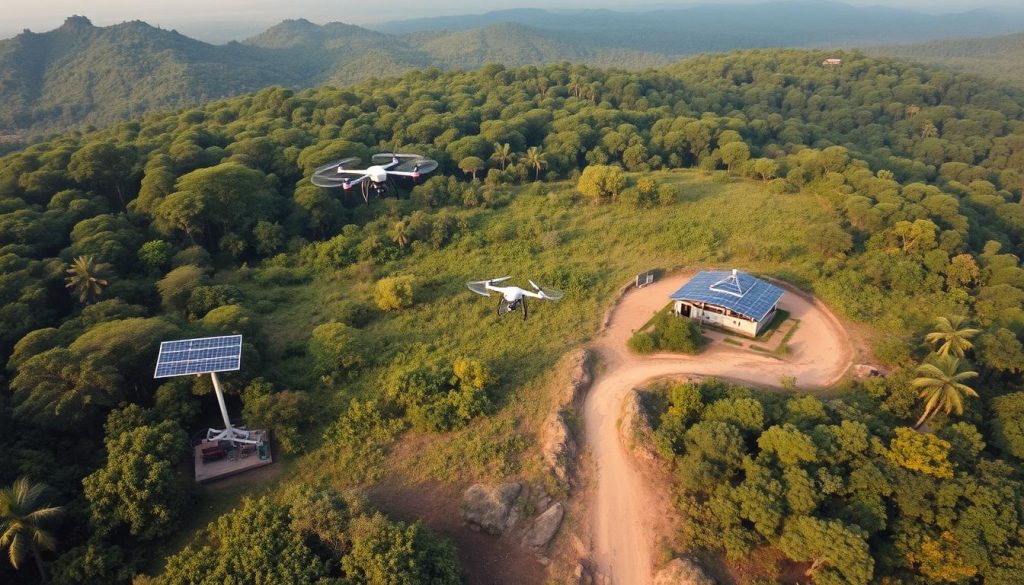
Drones have changed how we protect nature. They fly over hard-to-reach places, taking pictures and data. This makes old ways of watching wildlife much faster and easier.
Now, park teams can see how many animals there are, where they go, and how their homes change. This helps them make better plans for keeping nature safe.
Benefits of Data-Driven Strategies
Using data to guide conservation is very helpful. It lets experts spot trends and dangers to animals and their homes. This way, they can act quickly and wisely.
By using technology, Chitwan National Park shows it’s serious about keeping its unique animals and plants safe. It’s all about using the latest science to protect nature.
| Technology Type | Benefit | Application |
|---|---|---|
| Drones | Efficient monitoring | Aerial surveys of wildlife |
| Data Analytics | Informed decision-making | Trend identification for conservation |
| GPS Tracking | Real-time tracking | Movement patterns of wildlife |
| Camera Traps | Wildlife census | Identification and counting of species |
How You Can Help Conserve Chitwan National Park
Helping save Chitwan National Park is a team effort. There are many ways to get involved. Your help is crucial for the park’s future and makes your visit more meaningful.
Ways to Participate in Conservation Programs
You can join local efforts to protect the park’s ecosystems. Activities like tree planting and wildlife monitoring are hands-on. Supporting local projects also helps the community.
- Join organized volunteer groups focusing on habitat restoration.
- Participate in educational workshops to promote awareness.
- Support local NGOs working on wildlife protection.
Promoting Sustainable Tourism
Choosing eco-friendly options during your visit reduces harm to the environment. Opt for green hotels and behave responsibly. Your actions help protect the park for generations to come.
- Stay at hotels that practice sustainability and environmental awareness.
- Engage in responsible wildlife viewing, avoiding disturbances to animals.
- Encourage other tourists to be mindful of their actions in the park.
Conclusion
The Chitwan National Park conservation efforts are truly impressive. Local communities are now helping to protect their natural surroundings. This teamwork between the government and the community has made a big difference.
Challenges still exist, but the importance of saving Chitwan’s biodiversity is clear. Support for new ways to manage the park is crucial. This ensures the park’s future as a treasure at the Himalayas’ foot.
Your help, through tourism or community projects, is key to conservation success. By working together, we can protect the park’s wildlife and habitats. This makes Chitwan National Park a vital part of our planet’s biodiversity.