Volunteer Opportunities at Chitwan National Park
Ever thought about how volunteering could help endangered species and local communities in Nepal? Chitwan National Park, a UNESCO World Heritage Site, offers many volunteer chances. These allow you to make a big difference while enjoying its stunning beauty.
In this article, you’ll learn about the special volunteer chances at Chitwan National Park. You’ll see how your help can aid in wildlife conservation and community support. By joining eco volunteering Chitwan, you start a journey that mixes caring for the environment with learning about different cultures.
Introduction to Chitwan National Park
Chitwan National Park is in Nepal’s southern region. It covers over 932 square kilometers. This area is full of different ecosystems, including dense forests, wide grasslands, and rivers.
It’s home to many species, like the rare greater one-horned rhinoceros and the elusive Bengal tiger. These animals roam freely here.
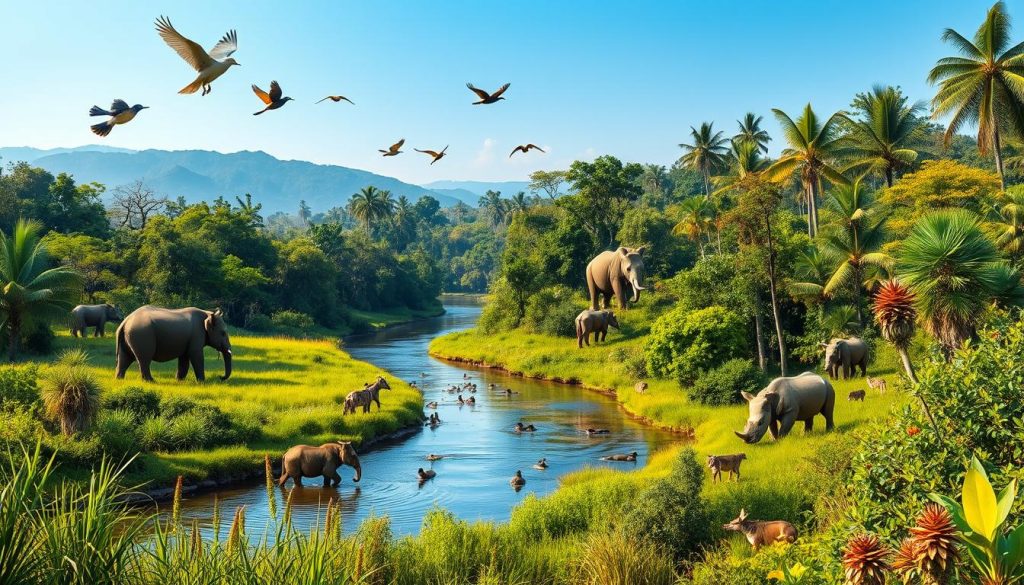
Chitwan National Park was set up in 1973. It’s very important for the environment. It’s a key place for many birds and rare animals to live.
People can enjoy the park through jungle safaris, canoeing, and birdwatching. These activities are not just fun. They also help with conservation efforts in the park.
| Aspect | Details |
|---|---|
| Area | 932 square kilometers |
| Main Ecosystems | Forests, Grasslands, Rivers |
| Key Wildlife | Greater One-Horned Rhinoceros, Bengal Tiger, Migratory Birds |
| Established | 1973 |
| Activities | Jungle Safaris, Canoeing, Birdwatching |
The park’s variety of plants and animals makes it a UNESCO World Heritage site. Volunteering here lets you help make a difference. You’ll also get to see one of Nepal’s most beautiful natural places.
Why Volunteer at Chitwan National Park?
Volunteering in Chitwan National Park is a unique chance to help wildlife and communities. You get to be in nature and help with important conservation work. This is a great way to make a difference.
Volunteering here also lets you meet local people and learn about their culture. You’ll grow personally, learning new skills that help you in life and work.
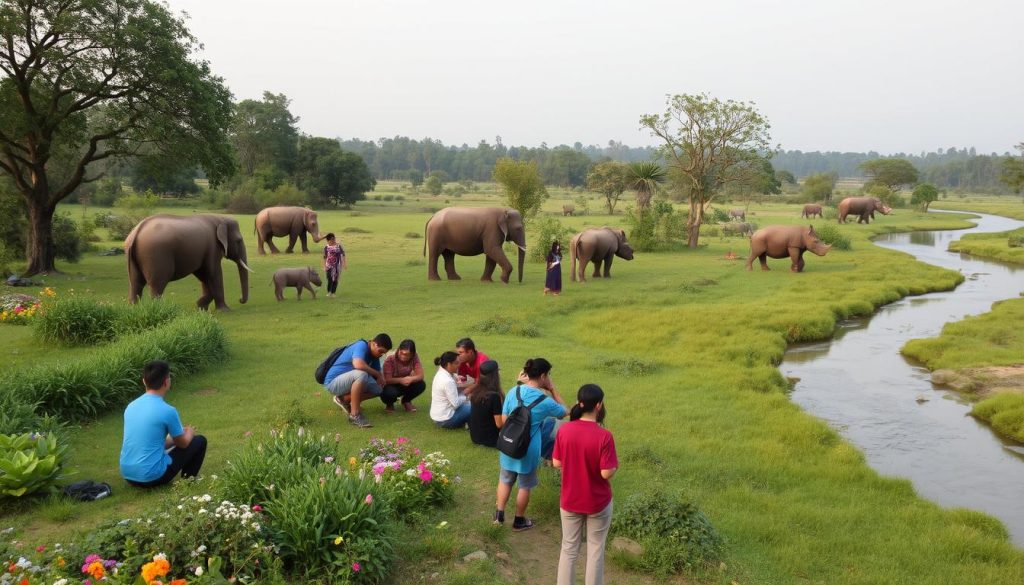
By volunteering, you make friends from around the world. You work together on projects that help the environment. This helps keep Chitwan National Park beautiful for everyone.
Can I volunteer at Chitwan National Park?
Yes, you can volunteer at Chitwan National Park. It’s a great chance to help with conservation and protect wildlife. Many volunteer programs in Nepal are open to students, professionals, and families. You must be at least 18 years old, but some projects might accept younger people with their parents’ permission.
Before you apply, it’s important to know if you’re eligible to volunteer in Nepal. Each program has its own needs, like language skills, physical fitness, and interests. Look into the different volunteer programs in Nepal to find one that fits your skills and interests.
Volunteering at this famous park helps with important conservation work. It also gives you unique experiences that help you grow personally. You’ll have a chance to explore nature, culture, and wildlife in a way that changes your life.
| Volunteer Program | Age Requirement | Background Needed |
|---|---|---|
| Wildlife Conservation | 18+ (Younger with Consent) | None required |
| Community Engagement | 18+ | Experience in teaching or social work |
| Ecological Research | 18+ | Science background preferred |
Types of Volunteer Opportunities in Chitwan
Chitwan has many volunteer programs for different interests and skills. People want to help the community through various projects. Here are some main volunteer opportunities:
- Teaching English: Teach English to local kids in schools. It helps them learn a new language.
- Working with Orphanages: Help kids in need by giving them support and friendship.
- Environmental Education Sessions: Teach people about saving the environment and being sustainable.
- Medical Outreach Programs: Help with health services for those who can’t afford them.
- Construction Projects: Help build and fix community buildings to make life better.
- Agricultural Initiatives: Work on farms to teach sustainable farming and improve food access.
- Eco-Tourism Development: Assist in creating eco-friendly tourism projects that help the economy and environment.
Volunteering in Chitwan improves lives and helps communities grow. Each project lets you dive into the culture and help people learn and grow.
| Type of Opportunity | Description | Skills Developed |
|---|---|---|
| Teaching English | Instructing local children and adults in English language skills. | Teaching, communication, leadership |
| Working with Orphanages | Providing care and support to children in difficult circumstances. | Compassion, mentorship, creativity |
| Environmental Education | Conducting workshops and seminars on conservation. | Public speaking, environmental awareness |
| Medical Outreach | Delivering medical services and health education. | Healthcare information, empathy |
| Construction Projects | Building and improving community facilities. | Teamwork, project management, construction skills |
| Agricultural Initiatives | Supporting farming communities in sustainable agriculture. | Agricultural knowledge, teamwork |
| Eco-Tourism Development | Creating projects that promote sustainable tourism. | Business development, cultural exchange |
Conservation Projects at Chitwan National Park
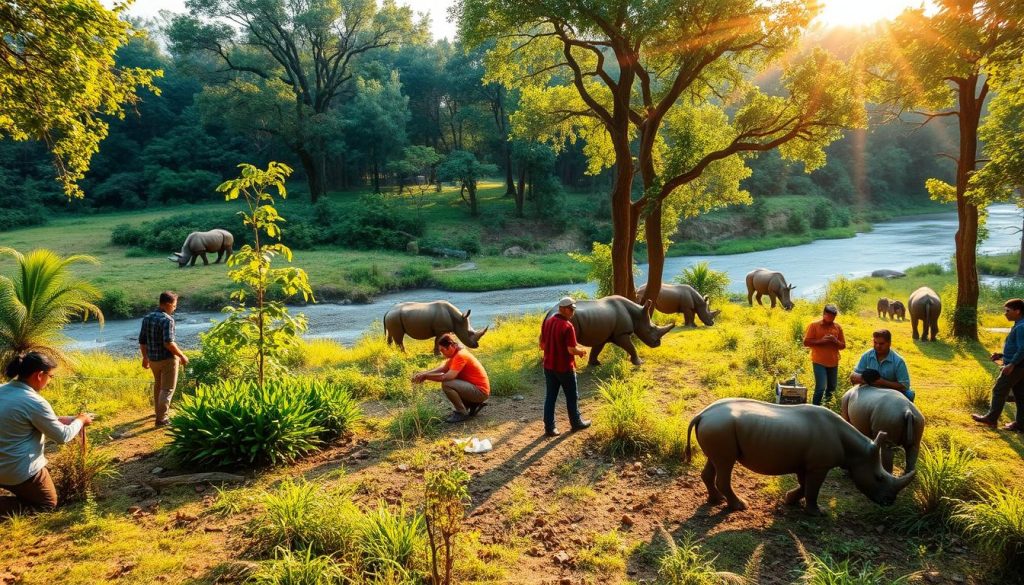
Chitwan National Park is key for wildlife conservation in Nepal. It has many projects to protect endangered species and their homes. These efforts focus on saving the greater one-horned rhino, among others. Volunteers are crucial, helping with important data collection and monitoring.
Volunteers might track rhino movements, do surveys of butterflies and birds, or help with tiger conservation. These tasks help us understand how animals live and move. This knowledge is vital for improving conservation plans in the park.
- Collecting and analyzing data on various animal populations
- Participating in anti-poaching patrols to safeguard wildlife
- Assisting in community outreach programs to raise awareness
By joining these projects, volunteers get real-world experience. They also help keep the ecosystem balanced. Working together, we learn more about wildlife conservation and its challenges.
| Project Focus | Activities Involved | Impact |
|---|---|---|
| Greater One-Horned Rhino Preservation | Tracking, data collection | Increased population awareness |
| Bengal Tiger Conservation | Monitoring, habitat restoration | Enhancement of habitat quality |
| Bird and Butterfly Surveys | Field surveys, data reporting | Understanding biodiversity |
| Anti-Poaching Initiatives | Patrolling, community education | Reduction in poaching incidents |
Wildlife Volunteering Programs in Nepal
Wildlife volunteering in Nepal is a great way to help with important conservation work. In places like Chitwan National Park, you can get involved in many activities. These include helping with wildlife surveys, studying the environment, and caring for animals like elephants and rhinos.
The elephant volunteer program is especially rewarding. Here, you help care for these amazing animals and learn about their needs. By doing this, you help protect endangered species and gain valuable knowledge.
These programs also include educational parts to teach about the importance of nature. This not only helps the animals but also deepens your understanding of Nepal’s ecosystems.

There are many programs to choose from, depending on your skills and interests. Whether you love research, animal care, or teaching, there’s a place for you. Joining these programs is a great way to make a difference and have a memorable experience in nature.
| Program Type | Key Activities | Duration | Focus Area |
|---|---|---|---|
| Wildlife Survey | Data collection, species monitoring | 2-8 weeks | Research |
| Elephant Volunteer Program | Care, habitat restoration, education | 2-12 weeks | Animal care |
| Conservation Education | Workshops, community outreach | 1-4 weeks | Awareness |
Eco Volunteering Experiences in Chitwan
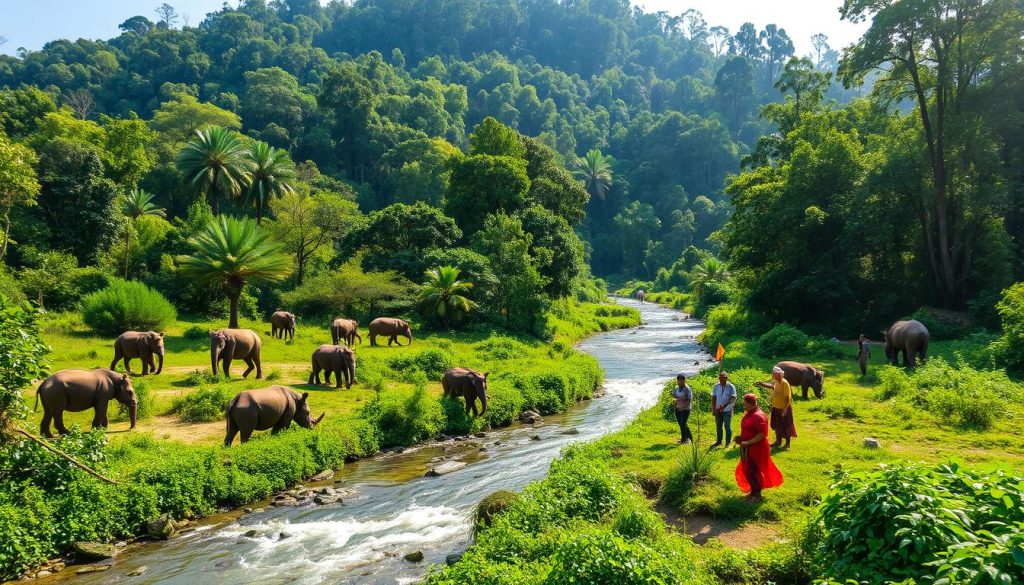
Joining eco volunteering in Chitwan lets you help with sustainable projects. You learn a lot about environmental issues. Your work helps protect nature and makes communities stronger against climate change.
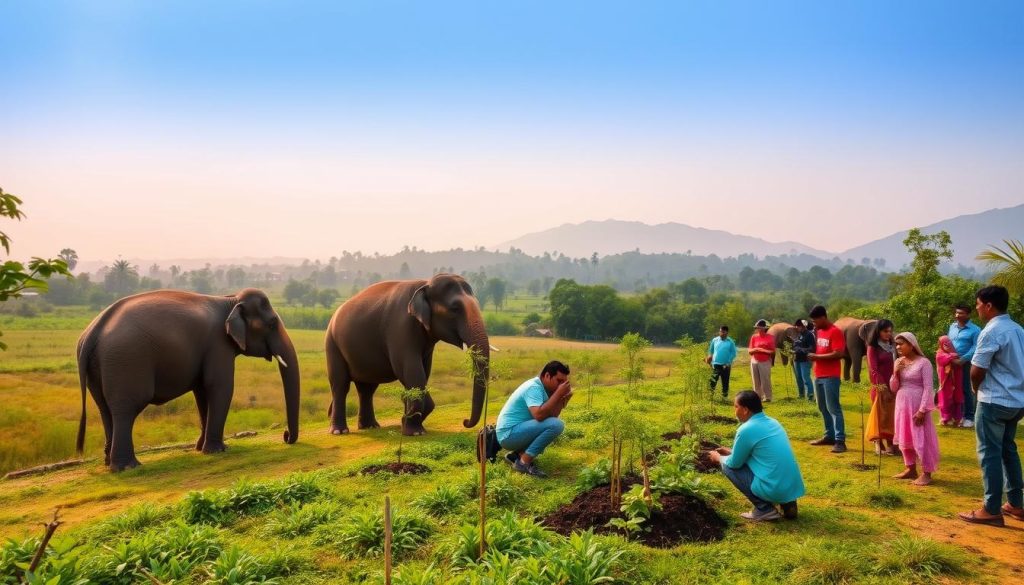
Activities like planting trees, fixing land, and managing waste are important. They help improve local ecosystems. You also get to teach others about conservation and farming in workshops.
Volunteers create educational programs for schools. This teaches kids and adults about caring for the environment. It helps them understand the importance of conservation.
- Tree planting initiatives promoting local biodiversity
- Waste management programs reducing environmental impact
- Workshops on sustainable agricultural techniques
- Educational outreach fostering environmental awareness
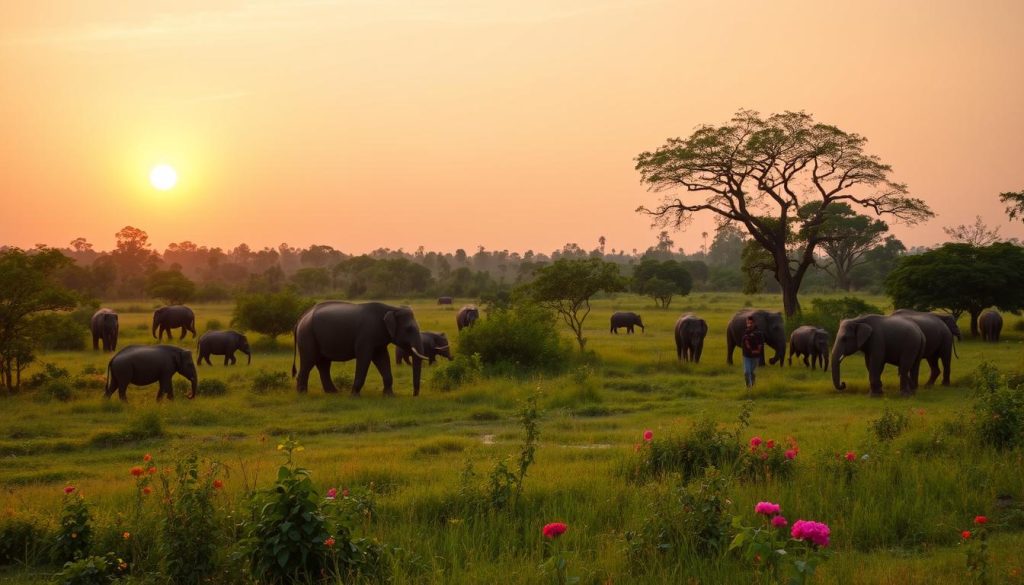
These experiences make a big difference. They help people live more sustainably. By volunteering, you help the environment and improve Chitwan’s communities.
Working with Elephants in Chitwan
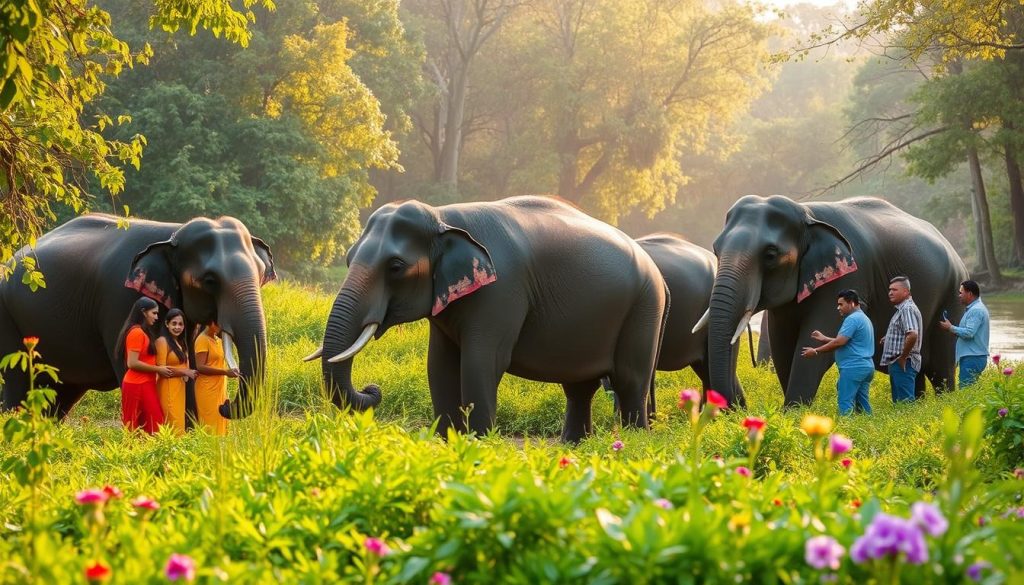
Working with elephants in Chitwan is a rewarding experience for wildlife lovers. Many elephant volunteer programs let you get close to these amazing animals. You’ll help with their care, like feeding and bathing, and study their behavior.
These projects do more than just care for elephants. You might help with elephant conservation Nepal by making eco-friendly products. For example, you could help make paper from elephant dung. This turns waste into something useful and teaches people about elephant challenges.
Here’s a closer look at what you can expect:
| Activity | Description |
|---|---|
| Caring for Elephants | Feeding, bathing, and maintaining the health of the elephants. |
| Behavioral Studies | Observe and document the behaviors of elephants to help receive better care. |
| Eco-Friendly Initiatives | Participate in projects that promote sustainability, such as creating paper from dung. |
| Community Awareness | Engage with local communities to raise awareness about elephant conservation efforts. |
Engaging with the Local Community
Getting involved with the local community is key to your volunteer time at Chitwan National Park. Helping out in local outreach programs can really make a difference. You might teach English or help at medical camps, which can change lives.
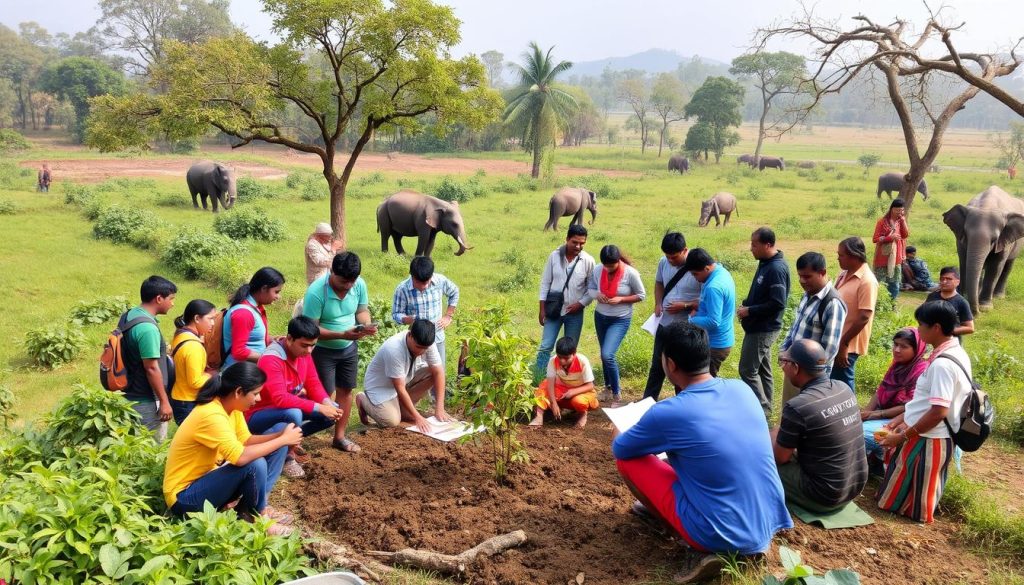
Through cultural exchange Chitwan, you learn about the local traditions and share your own stories. This exchange builds understanding and strengthens community ties. It also helps in sustainable development efforts.
These outreach efforts can have a big impact. Some of the benefits include:
- Improvement in English language skills
- Access to basic healthcare services
- Increased awareness of environmental issues
By taking part in these activities, you join a bigger effort for positive change. Your help in community engagement Chitwan not only improves lives locally but also gives you a rewarding volunteer experience.
| Outreach Activities | Benefits to the Community | Your Contribution |
|---|---|---|
| Teaching English | Enhanced communication skills | Sharing language and learning methods |
| Medical Camps | Improved health standards | Assistance in healthcare provision |
| Environmental Awareness | Increased ecological knowledge | Promotion of sustainability practices |
Preparing for Your Volunteer Journey
To get ready for volunteering in Chitwan, focus on key areas for a fulfilling trip. Start with visa arrangements. Getting the right visa is crucial. Make sure to check the visa needs for your country early on.
Don’t forget about health precautions. See a doctor to talk about vaccinations and medicines for Nepal. This keeps you safe and healthy while volunteering.
Learning about local customs and culture is important. Get to know the social norms, traditions, and basic Nepali phrases. This knowledge will make your interactions better and help your volunteer work.
Think about what you’ll need to pack, like clothes for different weather, personal items, and volunteer gear. Packing right is key for a great experience. Also, connect with other volunteers and coordinators before you go. They can share valuable tips for your trip.
Finally, be flexible and open-minded. Adapting to new situations and challenges is important. With these steps, you’re ready for a meaningful time in Chitwan.
Conclusion
Reflecting on volunteering in Chitwan is key. Volunteering at Chitwan National Park boosts your sense of community. It also helps protect biodiversity.
Volunteering here offers personal growth and social impact. You get to help with conservation efforts directly.
Your time in Chitwan will be filled with amazing wildlife and culture. You’ll join a movement for environmental care and sustainability. Every effort you make can lead to big changes.
Volunteering in Chitwan is more than just helping out. It’s a chance to see how nature, culture, and community are connected. Remember, your actions help the park and the people living nearby. Your help truly makes a difference.