Discover the Rapa Nui Culture: A Comprehensive Guide
Exploring the Rapa Nui culture, you might wonder about its secrets. This Easter Island culture is a mix of Polynesian heritage and outside influences. It’s interesting to see how it has survived challenges like European imperialism.
The Rapa Nui people make up about 60% of Easter Island’s population. They have a rich history and traditions. You’ll learn about the famous moai statues, the impact of tourism, and efforts to save their language and customs.
Understanding the Origins of Rapa Nui Society
The Rapa Nui society has a rich and fascinating history. The first inhabitants arrived around AD 400. The island’s geography and resources shaped their early social structure.
The Polynesian settlement between AD 700 and 800 was key. It influenced the Rapa Nui society. Archaeological evidence supports this.
The Rapa Nui people valued community and cooperation. This is seen in the massive moai statues. They were built with the help of many people.
The society had chiefs and clans. Each clan had its own identity and role. This made the community strong.
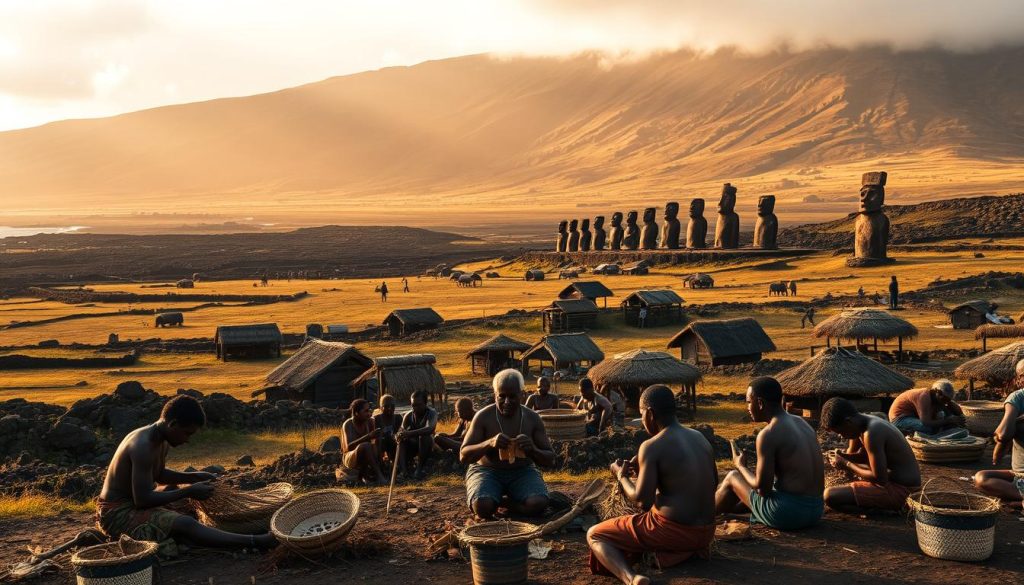
- The population of Rapa Nui is estimated to have peaked at around 9,000 people in 1550.
- The island was colonized by people from other Polynesian islands, with DNA analysis confirming a Polynesian origin.
- The Rapa Nui people developed a unique culture, with their own language, customs, and traditions.
The Polynesian settlement had a big impact on the island. The introduction of the Polynesian rat led to deforestation. Yet, the Rapa Nui society thrived for centuries.
Today, their culture still fascinates people worldwide. It shows the strength and resilience of the Rapa Nui people.
What is the Rapa Nui Culture Like: An In-Depth Look
The Rapa Nui culture is unique and fascinating. It has been shaped by history and traditions. You’ll see the rich heritage of the Rapa Nui people, who came from the Marquesas Islands over 800 years ago.
Their culture is known for community and Polynesian heritage. This is seen in their customs, traditions, and lifestyle.
The Easter Island culture is famous for its moai statues. These were carved by the Rapa Nui people between 1300 and 1450. They show the people’s ingenuity and skill, using volcanic rock for these massive structures.

Some interesting facts about the Rapa Nui culture include:
* The Rapa Nui people carved around 900 moai statues, which can be found throughout the island.
* The Rapa Nui culture is known for its birdman cult, which involved a competition where noblemen would select a servant to retrieve the first egg of the season.
* The Rapa Nui people have a strong connection to the land and the sea, which is reflected in their customs and traditions.
* The Rapa Nui culture is still alive and thriving today, with around 60% of the island’s population being descendants of the Rapa Nui people.
In conclusion, the Rapa Nui culture is rich and diverse. It’s worth exploring. With its unique traditions, customs, and history, it’s a key part of the island’s identity and Polynesian heritage. Learning about the Rapa Nui culture will deepen your appreciation for the island and its people.
The Sacred World of Moai Statues
The Moai statues hold a special place in the Rapa Nui culture. They are seen as sacred and carry deep religious meaning. As you explore the island, you’ll find nearly 900 Moai statues across the landscape. They are a key part of Easter Island’s culture.
Some interesting facts about the Moai statues include:
- Average height: 13 feet
- Average weight: 10 metric tons
- Largest Moai statue: “El Gigante,” standing at 69 feet tall
The Moai statues were built using logs and ropes. They are not just big; they also carry deep cultural meaning. They represent the history and traditions of the Rapa Nui people.

Exploring the Moai statues will help you understand the Rapa Nui culture better. You’ll see how these statues are a symbol of Easter Island’s rich heritage.
Traditional Arts and Crafts of Easter Island
The Rapa Nui people have a rich tradition of arts and crafts. They include woodcarving, tattooing, and weaving. These are key parts of Easter Island culture and Polynesian heritage. You can see the skill and detail in these art forms passed down through generations.
Some of the traditional arts and crafts of Easter Island include:
- Woodcarving: The Rapa Nui people are known for their intricate woodcarvings. These often depict ancestral figures and other mythological beings.
- Tattooing: Tattooing is a significant part of the Rapa Nui culture. The islanders are known for their unique and intricate tattoo designs.
- Weaving: Weaving is another traditional art form on Easter Island. The islanders are skilled at creating beautiful and intricate textiles using natural fibers.
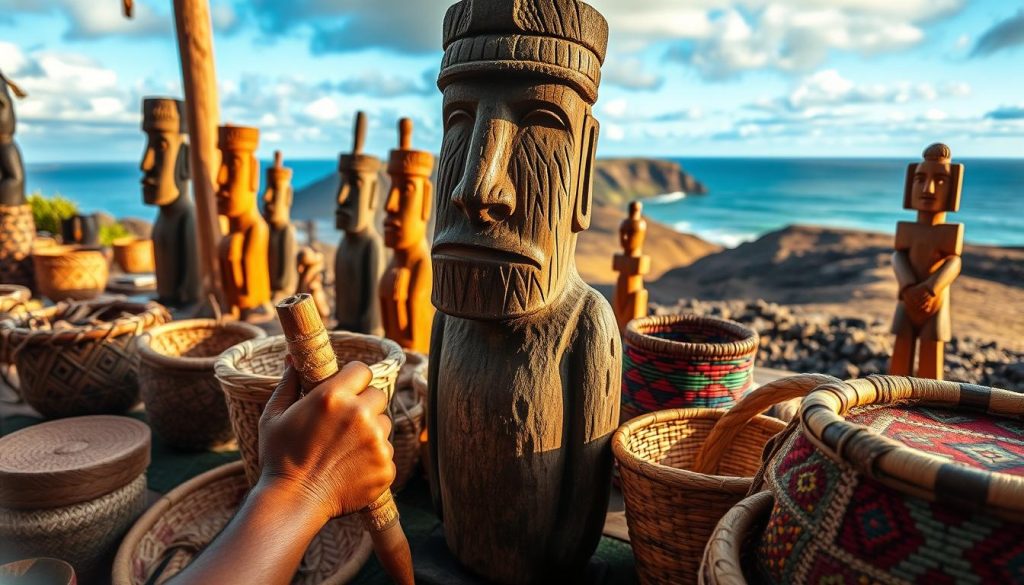
The traditional arts and crafts of Easter Island are not only beautiful. They also hold significant cultural and historical value. They are an important part of the Rapa Nui cultural heritage. By learning about and appreciating these traditional arts and crafts, you can gain a deeper understanding of the Easter Island culture and Polynesian heritage.
Language and Oral Traditions
The Rapa Nui language is a unique part of the island’s culture. It has complex grammar and vocabulary. It’s a big part of who the islanders are.
Oral traditions are key in Rapa Nui culture. Stories and legends are passed down through generations. These tales often include ancestors and mythical creatures. They teach important lessons and values.
The Rapa Nui people also use the ancient writing system of Rongorongo. This helps them keep their history and culture alive.
Some key aspects of the Rapa Nui language and oral traditions include:
- The use of Rongorongo tablets to record important events and stories
- The passing down of legends and myths through generations
- The importance of storytelling in Rapa Nui culture
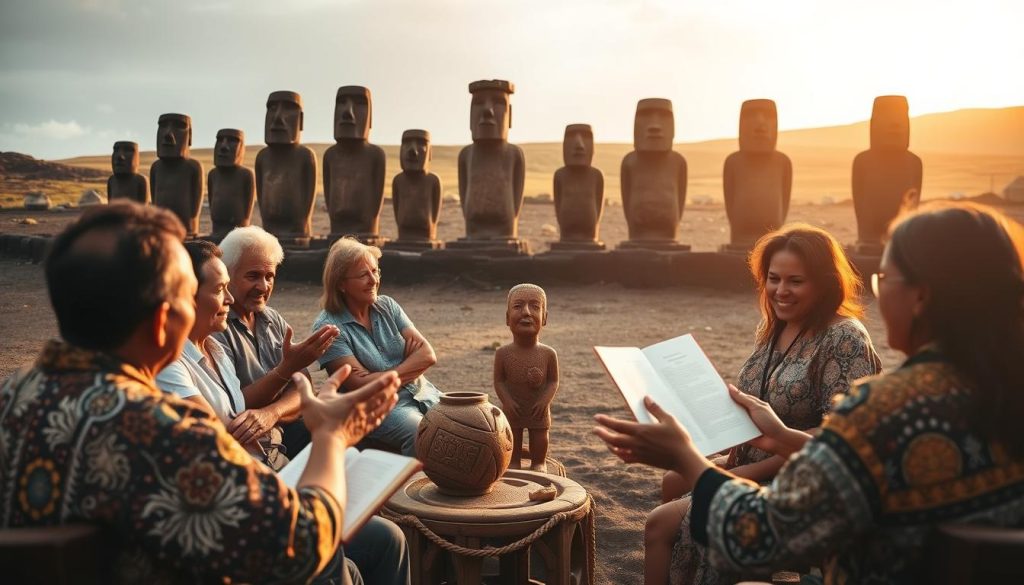
Exploring the Rapa Nui language and oral traditions helps us understand the island’s rich culture. It shows how vital it is to keep it alive for the future.
Ceremonial Practices and Rituals
The Rapa Nui people have a rich tradition of ceremonial practices and rituals. They use moai statues and other sacred objects. These Easter Island rituals connect them to their ancestors and the natural world.
One notable ceremony is the Tapati Rapa Nui festival, held annually in February for two weeks. It showcases the island’s cultural identity through music, dance, and traditional arts. The Birdman Cult competitions, starting in the 16th to 17th centuries, are also key to their practices.
The Rapa Nui people work hard to preserve their cultural heritage and traditions. They revive the Rapa Nui language and use traditional cooking methods like umu pae. They also create handicrafts such as wood and stone carvings.
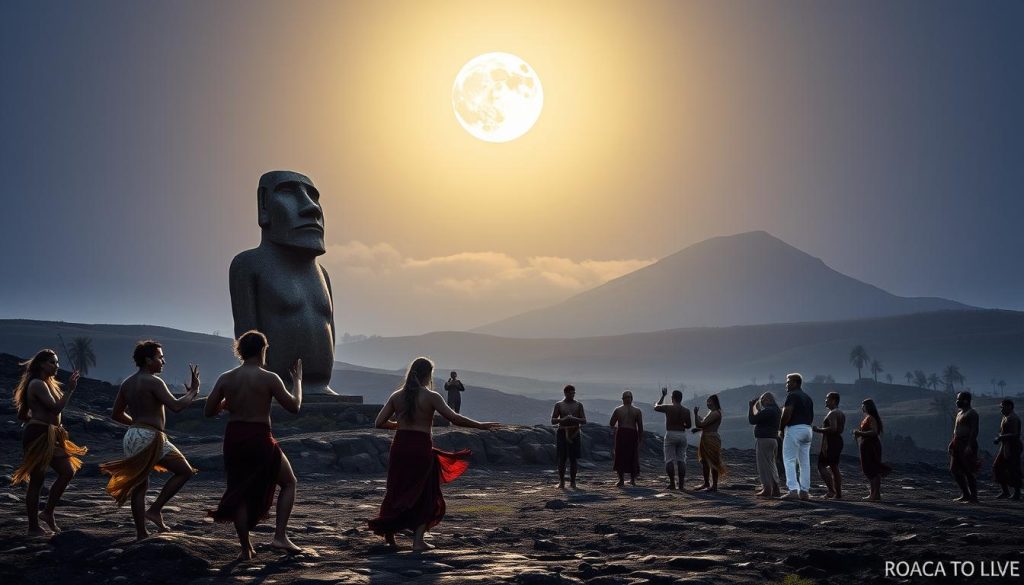
These practices and rituals honor their ancestors and promote community identity and cultural preservation. The Tapati Festival, for example, draws visitors from all over. It shows the importance of Rapa Nui’s cultural heritage.
Traditional Music and Dance Expression
Rapa Nui music and dance are key parts of the island’s Polynesian heritage. The islanders have a long tradition of music and dance. They use traditional instruments and dance forms. You can see the energetic and expressive performances, which are vital to Rapa Nui’s cultural heritage.
The traditional music and dance of Easter Island help keep the island’s history and traditions alive. Tapati Rapa Nui festival is a prime example. Here, you can enjoy music, dance, traditional crafts, and sports. The festival aims to revive forgotten traditions, boosting community involvement and cultural pride.
Some traditional dances and their meanings are:
- Haka pei: a sled race that shows the islanders’ strength and agility
- Vaka ama: a rowing race that highlights the islanders’ seafaring skills
- Traditional dances that tell stories of the island’s history and legends
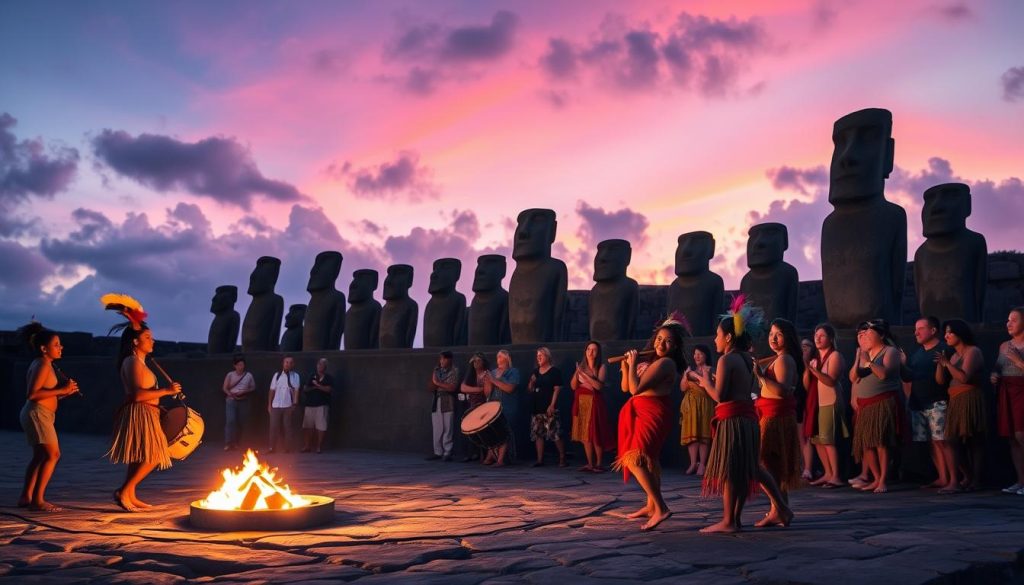
The Rapa Nui people are very proud of their cultural heritage. Their traditional music and dance are a big part of it. By watching these performances, you can learn more about the island’s history and traditions. You’ll also appreciate the beauty of Rapa Nui music and traditional dance.
Social Structure and Family Life
The Rapa Nui social structure is based on clans and family ties. It helps keep society in balance. The Rapa Nui people value community and family highly. This shows in their Polynesian heritage, where family bonds are key.
Family life is crucial in Rapa Nui. They aim to keep their cultural heritage alive. Key aspects of Rapa Nui family life include:
- Extended family relationships: Rapa Nui people often live in extended family groups, with multiple generations residing together.
- Community involvement: Family members are expected to participate in community activities and contribute to the well-being of the group.
- Cultural preservation: Families play a crucial role in preserving Rapa Nui cultural heritage, including traditions, language, and customs.
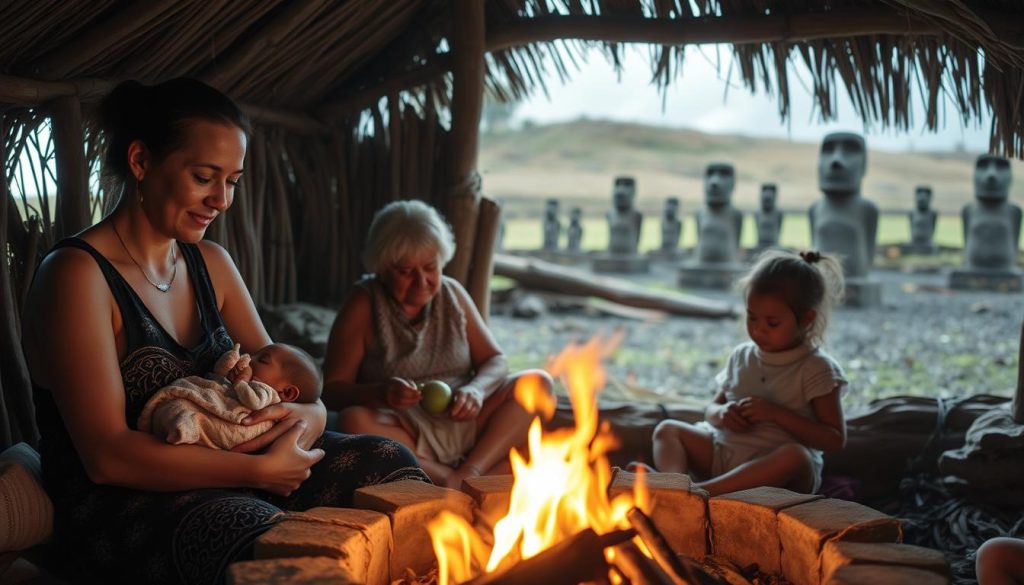
Understanding Rapa Nui’s social structure and family life is key. It shows the importance of community and cooperation. By looking at their clans and family ties, we see the value they place on working together.
Modern Rapa Nui: Preserving Ancient Traditions
Exploring Rapa Nui, you see the Modern Rapa Nui people’s efforts to keep their traditions alive. They work hard to protect their unique culture and way of life. They believe it’s key to share it with the next generations.
The island’s tourism has a big impact. The Rapa Nui people aim to find a balance. They want to keep their culture safe while welcoming visitors.
They’re doing many things to protect their heritage. For example:
- They promote traditional arts like woodcarving and tattooing.
- They keep traditional music and dance alive, like at the Tapati Rapa Nui Festival.
- They support education to teach the Rapa Nui language and culture.

By supporting these efforts, you help the Modern Rapa Nui people. You also help with cultural preservation and sustainable tourism on the island.
| Initiative | Goal |
|---|---|
| Promoting traditional arts and crafts | To preserve traditional skills and knowledge |
| Preserving traditional music and dance | To promote cultural heritage and identity |
| Supporting educational initiatives | To teach the Rapa Nui language and culture |
Environmental Connection and Sustainable Practices
The Rapa Nui environment is unique and fragile. It needs careful management to keep its beauty and cultural heritage safe. As you explore, you’ll see the Rapa Nui people’s deep connection to the land. They are committed to sustainable practices.
Eco-tourism plays a big role here. It lets visitors enjoy the island while helping conservation efforts. This way, everyone can support the island’s preservation.
The Rapa Nui people work hard on environmental projects. They focus on preserving the island’s plants and animals. These efforts keep the ecosystem balanced and ensure the island stays beautiful for the future.
They use sustainable practices to lessen their environmental impact. This helps protect the island’s natural wonders for generations to come.
Some key projects include:
- Promoting eco-tourism and responsible travel practices
- Conserving the island’s unique flora and fauna
- Implementing sustainable waste management and recycling programs
- Supporting renewable energy projects, such as solar and wind power
These projects are crucial for protecting the Rapa Nui environment. They also help keep the island’s culture alive. By working together, we can make sure this special place stays healthy and vibrant.
The Rapa Nui people are dedicated to saving their island and promoting green practices. As a visitor, you can help by being eco-friendly and respecting the island. Together, we can protect the Rapa Nui environment and keep it beautiful for the future.
| Initiative | Goal | Impact |
|---|---|---|
| Promoting eco-tourism | Support conservation efforts | Reduce environmental impact |
| Conserving flora and fauna | Preserve unique ecosystem | Maintain biodiversity |
| Sustainable waste management | Reduce waste and pollution | Protect the environment |
Conclusion: The Enduring Legacy of Rapa Nui Culture
The Rapa Nui culture is a unique and captivating part of Polynesian heritage. Despite many challenges, the islanders have kept their cultural traditions alive. The moai statues, rich oral histories, and ceremonies show the resilience and ingenuity of this society.
As the world discovers Easter Island, it’s important to support the Rapa Nui people. We can do this through responsible tourism, education, and respecting the island’s ecosystem. This way, the legacy of Rapa Nui will continue to inspire and captivate future generations.