

Discover Sundarbans Cultural Activities
The Sundarbans, a UNESCO World Heritage Site, is a treasure trove of cultural heritage. This remarkable region nestles in Bengal’s heart, where ancient and modern coexist. The area boasts rich folklore, vibrant festivals, and unique traditions.
Indigenous communities have a deep bond with the environment. Their customs are woven into the region’s fabric. Local artisans create intricate textiles and handcrafted pottery, showcasing their creativity.
Folk music and traditional dances have been passed down through generations. These performances celebrate the Sundarbans’ rich cultural tapestry. Each one tells a story of the region’s history and people.
The Sundarbans’ cultural heritage continues to evolve and adapt. Vibrant festivals like Bonbibi Mela and Poush Mela hold deep spiritual significance. These celebrations bring communities together and honor local traditions.
The region’s unique culinary traditions blend land and sea bounties. Local dishes tantalize the senses with flavors unique to the Sundarbans. Food here reflects the area’s rich biodiversity and cultural history.
A delicate balance exists between preservation and progress in the Sundarbans. Local communities work with global partners on sustainable tourism initiatives. These efforts aim to safeguard the remarkable heritage for future generations.
Introduction to Sundarbans Cultural Heritage
The Sundarbans is a vast mangrove forest with rich cultural heritage. It’s filled with folklore and mythology that has fascinated people for centuries. The region boasts enchanting stories, from Bonbibi’s legend to the Royal Bengal Tiger’s awe-inspiring presence.
The Folklore and Myths Surrounding the Sundarbans
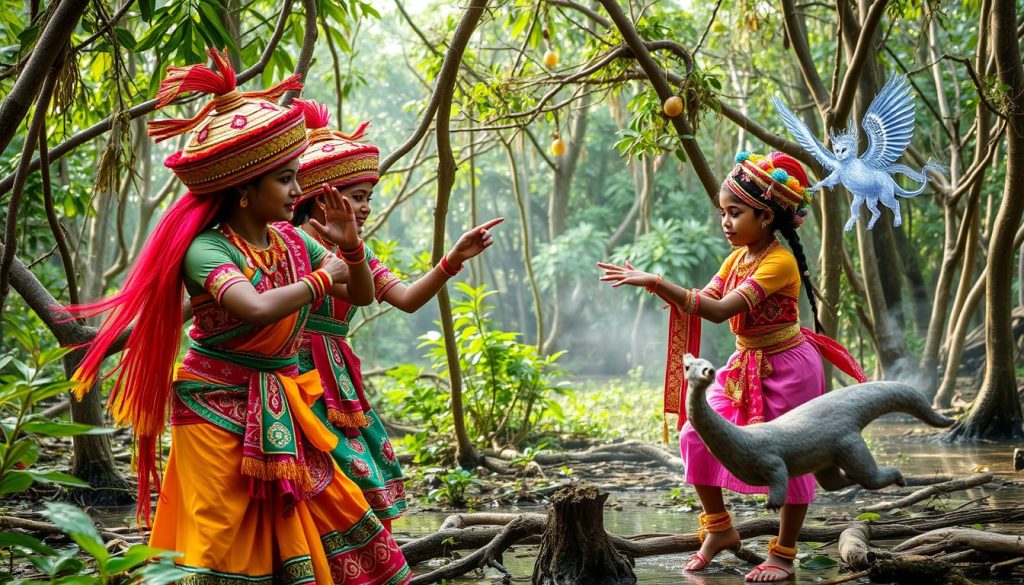
Sundarbans’ cultural heritage is woven with captivating folklore and myths. Bonbibi, the forest’s guardian deity, is the most well-known legend. She defeated Dakkhin Rai, the forest king, bringing peace to the region.
The Royal Bengal Tiger is a symbol of power in Sundarbans’ mythology. Spotting one in the dense mangroves is believed to bring good fortune. Goddess Manasa is another important figure in local lore.
She’s thought to protect people from snake bites. The ghost ship, a mysterious vessel, adds to the area’s mystical atmosphere. It’s said to roam the Sundarbans’ waters, enchanting visitors.
The Cultural Significance of Festivals in the Sundarbans
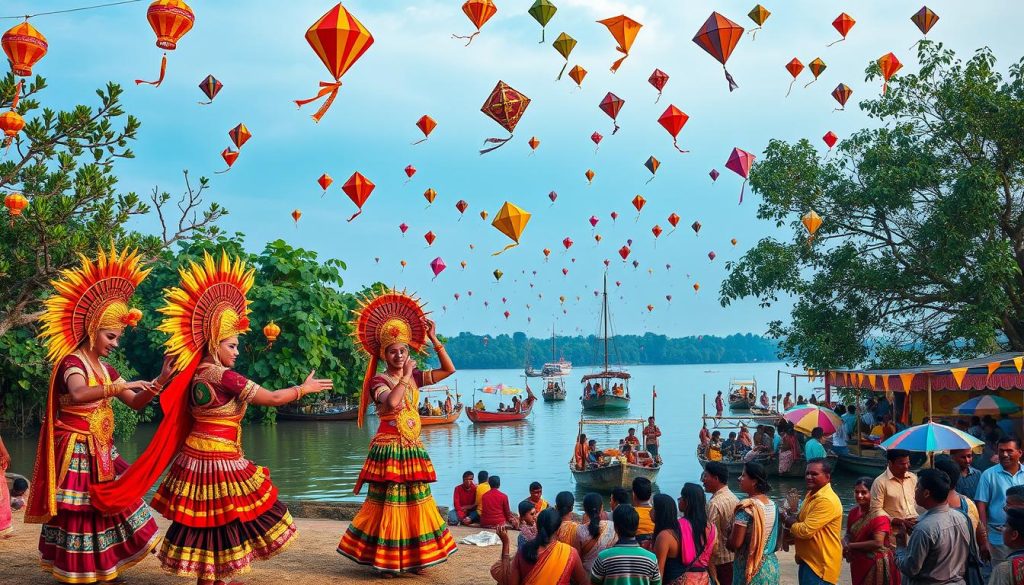
Festivals are crucial to the Sundarbans’ cultural life. They’re deeply rooted in local traditions and beliefs. The Bonbibi Mela celebrates the forest’s protector, while Poush Mela is a joyous harvest festival.
Bera Utsav honors the mangrove forest itself. Rash Mela celebrates the goddess Manasa. These events showcase the vibrant cultural tapestry of the Sundarbans region.
| Key Facts about the Sundarbans | Statistics |
|---|---|
| Total area of the Sundarbans | 10,000 sq.km |
| Area of the Sundarbans in Bangladesh | 60% |
| Area of the Sundarbans in India | 40% |
| Total area of World Heritage sites in the Sundarbans | 272,510 ha |
| Area of Sundarbans South Wildlife Sanctuary in Bangladesh | 36,790 ha |
| Area of Sundarbans East Wildlife Sanctuary in Bangladesh | 31,227 ha |
Explore the Vibrant Festivals of Sundarbans
The Sundarbans, a UNESCO World Heritage Site, boasts a rich cultural heritage. Its vibrant festivals showcase unique traditions and customs. The Bonbibi Mela and Poush Mela are two standout celebrations in this captivating region.
Bonbibi Mela – Celebrating the Protector of the Forest
The Bonbibi Mela honors the forest’s protector at her annual temple festival. It celebrates Bonbibi’s victory over Dakkhin Rai, the forest king. Visitors can enjoy music, dance, and local cuisine at this colorful event.
Poush Mela – Rejoicing the Harvest Season
The Poush Mela marks the end of harvest season in December-January. Communities gather to celebrate the year’s crops with traditional music and dance. This festival reflects the Sundarbans’ agricultural heritage and connection to the land.
The Sundarbans hosts other cultural events too. These include the Bera Utsav boat race and the Rash Mela honoring Krishna. The Ganga Sagar Mela pilgrimage adds to the region’s diverse cultural tapestry.
The Sundarbans offers unique cultural experiences through its festivals. From Bonbibi Mela’s rituals to Poush Mela’s harvest joy, these events celebrate the region’s heritage.
Sundarbans’ Unique Culinary Traditions
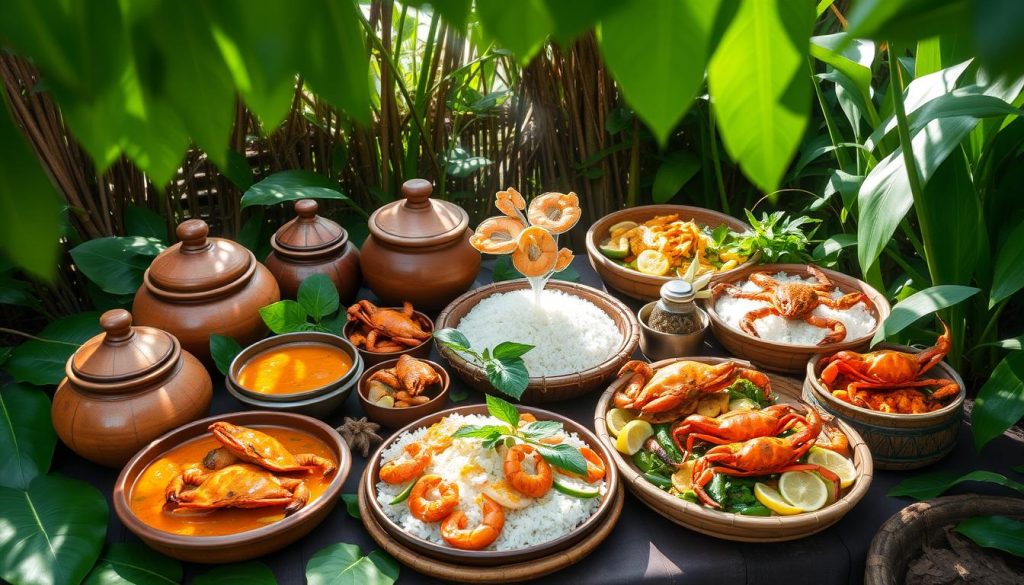
The Sundarbans boasts a rich culinary heritage, reflecting its abundant natural resources and cultural diversity. Seafood, especially the prized Hilsa fish, takes center stage in local dishes. The region’s rivers and canals provide a variety of delicious aquatic ingredients.
A signature dish is bhetki paturi, featuring sea bass wrapped in banana leaves. It’s steamed with aromatic spices and coconut. Another favorite is Chingri Malai Curry, a creamy prawn dish showcasing the area’s crustacean bounty.
Plant-based offerings also shine in Sundarbans cuisine. Khaira, a wild rice, is a traditional food source. Edible fruits from mangroves, like Nypa palm and Keora, add unique flavors.
Cooking techniques in the Sundarbans are fascinating. Methods include smoking and sun-drying fish, and using coconut milk in curries. Unique dishes like Chorchori and Patrani Machh showcase local culinary creativity.
Visitors can explore this culinary heritage in local restaurants and specialty eateries. Cooking classes, offered by organizations like Royal Sundarban Tourism, provide hands-on experiences. These activities offer insights into cultural traditions and sustainable practices.
“The Sundarbans cuisine is a reflection of the region’s rich natural bounty and the ingenuity of its people, who have perfected the art of transforming local ingredients into truly captivating dishes.”
Indigenous Communities and Their Way of Life
The Sundarbans, the world’s largest mangrove forest, is home to diverse indigenous communities. These groups, like the Munda, Bawali, and Jele, have deep ties to the area. Their traditional lifestyle showcases the cultural richness of this unique ecosystem.
Artisan Crafts and Handicrafts of the Sundarbans
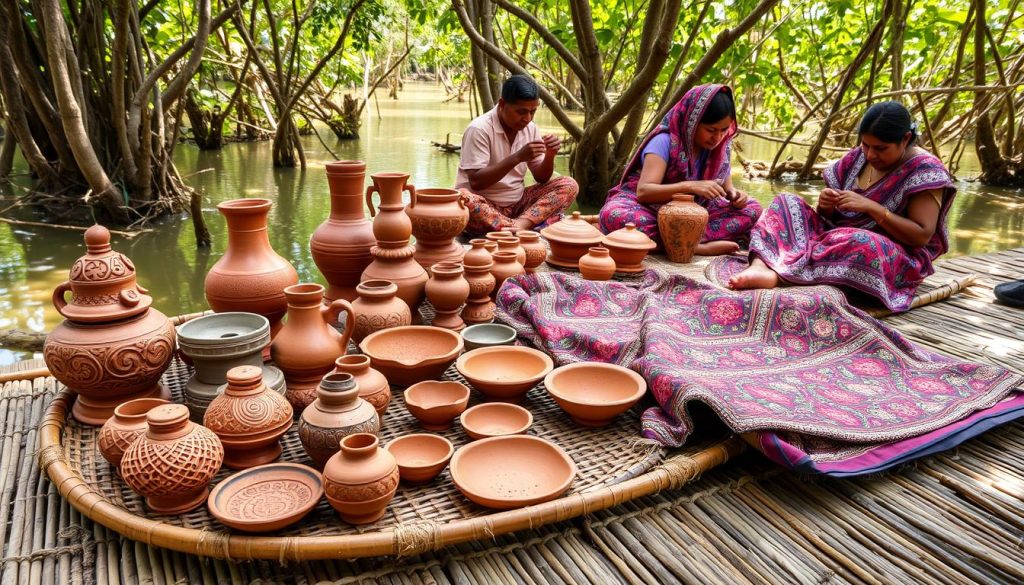
The Sundarbans is famous for its vibrant artisan crafts and handicrafts. These items reflect the region’s cultural heritage and support local livelihoods. Skilled artisans create a wide range of traditional crafts with unique stories and cultural significance.
One of the most famous handicrafts is Jute products. Local communities weave these items using abundant jute fibers from the region. These products are visually stunning and practical, showing the resourcefulness of indigenous populations.
Another significant craft is Muddy Pottery. Local artisans use rich clay to create various utilitarian and decorative items. These pottery pieces often feature intricate designs rooted in Sundarbans’ cultural traditions.
Preserving these traditional crafts is crucial for maintaining the Sundarbans’ cultural identity. It also supports local livelihoods, as many families rely on these skills for income.
“The artisanal crafts of the Sundarbans are not just beautiful objects; they are a living testament to the resilience, creativity, and cultural heritage of the people who call this remarkable region home.”
Sundarbans cultural activities
The Sundarbans offers a rich tapestry of cultural experiences in the Bengal region. Visitors can enjoy vibrant folk music, traditional dances, and artisanal crafts from indigenous communities. Mangrove boat tours showcase the UNESCO World Heritage site’s natural beauty.
Local folk musicians weave ancient tales through soulful melodies and rhythmic beats. Traditional dances like Chhau and Baul grace stages, displaying performers’ agility and grace. These activities offer a glimpse into the region’s deep-rooted heritage.
Visitors can engage with indigenous communities to learn about their unique lifestyles and customs. They can also admire intricate artisan crafts like woodcarvings and textiles. These masterpieces reflect local artisans’ ingenuity and creativity.
Mangrove boat tours provide a serene experience of the Sundarbans’ natural beauty. Visitors learn about ongoing conservation efforts to protect Bengal tigers and other wildlife. The region promotes sustainable tourism to preserve its cultural and ecological legacy.
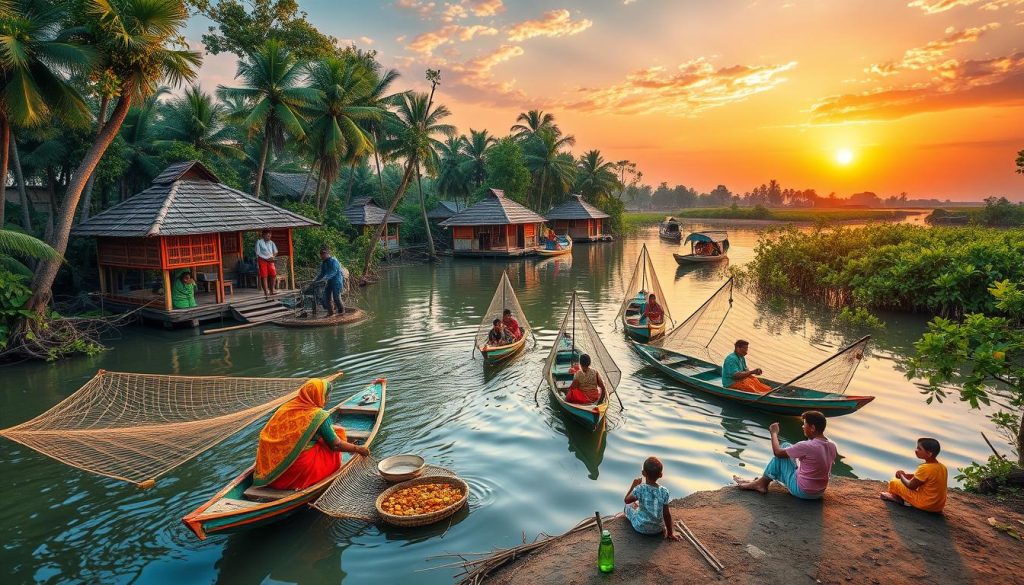
“The Sundarbans is a tapestry of cultural richness, where the natural and human worlds seamlessly intertwine, offering visitors a truly transformative experience.”
Sustainable Tourism for Preserving Sundarbans Heritage
The Sundarbans, the world’s largest mangrove forest, teems with diverse wildlife. It’s home to Bengal tigers, saltwater crocodiles, and many other species. However, this ecosystem faces threats from climate change and unsustainable tourism.
Efforts are underway to promote sustainable tourism in the Sundarbans. This approach aims to preserve the area’s natural and cultural legacy for future generations.
Eco-tourism Initiatives in the Sundarbans
Eco-tourism in the Sundarbans protects the environment and benefits local communities. It offers visitors responsible travel experiences. These initiatives support local artisans and collaborate with conservation groups to protect endangered species.
- The Sundarban Ecotourism Project focuses on sustainable practices like responsible waste management and eco-friendly boat tours.
- Tour De Sundarbans offers immersive experiences showcasing natural beauty and cultural heritage while prioritizing conservation.
- The Greater Sundarbans Ecotourism Society unites local stakeholders to enhance visitor experiences and promote sustainable tourism.
Sustainable tourism helps preserve the Sundarbans’ cultural richness and biodiversity. Eco-friendly activities and community engagement support this unique natural and cultural treasure.
Travelers can contribute to conservation efforts through responsible tourism practices. This ensures the Sundarbans continues to thrive for years to come.
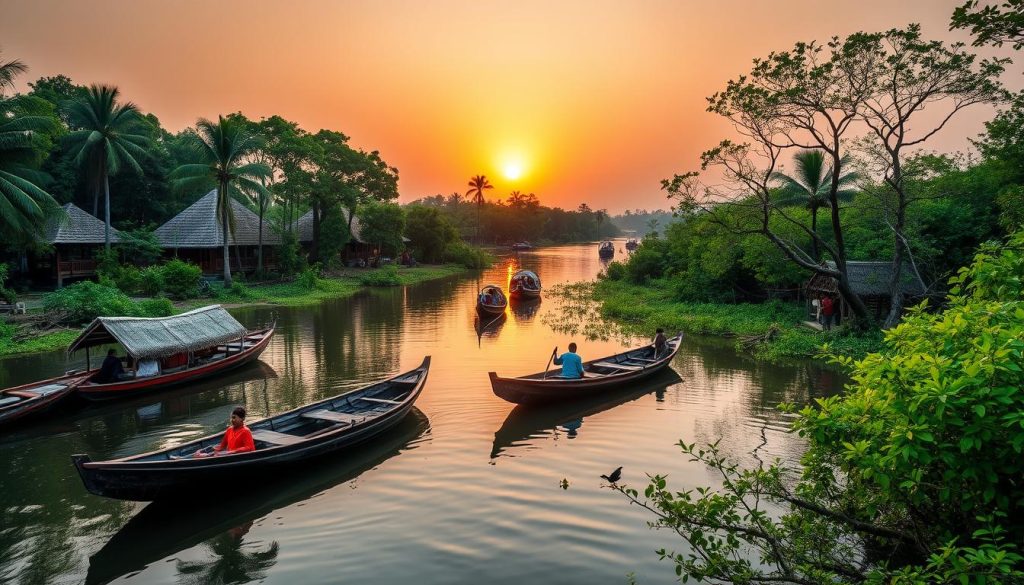
“Sustainable tourism in the Sundarbans is not just about preserving the environment, but also about empowering local communities and celebrating their rich cultural heritage.”
Experiencing Sundarbans Through Cultural Immersion
Dive into the Sundarbans’ rich cultural heritage by connecting with local communities. This UNESCO site boasts vibrant folk music and captivating traditional dances. Visitors can enjoy spellbinding tribal performances, gaining insight into age-old traditions.
Folk Music and Traditional Dances
Sundarbans’ cultural activities offer a unique glimpse into local life. Travelers can forge meaningful connections and understand the area’s cultural legacy. Witness lively Boul folk music or intricate Chhau dance for an authentic Sundarbans experience.
Royal Sundarban Tourism’s Village Experience tours stand out among regional operators. They focus on genuine connections with indigenous communities. These programs promote mutual respect through cultural exchange.
Travelers meet locals, observe traditional practices, and enjoy local cuisine. They can watch artisans at work and delight in folk performances. This approach creates a truly immersive journey.
| Cultural Activity | Description |
|---|---|
| Boul Folk Music | A captivating form of folk music that combines soulful lyrics, rhythmic drumming, and mesmerizing melodies, reflecting the deep spiritual and cultural heritage of the Sundarbans. |
| Chhau Dance | A traditional martial arts-inspired dance form that showcases intricate footwork, graceful movements, and vibrant costumes, often performed during festivals and cultural celebrations. |
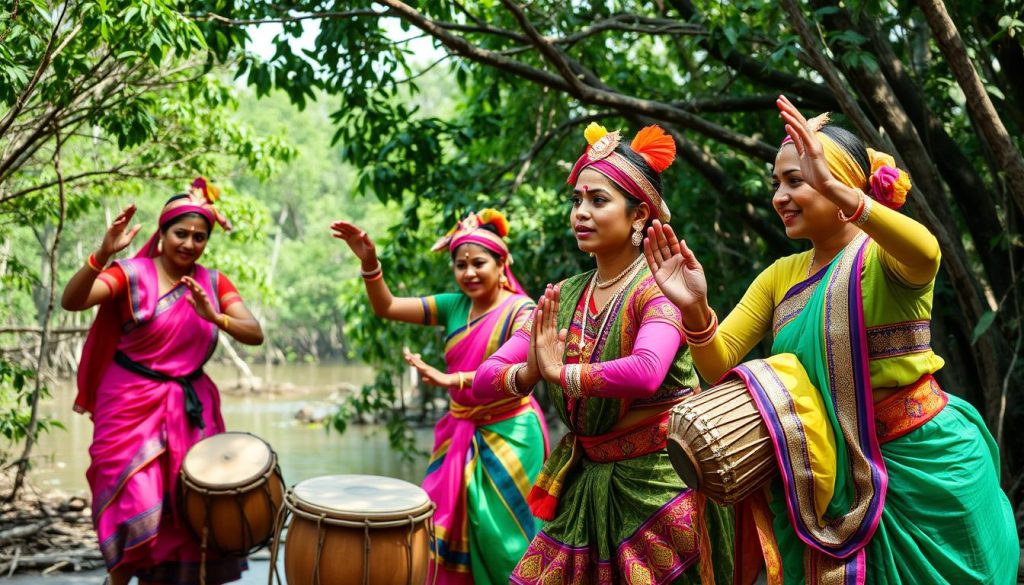
“The Sundarbans is a tapestry of cultural diversity, woven together by the harmonious coexistence of its people and the natural world. Experiencing this through immersive cultural activities is a truly unforgettable journey.”
The Impact of Climate Change on Sundarbans Culture
The Sundarbans Delta faces severe threats from climate change. Rising seas, higher temperatures, and extreme weather endanger its unique ecosystem. These changes threaten the region’s cultural heritage and biodiversity, including endangered species like the Royal Bengal Tiger.
Local communities are deeply affected by environmental shifts. Their festivals, traditions, and livelihoods are tied to the land and sea. The Sundarbans boasts 84 plant species, including 26 mangrove types.
The region is home to 453 animal species. This includes 120 fish, 290 birds, 42 mammals, 35 reptiles, and eight amphibians.
Protecting the Sundarbans’ cultural heritage requires teamwork. Local groups, conservationists, and sustainable tourism initiatives must join forces. The mangrove ecosystem covers about 10,000 square kilometers of unique habitat.
| Statistic | Value |
|---|---|
| Total population in the Sundarbans | More than 12 million people, with 4.5 million in India and 7.5 million in Bangladesh |
| Decrease in total forestlands in the Bangladesh Sundarbans | Approximately 1.1% loss, representing around 66 km² |
| Number of plant species in the Sundarbans | Over 334, with the Sundari tree (Heritiera fomes) being a prominent species |
| Number of fish, bird, mammal, reptile, and amphibian species | 120 fish species, 270 bird species, 42 mammal species, 35 reptile species, and 8 amphibian species |
Sundarbans’ mangroves protect coastal regions from flooding. They reduce wave energy and lessen tidal surge impacts. These forests also capture more carbon than tropical rainforests, helping reduce atmospheric CO2 levels.
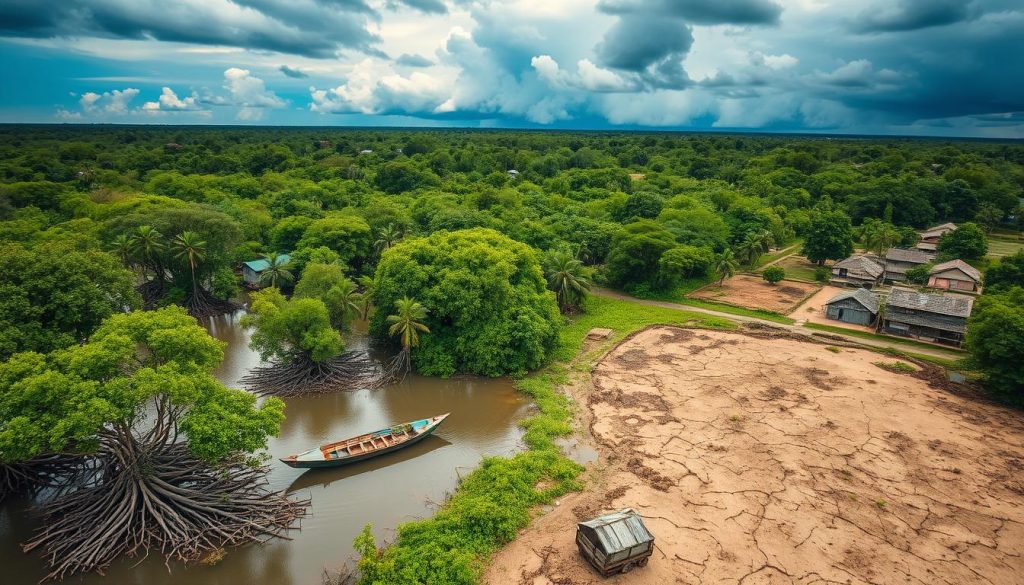
Changing conditions have altered species populations in the Sundarbans. Some are declining due to less freshwater and sediment. This environmental degradation and biodiversity loss directly threaten local communities’ livelihoods and cultures.
Preserving the Rich Legacy of Sundarbans
The Sundarbans Heritage Foundation works hard to protect the region’s arts and crafts. They team up with local artisans to showcase their skills. This helps pass on unique knowledge to future generations.
Efforts are underway to promote responsible tourism in the Sundarbans. The focus is on reducing harm to the environment and local communities. Travelers can help preserve the area’s cultural legacy by being mindful visitors.
Efforts by Local Communities and Organizations
- The Sundarbans Heritage Foundation, a dedicated organization, works to preserve the arts, crafts, and traditions of the region.
- The Foundation collaborates with local artisans and craftspeople to create opportunities for them to showcase their skills and pass on their unique knowledge.
- Initiatives to promote responsible tourism in the Sundarbans focus on minimizing the negative impact on the environment and local communities.
- By practicing responsible tourism, travelers can help ensure that the cultural legacy of the Sundarbans is preserved for future generations.
- These efforts by local communities and organizations are crucial in safeguarding the rich cultural heritage of the Sundarbans.
“Preserving the cultural heritage of the Sundarbans is not just about safeguarding the past, but also about ensuring a vibrant future for the region and its people.”
The Sundarbans is both a natural wonder and a home to rich cultural traditions. Local communities and organizations work together to protect this legacy. Their efforts ensure that future generations can enjoy the essence of this remarkable region.
Mangrove Boat Tours: Exploring Sundarbans’ Natural Beauty
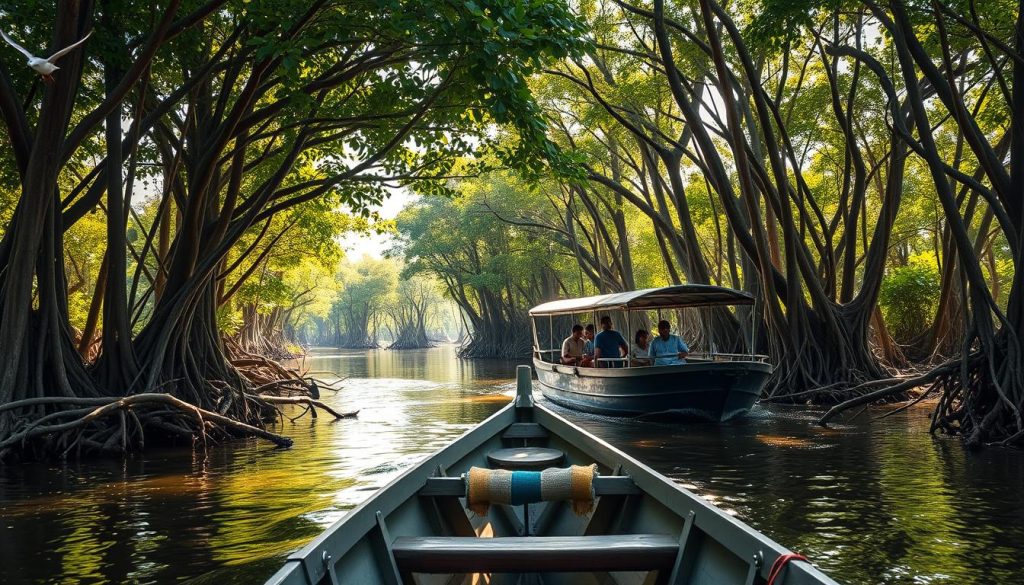
Discover the Sundarbans, the world’s largest mangrove forest, through an exciting boat tour. These Sundarbans mangrove boat tours let you experience the area’s stunning natural beauty and diverse wildlife.
Cruise through winding rivers surrounded by iconic mangrove trees in this UNESCO World Heritage site. You might spot the rare Royal Bengal Tigers, endangered crocodiles, or playful dolphins during these eco-tourism adventures.
Your trip supports conservation efforts and helps protect this fragile ecosystem. The Sundarbans Mangrove Forest houses countless plant and animal species, making it a true natural wonder.
“Navigating the Sundarbans’ waterways is a truly immersive experience, allowing you to connect with the heart of this incredible region.”
Nature lovers and adventure seekers will find the Sundarbans mangrove boat tour unforgettable. Get ready to be amazed by the Sundarbans’ natural beauty.
You’ll gain a deeper appreciation for this unique ecosystem and the need to preserve it. It’s a chance to disconnect from daily life and connect with nature.
Conclusion
The Sundarbans boasts rich cultural heritage and natural beauty. However, it faces challenges from climate change and environmental degradation. As travelers, we can support sustainable tourism and help preserve this remarkable destination.
Immerse yourself in vibrant festivals and unique culinary traditions. Experience the indigenous communities’ way of life. This will deepen your appreciation for the Sundarbans’ cultural legacy.
Support eco-tourism initiatives and practice sustainable travel habits. These actions help protect the delicate Sundarbans ecosystem. Your efforts can mitigate tourism’s adverse effects on this precious environment.
The Sundarbans is a treasure trove of Sundarbans cultural heritage. We must preserve this legacy for future generations. Your commitment to responsible travel and environmental conservation is crucial.
You can play a vital role in safeguarding the cultural preservation of the Sundarbans. Your actions help ensure its unique traditions and way of life continue to thrive.





