Deciding Where Should I Stay in Germany? Your Complete Guide
Germany is the most-visited country in Continental Europe, receiving more than 40 million international arrivals annually. Choosing where to stay depends on what you are visiting for: each major German city has a distinct character, and the country’s dense rail network means your base city shapes your daily experience more than it does in countries where cars are the norm. This guide covers the five most practical German base cities for travelers, a comparison of accommodation types, real hotel options with price benchmarks, and answers to the most common planning questions.
How to choose where to stay in Germany
Germany’s high-speed rail network (ICE trains) connects major cities at speeds up to 300 km/h, which means day trips between cities are practical. Berlin to Hamburg is 1 hour 40 minutes. Frankfurt to Munich is 3 hours 15 minutes. Cologne to Frankfurt is 1 hour. This connectivity changes the decision logic: if you want to see multiple cities, pick one as your base and take day trips rather than packing and unpacking repeatedly.
The practical question to ask first is: what type of trip is this? A business trip to Germany centers on Frankfurt (major financial hub), Hamburg (largest port and commercial city), or Munich (automotive industry and Messe trade fair). A historic and cultural trip centers on Berlin (20th-century history), Cologne (medieval and Roman history, cathedral architecture), or the Romantic Road and Bavarian villages. A Bavarian and mountain focus centers on Munich, with day trips to Neuschwanstein Castle, the Zugspitze, and Berchtesgaden.
Best places to stay in Germany by city
Berlin
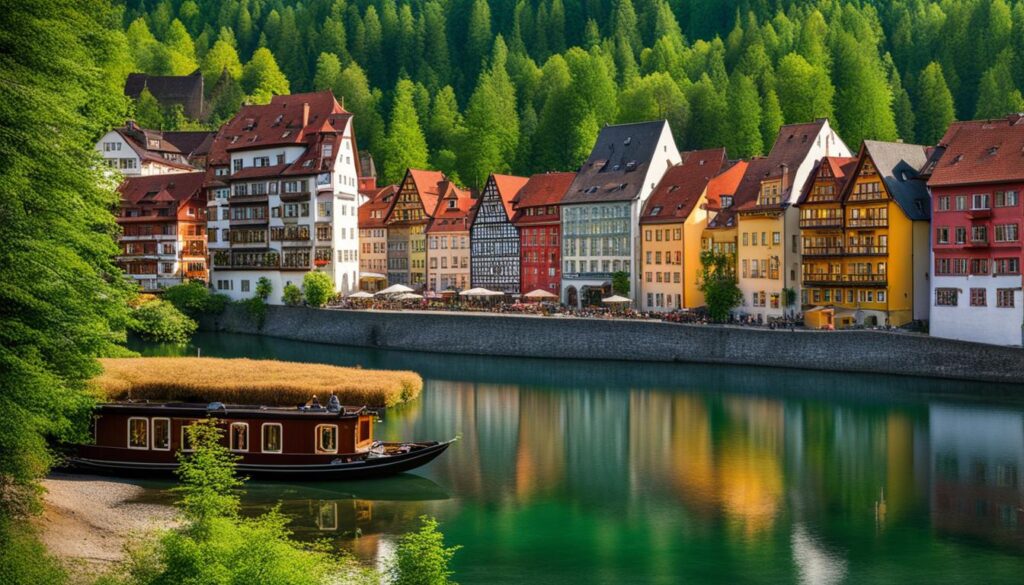
Berlin is Germany’s capital and largest city, with 3.7 million residents spread across 12 districts. It served as the divided capital during the Cold War and reunified in 1990, making it the densest concentration of 20th-century history in Europe. The Brandenburg Gate at Pariser Platz, the Berlin Wall remnants at the East Side Gallery (1.3 km stretch on Muhlenstrasse), the Reichstag building, Checkpoint Charlie, the Memorial to the Murdered Jews of Europe, and Museum Island are all within 4 km of each other in central Berlin.
For accommodation, Mitte is the central district and puts all the above landmarks within walking distance or a short U-Bahn ride. Prenzlauer Berg offers a more residential, quieter neighborhood character north of Mitte. Kreuzberg and Friedrichshain on the eastern side have the densest concentration of independent bars, restaurants, and music venues. The Hotel Adlon Kempinski at Unter den Linden 77 (adjacent to the Brandenburg Gate) has been Berlin’s flagship luxury hotel since 1907, with rates from approximately €400 per night as of 2026. The Motel One Berlin-Hauptbahnhof near the central train station offers reliable mid-budget accommodation from approximately €70 per night.
Munich
Munich is the capital of Bavaria and Germany’s third-largest city, with 1.5 million residents. It has the highest density of world-class museums in Germany: the Deutsches Museum on the Isar River is the largest science and technology museum in the world by exhibit space. The Alte Pinakothek, Neue Pinakothek, and Pinakothek der Moderne form a museum triangle within 10 minutes’ walk. The Marienplatz with the Glockenspiel is the historic center; the English Garden (Englischer Garten) covers 3.7 square kilometers in the city center, larger than New York’s Central Park.
The Schwabing and Maxvorstadt neighborhoods near the museum district are the most convenient base for cultural travelers. Lehel, southeast of the English Garden, is quieter and residential. The Bayerischer Hof at Promenadeplatz 2, operating since 1841, is Munich’s most storied luxury hotel, with rates from approximately €300 per night as of 2026. Wombats City Hostel Munich near the central station (Hauptbahnhof) is a consistently well-rated budget option from approximately €25 per night for a dorm bed.
Hamburg
Hamburg is Germany’s second-largest city and largest port, with 1.8 million residents. It is the wealthiest city in Germany by average income and one of the wealthiest in Europe. The Elbphilharmonie concert hall, opened in 2017 at the tip of the HafenCity development, is the largest concert hall in Germany and one of the most acoustically sophisticated in the world. The Speicherstadt warehouse district, a UNESCO World Heritage Site, is the largest warehouse complex in the world built on wooden piles, dating from the 1880s. The Reeperbahn entertainment district in St. Pauli is the most internationally known nightlife area in Germany.
HafenCity and the Speicherstadt area are the most architecturally distinctive bases, combining the old warehouse district with the new harbor development. The Altstadt (old town) around the Rathaus (city hall) is central to the main sights. The Westin Hamburg in the Elbphilharmonie building offers harbor views from approximately €200 per night as of 2026. Hotel Atlantic Kempinski Hamburg at An der Alster 72, a white-facade lakeside landmark from 1909, rates from approximately €250 per night.
Cologne
Cologne is Germany’s fourth-largest city, founded as a Roman settlement in 50 AD, making it one of the oldest continuously inhabited cities in Germany. The Cologne Cathedral (Kölner Dom) is a UNESCO World Heritage Site and the largest Gothic cathedral in Northern Europe, at 157 meters tall. Construction began in 1248 and was not completed until 1880, a span of 632 years. The cathedral is visible from most of central Cologne and is a 5-minute walk from the central train station (Köln Hauptbahnhof). The city also produces Kölsch, a light lager beer unique to Cologne and protected by geographical designation.
The Innenstadt around the cathedral is the most central and walkable base. The Belgian Quarter (Belgisches Viertel) in Ehrenfeld is Cologne’s most fashionable independent shopping and café neighborhood. Excelsior Hotel Ernst am Dom at Trankgasse 1, directly opposite the cathedral and the oldest luxury hotel in Cologne, rates from approximately €250 per night as of 2026. Hotel Lyskirchen in the old town near the Rhine rates from approximately €120 per night, a reliable mid-range option.
Frankfurt
Frankfurt am Main is Germany’s financial capital and home to the European Central Bank, Deutsche Bank, and the Deutsche Bundesbank. It is the primary international air gateway to Germany, with Frankfurt Airport (FRA) handling 60 million passengers annually and offering direct connections to over 300 destinations worldwide. The Romer (city hall) and Romerberg square form the historic center; the Staufen district south of the river (Sachsenhausen) is known for traditional cider taverns. Frankfurt’s Main River waterfront, lined with 12 museums (the Museumsufer), is one of the densest museum corridors in Europe.
For transit-oriented travelers, Frankfurt’s central station (Frankfurt Hauptbahnhof) is the busiest rail station in Germany, with direct ICE services to Berlin, Munich, Hamburg, and Cologne. The Innenstadt around the Romerberg is the most convenient base. The Steigenberger Frankfurter Hof at Bethmannstrasse 33, operating since 1872, is Frankfurt’s historic flagship hotel from approximately €250 per night as of 2026. Motel One Frankfurt-Römer near the old town offers budget-friendly rates from approximately €80 per night.
Germany hotel comparison: where to stay by city and budget
| City | Luxury hotel | From (2026) | Mid-range hotel | From (2026) |
|---|---|---|---|---|
| Berlin | Hotel Adlon Kempinski | ~€400/night | Motel One Berlin-Hauptbahnhof | ~€70/night |
| Munich | Bayerischer Hof | ~€300/night | Hotel Laimer Hof near Nymphenburg Palace | ~€130/night |
| Hamburg | Hotel Atlantic Kempinski | ~€250/night | The Westin Hamburg | ~€200/night |
| Cologne | Excelsior Hotel Ernst am Dom | ~€250/night | Hotel Lyskirchen | ~€120/night |
| Frankfurt | Steigenberger Frankfurter Hof | ~€250/night | Motel One Frankfurt-Römer | ~€80/night |
Unique accommodation options in Germany
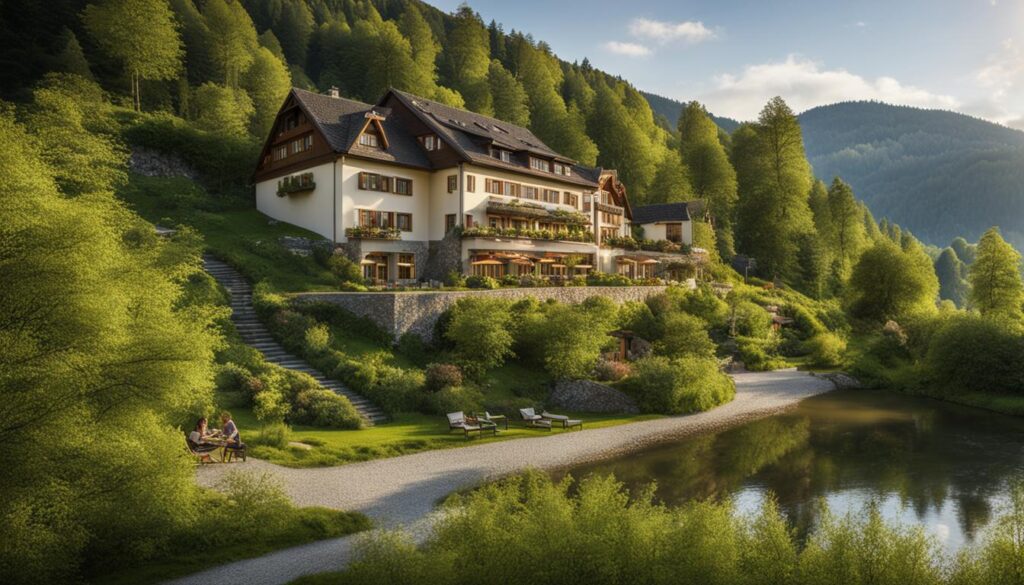
Germany has an unusually high density of historic castle hotels (Schlosshotels), with more than 100 castle properties converted to overnight accommodations. These range from simple guesthouses in former hunting lodges to five-star luxury estates. The Wald und Schlosshotel Friedrichsruhe in Baden-Württemberg, set in a 17th-century Baroque hunting palace with 1,500 acres of parkland, is among the most prestigious, with a Michelin-starred restaurant and spa. Rates start from approximately €300 per night as of 2026 and it is bookable directly at friedrichsruhe.de.
Farm stays (Urlaub auf dem Bauernhof) are an established accommodation category in Germany with a dedicated national portal at bauernhofurlaub.de listing thousands of working farms accepting guests. These range from basic rooms with breakfast to full self-catering apartments. Bavaria and the Black Forest have the highest concentration of farm stay properties.
Vineyard accommodations are concentrated in the Moselle Valley, Rhine Valley, and Palatinate Wine Route. Many wine estates (Weingüter) have converted rooms or guesthouses on the property with included wine tastings. The Moselle Valley between Trier and Koblenz contains some of the steepest vineyards in Europe and is the most scenic concentration of wine accommodations in Germany.
Affordable lodging options in Germany
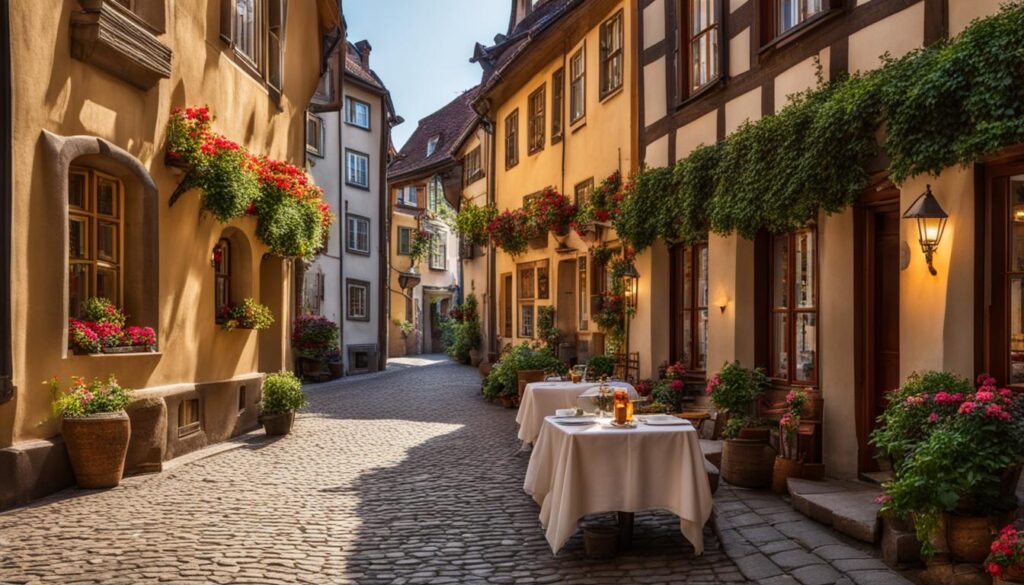
Germany has a well-developed hostel infrastructure in every major city. Dorm beds in centrally located hostels in Berlin, Munich, Hamburg, and Cologne typically run €20 to €35 per night as of 2026. Private hostel rooms average €60 to €90 per night. Wombats City Hostel Munich (near the Hauptbahnhof), Generator Hamburg (St. Georg district), and The Circus Hostel Berlin (Mitte) are consistently among the highest-rated hostels in their respective cities.
Guesthouses (Pensionen) and Bed and Breakfasts offer private rooms with private or shared bathrooms, typically run by the owner. Prices range from €40 to €90 per night depending on city and location. In smaller cities, university towns, and rural areas, Pensionen are often the best value option available. Breakfast is commonly included.
Budget hotel chains operating across Germany include Motel One (strong design standards, central locations, from approximately €65 to €90/night), Ibis and Ibis Budget (from approximately €50 to €80/night), and B&B Hotels (from approximately €55 to €75/night). These chains offer consistent quality in predictable central locations and can be booked with confidence without reviewing individual properties.
Rural Germany: countryside accommodation
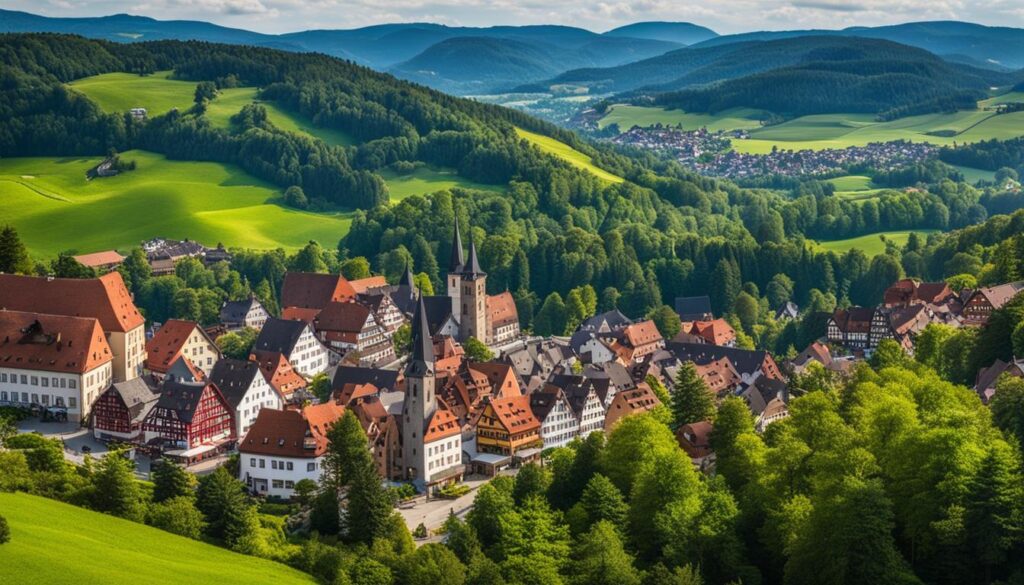
The German countryside offers fundamentally different accommodation experiences from the cities. The Bavarian Alps (Allgäu and Berchtesgaden) have Alpengasthäuser (mountain guesthouses), many operating for generations in the same family. The Black Forest (Schwarzwald) is known for traditional Schwarzwaldhöfe (Black Forest farmhouses), some of which accept overnight guests. The Rhine and Moselle valleys have wine estate accommodations and half-timbered village guesthouses.
Rothenburg ob der Tauber on the Romantic Road is the most-visited small medieval town in Germany and an excellent rural base. Its entire old town is enclosed within original medieval walls, and the town’s scale (population: 11,000) means attractions are within 10 minutes’ walk of any accommodation. Hotel Eisenhut at Herrngasse 3 to 7, occupying four historic patrician houses from the 14th to 16th centuries, is the landmark property, from approximately €100 per night as of 2026. The town is 90 minutes from Munich by car and reachable by regional rail via Steinach an der Bahn.
Tips for booking accommodation in Germany
Germany’s major trade fairs (Messen) have an outsized effect on hotel availability and pricing. During Frankfurter Buchmesse (Frankfurt Book Fair, October), Oktoberfest (Munich, mid-September to early October), IFA Berlin (late August to September), and Hannover Messe (April), hotel rates in the host city can triple or quadruple and availability collapses months in advance. Check the German trade fair calendar at auma.de before booking travel to any German city.
The Kurtaxe (resort tax) and Citytax (city tourist tax) are charged in addition to room rates at many German accommodations, ranging from €1 to €4 per person per night depending on the city. Berlin’s Citytax is 5 percent of the net room rate. Munich charges €3.50 per person per night. These fees appear on checkout rather than in the initial rate, so factor them into your budget.
Direct booking with hotels typically eliminates booking platform fees and sometimes unlocks lower rates or room upgrades. German hotels are generally responsive to direct inquiries. For longer stays (5+ nights), negotiating a weekly rate directly with the property is worth attempting, particularly at independent hotels and guesthouses.
Frequently asked questions
What is the best city to stay in Germany for first-time visitors?
Berlin is the most practical first base for visitors with broad interests, combining the most internationally significant historical sites (Brandenburg Gate, Berlin Wall, Holocaust Memorial, Museum Island), the widest range of accommodation budgets, and the most direct international flight connections. Munich is the better first base for visitors focused on Bavarian culture, the Alps, and Oktoberfest, and for those flying in from the United States via Lufthansa’s hub. Cologne is a good base for visitors arriving via Frankfurt Airport who want to start in western Germany and work east.
Is it cheaper to stay in Germany compared to other Western European countries?
Germany is mid-range by Western European standards. Berlin and Hamburg are notably less expensive than London, Paris, and Amsterdam for comparable hotel quality. Munich is more expensive than the other German cities due to demand from business travelers, Oktoberfest, and the Alps tourism market. Budget travelers can find dorm beds in Berlin from €20 per night and private rooms from €60 per night, which compares favorably to Paris or London for equivalent central locations.
Which district should I stay in when visiting Berlin?
Mitte is the most practical district for first-time visitors, covering the Brandenburg Gate, Reichstag, Museum Island, and the Potsdamer Platz within walking distance of each other. Prenzlauer Berg is the best choice for visitors who prefer a quieter, more residential atmosphere with easy U-Bahn access to Mitte. Kreuzberg and Friedrichshain suit visitors more interested in nightlife, independent restaurants, and street art culture. Charlottenburg-Wilmersdorf, on the western side, is the most traditional European city neighborhood and closer to the Ku’damm shopping district.
When is the cheapest time to stay in Germany?
November and January are typically the lowest-demand months in German cities, with the exception of Munich during Oktoberfest (which ends in early October) and Frankfurt during trade fairs. February through March offers a good combination of low prices and fewer crowds. Avoid German school holidays (Schulferien), which vary by state, as domestic travel demand spikes. The German National Tourist Office publishes a combined school holiday calendar annually at germany.travel.
Do German hotels include breakfast?
Luxury and mid-range hotels in Germany typically offer breakfast buffets (Frühstücksbuffet) at an additional charge of €15 to €30 per person per day. Budget hotels and hostel chains (Motel One, Ibis Budget) often charge separately for breakfast. Pensionen (guesthouses) more commonly include breakfast in the room rate as part of their Bed and Breakfast format. When comparing rates, check whether breakfast is included; the buffet quality at German hotels is generally substantial enough to replace a full meal.
Is it safe to use Airbnb and vacation rentals in Germany?
Airbnb and apartment rentals are widely available in all major German cities. Berlin regulates short-term rentals under the Zweckentfremdungsverbot law, requiring hosts to register and obtain a permit, which limits supply particularly in central neighborhoods. Munich has similar restrictions. Verification of permit status is the host’s responsibility; guests can book standard Airbnb listings normally. Vacation rental platforms including FeWo-direkt (VRBO’s German partner) are widely used and cover both city apartments and rural properties.
What is the best German city for a family visit?
Munich is consistently rated the most family-friendly major German city, combining the Deutsches Museum (15 to 20 distinct themed wings including a children’s museum), the English Garden with its beer gardens and open space, easy day trips to Neuschwanstein Castle and the Zugspitze (Germany’s highest mountain), and Bavaria’s themed village tourism infrastructure. Berlin is a strong second with its zoo (Zoo Berlin is one of the most-visited zoos in Europe), aquarium, LEGOLAND Discovery Center, and accessible 20th-century history sites that engage older children.