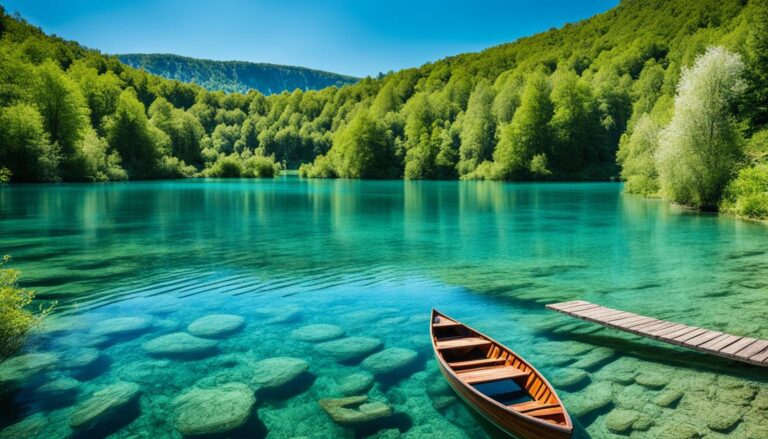
Ari Atoll Marine Conservation: Protect Our Oceans
Have you ever thought about how your actions today can affect our oceans’ future? The ari atoll marine conservation efforts in the Maldives are key to protecting these amazing ecosystems. Ari Atoll covers 3,500 square kilometers and is home to many marine creatures, like the whale shark, which can grow up to 18 meters long.
This area shows how vital Maldives marine biodiversity is. It also serves as a safe haven for many sea animals.
As a traveler or someone who loves nature, learning about marine conservation can change your view. By joining conservation efforts, you help keep our oceans healthy. You also support local businesses that rely on nature.
Your help is crucial for promoting green practices. These efforts aim to protect our oceans for future generations.
Introduction to Ari Atoll and Its Marine Life
Ari Atoll is a top spot for divers and marine lovers. It has 105 islands and is 89 kilometers long and 30 kilometers wide. Its shape helps support the area’s rich Maldives biodiversity, making it key for marine ecosystems.
Getting to Ari Atoll is easy from Malé International Airport. Seaplane rides offer amazing views of the atoll. Speedboats also connect you to resorts, taking about 90 minutes to two hours.
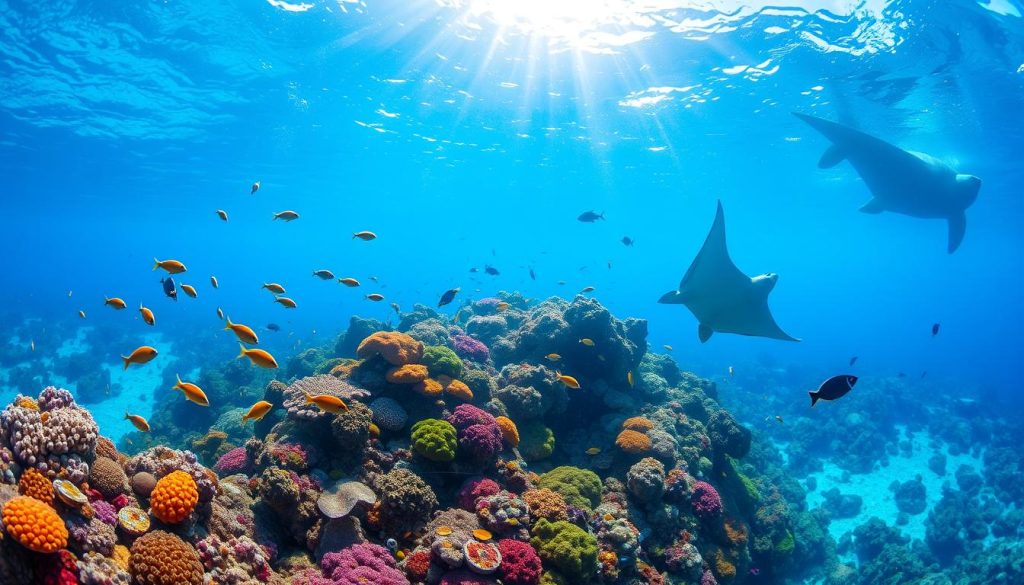
Exploring the atoll’s waters reveals a wide range of ari atoll marine life. You’ll see manta rays, whale sharks, and sea turtles. The South Ari Marine Protected Area is famous for whale shark sightings, giving visitors a unique experience.
Dive sites here suit all levels, with depths from 5 to 30 meters. Visibility is great, from 15 to 40 meters. The best time to dive is from December to March, when the weather is calm.
Ari Atoll also focuses on marine conservation. It runs educational programs for tourists and locals. Rules like no touching marine life and needing permits for diving areas help protect the marine ecosystems for future generations.
| Feature | Description |
|---|---|
| Area Size | Ari Atoll covers approximately 89 km in length and 30 km in width. |
| Islands | The atoll consists of 105 islands. |
| Diving Depths | Dive sites range from 5 to 30 meters deep. |
| Annual Whale Shark Sightings | Almost guaranteed year-round in South Ari Marine Protected Area. |
| Best Diving Season | December to March, during calmer Northeast Monsoon. |
| Educational Programs | Programs designed to promote conservation awareness. |
Understanding the Importance of Marine Biodiversity
Marine biodiversity is key to oceanic ecosystems, playing a big role worldwide. It helps ecosystems stay healthy and adapt to changes. This variety keeps important services like water cleaning and climate control working well.
In the Maldives, 26 atolls have unique underwater worlds. These areas are crucial for the local economy, making up 98% of exports. The coral reefs here are vital for fish and the tourism industry.
Guided snorkeling safaris let you see these ecosystems up close. You can see amazing marine life like manta rays and whale sharks. The best time is from November to April, when the water is clear.
Joining coral reef restoration programs is both fun and helpful. You can help by planting coral fragments. The Maldives has 91 Marine Protected Areas, covering 63,588.42 hectares. These areas protect habitats and support sustainable practices.
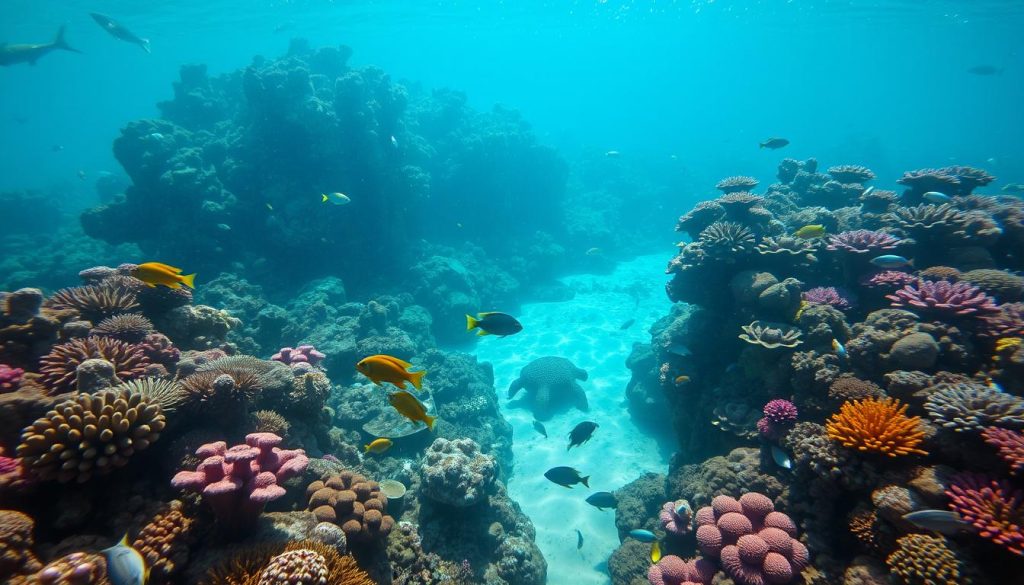
Knowing the value of marine biodiversity is more than just appreciation. It’s about keeping marine resources safe for food and jobs. Protecting marine ecosystems helps maintain the balance of life underwater and on land.
Ari Atoll Marine Conservation: Safeguarding the Coral Reefs
The coral reefs in Ari Atoll are full of life but face big threats. Climate change, pollution, and bad tourism practices harm these underwater worlds. It’s key to protect these reefs and keep their life rich.
LUX* Maldives has started a coral reef monitoring project. It aims to keep the reefs healthy in South Ari Atoll. This project also teaches guests how to live sustainably.
The South Ari Marine Park is special. It’s the only place where whale sharks gather all year. It’s a nursery for young whale sharks. This shows how important it is to protect these reefs.
The REGENERATE project is a big effort. It involves IUCN, USAID, and the Maldivian government. They work together to help reefs and involve the community.
Places like the PADI Diving Center at LUX* Maldives follow the Green Fins program. They teach guests to dive responsibly. This shows how important it is to care for reefs.
Resorts in Ari Atoll are helping with coral reef care. They plant and look after coral. The area also has the biggest floating solar system in the Maldives. This shows a big push for green energy.
In short, saving Ari Atoll’s unique ecosystems needs everyone’s help. From good tourism to new partnerships, every step helps protect these underwater wonders.
Key Challenges Facing Marine Conservation Efforts
Marine conservation in Ari Atoll faces big challenges. Uncontrolled tourism is a major problem. More visitors mean more boat strikes and harm to marine life, like whale sharks.
Plastic pollution is another big threat. It harms marine life and ruins the ocean’s beauty. This pollution affects the health of many sea creatures.
Climate change makes things worse. It causes coral bleaching, hurting coral reefs. These reefs are vital for the Maldives’ economy and marine life.
It’s important to work together to solve these problems. We need sustainable practices and good management. Local communities can help by promoting responsible tourism. This keeps marine ecosystems healthy and supports local jobs.
| Challenge | Description | Impact on Marine Life |
|---|---|---|
| Unregulated Tourism | Increased visitor numbers leading to disturbances and boat strikes. | Threat to species like whale sharks and other marine life. |
| Plastic Pollution | Waste infiltrating ocean ecosystems. | Degradation of overall marine health. |
| Climate Change | Rising ocean temperatures and coral bleaching. | Loss of coral health and biodiversity. |
| Illegal Fishing | Harmful fishing practices within marine protected areas. | Depletion of important fish populations. |
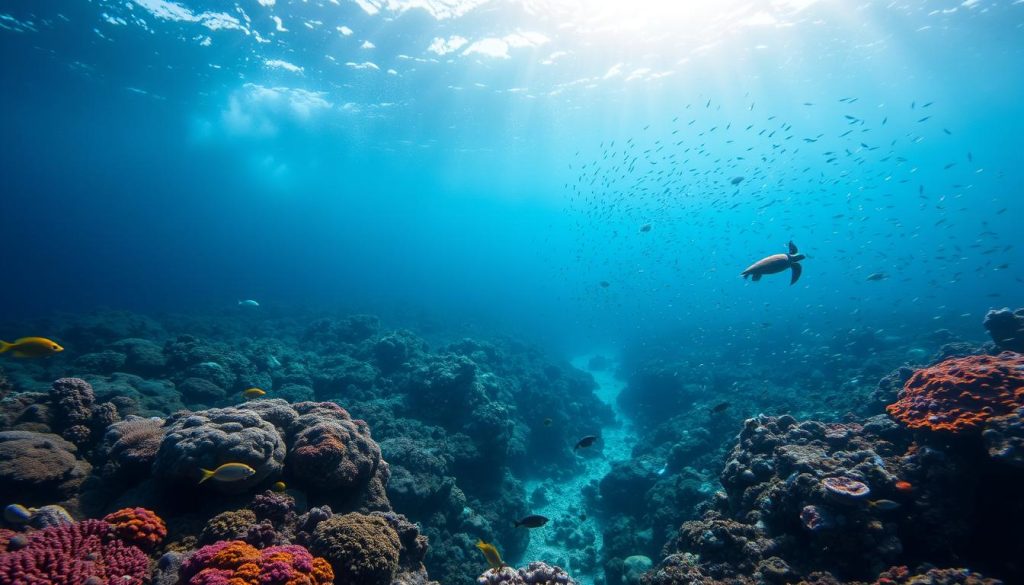
Unique Features of the South Ari Marine Protected Area
The South Ari Marine Protected Area is the largest in the Maldives, covering about 42 square kilometers. It plays a key role in protecting marine life. This area is vital for keeping the ocean’s ecosystem healthy.
It’s famous for being a home for whale sharks all year round. These huge creatures come here to stay warm and avoid dangers. The area is a big help for scientists and supports tourism.
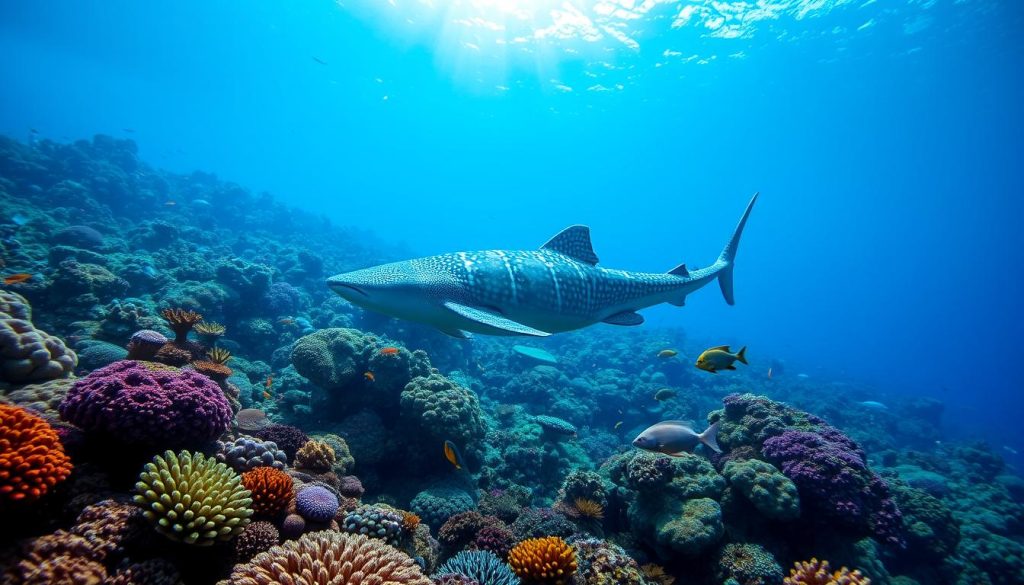
This place is more than just a home for whale sharks. It’s also a safe spot for other sea creatures. But, it faces dangers like boat accidents and pollution. To keep it safe, we need to protect it well.
| Feature | Description |
|---|---|
| Size | 42 square kilometers |
| Significant Species | Whale sharks |
| Year-Round Habitat | Utilization by juvenile whale sharks for thermoregulation |
| Threats | Unregulated tourism, plastic pollution |
| Conservation Focus | Research and protection of whale shark populations |
By working hard in research and tourism, we can make the South Ari Marine Protected Area even better. This will help whale sharks and all the sea life living there.
Coral Reef Preservation Strategies
To keep coral reefs in Ari Atoll healthy, many coral conservation projects are underway. These efforts not only help restore reefs but also prevent them from getting worse. Local groups and resorts work together on new programs. These programs get people involved and promote green practices.
They mix protecting the environment with tourism, aiming for a better future. This way, everyone can help save the reefs.
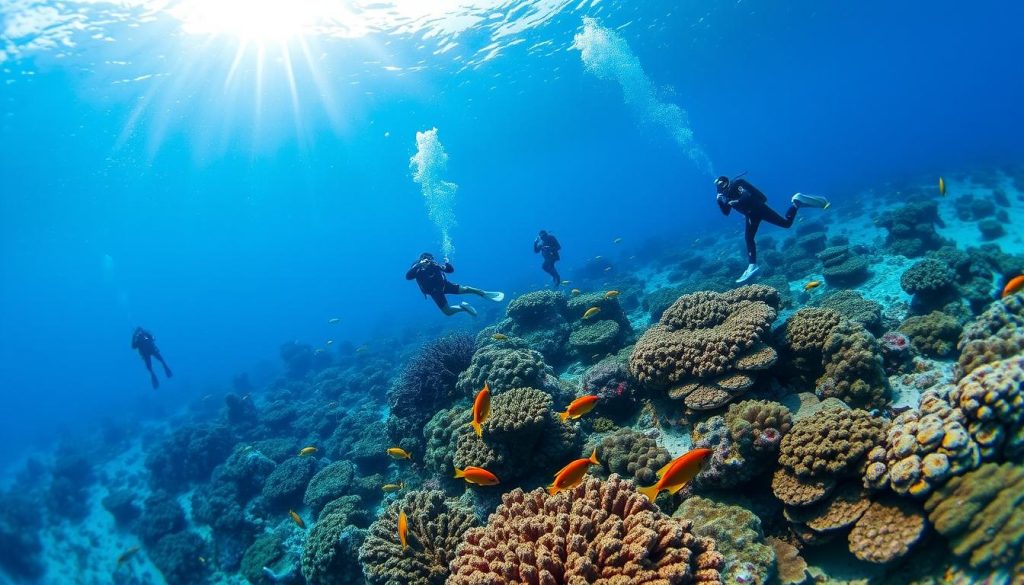
- Community Engagement: Visitors can help by planting coral or adopting a reef. This directly supports coral restoration initiatives.
- Sustainable Tourism: Resorts use green methods to lessen their impact. This creates a culture that cares for coral habitats.
- Research and Education: Studies and classes teach people about coral reefs’ importance. They also share the best ways to protect them with local communities.
These plans tackle how climate change affects coral reefs. They boost biodiversity and help reefs survive. By getting tourists involved in sustainable tourism, we teach them about marine life. This also helps fund important conservation work for the reefs’ future.
Community-Based Marine Conservation Initiatives
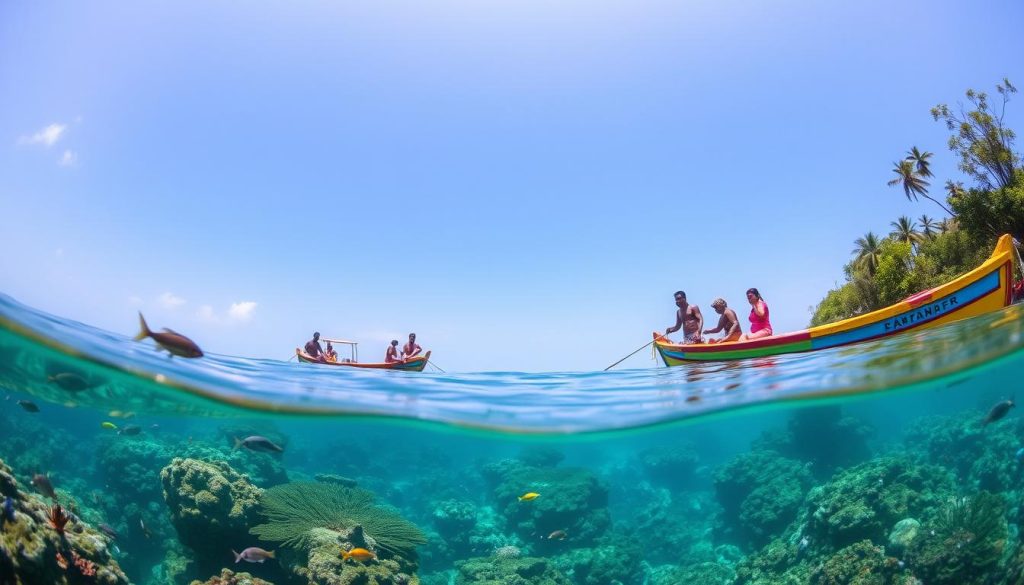
Community involvement is key to marine conservation success in Ari Atoll. Local fishing communities are now protecting their resources and improving their lives. They learn about sustainable practices like eco-tourism and responsible fishing.
The Maldives Whale Shark Research Programme (MWSRP) is a great example of community-based conservation. It studies whale sharks and helps locals through marine biology and eco-tourism jobs. This empowers them to care for their environment.
These efforts show in the region’s conservation success. Community-managed reserves have seen fish biomass triple in two years. This proves local care leads to healthier seas.
Groups like the Olive Ridley Project and Manta Trust protect key marine species. They raise awareness and involve locals in conservation work.
Local involvement is crucial for the Maldives’ marine health. By adopting sustainable practices and community conservation, we protect Ari Atoll’s treasures.
| Community Initiative | Focus Areas | Community Involvement | Impact |
|---|---|---|---|
| Maldives Whale Shark Research Programme | Whale shark studies, eco-tourism | Internships for students, local partnerships | Increased awareness and involvement in conservation |
| Olive Ridley Project | Sea turtle protection | Monitoring and rehabilitation efforts | Enhanced turtle populations and community education |
| Manta Trust | Manta ray conservation | Research and community engagement | Informed local fishing practices |
Protecting Endangered Marine Species in Ari Atoll
Ari Atoll is key in saving endangered marine life, like the whale shark. Sadly, the whale shark population has dropped by 16% since 2014. This shows we must act fast to protect these gentle giants.
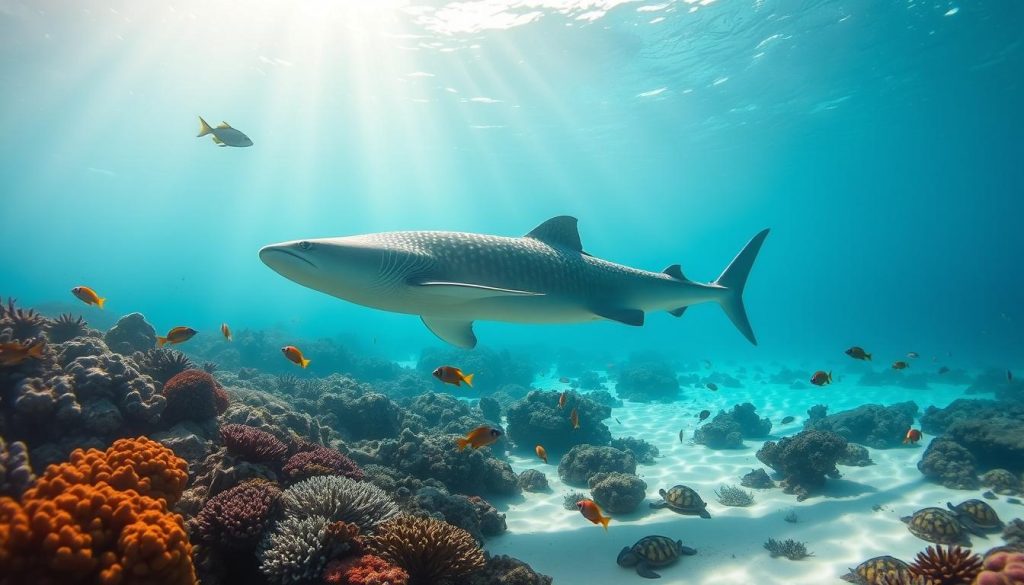
Boat strikes have hurt 45% of whale sharks in Ari Atoll. To help, boats should go slow and not crowd sharks. This way, we can keep them safe.
The local community is helping to save the whale sharks. Places like LUX* South Ari Atoll follow rules to protect these animals. They show us how to travel responsibly.
But, there are still problems. More boats mean more sharks get hurt. We need to keep working to protect our oceans. Euro-Divers says whale sharks show us if the ocean is healthy.
Other animals like manta rays and sea turtles also need our help. They are protected by law in the Maldives. Keeping their numbers up is a big job, but it’s doable with the right effort.
By working together and following the rules, we can save the whale sharks in Ari Atoll. This way, they can keep swimming in our oceans for years to come.
Opportunities for Marine Conservation Volunteer Programs
Volunteering in marine conservation in Ari Atoll lets you dive into a unique world. You’ll help with beach clean-ups, coral restoration, and watching marine species. It’s a hands-on way to learn about marine life and support eco-tourism.
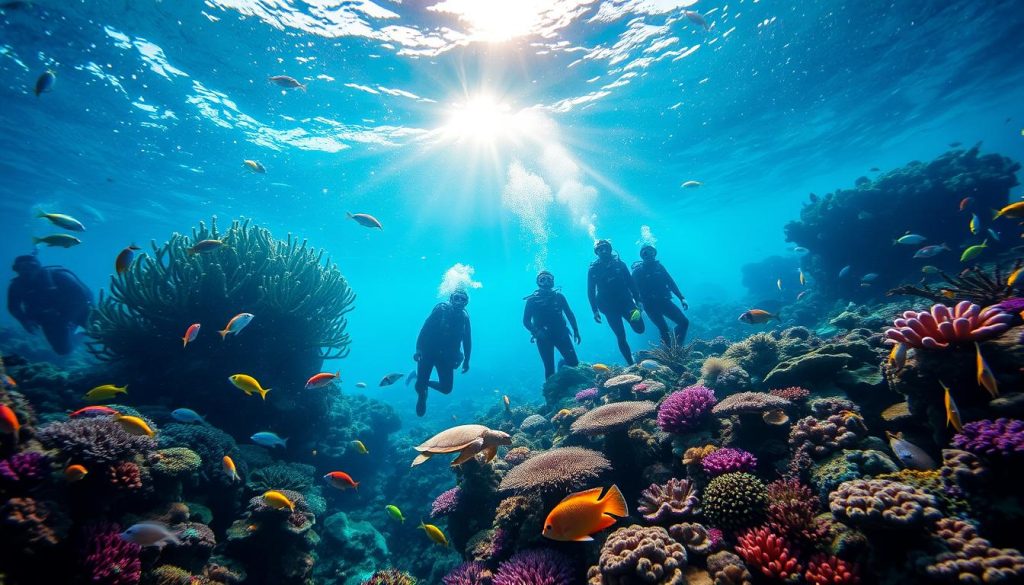
A ten-night program welcomes all, no matter your age or skill. It’s a chance to work together in the South Ari Marine Protected Area. This area is famous for its whale sharks.
Volunteers will help collect and enter data. They’ll learn about marine research firsthand.
The program offers meals that mix Maldivian and European dishes. It caters to different diets. You’ll spend five to six days a week on research, with Fridays off. Living on the MV Felicity makes your adventure even more special.
| Detail | Information |
|---|---|
| Trip Duration | 11 days |
| Program Cost | Starting from €2,800 |
| Volunteer Team Size | Up to 10 volunteers |
| Survey Trip Frequency | Daily |
| Swimming Requirement | Confident swimmer |
| Packing Essentials | Snorkeling gear, proper swim clothes, sun protection, insect repellent |
| Health Requirements | Doctor’s certificate and recommended vaccinations |
This program values cultural sensitivity and environmental care. It ensures volunteers have a low impact. You’ll get an orientation at Velana International Airport. Transport to the vessel or Dhigurah is arranged.
Join us in marine conservation. It’s a chance to help the environment and have amazing experiences in a vibrant marine habitat.
Sustainable Marine Management Practices in the Maldives
The Maldives is leading the way in sustainable marine management. This effort includes responsible tourism, which helps visitors understand and protect marine life.
Constance Moofushi hosts educational talks every Monday, Wednesday, and Friday. These talks are at the Manta Bar and cover topics like whale sharks, sea turtles, and coral reefs.
- Whale Shark & Sustainability
- Sea Turtles and Sustainability
- Coral Reef and Sustainability
These talks focus on saving whale sharks, protecting sea turtles, and preserving coral reefs. They teach guests about the life cycles of sea turtles and the importance of coral reefs. This helps create a culture of awareness and responsibility.
Guests are encouraged to spread the word about conservation. They learn to care deeply about sustainability. The government aims to protect 20% of its waters by 2025, despite challenges.
The government also worries about marine habitats. The Rasdhoo Madivaru Marine Protected Area is a key biodiversity reserve. But, local projects like dredging and reclamation threaten these habitats.
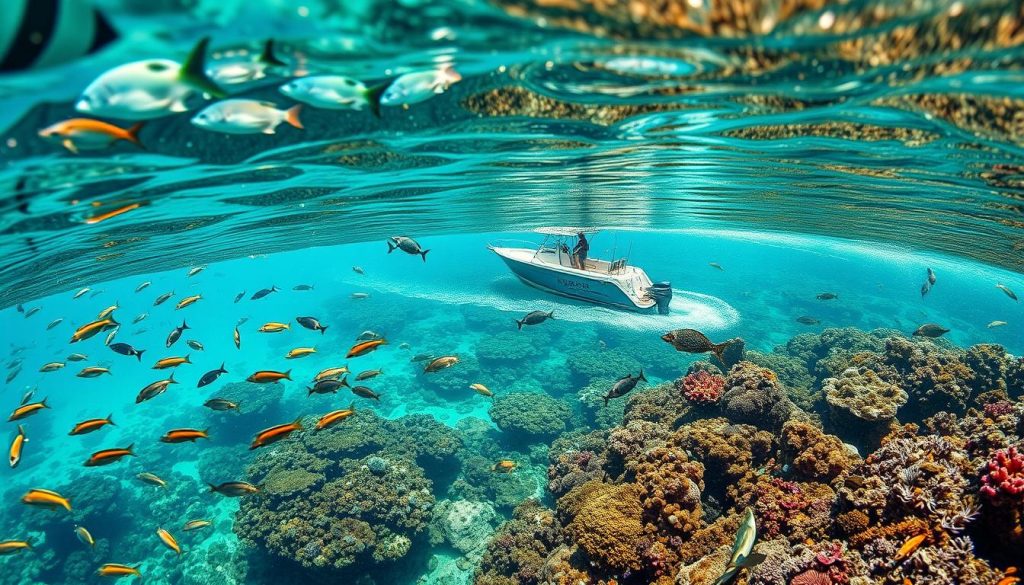
Responsible tourism is crucial in Rasdhoo Atoll, where 328 beds are available. Every action helps protect the Maldives’ natural beauty for the future.
Conclusion
Protecting the marine life of Ari Atoll is key for keeping our oceans healthy. With 60% of ecosystem services used unsustainably, saving these areas is crucial. This region has beautiful coral reefs and supports a strong tourism industry, bringing in much-needed money to protect marine life.
The future of Ari Atoll depends on good conservation plans. These plans must involve local people, scientists, and eco-friendly tourism. With about 400 tourists visiting North Ari Atoll each week, their help is vital. The money made from these visitors helps fund conservation efforts, showing the link between nature and economy.
By joining conservation efforts, you help keep Ari Atoll thriving. Keeping marine protected areas healthy ensures this place stays a paradise for all. Protecting these areas also helps migratory species and supports sustainable living, benefiting both nature and people.