Granite Boulders on La Digue: A Unique Natural Wonder
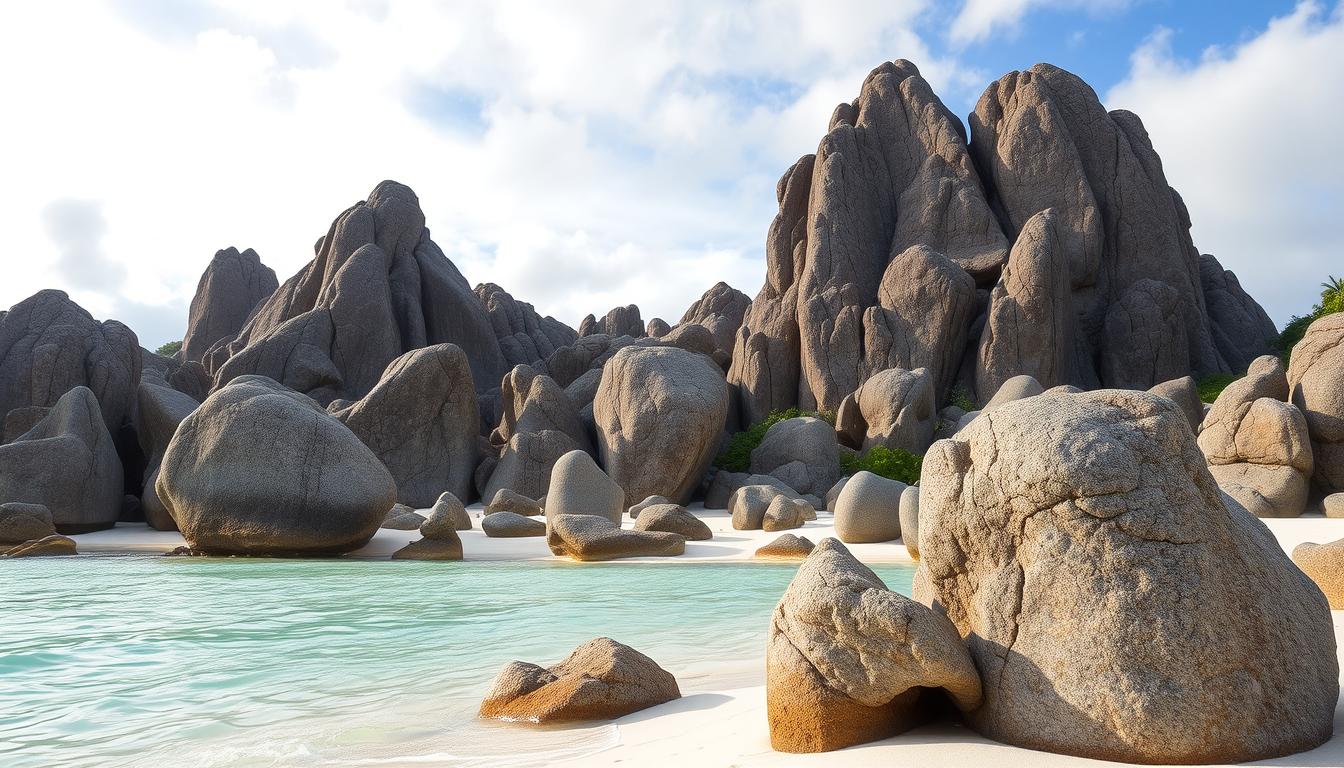
Ever thought what makes a beach stand out? Is it the clear waters, soft sand, or something special? On La Digue, it’s the granite formations along the shore that make it unforgettable.
Anse Source d’Argent beach is famous for its granite giants, some towering over 18 meters. These giants formed 750 million years ago, during the Precambrian era. Over time, weather and nature have shaped them into the awe-inspiring sights we see today.
Exploring La Digue, you’ll find these granite formations are more than just beautiful. They’re a key part of the island’s natural heritage. This unique landscape offers a peek into La Digue’s geological past, attracting both nature enthusiasts and travelers.
The Geological Marvel of La Digue
La Digue’s granite formations are truly breathtaking. They were shaped over millions of years by geological processes. These natural wonders show the island’s unique history and attract both visitors and scientists.
Formation of the Granite Boulders
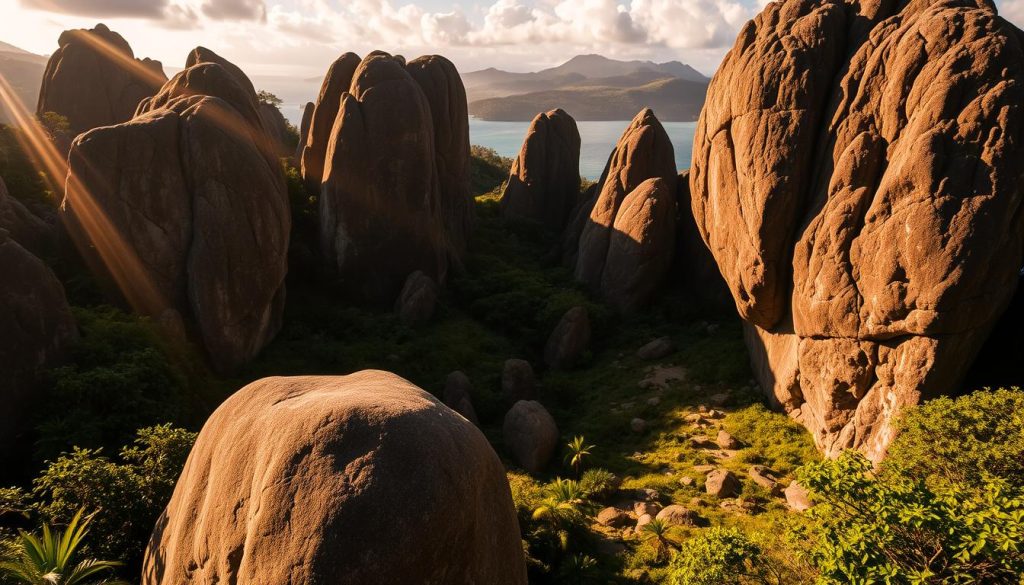
The granite boulders on La Digue formed from molten rocks cooling deep in the earth. This slow cooling over millions of years created the large crystals in the granite. The coarse-grained texture of the granite is a result of this slow cooling.
Age and Composition
The granite boulders are about 750 million years old. They date back to when the supercontinent Gondwana was forming. The granite is mostly quartz, feldspar, and mica, common minerals in granite. The unique mix of these minerals makes La Digue’s granite boulders stand out.
| Mineral | Composition | Characteristics |
|---|---|---|
| Quartz | SiO2 | Hard, resistant to weathering |
| Feldspar | KAlSi3O8 – NaAlSi3O8 – CaAlSi3O8 | Common in igneous rocks, varies in composition |
| Mica | K2Al4(Si6Al2O20)(OH)4 | Flaky texture, can be dark or light |
The Iconic Granite Boulders La Digue
Seeing La Digue’s granite boulders is unforgettable. These huge rocks, found all over the island, are a key part of La Digue’s beauty. They are a favorite spot for photos, attracting both visitors and photographers.
Origin and Evolution Over Time
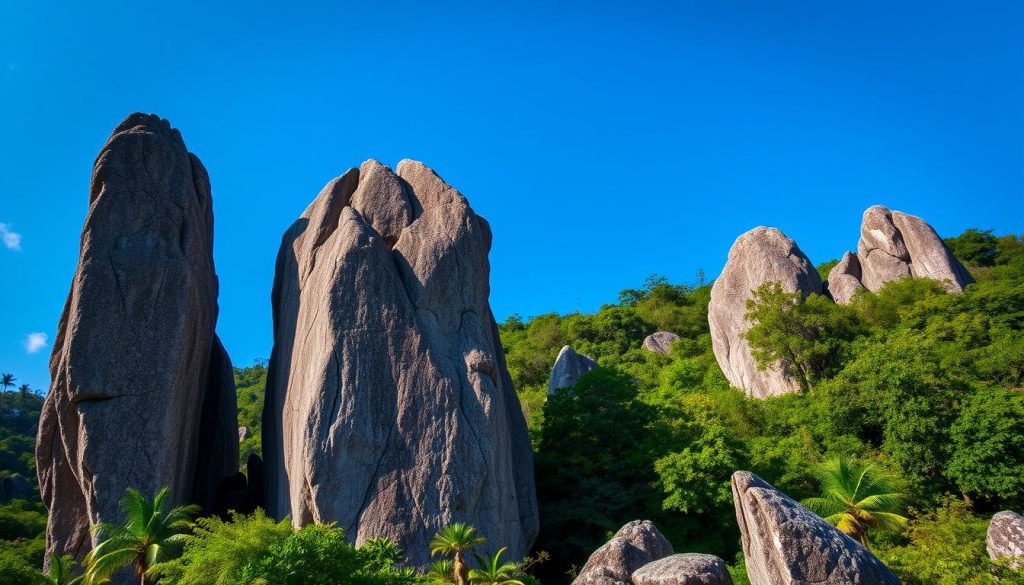
The granite boulders have a long history, millions of years in the making. They started as magma deep in the Earth, then cooled and solidified. Weathering and erosion later revealed the boulders we admire today.
This weathering process, called spheroidal weathering, shaped them into their rounded forms.
What Makes Them Geologically Special
La Digue’s granite boulders are not just beautiful; they’re also geologically interesting. Their unique makeup and structure tell us a lot about the island’s past. The boulders are mostly coarse-grained granite, full of quartz and feldspar minerals.
This makes them a key study area for geologists and a must-see for anyone visiting the island.
Location and Geography of La Digue
La Digue Island is a gem in the Seychelles archipelago. It’s known for its stunning natural beauty. Located off East Africa’s coast, the Seychelles are famous for their untouched beaches and lush green landscapes.
La Digue Island in the Seychelles Archipelago
La Digue is a smaller island in the Seychelles, covering about 10 square kilometers. Its landscape is rugged, with granite boulders everywhere. These boulders are a result of millions of years of geological changes.
Distribution of Boulders Across the Island
The granite boulders on La Digue are found all over the island. Anse Source d’Argent is famous for its huge boulders and beautiful beach. Other spots like Grand Anse and Petite Anse also have these natural wonders.
| Location | Notable Features |
|---|---|
| Anse Source d’Argent | Towering granite boulders, picturesque beach |
| Grand Anse | Scenic coastline, granite formations |
| Petite Anse | Secluded beach, granite boulders |
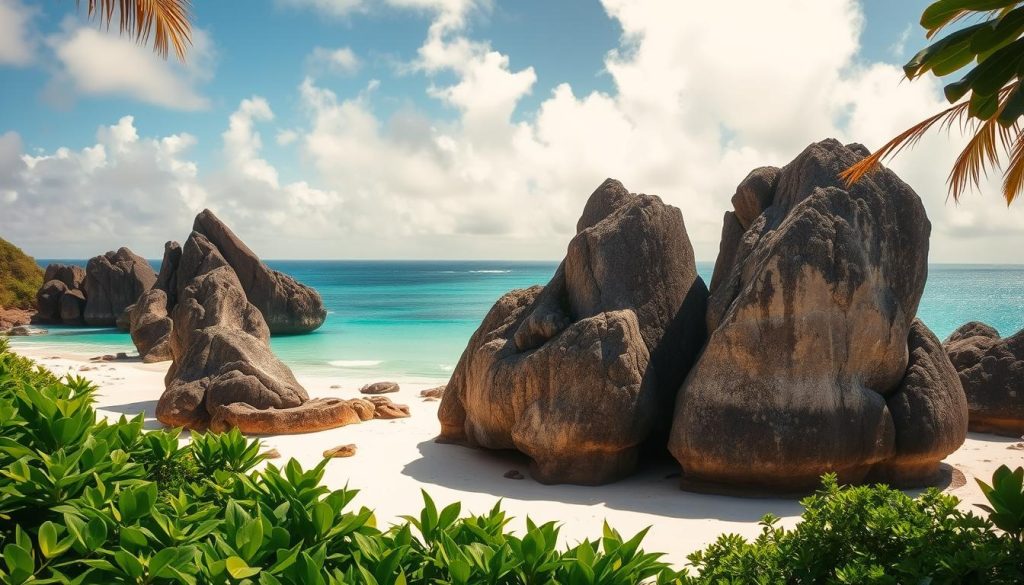
The boulders make La Digue a unique and captivating place. As you explore, you’ll see the beauty and importance of these granite formations.
The Most Famous Granite Formations
La Digue Island is famous for its stunning granite boulders. These formations show the island’s unique geological history. They attract tourists and photography lovers.
Anse Source d’Argent Boulders
Anse Source d’Argent is a top beach on La Digue. It’s known for its huge granite boulders along the shore. It’s a place you must see when you visit the island.
Photographic Landmarks
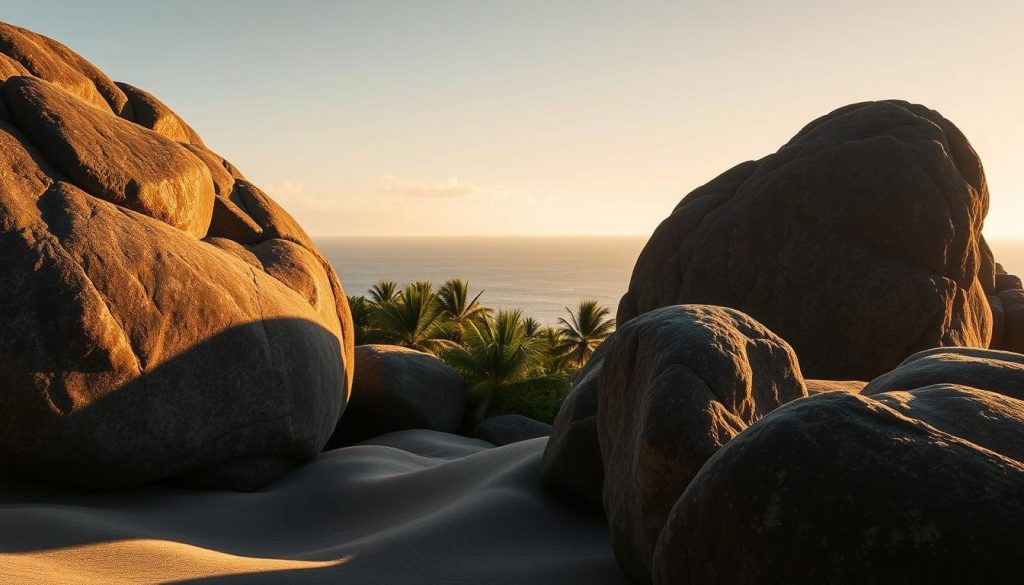
The boulders at Anse Source d’Argent are perfect for photos. Their shapes and the blue waters create a photographer’s dream. You can take pictures of light and shadow on the boulders, making unforgettable images.
Unique Shapes and Formations
The granite boulders have been shaped over millions of years. They range from smooth to jagged. These shapes make the beach fascinating to explore.
Grand Anse and Petite Anse Formations
La Digue also has Grand Anse and Petite Anse. These beaches have impressive granite boulders too. Grand Anse has a big sandy beach and dramatic boulders. Petite Anse is quieter and more intimate.
Lesser-Known Boulder Sites Worth Visiting
While Anse Source d’Argent is famous, there are other spots on La Digue. These include secluded beaches and unique boulder formations. They offer a chance to see the island’s beauty without the crowds.
Scientific Importance of La Digue’s Granite
La Digue’s granite is more than just a natural wonder. It holds secrets of the Earth’s past. Geologists find it very valuable for studying the Earth’s history.
Geological Research Value
The granite on La Digue is crucial for scientists. It’s old and full of information about the Earth’s past. By studying it, scientists learn a lot about our planet’s history.
- The age of the granite provides a timeline for geological events.
- The composition offers insights into the Earth’s crust formation.
- The unique shapes and structures of the boulders are a result of millions of years of weathering and erosion.
Unique Mineral Properties
La Digue’s granite is famous for its unique mineral properties. It has many minerals that are both beautiful and scientifically important. These minerals tell us about the conditions when the granite was formed.
Some of the key mineral properties include:
- Quartz and feldspar, which are common in granite and provide insights into the cooling and solidification processes of magma.
- Mica and other minerals that indicate the pressure and temperature conditions during the granite’s formation.
Cultural Significance to Seychellois People
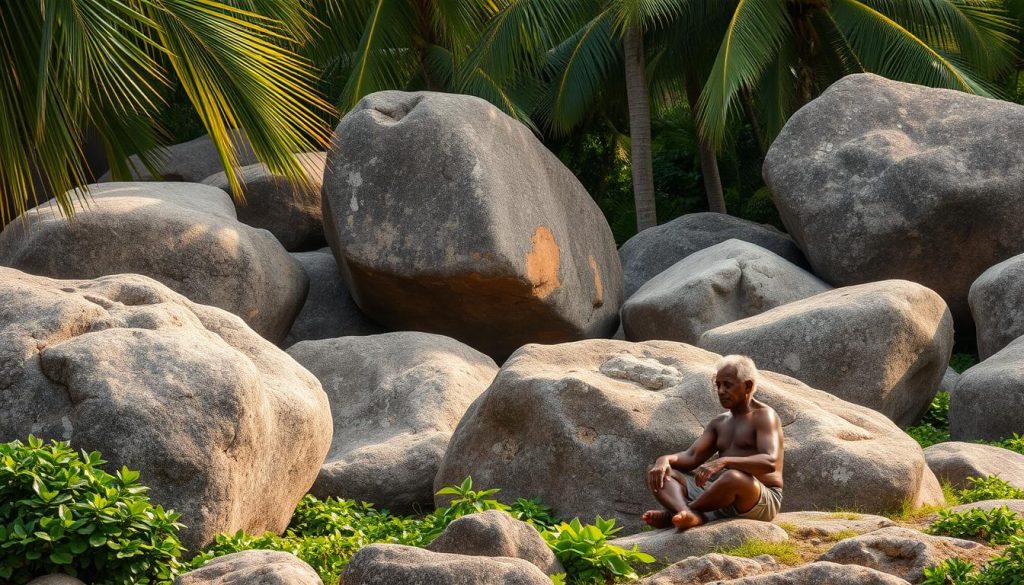
The granite boulders of La Digue hold a deep cultural value. They shape local art, culture, and the island’s identity. These natural wonders are a big part of the Seychellois way of life, showing the island’s rich history and heritage.
Local Legends and Myths
La Digue’s granite boulders are part of local legends and myths. They tell stories of the island’s past and its people. These stories have been passed down through generations, showing the island’s cultural heritage.
Influence on Local Art and Culture
The granite boulders have greatly influenced local art and culture. They inspire artists and shape the island’s cultural identity. You can see this in the local craftsmanship, music, and dance, which are key to La Digue’s cultural scene.
| Cultural Aspect | Influence of Granite Boulders |
|---|---|
| Local Legends | Stories and myths surrounding the boulders |
| Art and Craftsmanship | Inspiration for local artists and craftspeople |
| Cultural Identity | Shaping the unique identity of La Digue |
Photography Guide to La Digue’s Granite Wonders
La Digue’s granite boulders are a dream for photographers. They offer a mix of natural beauty and geological wonder. To get the best shots, you need to know the best times, what equipment to use, and how to take photos.
Best Times for Photography
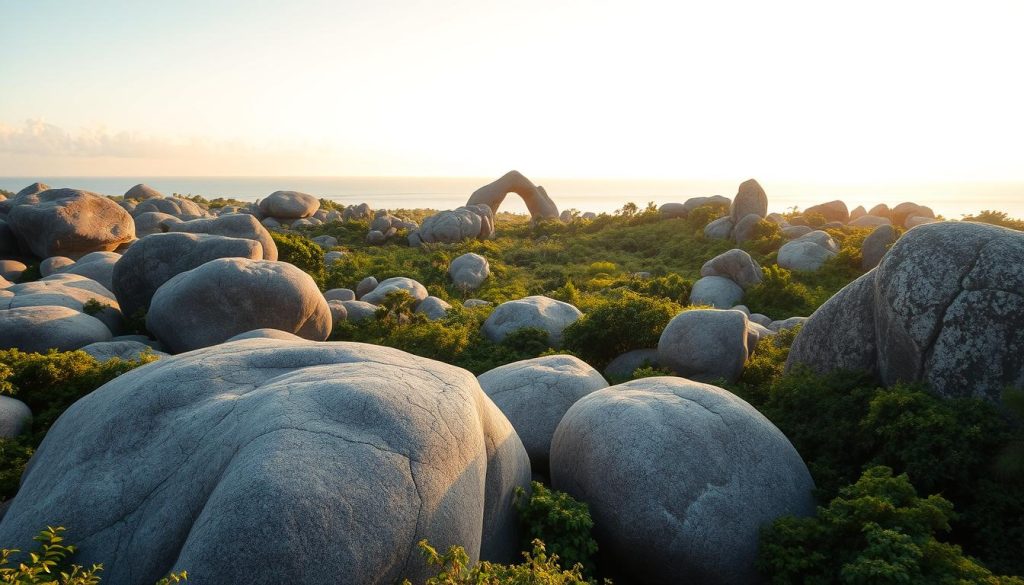
The best times to take photos of La Digue’s granite boulders are early morning and late afternoon. Soft, golden light during these times makes the granite’s textures and colors pop. Try to avoid midday when the sun is too harsh, causing bad shadows and highlights.
Recommended Equipment and Settings
To capture La Digue’s granite wonders, use a wide-angle lens to show the big landscapes. A polarizing filter helps reduce glare and makes colors brighter. For the best shots, set your camera to a low ISO (100-400) and a small aperture (f/8-f/11) to get a wide depth of field.
Composition Tips for Boulder Photography
When taking photos, use the rule of thirds to balance your shot. Add interesting foregrounds, like beach plants or tidal pools, to make your photos deeper. Try different angles and views to show off La Digue’s granite boulders’ unique charm.
By knowing the best times, using the right gear, and using good composition, you can take amazing photos of La Digue’s granite wonders.
How to Visit the Granite Boulders
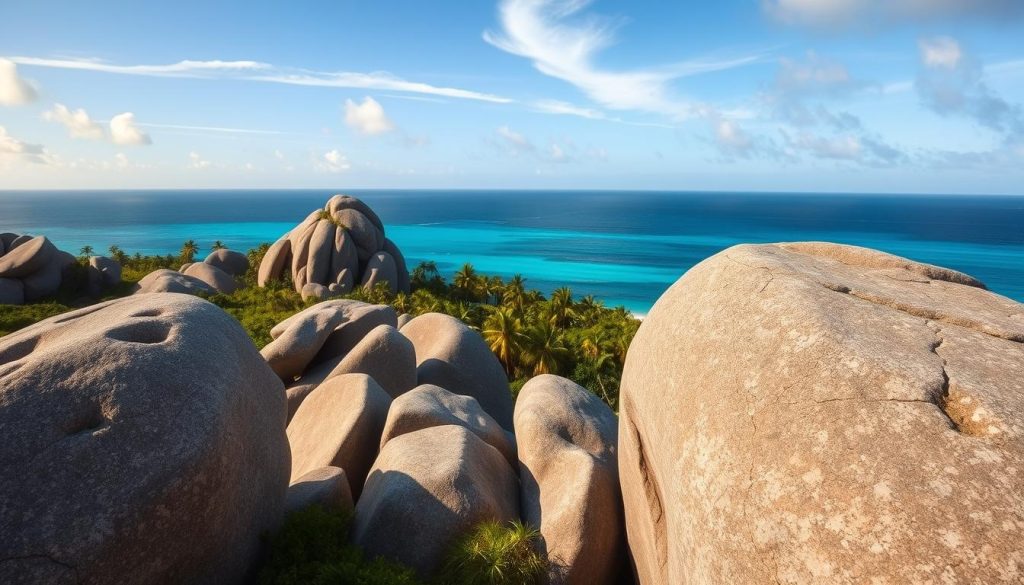
Exploring La Digue’s granite boulders is a memorable adventure. La Digue, in the Seychelles, is famous for its stunning granite formations. These formations have amazed visitors for centuries.
Getting to La Digue Island
La Digue is easy to reach by ferry from Mahé and Praslin. The ferry ride gives you a beautiful view of the islands. It’s a great start to your journey.
Ferry Options from Mahé and Praslin
Several companies operate the ferry from Mahé to La Digue. You can catch the ferry at the inter-island ferry terminal. From Praslin, the ferry to La Digue runs often, making it a good choice if you’re already there.
Airport Transfers
If you’re flying into Seychelles, the airport is on Mahé. You can take a ferry or a charter flight to La Digue from there. Booking your transfer in advance can make things easier.
Best Beaches to See the Boulders
La Digue boasts some of the Seychelles’ most stunning beaches. Anse Source d’Argent is famous for its towering boulders and clear waters. Grand Anse and Petite Anse are also worth visiting.
| Beach | Notable Features | Best Time to Visit |
|---|---|---|
| Anse Source d’Argent | Towering granite boulders, crystal-clear waters | Early morning or late afternoon |
| Grand Anse | Large beach with granite boulders, ideal for swimming | Any time of day |
| Petite Anse | Secluded beach with smaller boulders, perfect for relaxation | Mid-day for a quieter experience |
Guided Tours vs. Self-Exploration
You can explore La Digue’s boulders on your own or with a guided tour. Tours provide insights into the boulders’ history and significance. Exploring by yourself lets you experience it your way.
Whether you go on a guided tour or explore alone, La Digue’s granite boulders will impress you.
Conservation Efforts and Challenges
Keeping La Digue’s granite formations safe is a tough task. It’s all about finding a balance between nature and tourism. The island’s beauty, with its famous granite boulders, attracts many visitors. But, this also makes it hard to protect the environment.
Environmental Protection Measures
Many steps are being taken to save La Digue’s natural wonders. These include managing waste, cutting down pollution, and protecting homes for animals. It’s vital to keep the island’s ecosystem healthy and its granite formations intact.
Protected areas have been set up to keep the most fragile habitats safe. Rules are in place to lessen the harm from human activities. Also, there are programs to teach people, both locals and visitors, why conservation is so important.
Impact of Tourism on the Natural Formations
Tourism is a big part of La Digue’s economy, but it’s also a threat to its natural beauty. More people and development can cause erosion and harm the granite boulders. Finding ways to manage tourism that’s good for the environment is a major challenge.
Steps like controlled access to sensitive spots and promoting eco-tourism are being tried. These efforts aim to lessen the bad effects of tourism. With sustainable tourism, La Digue’s unique rock formations can be enjoyed by future generations.
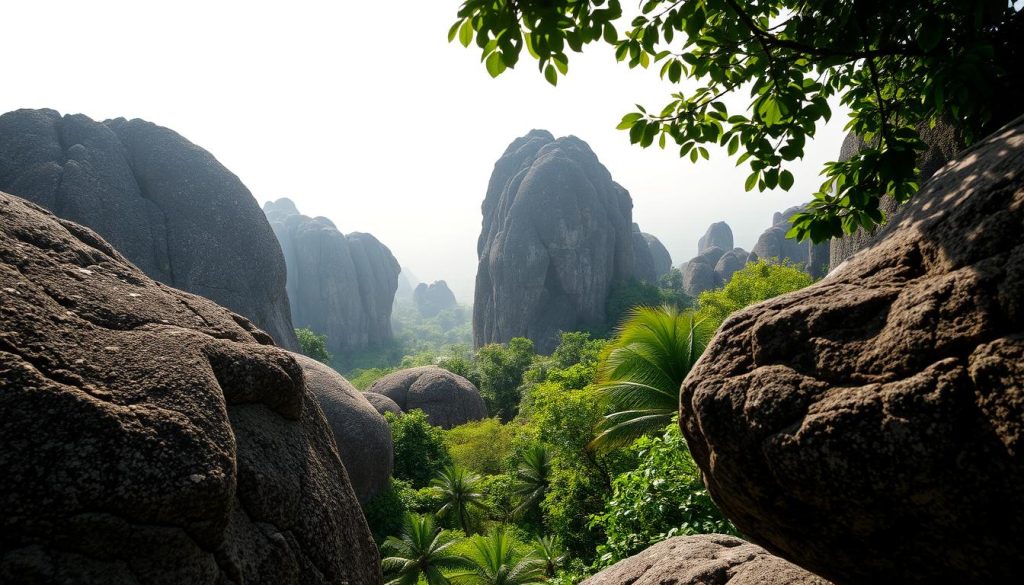
Similar Rock Formations Around the World
La Digue’s granite boulders are unique, but similar formations exist globally. They share traits with other granite areas. Yet, La Digue’s boulders are special because of the island’s beautiful beaches and greenery.
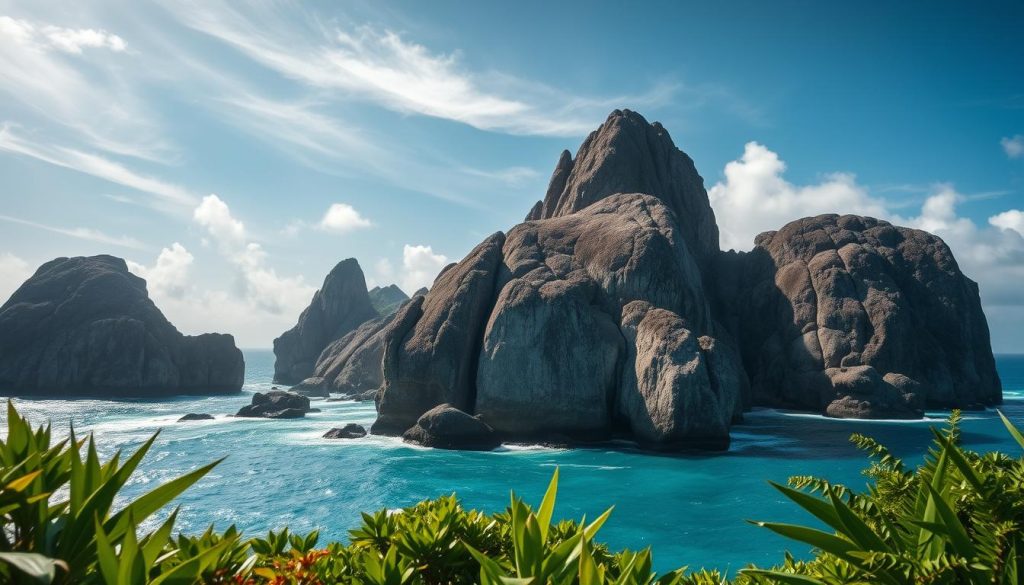
Comparing La Digue to Other Granite Landscapes
Granite landscapes are found worldwide, including the U.S., Australia, and Europe. For example, Joshua Tree National Park in California has huge granite boulders. The Devon granite in the UK is famous for its history and geology.
| Location | Notable Features |
|---|---|
| La Digue, Seychelles | Pristine beaches, lush vegetation, unique granite boulders |
| Joshua Tree, USA | Massive granite boulders, desert landscape |
| Devon, UK | Historical granite quarries, diverse geological formations |
What Makes La Digue’s Boulders Truly Unique
La Digue’s boulders are special because of the island’s natural beauty. The tropical environment and pristine beaches make the landscape stunning. This combination is rare and unique.
Planning Your Visit to La Digue
Planning a trip to La Digue is an exciting adventure. You’ll see stunning natural beauty and unique geological formations. There are a few things to think about to make your trip unforgettable.
Best Time of Year to Visit
The dry season is the best time to visit La Digue. It runs from April to May and September to November. During these months, the weather is perfect for exploring the island’s La Digue island attractions, like its famous granite boulders.
Accommodation Options Near the Boulders
La Digue has many places to stay, from luxury resorts to guesthouses. Many are close to the iconic granite boulders. Staying near Anse Source d’Argent, a famous beach, gives you easy access to the island’s main Popular photo spot La Digue.
Local Transportation Tips
Getting around La Digue is easy. You can rent bicycles or take traditional ox carts. Bicycles let you explore at your own pace. Ox carts offer a relaxing way to see the island’s scenic routes.
When visiting La Digue, remember to respect the island’s environment and local customs. La Digue’s natural beauty and cultural heritage make it a memorable place to visit.
Conclusion
La Digue’s granite boulders are a natural wonder that draws visitors worldwide. These massive rocks are scattered across the island. They show off La Digue’s natural beauty and its geological past.
The granite boulders are a marvel of nature and a key part of La Digue’s charm. They make the island a top spot for tourists. Laques natural beauty shines with these boulders on its beaches and landscapes.
When you visit La Digue, you can see these granite boulders up close. You can explore Anse Source d’Argent, Grand Anse, and more. Seeing these boulders will make your trip to La Digue unforgettable.