
Your Guide to the Hidden Souks in Fes el-Bali
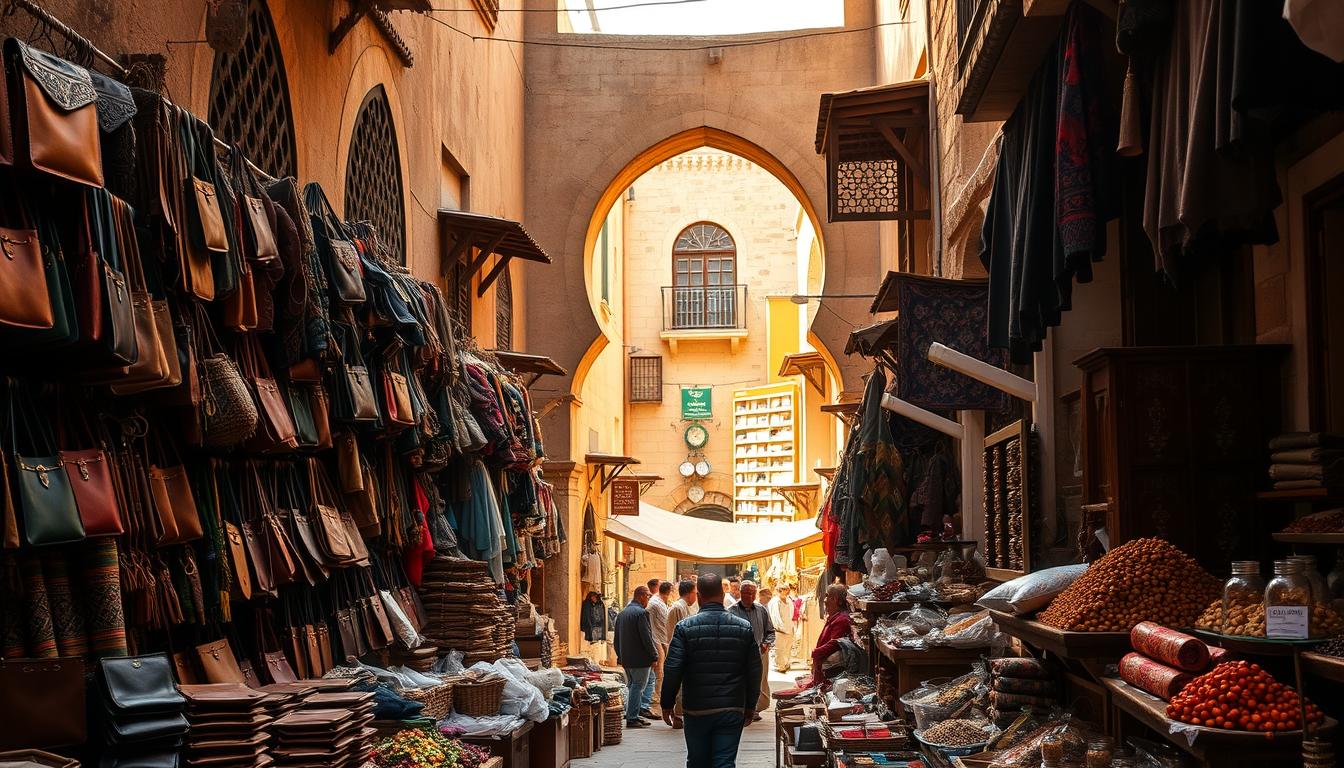
Ever wondered what secrets Fes el-Bali, a UNESCO World Heritage site, holds? As you walk through its narrow alleys, you’re surrounded by vibrant colors, enticing aromas, and the sound of traditional crafts.
Get ready to explore the traditional markets of historic Fes. The air is filled with the scent of spices and the calls of merchants. The hidden souks here are full of unique experiences, just waiting for you to find them.
As you wander, you’ll learn about the rich history and cultural importance of this ancient medina. You might even discover some of its best-kept secrets.
The Ancient World of Fes el-Bali
Fes el-Bali is one of the oldest medieval cities in the Arab world. It has a history going back to the 8th century. This ancient city is full of architectural heritage and traditional craftsmanship.
The Historical Significance of the Medina
The Medina of Fes el-Bali is more than just a historical site. It’s alive, showing the city’s rich past. Walking through its narrow streets, you’ll see Islamic architecture, ancient madrasas, and mosques that have lasted for centuries.
The UNESCO World Heritage Site Status
Fes el-Bali was named a UNESCO World Heritage Site in 1981. This recognition highlights its cultural and historical importance. It has brought the world’s attention to the need to preserve the city.
Preservation Efforts and Modern Challenges
Even with its protected status, Fes el-Bali faces challenges like over-tourism and urbanization. To keep the city’s ancient look, there are restoration projects and efforts to make tourism more sustainable.
| Preservation Aspect | Challenges | Efforts |
|---|---|---|
| Architectural Heritage | Deterioration due to age and weather | Restoration projects |
| Cultural Significance | Over-tourism | Sustainable tourism practices |
| Urbanization | Modern development pressures | Regulated urban planning |
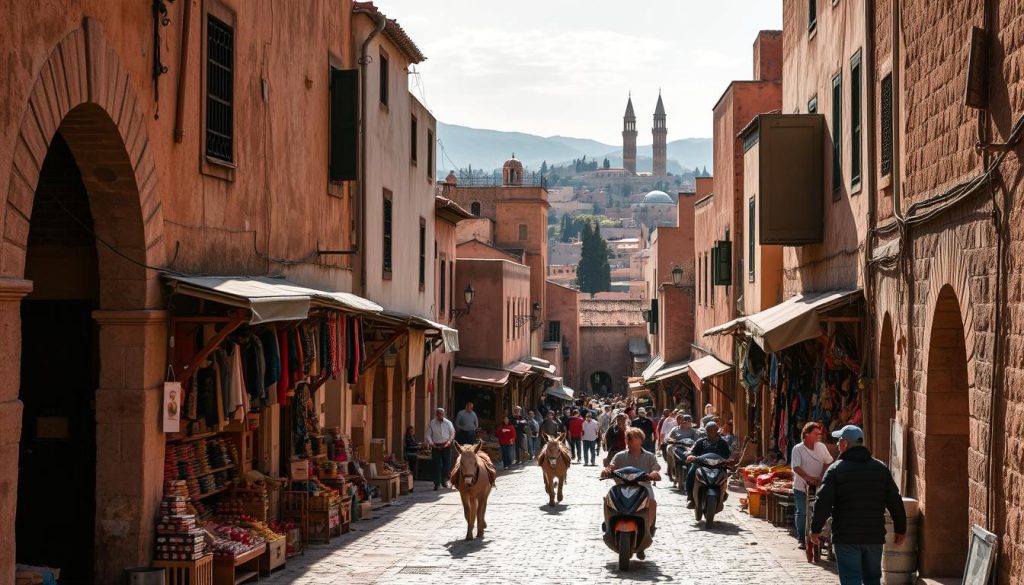
Exploring Fes el-Bali, you’ll see both old and new. It shows the city’s ability to keep its heritage alive.
Understanding the Souk Culture in Morocco
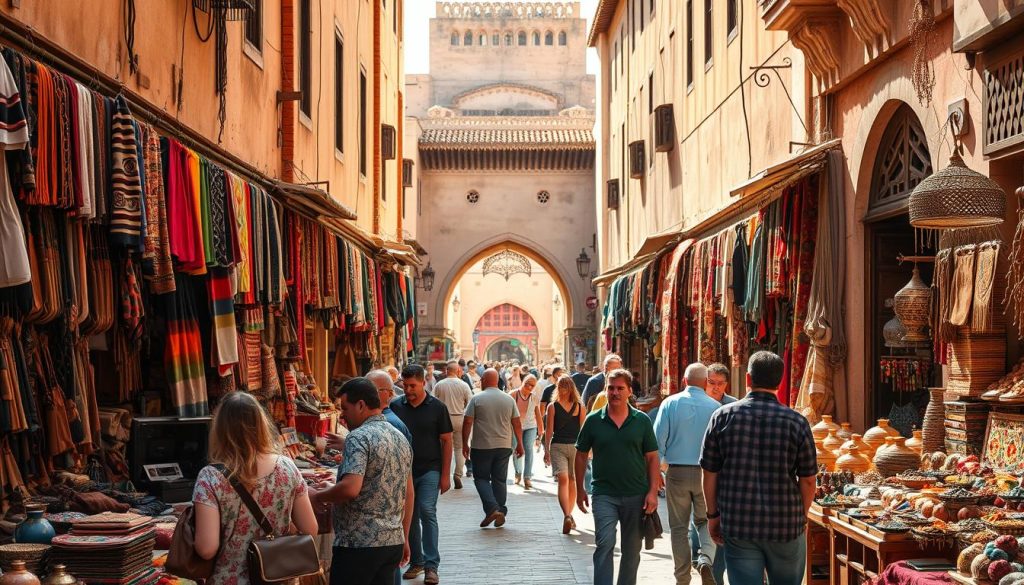
The souks of Morocco are a feast for the senses. They show off the country’s deep cultural roots and skilled craftsmanship. Walking through Fes el-Bali’s narrow alleys, you’re hit with vibrant colors, enticing smells, and lively sounds.
What Exactly is a Souk?
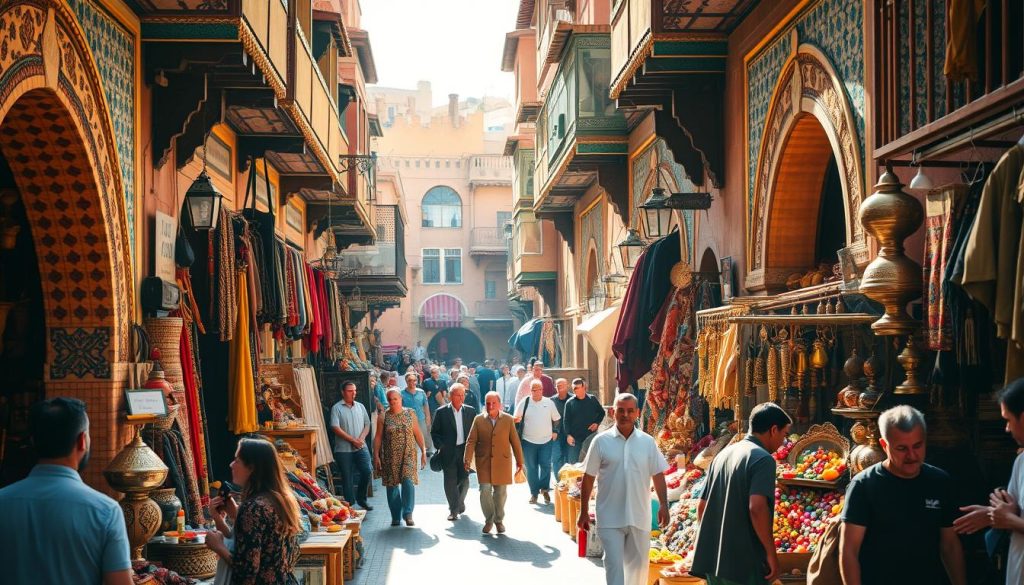
A souk is more than a market. It’s a place where people come to chat, share news, and do business. In Moroccan cities, souks are where you find everything from handmade crafts and spices to clothes and jewelry.
The Social and Economic Importance of Souks
Souks are key to Moroccan society and economy. They let local artists sell their work, helping the local economy and keeping traditional skills alive.
Daily Life in the Marketplace
Daily life in the souk is always lively. Vendors shout out to attract customers. The air is filled with the smells of spices, fresh bread, and traditional perfumes. Shopping here is more than just buying things; it’s experiencing Moroccan culture firsthand.
| Type of Goods | Description | Significance |
|---|---|---|
| Handicrafts | Intricately crafted items such as woodwork, pottery, and textiles. | Reflects traditional Moroccan craftsmanship and artistry. |
| Spices and Herbs | Aromatic spices, herbs, and blends used in Moroccan cuisine. | Essential for traditional cooking and flavoring. |
| Jewelry and Metalwork | Beautifully crafted pieces featuring traditional designs and motifs. | Symbolizes cultural heritage and is often worn on special occasions. |
Exploring Fes el-Bali’s souks gives you a real shopping experience. You get to meet local artisans and vendors. It’s a chance to dive deep into Morocco’s rich cultural heritage.
Navigating the Labyrinth of Hidden Souks in Fes el-Bali
Fes el-Bali’s hidden souks are full of surprises. But, finding your way around can be tricky. The old city is a maze of narrow streets and markets. With some guidance, you can find its hidden treasures.
Map Overview and Major Landmarks
First, get to know the medina’s layout. A detailed map is your best ally. Use landmarks like the Al-Attarine Madrasa and the Jardin Jnan Sbil as guides.
Here’s a quick guide to key areas:
| Landmark | Location | Significance |
|---|---|---|
| Al-Attarine Madrasa | Near the Qarawiyyin Mosque | Historic Islamic school |
| Bou Inania Madrasa | Talâa Kebira | Only madrasa with a minaret |
| Jardin Jnan Sbil | Near the Dar Batha Museum | Serene garden oasis |
Transportation Options and Entry Points
Getting to Fes el-Bali is easy. You can drive, take a taxi, or walk from the new city. Inside, walking is the best way to explore.
Hiring Local Guides vs. Self-Exploration
Deciding to hire a guide or explore alone is a big choice. Guides offer insights into the area’s history and culture. But, exploring by yourself can be exciting too.
“A good guide can transform your visit from a mere stroll into an immersive experience, revealing secrets and stories that lie behind every door and stall.” –
Think about what you want from your visit. Ask locals for advice. With the right approach, your time in Fes el-Bali’s hidden souks will be memorable.
The Artisan Quarter: Discovering Traditional Craftsmanship
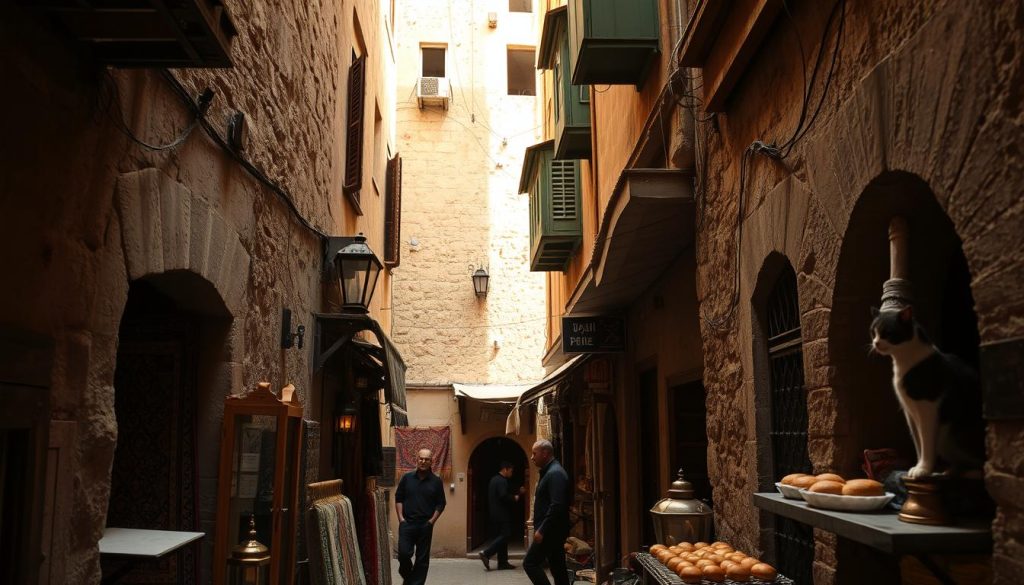
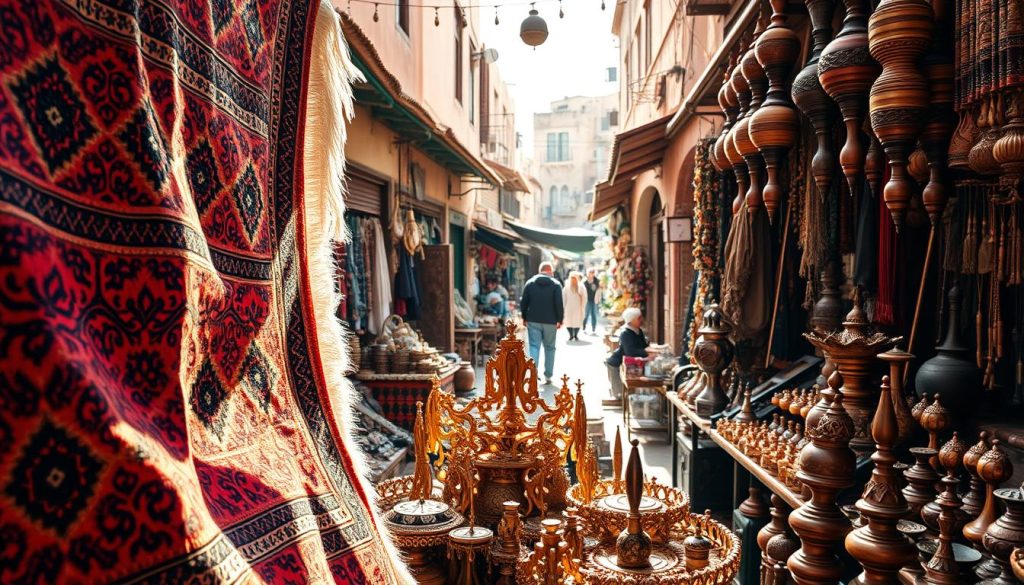
As you explore Fes el-Bali’s ancient streets, you’ll find a world where traditional crafts thrive. The artisan quarter is alive with local artisans practicing their ancient trades. They create beautiful works that show Morocco’s rich cultural heritage.
The Chouara Tannery and Its Hidden Corners
The Chouara Tannery is one of Fes’ oldest and most famous tanneries, dating back to the 11th century. Here, you can see the traditional tanning process. Leather is treated with natural dyes and old techniques.
Look for the tannery’s hidden corners to see artisans at work. They stain and dry the hides. Meeting the artisans up close offers a unique look into their craft. You’ll see how they prepare leather, from soaking hides in natural dyes to drying and polishing.
Pottery and Ceramic Workshops in Ain Nokbi
Ain Nokbi is known for its pottery and ceramic workshops. Local artisans create beautiful, functional pieces using traditional methods. You’ll see them shaping clay on potter’s wheels and decorating with intricate designs.
The pottery-making process is fascinating and hard work. From shaping clay to glazing and firing, each step needs skill and detail. You might even get to make your own ceramic piece with an experienced artisan’s help.
Woodworking and Cedar Crafts in Nejjarine
The Nejjarine area is famous for woodworking and cedar crafts. Artisans here create intricate wooden items, from decorative boxes to cedar wood carvings. The traditional woodworking techniques passed down through generations result in exquisite pieces that show Morocco’s rich craftsmanship.
Meeting the Master Craftsmen
Visiting the artisan quarter lets you meet master craftsmen. Many artisans welcome visitors into their workshops. They share their knowledge and skills, offering a chance to learn about their craft and maybe even commission a custom piece.
Engaging with local artisans deepens your appreciation for Moroccan culture’s traditional crafts. Whether you want a handmade souvenir or just to experience Fes’ artistry, the artisan quarter offers a unique and enriching experience.
Textile Treasures: From Silk to Carpets
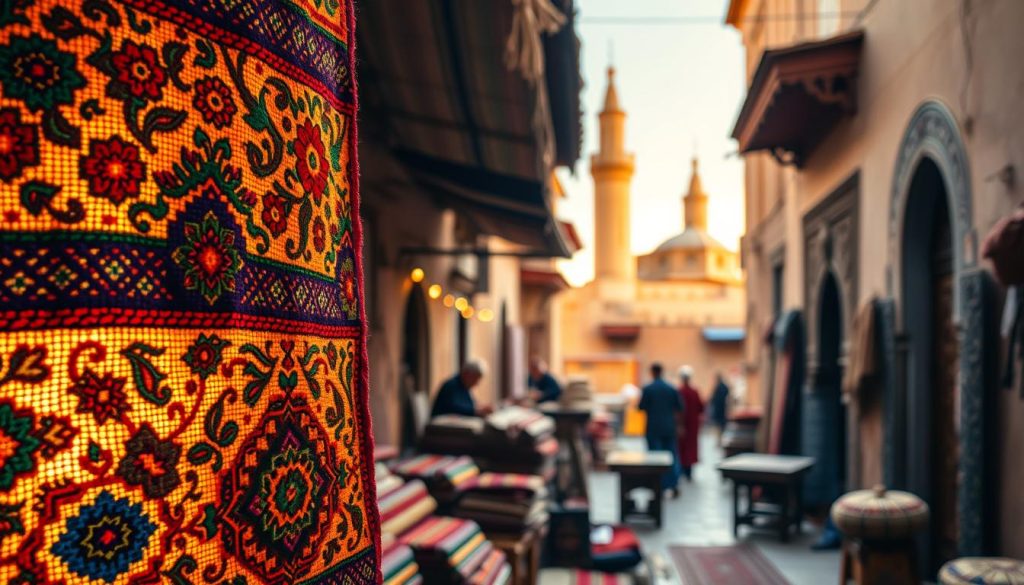
Fes is a center for making textiles, offering many high-quality fabrics and carpets. These items show off Moroccan craftsmanship. Walking through the ancient medina, you’ll see how important textiles are in the local culture. Artisans work hard to make beautiful, detailed pieces.
The Hidden Silk Weavers of R’cif
In R’cif, skilled silk weavers keep their traditional craft alive. They make amazing fabrics that people love. Each piece shows the weaver’s skill and care.
Berber Carpet Workshops Behind Bab Bou Jeloud
Behind Bab Bou Jeloud gate, you’ll find Berber carpet workshops. Artisans here make stunning, handmade carpets. These carpets are not just beautiful but also carry deep cultural and historical meaning.
Finding Authentic Textiles in Souk el Attarine
Souk el Attarine is a great place for authentic textiles. You can find everything from Moroccan silks to beautiful carpets. To get a real authentic shopping experience, it’s key to know what makes something quality and real.
Distinguishing Quality and Authenticity
When looking for textiles in Fes, look for signs of quality. Check for intricate patterns, bright colors, and natural materials. Talking to local artisans and vendors can help you understand the value and authenticity of what you’re looking at. This way, you get beautiful items and help the local community and keep traditional markets alive.
Spices, Herbs, and Culinary Delights
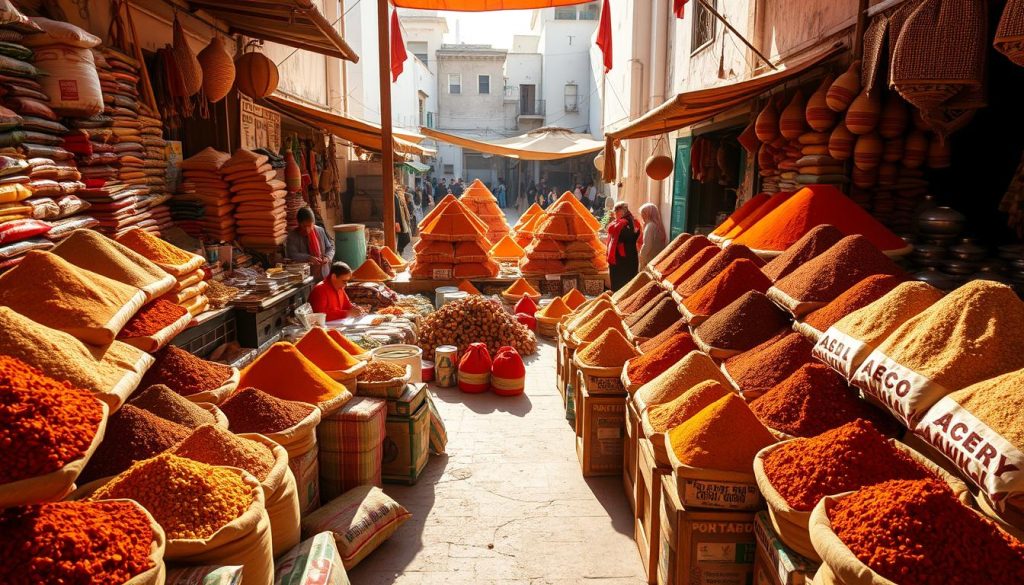
As you explore Fes el-Bali’s ancient medina, you’re greeted by the scent of exotic spices and fresh herbs. The souks are filled with flavors, offering spices, herbs, and local treats that excite your taste buds.
The Secret Spice Markets of Souk el Henna
Souk el Henna is a paradise for those who love traditional Moroccan spices and herbs. You’ll find a variety of spices, like turmeric and saffron, and herbs with strong scents like cumin and coriander. The spice sellers are eager to teach you about these spices and how they’re used in Moroccan cooking.
Traditional Moroccan Cooking Ingredients
Moroccan food is famous for its deep flavors and smells. The souks of Fes el-Bali have all the ingredients you need for Moroccan cooking. You can find things like preserved lemons, olives, and spices that are key to Moroccan dishes. The vendors, who often make their products themselves, offer authentic and tasty goods.
Food Stalls and Local Delicacies
The souks are more than just places to shop; they’re a feast for your senses. You’ll find food stalls with fresh orange juice, traditional pastries, and street food like grilled meats and skewers. Don’t miss out on trying b’stilla or ma’amoul, which are sure to please your palate.
Tasting Opportunities and Culinary Experiences
Exploring the souks lets you taste local treats and experience Morocco’s rich culinary history. Many vendors offer free samples, so you can try before you buy. You can also join cooking classes or guided tours to learn more about Moroccan cuisine and how it’s made.
Jewelry and Metalwork: The Hidden Gems
Fes el-Bali is famous for its stunning jewelry and metalwork. These treasures are hidden in the souks’ winding paths. You’ll find both traditional and modern designs that show Morocco’s rich culture.
Silver Souks and Traditional Designs
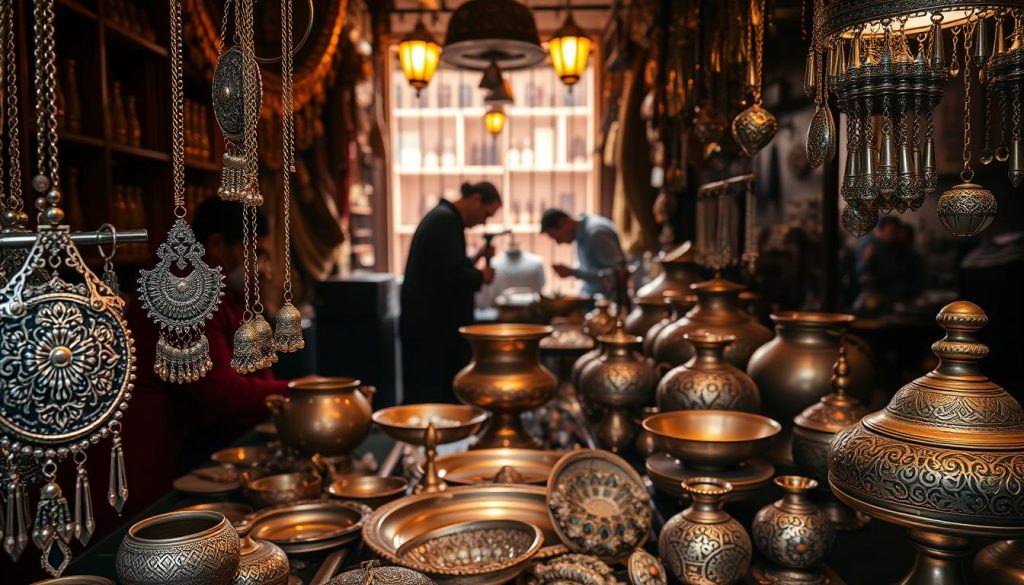
The silver souks in Fes el-Bali are perfect for those who love intricate silver jewelry. Local artisans use old techniques to make beautiful pieces. You can find everything from delicate necklaces to bracelets with berber motifs.
Gold Markets and Their History
Fes el-Bali’s gold markets have a long history. The gold souks are lively and full of gold jewelry. You can watch local goldsmiths create intricate pieces that are both stunning and valuable.
Copper and Brass Artisans in Seffarine Square
Seffarine Square is known for its copper and brass artisans. Here, craftsmen turn metal into beautiful items, like decorative plates and lanterns. Commissioning custom pieces is also an option, making your item truly unique.
Commissioning Custom Pieces
Looking for something special? Consider getting a custom piece from a local artisan. This lets you work with the craftsman to design a piece that’s just right for you, making it a one-of-a-kind treasure.
Cultural Etiquette and Practical Tips
To fully enjoy Fes el-Bali’s shopping, understanding local etiquette is key. The souks are more than markets; they’re lively places where tradition and culture meet daily life.
Respectful Interaction with Vendors
Starting with a friendly “As-salamu alaykum” (peace be upon you) can make a big difference. Moroccans love hospitality. Small talk, like asking about their day or family, can also help.
The Art of Haggling in Moroccan Markets
Haggling is a big part of souk life. Start with a lower offer than you’re willing to pay. It’s about the conversation, not just the price. But, be fair and don’t offer too low a price.
Common Phrases in Darija to Know
Knowing a few Darija phrases can make your visit better. Saying “Shukraan” (thank you) and “La, shukraan” (no, thank you) shows respect. It makes talking to locals easier.
Safety Considerations for Tourists
Fes el-Bali is mostly safe for visitors. Still, it’s smart to stay alert. Keep your things close and watch out for pushy sellers. Don’t show off expensive items and stay aware of your surroundings.
Following these tips will make your shopping trip better. You’ll also show respect for the local community.
Best Times to Visit and Seasonal Specialties
Visiting Fes el-Bali is an adventure all year round. But, the right time can make your trip even better. The city’s ancient streets and souks buzz with life all year. Yet, some times offer special experiences that can make your visit unforgettable.
Weather Considerations Throughout the Year
Fes has a Mediterranean climate, with warm summers and cool winters. The best times to visit are spring (March to May) and autumn (September to November). During these seasons, the weather is mild and perfect for exploring the old city souks.
Festival Seasons and Special Market Days
Fes hosts many festivals, like the Fes Festival of World Sacred Music. This festival draws visitors from all over. It adds a special touch to your visit, with artisans showcasing their crafts on special market days.
Morning vs. Evening Shopping Experience
Shopping in Fes el-Bali changes between morning and evening. Mornings are less crowded, making it easier to explore the souks. Evenings, on the other hand, are lively with the souks lit up, creating a magical atmosphere.
Photography Tips and Etiquette
When taking photos in Fes, be respectful. Always ask before taking someone’s picture, and respect any restrictions. This way, you can capture the beauty of Fes without offending anyone.
Conclusion: Embracing the Authentic Fes Experience
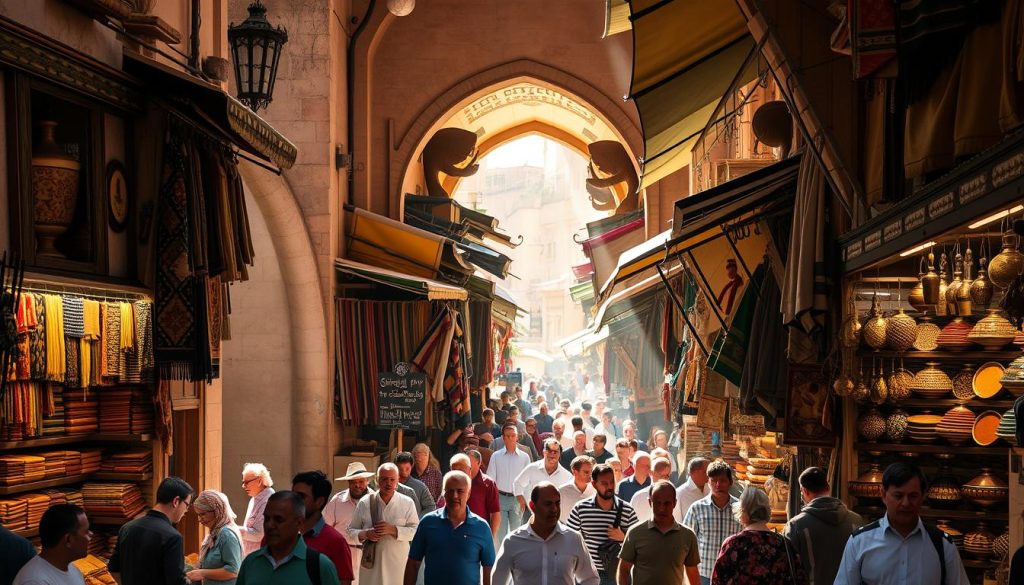
As you explore Fes el-Bali’s ancient alleys, you’ll find hidden souks. They show a world of traditional Moroccan craftsmanship. This authentic shopping experience gives you a peek into Morocco’s rich cultural heritage.
In the souks, you can dive into a world of vibrant colors and textures. You’ll find unique textiles, jewelry, and spices. Each piece reflects the local artisans’ skill and creativity.
To fully experience Fes, take your time in the souks. Talk to the friendly vendors and admire the traditional craftsmanship. As you wander, you’ll discover Morocco’s cultural essence.





