Explore Moroccan Flavors with a Cooking Class in Marrakech
Have you ever wondered what makes Moroccan cuisine so unique?
The mix of aromatic spices, vibrant colors, and rich flavors comes from the country’s diverse culture. Joining a hands-on cooking class in Marrakech lets you discover these secrets.
Picture yourself diving into the local culture, picking up new cooking skills, and enjoying real Moroccan dishes made by local chefs. This experience is more than cooking. It’s about learning the traditions and stories behind each dish.
The Rich Heritage of Moroccan Cuisine
Moroccan cuisine reflects the country’s strategic location at the crossroads of Africa, Europe, and the Middle East. This unique position has led to a diverse and complex culinary tradition.
A Fusion of Cultural Influences
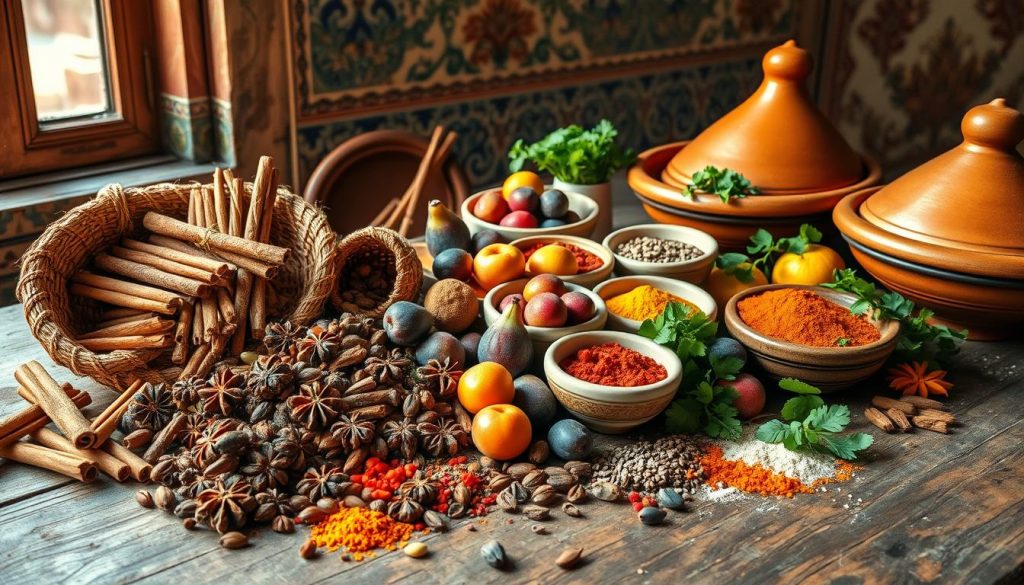
Moroccan cuisine is shaped by its history. It has influences from the Berber, Arab, Mediterranean, and African cultures. This mix is seen in the use of Moroccan spices and ingredients like cumin, coriander, and cinnamon. These spices are key in many traditional dishes.
The Significance of Food in Moroccan Culture
Food is central in Moroccan culture, often the main focus of social gatherings and celebrations. Preparing and sharing meals shows hospitality and respect. It highlights the importance of community and tradition in Moroccan society.
Key Elements That Define Moroccan Cooking
The use of traditional cooking techniques, like slow-cooking in a tagine, is crucial. It helps create the rich flavors of Moroccan cuisine. The focus on fresh ingredients, including herbs and preserved lemons, also sets Moroccan cooking apart.
Understanding these elements helps you appreciate the depth and complexity of Moroccan cuisine. It prepares you for an immersive culinary experience in Marrakech.
Why Take a Moroccan Cooking Class in Marrakech
Dive into Marrakech’s rich food culture with a local cooking class. Moroccan food is a mix of Arab, Mediterranean, and African flavors.
Immersive Cultural Experience
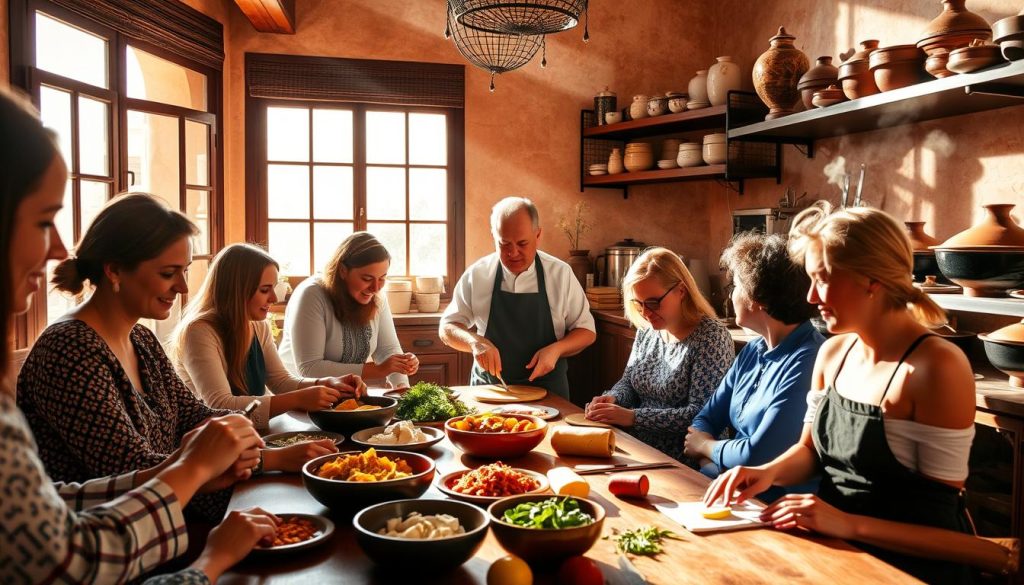
A Moroccan cooking class in Marrakech is more than cooking. It’s a dive into the local food scene. You’ll see, smell, and taste the city’s flavors. Many classes take you to a local market to learn about unique ingredients.
Learning From Local Experts
Learn from skilled local chefs who know traditional Moroccan recipes. They’ll teach you how to make authentic dishes. You’ll learn about cooking techniques and picking the right ingredients.
Skills You Can Take Home
The skills you learn in a Moroccan cooking class last long after the class ends. You’ll know how to make dishes like tagines and pastries. This lets you share a taste of Marrakech with your loved ones.
Creating Authentic Connections Through Food
Food connects us all, and a Moroccan cooking class is a way to connect with the local culture. It shows you how food is a big part of Moroccan life. You’ll bond with the community through food.
By taking a best Moroccan cooking class in Marrakech, you’ll learn about Moroccan cuisine. You’ll also understand the city’s food traditions better. It’s a great experience for food lovers and cultural explorers alike.
What to Expect in a Typical Moroccan Cooking Class
A Moroccan cooking class is a mix of culture, food, and fun. You’ll explore Marrakech’s souks, learn cooking tricks, and taste your dishes.
Class Structure and Duration
The class lasts about 4 hours. You’ll visit a local market first. Then, you’ll cook and enjoy what you make.
Market Visits and Ingredient Selection
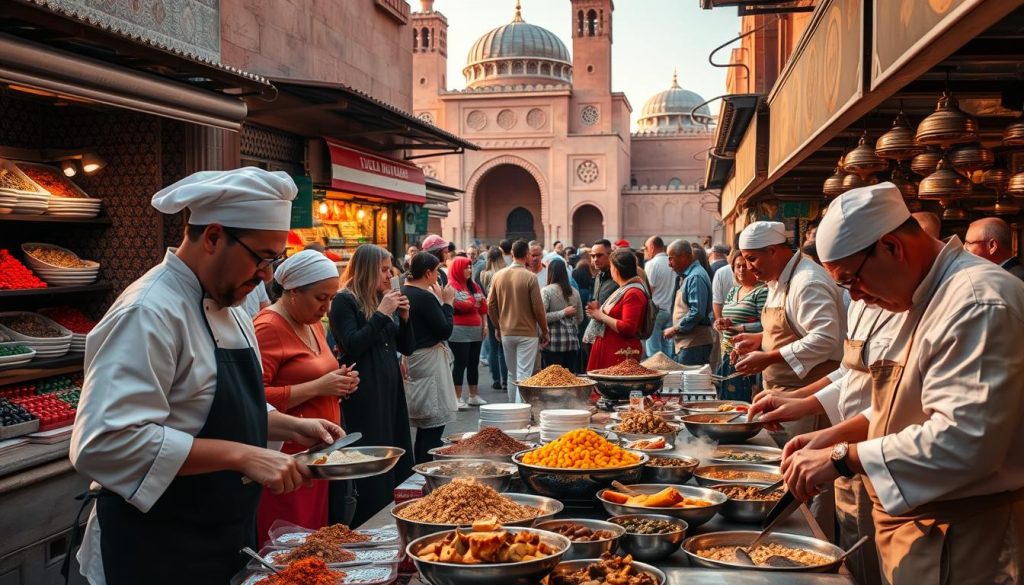
Visiting the market is a big part of the class. You’ll pick fresh ingredients for your meals.
Navigating Marrakech’s Vibrant Souks
Walking through the souks is exciting. You’ll see, hear, and smell Morocco’s vibrant culture.
Selecting the Freshest Ingredients
Your chef will teach you to pick the best ingredients. This hands-on lesson is key to learning Moroccan cooking.
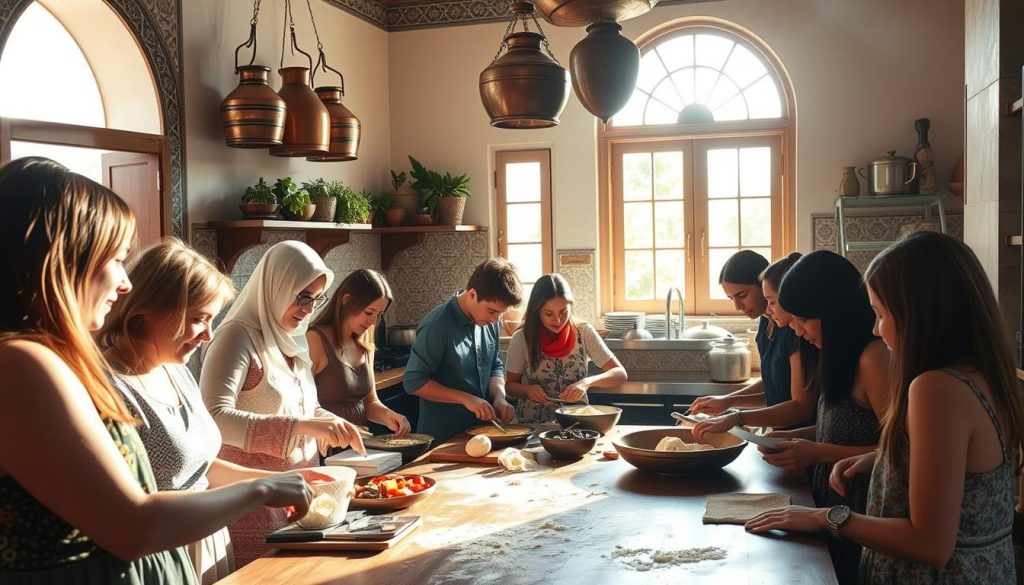
Hands-on Cooking Experience
With your ingredients, you’ll start cooking. Expert chefs will guide you through making traditional Moroccan dishes.
Enjoying Your Culinary Creations
At the end, you’ll eat what you made. It’s a chance to enjoy the tastes and smells of Morocco.
By the end, you’ll have new cooking skills and a love for Moroccan culture and food. A Moroccan cooking class in Marrakech is a memorable adventure, no matter your cooking level.
Essential Moroccan Dishes You’ll Learn to Prepare
A cooking class in Marrakech is a great way to dive into Moroccan cooking. You’ll learn to make many dishes that show off Morocco’s rich food culture.
Tagine Variations
Tagine is a key Moroccan dish, named after the pot it’s cooked in. You’ll learn to make different tagines, each with its own taste.
Chicken with Preserved Lemon and Olives
This classic tagine mixes the tangy taste of preserved lemons with the salty flavor of olives. It’s a true taste of Morocco.
Lamb with Prunes and Almonds
The sweetness of prunes and the crunch of almonds make the lamb tagine rich and filling.
Couscous Preparation Techniques
Couscous is a big part of Moroccan food. You’ll learn how to make it the traditional way. From steaming to seasoning, you’ll get good at making couscous that’s both fluffy and tasty.
Traditional Moroccan Salads and Appetizers
Moroccan food isn’t just about main dishes. You’ll also learn to make salads and appetizers like zaalouk (eggplant stew) and brik (fried pastry).
Sweet Treats and Moroccan Pastries
No Moroccan meal ends without dessert. You’ll learn to make traditional Moroccan pastries and sweets.
Honey-Soaked Pastries
Pastries soaked in honey are a big part of Moroccan desserts. They’re sweet and indulgent.
Almond-Based Desserts
Almonds are often used in Moroccan baking. You’ll learn to make delicious desserts with almonds.
| Dish | Description | Key Ingredients |
|---|---|---|
| Chicken Tagine | A classic Moroccan stew | Chicken, preserved lemons, olives |
| Couscous | Traditional North African pasta | Couscous grains, vegetables, spices |
| Honey-Soaked Pastries | Sweet Moroccan dessert | Pastry dough, honey, almonds |
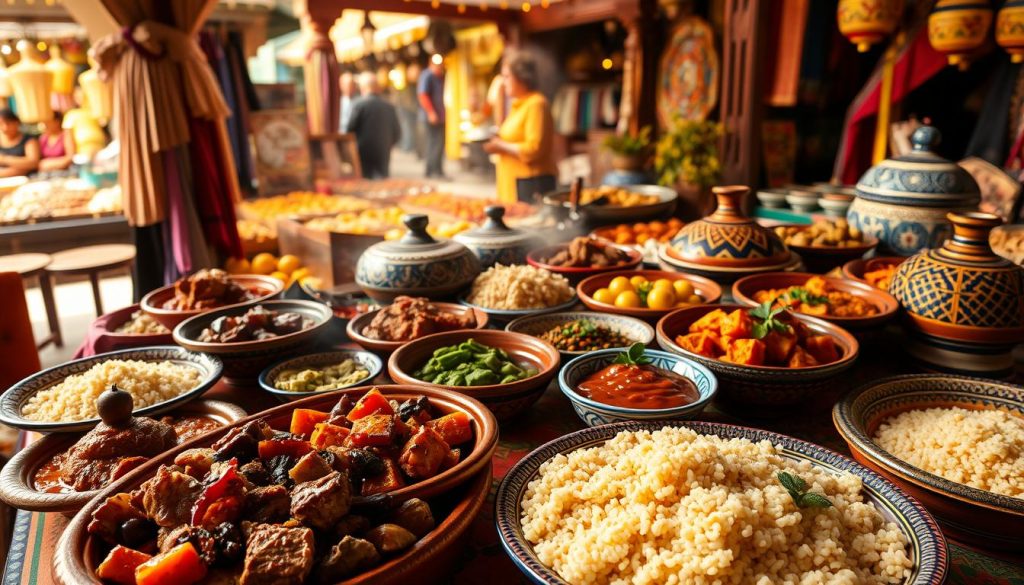
By the end of the cooking class, you’ll know how to make many authentic Moroccan dishes. This includes tagines, couscous, salads, and sweet pastries.
The Magic of Moroccan Spices and Ingredients
Exploring Moroccan cooking reveals the magic in its spices and ingredients. Moroccan food is famous for its rich spice mixes, like Ras el Hanout. It also uses fresh herbs and preserved lemons.
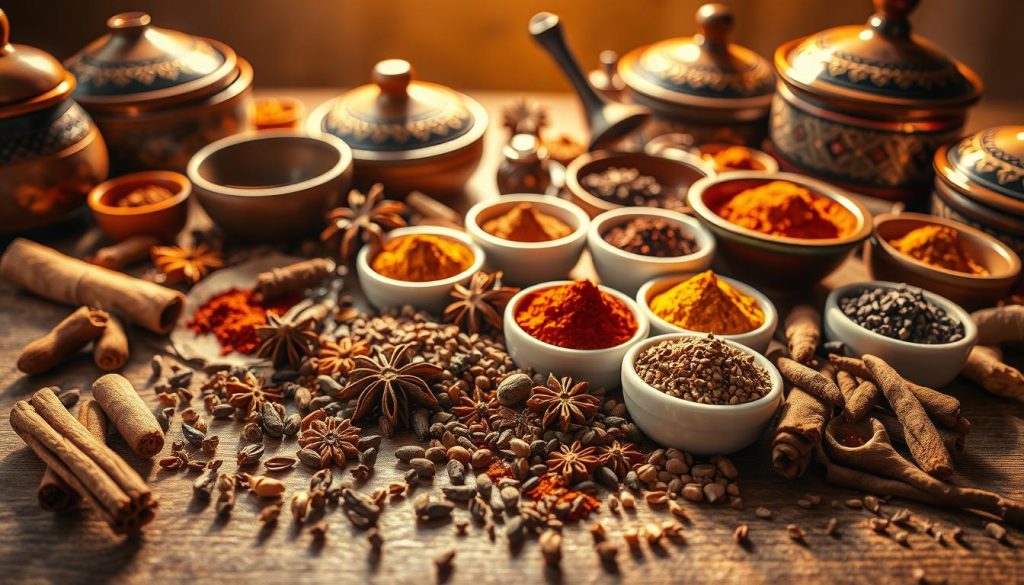
Understanding Ras el Hanout and Other Spice Blends
Ras el Hanout, meaning “head of the shop,” is a mix of over 30 spices. It includes cinnamon, cumin, coriander, turmeric, and cardamom. This blend is key in Moroccan cooking, adding depth and warmth to dishes like tagines and couscous.
Chermoula is another important blend, used to flavor fish and meat. Moroccan curry powder also adds a rich, spicy flavor to various dishes.
Fresh Herbs in Moroccan Cooking
Fresh herbs are vital in Moroccan cuisine. Parsley, cilantro, and mint are commonly used. They add freshness and aroma, balancing the spice blends.
“The use of fresh herbs is what gives Moroccan cuisine its bright, vibrant flavor. It’s an essential component that elevates the dishes from rich and spicy to balanced and refreshing.”
Preserved Lemons and Unique Ingredients
Preserved lemons, or pickled lemons, are a key ingredient in Moroccan cooking. They add a salty, tangy flavor to tagines, salads, and more. Other unique items include argan oil and orange blossom water, used for cooking and as finishing touches.
Where to Purchase Authentic Spices in Marrakech
For a true Marrakech culinary experience, visit local markets. Souks like Jardin Majorelle and the Medina’s bustling streets offer a wide range of spices and ingredients. Choose vendors with freshly ground spices for the best flavor.
- Visit local souks and markets to explore a variety of spices and ingredients.
- Opt for vendors who offer freshly ground spices for the best flavor.
- Don’t hesitate to ask vendors for recommendations on the best spices and blends for your needs.
By using authentic Moroccan spices and ingredients, you can recreate Marrakech’s flavors at home. This brings a piece of the Marrakech culinary experience into your kitchen.
Best Moroccan Cooking Class Marrakech Options
Marrakech has many cooking classes, each showing a different side of Moroccan cooking. You can pick from classes in riads, chef-led experiences, or family home cooking. There’s something for everyone.
Riad-Based Cooking Schools
Riad cooking schools give you a real taste of Moroccan cooking. Two great options are:
- La Maison Arabe Cooking Workshop: Known for its detailed cooking classes, La Maison Arabe lets you dive deep into Moroccan cuisine.
- Riad Dar Les Cigognes: This riad teaches traditional Moroccan dishes with fresh ingredients and old techniques.
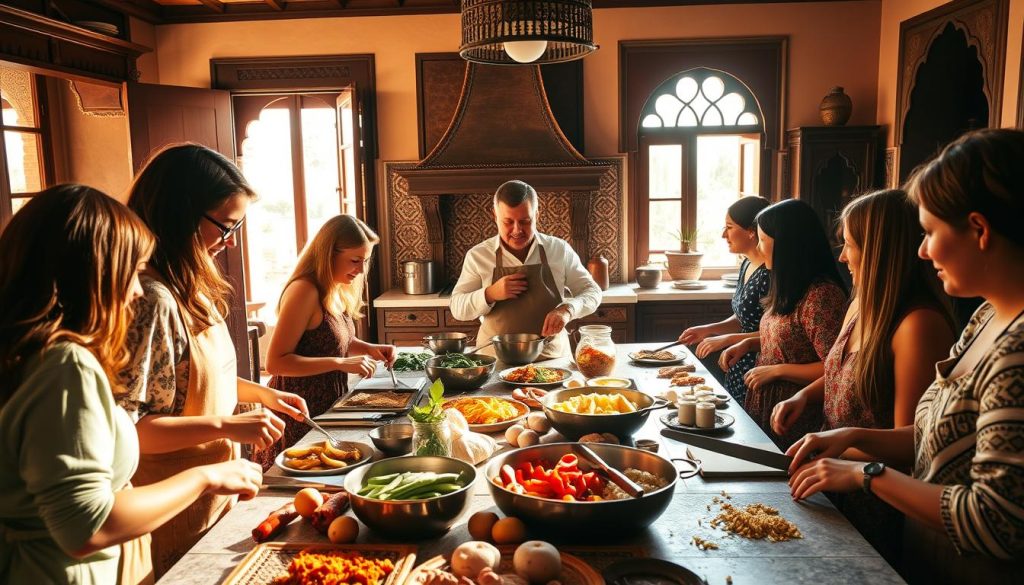
Chef-Led Culinary Experiences
For those who love learning from chefs, Marrakech has many options. These classes often include market visits. You’ll learn about the ingredients and spices used in Moroccan cooking.
Family Home Cooking Classes
Family home cooking classes are warm and welcoming. You’ll learn traditional Moroccan recipes in a cozy setting. Enjoy the warmth of Moroccan hospitality while learning local dishes.
Luxury Resort Cooking Workshops
Luxury resorts in Marrakech also offer cooking workshops. These are led by skilled chefs. You’ll learn to cook while enjoying the resort’s luxury, making for a unique and relaxing experience.
Pricing and Value Comparison
Prices for cooking classes in Marrakech vary. Riad and family home classes start around $50 per person. Luxury resort workshops cost more, from $100 to $200 per person. Think about what you get, like market visits and meal tastings, when comparing prices.
“The best cooking classes in Marrakech are those that offer a combination of traditional techniques, fresh ingredients, and cultural immersion.”
Choosing the right cooking class lets you learn new skills and appreciate Moroccan culture more.
Traditional Cooking Techniques and Tools
Explore Morocco’s rich culinary heritage in a Marrakech cooking class. Local experts will teach you to make authentic Moroccan dishes.
Mastering the Tagine Pot
The tagine pot is key in Moroccan cooking. You’ll learn to make various dishes in this clay pot. It cooks food slowly, making stews rich and flavorful.
The Art of Hand-Rolling Couscous
Couscous is a big part of Moroccan food. You’ll learn to roll it by hand, a skill that takes patience and practice.
Bread Baking in Communal Ovens
Baking bread is a big part of Moroccan cooking. You’ll learn to make traditional bread and bake it in a communal oven.
Tea Preparation Rituals
Tea is a big deal in Morocco. You’ll learn how to make mint tea, a drink that shows hospitality. Mint tea is a big part of Moroccan culture.
The Significance of Mint Tea in Moroccan Hospitality
Mint tea is more than a drink in Morocco. It’s a sign of welcome and respect. You’ll learn its role in Moroccan culture.
Perfecting the Pour
Pouring tea is an art. You’ll learn to pour tea from a height, a skill that takes practice.
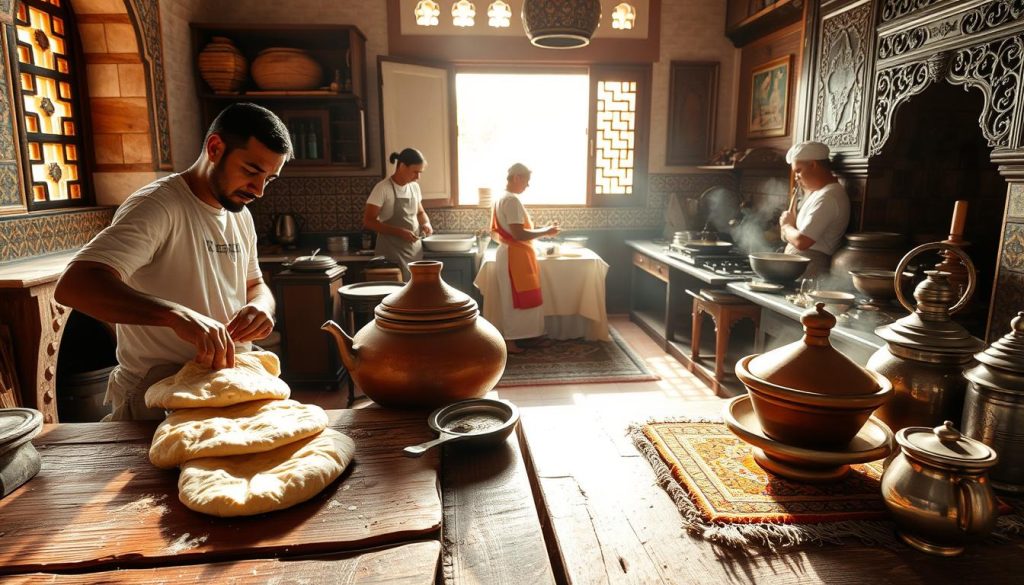
By learning these cooking techniques, you’ll make authentic Moroccan dishes. You’ll also appreciate Morocco’s rich culinary heritage.
- Learn traditional cooking techniques, including mastering the tagine pot and hand-rolling couscous.
- Understand the significance of tea preparation rituals in Moroccan culture.
- Appreciate the art of bread baking in communal ovens.
Planning Your Marrakech Culinary Experience
To enjoy Morocco’s true flavors, plan your Marrakech food trip carefully. A good plan helps you dive deep into the local dishes.
Best Time to Visit for Culinary Experiences
The best times to visit Marrakech for food are spring (March to May) and autumn (September to November). The weather is nice then. You can enjoy cooking classes and market visits outside.
As a local chef said,
“The freshness of spring ingredients is unmatched, making it the perfect time to learn about Moroccan cuisine.”
Booking Tips and Considerations
When booking a cooking class, think about the cuisine, the chef’s skills, and the class size. A hands-on cooking class Marrakech is more fun. Classes that include market visits are great for learning about local ingredients and cooking methods.
What to Bring and How to Prepare
Wear comfy clothes and closed-toe shoes to a cooking class. Bring a notebook for recipes and tips. Being ready and open to new things will make your learn Moroccan cuisine trip better.
Dietary Restrictions and Accommodations
Many Marrakech cooking schools can handle dietary needs if you tell them ahead of time. Let them know if you need vegetarian or gluten-free dishes for an inclusive experience.
Extending Your Culinary Adventure
For a richer experience, try food tours or local markets. They let you explore more of Moroccan cuisine. You’ll also meet other food lovers.
Conclusion: Bringing Morocco’s Flavors Into Your Kitchen
After your Moroccan cooking class in Marrakech, you’ll know how to make real Moroccan dishes at home. You’ll learn about traditional cooking methods. This lets you try new flavors and ingredients, bringing Morocco’s taste to your kitchen.
Learning to cook Moroccan food means you can make tasty meals and share Morocco’s culture with your family. The skills and knowledge from your class will keep inspiring you to try more Moroccan dishes.
Now, you’re all set to cook Moroccan dishes in your kitchen. Use the skills and knowledge from your class to make delicious meals. Start cooking with the authentic Moroccan recipes and traditional cooking techniques you learned in Marrakech.