

Comparing Durban vs Cape Town Living Costs: What You Need to Know
Thinking about moving to South Africa? Wondering which city is more affordable? Knowing the living costs in Durban and Cape Town is key.
Housing, food, transport, and utilities costs differ a lot between these cities. Durban is often cheaper in these areas than Cape Town.
When choosing, think about how these costs will affect your life and money. Looking at the cost differences helps you decide which city suits you best.
Overview of Durban and Cape Town
When deciding between Durban and Cape Town, it’s key to look at the basics of each city. Both cities have their own special traits that affect living costs and quality of life.
Durban: The Coastal Economic Hub
Durban is famous for its warm weather and busy ports. It’s a big economic center in South Africa. Its coastal spot makes it a hit with tourists and businesses.
Geography and Climate Factors
Durban sits on coastal plains with hills around it. It has a subtropical climate, with hot summers and high humidity all year. This climate can raise energy costs, mainly for cooling in summer.
Economic Profile
Durban’s economy is varied, with big industries like manufacturing, tourism, and trade. Its port is one of South Africa’s busiest, boosting the economy. Key sectors include:
- Manufacturing: Automotive and textile industries are big.
- Tourism: Durban’s beaches and cultural spots attract visitors.
- Trade: The port handles a lot of imports and exports.
Cape Town: The Tourist Destination
Cape Town is known for its natural beauty, like Table Mountain and its coastline. Its economy mixes tourism, business, and tech.
Geography and Climate Factors
Cape Town has mountains and coastal areas. It has a Mediterranean climate, with wet winters and dry summers. This climate shapes housing and infrastructure, focusing on saving water in dry times.
Economic Profile
Cape Town’s economy is strong, thanks to tourism, finance, and tech. Its appeal to tourists and businesses keeps the economy stable. Notable sectors include:
- Tourism: Places like Table Mountain and Cape of Good Hope boost tourism.
- Financial Services: Cape Town is a key spot for finance and business.
- Technology: The city is growing in tech, with many startups and big companies.

Knowing the basics of Durban and Cape Town helps compare living costs. This knowledge helps decide which city fits your lifestyle and budget better.
Durban vs Cape Town Living Costs: A General Comparison
When deciding between Durban and Cape Town, living costs are key. Knowing these costs helps you choose the best city for your lifestyle and budget.
Overall Cost Index Comparison
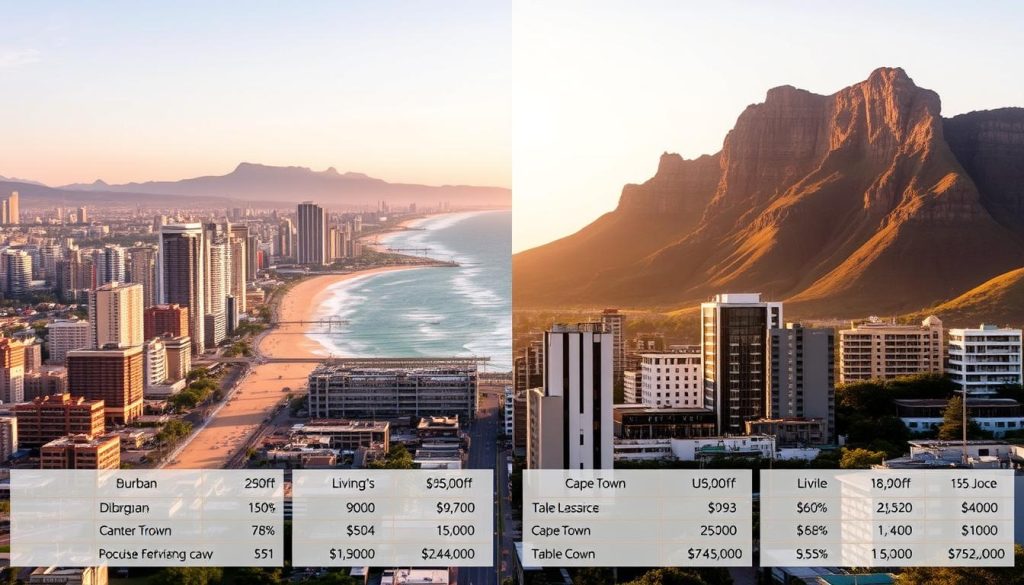
Durban is cheaper than Cape Town, except for rent. Durban’s living costs are 10.9% lower, and rent is 44.5% cheaper. This big difference is important if you’re moving for work or other reasons.
Consumer Price Index Differences
The Consumer Price Index (CPI) shows how affordable a place is. Durban’s CPI is lower, making life more affordable. This is mainly because of housing, food, and transport costs.
Purchasing Power Comparison
In Durban, your salary stretches further because of lower costs. A financial expert says, “The same salary can offer a better lifestyle in Durban than in Cape Town because of lower living expenses.”
Salary Differences Between Cities
Salaries in Durban and Cape Town differ based on industry, experience, and job type. Cape Town often pays more, mainly in tech and finance.
Average Income Levels
Cape Town’s average incomes are higher, showing it’s a major economic center. But, the higher cost of living there might balance out the salary benefits.
Job Market Opportunities
Both cities have various job opportunities, but they differ. Cape Town’s tech industry is booming, while Durban’s economy is more spread out, with big contributions from manufacturing and trade.
Choosing between Durban and Cape Town depends on your priorities, lifestyle, and finances. By looking at living costs, salaries, and job chances, you can pick the best city for you.
Housing Expenses Comparison
When deciding between Durban and Cape Town, housing costs are key. Knowing these costs helps you choose the best city for your budget and lifestyle.
Rental Market Analysis
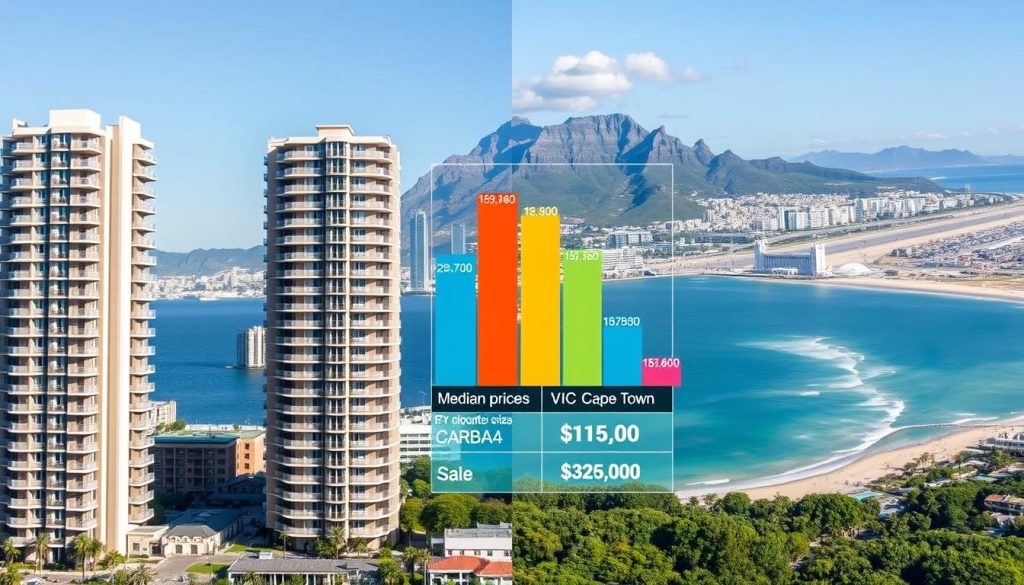
The rental markets in Durban and Cape Town are quite different. Rent prices in Durban are notably lower, about 44.5% less than in Cape Town.
City Center Accommodation Costs
City center living is pricey in both cities. But, Cape Town’s city center is more expensive. This is due to high demand and limited supply.
You’ll pay a lot for a one-bedroom apartment in Cape Town’s city center.
Suburban Housing Prices
Suburbs offer cheaper housing in both cities. Durban’s suburbs are very affordable. You can find bigger homes for less money than in Cape Town.
Property Purchase Costs
Buying property has its perks in both cities. Cape Town’s market is more varied, with luxury homes available. Durban, though, has more affordable options.
Real Estate Investment Potential
Both cities are good for real estate investments. But, the returns differ. Cape Town’s market is more profitable in some areas. Durban offers cheaper investment options with good rental yields.
Neighborhood Price Variations
Prices vary by neighborhood in both cities. In Cape Town, Claremont and Sea Point are pricey. Durban’s Brackenham and Mitchell Park offer more affordable choices.
Choosing between Durban and Cape Town depends on your budget and priorities. By looking at rental and property costs, you can make a better choice for your needs.
Food and Grocery Costs
When deciding between Durban and Cape Town, looking at food and grocery prices is key. These costs are a big part of living expenses in any city.
Supermarket Prices Comparison
Groceries are 9.6% cheaper in Durban than in Cape Town. This makes Durban a good choice for saving money on household items. It’s important to compare prices for both basic foods and local vs. imported products.
Essential Food Items Pricing
The prices of basic items like bread, milk, and rice differ between cities. Here’s a look at some essential items:
| Item | Durban Price (R) | Cape Town Price (R) |
|---|---|---|
| Milk (1L) | 15.50 | 17.00 |
| Bread (500g) | 10.00 | 11.50 |
| Rice (1kg) | 20.00 | 22.00 |
Local vs. Imported Products
Choosing between local and imported goods can impact your grocery bill. Local items are often cheaper and can save you money.
“Buying local not only supports the local economy but can also be more cost-effective.”
Dining Out Expenses
Dining out is 26.1% cheaper in Durban than in Cape Town. This makes eating out more affordable in Durban.
Restaurant Price Ranges
The cost of eating out varies a lot. It depends on the restaurant type and location.
- Fast food meal: R 60 – R 100
- Mid-range restaurant meal: R 150 – R 300
- Fine dining: R 500+ per person
Coffee Shops and Fast Food Costs
Coffee and fast food are common choices. Prices for these are generally lower in Durban.

Transportation and Commuting Expenses
Transportation costs can greatly affect your lifestyle in Durban and Cape Town. It’s key to compare these costs when deciding where to live. Knowing these expenses helps you make a smart choice.
Public Transportation Options and Costs
Both Durban and Cape Town have buses, trains, and taxis for public transport. But, the prices for these services are different.
Bus and Train Services
In Durban, bus and train services are affordable, with monthly passes available. Cape Town also has a good bus and train network, with prices that are competitive.
Taxi and Ride-sharing Prices
Taxi fares in Durban are a bit higher than in Cape Town, mainly during busy times. Both cities offer ride-sharing services, with prices changing based on demand.
Vehicle Ownership and Fuel Expenses
If you own a vehicle, costs go beyond the car’s price. You also have to think about fuel, maintenance, and parking.
Car Purchase and Maintenance Costs
Buying a car in Durban and Cape Town costs about the same. But, maintenance costs can change based on the car’s type and model.
Fuel Prices and Parking Fees
Fuel prices are the same in both cities. But, parking fees can be very different, often higher in city centers.
| Expense Category | Durban | Cape Town |
|---|---|---|
| Monthly Public Transport Pass | R 800 | R 750 |
| Average Fuel Cost (per liter) | R 20 | R 20 |
| Average Monthly Parking Fee | R 1,500 | R 1,200 |
Transportation costs in Durban are a bit higher than in Cape Town, by 0.1%. This difference might influence where you choose to live, based on your travel needs and preferences.
Utilities and Basic Services
The cost of utilities and basic services can greatly affect your choice between Durban and Cape Town. These costs include electricity, water, internet, and mobile services. They vary between the two cities, impacting your living costs.
Electricity and Water Costs
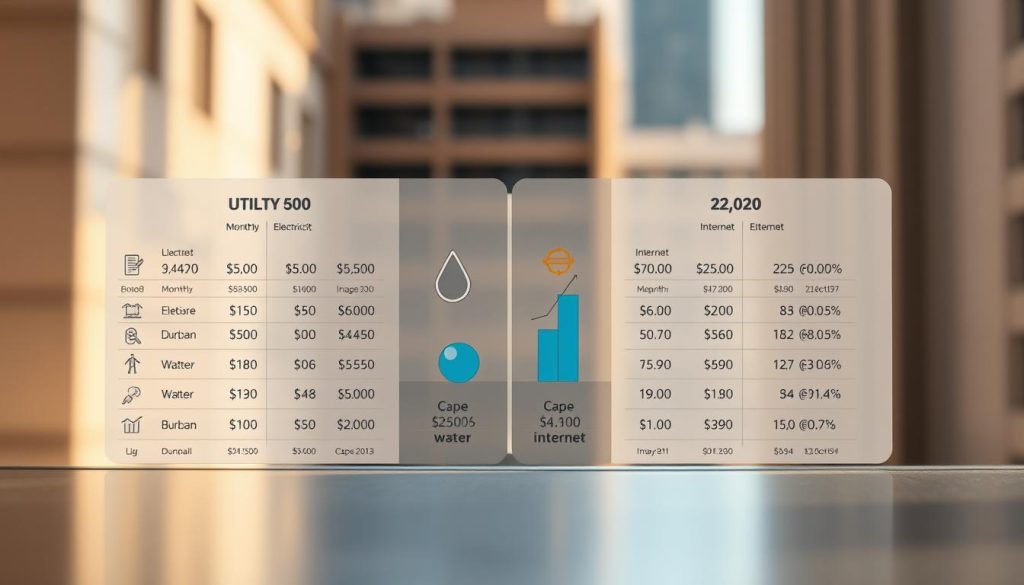
Electricity and water are big parts of your utility bills. In Durban, these costs are often higher than in Cape Town.
Monthly Utility Averages
A household in Durban might spend R2,000 to R3,000 monthly on electricity and water. Cape Town’s average is R1,800 to R2,800 for the same services.
Seasonal Variations
Seasonal changes affect utility costs. Durban’s mild winters mean stable electricity costs. Cape Town sees more seasonal changes.
Internet and Mobile Services
Internet and mobile services are key for daily life. Both Durban and Cape Town offer various plans from different providers.
Broadband Options and Pricing
Major providers like Telkom and VodaCom offer broadband in both cities. Prices vary by speed and data, from R500 to R1,500 monthly.
Mobile Data and Call Plans
Mobile services have many plans for different needs. Costs range from R200 to R1,000 monthly, based on usage.
When comparing utilities and basic services costs in Durban and Cape Town, consider these factors. This will help you decide which city fits your budget best.
Cost Considerations for Different Lifestyles
Thinking about moving to Durban or Cape Town? It’s key to know how different lifestyles affect costs. Your choices can really change how much you spend. Knowing this helps you budget better.
Expat Budget Planning
As an expat, your budget is shaped by many things. Currency exchange implications are big ones. A strong currency stretches your money, but a weak one increases costs.
Currency Exchange Implications
Changes in currency rates can change your living costs. For example, a strong Rand can lower your expenses if you earn in USD.
American Expat-Specific Considerations
American expats face unique costs. Health insurance in South Africa can be pricey. You also need to budget for flights back to the US.
Family vs. Single Living Costs
Families and singles spend differently. Families need more for homes, schools, and activities.
Family of Four Budget Breakdown
A family of four spends more on housing, food, and transport. Here’s a rough guide:
| Expense Category | Durban | Cape Town |
|---|---|---|
| Rent | $1,200 | $1,500 |
| Groceries | $800 | $1,000 |
| Transportation | $300 | $400 |
Single Person Expenses
Single people spend less. Here’s a quick estimate:
| Expense Category | Durban | Cape Town |
|---|---|---|
| Rent | $600 | $800 |
| Groceries | $300 | $400 |
| Transportation | $150 | $200 |
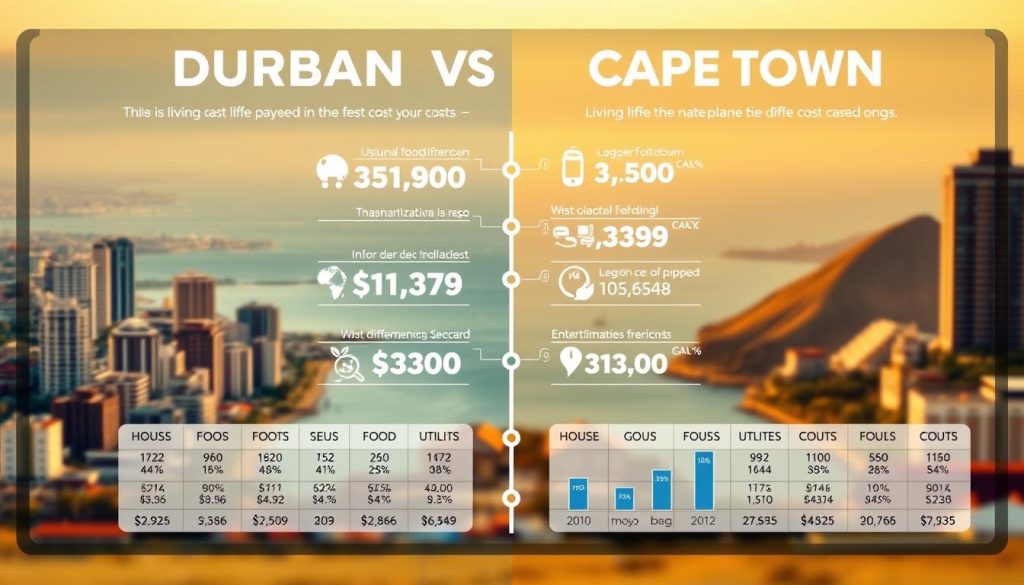
Knowing these costs helps you choose the best city for your lifestyle and budget.
Conclusion
When comparing Durban vs Cape Town living costs, several factors come into play. You have seen how these two major South African cities differ across various expense categories.
Durban generally offers a lower cost of living compared to Cape Town, making it an attractive option for those looking to relocate. The cost of living comparison between the two cities reveals that Durban has lower housing expenses, food, and transportation costs.
As you weigh your options, consider your lifestyle and preferences. If you prioritize affordability without compromising on quality of life, Durban might be the better choice. On the other hand, Cape Town’s unique blend of urban and natural attractions may justify its higher living costs for some.
Ultimately, understanding the Durban vs Cape Town affordability will help you make an informed decision that suits your needs and budget.





