Top Must-See Attractions in Vientiane Revealed
Ever wondered about the hidden gems in Laos’ capital? Vientiane is a city rich in history and culture. It invites you to explore its amazing attractions that will change how you see this lively city. You’ll find everything from the bustling Night Market to the stunning Pha That Luang Golden Stupa, built in 1566.
Each place has its own story, pulling you into Laos‘ heritage and warmth.
Exploring Vientiane, you’ll learn about important sites like the Patuxai Monument. It celebrates Lao independence. And there’s the Buddha Park, filled with over 200 fascinating statues.
Whether walking by the Mekong River or visiting old temples, Vientiane’s attractions are waiting for you.
Introduction to Vientiane
Vientiane, the capital of Laos, sits on the Mekong River’s banks. It offers stunning views that draw in visitors. This city has a population of over half a million, making it the smallest capital in the region.
A Vientiane travel guide shows a city that mixes old and new cultures. It’s influenced by French colonial times.
When you start exploring Vientiane, you’ll see attractions in different areas. Getting around is key to seeing everything. You can try local markets and food, from cheap to mid-range, showing the city’s variety.
There are many cultural and religious festivals in Vientiane. Events like the That Luang Festival and Vientiane Boat Races happen all year. These festivals help you understand the local culture and connect with the community.
Must-see spots include the Patuxay Victory Monument, That Luang (Great Stupa), and Wat Si Saket. They make your trip unforgettable.

Vientiane has many museums, like the COPE Visitor Centre. They tell stories of Laos’ history and culture. As you explore, you’ll find Vientiane’s calm yet lively vibe. It’s a place that leaves lasting memories.
Exploring Vientiane Attractions
Vientiane is full of amazing attractions that show off the city’s rich culture. As you explore this lively capital, you’ll find many points of interest. These spots reveal Laos’ interesting history and traditions.
Places like the Patuxai Monument and Buddha Park have their own stories. The Vientiane Night Market is open from 6 PM to 10 PM. It’s great for trying local food and finding unique crafts.
The bicycle route from Vientiane to Luang Prabang is 430 km long. It’s a favorite among cyclists for its beautiful views.
The COPE Visitor Centre is a key place for learning. It teaches about the Lao Civil War and the impact of unexploded ordinances. This centre helps victims of these dangers.
Wat Si Saket is a must-see for its huge collection of Buddhist sculptures. Buddha Park, just outside the city, has over 200 statues. A 40-meter high sleeping Buddha is a highlight.
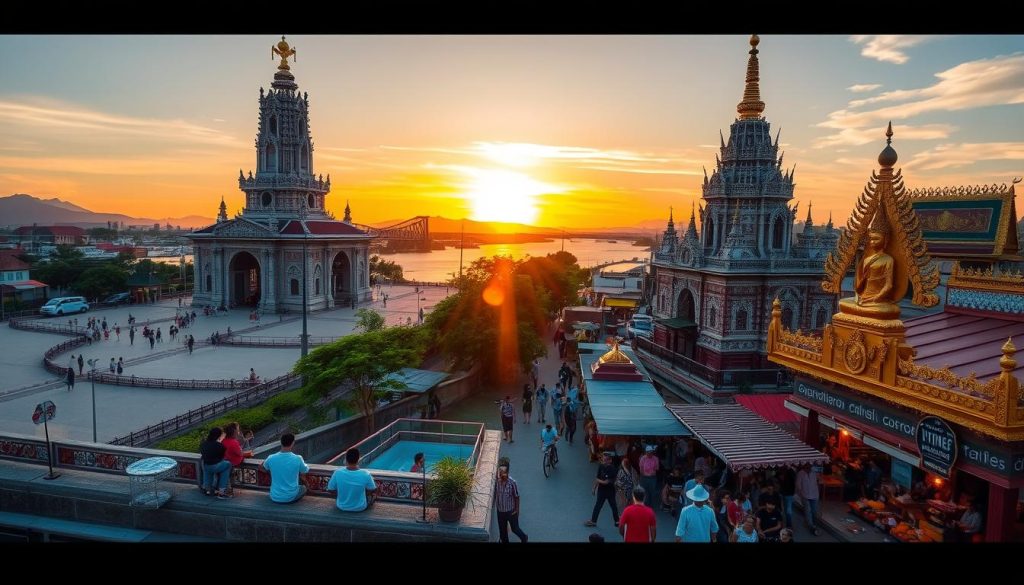
Vientiane is a place full of culture and history. Each attraction offers a new view into Laos’ traditions and spirit. Get ready for an exciting journey through Vientiane’s best spots.
What are the must-see attractions in Vientiane?
Visiting Vientiane reveals a wealth of landmarks that showcase the city’s essence. These sites offer a peek into Laos’ rich culture, history, and spirituality. Each landmark is a visual marvel and a testament to Laos’ heritage. Exploring these spots will deepen your understanding of Laotian life.
Overview of Key Landmarks
The main Vientiane landmarks are:
- Patuxai Monument: This grand structure resembles the Arc de Triomphe and symbolizes Laotian independence.
- Pha That Luang: The country’s national symbol, recognized for its iconic gold-colored stupa.
- Buddha Park: A unique area filled with intriguing Buddhist sculptures and artistic expressions.
- Wat Si Saket: The oldest temple in the city, showcasing a wealth of historical significance.
Importance of Each Attraction
Exploring these landmarks deepens your understanding of Laotian culture and history:
- Patuxai Monument stands as a symbol of resilience, representing those who fought for the nation’s independence.
- Pha That Luang is revered for its spiritual significance and is a centerpiece of many national celebrations.
- Buddha Park reflects the country’s artistic heritage, combining religion and creativity.
- Wat Si Saket provides insights into the spiritual and cultural evolution of Lao Buddhism.
These Vientiane landmarks capture key themes in Laotian culture like independence, spirituality, and artistry. A visit to these attractions will not only captivate your senses but also foster a profound appreciation for the spirit and traditions of Laos.

Patuxai Monument: The Arc de Triomphe of Laos
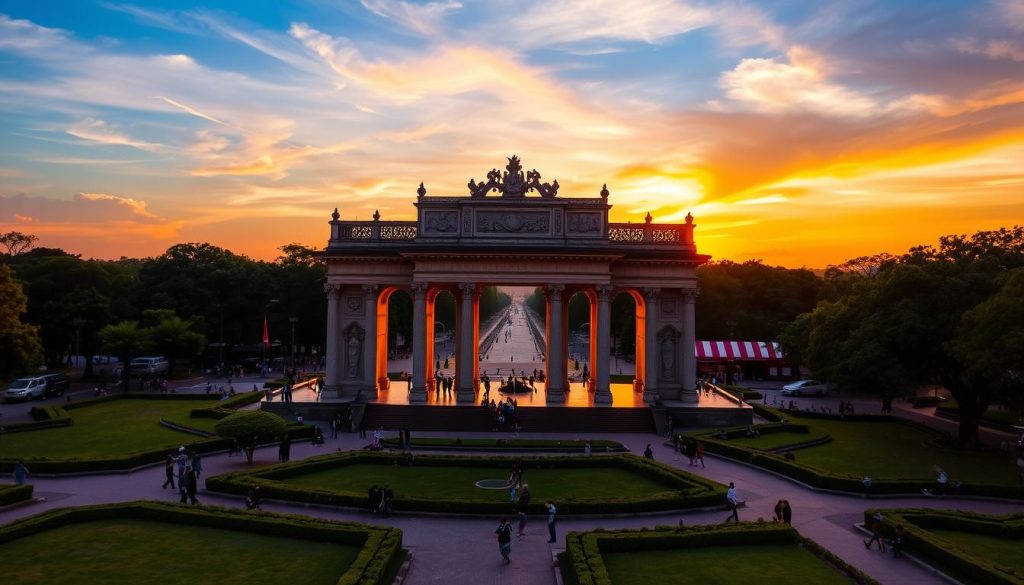
The Patuxai Monument is a symbol of Laos’ strength and pride. It was finished in 1968 to honor those who fought for freedom from France. Its design, like the Arc de Triomphe in Paris, adds Laotian touches, making it special. The Patuxai Monument history shows its beauty and deep meaning to Laotians.
History and Significance
Work on the Patuxai Monument started in 1957, with help from the U.S. government. It stands 55 meters tall, with four sides and seven levels. It has intricate designs, like Buddha-shaped windows and Ramayana bas-reliefs, showing Laotian art and culture.
Visiting Tips and Views
Plan your visit to the Patuxai Monument. The entrance costs 3,000 Kip, or about 38 US cents. It’s open from 08:00 to 16:30 on weekdays and until 17:00 on weekends. Climb the stairs to see amazing views of Vientiane. Sunset is the best time for these views.
Pha That Luang: The Golden Stupa
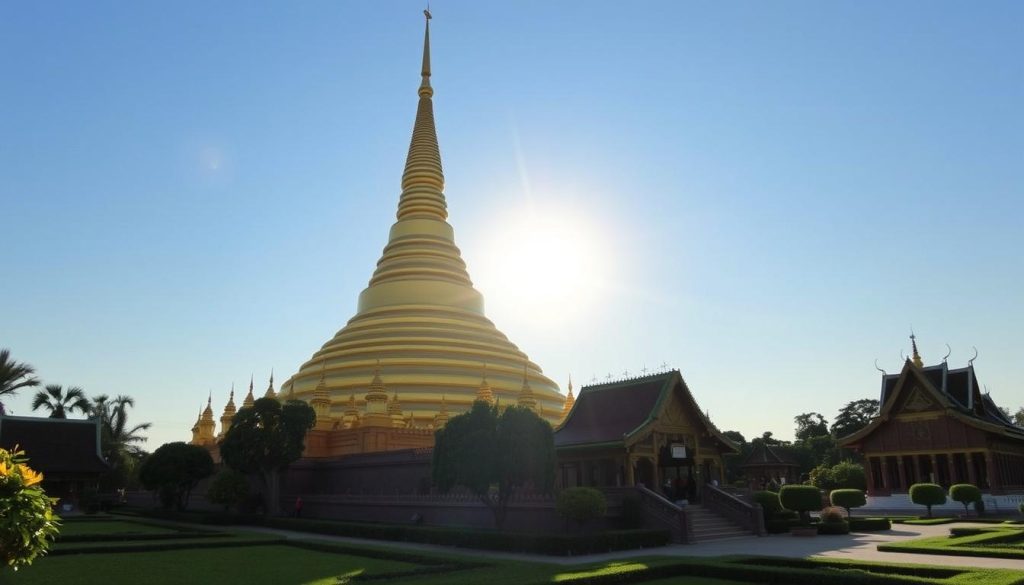
Pha That Luang is the most revered religious monument in Laos. It shines brightly with its golden glow. Located about 4 km from Vientiane’s heart, it stands tall at 148 feet (45 meters). The complex around it covers about 2.2 hectares.
The Pha That Luang significance comes from its history. It’s believed to hold a relic of the Buddha’s breastbone. The original structure dates back to the 3rd century. The most significant rebuild happened in 1566, thanks to King Setthathirat.
Historical Background
Pha That Luang has three levels, each representing a part of Buddhist teachings. It’s covered in gold leaf, making it a symbol of Laos. Visitors can enter for a small fee of 5,000 Lao Kip (about $0.55 USD).
This lets them experience the peaceful atmosphere and the deep meaning of this sacred place.
Experience the Boun That Luang Festival
Every November, Pha That Luang comes alive with the Boun That Luang Festival. It draws both locals and tourists. The festival includes candlelight processions, fireworks, and traditional ceremonies.
Participating in this festival offers a glimpse into Lao spiritual traditions. It celebrates the nation’s rich cultural heritage.
Buddha Park: A Unique Cultural Experience
About 25 kilometers southeast of Vientiane, you’ll find Buddha Park, also known as Xieng Khuan. It’s a top spot for sightseeing, with over 200 Hindu and Buddhist statues. Created by Luang Pu Bunleua Sulilat in 1958, it mixes mythological scenes with religious figures. This lets you dive into the art of two big cultures.
Getting to Buddha Park is easy. You can choose from several ways to travel:
- Bus No. 14 from Talat Sao Bus Station costs 12,000 Lao kip (about USD 0.70).
- Scooter rentals are about 70,000 Lao kip (USD 4), plus extra for petrol.
- Tuk-tuk rides for a round trip cost around 200,000 Lao kip (USD 19).
- Taxis offer a round trip for about 300,000 Lao kip (USD 28).
When you get there, the entrance fee is just 40,000 Lao kip (about USD 2.30). The park is open from 8 a.m. to 4 p.m. The grounds, renovated in 2017, have walkways and better facilities for visitors.
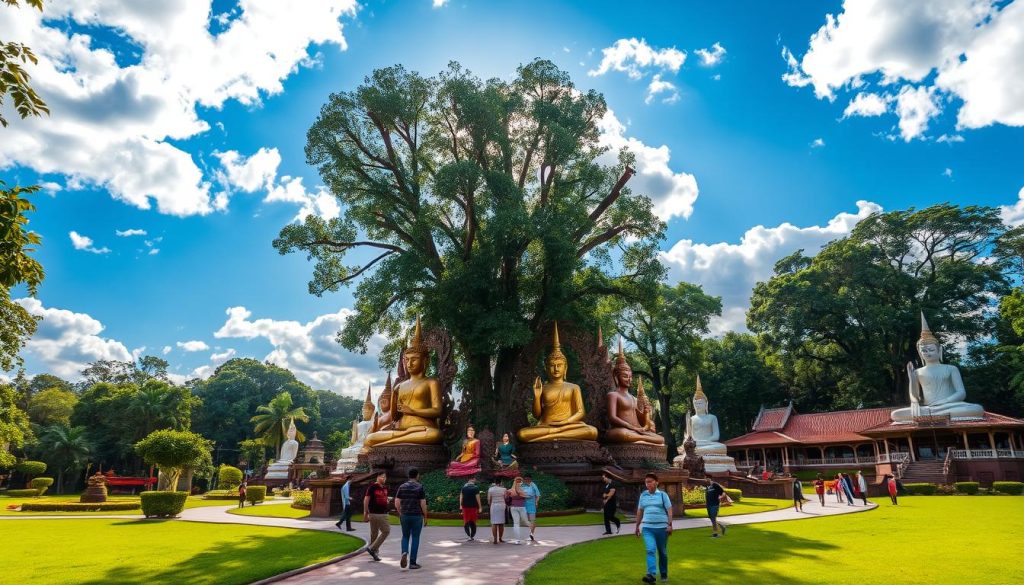
In the park, you’ll see statues of deities like Shiva, Vishnu, and Indra, along with big Buddha figures. There’s a 40-meter reclining Buddha. Each statue has special mudras, showing teachings and stories from Buddhism and Hinduism. Your visit lets you get close to the art, deepening your understanding of the cultural heritage.
To fully enjoy your visit, remember to respect the site’s spiritual value. Wear comfy clothes, sunscreen, and good shoes for walking, as it can be sunny. If you want to learn more about the sculptures, think about getting a local guide.
COPE Visitor Centre: Understanding Laos’ History
The COPE Visitor Centre is a powerful reminder of Laos’ struggles after war. It opened in 1997 to help those hurt by war, like those affected by unexploded ordnance from the Vietnam War. It’s a place where you can learn about the COPE Visitor Centre’s history and its role in Laos’ story.
Impact of the Lao Civil War
Laos was hit hard by war, being the most bombed country per capita. Over two million tons of bombs were dropped during the Vietnam War era. Today, unexploded ordnance still harms communities. The COPE Visitor Centre teaches visitors about this dark history and the dangers of these bombs.
COPE’s Role in Recovery
COPE’s main goal is to help those hurt by unexploded ordnance. It offers free entry and asks for donations to support its work. The center shares powerful stories of survivors through documentaries in many languages.
Here are some key highlights of what the COPE Visitor Centre offers:
- Daily openings from 8:30 AM to 4:00 PM.
- A gift shop featuring items made by local artisans, with proceeds supporting COPE’s mission.
- Proximity to the Vientiane Center Lao shopping mall, making it easily accessible.
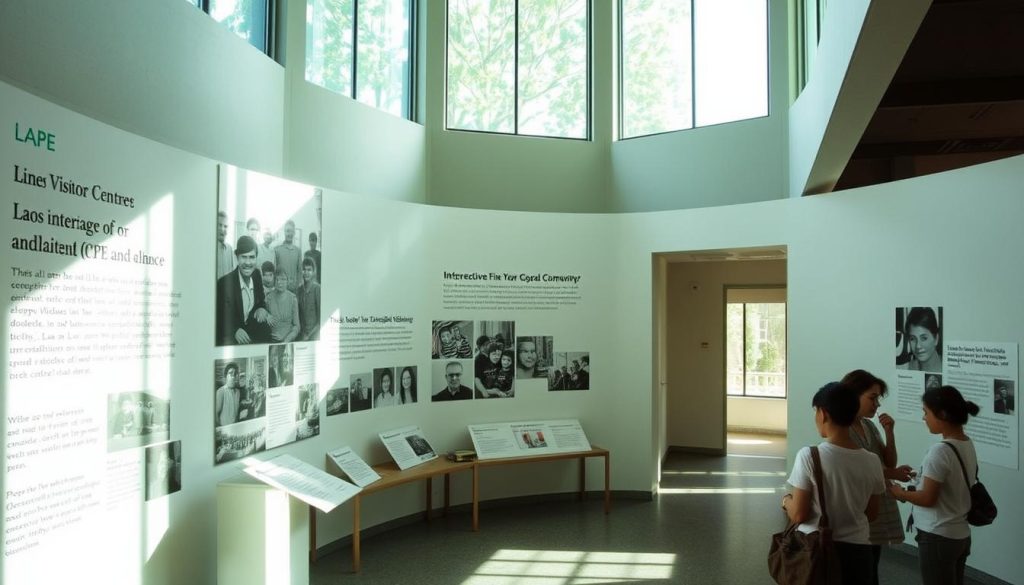
Visiting the COPE Visitor Centre lets you see the strength of people and communities in Laos. It shows the importance of awareness and support for those affected by war. It’s a chance to appreciate the efforts to help UXO survivors.
Wat Si Saket: A Journey Through Time
Wat Si Saket, built in 1818 by King Chao Anuvong, is the oldest temple in Vientiane. It shows the rich culture and history of Laos. This temple has seen a lot, including the Siamese occupation, making its story even more interesting.
The temple is peaceful, inviting you to explore its spiritual surroundings. It’s a place where history and culture come alive.
Wat Si Saket is famous for its over 2,000 Buddha statues, some from the 13th century. You’ll see many styles along the temple’s corridors. The walls have more than 300 Buddha statues, made from wood, stone, or tin.
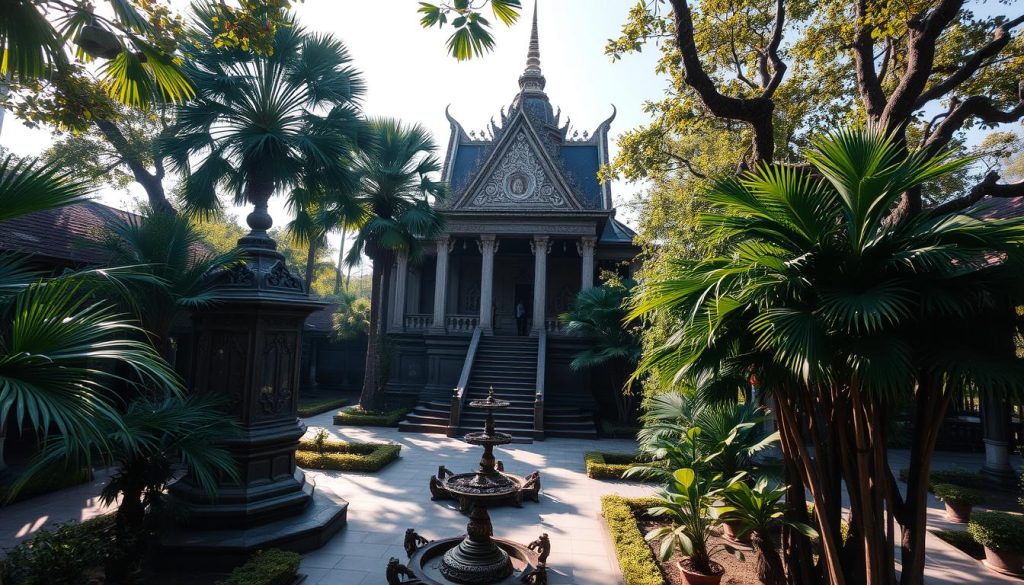
The Central Praying Hall is like a museum. It has over 8,000 valuable books and 6,840 Buddha statues. These statues are made from bronze, stone, wood, silver, or plaster.
The library here is nearly 400 years old. It has ancient Buddhist scriptures written on palm leaves. This is a treasure trove for those who want to learn about Buddhism.
Monks at Wat Si Saket still go on mendicant journeys for meals. This shows the temple’s strong connection to the local community. Visitors can see how locals give food to monks as a sign of respect and to wish for peace and health.
This temple is not just a place of worship but also a heritage site. The Wat Si Saket history is felt everywhere. Visiting here is a chance to learn about Laos’ spiritual and historical significance. It’s a must-see on your trip to Vientiane.
Night Market: Shopping and Local Cuisine
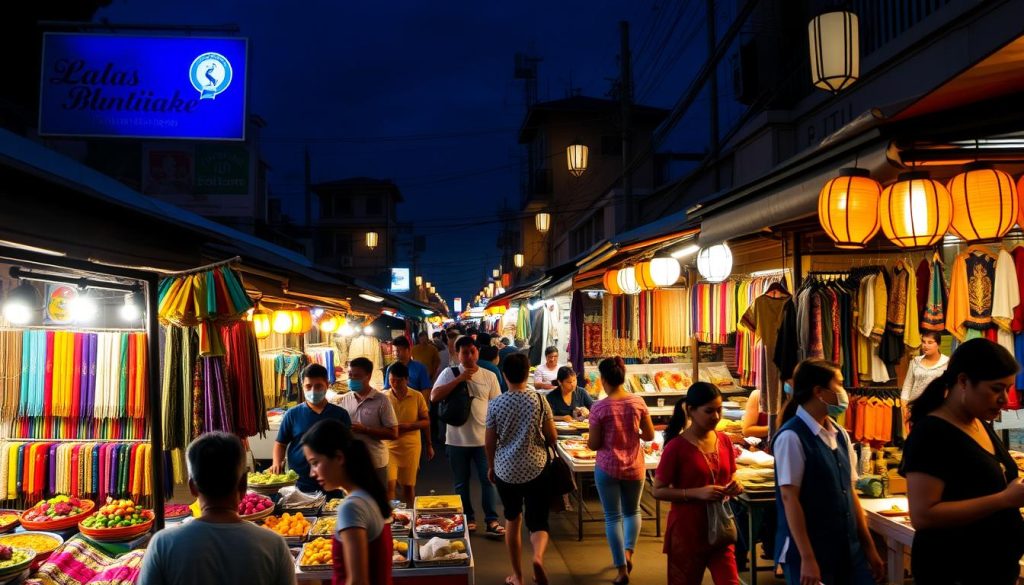
The Night Market in Vientiane is a lively spot for shopping and trying local food. As night falls, the market lights up along the Mekong River. You’ll find everything from clothes to gadgets and special crafts.
The market’s fun vibe makes it great for bargaining. It’s a way to support local sellers while having fun.
What to Expect at the Night Market
This market is open every day, from 18:00 to 22:00. You’ll see handmade items and souvenirs that make perfect gifts. The vendors speak English and French, making it easy to chat.
This mix of cultures adds to your Vientiane travel guide experience.
Popular Street Food Options
Trying the local food at the Night Market is a must. Here are some favorites:
- Grilled meat skewers
- Sticky rice dishes
- Deep-fried frogs and fish
- Laos-style baguette sandwiches from Khao Gee Mae Sab
- Fresh green papaya salad from Tam Luang Prabang
Visit each stall to taste authentic Lao flavors. This will enrich your Vientiane travel guide, showing you the local culture through food.
Conclusion
Vientiane may not be the top choice for travelers in Laos. Yet, it has a lot to offer. You can explore its history, culture, and try delicious food at the night market.
Visiting Vientiane’s landmarks like Patuxai Monument and Pha That Luang is a must. It’s a great way to enjoy the local cuisine. The night market is full of tasty dishes to try.
Getting around Vientiane is easy. You can get a visa-on-arrival for 50 USD or enter without one if you’re from ASEAN. Attractions have low entrance fees, making it affordable to explore.
Places like Talat Sao and That Dam are free to visit. This means you can see a lot without spending much money.
Exploring Vientiane is a unique experience. You’ll see Wat Si Saket’s beauty and enjoy modern transportation. Your trip will make you appreciate Laos more.
Vientiane is more than just a starting point for Laos. It’s a place with its own adventures and stories. You’ll find unforgettable experiences here.