Your Guide to Sustainable Machu Picchu Travel
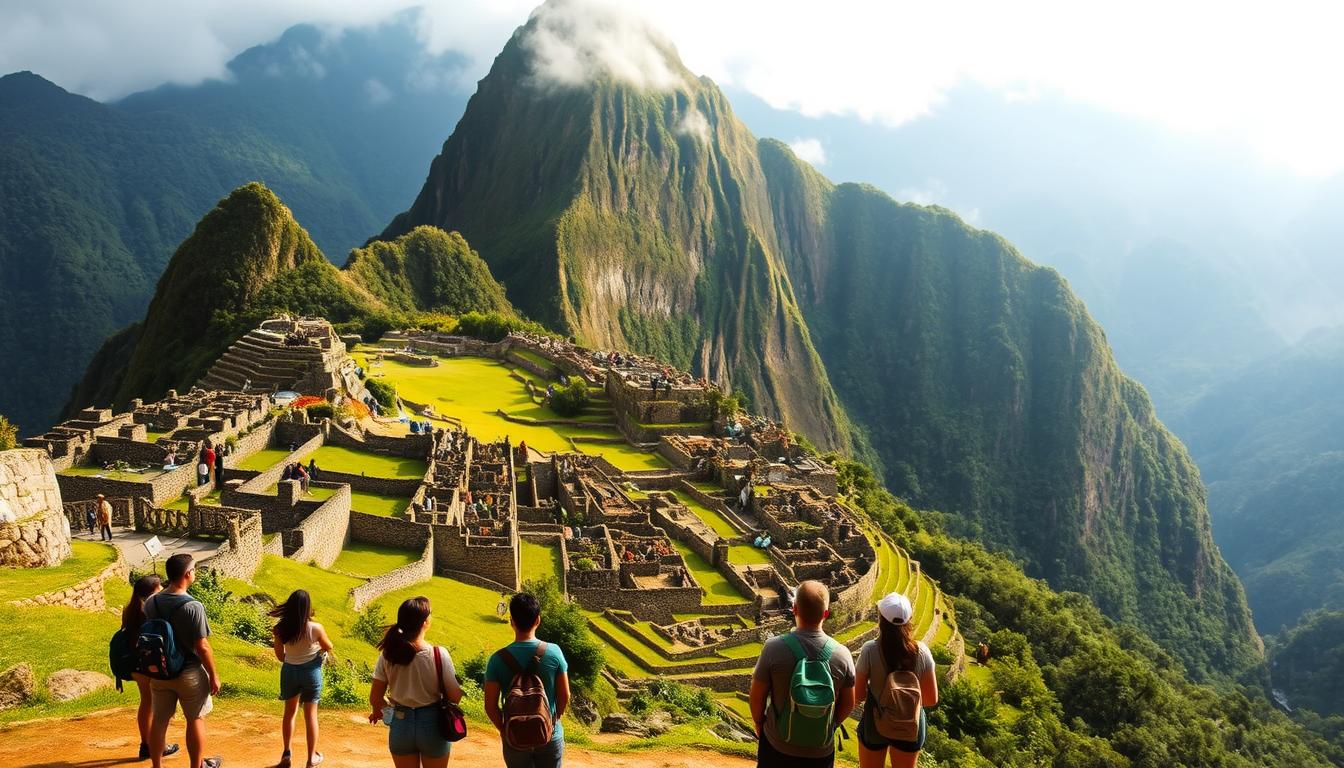
Planning a trip to Machu Picchu? You might wonder if your visit can help protect its culture and nature. With over 1 million visitors each year, Machu Picchu faces big challenges from too many tourists. That’s why making your travel to Machu Picchu sustainable is key to its survival.
By picking responsible travel options, you help keep Machu Picchu amazing for others to see. You also support local businesses and encourage travel that cares for the environment.
Understanding Machu Picchu’s Cultural and Environmental Significance
Machu Picchu is a UNESCO World Heritage Site in Peru. It’s a key cultural and historical spot. When you plan your trip, knowing its importance and the tourism impact is vital. Choosing sustainable tours helps keep it safe for the future.
The site faces environmental issues like soil erosion and stone damage from too many visitors. It’s important to pick tours that care about the environment. This way, you can lessen your impact and support local people.
Some important things to remember when you visit include:
- Machu Picchu is about 50 miles northwest of Cusco City.
- The citadel is at about 7,970 feet above sea level.
- The best time to visit is from April to October.
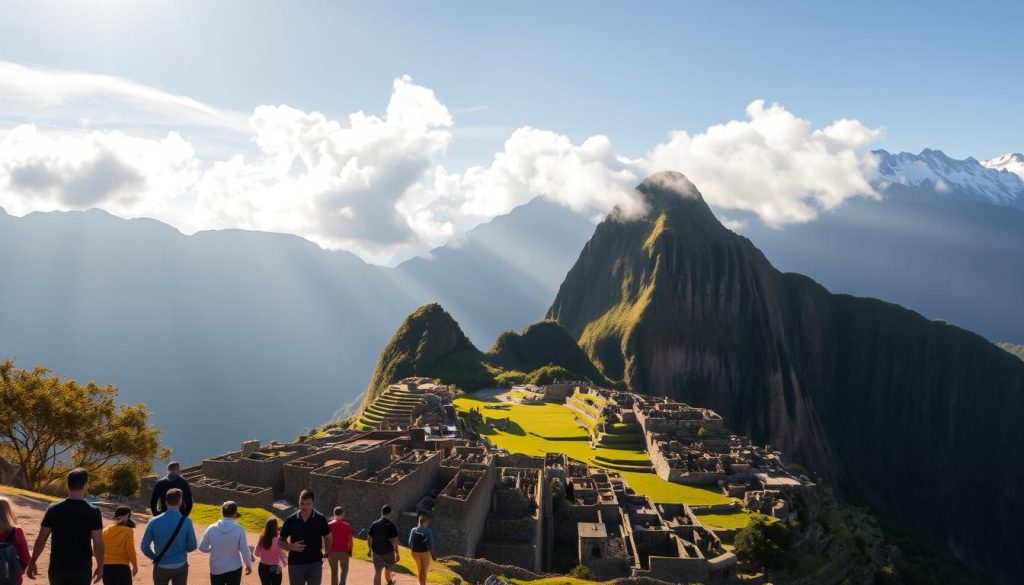
By picking sustainable tours, you help protect Machu Picchu’s culture and nature. Always follow local rules, support eco-friendly tours, and try to leave a small footprint.
| Month | Visitation | Environmental Impact |
|---|---|---|
| April | Low | Low |
| May | Low | Low |
| June | High | High |
Being aware of your visit’s effects and choosing green options helps preserve Machu Picchu for the future.
Best Times for Sustainable Machu Picchu Travel
Planning your trip to Machu Picchu? Knowing the best time to visit is key for a green travel Machu Picchu experience. The dry season, from May to September, offers clear skies and mild temperatures. But, visiting in April or October can help avoid the crowds and offer a quieter experience.
The Inca Trail is closed every February for maintenance. Also, only 400 people can climb Huayna Picchu each day. To enjoy a responsible travel Machu Picchu experience, try visiting in the afternoon or during the rainy season. This way, you’ll see lush green scenery.
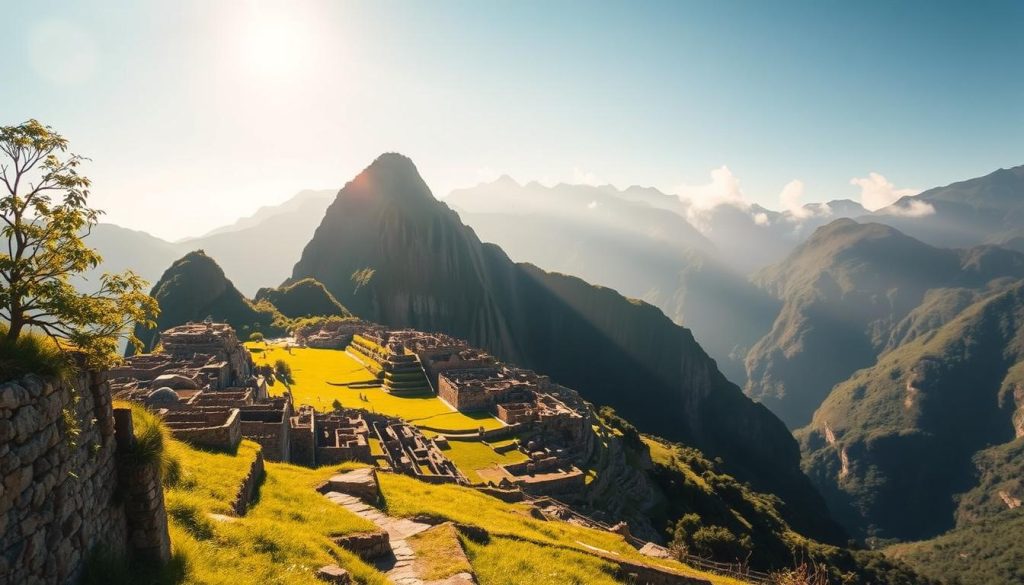
- Best months to visit: April, May, September, and October
- Busiest time: June, July, and August
- Less crowded times: Afternoon visits and rainy season (February)
Choosing the right time to visit and being mindful of your impact is crucial. This way, you can have a responsible travel Machu Picchu experience. It benefits you and the local community, promoting green travel Machu Picchu practices.
Planning Your Eco-Friendly Journey to the Ancient Citadel
Getting ready for your Machu Picchu trip? Think about how your travel choices affect the environment and local people. Eco-friendly tourism in Machu Picchu is becoming more popular. By choosing sustainable options, you help keep this amazing site safe.
Sustainable tours often include green hotels and travel ways. This cuts down on your trip’s carbon footprint.
Choosing Sustainable Transportation Options
For your Machu Picchu journey, pick low-impact travel like hiking or the train. It’s good for the planet and offers a special experience. Eco-friendly tour companies also offer green travel, like buses or shuttles that use clean fuels.
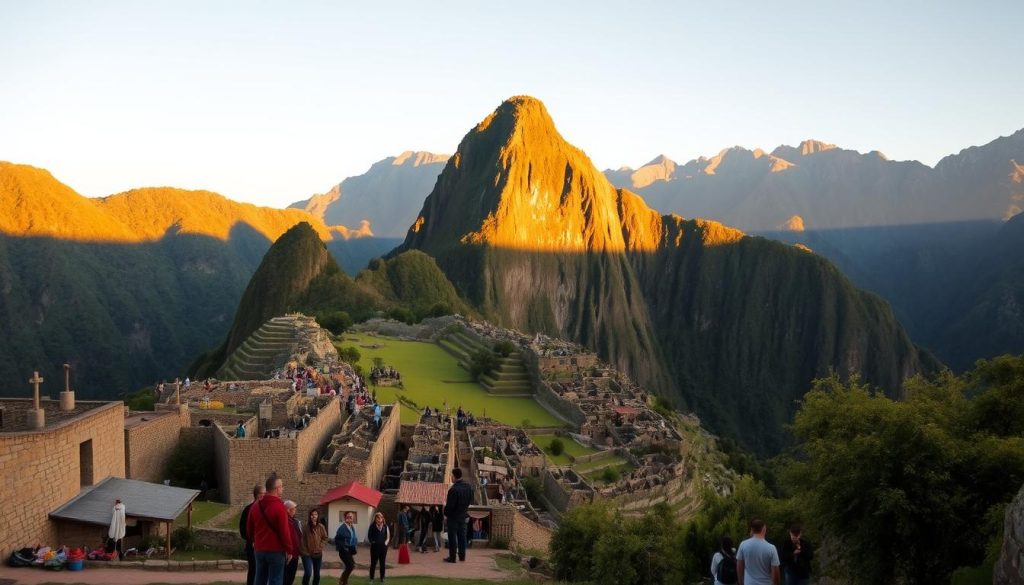
Selecting Environmentally Conscious Accommodations
Find places to stay that are green certified or use eco-friendly practices. This helps lessen your environmental effect and supports local green businesses. Choosing eco-friendly hotels helps protect Machu Picchu and its area.
Responsible Tour Operator Selection
When planning your trip to Machu Picchu, picking a responsible tour operator is key for responsible travel Machu Picchu. This choice greatly affects the local environment and community. Look for operators that focus on ethical tourism Machu Picchu and follow sustainable practices.
A good tour operator will use public transport when it’s available, promoting sustainable travel practices. They also prefer staying in local families’ homes for meals and overnight stays. This boosts cultural exchange. Plus, they travel in small groups to lessen environmental impact and offer more personal experiences.
Some important traits of a responsible tour operator include:
- Support for local economies through community projects
- Working with top local operators to ensure quality and support local economies
- Focus on enriching experiences by promoting cross-cultural understanding and local culture appreciation
Apus Peru is a great example of a tour operator that supports Andean communities. They offer fair wages and benefits to their staff, with flexible work hours for families. By choosing Apus Peru, you help with responsible travel Machu Picchu and support the local community.
Remember, ethical tourism Machu Picchu aims to give more economic benefits to locals and improve their well-being. By making smart choices, you help keep Machu Picchu for the future and support sustainable travel practices.
Supporting Local Communities Through Your Visit
When planning your trip to Machu Picchu, think about how your visit affects local communities. Choosing tours that are good for the environment helps preserve the area’s culture and nature. Supporting businesses owned by locals is a great way to show respect and engage with the community.
Companies like SAM Travel Peru and Alpaca Expeditions are great examples. They hire local guides, pay fair wages, and support conservation. By picking these operators, you help create jobs and opportunities for the community.
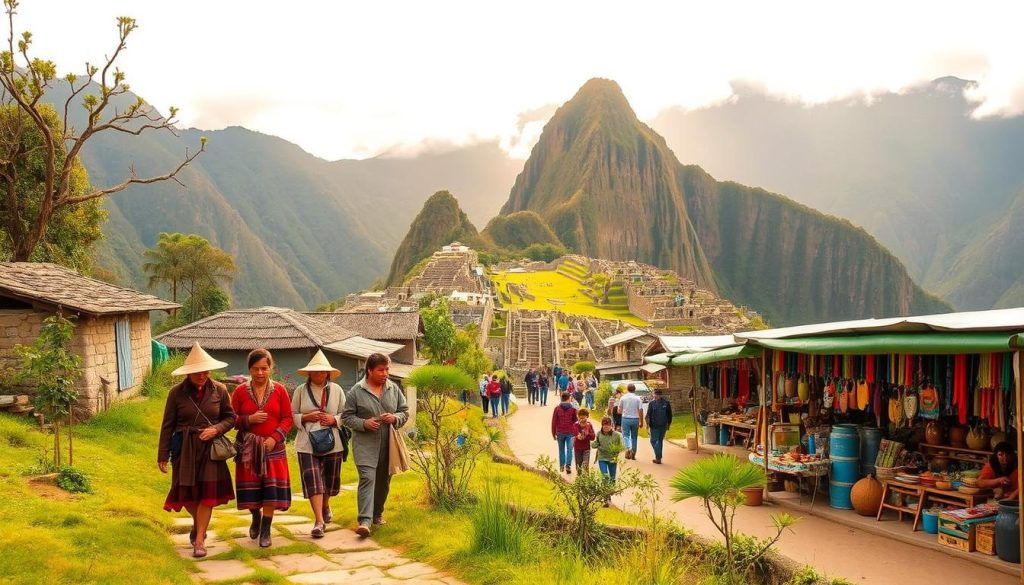
- Shopping at local markets and purchasing fair trade products
- Participating in cultural activities and workshops
- Respecting local customs and traditions
By doing these things, you support sustainable tourism and help the local economy. Your choice of tour can positively impact the environment and communities. This makes your visit not just a trip, but a meaningful and responsible one.
Trail Ethics and Conservation Practices
When you start your trip to Machu Picchu, it’s key to follow green travel Machu Picchu rules. With so many people walking the trails every day, it’s important to be gentle on the environment. You can do this by staying on the right paths, throwing away trash in bins, and not disturbing the animals and plants.
Here are some tips for responsible travel Machu Picchu:
- Stay on marked trails to avoid erosion and damage to the environment
- Bring a reusable water bottle and refill it at designated stations
- Dispose of waste in designated bins and avoid littering
- Respect the sanctuary’s flora and fauna, including the over 500 types of orchids
By following these tips, you help keep Machu Picchu’s nature safe. Every little bit helps, and together, we can protect this UNESCO World Heritage Site.
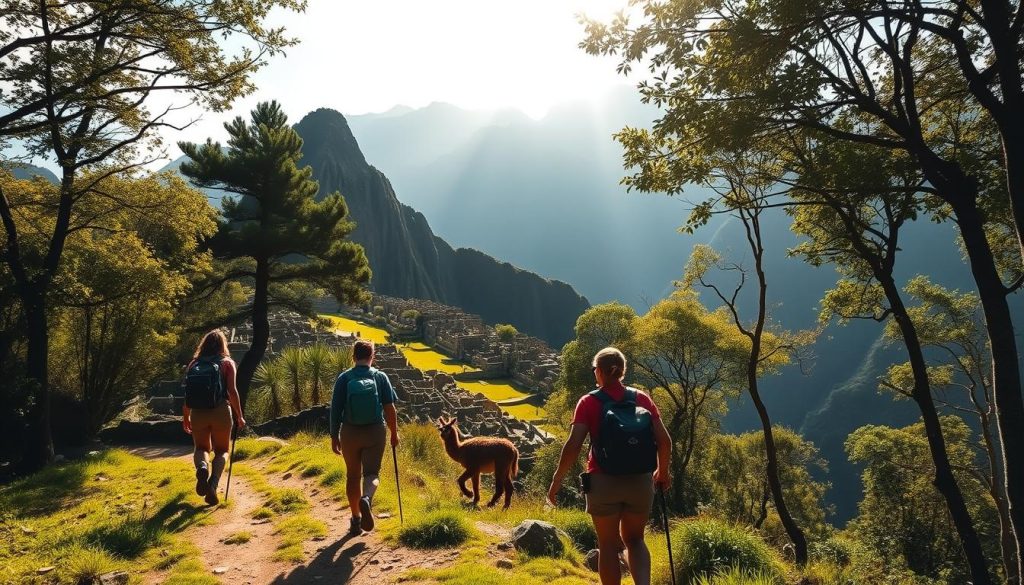
As you walk the trails, enjoy the stunning views and the area’s special plants and animals. This way, you’ll make memories that last and help protect this amazing place for the future.
Sustainable Accommodation Options Near Machu Picchu
Planning your trip to Machu Picchu? Choosing the right place to stay is key. Sustainable tours often mean staying in eco-lodges or green hotels. These places aim to reduce their impact on the environment.
In the Sacred Valley, you’ll find many options for a comfortable stay. They also support sustainable practices. For example, Inkaterra has a biodiesel plant to help the environment.
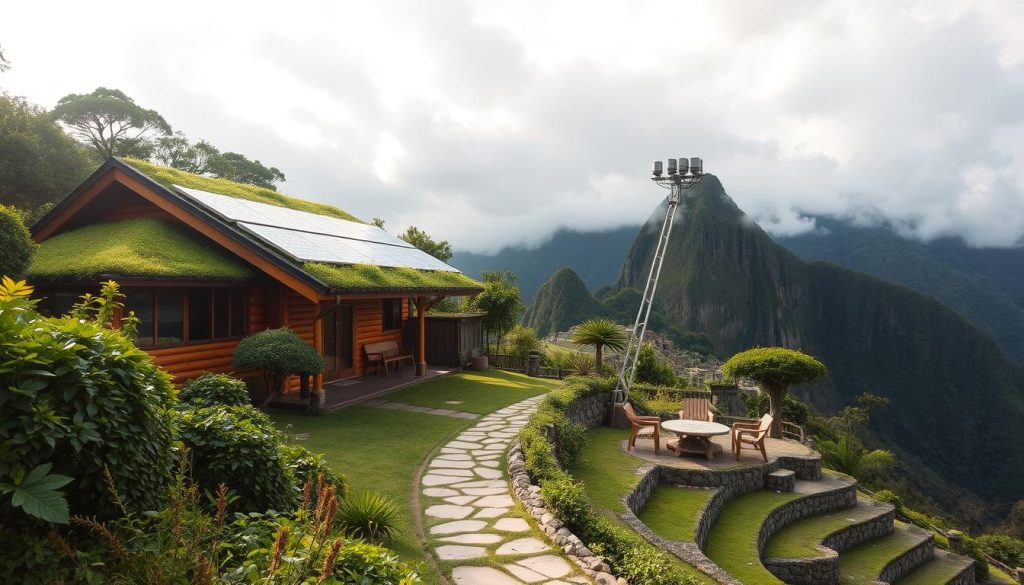
In Aguas Calientes, green hotels are a great choice. They use local materials, save water, and encourage recycling. Staying here supports the local economy and helps keep Machu Picchu beautiful.
When booking, look for sustainability certifications. This shows the place cares about the environment. Making smart choices lets you travel responsibly and help the community.
Water and Waste Management During Your Visit
Planning your trip to Machu Picchu means thinking about the environment. Responsible travel Machu Picchu means taking care of water and waste. The Inca Trail, 39 kilometers long, gets about 14 tons of trash every day. This shows how important ethical tourism Machu Picchu is.
To leave a smaller mark on the environment, here are some tips:
- Carry a canteen instead of plastic bottles to cut down on waste
- Don’t use soap or shampoo on the trail to keep water clean
- Help local efforts, like the biodiesel plant and organic waste plant, which turn waste into bio-coal for trees
The Peruvian government has rules to lessen waste and support green efforts. For example, a PET waste plant can handle up to 14 tons of trash a day. Also, the SERNANP has planted a million trees using bio-coal from organic waste.
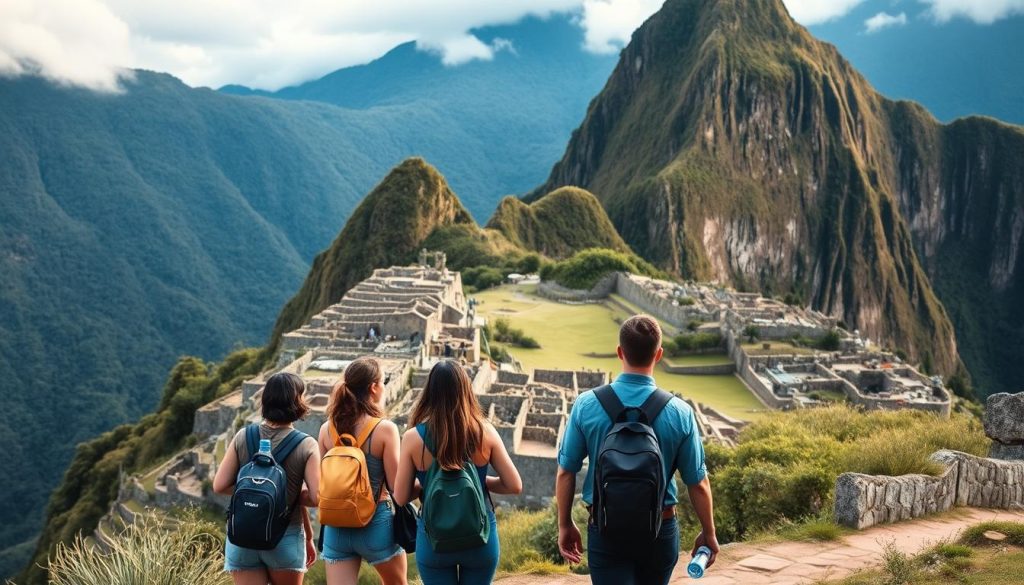
By choosing responsible travel Machu Picchu and supporting ethical tourism Machu Picchu, you help keep Machu Picchu beautiful for others. Every little bit helps, and together we can make a big difference in reducing tourism’s impact on the environment.
Conclusion: Preserving Machu Picchu for Future Generations
When you go on sustainable Machu Picchu tours and environmentally conscious Machu Picchu trips, you help protect this amazing place. The Inca Trail and the Inca civilization’s engineering show us why we must travel responsibly.
By choosing eco-friendly options, like using green transport and supporting local shops, you help reduce harm to the environment. This way, you help keep Machu Picchu’s natural and cultural wonders safe. Companies like Alpaca Expeditions show how sustainable tourism can work, protecting the trail and helping local people.
Your dedication to traveling responsibly goes beyond just visiting. Getting involved in educational programs, volunteering, and supporting conservation efforts makes a big difference. Together, we can keep Machu Picchu’s beauty and history alive for those who come after us.