Uncover the Best Local Villages to Visit Near Machu Picchu
Planning a trip to Machu Picchu? You might wonder about the area’s hidden gems. Thousands visit Machu Picchu every year. But have you thought about the local villages near it? These villages are full of traditional and modern attractions, like vibrant markets and impressive archaeological sites.
So, why should you visit these local villages near Machu Picchu? Exploring their history and culture offers a unique experience. Places like Ollantaytambo and Pisac are full of history and natural beauty. They make your Machu Picchu visit even more special.
Understanding the Cultural Significance of Local Villages Near Machu Picchu
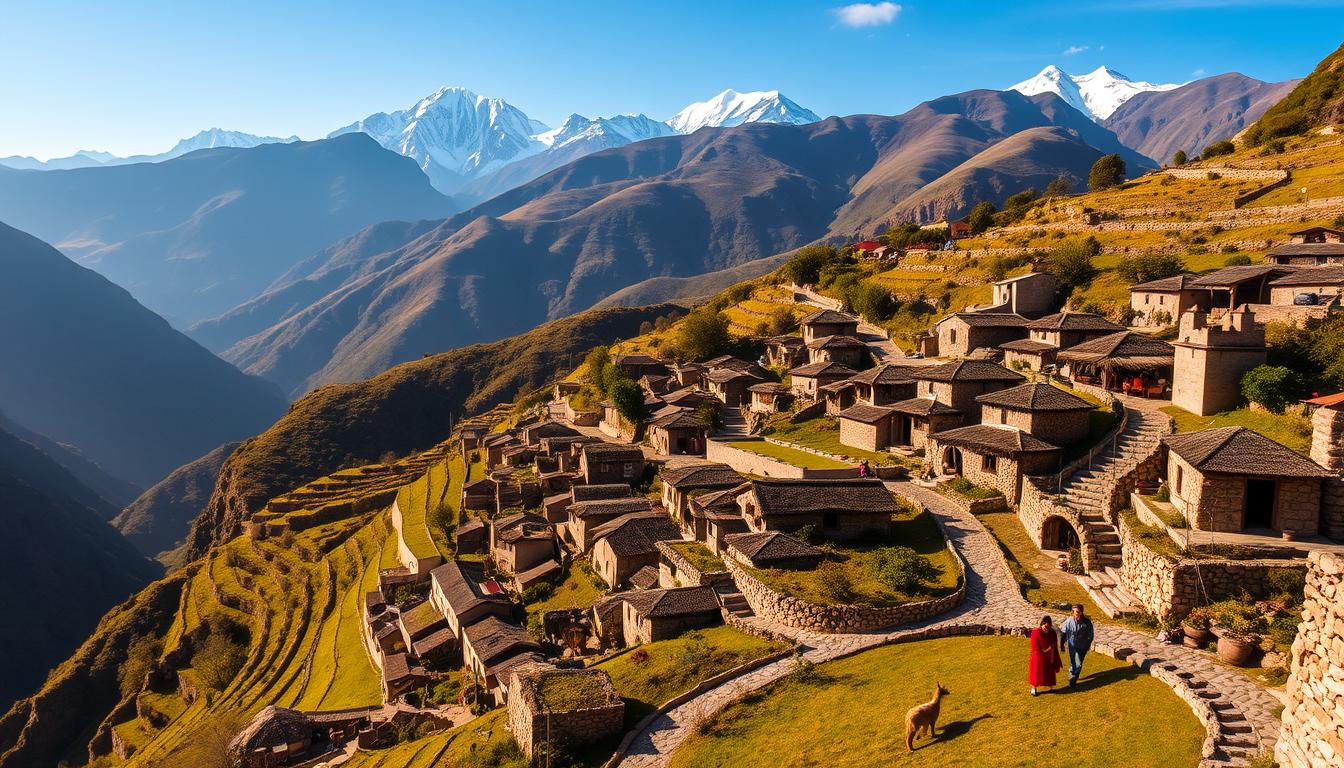
Exploring the Machu Picchu region villages reveals a deep cultural richness. These villages are home to indigenous communities. They continue traditional farming and crafting.
The Andes boast over 100 potato varieties, showing the local people’s diversity and strength. The historical ties to the Incan civilization are clear. Ruins and artifacts across the landscape tell their story.
The Sacred Valley is filled with Incan ruins, as impressive as Machu Picchu. Visiting these villages deepens your understanding of the region’s history and culture. This enriches your Machu Picchu journey. Key aspects of local culture include:
- Traditional farming practices, such as crop rotation and terracing
- Indigenous crafts, like textiles and pottery
- Community-based initiatives, such as local markets and festivals
The cultural significance of Machu Picchu region villages extends beyond history. Today, local communities strive to preserve their traditions while embracing modernity. By supporting these communities and respecting their heritage, you contribute to the region’s cultural preservation.

Ollantaytambo: The Living Inca City
Ollantaytambo is a key spot among the Machu Picchu villages. It’s known as the “Living Inca City” for its deep history and cultural importance. Built in the early 1400s, it was a military base under Inca Pachacutec. It was the last Inca stronghold in the Andes during the Spanish conquest.
The city’s architecture is a marvel, with the Temple of the Sun being a standout. This temple has six huge stone blocks, with the biggest being over 2 meters wide and 4 meters high. The town’s water systems, built for farming, are still working today. Farming was crucial back then.
Visitors can see how locals live, including their traditions and clothes. Kids wear special outfits on their first day of school, showing their Inca heritage. The town’s streets and terraces show the Incas’ skill in urban planning.
Some key facts about Ollantaytambo include:
- Location: 60 km northwest of Cusco, at an altitude of 2,792 meters above sea level
- Population: Still-populated city originally built by the Incas
- Significance: Last foothold of the Incas in the Andes during the Spanish conquest
- Architecture: Well-preserved Incan architecture, including the Temple of the Sun
- Culture: Traditional way of life, including customs and clothing
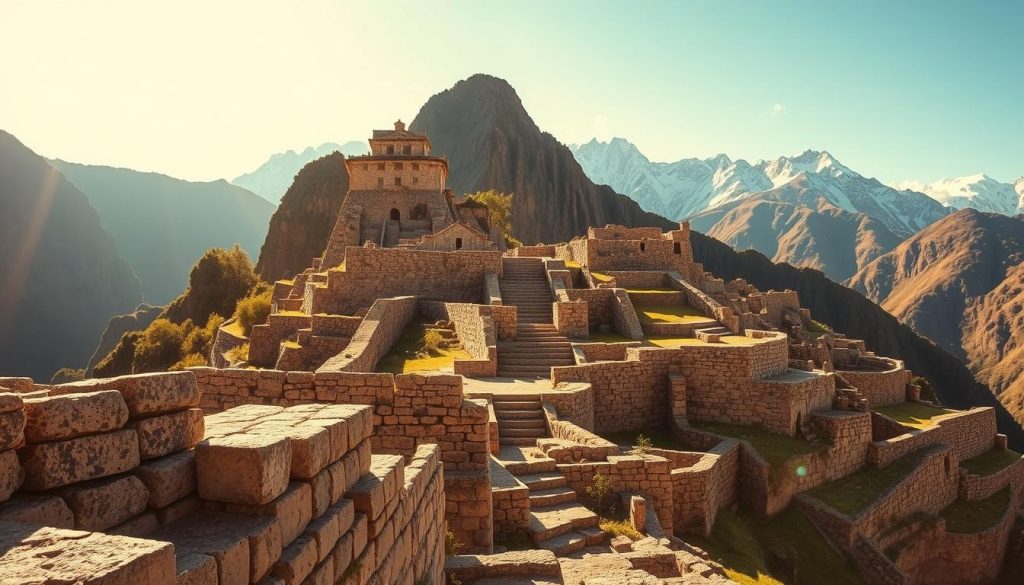
Ollantaytambo is a unique and fascinating place. It gives a peek into the Inca Empire’s history and culture. As a village near Machu Picchu, it’s a must-see for anyone interested in the region’s heritage.
Exploring Pisac: Markets and Mountain Terraces
Pisac is a top spot near Machu Picchu, famous for its lively market and ancient sites. Here, you can dive into the local culture and traditions.
The village’s Sunday market is a highlight, filled with traditional crafts, textiles, and fresh produce. It’s a perfect spot to see how locals live and find unique souvenirs.
Archaeological Sites
High above the village, the archaeological sites offer stunning views. They give a peek into the area’s rich past. You can wander the ruins and discover the history of the place.
Local Artisan Workshops
Don’t miss the local artisan workshops. Here, you can learn about traditional crafts and support the community. It’s a great way to understand the local culture and buy handmade items.
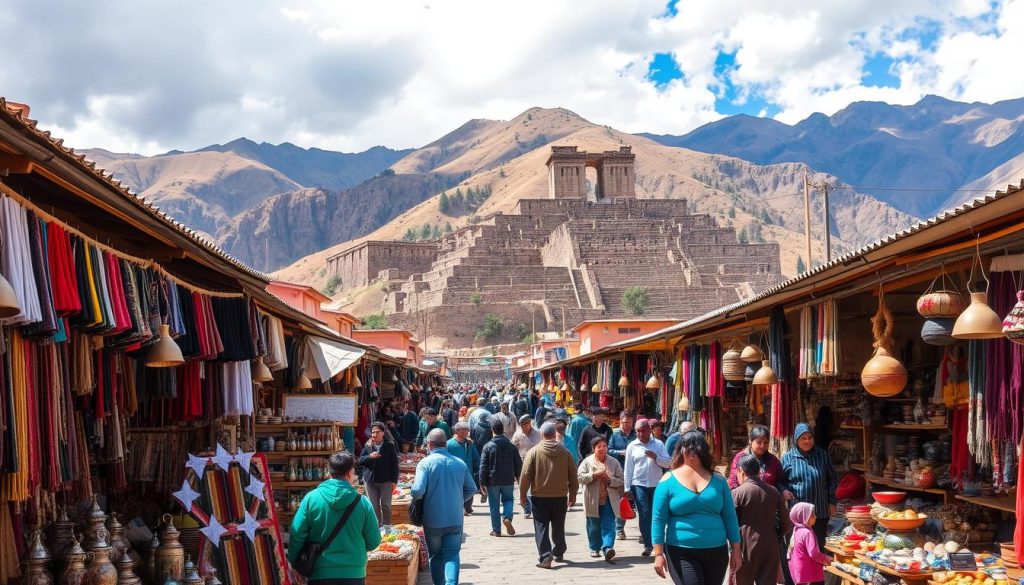
Pisac is a place where vibrant markets meet ancient history. It’s perfect for those who love history, culture, or nature. As a nearby village to Machu Picchu, Pisac is a must-see for travelers.
Chinchero: The Rainbow Village of Textiles
As you explore the local villages near Machu Picchu, you’ll find Chinchero. It’s famous for its colorful textiles and beautiful nature. Located 28 kilometers from Cusco, it’s a key spot for those interested in traditional weaving and supporting local communities.
The village is called the “Rainbow Village” because of its bright buildings and traditional clothes. You can visit textile workshops to learn about weaving and help the local community. These workshops sell unique items made from alpaca and baby alpaca wool.
Some top things to do in Chinchero include:
- Visiting the archaeological site, which covers an area of up to 43 hectares
- Exploring the traditional textile workshops and learning about the weaving techniques
- Shopping for unique souvenirs made from alpaca and baby alpaca wool
- Enjoying the stunning natural surroundings and taking in the breathtaking views
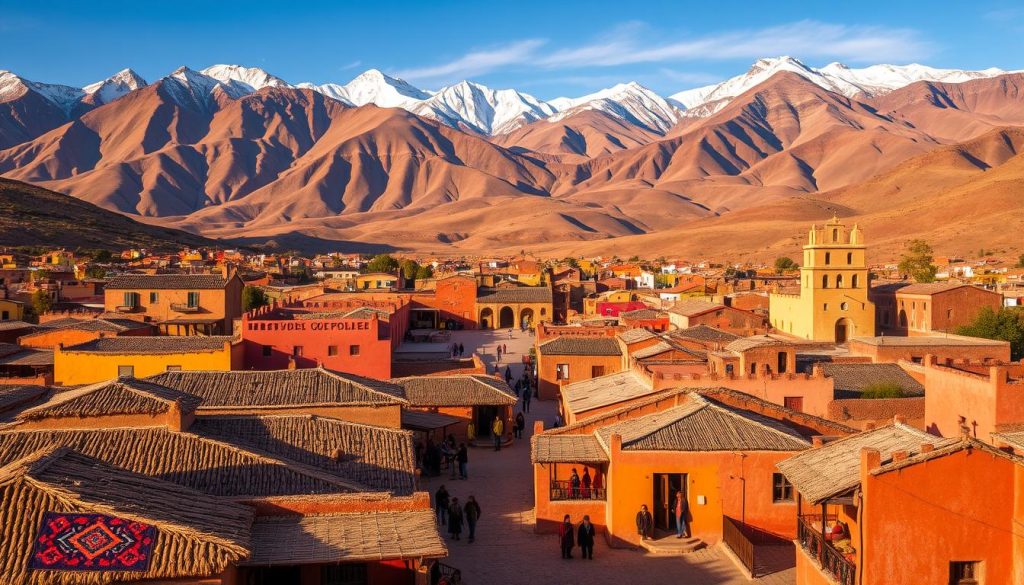
Chinchero is a unique local village near Machu Picchu. By visiting, you’ll learn about weaving and support the community. You’ll also help preserve the village’s cultural heritage.
Aguas Calientes: Gateway to Machu Picchu
When you visit the Machu Picchu region villages, you’ll go through Aguas Calientes. This town is the entrance to the famous citadel. It sits at 2,040 meters above sea level and has hotels, restaurants, and shops.
Aguas Calientes has places to stay for all budgets. You can find hostels or luxury hotels like the Belmond Hotel Sanctuary Lodge. Hotels like Sumaq Machu Picchu Hotel and Hotel El Mapi by Inkaterra offer rooms for about $123 to $1,055 per night.
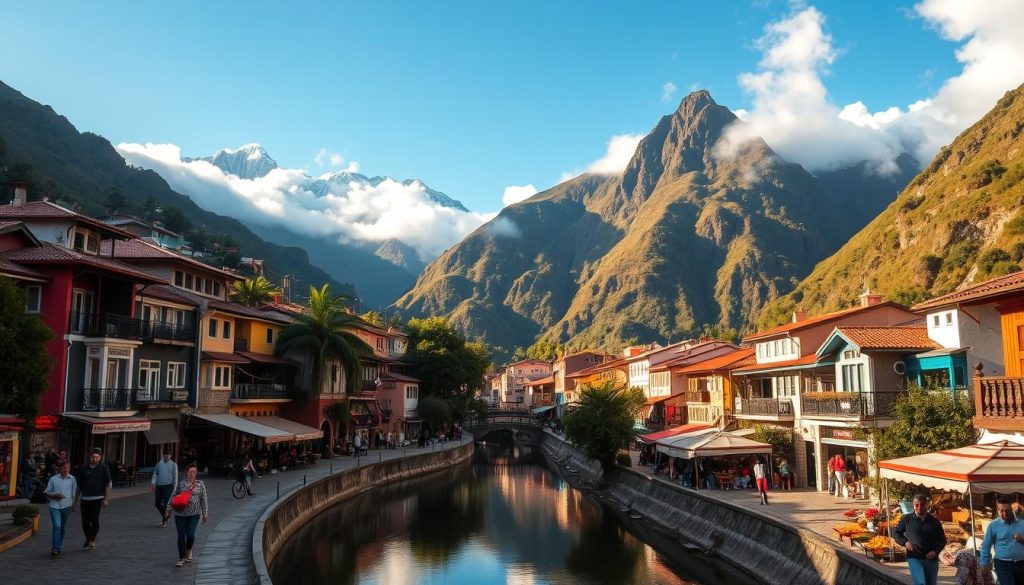
Aguas Calientes is not just for staying. It’s also a place to dive into local culture. You can soak in the thermal baths, see butterflies, or learn at the Machu Picchu Site Museum. It’s a mix of nature, history, and modern comforts, making it ideal for exploring the Machu Picchu region villages.
Urubamba: Heart of the Sacred Valley
Urubamba sits in the Sacred Valley’s heart, surrounded by breathtaking nature and culture. It’s a key Machu Picchu surrounding village. The village’s lower elevation makes it more comfortable than Cusco, perfect for travelers.
Urubamba is full of attractions and activities. Here are a few highlights:
- Exploring the traditional markets and supporting local communities by purchasing handicrafts and local produce
- Visiting the impressive ruins of Urubamba, which offer breathtaking views of the surrounding landscape
- Taking a train ride from Urubamba to Machu Picchu (Aguas Calientes Station), which takes about 2.5 to 3 hours
The village is famous for its tasty Novo Andean dishes. These meals use authentic local ingredients and cooking methods. With its history, beauty, and culture, Urubamba is a top spot for anyone visiting the Machu Picchu surrounding villages.
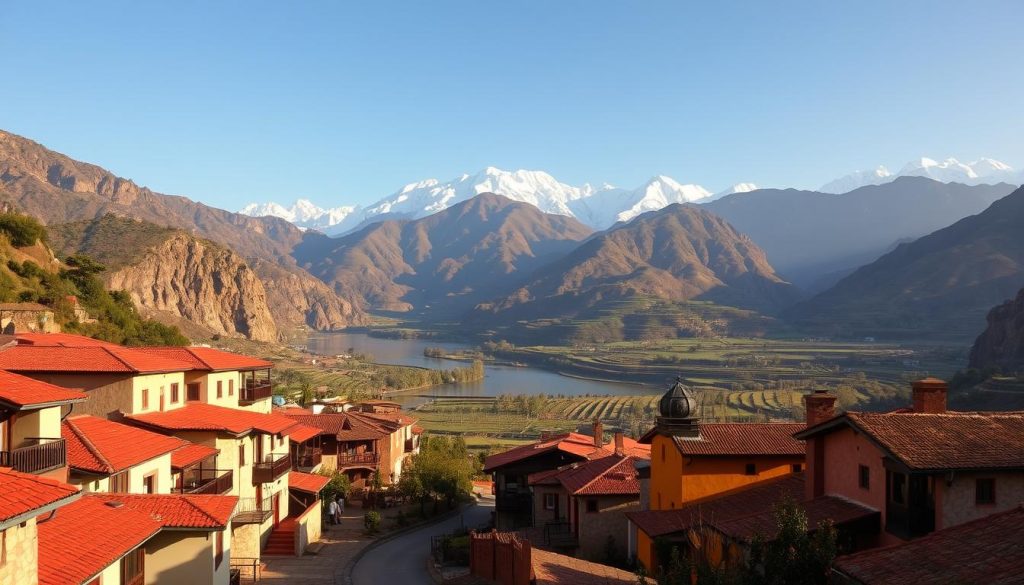
Best Times to Visit Villages in the Machu Picchu Region
Planning your trip to the local villages near Machu Picchu? Think about the best time to go. The dry season, from May to September, is perfect. You’ll have clear skies and comfortable weather.
The rainy season, from October to April, is great if you want fewer tourists and lower prices. It’s a good time to explore without the crowds.
Don’t forget to check the festival calendar. Many festivals and celebrations happen throughout the year. For example, the Inti Raymi on June 24 is a big event that attracts lots of people.
Seasonal Considerations
The peak tourist season is from June to August. It’s the best time if you like dry weather. But, if you want a more relaxed vibe, visit in the shoulder season. This is from April to May or September to November.
Festival Calendar
The festival calendar is full of exciting events. The Holy Week in late March brings more visitors. Spring break crowds from the U.S. are in mid-March through April. Summer vacation from May to September also means more people.
Weather Patterns and Travel Planning
Machu Picchu has moderate temperatures all year. This makes it a great place for travelers. The Inca Trail is closed for maintenance in February, which means fewer visitors. Huayna Picchu permits need to be booked three months in advance. With good planning, you can have a great time in the local villages near Machu Picchu.
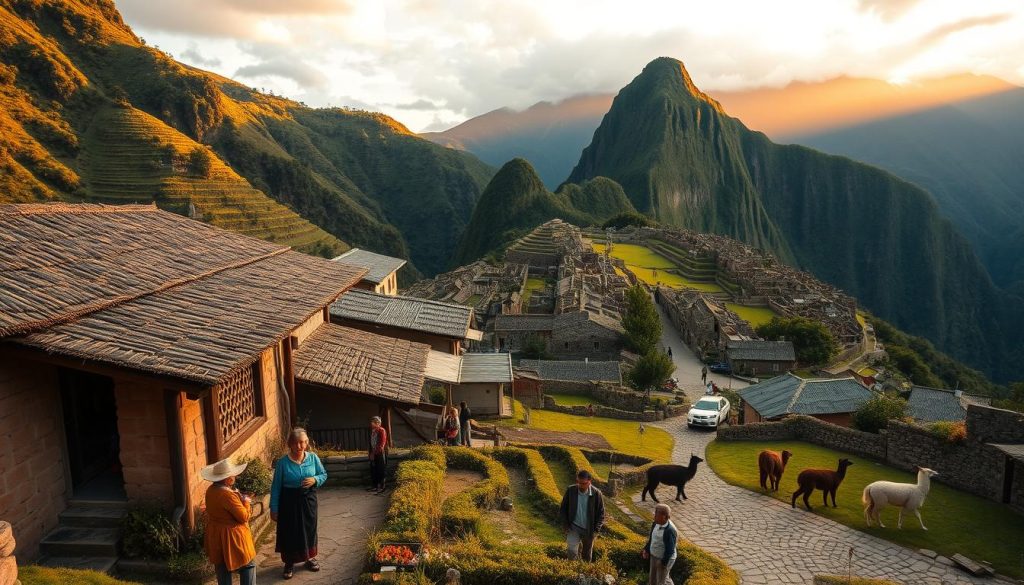
Here’s a quick guide to the best times to visit the villages in the Machu Picchu region:
- Dry season: May to September
- Rainy season: October to April
- Peak tourist season: June to August
- Shoulder season: April to May or September to November
By keeping these factors in mind, you can plan your trip well. This way, you’ll have the best time visiting the local villages near Machu Picchu. Your trip will be unforgettable.
Transportation Options Between Villages
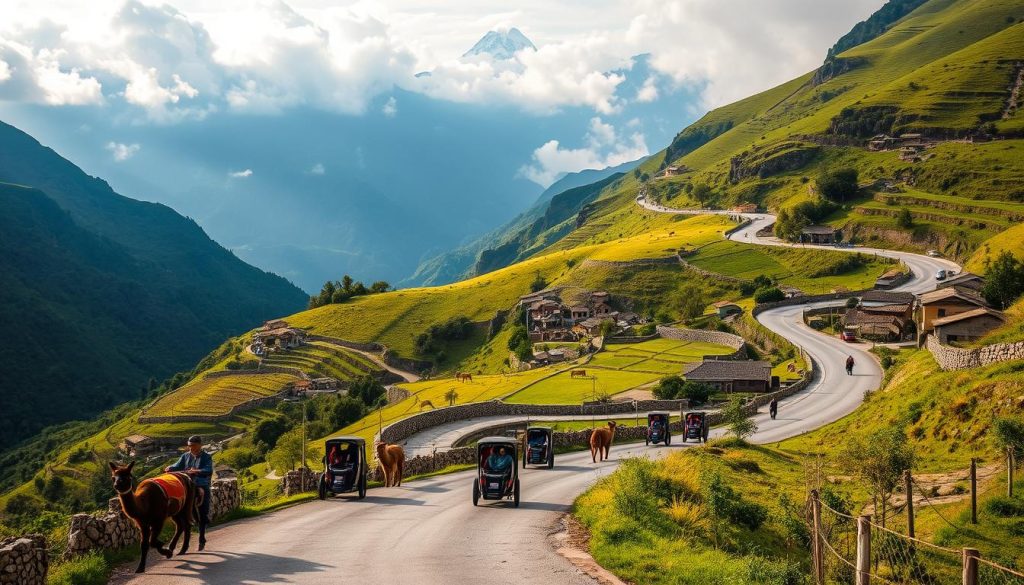
Exploring the Machu Picchu region villages is easy thanks to various transportation options. You can choose from buses, taxis, and trains. Each offers unique views and benefits.
For example, buses or taxis from Cusco to Ollantaytambo take about an hour. This journey is scenic and convenient. If you want breathtaking views, take the train from Cusco to Aguas Calientes. It’s a great way to see the landscape.
Another option is hiring a private car or driver. This lets you explore at your own pace. The cost varies, with bus fares from 5 soles ($2) to 10 soles ($3). Taxi fares range from 5 soles ($2) to 20 soles ($6), depending on the distance.
- Buses from Cusco to the Sacred Valley towns
- Taxis from Cusco to Ollantaytambo
- Trains from Cusco to Aguas Calientes
- Private car or driver hire for the day
Plan your transportation in advance, mainly during peak seasons. This ensures a smooth and enjoyable trip through the Machu Picchu region villages.
Cultural Etiquette and Responsible Tourism
Exploring local villages near Machu Picchu requires cultural etiquette and responsible tourism. It’s important to be aware of your actions and their effects on the environment and local communities. This way, you help keep the area’s cultural and natural beauty for the future.
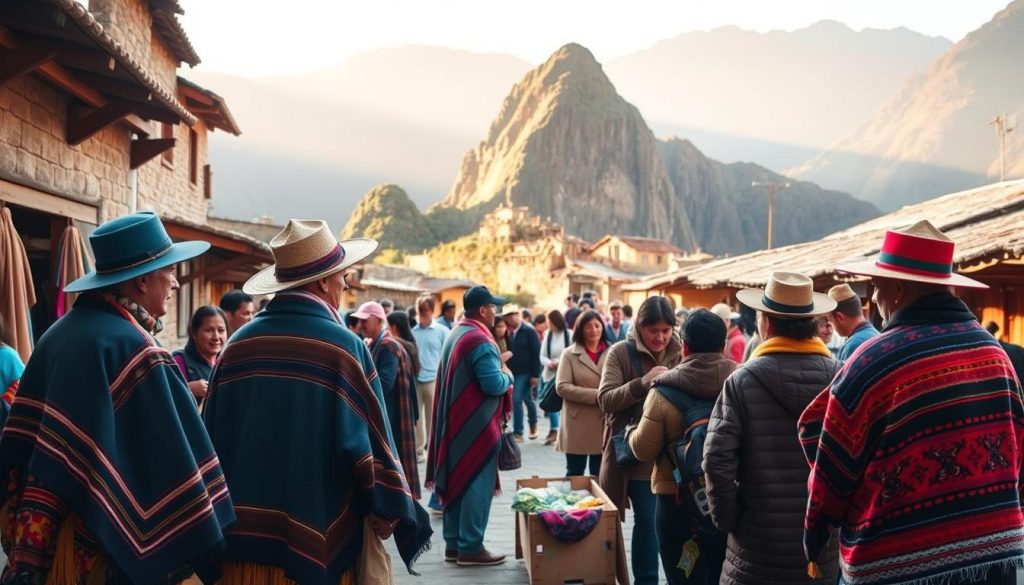
When meeting locals, always respect their customs and traditions. Dress modestly, remove your shoes in homes or temples, and don’t take pictures of people without asking. Supporting local communities by buying handicrafts and staying in local places is also a great way to help.
- Respecting local residents’ privacy and dignity, particular in sensitive areas
- Conserving water and energy in resource-scarce destinations
- Choosing sustainable transportation methods, such as walking, biking, or using public transport
- Participating in community efforts to combat plastic pollution
Being a responsible tourist has a positive effect on local communities and preserves cultural heritage. Always prioritize cultural etiquette and respect the local way of life. This will give you a more authentic and enriching experience in the local villages near Machu Picchu.
Essential Phrases in Quechua and Spanish
Visiting Machu Picchu region villages is more fun when you know some key phrases in Quechua and Spanish. With 4 million Quechua speakers in Peru, and 8 to 10 million in South America, a few words can show great respect. Say “hello,” “thank you,” and “how much” to locals and make your trip better.
In Cusco, knowing Quechua is key. It helps a lot when talking to locals. Here are some basic phrases to start with:
- Kamayaq (hello)
- P’unchay (good day)
- Sulpayki (thank you)
Learning Quechua makes hikes more meaningful. It lets you connect with Andean traditions and even Pachamama, the Mother Earth goddess. Plus, it helps on treks and in emergencies.
When in Machu Picchu villages, speaking Quechua shows respect. It makes interactions better and can help in tough spots. With effort, you can speak well and enjoy the region more deeply.
What to Pack for Village Visits
Visiting local villages near Machu Picchu requires the right packing. Think about the season and activities you’ll do. Peru has a dry season from May to September and a wet season from December to March.
For a two-week trip, pack light sweaters, tank tops, and wrinkle-free dresses. Include comfy hiking boots, walking shoes, and ballet flats. Also, remember a reusable water bottle, moneybelt, and baggage locks with TSA symbols.
Here are some more items to pack:
- Sunscreen and insect repellent
- A first-aid kit and any personal medications
- A solar-powered battery charger for remote areas
- A day bag with at least 25L capacity for short hikes or overnight stays
- Comfortable clothing for cooler evenings, such as thermal pants and a foldable down jacket
Check the weather forecast before you go. Pack layers for cooler nights. This way, you can enjoy your time in local villages near Machu Picchu without worrying about what to wear or bring.
With the right gear and planning, you’re set for an amazing adventure in the Sacred Valley. Remember to respect local customs and traditions. Also, support local communities during your visit.
Conclusion: Making the Most of Your Sacred Valley Village Experience
As you finish your trip through the villages near Machu Picchu, you’ll have a deep respect for the area’s culture and the kindness of its people. You’ve learned a lot about the Inca legacy and the traditions that still live on today. Places like Pisac and Chinchero show off the area’s history and the lives of the indigenous people.
Your time in the Machu Picchu region has made you appreciate the Inca civilization even more. Think about staying longer next time to really get into village life. You can meet local artists and see secret natural spots. This way, you’ll make a lasting connection with the land and its people.