
Oranjestad Historical Sites: Unveil Aruba’s Captivating Past
Exploring Oranjestad, you might wonder about its hidden history. What’s so special about landmarks like Fort Zoutman and the Willem III Tower? These sites show off the city’s deep cultural roots. They take you back to the 18th century and highlight Aruba’s varied past.
Oranjestad’s history is a mix of colonial and indigenous cultures. The Archaeological Museum and the Historical Museum of Aruba give a peek into Aruba’s past. You’ll find gems like Fort Zoutman and the Willem III Tower. These spots are a window into the city’s rich history and cultural importance.
Whether you love history or just want to see something new, Oranjestad’s sites will amaze you. They make the city a must-see for anyone interested in history and landmarks.
The Rich Historical Heritage of Oranjestad
Exploring Oranjestad’s history reveals a mix of cultures and influences. This blend has shaped the city into its current form. An Oranjestad history tour is a great way to see the city’s landmarks and hidden spots. The city’s strategic location made it a key trade and commerce hub.
The city’s history is a fascinating mix of Dutch colonial influence, indigenous Arawak legacy, and maritime trading. The commercial center started growing in the late 18th century. This was thanks to Fort Zoutman and the shops in Havenstraat. The discovery of gold in Aruba in 1824 also boosted interest in the island.
Key historical sites include Fort Zoutman, the Willem III Tower, and the Historical Museum of Aruba. These sites give a glimpse into Oranjestad’s rich history. They help understand what has made the city vibrant today. By visiting these attractions, you’ll appreciate Oranjestad’s cultural heritage and its role in the region.
For a deeper experience, consider a guided tour of Oranjestad’s history. It will take you to the city’s most notable landmarks. You’ll learn more about its history and cultural significance. Oranjestad offers something for everyone, making it a top choice for exploring Aruba’s history and culture.
Best Time to Explore Oranjestad Historical Sites
When planning your visit to Oranjestad’s must-visit historical sites, think about the best time. The dry season, from October to June, is perfect. It has nice weather and little rain.
During this time, you can easily see places like Fort Zoutman and the Archaeological Museum. The weather is warm, between 78°F and 85°F (26°C to 29°C). It’s great for being outside.
Also, the dry season has cool events like the Aruba Soul Beach Music Festival and the Aruba International Film Festival. These events show off the city’s lively culture. They’re a fun way to see the local vibe.
Bird watching is also top-notch during the dry season. Many birds migrate here. Plus, you might find deals on places to stay and things to do. It’s a smart time to see historic places in Oranjestad.
To get the most out of your trip, plan it during the week. This way, you avoid big crowds and long airport lines. Oranjestad is a fantastic spot for history buffs and culture lovers, thanks to its weather and attractions.
Fort Zoutman and Willem III Tower
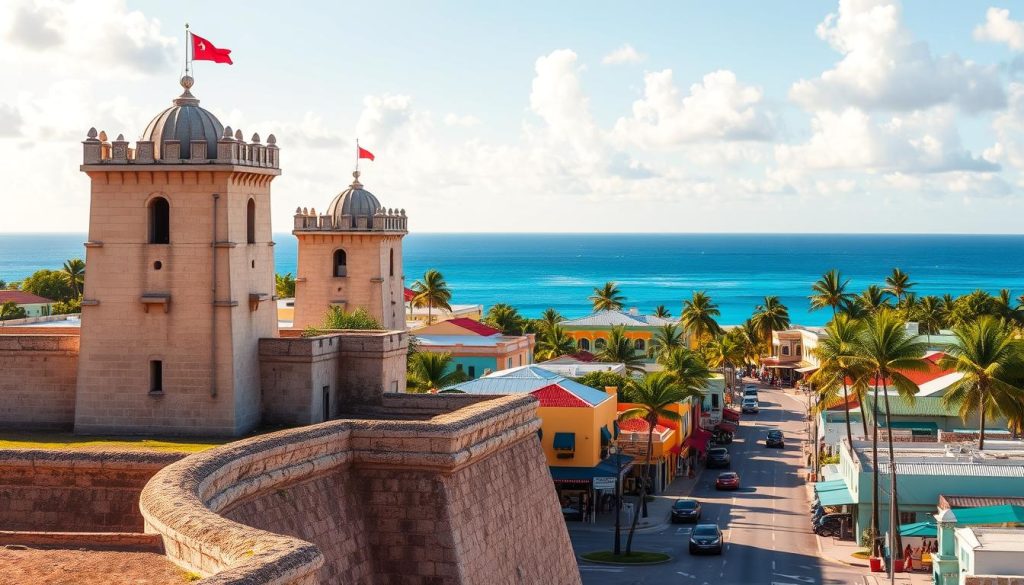
Exploring Oranjestad’s landmarks, you’ll find Fort Zoutman and Willem III Tower. They sit at Oranjestraat and Zoutmanstraat’s crossroads. These landmarks show the city’s rich history. Fort Zoutman, built in 1796, protected against pirates and enemies. Willem III Tower, built in 1868, was a lighthouse and clock tower.
Now, these sites house the Aruba Historical Museum. It’s open from 9:00 a.m. to 6:00 p.m. on weekdays and 10:00 a.m. to 6:00 p.m. on Saturdays. The museum, run by Fundacion Museo Arubano, displays artifacts and exhibits. They tell the story of Aruba’s history and culture.
Military Significance
The fort was built to fight off pirates, but it saw little action. It was used for government tasks like a police station and prison. The Willem III Tower was finished in 1868. It was a lighthouse and bell tower, lit for the first time on February 19, 1868, King William III’s birthday.
Current Museum Exhibition
The Aruba Historical Museum has many exhibits. You can see artifacts from the Arawak people and learn about colonial history and maritime trade. It also hosts the Bon Bini Festival every Tuesday from 7:00 p.m. to 8:30 p.m.
Architectural Features
The fort and tower stand out for their design. The fort has solid walls, and the tower is octagonal. The tower has four floors and a fifth with clock dials. The lighting changed from kerosene to electric over time.
Visiting Fort Zoutman and Willem III Tower, you’ll learn a lot about Aruba’s history and culture. They are key attractions for anyone interested in Oranjestad’s past.
Traditional Colonial Architecture in Downtown Oranjestad
Exploring Oranjestad’s history reveals its traditional colonial architecture. This architecture shows the city’s rich cultural heritage. The Old Protestant Church and the New Protestant Church are examples, blending colonial and Caribbean styles.
Walking through downtown Oranjestad’s historic district is a must. You’ll see a mix of old and new buildings, each with its own story. The city’s architecture reflects its Dutch, Spanish, and indigenous Arawak influences. You’ll notice the distinctive features of each building, like ornate doors and colorful shutters.
Some notable buildings in downtown Oranjestad include:
- The Old Protestant Church, built in 1846
- The New Protestant Church, constructed between 1950 and 1951
- Fort Zoutman, the oldest remaining building in Oranjestad, dating back to 1796
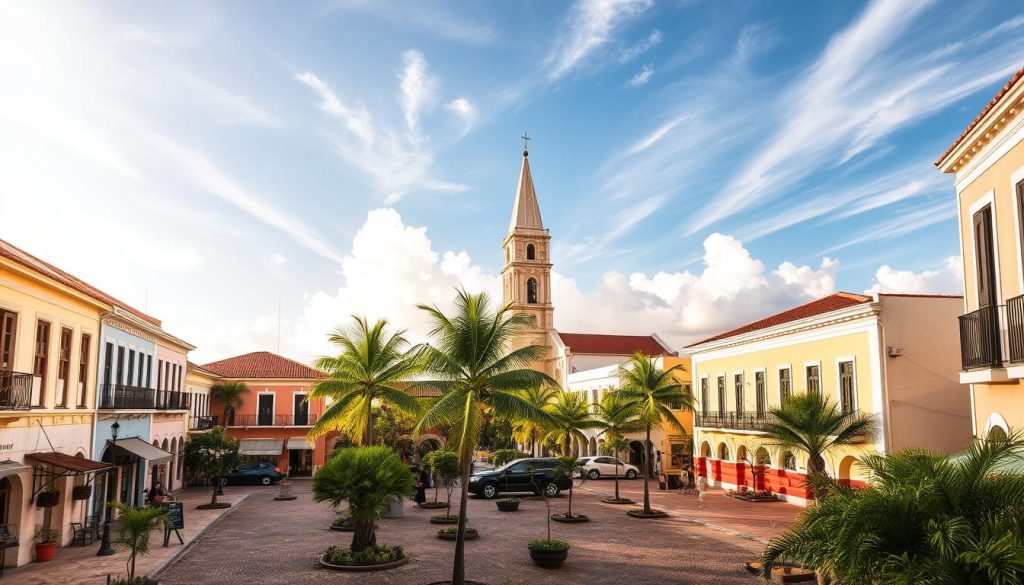
These buildings are not just historically significant but also beautiful. Exploring Oranjestad’s history and visiting these sites helps you understand the city’s rich culture and people.
The Historical Harbor District
Exploring the historical harbor district in Oranjestad reveals the city’s deep maritime history. This area was once bustling with commercial activity. Ships from all over the world came to trade goods and commodities. Now, you can visit maritime museums and ancient trading posts to learn about Oranjestad’s growth.
Walking along the waterfront, you’ll see the harbor’s sights and sounds. The schooner market tells the story of trade and commerce here. These sites are essential for anyone interested in history and culture.
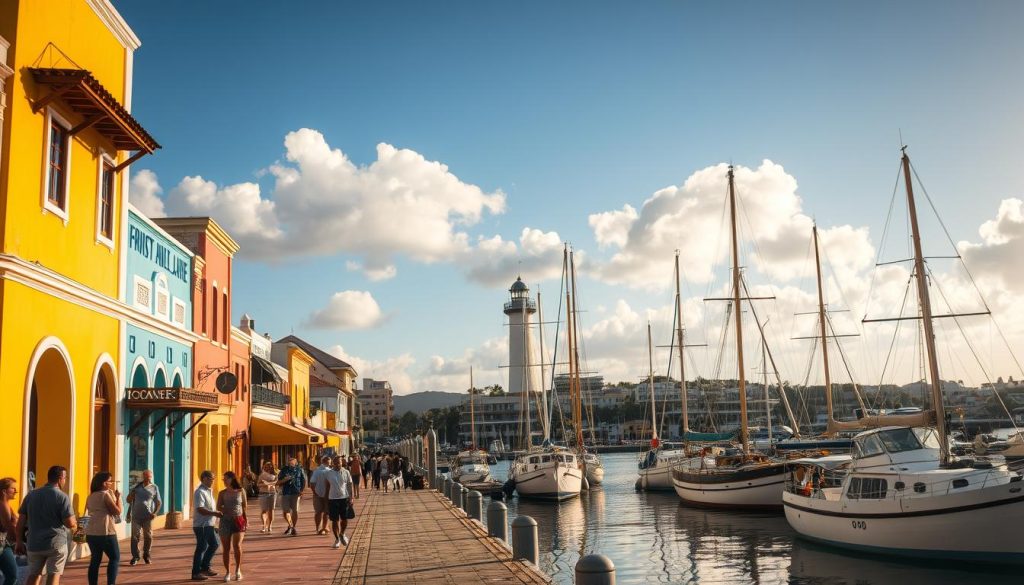
- Maritime museums showcasing the city’s maritime history
- Ancient trading posts that once played a significant role in the city’s commerce
- The schooner market, where you can learn about the history of trade and commerce in the area
Exploring the harbor district deepens your understanding of Oranjestad’s history and culture. The sites here prove Oranjestad’s importance as a maritime hub and major trade center.
Religious Heritage Sites and Churches
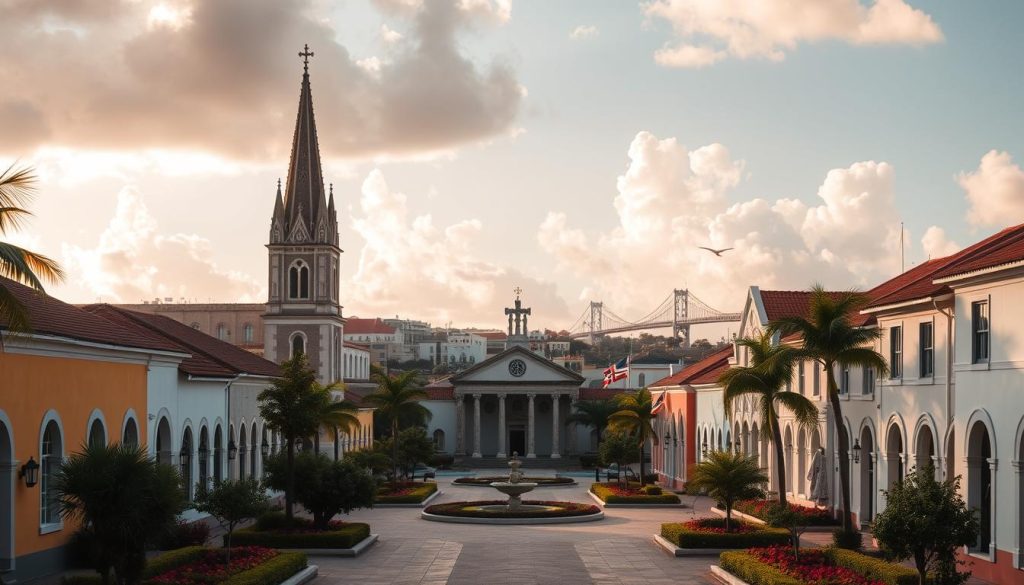
Exploring top historical attractions in Oranjestad reveals a rich tapestry of religious sites and churches. Over 75% of Aruba’s people are Roman Catholic. This highlights the city’s deep spiritual and cultural roots.
The Protestant Church, or Kerki 1846, stands out as a symbol of Oranjestad’s history. Built in 1846, it’s Aruba’s oldest religious structure. Its design combines local limestone with various architectural styles.
Other key churches include the Alto Vista Chapel, built in 1750, and the St. Francis of Assisi Church, from 1813. These sites offer a window into Oranjestad’s spiritual journey. They are essential for anyone wanting to explore the city’s landmarks and religious heritage.
Here are some of the churches in Oranjestad and their service times:
- Protestant Church: Sunday at 10:30 a.m. (English and Dutch)
- St. Ann’s Catholic Church: Monday, Wednesday, and Friday at 6:30 p.m., and Sunday at 7:30 a.m., 11 a.m., and 6 p.m.
- Holy Cross Anglican Church: Friday at 7 a.m. and Sunday at 8 a.m.
- Beth Israel Synagogue: Friday at 7:30 p.m.
Must-Visit Historical Sites in Oranjestad
Exploring Oranjestad reveals a city steeped in history and culture. The must-see historical sites offer a peek into the city’s past. They show how Oranjestad has grown and developed over time. Each site gives a unique view into the city’s history.
The Archaeological Museum is a top spot, with a vast collection of artifacts from the island’s past. The Plaza Daniel Leo, with its historic square, is surrounded by important buildings like the Old Protestant Church. Don’t miss the Courthouse and other government buildings to learn about the city’s governance.
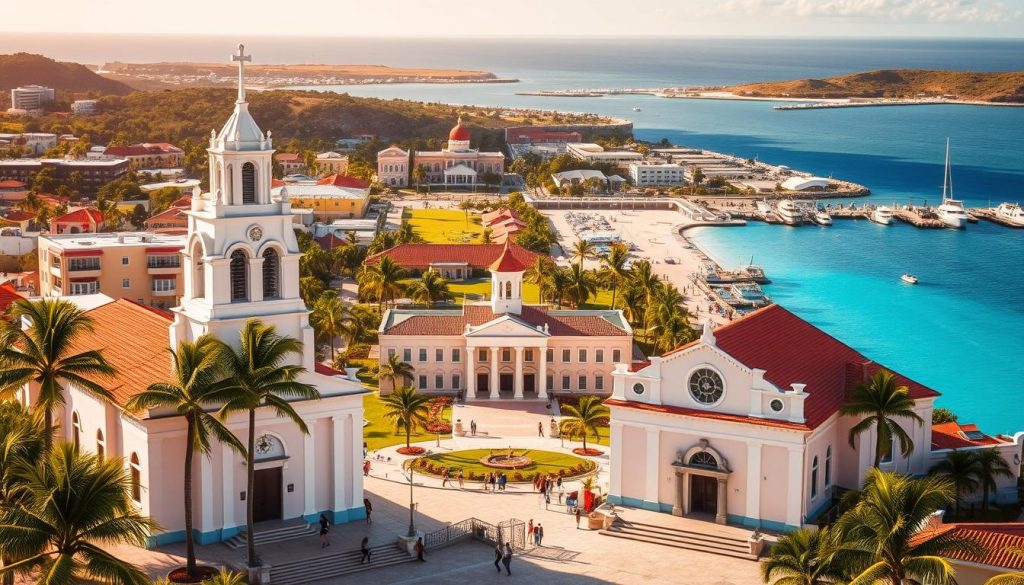
Oranjestad’s historic places showcase the city’s rich history and cultural importance. Visiting these sites helps you understand the city’s growth and appreciate its cultural heritage. Whether you love history, architecture, or culture, Oranjestad’s sites are a must-see.
Some key sites to explore include:
- Archaeological Museum
- Plaza Daniel Leo
- Historical Government Buildings
These sites are a great starting point for your journey through Oranjestad’s history. They offer a deep understanding of the city’s history and cultural significance.
Cultural Heritage Walking Routes
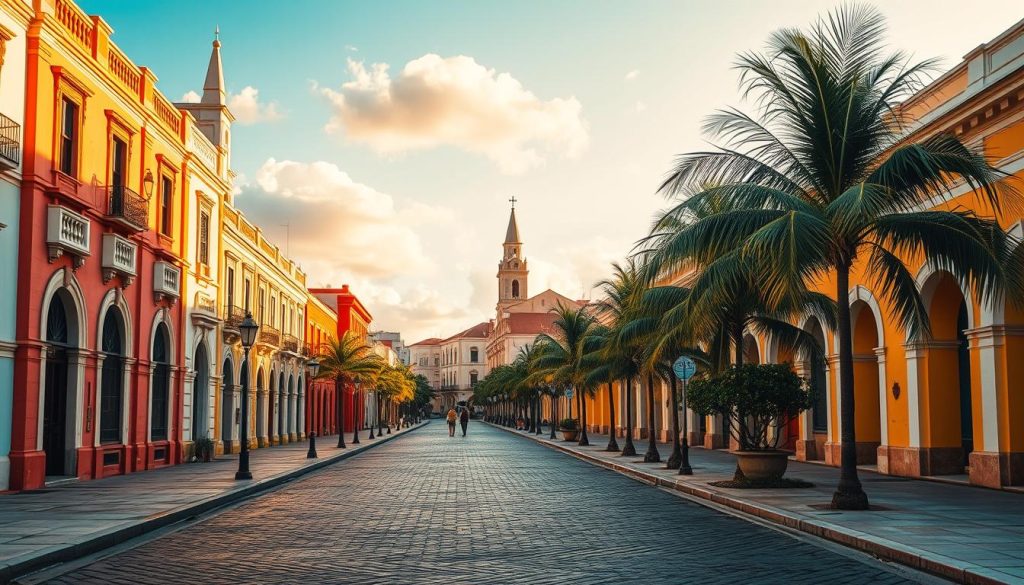
Exploring Oranjestad’s history reveals a rich mix of colonial and indigenous influences. Walking routes let you see the city’s past up close. You can wander the streets at your own pace.
Self-guided tour maps help you find Oranjestad’s historical landmarks. These routes highlight buildings and monuments that tell the city’s story. Walking through, you’ll learn about Oranjestad’s culture and people.
Discovering Hidden Gems
Exploring Oranjestad’s cultural sites also uncovers hidden gems. You’ll find lesser-known sites and vibrant street art. These add to the city’s charm, making your tour unforgettable.
Planning Your Walking Route
To enjoy your walking route, start early to avoid heat and crowds. Bring snacks and water to stay hydrated. Consider a guided tour with experts like Wendle and Yvonne.
Be mindful of your fitness level. Pace yourself to make the most of your walk. This way, you can create a personalized route that’s both fun and educational.
Preservation Efforts and Modern Development
As you explore the oranjestad historical sites, you might wonder about preservation efforts. The city’s sites and cultural heritage are precious. They need careful conservation and protection. At the same time, the city must grow in a way that’s sustainable and responsible.
Recent data shows 68% of American travelers want to see historical sites and countryside. This shows how important it is to keep best historical sites in oranjestad for the future. Restoring nine historic sites for tourism could cost $17 million over five to ten years. This is about half the cost of a new 300-room hotel.
Restoring historic sites is a team effort. It involves many stakeholders and subcontractors. For example, the restoration of Cas Veneranda, a 17th-century monument, is funded by several groups. These include the Algemeen Pensioenfonds Aruba (APFA), the National Restoration Fund of the Netherlands (NRF), and the Ministry of Economy, Communication, and Sustainable Development.
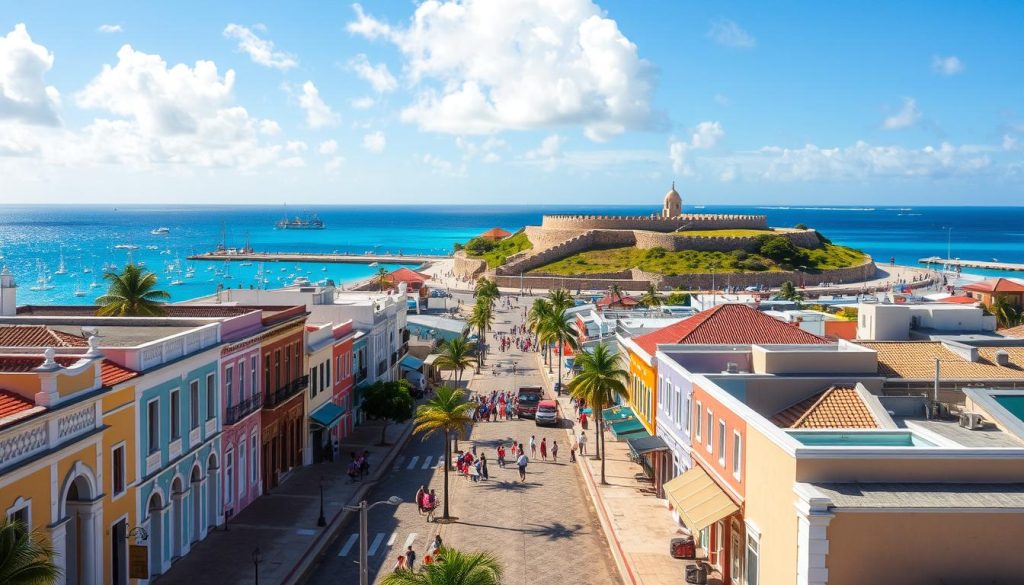
To learn more about preservation and development in Oranjestad, visit the Archaeological Museum of Aruba or the Museo Historico Aruba. They offer insights into the island’s past and colonial history.
Historical Site Photography Tips
Exploring Oranjestad’s history and visiting its top attractions is exciting. Taking photos of these sites is a great way to keep your memories alive. Here are some tips to help you capture memorable and respectful photos.
When you’re at Oranjestad’s historical sites, be aware of your surroundings and the people around you. Take a moment to observe the site and think about the story you want to tell through your photos. Look for the best spots, like the top of a hill or a unique feature, to add depth and interest.
- Best time of day: Early morning or late afternoon for soft, warm light
- Camera equipment: A good quality camera or smartphone with a decent camera
- Respect for the site: Be mindful of any photography restrictions or rules
By following these tips and being respectful, you’ll capture stunning photos. These photos will help you remember your time exploring Oranjestad’s history and visiting its top attractions.
Travel Tips for Historical Site Visits
When you plan to visit Oranjestad’s must-visit historical sites, remember a few key tips. There are many historic places in Oranjestad to see. You’ll want to dive into the city’s deep history.
First, plan ahead. Look up the sites you want to see and make a schedule. This way, you’ll have enough time at each place. Also, respect the sites and the people around you. Learn about the history and importance of each spot.
- Taking guided tours to gain a deeper understanding of the historical sites
- Being mindful of your surroundings and respecting any rules or regulations
- Taking photos and documenting your experience to remember your visit
By following these tips, you’ll enjoy your visit to Oranjestad’s historic places more. You’ll also make memories that last a lifetime.
Conclusion: Embracing Oranjestad’s Living History
As you finish exploring Oranjestad’s historical sites, think about the city’s rich culture and lasting impact. You’ve seen iconic spots like Fort Zoutman and the lively downtown area. You’ve also visited the bustling harbor and diverse religious sites.
These landmarks show Oranjestad’s complex and varied history. By embracing this history, you pay tribute to the people who made this city special.
Oranjestad’s historical sites are more than just a look into the past. They help keep the city’s culture alive. By exploring the island’s ancient treasures and maritime history, you see Oranjestad’s strength and ability to change.
This city is always growing, mixing its old charm with new developments. It ensures its history will live on for many years.





