

Creative Techniques for Travel Photography FAQs
What are some creative composition techniques for travel photography? If you’re looking to take your travel photography to the next level, implementing creative composition techniques can greatly enhance your photos and make them stand out. In this section, we’ll answer some frequently asked questions about using creative techniques to compose travel photos and share tips to capture visually compelling images of your travels.
Understanding the Rule of Thirds
The rule of thirds is a fundamental principle of composition in photography, and it’s a valuable tool you can use to create visually compelling travel photographs. Here’s how it works:
You divide your frame into nine equal parts, using two horizontal and two vertical lines. This division creates four intersection points that serve as natural focal points for your composition. When you place your subject off-center at any of these intersection points, you create a balanced and visually pleasing composition.
The rule of thirds is one of the most basic composition techniques for travel photography that yields beautiful results. There are many ways you can use this approach, such as:
- Placing your subject off-center for a sense of balance
- Using the intersecting lines to align key elements in your composition
- Strategically placing negative space around your subject
By incorporating the rule of thirds into your travel photography, you can take your compositions to the next level and create stunning and impactful images.
Leading Lines and Diagonals
When it comes to composing travel photographs, leading lines and diagonals can be incredibly effective. These elements not only draw the viewer’s eye toward the subject but can also add a sense of depth and movement to the image. Be aware of the different leading lines and diagonals available to you when shooting and consider how you can utilize them in your compositions.
Leading lines can be anything from roads, pathways, or bridges to natural elements such as tree branches or rocks. They all have the common characteristic of pointing towards the subject. When using leading lines in your travel photography, aim to position them to create a more dynamic and interesting photo with the subject as the focal point.
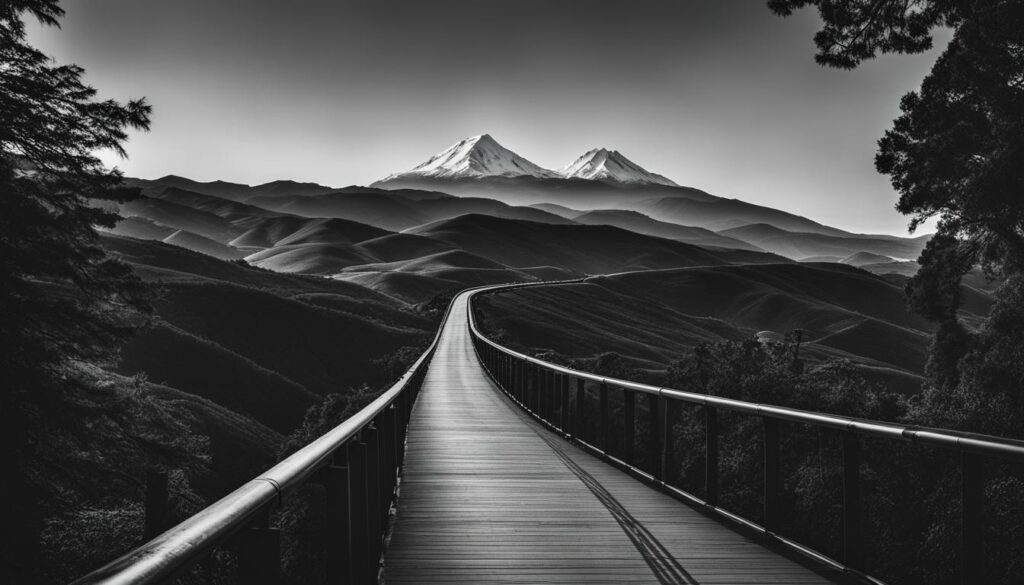
Diagonal lines, on the other hand, can add a sense of tension and movement to an image. They can be created by anything from a slanted rooftop to waves on the beach. Diagonal lines can be used to create a sense of depth, drawing the viewer’s eye into the frame and towards the subject.
Examples of Leading Lines and Diagonal Compositions In Travel Photography
| Image | Description |
|---|---|
| This image uses the leading line of the road to draw the viewer’s eye towards the subject, creating a sense of movement and depth. The rule of thirds has also been applied here, with the subject positioned on the right-hand third of the image. | |
|
The diagonal line created by the beach in this image adds a sense of movement and depth to the photograph. Additionally, the image utilizes the rule of thirds by placing the horizon along the upper third of the frame. |
| This image uses the leading line of the staircase to draw the viewer’s eye towards the subject. The image is also framed by the archway, which creates a sense of context and adds visual interest to the photograph. |
By incorporating the principles of leading lines and diagonals in your travel photography, you can create images that not only capture a moment but evoke a feeling and convey a sense of movement. Experiment with different compositions to find what works for the scene and subject you are photographing.
Framing Your Subject
In travel photography, framing your subject with natural or man-made elements, such as arches, windows, or trees, can add context and create visual interest within your photo. It can draw attention to your subject while showing the viewer the environment in which the subject exists.
One effective framing technique is to use a foreground object to create depth in your composition. For example, if you’re taking a photo of a towering mountain range, try framing the shot with a tree in the foreground. This adds a sense of scale and dimension to the image and can help lead the viewer’s eye to the main subject.
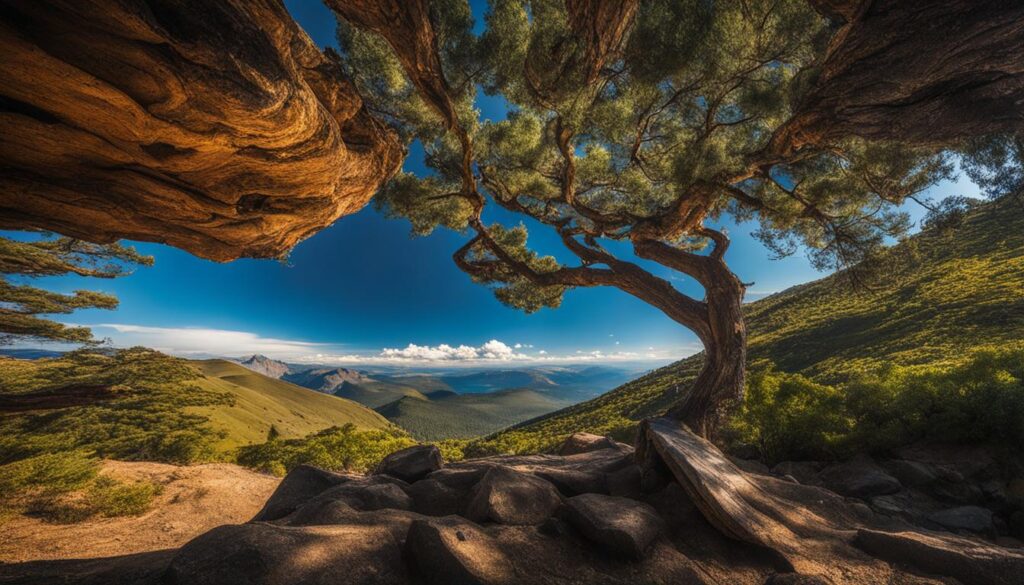
Pro Tip: Look for frames wherever you go, from doorways and windows to bridges and trees. Experiment with different angles and settings to get the shot just right.
By framing your subject with intention and creativity, you can capture stunning and captivating travel photos that tell a unique visual story.
Utilizing Symmetry and Patterns
Symmetry and patterns are two techniques that can create visually striking and harmonious compositions in your travel photography. Symmetrical scenes create a sense of balance and repetition, while patterns can add an element of visual interest and complexity to your images.
Identifying Symmetry
Symmetry can be found all around us in our travels. It can be a reflection of a building in a body of water, a perfectly aligned row of trees, or a circular opening in a stone wall. To capture symmetry in your travel photography, look for lines or shapes that are perfectly mirrored around a central axis.
Note: Using a tripod can be a helpful tool in capturing symmetrical scenes, as it helps to keep your camera level and steady.
Capturing Patterns
Patterns can be found in many different forms, from repeating shapes and textures to alternating colors and lines. When capturing patterns in your travel photography, try to fill the frame with the pattern, or use it as a background or foreground element to create visual interest in your image.
Note: Playing with different angles and distances can help to enhance the pattern and create a different visual impact on your photograph.
Examples of Symmetry and Patterns in Travel Photography
The image above showcases both symmetry and patterns in travel photography. The perfectly aligned boats in the foreground create a symmetrical scene, while the colorful buildings in the background form a repeating pattern.
Experimenting with Different Perspectives
Are you tired of taking the same travel photos from eye level? Changing your perspective and viewpoint can do wonders and transform an ordinary travel scene into a unique and captivating photograph.
Try looking at your subject from different angles and experiment with various perspectives – low-angle, high-angle, and unique vantage points. For instance, you could try shooting from a bird’s-eye view by climbing a nearby hill or building for a stunning aerial shot. Alternatively, shooting from a low-angle can create an interesting sense of scale and add drama to your travel photos.
Examples of Perspective Shots
| Perspective | Example |
|---|---|
| Low-angle | A photo of a mountain range with a small cabin in the foreground |
| High-angle | A photo of a busy city street from a high rise building |
| Unique Vantage Point | A photo of a sunrise taken from a hot air balloon |
Experiment with different perspectives and find the one that works best for the subject in your frame. You’ll be surprised to see how big of a difference it can make in your travel photos.
Incorporating Foreground Interest
Travel photography is a fantastic way to capture memories of your adventures around the world. To create visually engaging compositions, consider adding foreground interest to your travel photos. Including foreground elements can give your images a sense of depth and lead the viewer’s eye into the scene.
There are numerous ways to incorporate foreground interest into your travel photography. Try using natural elements such as rocks, plants, or water to add texture and depth to your foreground. Man-made objects like buildings or bridges can also be effective at anchoring the foreground and creating a strong sense of place.
When considering foreground interest, keep in mind the rule of thirds. Positioning your subject off-center using the rule of thirds can create balance and harmony within your composition.
Experiment with different foreground elements and don’t be afraid to get creative with your compositions. By incorporating foreground interest, you can add a new dimension to your travel photography and create visually stunning images.
Creating Depth with Layers
As a travel photographer, your goal is to transport your viewers to different parts of the world and make them feel like they’re right there next to your subject. Adding depth and dimension to your photographs is one way to achieve this, and layering elements within a frame is a great technique to accomplish it.
By dividing your photograph into different planes of foreground, middle ground, and background, you can create a sense of depth and atmosphere in your images. The foreground is the area closest to the viewer, while the background is the furthest away. The middle ground is the space between the two.
Here are some tips for layering your compositions and adding depth:
Foreground
The foreground is an excellent place for you to add elements that create depth and interest. Consider adding objects in the foreground that complement your main subject or provide context for it. For example, you could use rocks or plants to frame your subject and draw the viewer’s eye towards it.
Middle ground
The middle ground is where most of your subject resides. Use the middle ground to continue to lead the viewer into the background of the photo. Ensure that your subject is visible and not crowded out by too many additional elements.
Background
The background provides context for your subject and can reinforce the story you’re telling in your photograph. You can also use the background to provide environmental context for your subject.
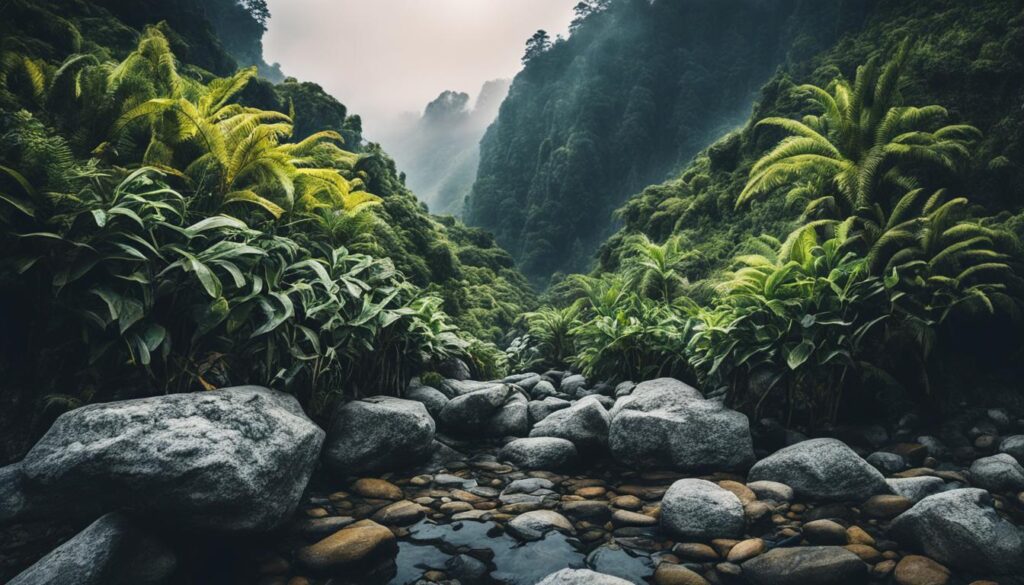
Remember to experiment with different layers, angles, and perspectives to find the right combination that works best for your composition. With practice, you’ll be able to create captivating travel photos that stand out from the rest.
Emphasizing the Golden Hour
When it comes to travel photography, lighting is key. The golden hour, which occurs just after sunrise or before sunset, offers a soft, warm light that can enhance your travel compositions, giving them an ethereal and almost magical quality. Utilizing the golden hour can improve the aesthetic composition techniques for travel photos, so it’s essential to know how to use it effectively.
To make the most of the golden hour, it’s important to prepare in advance. Scout out your location beforehand, so you know exactly where the sun will be. This will help you determine the best spot to capture the shot you envision. Arrive early to set up your equipment and take some test shots to ensure you’re capturing the right light and composition.
During the golden hour, experiment with different shutter speeds, apertures, and ISO settings to capture the warmth and softness of the light. Shooting in manual mode can give you more control over your settings and the resulting image. Keep in mind that the light changes rapidly during this time, so be prepared to adjust your settings as needed.
When composing your shot, consider using the rule of thirds to position your subject in the most visually appealing spot. The warm light of the golden hour can also be used to create beautiful silhouettes, and backlighting can add depth and a sense of drama to your photos.
The golden hour doesn’t last long, so it’s important to make the most of this magical time. With a little preparation and experimentation, you can utilize this beautiful light to elevate the aesthetic composition techniques for travel photos, resulting in stunning and captivating travel photographs.
Utilizing Negative Space
When it comes to travel photography, negative space can be powerful. Negative space is the area around and between the primary elements in your photograph and it can draw attention to your subject, creating a visually minimalist and impactful travel photograph. By intentionally incorporating negative space, you can create a sense of balance and emphasize the subject of your composition.
Here are a few tips for effectively utilizing negative space in your travel photographs:
- Keep it simple: Negative space works best when it’s clean and uncluttered.
- Consider your background: Busy or distracting backgrounds can detract from the impact of negative space.
- Use the rule of thirds: Placing your subject off-center can help create negative space around the subject.
When used correctly, negative space can create striking and memorable travel photos. So, don’t be afraid to experiment with this powerful compositional element.
Balancing Elements in the Frame
When composing travel photos, it’s important to properly balance the elements within the frame to achieve a visually pleasing composition. To create balance, use different techniques, such as:
- Color: Use colors that complement each other or create contrast to balance the composition.
- Size: Vary the size of elements in the frame to create a natural hierarchy and distribute visual weight evenly.
- Visual weight: Balance the visual weight of elements in the photo to create a harmonious feel. For example, large objects may have more visual weight than small objects, and dark objects may be heavier than light objects.
By paying attention to these design principles, you can create a sense of harmony and cohesion in your travel photos. Below is an example of a balanced composition.
Example
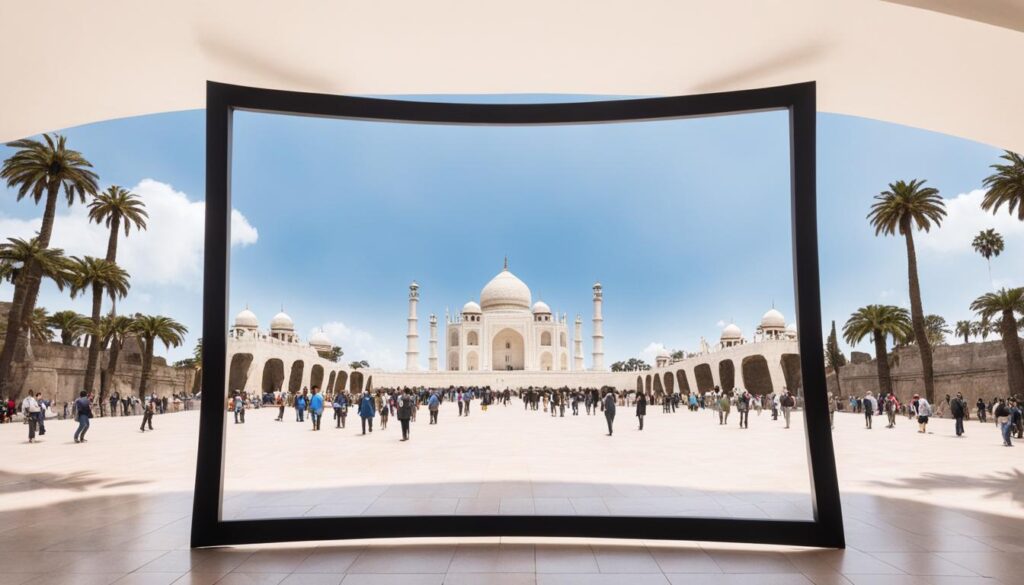
In this photo, the statue has more visual weight due to its size and dark coloring. The bridge, buildings, and trees provide balance by filling in the other areas of the frame and creating a natural symmetry. The light and color contrast between the sky and the statue also adds interest and helps to create a visually appealing composition.
Conclusion
In conclusion, incorporating creative composition techniques can enhance your travel photography and help you capture stunning and captivating images. By understanding the rule of thirds, utilizing leading lines and diagonals, framing your subject, utilizing symmetry and patterns, experimenting with different perspectives, incorporating foreground interest, creating depth with layers, emphasizing the golden hour, utilizing negative space, and balancing elements in the frame, you can take your travel snapshots to the next level.
Remember to have fun and experiment with different approaches while exploring the world through your lens. The more you practice, the more you’ll improve your composition skills, and the more you’ll develop your unique style as a travel photographer. Happy snapping!


