Celebrate Spring: Top Cultural Festivals Happening in March
March cultural festivals offer a vibrant tapestry of global festivities. They capture the essence of renewal and joy. From Holi in India to St. Patrick’s Day, these celebrations showcase humanity’s desire for new beginnings.
The Vernal Equinox marks spring’s arrival between March 19th and 21st in the northern hemisphere. This triggers a wave of cultural events across the globe. Spain’s Las Fallas kicks off the month with a five-day extravaganza in Valencia.
March offers a diverse array of global festivities. You can experience ancient rituals like Nyepi in Bali or modern events like Sydney’s Gay and Lesbian Mardi Gras.
Unique traditions abound throughout the month. Bosnia’s Cimburijada features a scrambled egg feast. In the Netherlands, Keukenhof showcases tulip-filled fields. These spring celebrations invite you to explore world cultures.
Introduction to Global Spring Celebrations
Spring festivals bring life and color to communities worldwide. People gather to celebrate renewal through vibrant traditions. These celebrations blend history and modernity, attracting tourists and fostering cultural understanding.
The Significance of Spring Cultural Festivals
Spring marks new beginnings with blossoming flowers and longer days. Festivals during this season often carry deep cultural and religious meaning. Holi, the Hindu festival of colors, celebrates winter’s end with joyous powder-throwing on March 25, 2024.
Nowruz, the Iranian New Year, welcomes spring with traditional dances and rituals on March 20, 2024. These events showcase the diversity of global celebrations and traditions.
Historical Origins and Modern Celebrations
Many spring festivals have ancient roots that have evolved into modern spectacles. Sechseläuten in Zurich, Switzerland, features the burning of a huge effigy called Böögg. This tradition is believed to predict summer weather.
In Luxembourg, the Buergbrennen tradition of lighting bonfires was revived in the 1930s. It continues to thrive today, connecting past and present celebrations.
Cultural Impact and Tourism
Spring festivals significantly boost cultural tourism. Thailand’s Songkran water festival, celebrated on April 13, attracts visitors from around the world. These events preserve traditions and create economic opportunities for local communities.
Consider immersing yourself in these rich cultural experiences during your spring travels. You’ll discover the beauty and diversity of global spring celebrations firsthand.
| Festival | Country | Date (2024) | Key Feature |
|---|---|---|---|
| Holi | India | March 25 | Color throwing |
| Nowruz | Iran | March 20 | Fire and water rituals |
| Songkran | Thailand | April 13-15 | Water fights |
| Sechseläuten | Switzerland | Third Monday of April | Böögg burning |
March Cultural Festivals Around the World
March is alive with global festivals and spring events. From colorful explosions to sacred observances, this month offers a rich cultural tapestry. Discover the diverse celebrations happening worldwide.

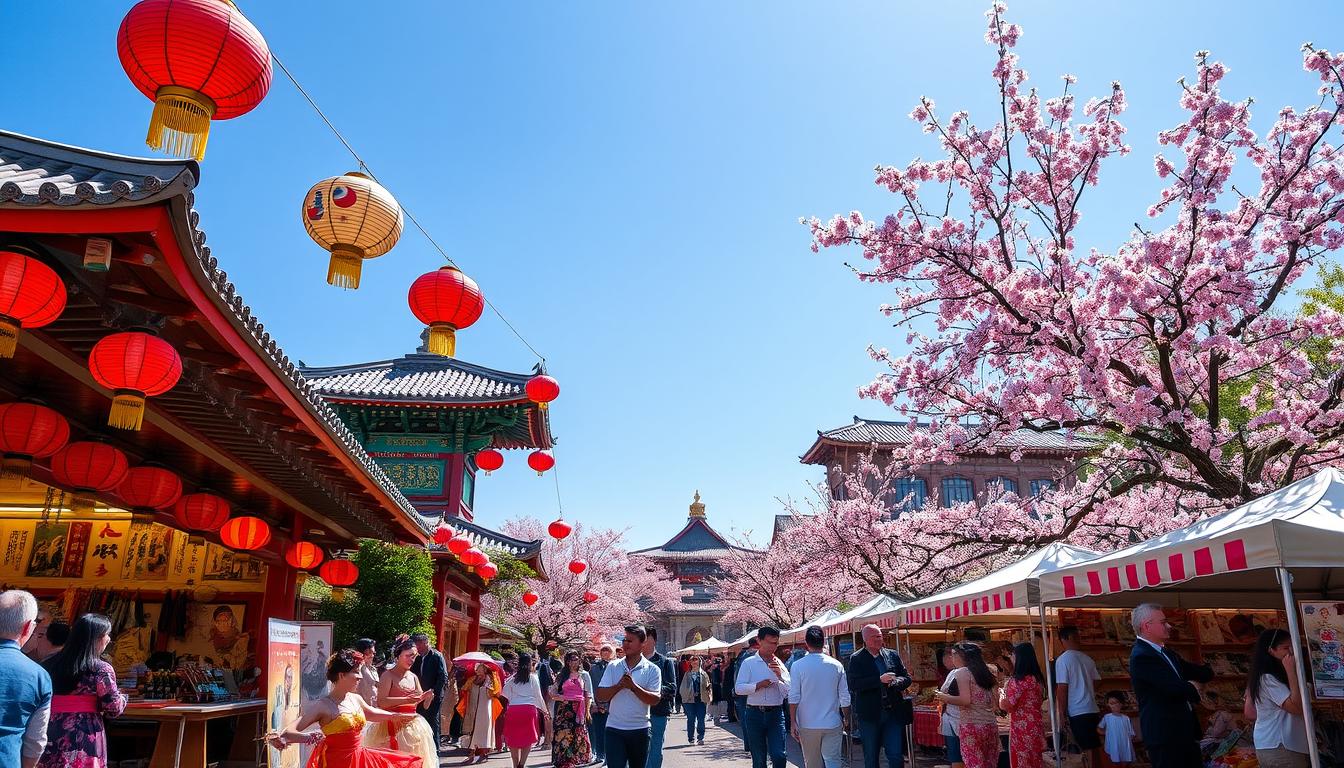
Japan’s Hanami, the Cherry Blossom Festival, runs from March 20 to April 14, 2024. Millions flock to admire the delicate pink blooms. This event celebrates nature’s beauty in a stunning display.
St. Patrick’s Day on March 17 spreads Irish cheer globally. Cities like Dublin and New York turn into seas of green. Parades and festivities mark this lively celebration.
Easter falls on March 31, 2024, blending religious tradition with springtime joy. Families enjoy egg hunts and special meals. This Christian holiday holds deep meaning for many.
Ramadan begins on March 10, 2024, for Muslims worldwide. This month-long period involves fasting and reflection. It fosters community spirit and spiritual growth among believers.
| Festival | Location | Dates (2024) |
|---|---|---|
| Hanami | Japan | March 20 – April 14 |
| St. Patrick’s Day | Global | March 17 |
| Easter | Worldwide | March 31 |
| Ramadan | Global Muslim Communities | March 10 – April 9 |
| Valencia Fallas | Spain | March 1 – 19 |
Spain’s Valencia Fallas ignites from March 1 to 19. This fiery festival features massive sculptures set ablaze. It creates a spectacular blend of art and tradition.
These March festivals highlight cultural diversity and springtime renewal. Each celebration offers unique insights into local customs. They also showcase the connections we share across the globe.
Holi Festival: India’s Vibrant Color Celebration
Holi, India’s spring festival, paints the world in vibrant hues. This joyous celebration marks spring’s arrival and good’s triumph over evil. Holi brings people together, breaking social barriers and fostering unity.
Origins and Religious Significance
Holi’s roots lie in ancient Hindu legends. It commemorates Prahlada and Holika’s story, symbolizing devotion’s victory over wickedness.
The night before Holi, people gather for Holika Dahan. They light bonfires to represent good conquering evil.
Traditional Celebrations and Customs
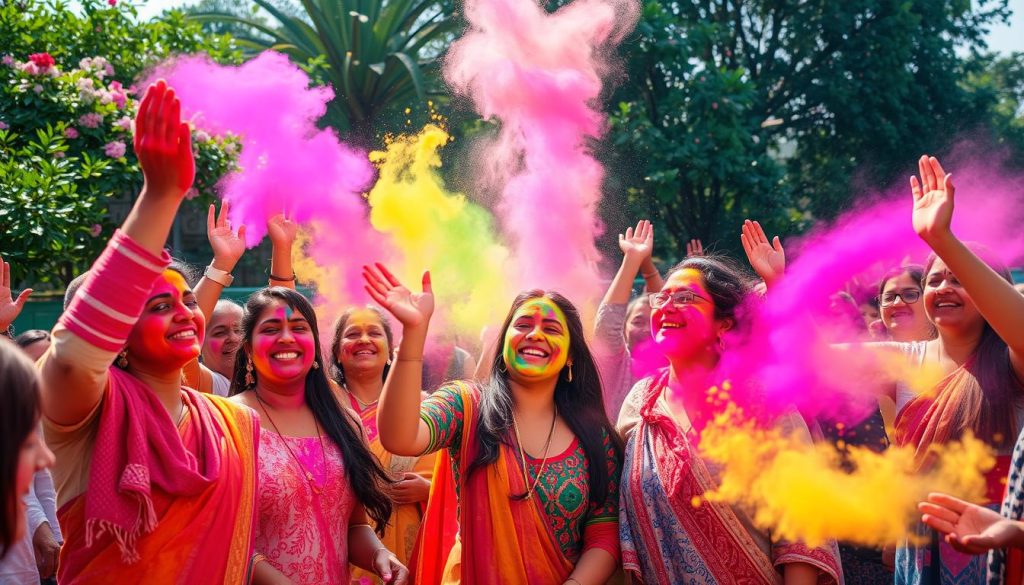
Holi bursts with energy as people smear each other with colorful powders. Streets come alive with laughter, music, and dance.
Families prepare special treats like gujiya and thandai. They share these delicacies with loved ones and neighbors.
| Region | Unique Holi Tradition |
|---|---|
| Mathura-Vrindavan | Week-long celebration with Lathmar Holi |
| Punjab | Hola Mohalla martial arts displays |
| West Bengal | Dol Jatra with swings and songs |
Where to Experience Authentic Holi
For an unforgettable Holi experience, visit Mathura and Vrindavan in Uttar Pradesh. These cities, linked to Lord Krishna, offer week-long celebrations.
Delhi, Jaipur, and Udaipur host vibrant color festivities too. They attract both locals and tourists alike.
Wear old clothes and use natural colors to fully enjoy this joyous Indian spring festival.
St. Patrick’s Day: Irish Heritage Worldwide
St. Patrick’s Day, on March 17th, has become a global Irish cultural celebration. This festive day honors Irish traditions with vibrant parades, green attire, and joyous gatherings worldwide.
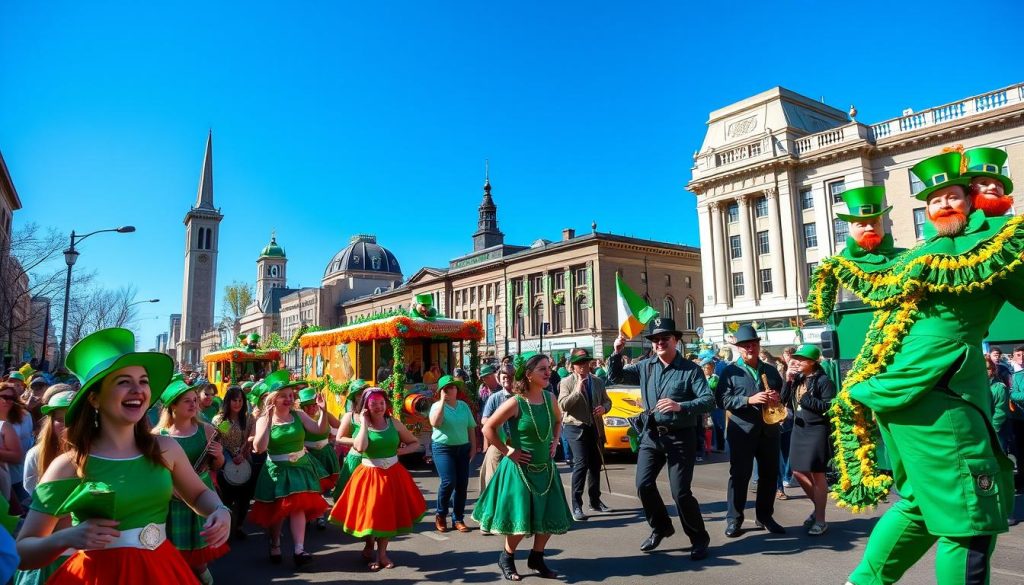
This Irish festival is celebrated in more countries than any other national event. Since 2010, over 300 landmarks in 50 countries have joined the “Global Greening Initiative.” Famous sites turn emerald green for the occasion.
In the United States, St. Patrick’s Day has a rich history. The first parade took place in Manhattan in 1762. Irish immigrants used these celebrations to combat discrimination and establish their place in American society.
Today, parades showcase Irish music, dance, and customs. Cities like New York, Chicago, and Dublin host major events. These festivities draw millions of spectators from around the world.
- Traditional music sessions (céilithe)
- Wearing green clothes or shamrocks
- Church services
- Consumption of Irish stout
Four-leaf clovers are rare due to recessive genetic traits. The color green’s connection to Ireland dates back to the 11th century. It’s deeply rooted in Irish folklore and tradition.
| Element | Significance |
|---|---|
| Green Color | Symbolizes Ireland, dates back to 11th century |
| Shamrock | Represents the Holy Trinity in Christian tradition |
| Parades | Showcase Irish culture and pride worldwide |
| Irish Stout | Popular beverage, consumption increases during celebrations |
St. Patrick’s Day is more than just wearing green. It’s a chance to explore Irish culture and heritage. Join the global celebration and embrace the spirit of Ireland.
Las Fallas Festival in Valencia, Spain
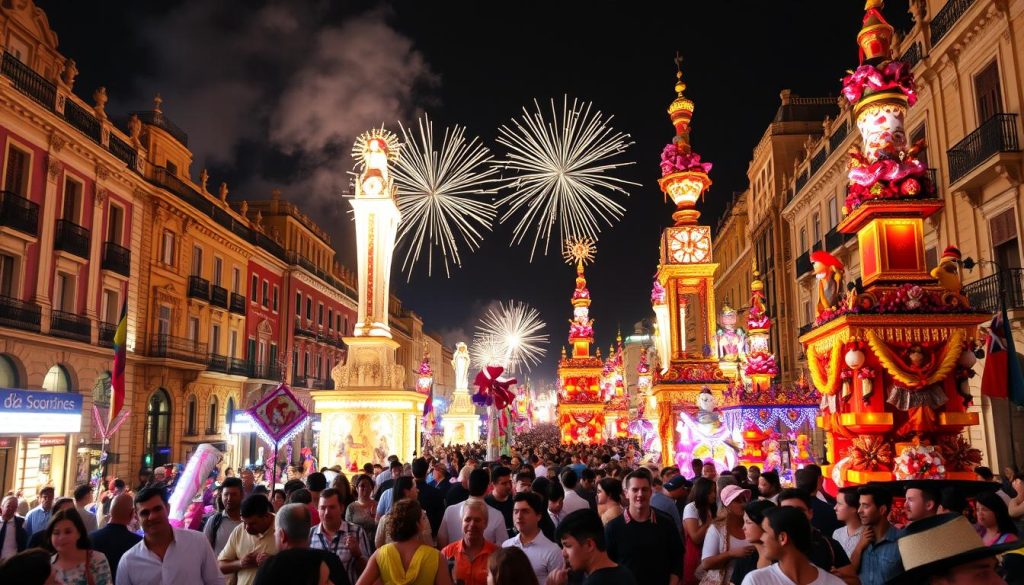
Valencia bursts into life each March with the Las Fallas festival. This UNESCO event blends art, fire, and tradition in a captivating spring celebration.
History of Las Fallas
Las Fallas began in medieval times when carpenters burned extra wood at winter’s end. It has grown into a massive city-wide celebration.
Over 750 neighborhood groups, representing a quarter of Valencia’s population, create elaborate falla sculptures. These groups bring the festival to life with their artistic creations.
Artistic Installations and Celebrations
Valencia’s streets come alive with over 800 fallas monuments during the festival. These towering, often satirical artworks become the heart of the festivities.
The Ninot Exhibition showcases selected figures from each falla. It gives visitors a sneak peek of the artistic wonders to come.
Schedule of Events
Las Fallas officially runs from March 15th to 19th. However, the celebrations start earlier with various events.
- February’s last Sunday: La Crida opening ceremony
- March 1st-19th: Daily Mascletà fireworks at 2 PM, reaching 120 decibels
- March 17th-18th: Flower offering parade to the Virgin Mary
- March 19th: La Cremà – burning of fallas at night
| Event | Date | Description |
|---|---|---|
| Ninot Exhibition | Feb 4 – Mar 15 | Display of selected falla figures |
| Mascletà | Mar 1 – 19 | Daily fireworks display at 2 PM |
| Flower Offering | Mar 17 – 18 | Parade with floral tributes |
| La Cremà | Mar 19 | Burning of fallas sculptures |
Nowruz: Persian New Year Traditions
Nowruz, the Persian New Year, heralds spring with rich traditions. This ancient celebration spans over 3,000 years, aligning with the spring equinox. UNESCO and the UN recognize Nowruz as a symbol of renewal.
Cultural Significance
Nowruz holds deep importance across Central Asia and the Middle East. It signifies new beginnings and life’s cyclical nature. The festival’s origins trace back to the ancient Achaemenid Empire.

Traditional Customs and Rituals
Nowruz festivities last 13 days, filled with unique customs. Families spring clean and set up the Haft-Sin table. This display features seven symbolic items representing themes like health and wealth.
In Iran, people jump over bonfires to cleanse negativity. This ritual takes place before the New Year begins.
Global Celebrations
Nowruz is now celebrated worldwide, beyond its Persian origins. Countries like Afghanistan, Azerbaijan, and Turkey observe this spring equinox celebration. In the US, Persian communities gather to honor their heritage through Nowruz.
| Country | Unique Nowruz Tradition |
|---|---|
| Iran | Haft-Sin table display |
| Afghanistan | Serving haft mewa (seven fruits) |
| Azerbaijan | Preparing special pastries |
| Turkey | Egg-tapping games |
Discover the vibrant traditions of Nowruz during your spring travels. This Persian New Year blends ancient customs with modern festivities. It offers unforgettable cultural experiences for both travelers and locals.
Hina Matsuri: Japan’s Doll Festival
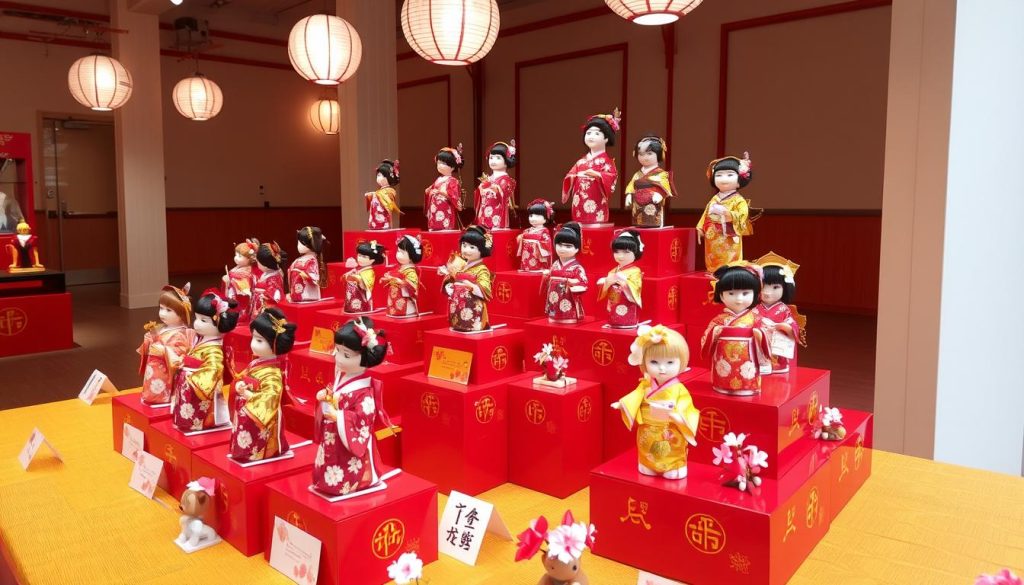
Hina Matsuri, Japan’s doll festival, is a beloved tradition on March 3rd. This Girls’ Day event showcases elaborate doll displays. It promotes the health and happiness of young girls across Japan.
Families set up hinadan, multi-tiered platforms with ornate dolls. The top tier features the emperor and empress. Lower levels display court ladies, musicians, and ministers.
These displays can be quite expensive. High-quality five-tier sets can cost between $1,500 and $2,500.
Traditional foods are a key part of the celebration. Families enjoy hina-arare, chirashizushi, and clam soup. These treats symbolize good fortune and are delicious.
- Hishi-mochi: Diamond-shaped rice cakes
- Shirozake: Sweet white sake
- Amazake: Non-alcoholic sweet rice drink
Superstition suggests packing away doll displays promptly after March 3rd. Leaving them out too long might delay a girl’s marriage prospects!
Modern trends show a growing preference for compact doll sets. These space-saving options honor Hina Matsuri without needing elaborate displays.
Hina Matsuri offers a beautiful look into Japanese culture. It celebrates femininity, both in Japan and abroad.
Mardi Gras and Carnival Celebrations
Mardi Gras and carnival festivals bring cities to life with color, music, and joy. These lively events happen right before Lent, a time for reflection in many Christian traditions.
New Orleans Mardi Gras Traditions
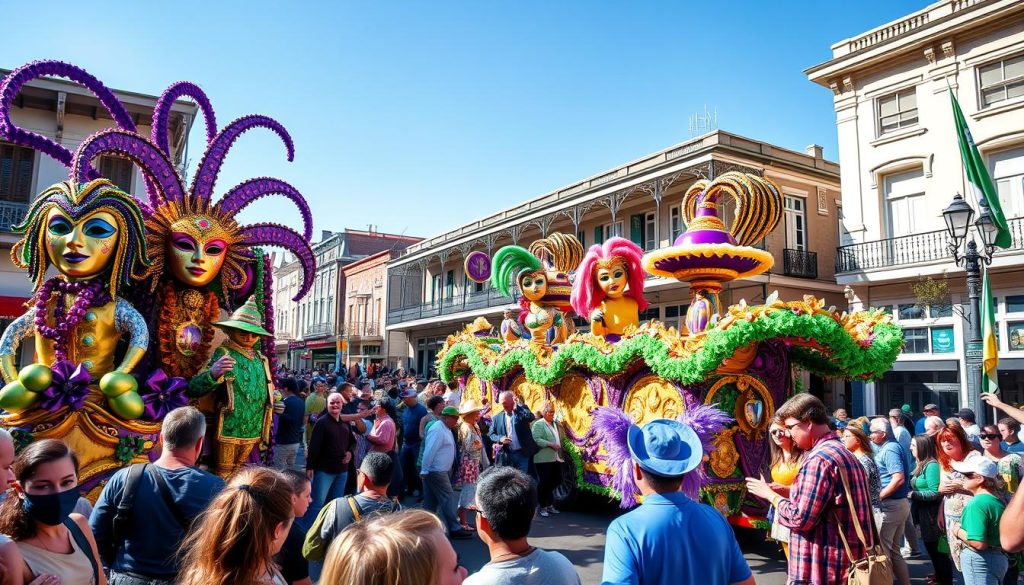
New Orleans hosts one of America’s most famous Mardi Gras celebrations. The city buzzes with parades, fancy costumes, and tasty Creole food. King cakes and beignets are popular treats during this time.
Sales of these goodies have gone up by 25% during the festival season. This shows how much people love these traditional snacks.
Global Carnival Festivities
Carnivals happen all over the world, not just in New Orleans. Rio de Janeiro is known for its samba parades and street parties. Venice charms visitors with its mysterious masked balls.
These global festivals draw millions of tourists each year. They bring in lots of money for local businesses.
Cultural Impact and Tourism
Mardi Gras and carnival celebrations boost tourism and help local shops. Many cities see 30% more people on the streets during these events. These spring festivals keep old traditions alive and help the economy grow.
Some places now have twice as many carnival events as before. This shows that more people are getting excited about these fun celebrations.
| Impact | Percentage Increase |
|---|---|
| Costume and Accessory Spending | 20% (over 5 years) |
| Tourism Revenue | 10% (during March) |
| Local Business Foot Traffic | 30% |
| Charity Event Donations | 40% (year-over-year) |
Mardi Gras and carnival celebrations keep changing, but their spirit stays the same. They show how people love to come together and have fun.
Bun Festival in Hong Kong
The Cheung Chau Bun Festival is a lively Hong Kong spring event held yearly in April or May. This week-long celebration draws huge crowds to the small island of Cheung Chau. It blends religious customs with local folklore, making it a key cultural happening.
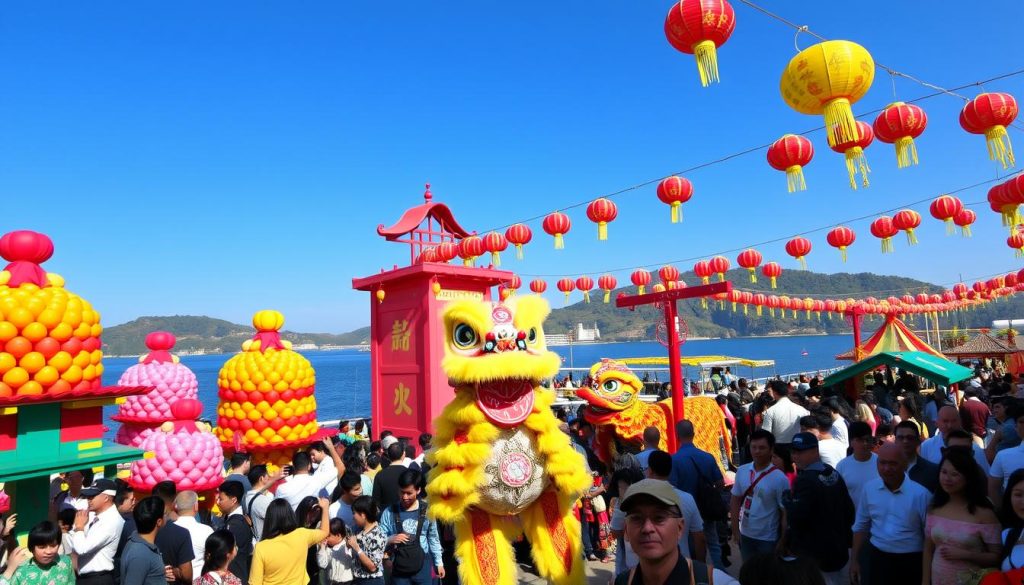
The festival’s main event is the exciting Bun Scrambling Competition. Twelve chosen contestants climb a steel tower covered in steamed buns. Their goal? Grab as many buns as they can.
This thrilling contest returned in 2005 after a break due to safety worries. Now, climbers use proper gear and get training before the event. It’s both safe and fun!
Kwok Ka-Ming, a Cheung Chau fitness coach, is the contest’s star. He won four times, scoring an amazing 939 points in 2010. Kwok Kam Kee, the official bun maker, bakes over 60,000 buns for the festival.
| Year | Winner | Score |
|---|---|---|
| 2005 | Kwok Ka-Ming | 423 |
| 2006 | Kwok Ka-Ming | 705 |
| 2010 | Kwok Ka-Ming | 939 |
The festival also features a grand parade with people in traditional Chinese outfits. It ends with a big feast where butchers start selling meat again. This event keeps local traditions alive.
Visitors get to see a unique part of Hong Kong’s cultural heritage. It’s a fantastic way to experience local customs up close.
Planning Your Spring Festival Experience
Spring festivals celebrate culture and renewal vibrantly. These tips will help you make the most of your journey. Proper planning ensures an unforgettable experience.
Consider packing essentials and respecting cultural etiquette. These factors contribute to a smooth and enjoyable festival adventure.
Travel Tips and Considerations
Book accommodations early for popular events like the Hirosaki Cherry Blossom Festival. This event attracts thousands with its 2,600 cherry trees.
Pack weather-appropriate clothing and comfortable shoes for long exploration days. Research local transportation options to navigate crowded festival areas efficiently.
Cultural Etiquette Guide
Respect local customs to fully appreciate the festival spirit. For Nowruz, the Persian New Year, learn about the haft-seen table’s symbolic items.
During Holi in India, ask before applying colors to strangers. Wear clothes you don’t mind getting stained.

Photography and Social Media Guidelines
Capture memories responsibly with these festival photography tips. At the Nachi Fire Festival, be mindful of sacred rituals when taking photos.
For social media posts, use relevant hashtags to share your experience. Remember to respect privacy guidelines when posting online.
| Festival | Location | Date | Key Feature |
|---|---|---|---|
| Holi | India | March 17-18 | Colorful powder throwing |
| Las Fallas | Valencia, Spain | March 15-19 | 750+ monument burnings |
| Nowruz | Central Asia | March 20 | Symbolic haft-seen table |
| Songkran | Thailand | April (varies) | Water splashing festivities |
Conclusion
Spring cultural festivals showcase global celebrations and cultural diversity. From India’s colorful Holi to Spain’s fiery Las Fallas, these events offer unique insights into local customs. Your participation can create lasting memories and promote cultural understanding.
These celebrations have a significant economic impact. In the UK, festivals contribute £550 million annually, with 3.4 million attendees. The Glastonbury Festival alone adds over £100 million to the local economy yearly.
These events boost tourism and create jobs. The Edinburgh Festivals generate the equivalent of 5,242 full-time positions.
Educational institutions value cultural festivals in nurturing global citizens. Excelsior American School in Gurgaon celebrates diverse traditions like Diwali, Chinese New Year, and Thanksgiving. This approach helps students develop cross-cultural communication skills and a global mindset.
Spring festivals offer more than entertainment. They serve as tribal gatherings, providing unity and belonging. Attending events like the San Francisco International Film Festival enriches communities worldwide.