Uncover the Secret of Grand Turk Wild Donkeys
Ever wondered why the wild donkeys in Grand Turk are so loved? These animals are more than just a fun sight. They play a key role in the island’s ecosystem. As you learn about them, you’ll discover their history, cultural importance, and the efforts to save them.
Grand Turk welcomes nearly a million visitors each year. This growth is a challenge for the wild donkeys. But, there are efforts to protect them, even as more people visit the Grand Turk Cruise Center.
Grand Turk is full of history and beauty. It has colonial buildings and old salt industry sites. The island enjoys over 350 sunny days a year, making it a stunning place to visit.
Let’s explore the wild donkeys’ role in the island. We’ll also see how you can help protect them during your trip.
A Brief Overview of Grand Turk
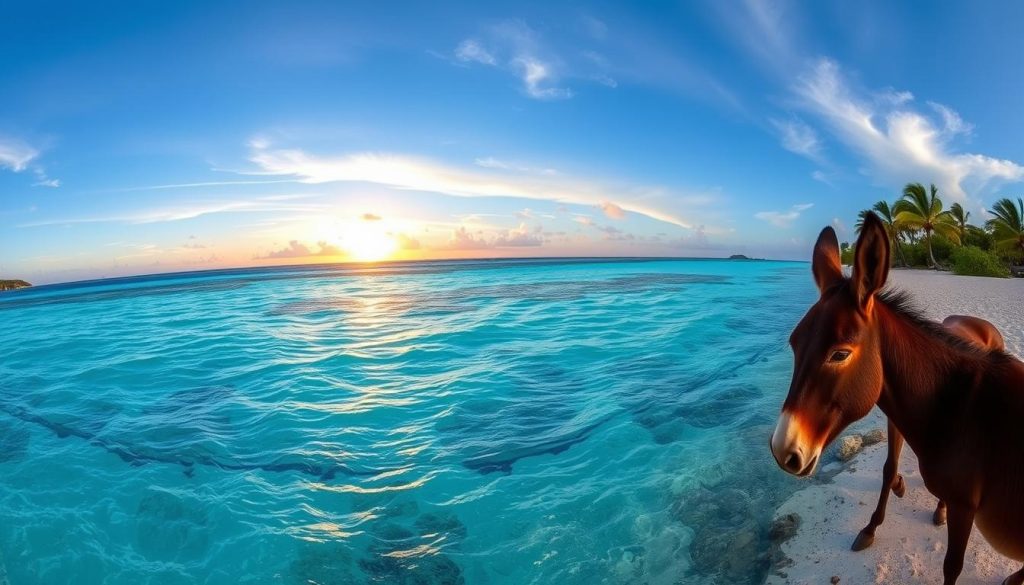
Grand Turk is the biggest island in the Turks and Caicos group, in the Eastern Caribbean. It’s about 7 miles long and 1.5 miles wide. Cockburn Town, its capital, shows off the island’s culture and history.
The island’s beauty is unmatched, with clear blue waters and soft white beaches. Its past is fascinating, with a booming salt industry in the early 1900s. Back then, they used over 227 acres for salt production, sending out about two million bushels a year.
Don’t miss the Grand Turk Lighthouse, built in 1852 and electrified in 1971. The Grand Turk Cruise Center, opened in 2006, welcomes many visitors. It’s also where Colonel John Glenn first stepped on land after orbiting Earth in 1962.
Today, Grand Turk celebrates its past while protecting its wildlife. The community works hard to save its unique species and historical sites. This way, the island will keep enchanting visitors for years to come.
| Feature | Details |
|---|---|
| Location | Eastern Caribbean |
| Size | 7 miles long, 1.5 miles wide |
| Capital | Cockburn Town |
| Salt Industry Peak | Early 1900s |
| Annual Salt Export | 2 million bushels |
| Historical Sites | Grand Turk Lighthouse, Columbus Landfall National Park |
| Cruise Center | Opened in 2006 |
| Notable Event | John Glenn’s first step on land in 1962 |
The Fascinating History of Wild Donkeys in Grand Turk
The tale of wild donkeys in Grand Turk goes back centuries. They were brought by Spanish explorers as early as the 1650s. These animals were essential for moving goods and doing hard work.
In the mid-1700s, Bermudian salt rakers came to the island. They used donkeys for mining salt. This was a big part of the island’s history.
When the salt industry went down, the donkeys were set free. This was a big change in their history. They learned to live well on the island, becoming a symbol of its culture.
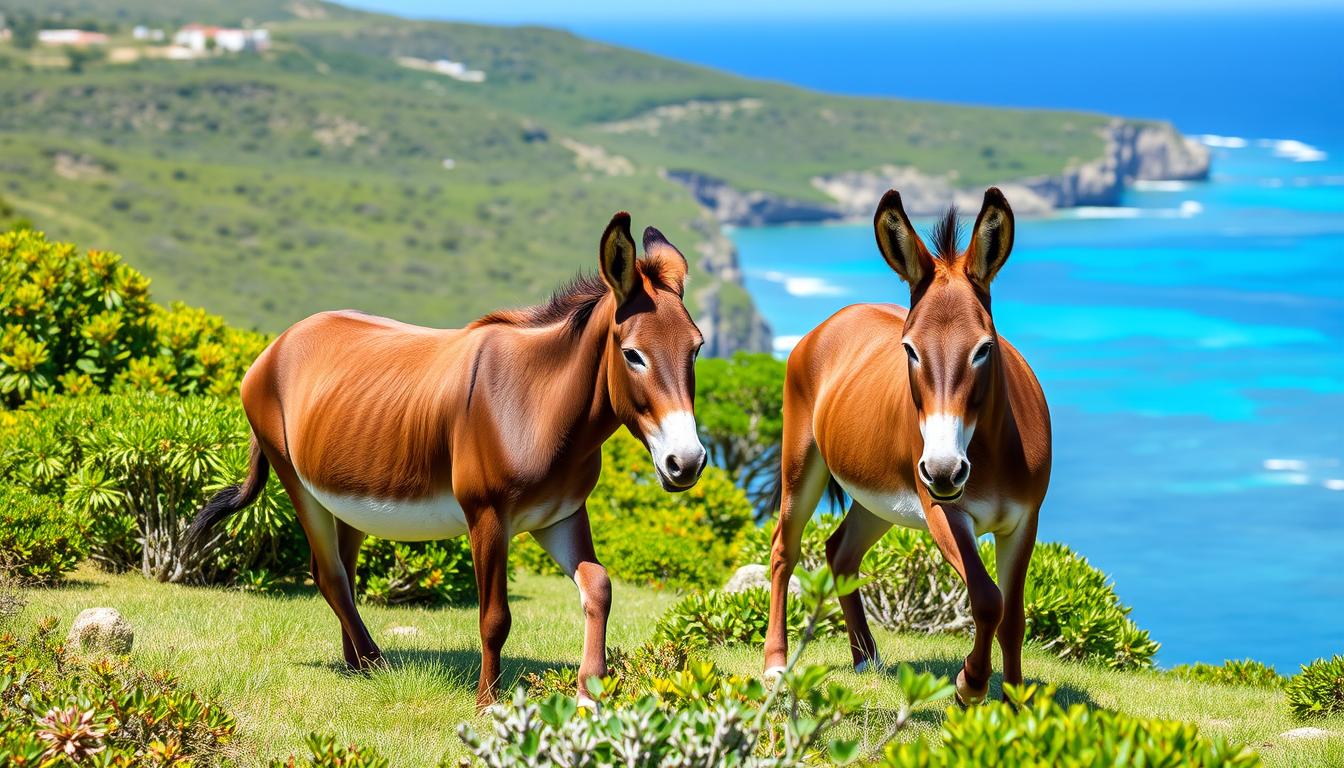
Today, these donkeys are a big part of the island’s heritage. You can see them walking by the coast or eating in fields. They can live up to 40 years, showing the island’s spirit.
They are loved by everyone on the island. Their history makes them a special part of life here.

Understanding the Grand Turk Wild Donkeys
Grand Turk wild donkeys are a key part of the island’s beauty. They show how animals can adapt and survive. These donkeys were brought in for salt mining, marking a special time in the island’s history.
At first, they helped carry salt. But as salt mining went down, they became wild. This shows how they can live well in the Caribbean.
The Origin of Wild Donkeys
The wild donkeys remind us of Grand Turk’s farming past. They were brought here in the 18th century for work. As salt mining fell, they turned into a free-roaming group.
Their story is a testament to animals’ ability to adapt. It shows how they can thrive even as human activities change.
Life on the Island
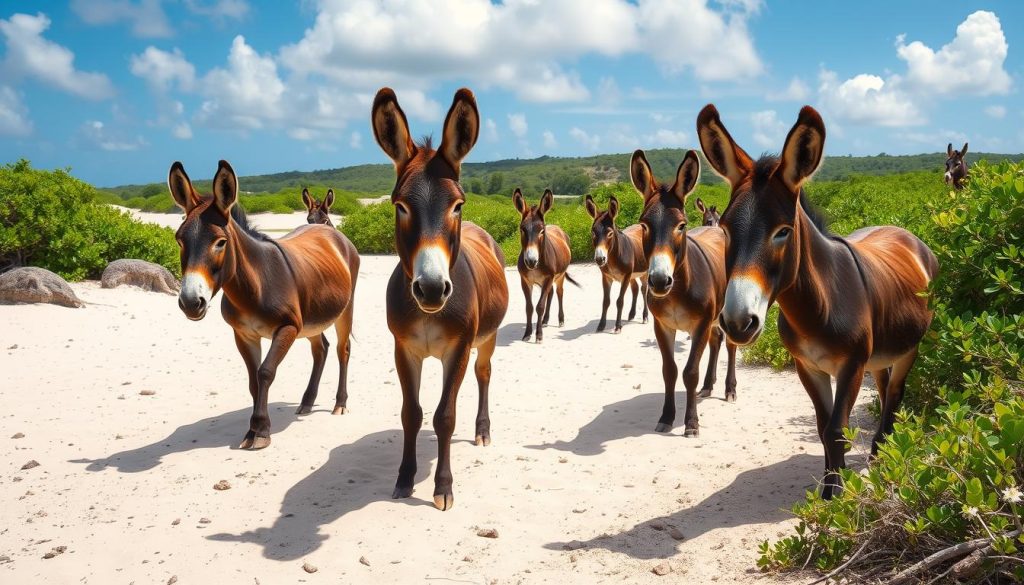
The wild donkeys of Grand Turk live a unique life. They roam everywhere, from beautiful beaches to busy streets. This lifestyle adds to Grand Turk’s beauty and wins hearts from locals and visitors.
Seeing them in their natural setting is a reminder of their strength. It shows how they’ve adapted and survived through time.
| Feature | Description |
|---|---|
| Habitat | Free-roaming across various terrains, including beaches and city areas. |
| Historical Significance | Introduced for salt mining, representing the island’s historical agricultural practices. |
| Population Adaptability | Adapted to a wild lifestyle after the decline of the salt industry. |
| Tourist Interaction | Often interact with visitors, adding to the cultural experience of Grand Turk. |
| Symbol of Resilience | Embodies the adaptation and sustainability of wildlife in changing environments. |
Grand Turk Donkey Population: Past and Present
The Grand Turk donkey population has seen big changes over time. They thrived when the salt industry was booming. But when the industry declined, their numbers dropped.
As the island changed, the donkeys adapted and their numbers grew again. Now, they are a symbol of the island’s culture and a joy for tourists.
The community works hard to keep the donkeys healthy. They have programs to protect and care for them. A spay and neuter effort, led by the TCSPCA before the pandemic, is key to managing their growth.
But, there are still big challenges. Donkeys sometimes get into trouble, causing accidents. It’s also expensive to get them vet care, which many can’t afford.
The government wants to make the donkeys safer. They plan to quarantine them. This is to protect both the donkeys and the community.
There’s a push to stop cruelty and neglect. Local inmates are helping care for injured donkeys. Dr. Brent is working on a plan to get a special transport vehicle for the animals.
People are looking for ways to make sure the donkeys are okay for the future. Ideas include moving some to deserted islands, sending them to Haiti, or setting up sanctuaries. These plans show a growing effort to protect the donkeys and fight animal neglect.
Grand Turk Donkey Sanctuary: A Safe Haven
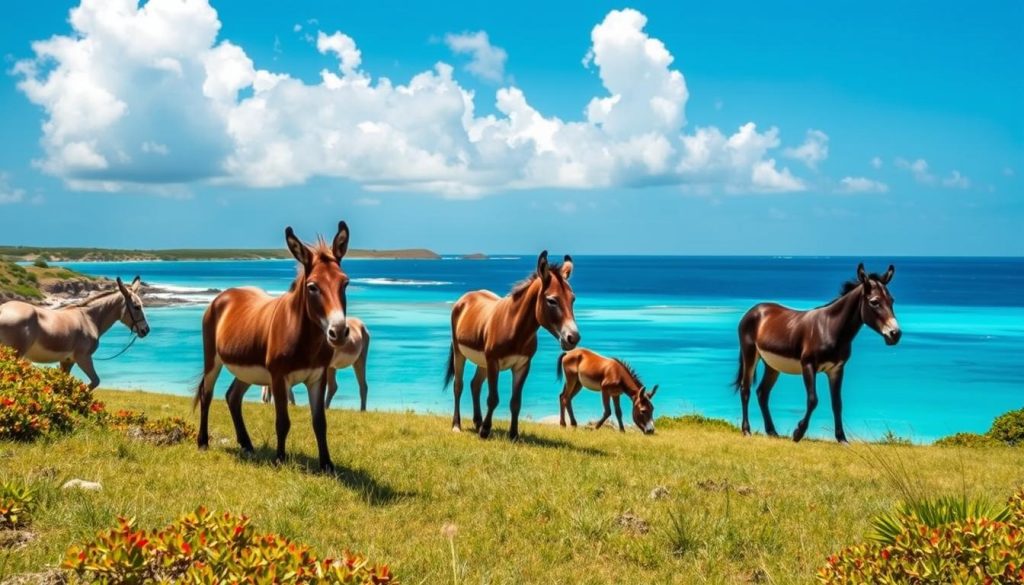
The Grand Turk donkey sanctuary is a crucial place for the island’s donkeys. It offers shelter, care, and helps them get better. This place highlights the need for donkey conservation. It also teaches people about the importance of these animals.
Mission and Goals of the Sanctuary
The Grand Turk donkey sanctuary has big goals. It wants to protect donkeys and their homes. The main goals are:
- Give a safe place for donkeys that need help.
- Teach people why donkey conservation is important.
- Get the community involved by offering volunteer chances.
- Help keep donkey populations alive through conservation.
How You Can Support the Sanctuary
You can help the Grand Turk donkey sanctuary in many ways. Here are a few:
- Make a Donation: Your money helps with the daily needs of the donkeys.
- Adopt a Donkey: Adopting a donkey helps the sanctuary and teaches people about donkey conservation.
- Volunteer: Help with animal care and educational tasks by volunteering.
- Visit the Sanctuary: See the sanctuary, learn about its work, and support the animals by visiting.
Wild Donkeys in Grand Turk: Their Role in the Ecosystem
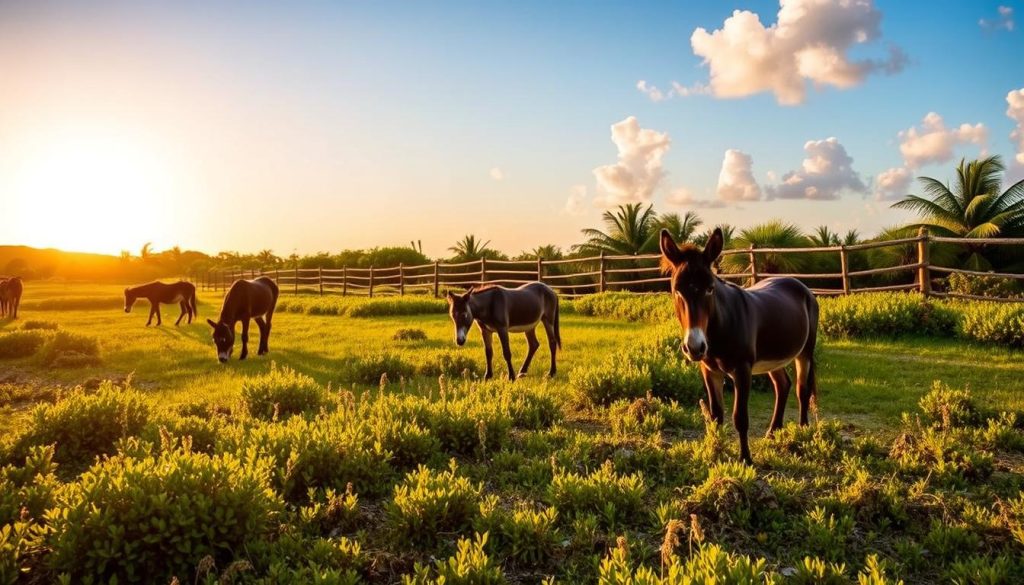
Wild donkeys in Grand Turk play a big role in the local ecosystem. They were brought here in the 17th century for salt mining. Now, they help keep the island’s environment balanced.
As herbivores, they control how plants grow. This stops plants from taking over and lets different species live together. It’s a key part of the island’s ecosystem.
People often see these donkeys in places like Cockburn Town and beaches. They add to the island’s charm and are seen as cultural symbols. Many share stories and photos of their encounters with these animals.
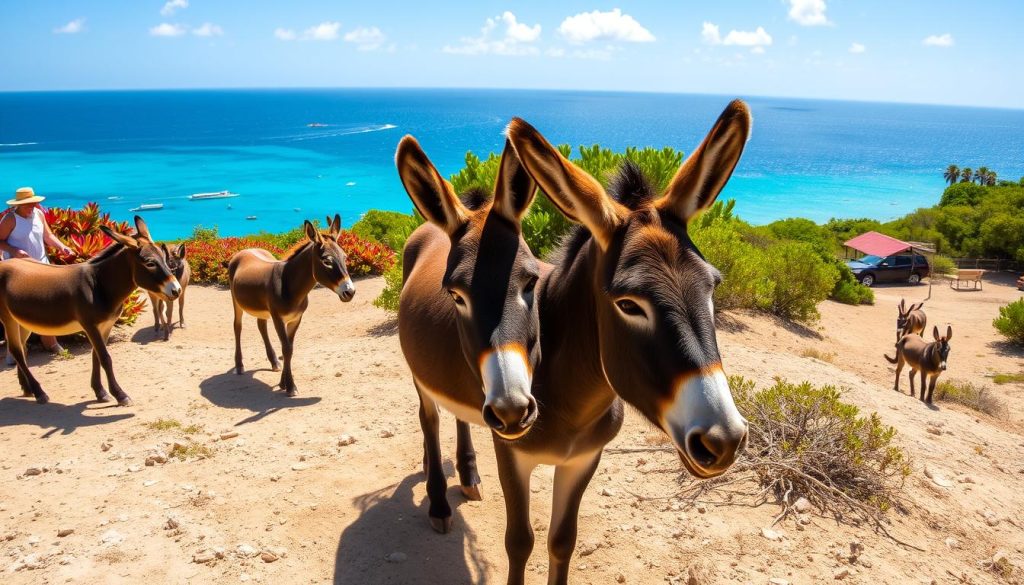
Even though they seem friendly, it’s important to remember they are wild. They’ve adapted well to Grand Turk’s unique environment. This shows how important it is to keep the natural balance, where every species helps keep the island beautiful and diverse.
Grand Turk Donkey Conservation Efforts
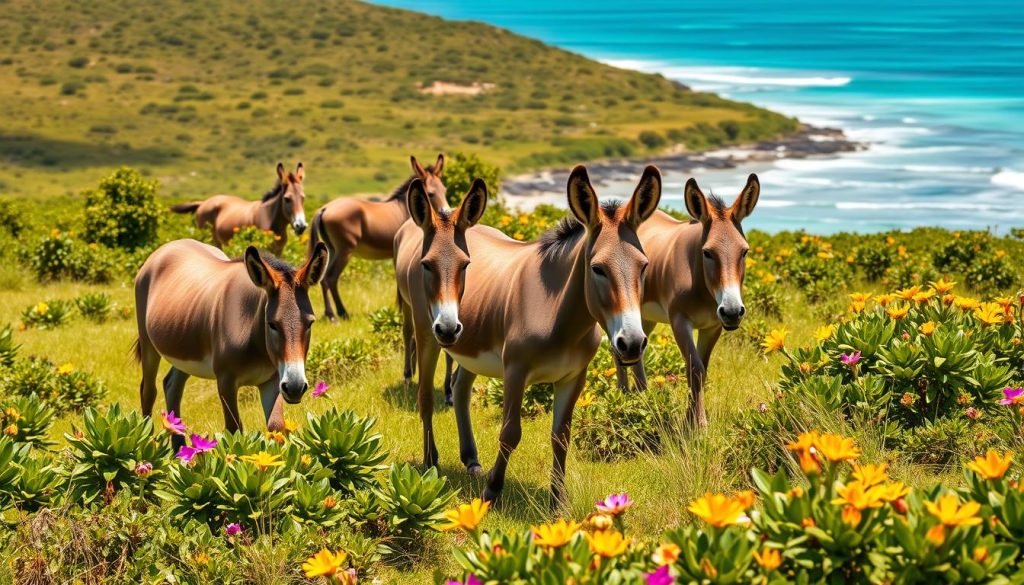
The community plays a big role in saving Grand Turk’s wild donkeys. Local groups work with people to build a conservation culture. Together, they show how important these donkeys are to the island’s nature and culture.
Community Involvement in Conservation
People in the community are key to saving the Grand Turk donkeys. They start projects to teach everyone about why these animals matter. Some of these efforts include:
- Clean-Up Drives: People come together to clean up the donkeys’ homes. This helps them live in a healthy environment.
- Awareness Campaigns: These campaigns tell people about the donkeys’ history and how they help the environment. They also focus on keeping them safe.
- Workshops: Workshops are held to honor the donkeys’ role in local culture. They also teach how to take care of them properly.
Fun Activities with the Donkeys
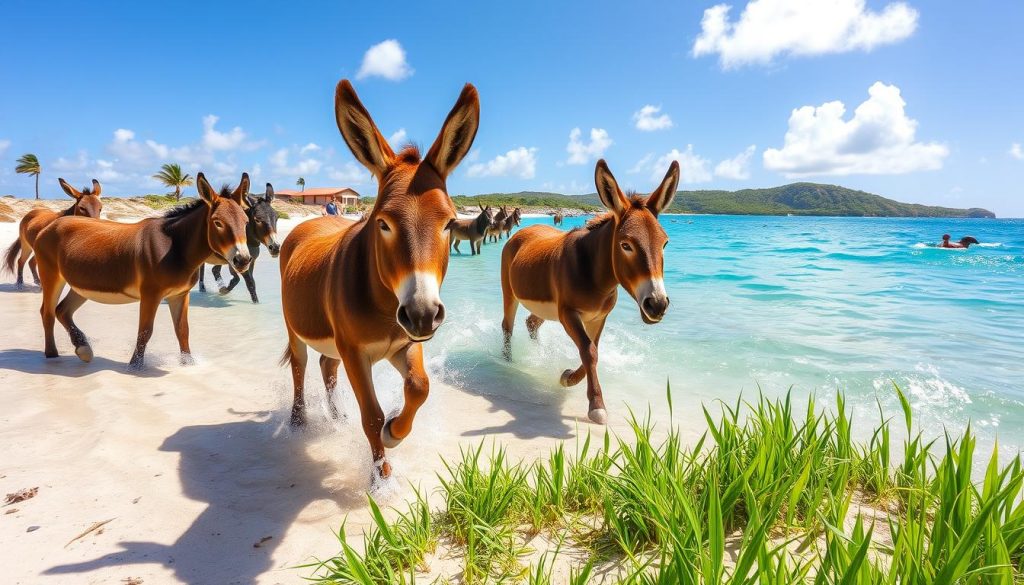
Exploring Grand Turk is fun, thanks to the donkeys. These friendly animals are a big part of the island. Guided tours let you get close to them and learn about their lives.
Guided Tours and Interactions
Guided donkey tours are a great way to see the island. You can:
- Feed the donkeys, creating a special bond.
- Walk alongside them, learning about their daily lives.
- Observe their behavior in their natural setting, which is both fun and educational.
Tour operators share the donkeys’ special traits and their role in the ecosystem. These tours offer unforgettable experiences. With so many donkeys around, your adventure will be full of joy and discovery.
Visiting the Grand Turk Donkey Sanctuary Tours
When you think of visiting Grand Turk, the Grand Turk donkey sanctuary tours are a must-see. These tours let you connect with the island’s wild donkeys. You’ll learn about their history and how they’re cared for.
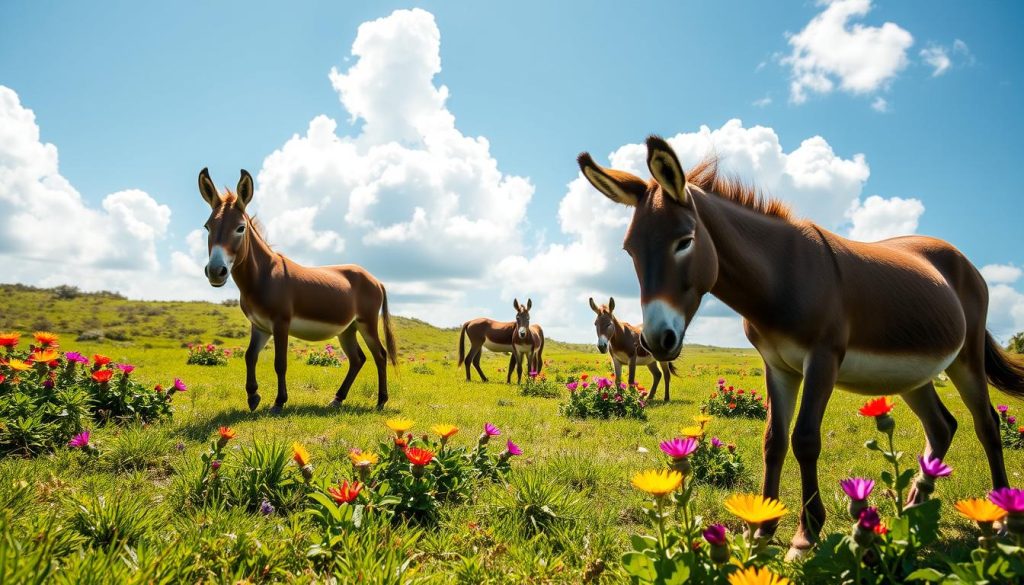
Visiting the sanctuary helps the donkeys. You can feed them along special paths. This makes your visit special and helps you bond with the animals.
The sanctuary is set in Grand Turk’s beautiful scenery. The island has about 4,000 people and stunning beaches. It’s a place where nature and care for animals come together.
There’s more to see on the island, like the Grand Turk Lighthouse and beautiful beaches. Every visit to the sanctuary and the island shows the beauty of preserving nature.
Conclusion
The Grand Turk wild donkeys are more than just a charming sight. They are a key part of the island’s culture and history. These animals came to the area thanks to Bermudian salt rakers, who brought them over during the harvest season.
They left the donkeys behind during the rainy months. Their presence shows the special bond between the land and its people.
It’s important to keep the Grand Turk wild donkeys safe. This is not just for the island’s identity but also for the ecosystem. They help keep the environment diverse, which is good for all living things.
When you visit, seeing these donkeys helps you understand the importance of conservation. It shows how protecting animals and their homes is crucial.
Planning a trip to this beautiful Caribbean paradise? Think about how seeing the Grand Turk wild donkeys helps conservation. Your visit will not only give you great memories but also help these amazing animals survive for years to come.