Explore Top Turks and Caicos Snorkeling Spots
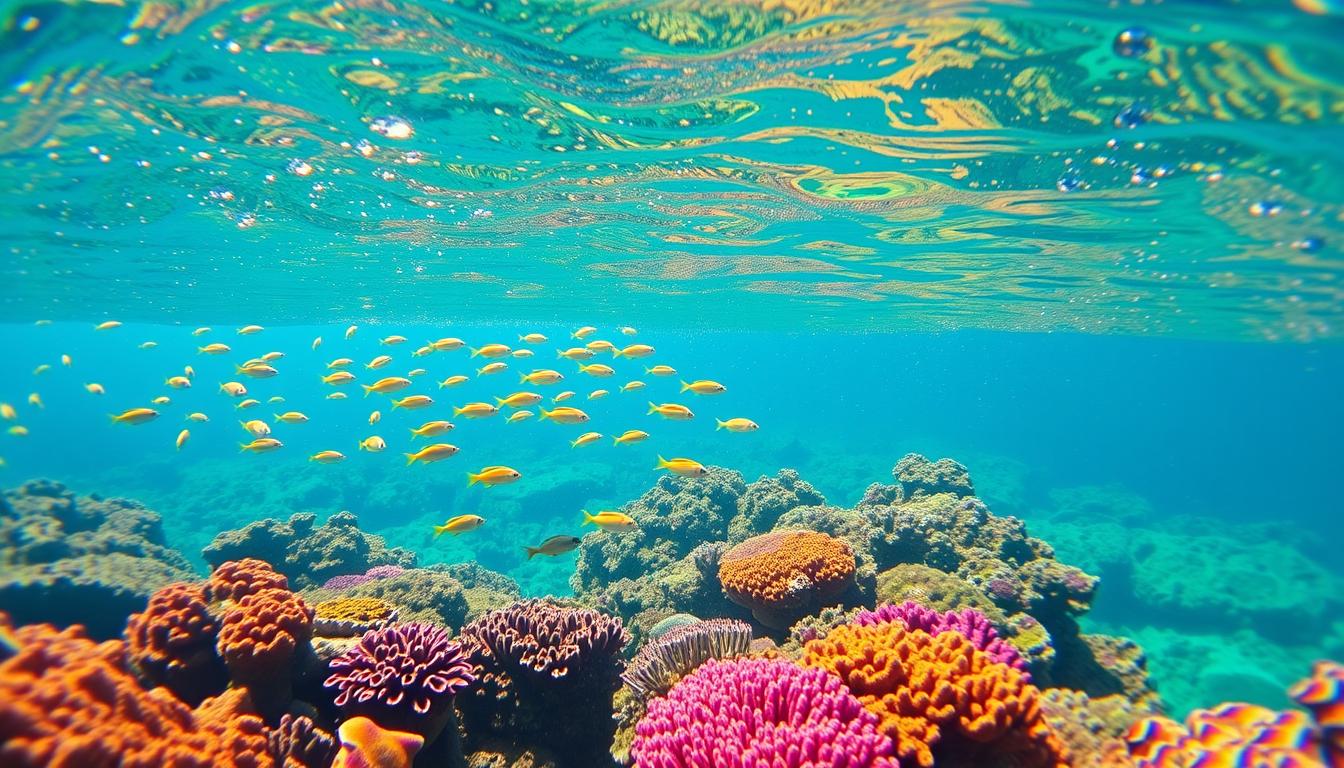
Have you ever wondered why the Turks and Caicos Islands are top snorkeling spots? Their clear waters, colorful coral reefs, and rich marine life make them unique. Let’s explore the best snorkeling spots in Turks and Caicos and what makes them special.
From Bight Reef, also known as Coral Gardens, to Northwest Point Marine National Park, there’s a spot for everyone. Whether you’re new to snorkeling or an expert, you’ll find the perfect spot. Get ready for an underwater adventure filled with unforgettable moments and stunning views!
Introduction to Snorkeling in Turks and Caicos
Snorkeling in Turks and Caicos is an unforgettable experience. It shows the Caribbean’s most beautiful underwater worlds. The shallow, warm waters attract both new and experienced snorkelers.
The best time to snorkel is in summer and early fall. This period offers warmer waters and lively marine life.
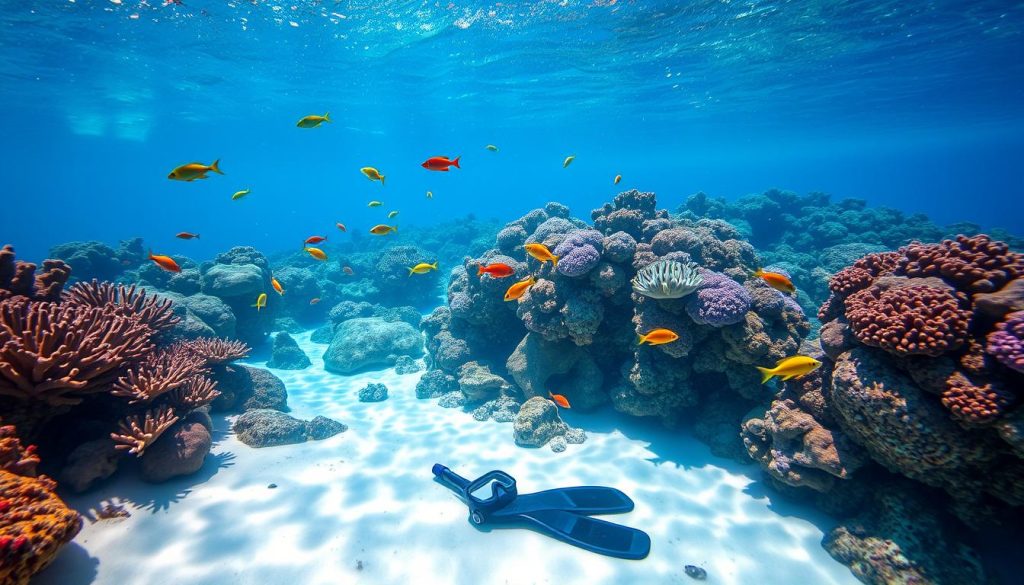
Knowing the islands’ geography is key for great snorkeling. Places like Bight Reef and Smith’s Reef are full of marine life. They are easy to get to.
Guided tours or cruises are recommended. They help you reach remote spots and learn from local experts.
Here are some snorkeling tips for Turks and Caicos:
- Buy good snorkeling gear at Grace Bay shops. Prices range from $30 for basic to $70-$100 for top-notch.
- Learn safety rules. Don’t touch coral, avoid taking marine life, and use reef-safe sunscreen.
- Watch out for dangers like strong currents, powerboats, and lionfish or jellyfish.
In this paradise, you can see amazing places like Coral Gardens at Bight Reef. It’s home to sea turtles and colorful fish. Malcolm’s Road Beach and Northwest Point are great for those looking for more challenges.
Why Choose Turks and Caicos for Snorkeling?
The Turks and Caicos Islands offer a unique snorkeling experience. They have a vast barrier reef system, one of the largest in the Caribbean. This makes them a top spot for snorkeling.
Here, you’ll see a variety of coral species and vibrant marine life. It’s a perfect place for snorkeling enthusiasts.
In 2015, the Turks and Caicos Islands were named the world’s top islands. This shows their beauty and ecological importance. Provo, the northeastern-most island, has some of the best snorkeling spots.
The Bight Reef is one such spot, with a depth of 15-20 feet. Smith’s Reef in Providenciales is known for its easy beach access. Here, you can see butterfly fish, barracudas, and lobsters.
Malcolm’s Road Beach has reefs 500-700 feet from the shore. This lets you explore deeper underwater landscapes. Grand Turk has several snorkeling points close to shore, including Boaby Rock Point.
Salt Cay offers unique snorkeling spots, best accessed by boat cruises. As you snorkel, you’ll see marine life like parrotfish and angelfish. You might even see spotted eagle rays and southern stingrays at Gibbs Cay.
With 350 sunny days a year and perfect water temperatures, snorkeling here is exciting and peaceful.
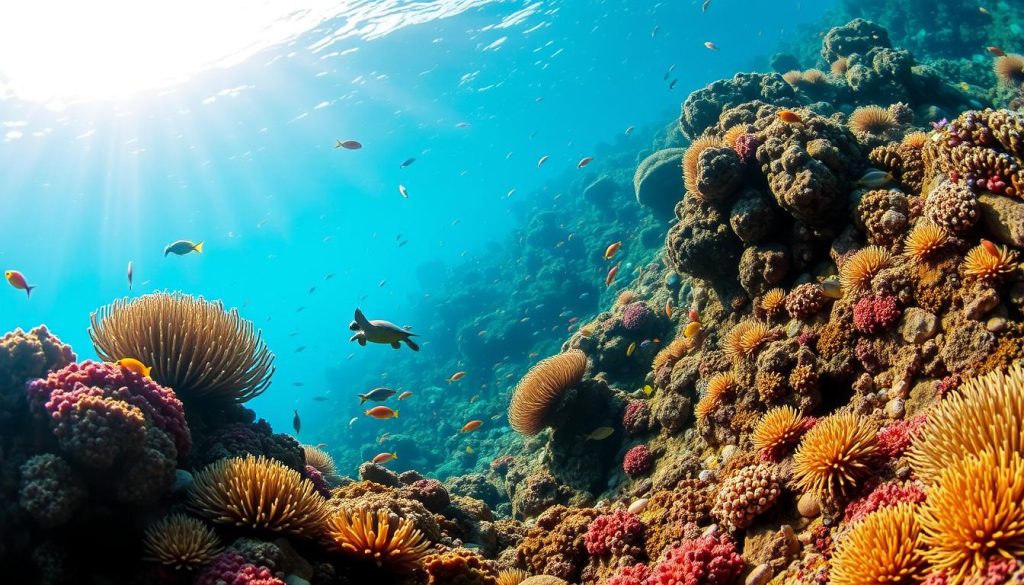
| Island | Top Snorkeling Locations | Notable Wildlife |
|---|---|---|
| Providenciales | The Bight Reef, Smith’s Reef, Malcolm’s Road Beach | Butterfly fish, Barracudas, Lobsters |
| Grand Turk | Boaby Rock Point, Gibbs Cay | Southern stingrays, Green sea turtles |
| Salt Cay | North Bay Beach, Balfour Town Beach | Reef sharks, Lionfish |
| North Caicos | Three Marys Cays | Various fish species |
The Bight Reef (Coral Gardens)
Bight Reef, also known as Coral Gardens, is a top snorkeling spot in Turks and Caicos. It’s easy to get to from Grace Bay. This place is perfect for both seasoned snorkelers and families. The coral ridge stretches about 350 feet from the beach, with depths of 15–20 feet at the edges.
The shallow waters make it a great spot to see vibrant marine life. It’s an inviting place for snorkelers to explore.
Accessibility and Features
Getting to Bight Reef is easy, with many beach entry points and parking. There are signs to help you find your way, near Lower Bight Road and in Princess Alexandra National Park. The reef has signs and buoys to keep snorkeling safe.
There are also restrooms to make your visit more comfortable.
Marine Life Encountered
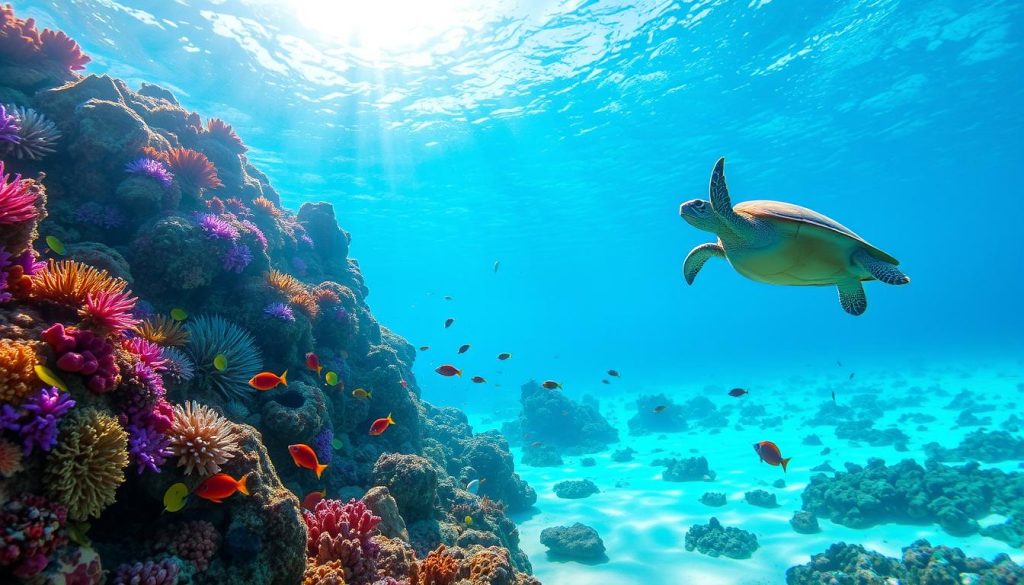
At Bight Reef, you’ll see many marine species. Look out for green and hawksbill turtles, southern brown stingrays, and spotted eagle rays. You’ll also see stoplight parrotfish and Nassau grouper.
The area’s rich biodiversity is thanks to healthy coral formations. It’s a great place to see undersea life. Don’t forget your snorkeling gear, like masks, snorkels, and fins, for a fun underwater adventure.
Smith’s Reef: A Snorkeler’s Paradise
Smith’s Reef is a top spot for snorkeling in Turks and Caicos. It’s known for its beautiful coral and a wide variety of sea life. Snorkeling here is an adventure you won’t forget.
Multiple Access Points
Smith’s Reef has three main entry points: West Access and Central Access. Each offers a unique view of the coral and sea creatures. This lets snorkelers see different parts of the reef, making their trip more interesting.
The reef is just 3.5 miles from Grace Bay. This makes it easy for visitors to get there.
Note for Night Snorkeling
Night snorkeling at Smith’s Reef is exciting. You can see creatures like squid and sea worms, and even bioluminescent algae. It’s important to snorkel with a buddy and watch out for currents and boats.
Smith’s Reef is considered safe for snorkeling. But, staying alert to your surroundings makes your experience even better.
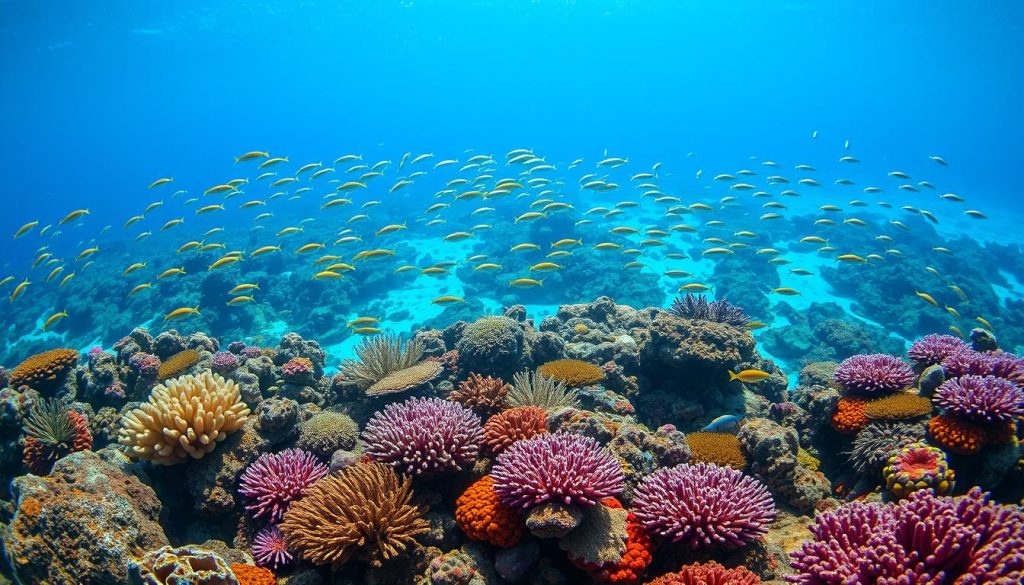
| Feature | Details |
|---|---|
| Location | 3.5 miles from Grace Bay, Providenciales |
| Access Points | West Access, Central Access |
| Marine Life | Green turtles, hawksbill turtles, southern stingrays, spotted eagle rays |
| Fish Species | Stoplight parrotfish, queen angelfish, butterfly fish |
| Night Snorkeling | Observation of squid, shrimp, and bioluminescent algae |
| Safety Notes | Beware of currents, lionfish presence, and boat traffic |
| Regulations | No fishing, collection of marine life, or open fires |
Malcolm’s Road Beach: An Advanced Snorkeling Spot
Malcolm’s Road Beach is a top pick for thrilling snorkeling adventures. It’s on Providenciales’ western coast, known for its deep waters and secluded location. The clear waters let you see big marine life like sharks and rays, along with colorful coral.
Visibility and Marine Fauna
Snorkeling here is great for those who love a challenge. You’ll see:
- Caribbean reef sharks
- Stingrays
- Eagle rays
- Vibrant coral species
- Diverse tropical fish
The reefs are about 500 to 700 feet from the shore. It’s an exciting journey for those who dare to explore further. Remember, the currents can be strong, so stay alert.
Cautions for Beginners
Malcolm’s Road Beach is perfect for experienced snorkelers but not for beginners. It’s deep and has unpredictable conditions. Be ready for:
- Variable water conditions
- Potential underwater hazards
- Depth changes
Beginners should start at places like Smith’s Reef or Bight Reef. They’re easier to get to and good for all levels. Renting a reliable vehicle or going with a guide is smart because the roads are rough.
Northwest Point Marine National Park: Unexplored Beauty
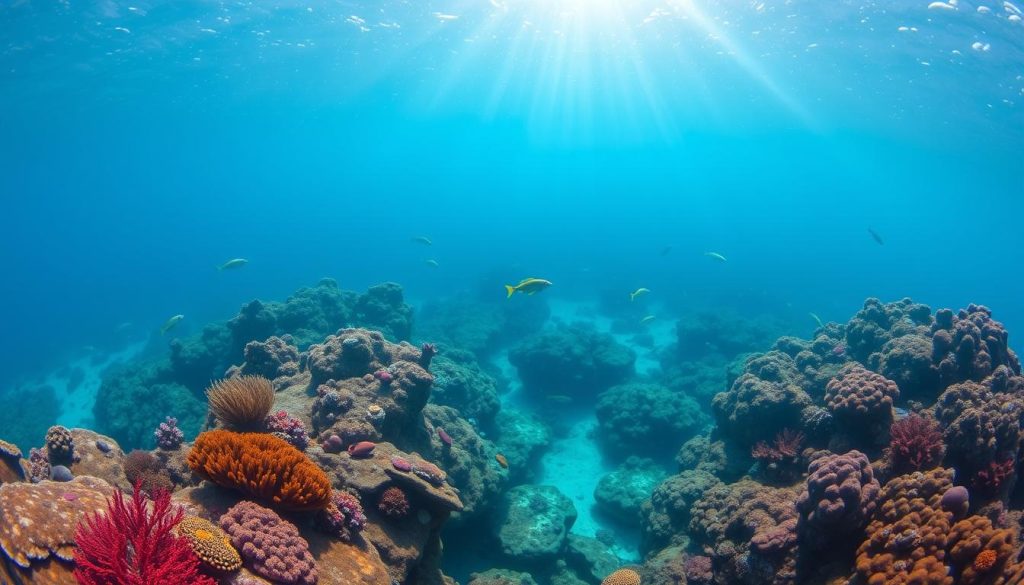
Northwest Point Marine National Park is a hidden gem for snorkeling. It’s known for its stunning underwater scenes and diverse marine life. The park’s untouched coastlines offer a peaceful escape from the crowds.
Unique Underwater Environments
The park is home to vibrant coral reefs and hidden caves. Snorkelers can see many fish species and healthy coral reefs. It’s perfect for both new and experienced snorkelers looking for adventure.
Boat Accessibility
To get to Northwest Point Marine National Park, you need a boat. Local charters make it easy to reach the best spots. A thirty-minute ferry ride from Providenciales is a great way to spend the day.
| Feature | Description |
|---|---|
| Barrier Reef System | Spans over 80 miles (129 km) with diverse marine life. |
| Unique Ecosystems | Includes seagrass beds and coastal caves. |
| Accessibility | Primarily by boat, with local charter services available. |
| Visibility | Generally excellent, enhancing the snorkeling experience. |
| Atmosphere | Tranquil and largely undeveloped coastlines. |
Leeward Cut Reef: Barrier Reef Wonders
Leeward Cut Reef is a top spot for snorkeling in Turks and Caicos. It’s on the northeastern end of Providenciales. This reef is part of the second-largest barrier reef in the Western Hemisphere.
Here, you’ll see amazing underwater sights. You’ll find unique spur and groove structures and colorful sea fan beds. Snorkeling here lets you see a variety of marine life in these vibrant reefs.
This place is not just beautiful but also lets you explore different depths. You can canoe or paddleboard in the shallower areas. This way, you can see the marine ecosystem up close.
As you go deeper, you’ll find even more wonders. Snorkelers can dive to discover these secrets.
Getting to Leeward Cut Reef usually involves boat tours. These tours often include this site because of its beauty. Guides on these tours make sure you have a safe and fun time exploring the area.
Snorkeling in West Caicos Marine National Park
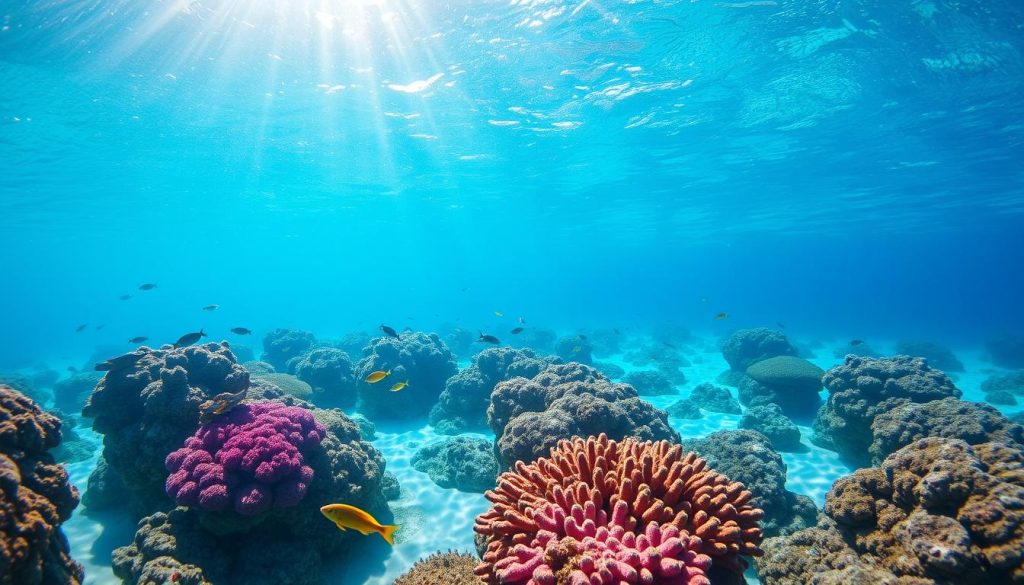
West Caicos Marine National Park is a huge 397 hectares (981 acres) off West Caicos’ west coast. It’s a top spot for snorkeling, with fewer visitors than other places. Here, you can enjoy peaceful snorkeling among the most stunning underwater sights in Turks and Caicos. It has a 5-star rating from Visit Turks and Caicos Islands, showing its beauty and health.
What to Expect Underwater
Exploring West Caicos’ waters will amaze you with its coral and marine life. The park has over a dozen dive sites, with walls that drop from 9-18 meters (30-60 feet). You’ll see tropical fish, elkhorn coral, and maybe even stingrays and sea turtles.
The clear waters of the west coast are perfect for seeing the underwater wonders. The coastal cliffs also have fossils of marine life in the limestone. This makes snorkeling here both beautiful and educational.
Remember to follow the park’s rules to protect this paradise. No fishing or collecting marine artifacts is allowed. West Caicos Marine National Park is a treasure for snorkelers looking for adventure and peace.