Spot Royal Bengal Tigers in the Sundarbans Safely
Ever wondered why seeing a Royal Bengal Tiger in the wild is so thrilling? The Sundarbans, a UNESCO World Heritage Site, is their last home. It covers 140,000 hectares in India and Bangladesh, full of life. You’ll find 150 fish species, 270 birds, and many mammals and reptiles.
To see Royal Bengal Tigers in the Sundarbans, you must understand its ecosystem. These tigers can weigh up to 325 kg and run 64 kph. Spotting one is exciting, but it’s also important to do it safely and responsibly. Whether you join a guided tour or explore on your own, always prioritize safety and conservation.
Introduction to the Sundarbans
The Sundarbans is a unique place where the Ganges and Brahmaputra rivers meet the Bay of Bengal. It’s a UNESCO World Heritage site with mangrove forests and diverse wildlife. The endangered Royal Bengal Tiger calls this place home.
About 60% of the Sundarbans is in Bangladesh, with the rest in India. It covers around 10,000 square kilometers. This area is home to over 693 wildlife species, including 49 mammals and 210 fish types.
Climate change is a big threat to the Sundarbans. Sea-level rise, cyclones, and saltwater intrusion harm the ecosystem and its inhabitants. There are about 600 Royal Bengal Tigers here, crucial for their survival.

The Sundarbans shows the need to balance human activities with wildlife conservation. It’s a vital ecosystem that needs our attention and action to protect its wildlife.
What Makes the Royal Bengal Tiger Unique?
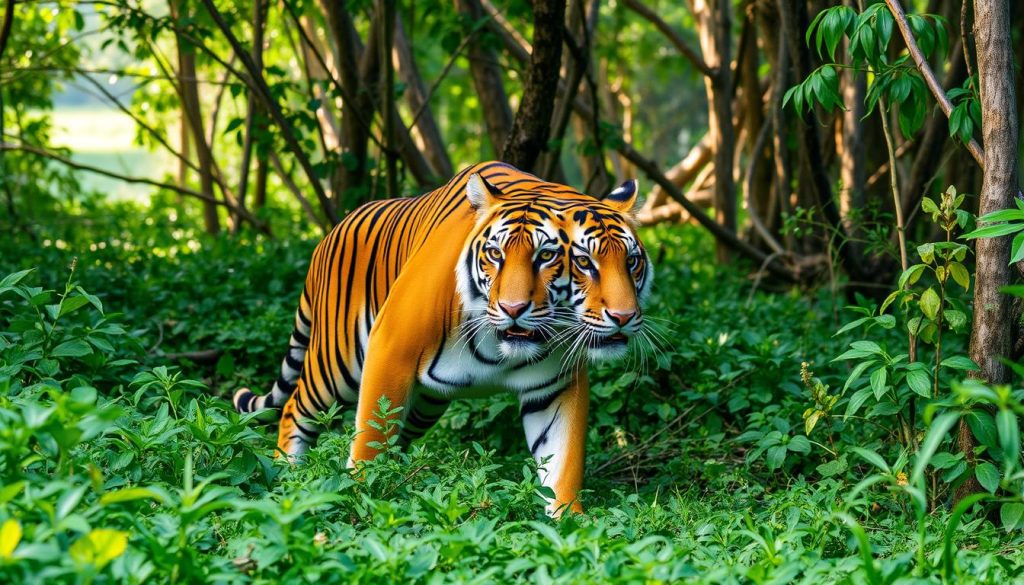
The Royal Bengal Tiger is a majestic creature, known as the national animal of Bangladesh and India. It is classified as Panthera tigris tigris. This tiger subspecies is known for its power and beauty.
Its orange coat with black stripes is stunning. Each tiger’s pattern is unique, like human fingerprints. This makes it easy to tell them apart. They are also great swimmers, able to move through the Sundarbans’ mangrove ecosystem with ease.
As top predators, Royal Bengal Tigers keep their habitats balanced. They control herbivore numbers, which helps the Sundarbans’ food web stay healthy. But, they face big threats like habitat loss from deforestation and encroachment.
Efforts to save the Royal Bengal Tiger include strict anti-poaching laws and community programs. These programs help reduce human-wildlife conflicts. Supporting local communities and responsible tourism can help protect these tigers.
Studies and monitoring help us understand tiger behavior and habitat needs. This information is key for conservation. It’s important to balance tourism with conservation to protect the Royal Bengal Tiger.
How Can I See the Royal Bengal Tiger in the Sundarbans?
To see the Royal Bengal Tiger in the Sundarbans, you need to plan carefully. Start by picking approved tour operators. They help protect the environment and ensure a safe trip. These operators follow rules to keep the habitat safe for both wildlife and visitors.
Selecting Approved Tour Operators
Finding the right tour operator is key for a great adventure. Look for those dedicated to conservation. They offer different trips, like overnight cruises and jeep safaris. Some top operators include:
- Sunderban Tiger Camp
- Tora Eco Resort
- WBTDC Cruises
Before you go, get the right permits to enter the Sundarbans Tiger Reserve. Indians need permission from the Field Director’s Office. Foreigners must get a special permit from Kolkata’s Forest Department.
Understanding the Best Viewing Practices
To see the Royal Bengal Tiger, follow the best viewing practices. Keep a safe distance and be quiet. This respects the tigers and lets you see their natural behaviors. Here are some tips:
- Stay for at least three days for better tiger sightings.
- Check the tides to find the best spots.
- Stay at forest rest houses near wildlife areas.
By following these tips, your trip to see the Royal Bengal Tiger in the Sundarbans will be exciting. Supporting local businesses and conservation efforts makes the experience even more rewarding.

Sundarbans Tiger Safari: An Adventure Awaits
A Sundarbans tiger safari is an unmatched adventure in Sundarbans. It takes you deep into one of Earth’s most vibrant ecosystems. You’ll travel on small boats, getting up close to stunning mangrove forests and rivers.
There are different packages to choose from, like a 2 Nights/3 Days standard trip or a deluxe option. Each package lets you explore this amazing area while enjoying comfort.
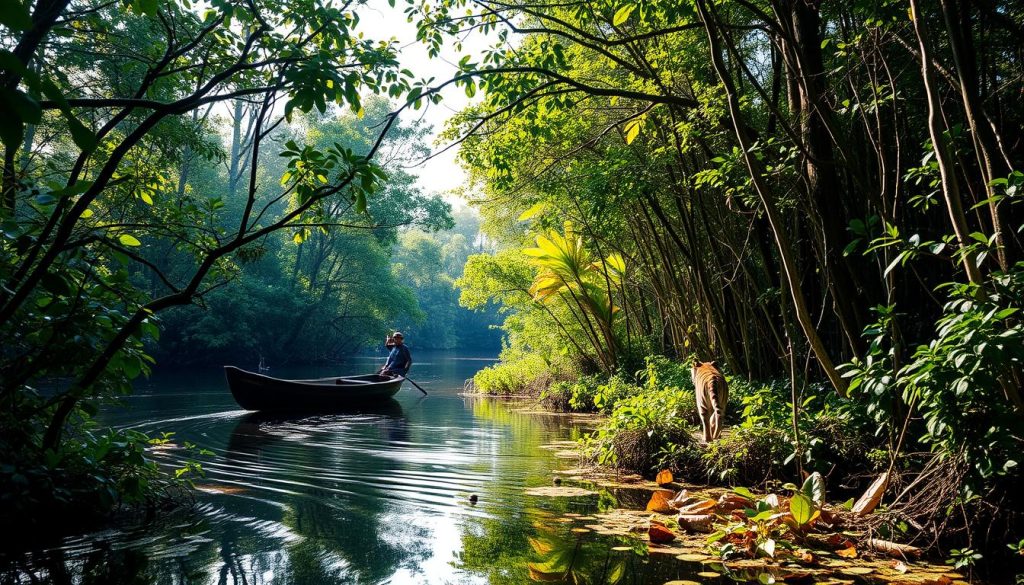
On your journey, you might see crocodiles, wild boars, and the majestic Royal Bengal Tiger. The best time for wildlife spotting is from October to February. You’ll also visit historical sites like Gosaba Island and the Mangrove Interpretation Center.
Meals will introduce you to local flavors, with dishes like Prawn Malaikari and Misti Doi. Evenings are filled with cultural events, including folk music and tribal dances. This makes your adventure a treat for all your senses.
The Sundarbans experience is designed to protect nature. It requires permissions for all trips. This care ensures the area remains beautiful for future visitors.
From its lush landscapes to incredible wildlife, a Sundarbans tiger safari is unforgettable. It leaves you with memories and a deep love for nature’s beauty.
Best Time to Spot Royal Bengal Tigers in Sundarbans
The best time to spot Royal Bengal Tigers in Sundarbans is from September to March. This is the dry season, when the weather is cooler. It makes tigers more active, raising your chances of seeing them as they hunt or relax in the sun.
Going on a guided tour in the early morning or late afternoon is a great idea. The rivers are calmer and safer, allowing you to see more of the Sundarbans’ wildlife.
While on your tour, you might also see spotted deer, saltwater crocodiles, and many bird species. You can stay in eco-resorts, guesthouses, or homestays. These places offer a chance to spend the night and learn more about the area.
Staying safe is easier during the dry season, with less risk of malaria. This time is perfect for seeing Royal Bengal Tigers. It also helps in observing wildlife responsibly, supporting conservation.
Understanding the Sundarbans Ecosystem
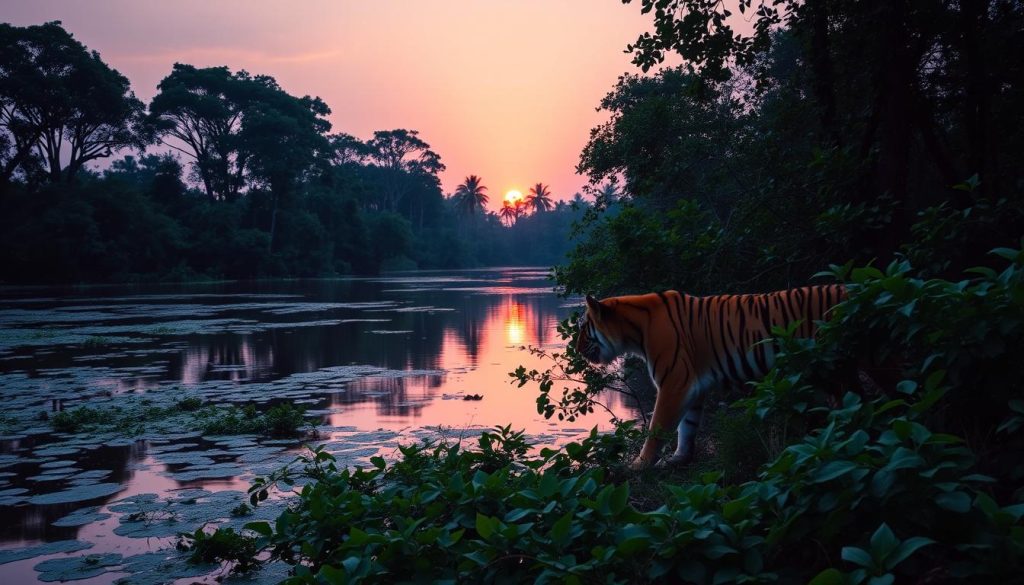
The Sundarbans ecosystem is a rich mix of mangrove forests and wildlife. It spans the India-Bangladesh border, hosting many unique species. The area faces big conservation challenges, showing why we must understand it well.
Significance of Mangrove Forests
The significance of mangrove forests is huge. They cover 140,000 hectares and protect against storms. They keep inland areas safe from erosion and flooding.
These forests are more than just barriers. They are homes for many animals, like the endangered Royal Bengal Tiger. They also help fight climate change by absorbing carbon.
Diversity of Wildlife in the Sundarbans
The diversity of wildlife in the Sundarbans is amazing. Over 693 species live here, including 49 mammals, 59 reptiles, and 260 birds. This variety is key to the Sundarbans’ ecological balance.
The presence of predators like the Royal Bengal Tiger is crucial. They help control prey numbers and support the ecosystem. This shows why protecting the Sundarbans’ biodiversity is so important.
Sundarbans Tiger Viewing Tips for Safety
Seeing the Royal Bengal Tigers in Sundarbans is an exciting adventure. But, safety comes first. Follow these tips for a safe and fun trip. Always listen to your tour operator’s advice.
Keep a safe distance from the tigers. Stick to designated viewing areas to stay safe. This helps avoid any dangerous encounters.
Avoid sudden movements or loud noises. These can scare the tigers. Remember, they are wild animals and deserve our respect.
Traveling with a group is safer. Join tours with experienced guides. They know the local wildlife and can keep you safe.
The Sundarbans is also home to many mosquitoes. Use insect repellent to protect yourself. Drink plenty of water to stay hydrated in the humid forests. Bring snacks to keep your energy up.
Talking to knowledgeable guides can make your trip better. They share interesting facts about the wildlife. By following these safety tips, you can enjoy the Sundarbans safely and appreciate the tigers.

Royal Bengal Tiger Guided Tours in Sundarbans
Joining Royal Bengal Tiger guided tours in Sundarbans is a special chance to learn about these amazing animals. Guides share important facts about tigers and their home, the Sundarbans. They talk about conservation efforts and the challenges tigers face.
This knowledge makes your wildlife adventure even better. It also helps support local conservation efforts. This way, visitors feel more connected to the environment.
The Sundarbans is a top spot for tiger tours, with a 90% success rate in the last decade. It’s the world’s largest mangrove forest and the only place where tigers live among mangroves. Tours run from sunrise to sunset, fitting different schedules.
These tours take you through the dense mangrove habitat. They aim to give everyone a great view of the tigers.
For wildlife photographers, seeing a Royal Bengal tiger in Sundarbans is a dream come true. Tours encourage patience for those rare moments of wildlife action. The Wildlife Photo Safaris Fund helps local communities learn about wildlife and conservation.
By going on these tours, you have an unforgettable adventure. You also help protect this unique ecosystem and its famous tigers.