Best Time to Visit the Sundarbans – Find Out Now!
Ever thought about the best time to visit the Sundarbans? It can really make your trip better. Located in West Bengal, the Sundarbans is a UNESCO World Heritage Site. It’s home to the Royal Bengal Tiger and lots of other wildlife.
Each season shows a different side of this amazing place. Knowing the Sundarbans travel season is key to a great trip.
Winter offers perfect weather, while monsoons are lively but tough. Figuring out when to go is important. This article will cover the seasons and tips for a great Sundarbans visit.
Discover why different times are better for visiting. Learn how to enjoy the Sundarbans mangrove forest to the fullest.
Introduction to the Sundarbans
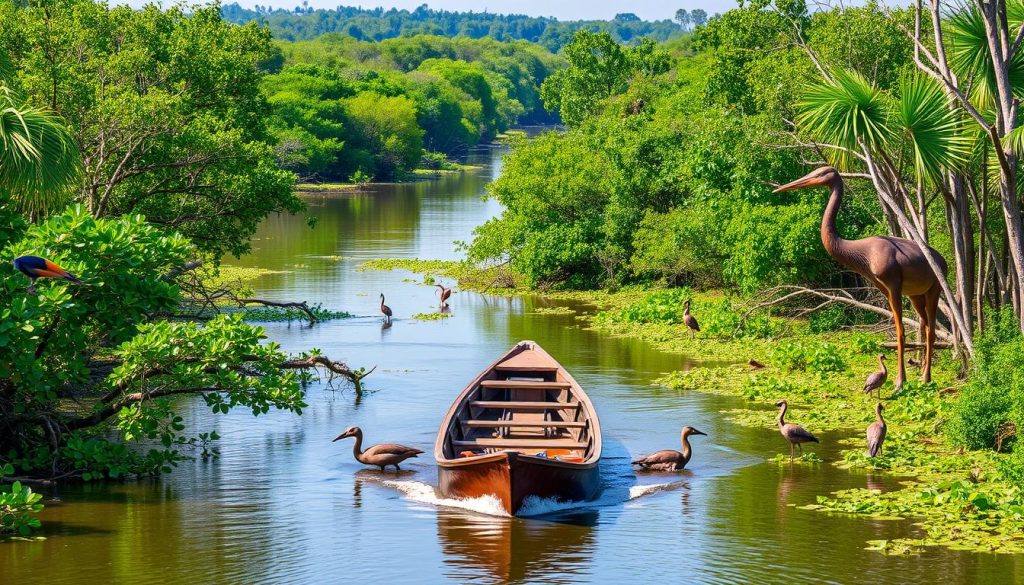
The Sundarbans is the world’s largest mangrove forest. It lies across India and Bangladesh. It’s a wildlife sanctuary with unmatched biodiversity. It’s home to many species, including the endangered Royal Bengal Tiger.
The Sundarbans has a unique landscape. It’s filled with waterways and lush mangrove forests. Visitors can see stunning views and help with wildlife conservation through ecotourism. The area’s diverse ecosystems offer great opportunities for adventure and discovery.
Knowing about the Sundarbans is more than just seeing its beauty. The seasons change how wildlife acts and how easy it is to visit. The area’s rich culture and beautiful landscapes make it a must-see for nature lovers and adventurers.

| Season | Temperature Range | Wildlife Sightings | Rainfall |
|---|---|---|---|
| Summer | Up to 45°C (113°F) | Higher tiger sighting chances | Low |
| Monsoon | Average 25°C (77°F) | Difficult due to foliage | Heavy rain from July to September |
| Winter | 10°C to 25°C (50°F to 77°F) | Peak tourist season | Minimal |
What is the best time of year to visit the Sundarbans?
Deciding when to visit the Sundarbans can make your trip better. Knowing about the seasons helps you plan a trip that fits your interests and comfort. Each season has its own special moments and challenges.
Understanding Seasonal Variations
The best time to visit the Sundarbans is from October to March. The weather is nice, with temperatures between 20°C and 30°C. Here are some key things to know about each season:
- Winter (November to March): This season has comfortable weather, fewer wildlife risks, and great birdwatching spots, like the Sajnekhali Bird Sanctuary.
- Summer (March to May): Summer gets very hot, up to 42°C. But, it’s a good time to see wildlife, like the Royal Bengal Tiger. Staying cool is important.
- Monsoon (June to October): This season is exciting for adventure lovers, despite the dangers of storms and floods. The forest is green and lively.
Highlights of Each Season
Every season has its own highlights for visiting the Sundarbans:
| Season | Highlights | Considerations |
|---|---|---|
| Winter | Best time for wildlife visibility, active crocodiles, and birdwatching. | Ideal weather conditions, lower chances of floods. |
| Summer | Increased animal sightings, including tigers and other wildlife. | High temperatures call for heat management strategies. |
| Monsoon | Unique adventure experiences and vibrant forest life. | Risk of storms; swimming skills may be necessary for safety. |
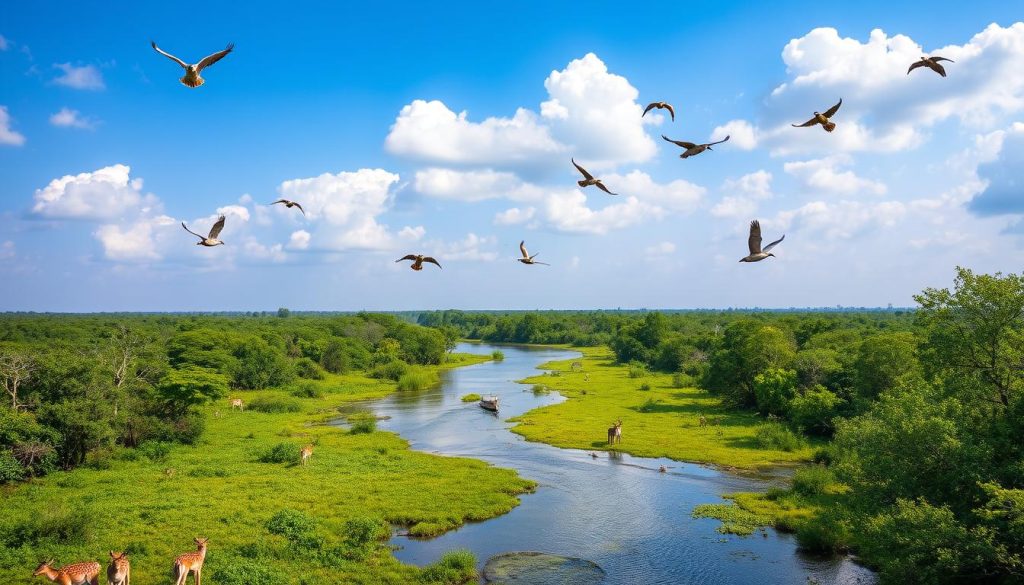
In short, the best time to visit the Sundarbans is from September to March. Making smart choices about the seasons can make your trip more enjoyable. You’ll get to see the amazing mangrove ecosystem in its best light.
Sundarbans Weather Guide
Knowing the Sundarbans weather guide is key for planning your trip. The weather greatly affects your experience in this amazing place. Each season brings its own charm, and knowing the temperature and rainfall helps you plan better.
Temperature Range Throughout the Year
The Sundarbans’ temperature changes a lot throughout the year. This affects how easy it is to see wildlife and how comfortable you’ll be. Here’s a quick overview:
| Season | Temperature Range | Notable Features |
|---|---|---|
| Winter (November to February) | 10°C to 30°C | Ideal for wildlife sightings, clear skies, and lush scenery |
| Summer (March to May) | 35°C to 42°C | Hot and humid, can be uncomfortable for outdoor activities |
| Monsoon (June to October) | 25°C to 35°C | Heavy rainfall, potential for flooding, safer to avoid |
Rainfall Patterns and Humidity Levels
The Sundarbans’ rainfall greatly affects its plants and animals. The monsoon months bring heavy rain and high humidity. This makes boat travel risky. Both locals and tourists need to be careful, as overflowing rivers can block access to sights.
Winter, on the other hand, has little rain and nice humidity. It’s a great time to explore. Knowing about rainfall patterns is important for a good visit to this unique place.

Sundarbans Travel Season: Overview
When you visit the Sundarbans, the time you go makes a big difference. Knowing when to go helps you plan better. The best time is from November to February, when it’s cooler and wildlife is most active.
Understanding Peak Tourist Season
The peak season is great for seeing the Sundarbans’ amazing wildlife. You’ll see over 400 Bengal Tigers and many other animals and birds. The weather is perfect for exploring, making it easy to enjoy activities like boat tours and birdwatching.
Off-Peak Benefits
Traveling off-peak has its perks. You can save money on travel and places to stay. Summer and monsoon months might be hot and rainy, but they offer special experiences. You’ll see the Sundarbans in a quieter way, closer to nature.

Sundarbans Peak Season
Winter months from November to March are the best time to visit the Sundarbans. You’ll enjoy comfortable daytime temperatures and can take part in many outdoor activities. The weather is perfect, and you have a better chance of seeing wildlife, making it great for nature lovers.
What Makes Winter (November to March) Ideal
Winter temperatures are between 20°C to 30°C, creating a nice atmosphere for exploring. It’s the best time for guided boat safaris to see the Royal Bengal Tiger. The weather is also great for photography, attracting wildlife photographers.
Wildlife Sightings and Activities During Peak Season
Winter is when wildlife is most active, offering many sightings. You’ll see migratory birds and other species, enhancing your visit. Activities include:
- Guided boat safaris for tiger and wildlife spotting
- Birdwatching excursions amidst diverse avian species
- Trekking and nature walks through lush landscapes
These activities during the Sundarbans peak season let you dive into the region’s natural beauty.
Sundarbans in Summer: March to May
Summer in the Sundarbans, from March to May, offers a special experience. It’s less crowded because of the heat, but the warmth brings challenges. High temperatures make daytime outings hard, mainly for those not ready for the heat.
Challenges of Visiting During Summer
Temperatures can reach 30°C to 40°C (86°F to 104°F) during this time. Summer travel in the Sundarbans faces several hurdles:
- Intolerable heat waves make daytime safaris tough.
- Wildlife sightings are rare as animals hide from the heat.
- Traveling in non-AC boats without preparation is uncomfortable.
Activities You Can Enjoy
Summer still offers fun activities. Try these during the cooler mornings and evenings:
- Take river cruises for stunning mangrove views.
- Visit coastal villages to learn about local culture.
- Try wildlife photography early when it’s cooler.
With some planning, your Sundarbans summer visits can be rewarding. You can still enjoy the beauty of this unique place, despite the summer challenges.
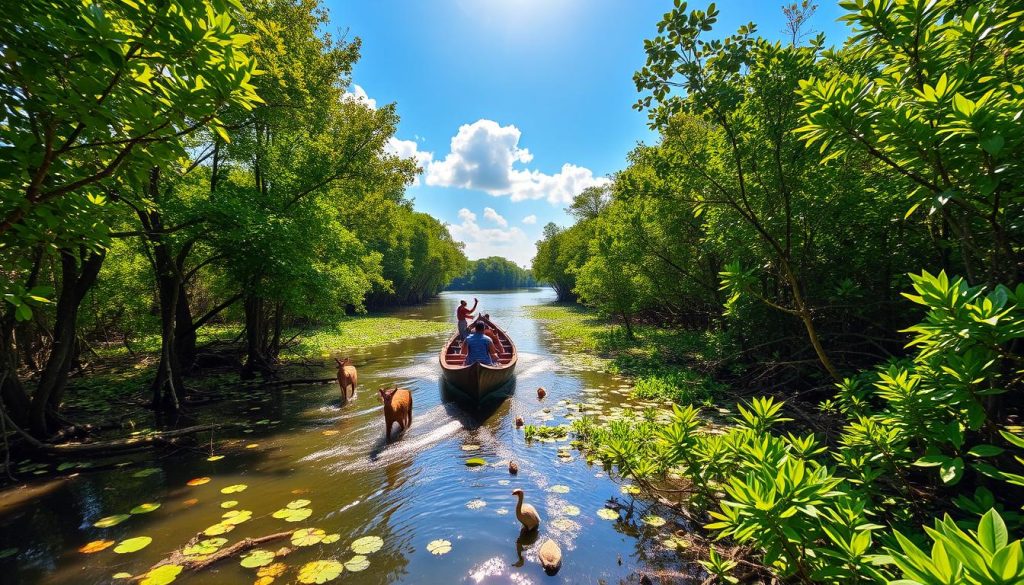
Sundarbans in Monsoon: June to October
The monsoon season in the Sundarbans, from June to October, adds a special charm to this lush delta. It brings challenges for travelers but also offers unique experiences. The mangrove ecosystem comes alive, creating stunning landscapes.
Advantages and Disadvantages of Monsoon Travel
Traveling to Sundarbans during monsoon is captivating but comes with risks. Here’s what you can expect:
- Advantages:
- The vegetation thrives, making the scenery vibrant.
- There are fewer tourists, offering a more personal experience in nature.
- Seeing unique wildlife is possible as some species come out after rains.
- Watching the landscape rejuvenate is truly awe-inspiring.
- Disadvantages:
- Heavy rains can disrupt travel plans due to flooding.
- Some areas might be off-limits for safety reasons.
- Wildlife sightings are limited as many animals hide in their habitats.
Unique Experiences During the Monsoon
Despite challenges, Sundarbans monsoon travel offers many unique experiences. Imagine boating through the lush mangrove forests, surrounded by rain sounds and chirping insects:
- Seeing the landscape transform into vibrant greens.
- Trekking through forests where the air smells of wet earth.
- Enjoying the forest’s stillness after rain, filled with color and sound.
- Photographing scenes that few tourists see.
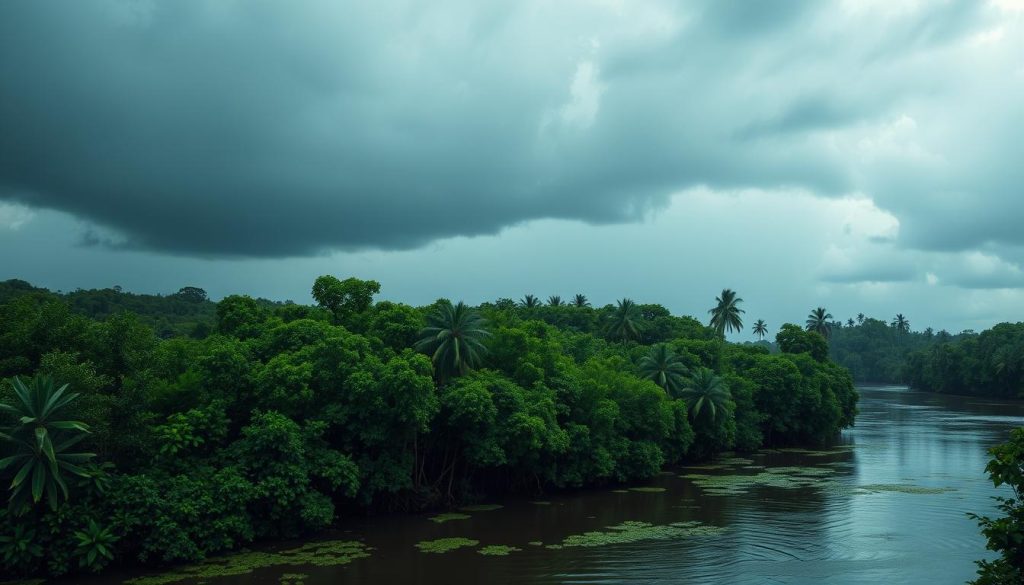
The monsoon season may not be the usual time for travel, but it offers remarkable views and experiences in the Sundarbans. When planning your trip, consider the advantages of monsoon visits and the challenges. This will ensure a rich and fulfilling journey into this breathtaking region.
Sundarbans Travel Tips
Visiting the Sundarbans is a memorable experience. It’s filled with nature and wildlife. To enjoy your trip, knowing how to get there and where to stay is key.
Best Ways to Reach Sundarbans
First, you need to get to Kolkata. Then, you have several ways to start your adventure:
- Bus: Take a bus to either Khulna or Mongla, which are key entry points to the Sundarbans.
- Train: Various trains are available that connect Kolkata to the nearest railheads.
- Personal Vehicle: Driving provides flexibility and allows for scenic stops along the way.
Once you arrive at Khulna or Mongla, booking a boat tour is the best way to explore. Look for trusted travel providers for a safe and enjoyable experience.
Accommodation Options During Different Seasons
Choosing the right accommodation is crucial for a comfortable visit. During the peak season from October to March, options are more varied:
- Luxury Boat Accommodations: Experience the Sundarbans on a luxury houseboat for an immersive stay.
- Group Tours: Many tour packages offer group rates, allowing for a shared experience in a vibrant environment.
Off-peak seasons usually see more budget-friendly options. This makes it easier to find affordable stays. Understanding seasonal price adjustments can help in planning a cost-effective trip.
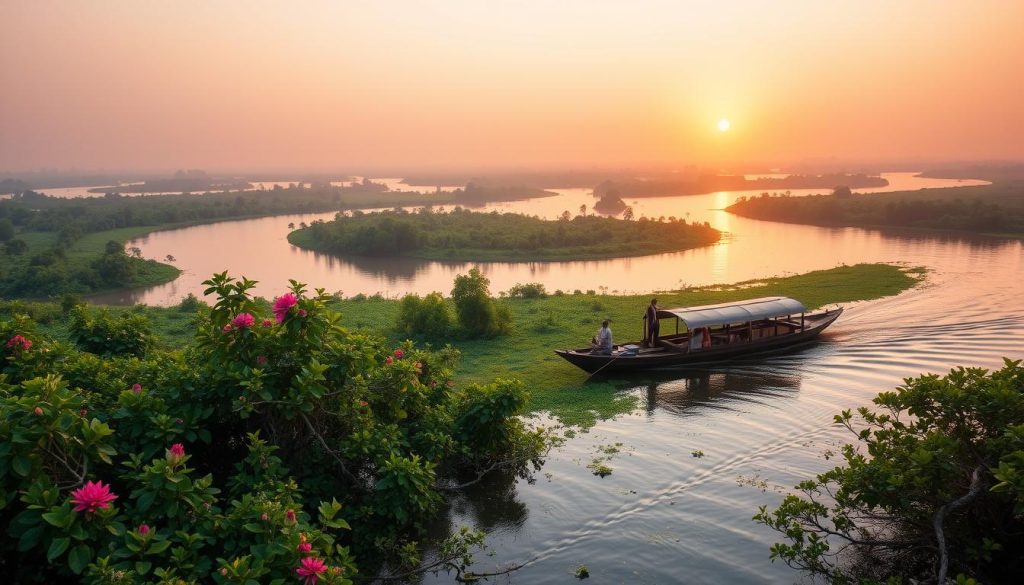
Traveling During Festivals: Durga Puja
October is a great time to travel, with the Durga Puja festival in the Sundarbans. The area comes alive with color and culture. You can enjoy local traditions without the usual crowds.
Unique Cultural Experiences
Joining in the Durga Puja lets you see traditional rituals and local crafts. Villages prepare with great enthusiasm, showing off their heritage. Street markets offer delicious food and crafts, highlighting the area’s artistic side.
Talking to locals during this time creates lasting memories. It also helps you understand their culture better.
Festivity-Related Wildlife Sightings
October also means seeing unique wildlife. Many birds migrate to the Sundarbans, offering bird watchers a chance to see different species. The park’s calm adds to the experience, making it perfect for wildlife lovers.
Visitors can see tigers, crocodiles, and birds. Traveling during Durga Puja is a special way to connect with nature.

| Festival | Best Time to Visit | Unique Attractions |
|---|---|---|
| Durga Puja | October | Cultural rituals, traditional cuisine, migratory birds |
| Hilsa Festival | August – September | Fishing safaris, local fishery culture |
| Banbibi Festival | Annual | Local folklore, rituals associated with wildlife |
Planning Your Sundarbans Trip
When planning your Sundarbans trip, knowing the best time to visit is crucial. A good trip lasts at least two nights and three days. This gives you time to see many sights and enjoy the area’s rich wildlife. If you want to see more, consider staying for four days.
Ideal Duration for a Trip
The best time to visit the Sundarbans is from October to March. The weather is nice then, great for Tiger Safaris and the Bird Sanctuary in Sajnekhali. Your stay’s length depends on what you want to do:
- Two Days: Good for a quick visit and main activities.
- Three Days: Better for slow exploration and wildlife watching.
- Four Days: Best for deep experiences and seeing more places.
Recommended Tour Packages
Many travel agencies have Sundarbans packages for all tastes and budgets. These packages usually include:
| Package Type | Inclusions | Ideal Duration |
|---|---|---|
| Basic Package | Accommodation, meals, guided activities | 2 Days / 1 Night |
| Adventure Package | Tiger Safaris, birdwatching tours | 3 Days / 2 Nights |
| Luxury Package | High-end accommodation, exclusive experiences | 4 Days / 3 Nights |
With so many packages, you can plan your trip to fit your interests. This way, your Sundarbans adventure will be unforgettable.
Conclusion
Visiting Sundarbans is best when you pick the right time. Weather, wildlife, and comfort play big roles. The area, covering 38,500 sq km, is perfect in winter from October to March. Here, you can see the beauty of the Sundarbans with temperatures between 10 to 30 degrees Celsius.
The Sundarbans is a treasure trove of landscapes and wildlife. You can spot around 400 Royal Bengal tigers and 30,000 spotted deer. Summer and monsoon bring challenges, but they also offer unique adventures for the brave.
Every trip to Sundarbans reveals its wonders. Whether it’s the wildlife or the local festivals, there’s something for everyone. By choosing the best time, you can make your visit unforgettable in this UNESCO World Heritage site.