Discover Unexplored Sites: Plain of Jars Mysteries
Ever wondered what ancient civilizations left behind in Southeast Asia’s hills? The Plain of Jars in Laos gives us a peek into this mystery. It’s filled with hundreds of ancient stone vessels.
Spread across the Xieng Khouang plateau, this area has over 85 jar sites. But only a few are open to curious travelers. These mysterious archaeological sites are not just historical treasures. They also show the Vietnam War’s impact on the region.
As you explore, you’ll find the past still fascinates. These massive structures, some weighing up to 14 tons, tell stories. They invite you to uncover their secrets.
Embark on a journey to one of Laos‘ most fascinating historical landmarks. Unravel the enigmas of these ancient stone vessels. Your adventure begins in this remote Southeast Asian destination, where each jar might hold a piece of history.
Introduction to the Plain of Jars
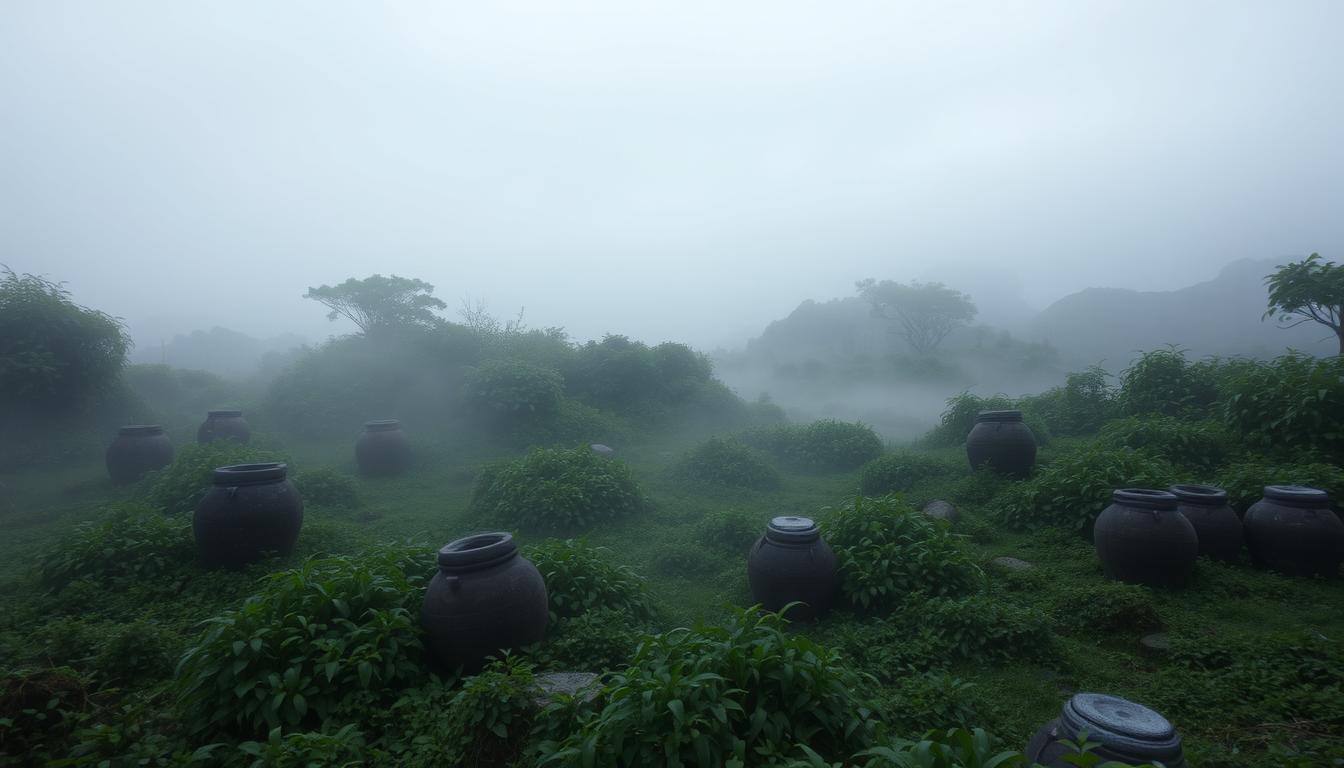
The Plain of Jars in central Laos is a fascinating site. It has over 3,000 giant stone jars, some dating back 2,000 years. Located near Phonsavan, it’s a peaceful spot away from the crowds of Thailand and Vietnam.
Walking through the area, you’ll see jars made of sandstone, granite, and limestone. Some are as heavy as 10 metric tons. The reason behind these massive jars is still a mystery. Archaeologists think they were used for burials, with human remains and other items found nearby.
In 2019, the Plain of Jars was named a UNESCO World Heritage Site. It’s a place where ancient culture meets danger. About 35% of the area is unsafe due to landmines and bombs. This adds to the site’s intrigue and caution.
Historical Significance of the Plain of Jars
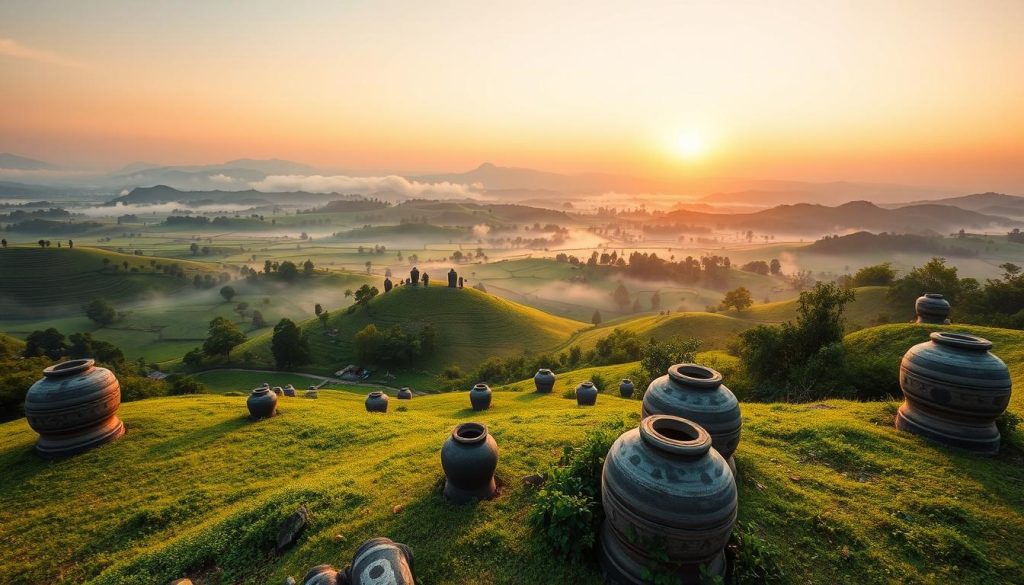
The Plain of Jars is a key site in Laos, known for its deep historical value. It features over 60 jar sites, with three open for visitors. These jars, some as heavy as 14 tons, are between 1 to 3 meters tall. They add to the site’s mystery and beauty.
French archaeologist Madeleine Coloni found that the jars date back to 300 BC to 300 AD. Excavations have uncovered human remains and burial practices. This shows the area’s importance in the mortuary customs of its people.
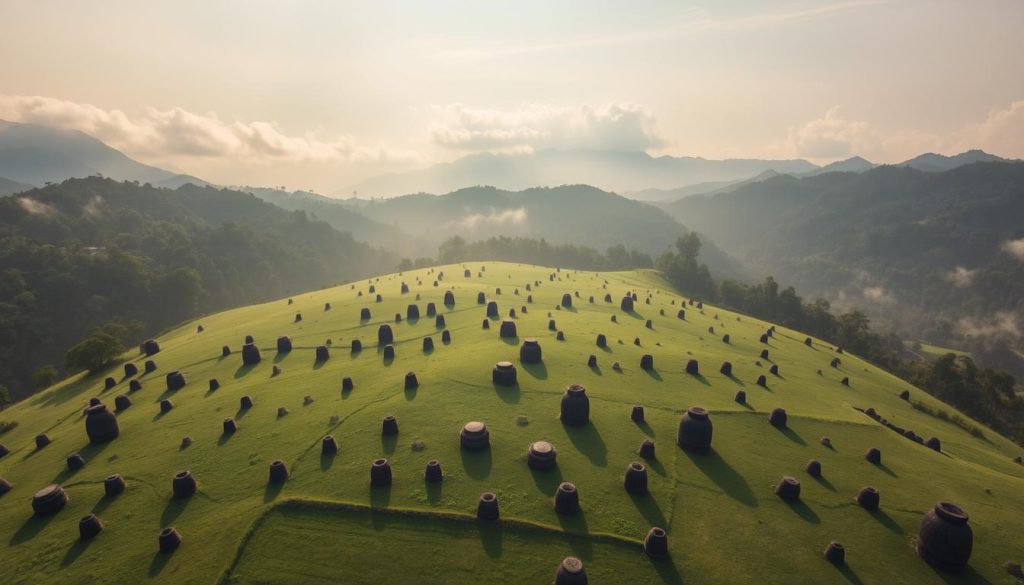
Among the jars, archaeologists found burial pits and more artifacts. A 1994 study by Eiji Nitta revealed remains and two-foot-tall burial jars. These finds shed light on the social customs of ancient communities.
Work to clear unexploded ordnance from the area highlights its importance. Local governance and UNESCO are working together. They aim to keep visitors safe while preserving these ancient relics.
Mysterious Archaeological Findings
The Plain of Jars reveals a treasure trove of mysteries from ancient times. These discoveries give us a peek into the lives of long-lost cultures. As you wander through these sites, you’ll find ancient stone vessels that have long fascinated researchers.
Ancient Stone Vessels and Their Origins
In Laos, many sites feature massive stone jars, some as tall as 3 meters. These jars, weighing up to 20 tons, show the skill of ancient artisans. They were made from different materials like sandstone and granite.
Over 90 sites with these jars have been found, but many more are hidden. Dating shows they were used from 7552 BC to AD 1214. This highlights their lasting importance.
The Role of the Jars in Ancient Burial Practices
Excavations reveal the jars’ role in ancient burials. At Ban Hai Hin, researchers found 18 individuals, mostly infants and children. This suggests a large burial ground over the centuries.
The jars likely held human remains, showing their importance in burial rituals. They were also used for fermenting rice wine. This shows their deep connection to ancient cultures’ rituals.
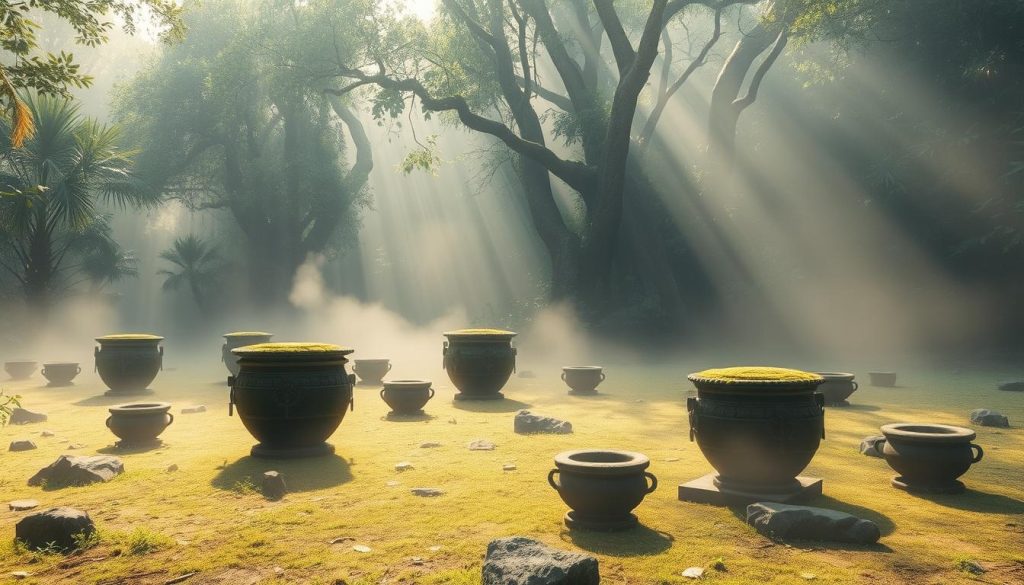
Unexplored Sites Plain of Jars
The Plain of Jars is full of mystery, with over 60 sites each holding secrets of the past. But, only a few are open to tourists because of safety risks from the Vietnam War. Many places are waiting to share their stories with brave explorers.
Site 1 is a great example, with five groups of jars and discs. Group 2 has 227 jars and 24 discs. The jars are huge, weighing up to 14 tons and standing 3 meters tall. This amazes everyone who sees them.
Many sites are still unexplored, making people wonder about the cultures that once lived here. As you explore the Plain of Jars, you find not just discoveries but also a link to a time of great achievements. Site 2 has 51 jars and 7 discs, showing the engineering skills of ancient people.
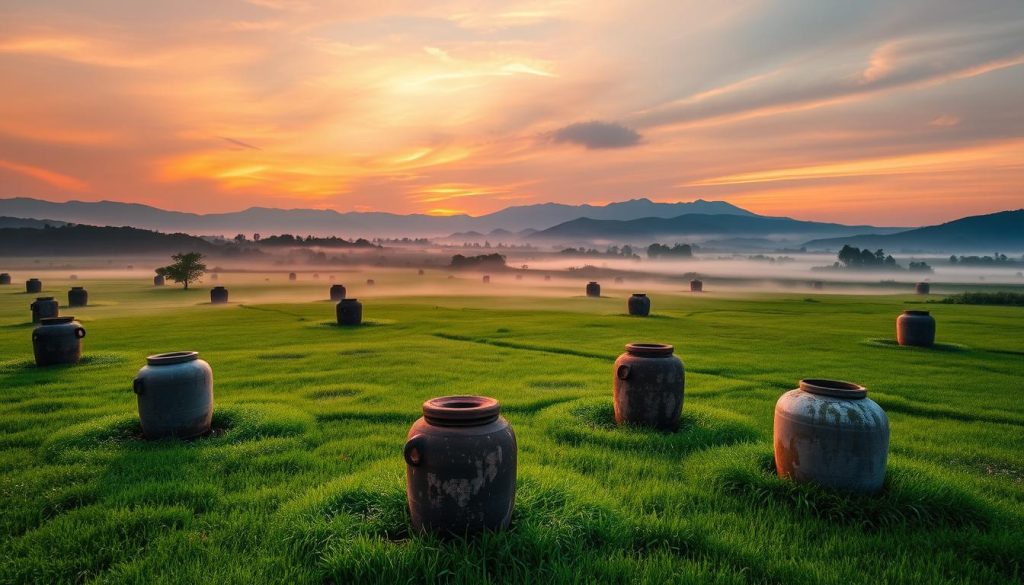
Exploring the Plain of Jars is like stepping back in time. It’s perfect for those who love adventure and learning about ancient cultures. It offers a peek into the past and the secrets still hidden.
Legends Surrounding the Stone Jars
The Plain of Jars is not just a historical site. It’s also filled with local legends and folklore. These stories show how the stone jars connect to the area’s cultural past. They tell of mythical kings and local beliefs tied to the jars, making the area’s identity rich and unique.
Mythical Kings and Giant Battles
A mythical king is a key figure in these legends. He’s said to have created the jars after winning epic battles. These tales paint a picture of grand celebrations, where stories of the king and the jars come alive.
Local Beliefs and Folklore
Local beliefs add depth to the jars’ significance. Some say they were used for ceremonies, tied to Laos’s spiritual side. These relics are more than just objects; they’re part of the people’s heritage. They show how history and myth blend in this magical place.
Archaeological Research and Discoveries
The Plain of Jars is a site of ongoing archaeological research. Recent finds have shed new light on the stone jars’ origins and uses. This has led to deeper exploration and analysis.
Recent Excavations and Findings
Archaeologists from places like the Australian National University have made big strides. They’ve found over 100 ancient stone jars across 15 sites in Laos. This adds to the over 90 known locations, showing about 137 massive stone pots in Xieng Khouang province.
The artifacts date from 500 BCE to 500 CE. They show a rich history.
| Site | No. of Jars | No. of Discs |
|---|---|---|
| Site 1, Group 1 | 60 | 2 |
| Site 1, Group 2 | 227 | 24 |
| Site 2, Group E | 51 | 7 |
| Site 2, Group W | 35 | 9 |
| Site 3, Group 1 | 158 | 34 |
| Site 4, Group 1 | 3 | 0 |
| Site 10, Group 1 | 9 | 1 |
| Site 12, Group 1 | 43 | 6 |
| Site 13, Group 1 | 3 | 1 |
| Site 22, Group 1 | 10 | 1 |
| Site 26, Group 1 | 1 | 0 |
| Site 26, Group 2 | 1 | 1 |
| Site 31, Group 1 | 2 | 1 |
| Site 31, Group 2 | 2 | 2 |
| Site 32, Group 1 | 7 | 1 |
| Site 32, Group 2 | 24 | 1 |
| Site 42, Group 1 | 62 | 3 |
| Site 42, Group 2 | 42 | 0 |
| Site 42, Group 3 | 15 | 3 |
| Site 52, Group 1 | 115 | 44 |
| Site 52, Group 2 | 81 | 52 |
| Site 52, Group 3 | 195 | 70 |
| Site 52, Group 4 | 24 | 15 |
| Site 64, Group 1 | 7 | 4 |
| Site 64, Group 2 | 5 | 1 |
| Site 65, Group 1 | 14 | 2 |
| Site 65, Group 2 | 3 | 1 |
| Site 66, Group 1 | 2 | 2 |
| Site 66, Group 2 | 6 | 0 |
| Site 67, Group 1 | 2 | 0 |
| Site 67, Group 2 | 7 | 0 |
| Site 70, Group 1 | 11 | 1 |
| Site 70, Group 2 | 4 | 0 |
| Site 71, Group 1 | 9 | 0 |
| Site 79, Group 1 | 67 | 5 |
Virtual Reality Projects for Exploration
Virtual reality is changing how we explore the Plain of Jars. It lets researchers study data from anywhere, working together worldwide. This technology makes exploring the jars and their history more engaging.
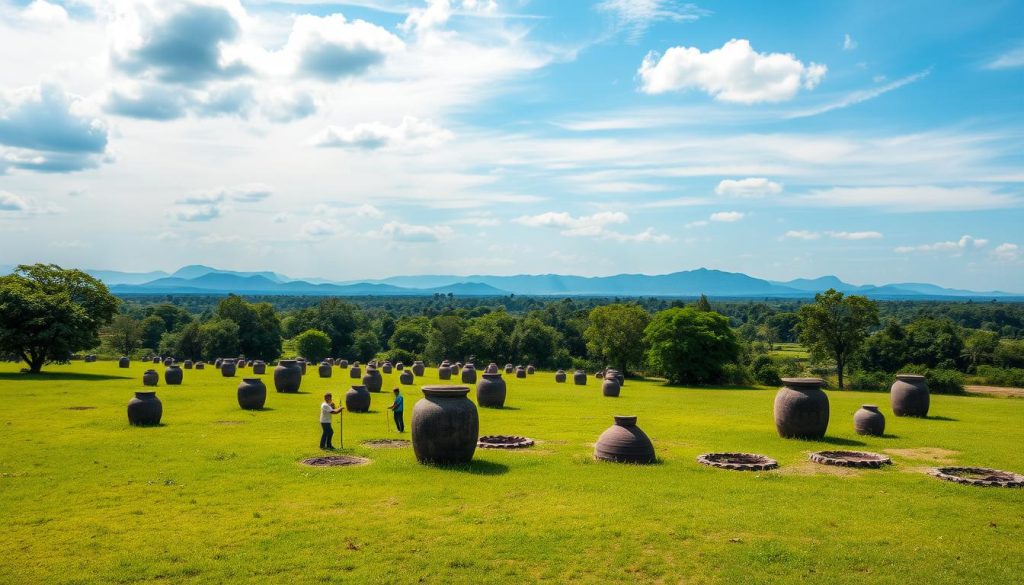
The Impact of War on the Plain of Jars
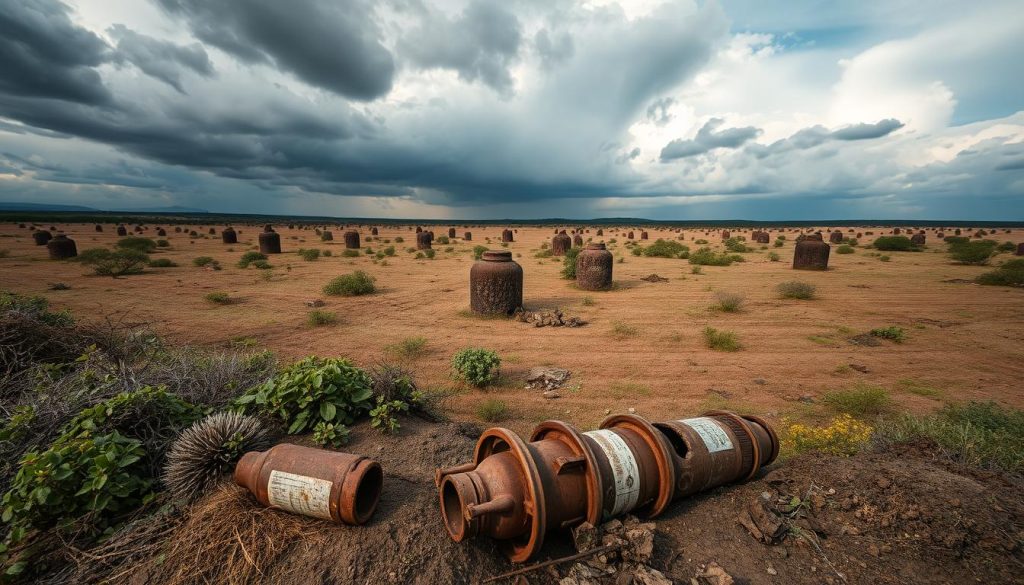
The Vietnam War changed the Plain of Jars forever. It made the site both important and dangerous. Today, over 90 ancient jar sites in Xieng Kouang Province face challenges due to war remnants.
These sites are filled with unexploded bombs. This poses a big risk for anyone who wants to see or study them.
Unexploded Bombs and Safety Concerns
From 1964 to 1973, the U.S. dropped 270 million cluster bombs on Laos. This left many areas still filled with unexploded ordnance. It’s crucial to keep visitors and researchers safe as they explore this area.
Some parts, like Sites 2 and 3, are now safe for tourists. But, many spots still have hidden dangers.
How the Vietnam War Shaped the Landscape
The war did more than just damage the land. It also changed the area’s history and culture. Efforts to remove war leftovers are key to saving the ancient jars.
These jars are believed to be from between 2000 BC and 1000 AD. As the Plain of Jars seeks UNESCO World Heritage status, balancing history and safety is essential.
| Aspect | Details |
|---|---|
| Bombing Period | 1964 – 1973 |
| Cluster Bombs Dropped | 270 million |
| Declared Safe Sites | Site 2 and Site 3 |
| Estimated Age of Jars | 2nd millennium BC – 1000 AD |
| World Heritage Listing | Efforts ongoing for UNESCO recognition |
Tourist Experience and Accessibility
Visiting the jar sites is an unforgettable experience. You’ll see breathtaking landscapes and learn about rich history. Over 2,100 ancient stone jars are spread across the area, showing the wonders of an Iron Age culture.
Only a small part of these sites are open for visitors. Less than 10% have been studied by archaeologists. This means you can see some amazing places, but there’s still much to discover.
Site 1 is the most accessible, with over 300 jars. It’s a stunning backdrop for your exploration. Sites 2 and 3 offer different views, with jars on hilltops or in forests. Accessibility is also helped by guided tours, where locals share the history of these ancient structures.
Getting there costs about $1.5 and a 30-minute flight from Vientiane. Remember, safety is important due to unexploded ordnance. Always stay on marked paths and follow the rules.
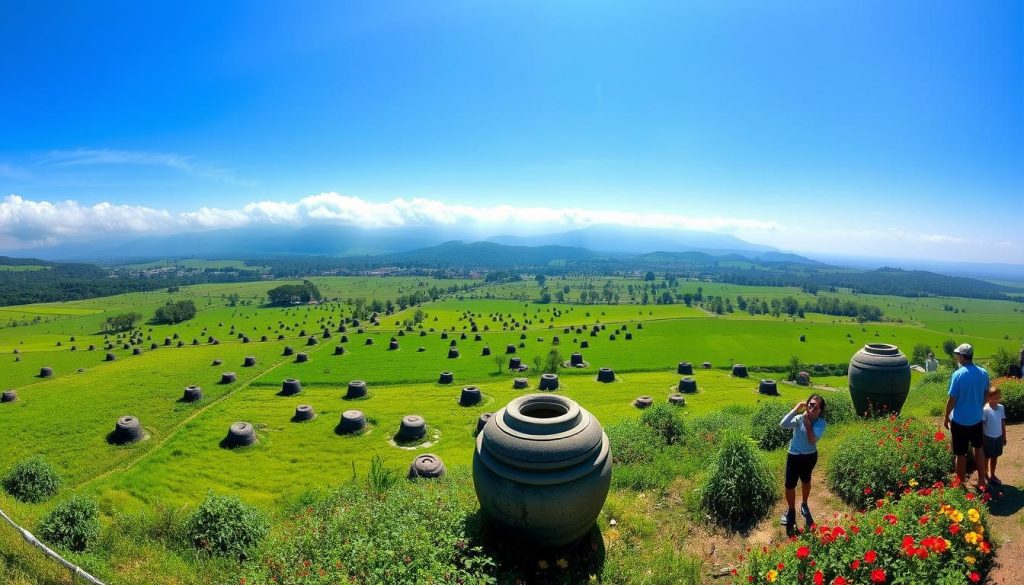
Local guides make your visit even more special. They tell stories of the jars’ past uses. The jars’ shapes and sizes add to the mystery, sparking debates about their purpose.
| Site | Accessibility | Notable Features |
|---|---|---|
| Site 1 | Very Accessible | Over 300 jars |
| Site 2 | Moderately Accessible | Hilltop location |
| Site 3 | Moderately Accessible | Forested area |
| Site 52 | Remote | 392 jars, requires hiking |
Exploring this UNESCO World Heritage Site is breathtaking. Safety and guided tours make your journey enlightening and secure. You’ll leave with memories to treasure.
Conclusion
The Plain of Jars is a haunting reminder of ancient wonders in Laos. It has thousands of stone jars across more than 90 sites in Xiangkhouang Province. Each jar has its own story, full of history and mystery.
The jars, made of sandstone, range from 1 to 3 meters tall. They call out to scholars and adventurers to uncover their secrets. This site is a mix of archaeology and local tales, with stories of giants making them for festivals.
Exploring the Plain of Jars feels like connecting with the past. Some sites, like Site 1 with over 300 jars, are now safe for visitors. It’s a place in Southeast Asia that offers a unique experience, blending history with natural beauty.