

Explore Royal Palace Luang Prabang History
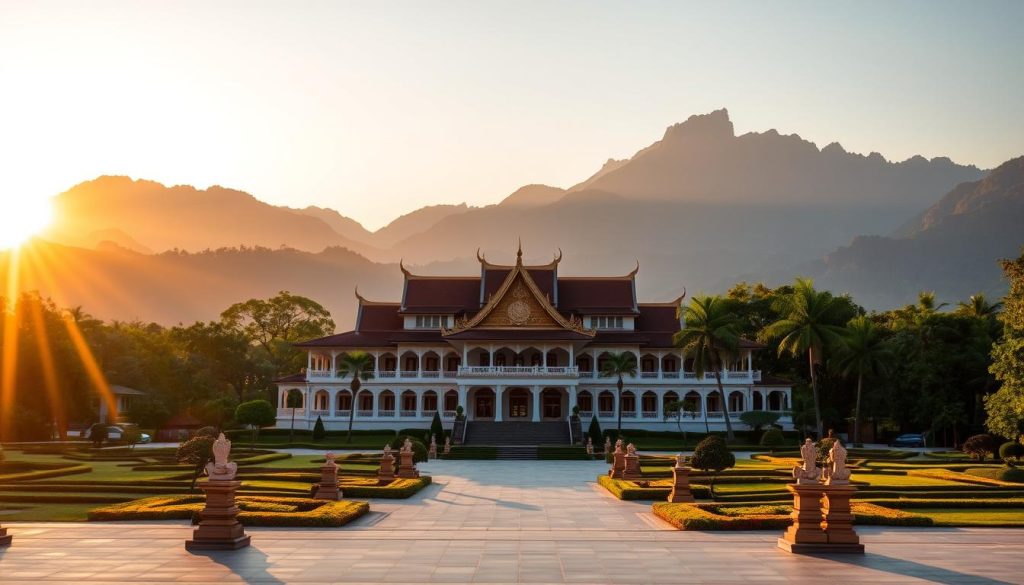
Ever wondered how a stunning building can tell a nation’s story? The Royal Palace Luang Prabang history is a fascinating look into Laos’ royal past. It shows the grandeur of the royal family’s home in Luang Prabang. Built from 1904 to 1909 during French rule, it honors King Sisavang Vong.
Since 1995, it’s been the Luang Prabang Royal Palace museum. It shows the deep impact of Laos‘ monarchy. Its design mixes Lao and French styles, taking us back in time. Let’s explore the stories and key moments in this iconic place’s history.
Introduction to the Royal Palace
The Royal Palace, also known as the former royal residence Laos, is a key symbol of Laotian history and culture. It is located next to the Mekong River in Luang Prabang. Built in 1904, it was the official home for King Sisavang Vong and his family after a previous palace was destroyed in 1887.
This palace combines traditional Lao architecture with foreign influences. It shows the rich royal heritage of the country.
Visiting this site, you’ll find a wealth of historical and cultural artifacts. These items give insight into the royal family’s life and Laos’ history. The museum lets you see the grandeur of the nation’s royal era.
Experience the rich atmosphere of the Royal Palace Museum. Admission costs 30,000 Kip (about US$4). It’s open from 8:30 AM to 11:30 AM and from 1:30 PM to 4:00 PM, except Tuesdays. You’ll see stunning displays, like the 48 kg Prabang Buddha statue, 83 cm tall.
Visitors should dress modestly, showing respect for Laos’ culture. You can rent a Lao skirt on-site. By exploring the Royal Palace, you learn about a key part of Laotian history and culture.
Royal Palace Luang Prabang history
The Royal Palace in Luang Prabang is a key part of Laos’ history. It shows how the country was influenced by France. Built from 1904 to 1909, it replaced a palace destroyed in 1887.
The palace’s construction shows the architectural styles of its time. It also highlights the royal heritage of Laos.
Construction Timeline of the Palace
It took five years to build the Royal Palace. Skilled artisans worked on it, blending Lao and French styles. This period saw big changes in Laos’ government and culture.
The palace became a symbol of luxury and sophistication. King Sisavang Vong was the first to live there. He stayed for over 50 years.
Royal Family Significance
The Royal Palace Luang Prabang is more than just a beautiful building. It holds the traditions and diplomatic history of the royal family. It was the last royal home before the monarchy ended in 1975.
After the monarchy fell, the last king and his family had to leave. This marked a big change for Laos.
| Year | Event |
|---|---|
| 1904-1909 | Construction of the Royal Palace |
| 1975 | Monarchy abolished, palace became a museum |
| Present | Royal Palace Museum open to public |
Architectural Features of the Royal Palace
The Royal Palace in Luang Prabang is a stunning example of cultural mix. It beautifully combines Lao and French styles, showing its rich history. The palace’s design is a testament to Laos’ heritage and the French colonial era.
Blend of Lao and French Colonial Styles
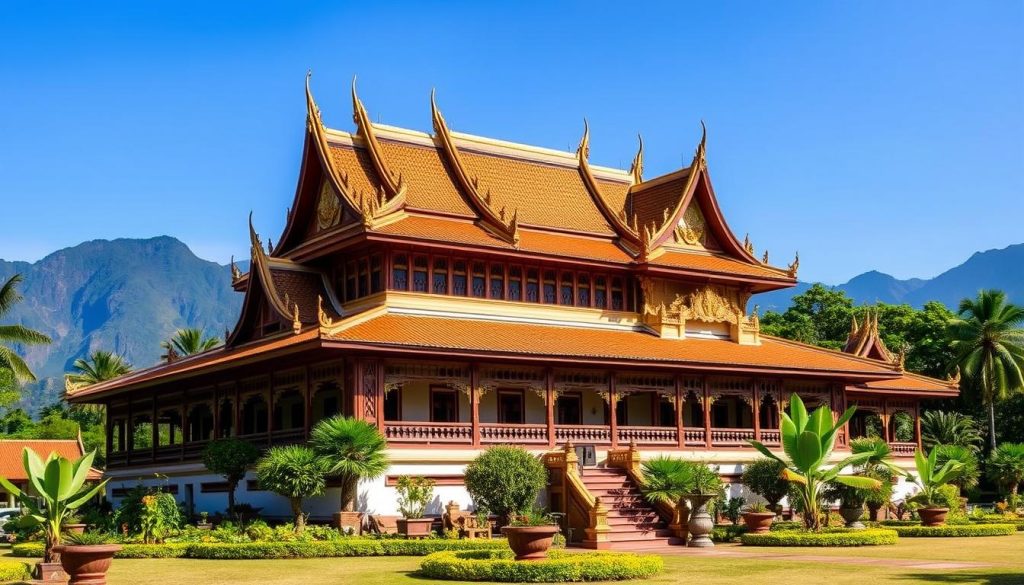
The Royal Palace is a unique mix of architectural styles. It shows French Beaux-Arts and traditional Lao designs. This blend is seen in its symmetrical layout, decorations, and exterior look.
This design not only looks great but also had practical uses. For example, it helped with royal visitors arriving by boat.
Design Elements and Materials Used
Several design elements highlight the Royal Palace’s architecture. These include:
- Brick Construction: The palace’s strong brick walls show its grandeur and lasting quality.
- Intricate Tile Work: The palace’s tile designs show the skill of local artists.
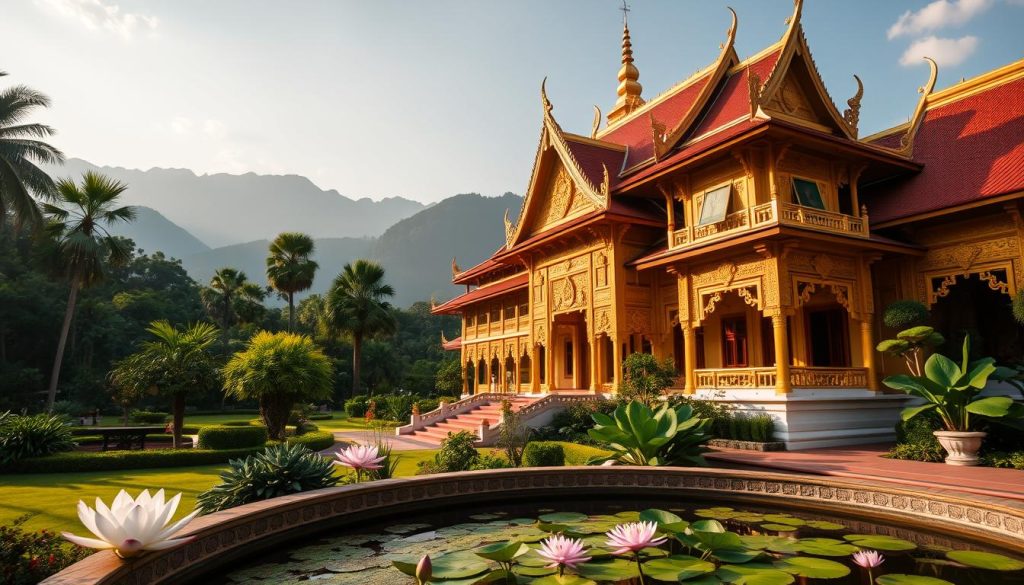
- Landscaped Gardens: The palace’s gardens add beauty and peace to its surroundings.
- Haw Pha Bang Temple: The temple houses the revered Phra Bang Buddha, adding spiritual value.
The mix of Lao and French styles makes the palace a must-see. It draws visitors who want to learn about its history and importance.
Historical Significance of Royal Palace Luang Prabang
The Royal Palace Luang Prabang is a key historical site in Luang Prabang. It shows the grandeur of Laotian history. Built in the 14th century as the royal capital of the Lan Xang Kingdom, it symbolizes the royal family’s importance.
Constructed between 1904 and 1909, it blends traditional Laotian architecture with French colonial styles. This makes it a unique landmark.
In 1995, it was named a UNESCO World Heritage site. This led to more preservation efforts and worldwide recognition. Every year, thousands visit to see the artifacts and documents that tell Laos’s story.
The palace houses the revered Prabang Buddha statue. This statue is a symbol of national pride and spiritual importance.
In 1975, the monarchy ended, and the palace became a national museum. This change highlights the royal family’s role in preserving history. It ensures that future generations stay connected to their cultural heritage.
The Royal Palace is a reminder of Laos’s royal legacy. It offers insights into the cultural mix that has shaped its history.
Transition to Memorial: The National Museum
After the monarchy fell in 1975, the Royal Palace changed a lot. It opened as the Luang Prabang Royal Palace museum in 1995. This change made it a place to learn about Laos’ history and culture.
Transformation Post-Monarchy
The museum became a key spot for Lao culture and history. People can see how the monarchy was important and learn about the country’s ups and downs. It shows how the museum makes history open to all.
Exhibits and Artefacts Showcased
The museum has many royal artifacts from Luang Prabang. These show the area’s art and culture. Some of the exhibits include:
- Royal regalia and personal items that give a peek into the monarchs’ lives.
- Religious artifacts that show how spirituality and royal power mixed.
- Historical paintings that tell key stories in Lao history.
- Sculptures and textiles that highlight traditional Lao craftsmanship.
This big collection helps people understand Laos’ royal past. It also shows the area’s cultural wealth, making your visit to the museum special.

What to Expect When Visiting the Royal Palace
Planning your visit to the Royal Palace Luang Prabang? Knowing the rules and what to expect will make your visit better. The Royal Palace Museum showcases amazing artifacts that tell Laos’ rich history. Follow these tips for a smooth and fun visit.
Visitor Access and Regulations
The Royal Palace Museum is open every day. It’s open from 8 am to 11:30 am and 1:30 pm to 4 pm, except Mondays. The entrance fee is 30,000 kip, or about US$4.
When you arrive, remember to dress modestly. This means no bare shoulders or short bottoms. You’ll also need to remove your shoes before entering. Cameras are not allowed inside, but you can store them in lockers.
Guided Tours and Informative Signage
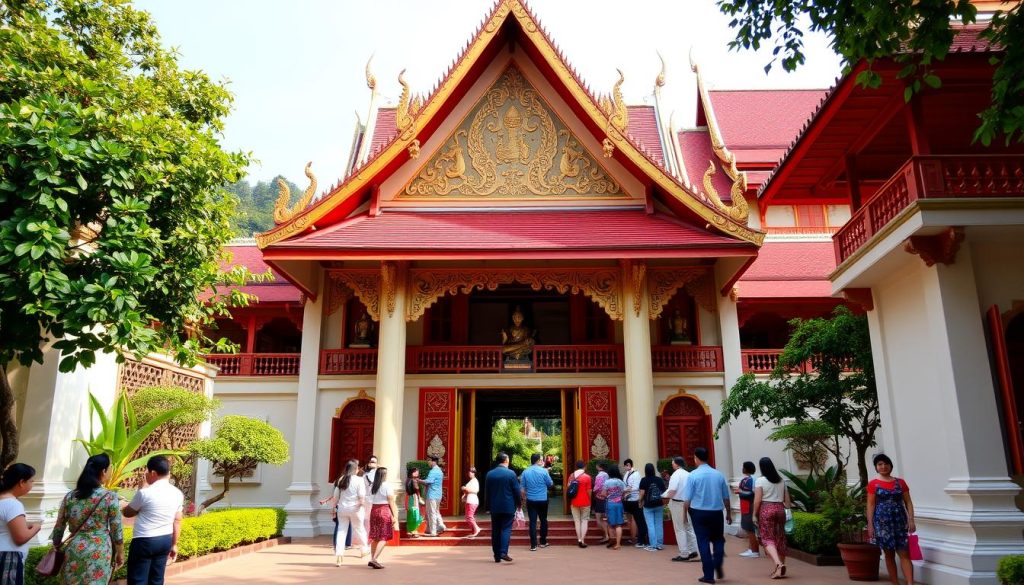
Guided tours are available to help you understand the culture and history of the Royal Palace Luang Prabang. You’ll find informative signs throughout the museum. They provide context and details about the exhibits, helping you appreciate the royal relics, paintings, and artifacts.
Key Highlights Inside the Royal Palace Museum
Visiting the Royal Palace Museum is a journey into Laos’ rich history and culture. The museum showcases the grandeur of the Lao monarchy through its collections. You can see the royal legacy through art and artefacts.
Main Gallery and Reception Areas
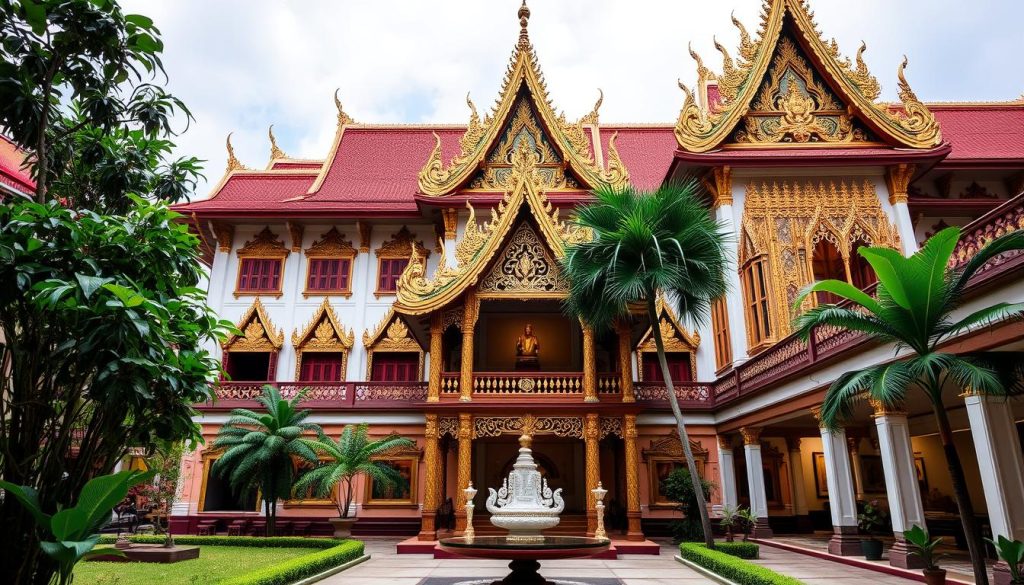
The main gallery introduces you to the royal lineage and culture. It displays beautiful paintings, sculptures, and gifts from countries like Myanmar and Japan. These items are arranged to highlight the royal family’s artistic and historical significance.
Throne Room and Royal Artefacts
The throne room is a place of majesty. It’s decorated with mirrors and mosaics. Here, you’ll see the king’s throne and ceremonial regalia, including the famous elephant chair.
The Golden Buddha statue is a highlight. It’s 83 cm tall and weighs 54 kg. Its details show its cultural importance. Seeing these artefacts helps you understand Laos’ monarchy traditions.
| Feature | Description |
|---|---|
| Main Gallery | Showcases paintings, sculptures, and diplomatic gifts |
| Throne Room | Home to the royal throne and ceremonial regalia |
| Golden Buddha Statue | 83 cm tall, 54 kg, and made of 80% gold |
| King Sisavang Vong Statue | Bronze statue located on museum grounds |
| Important Rules | No photography, respectful attire, and shoe removal |
Cultural Heritage of Royal Palace Luang Prabang
The Royal Palace Luang Prabang is a key part of Laos’ history and traditions. It shows the art and customs of the Lao monarchy over many years. The building’s design mixes Lao and French styles, creating a special look.
Inside, you’ll see many artifacts that tell stories of the past. They show the skill and importance of their time. Seeing these items up close helps you understand the Lao people’s heritage.
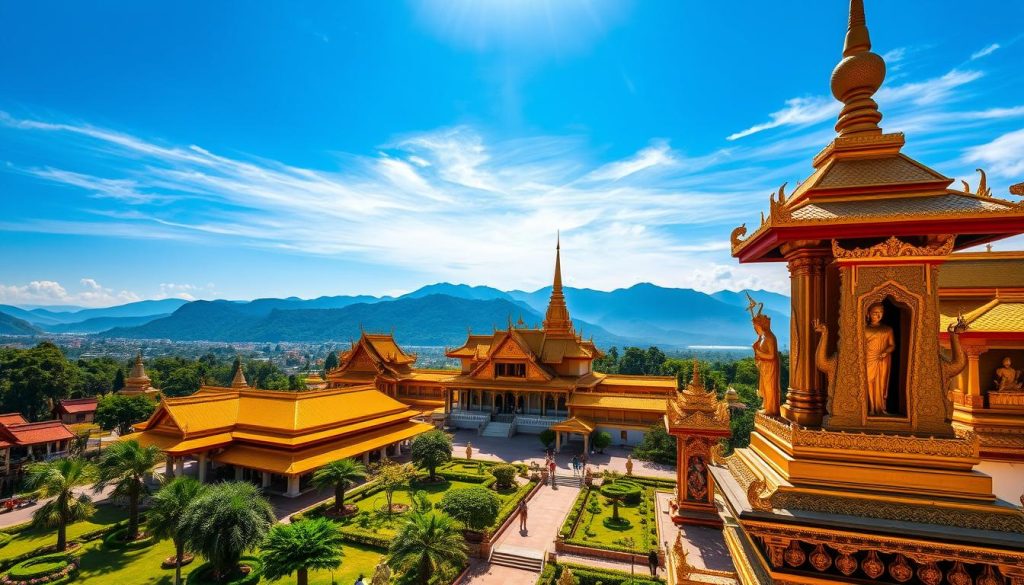
Visiting this place lets you dive into Lao culture. It’s a place where history, art, and tradition come together. This shows the deep connections within the community.
| Aspect | Description |
|---|---|
| Historical Importance | Represents the legacy of the Lao monarchy, serving as a focal point for national identity. |
| Architectural Style | Combination of traditional Lao motifs and French colonial elements, creating a unique structure. |
| Artifacts | Displays items showcasing the artistry of various Lao crafts and the royal lifestyle. |
| Visitor Experience | An engaging opportunity to explore Laos’ past and the relevance of its artifacts to contemporary culture. |
The Royal Palace Luang Prabang is a key part of Laos’ cultural heritage. It lets you connect with the spirit and history of this amazing nation.
The Role of the Royal Palace in Modern Laos
The Royal Palace Luang Prabang history is still felt in modern Laos. Today, it’s the National Museum, teaching people about the royal past. It shows how the monarchy’s legacy shapes Laotian culture.
Visitors can see the grandeur of the monarchy and its lasting impact. This helps them understand Laotian society better. The Palace is a key part of preserving Laotian heritage.
It’s a place where people learn about Laos and its traditions. The Royal Palace is a symbol of national pride. It reminds everyone of the importance of remembering and keeping cultural traditions alive.
Tourism in Luang Prabang grows thanks to the Palace. It attracts tourists from all over, boosting the local economy. This exchange helps share Laotian culture with the world.
In Luang Prabang, the Palace is more than just a building. It’s part of a lively community with thirty-three temples and many cultural sites. This makes Luang Prabang a UNESCO World Heritage site.
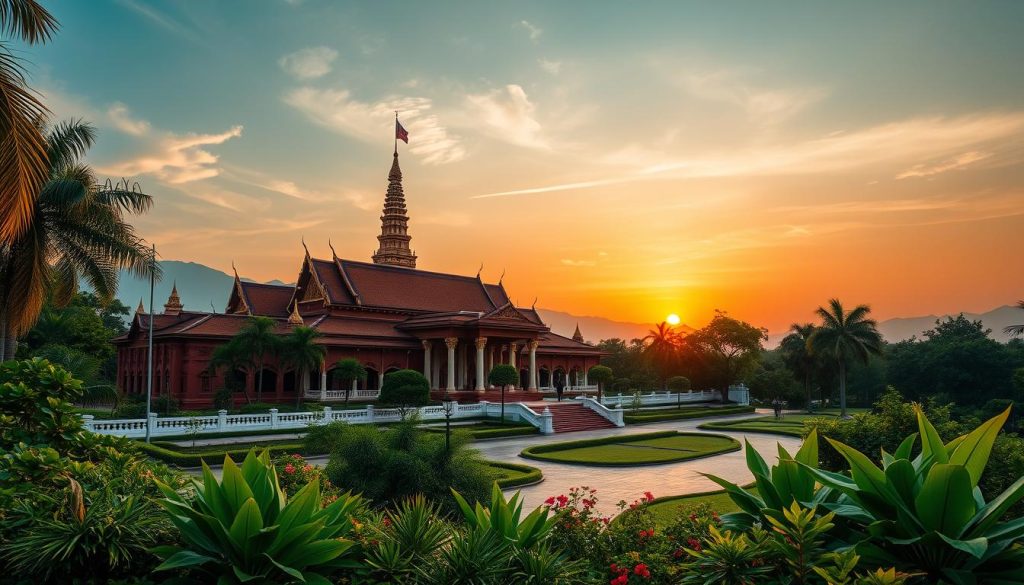
Visiting the Palace is more than seeing sights. It’s about understanding modern Laos through its history. The Royal Palace is key to keeping the nation’s story alive.
How to Get to the Royal Palace
Getting to the Royal Palace Luang Prabang is easy because it’s in the city’s heart. It’s between the Mekong River and Mount Phousi. You can walk from nearby hotels or take a tuk-tuk for a fun ride. The main entrance is on Sisavangvong Road, a famous street in Luang Prabang.
Here are some visiting regulations and tips to make your visit better:
- Know the opening hours: the Royal Palace Museum is open from 8:00 AM to 11:30 AM and 1:30 PM to 4:00 PM, except Tuesdays.
- The entrance fee is 30,000 kip, about $4. It lets you see many historical artifacts and exhibits.
- Take off your shoes before going inside. You can store your bags in free lockers at the entrance.
- Don’t take pictures inside the museum. It helps keep the displays safe.
Knowing these rules will make your visit to the Royal Palace more enjoyable. You can dive into its history and culture without worry.
Exploring the Surrounding Gardens and Temples
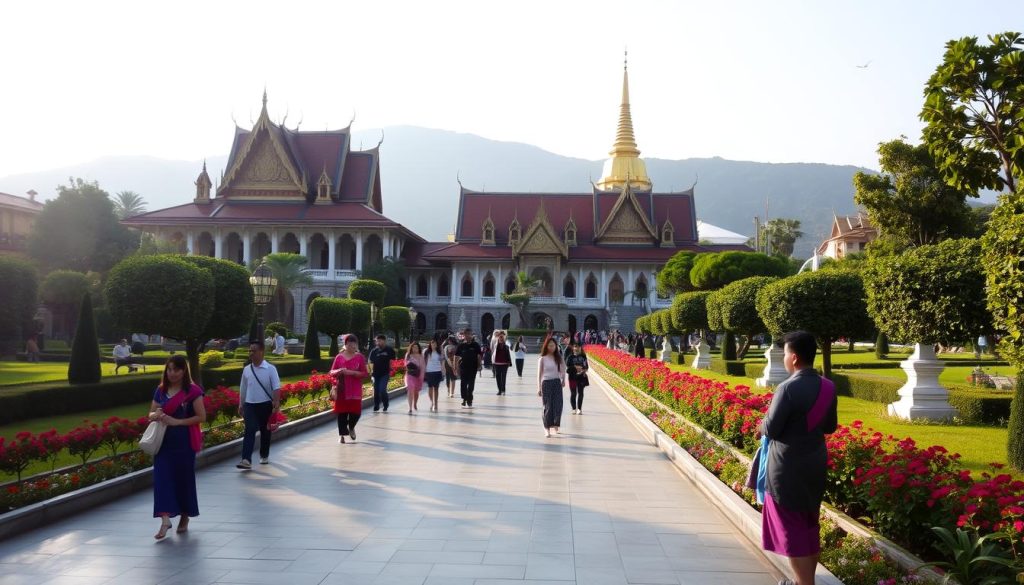
As you explore the Royal Palace, you’ll find beautiful gardens and temples. These spots offer a break from city life. You can walk through green spaces and enjoy the scenery.
The Haw Pha Bang temple is a must-see. It houses the famous Phra Bang Buddha statue. This temple adds to the calm and shows the spiritual side of the area. Exploring these places, you’ll find more than just beauty. You’ll learn about the city’s rich culture and history.
Wat Xieng Thong is another highlight. It’s known for its detailed carvings and golden stupas. This temple, along with the Royal Palace, shows the beauty of architecture and nature. Luang Prabang has over thirty temples and monasteries, filled with tradition and learning.
Visiting these places is a deep dive into culture and understanding. You’ll find peace and beauty in the gardens and temples of Luang Prabang. This mix of nature and spirituality brings calm, making your visit unforgettable.
Visiting Regulations and Tips
Before you visit the Royal Palace Museum in Luang Prabang, know the rules. These rules help you enjoy your visit and keep the palace in good shape.
First, you must follow a dress code. Wear clothes that cover your shoulders and knees. This shows respect for the palace’s history.
Inside, you can’t take photos. This lets you focus on the exhibits without any distractions. You can use lockers at the entrance for your bags and other items.
The ticket for the Royal Palace Museum costs 30,000 Kip, or about US$4. It’s open from 8:30 am to 11:30 am and 1:30 pm to 4:00 pm, except on Tuesdays. Plan your visit to make the most of your time.
Talking to the guides can make your visit even better. They share interesting stories about the exhibits. Here are some tips to help you:
- Go early to miss the crowds.
- Take a guided tour for more insight.
- Give yourself enough time to see everything.
- Check the weather, as it can get cold in winter and hot in summer.
- Visit nearby temples to learn more about the culture.
By following these tips, your visit to the Royal Palace Museum will be memorable.
| Fee/Details | Amount |
|---|---|
| Royal Palace Museum Entry Fee | 30,000 Kip (approx. US$4) |
| Opening Hours | 8:30 am – 11:30 am / 1:30 pm – 4:00 pm (Closed Tuesdays) |
| Dress Code | Modest attire (covered shoulders and knees) |
| Photography | Not permitted inside museum |
Conclusion
The Royal Palace in Luang Prabang is more than just a beautiful building. It’s a treasure trove of history and culture. Built in 1904, it has seen many changes, becoming a museum today. This shows the lasting impact of the royal family on Laos.
When you visit, you learn about Laos’ traditions and culture. The palace’s mix of Lao and French styles is fascinating. Nearby sites like Wat Xieng Thong add to its cultural importance.
Your trip to the Royal Palace is a chance to appreciate its history and culture. Every part of this landmark tells a story of Laos’ rich past. It invites you to join in its ongoing story.





