Understanding Preservation Challenges of Plain of Jars
Have you ever thought about how to keep a site with over 2,100 stone jars safe? These jars are linked to ancient burial practices. The Plain of Jars in Laos is a UNESCO World Heritage site. It’s not just a collection of artifacts; it’s a window into history, archaeology, and culture from 500 BCE to 500 CE.
This site has more than 1,325 stone jars and burial items. They show a civilization’s unique burial rituals and trade routes. But, these treasures face danger from the US Secret War’s leftover bombs. These bombs pose a big risk to both the site and local people.
To understand the challenges of saving the Plain of Jars, we need to look at its importance. We must also see the dangers it faces and how we can protect it for the future. In a world that often values development over preserving culture, how can we keep sites like this safe and thriving?
The Significance of the Plain of Jars
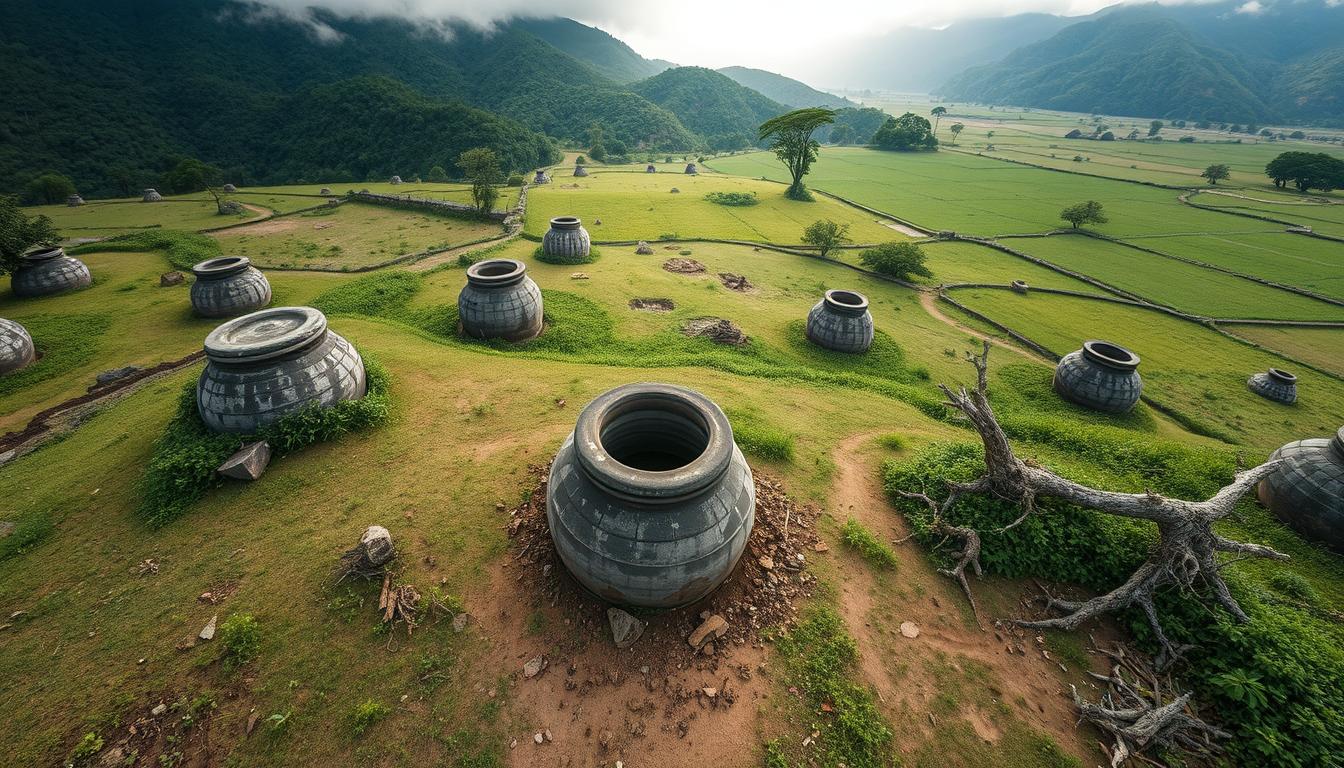
The Plain of Jars is a key site that shows us about an ancient civilization in Southeast Asia. It offers deep insights into old burial practices and cultural ways. Over 2,000 megalithic jars are spread across more than 90 spots, highlighting their importance.
Historical Context and Archaeological Importance
The Plain of Jars is very important for archaeology. It dates back to the Iron Age, giving us a peek into the lives of the past. Excavations have found pottery, tools, and decorated animal bones, helping us understand daily life.
Local beliefs and funeral customs are also linked to the jars. This makes them even more interesting. Being named a UNESCO World Heritage Site in 2019 shows its global importance.
Geographic Location and Overview of Sites
The Plain of Jars is in Xieng Khouang Province. Its location adds to its significance. The biggest collection is near Phonsavan in Site 1, where you can see jars up to three meters tall.
Despite its beauty, there’s still work to clear unexploded ordnance. This ensures a safe place for visitors and researchers. The balance between preserving and exploring the Plain of Jars is ongoing.
The Legacy of Unexploded Ordnance in Xieng Khouang
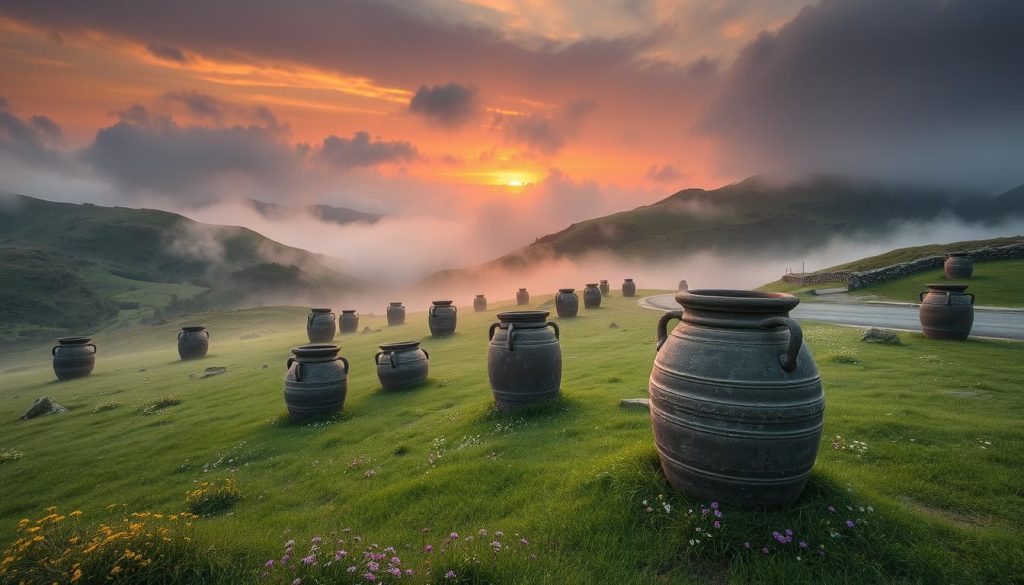
Xieng Khouang Province is deeply scarred by its past. The US Secret War left a trail of unexploded bombs. Today, 30% of the four billion pounds dropped between 1964 and 1973 still pose a threat.
This danger affects local communities and hampers archaeological work. The area is famous for its ancient megalithic jars. Yet, the risk of UXO remains high.
Impact of the US Secret War
The US Secret War made Laos the most bombed country per capita. Over 2.1 million tons of ordnance were dropped. This has had a devastating impact.
Approximately 30,000 civilians have died, and 20,000 have been injured. Even after the war ended in 1973, UXO still kills about 300 people every year. This highlights the need for urgent demining efforts.
The world is starting to take action. Humanitarian efforts aim to address this historical tragedy.
Current Risks to Archaeological Work and Local Communities
The plain of jars is now a dangerous site due to UXO. About 70% of Lao people depend on farming, but half of their land is contaminated. This makes daily life uncertain for locals.
Groups like the Mines Advisory Group (MAG) are working to clear UXO. They aim to ensure safe exploration of jar sites and protect cultural heritage. Villagers hope these efforts will make their homes safer and uncover new archaeological finds.
What are the challenges in preserving the Plain of Jars?
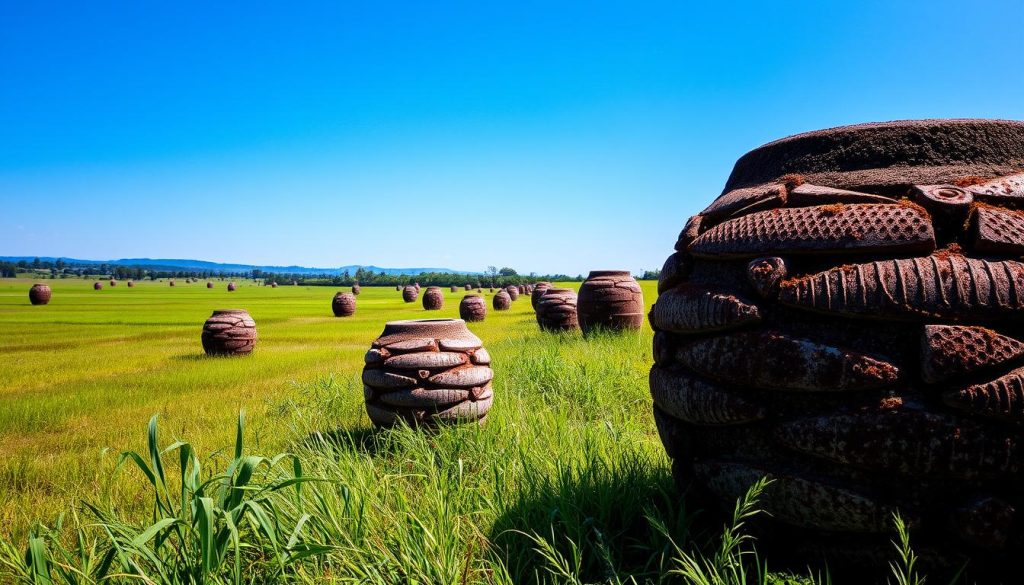
Preserving the Plain of Jars is tough. It needs UXO clearance and deals with tourism and preservation. Knowing these challenges helps protect this site for visitors.
Unexploded Ordnance (UXO) Clearance Efforts
Clearing UXO is key to preserving the Plain of Jars. The area still faces dangers from the Second Indochina War. Bomb incidents happen often, risking lives and archaeological work.
Groups work hard to remove these dangers. Their efforts keep visitors and sites safe. As the Plain of Jars becomes more famous, removing UXO is crucial for its future.
Balancing Tourism and Preservation
More visitors come with UNESCO World Heritage status. Around 10,000 tourists visit each year. They help local families by buying from shops.
But tourism can harm the site. It causes wear and damage. Finding a balance is essential. Rules for visitors and sustainable tourism are needed to protect the site.
| Aspect | Details |
|---|---|
| Population | Approx. 360,000 residents |
| Tourism Impact | 10,000 visitors to the UXO Survivor Information Center annually |
| Family Benefits | Income generated from tourism helps about 200 families |
| Total Jars | 2,107 known megalithic jars |
| UNESCO Nomination | The region has been nominated for UNESCO World Heritage status |
| Recent Incidents | Bomb-related incidents occur several times a month |
Natural Threats to Preservation
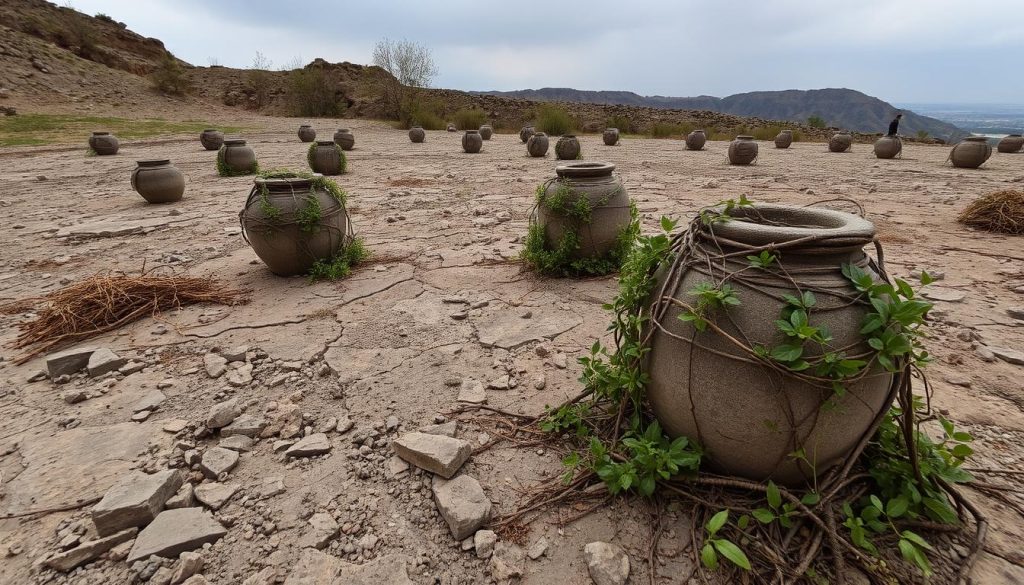
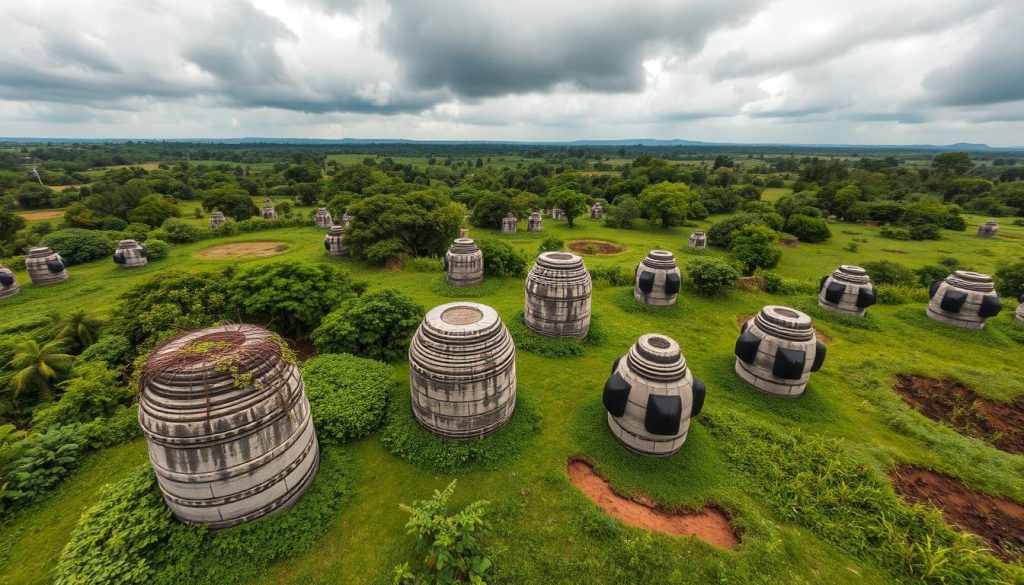
The Plain of Jars faces many natural threats. These dangers harm its structure and the environment around it. It’s crucial to know these risks to protect it well.
Forest Fires, Landslides, and Flooding
Forest fires are a big worry, mainly in dry seasons. They can destroy not just plants but also the ecosystems around the jars. Landslides happen after heavy rains, causing more damage to the jars. Flooding is another problem, as it can cover up the ancient sites, making it even more urgent to act.
Vegetation Encroachment and Vandalism
Overgrown plants around the jars make it hard to get there and can damage them. While plants are good in many ways, they can hide the ancient structures. Vandalism and careless tourists also harm the site, causing damage and litter. This makes the Plain of Jars less important to history.
| Natural Threats | Impact on Preservation |
|---|---|
| Forest Fires | Damage vegetation and surrounding ecosystems; threaten structural integrity. |
| Landslides | Erosion and physical damage to jar sites. |
| Flooding | Risk of submerging archaeological features; complicates preservation efforts. |
| Vegetation Encroachment | Obscures access; deteriorates visibility and structural integrity. |
| Vandalism | Induces physical damage and littering; erodes historical significance. |
Cultural Heritage Protection Strategies
Protecting the Plain of Jars is a big task. It needs teamwork from many groups. This ensures the site stays safe for future generations.
The Role of UNESCO in Site Management
UNESCO is key in protecting cultural heritage. They help manage and conserve sites. When the Megalithic Jar Sites of Xieng Khouang were added to UNESCO’s list in 2019, it was a big win.
This move brought more help for saving the site. It also made the world pay more attention. With over 100 sites, including 2,100 stone jars and 200 discs, UNESCO’s help is crucial.
Community Engagement and Local Involvement
Getting the community involved is vital. Local people are the first to protect the sites. They learn about their heritage through training and workshops.
This makes them want to help preserve it. It’s a way to make them feel like they own the heritage.
| Strategy | Description | Impact |
|---|---|---|
| UNESCO Involvement | Facilitates international support and attention for heritage sites. | Increased funding and resources for conservation projects. |
| Local Training Programs | Educates villagers on cultural heritage importance and preservation techniques. | Empowered community members actively participate in protection. |
| Collaborative Conservation Plans | Develops strategies involving local authorities and community leaders. | Creates effective frameworks for long-term preservation efforts. |
Challenges After UNESCO World Heritage Designation
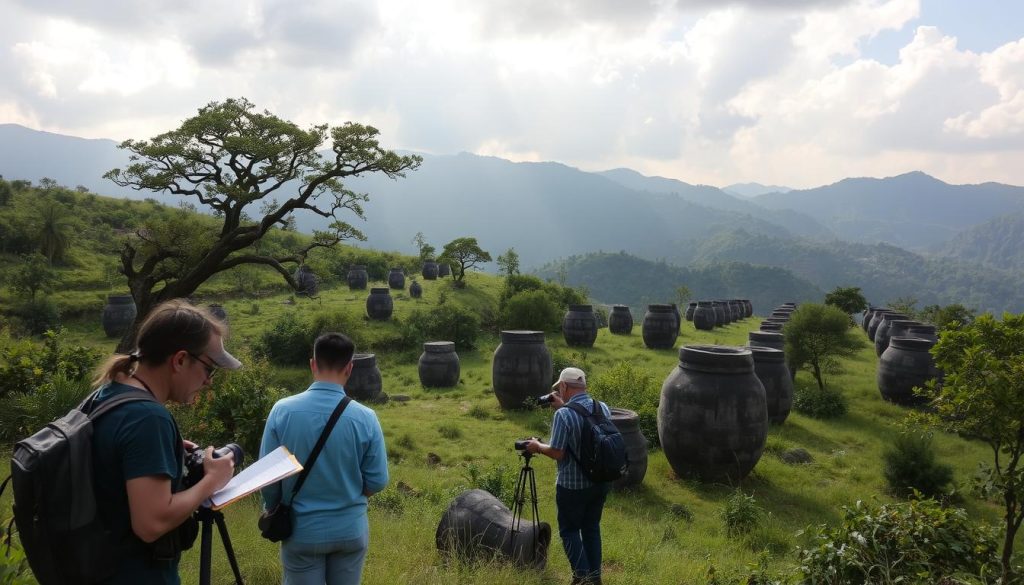
Getting UNESCO World Heritage status can make people think tourism will grow and local economies will improve. But, it also brings big challenges. More visitors can harm the environment around these sites, risking both natural and cultural treasures. It’s key to find a way to welcome tourists without damaging these historical places.
Visitor Impact and Economic Considerations
The number of visitors to the Plain of Jars went up after it was listed as a UNESCO site in 2019. This showed both sides of the coin. People hoped for more money and jobs for locals, but we also need to protect the site. We must find ways to make tourism work without harming the cultural heritage.
Expectations vs. Reality for Local Communities
Local people often have high hopes for what UNESCO status will bring. But, the real results can be different. While it can attract investors, it might not meet everyone’s expectations right away. It’s important to understand these differences to find ways that help both the economy and the community.

Sustainable Tourism Development Plans
Adding sustainable tourism to the Plain of Jars’ plans helps both the community and the site. It makes sure visitors enjoy their time and locals are happy. This way, the site stays safe for future generations.
Encouraging Responsible Visitor Behavior
It’s key to keep the Plain of Jars safe for the long run. By teaching visitors about the site’s history and how to care for it, we can make a difference. Here are some ways to do it:
- Provide info on the site’s history.
- Ask visitors to stay on paths to protect the land.
- Teach how to respect local people and traditions.
Infrastructure Improvements and Community Benefits
Upgrading the site, like better parking and visitor centers, helps everyone. It makes visiting easier and helps the local economy grow. This leads to:
- More jobs and services for locals.
- Helping the environment stay safe.
- Teaching locals how to handle tourism well.
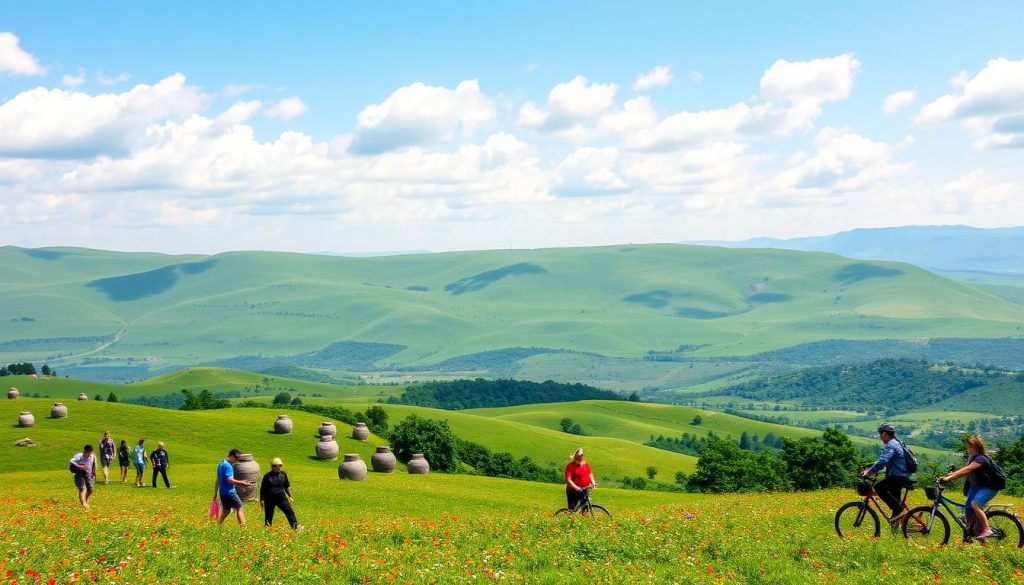
These plans are a guide for keeping the Plain of Jars special. By focusing on good visitor behavior and improving the site, we can help the community and protect the site’s history.
Heritage Site Management and Disaster Risk Reduction
Keeping the Plain of Jars safe is key, with challenges from natural disasters and unexploded ordnance. Local authorities are working hard to improve disaster risk reduction. They are doing this through special workshops and initiatives.
These efforts aim to equip your community with the tools and knowledge needed. This will help protect this important historical site.
Current Initiatives and Workshops
Workshops on disaster risk management are crucial. They help local authorities learn and apply best practices. This way, your community can prepare for and handle risks better.
It’s important to identify vulnerabilities through thorough risk assessments. This includes both natural and human-made threats to the site.
Future Plans for Risk Assessment and Management
Future plans focus on ongoing risk assessment to tackle new threats. A long-term disaster risk reduction framework is essential. It will make the site more resilient.
By focusing on sustainable heritage practices, you can preserve the Plain of Jars for the future. This ensures its cultural and historical value remains strong, even in tough times.