
Experience the Peace of Kyichu Lhakhang Prayers
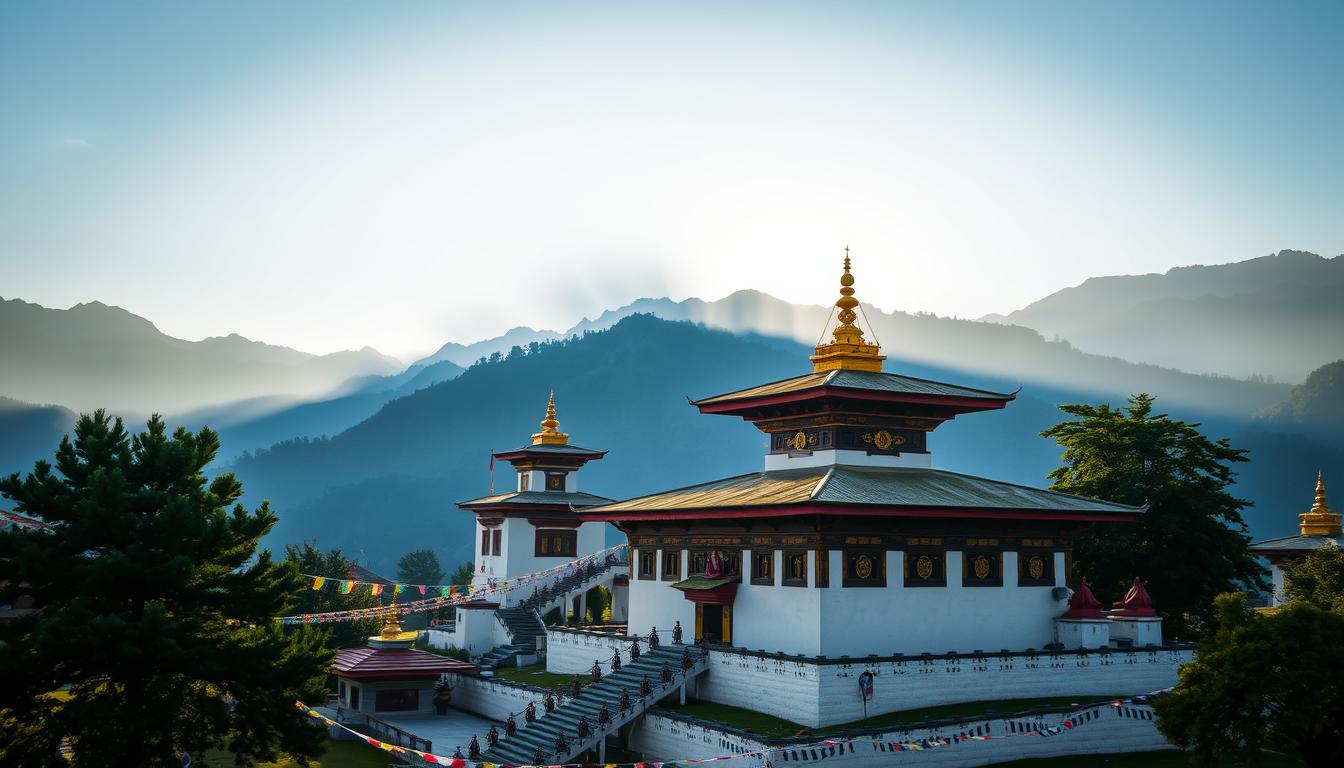
Have you ever thought about how prayer can change your view of life and spirituality? At Kyichu Lhakhang, a sacred Bhutan temple from 659 CE, you can find peace and reflection. This place is not just beautiful but also connects you to ancient spiritual traditions through its prayers.
When you enter this ancient place, you’ll find a spiritual journey that goes beyond time and culture. The calm atmosphere from the rituals here helps quiet your mind and lift your spirit. It’s a key stop for both locals and travelers seeking peace and understanding of Bhutan’s culture and Buddhism.
Introduction to Kyichu Lhakhang
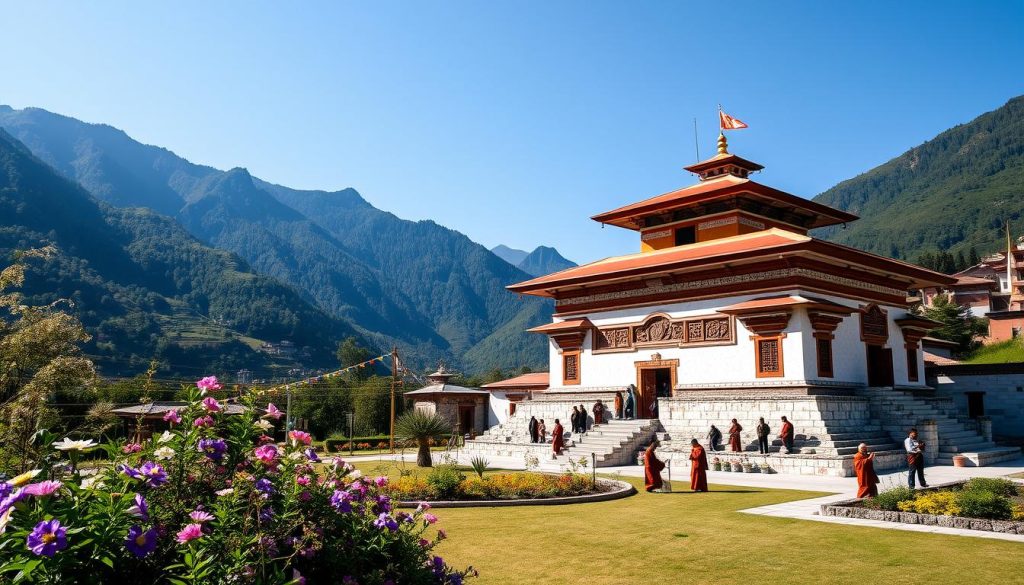
Kyichu Lhakhang is a key spiritual site in Bhutan, found in the beautiful Paro Valley. It’s one of the oldest temples in the country, dating back to the 7th century. The history of Kyichu Lhakhang is deeply connected to Bhutanese Buddhism and its spiritual traditions.
Visiting this famous place, you’ll find a calm atmosphere. Its stunning architecture and natural beauty attract visitors from everywhere. You can join rituals or just enjoy the peaceful surroundings, learning about Bhutan’s culture and travel.
The temple was built by the Tibetan Emperor Songtsen Gampo to spread Buddhism. Over time, it has been restored many times. Today, it remains a sacred place for both locals and travelers, showing its importance in Bhutan’s spiritual heritage.
Historical Significance of Kyichu Lhakhang
The temple history of Kyichu Lhakhang shows its key role in Bhutan’s spiritual world. Built in the 7th century, it’s a treasure of history. It was one of the first temples to spread Buddhism in Bhutan. Its story connects Bhutanese culture with Tibetan traditions.
Origins of the Temple in the 7th Century
The Kyichu Lhakhang origins go back to the Tibetan Emperor Songtsen Gampo’s vision. He wanted to spread Buddhism across the Himalayas. He built 108 temples, including this one, to defeat a demoness.
The temple’s design shows the victory of spirit over matter. This idea is very important in Bhutanese beliefs.
Connection to Tibetan Emperor Songtsen Gampo
Emperor Songtsen Gampo’s impact is still felt today, thanks to Kyichu Lhakhang. His time was when Buddhism in Bhutan grew a lot. The temple shows his faith and the cultural exchange between Tibet and Bhutan.
Role in the Spread of Buddhism in Bhutan
Kyichu Lhakhang is a key part of Buddhism in Bhutan. It welcomed famous teachers like Padmasambhava in the 8th century. It’s a place for people to come together, think, and practice.
The temple is still important for religious activities. It shows its lasting impact on Bhutan’s spiritual path.
Kyichu Lhakhang Prayers: A Spiritual Experience
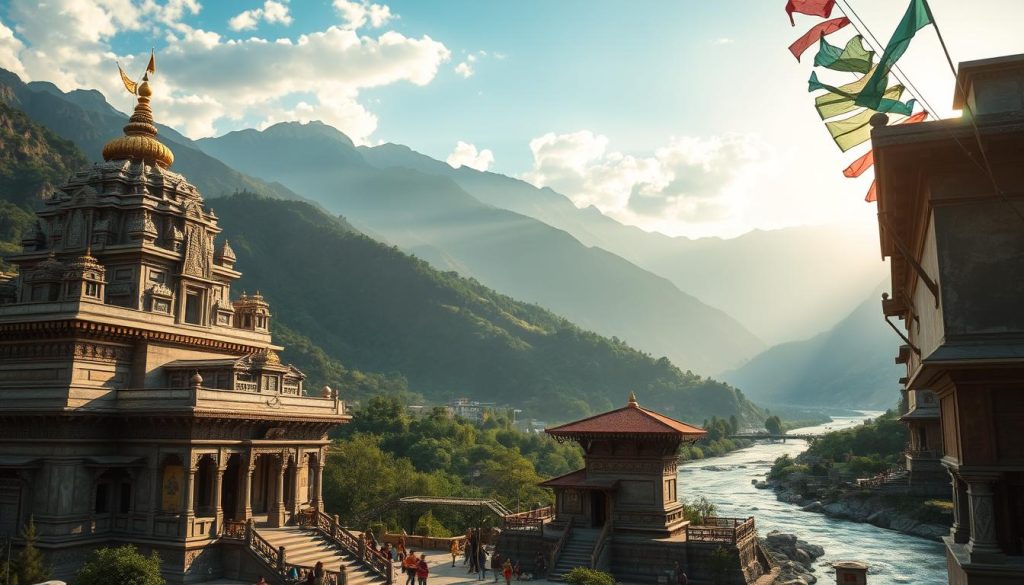
Kyichu Lhakhang offers visitors deep spiritual experiences through its meaningful Kyichu Lhakhang prayers. Local monks lead these heartfelt sessions, creating a calm and reverent atmosphere. People often find themselves lost in deep meditation, reflecting and introspecting in the serene surroundings.
One significant practice is the lighting of 108 butter lamps. This ritual symbolizes offering light to deities and boosts one’s merit. It aligns with the teachings of the Root Tantra of Chakrasamvara, highlighting the importance of offering countless lights for spiritual growth. Such offerings reflect the ancient traditions of this sacred space.
The tranquility of Kyichu Lhakhang is enhanced by its historical relics. These include the revered statue of Jowo Jamba, cherished since the 7th century, and the exquisite statue of Chenrezig, with a thousand arms and eleven heads. The main temple’s intricate details, adorned with turquoise and precious stones, showcase the artistic and cultural heritage of the temple.
Engaging in the peaceful ambiance deepens your spiritual experience. This is true for elderly pilgrims who come for prayer rituals and meditation. The presence of monk houses, prayer wheels, and the unique Lenza script on tiny prayer wheels add to the cultural and spiritual significance of Kyichu Lhakhang, making it a remarkable destination.
The Architecture of Kyichu Lhakhang
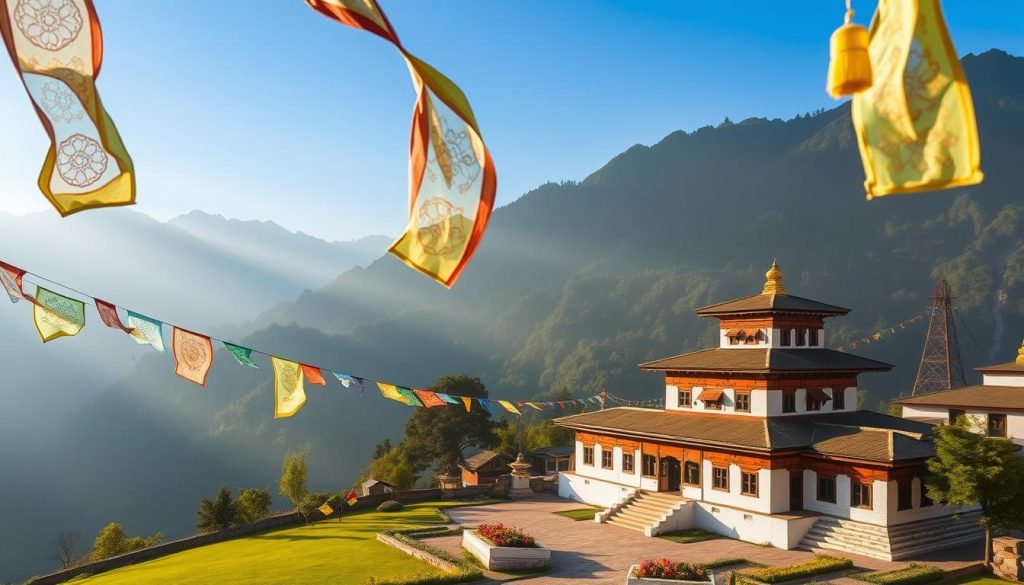
The Kyichu Lhakhang architecture shows the beauty of Bhutanese culture. This temple is a masterpiece of art, filled with spiritual history. Its colors, woodwork, and carvings tell the temple’s story and its spiritual life.
Design Elements Reflecting Bhutanese Culture
The temple’s design is unique, showing off Bhutanese culture. Visitors see:
- Intricate wood carvings that show Buddhist themes and symbols.
- Vibrant colors that make the temple lively.
- The golden main entrance door, showing its sacredness.
- A courtyard with two orange trees, blending nature and spirituality.
The Sacred Guru Lhakhang Structure
The Guru Lhakhang is a key part of Kyichu Lhakhang. It honors Guru Rinpoche. This temple, built in 1968, has a 5-meter-high guru statue with flower-made arrow and bow. It also has:
- A 7th-century Jowo Sakyamuni statue, showing history.
- A Chenrezig statue with 1000 arms and 11 heads, showing Bhutanese art.
- Monk houses and prayer wheels, for spiritual and practical use.
The Kyichu Lhakhang architecture is a marvel in Bhutan. It helps visitors understand the country’s rich culture.

Rituals and Traditions at Kyichu Lhakhang
Rituals and traditions at Kyichu Lhakhang are key to its spiritual vibe. They give a peek into Bhutan’s rich culture. This sacred place draws both visitors and locals, creating a strong bond with the local faith.
The Kyichu Lhakhang rituals keep the temple pure. You might see monks praying, asking for blessings and peace. These customs help you understand Buddhist ways and connect with the past.
Inside the temple, you’ll find:
- An annual rites of great accomplishment honoring deities such as Vajrasattva, Palchen Heruka, and Vajrakilaya.
- A sacred orange tree symbolizing fertility and prosperity, cherished by practitioners.
- Intricate murals showcasing Buddhist mythology that reflect the artistic tradition of the region.
Visitors feel a warm welcome here. You can join in spiritual practices that truly capture Bhutan’s spirit. From reciting prayers to receiving blessings, these rituals make your visit unforgettable.
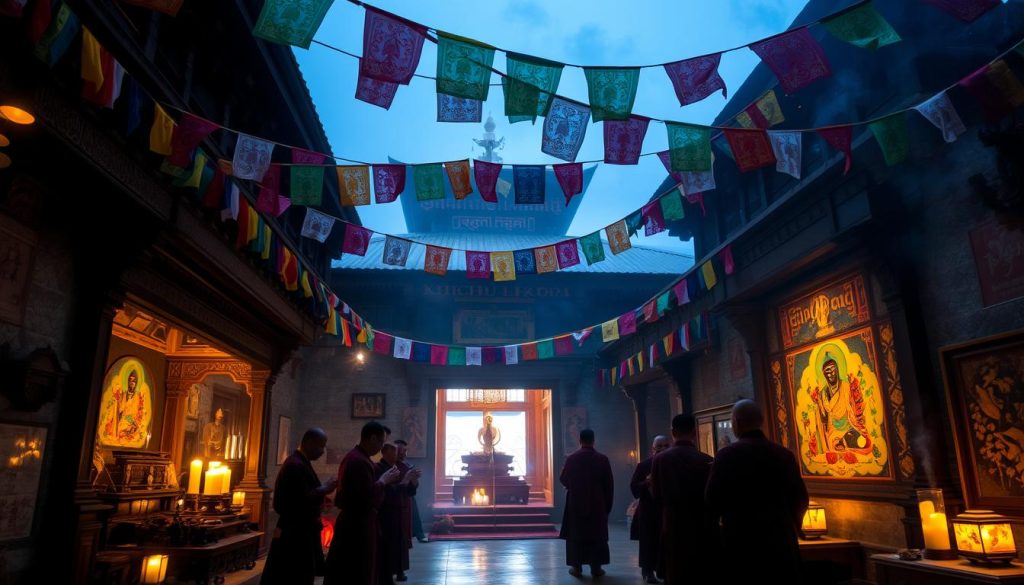
Participating in Kyichu Lhakhang Offerings
Visiting Kyichu Lhakhang is a special experience for everyone. It connects you to the temple’s deep spiritual roots. You can light butter lamps and spin prayer wheels, both important acts.
Lighting Butter Lamps as a Symbol of Hope
Lighting butter lamps is a powerful symbol of hope. It fights darkness and ignorance. Each lamp carries your prayers, offering a chance for deep thought.
Many find it uplifting, bringing peace and guidance. It adds to the calm of Kyichu Lhakhang.
Spinning Prayer Wheels for Spiritual Merit
Spinning prayer wheels is another key tradition. It builds spiritual merit and connects you to Buddhist teachings. The motion is calming, focusing your mind on compassion and wisdom.
The Peaceful Ambiance of Kyichu Lhakhang
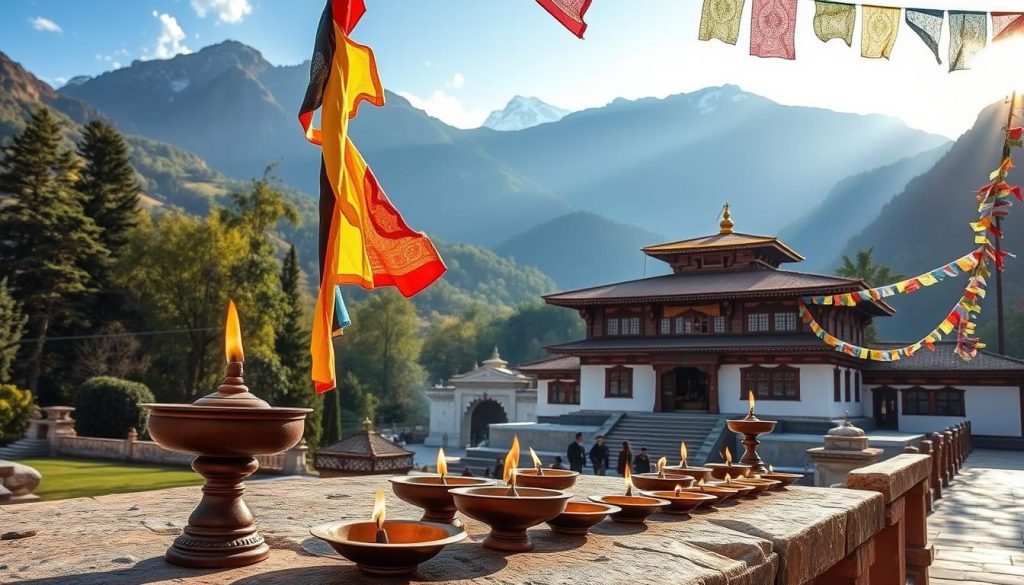
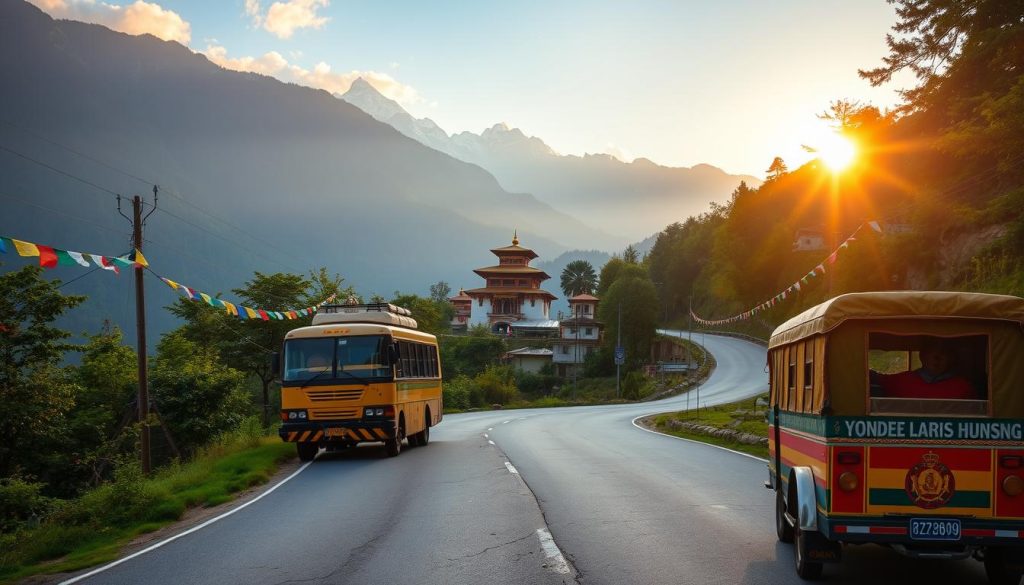
When you step into Kyichu Lhakhang, you’re greeted by a peaceful ambiance that encourages quiet thought. The soft sound of prayer flags and the mountains in the background create a calming space. Walking through the gardens with sacred orange trees, you feel a deep tranquility. It’s a perfect place for meditation.
The Kyichu Lhakhang experience is enhanced by the soft light of butter lamps. These lights, dancing in the dimness, help focus your mind on peace and unity. The sound of chanting, echoing through the temple, adds to the spiritual atmosphere.
This calm setting offers a break from the hustle of daily life. Kyichu Lhakhang is a spiritual haven. It invites everyone to pause, reflect, and connect with their inner self.
Kyichu Lhakhang as a Pilgrimage Destination
Kyichu Lhakhang is a key pilgrimage site, drawing locals and tourists alike. Built in the 7th century, it holds great cultural value in Bhutan. It’s a place where people seek blessings, peace, and inspiration in its calm setting.
Significance for Local Pilgrims and Tourists
For local pilgrims, visiting Kyichu Lhakhang is a way to connect with their spiritual roots. The temple’s long history as a sacred site in Bhutan makes it a place for reflection. Every year, thousands visit to seek spiritual growth and to experience its cultural richness.
The temple’s courtyard has a sacred orange tree that grows fruit all year. This tree is seen as a symbol of the temple’s spiritual power.
Annual Festivals Celebrated at the Temple
The temple hosts many festivals, with the Paro Tshechu being the most significant. This festival showcases traditional dances and rituals, celebrating Bhutan’s rich culture. During these events, Kyichu Lhakhang becomes a lively center of activity.
These festivals are a chance to see Bhutan’s unique blend of faith and culture. They preserve local customs and traditions, offering visitors a glimpse into Bhutan’s heritage.
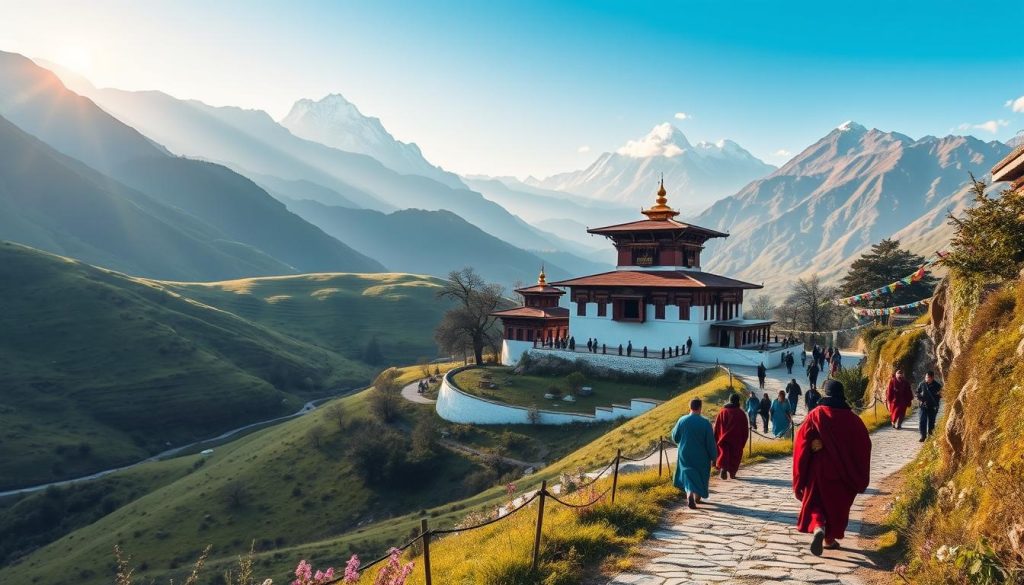
Experiencing the Kyichu Lhakhang Mantra
The Kyichu Lhakhang mantra is key in the temple’s spiritual practices. It connects you with Buddhism’s deep teachings. Chanting this mantra helps you focus and find peace, following Bhutanese traditions.
Visiting Kyichu Lhakhang lets you dive into mantra chanting. It’s more than just words; it’s a spiritual journey. By chanting, you learn more and join Bhutan’s spiritual heritage.
Being part of these practices brings a sense of community. The devotion around you shows the strength of Buddhist traditions. The Kyichu Lhakhang mantra guides you toward greater awareness and connection.
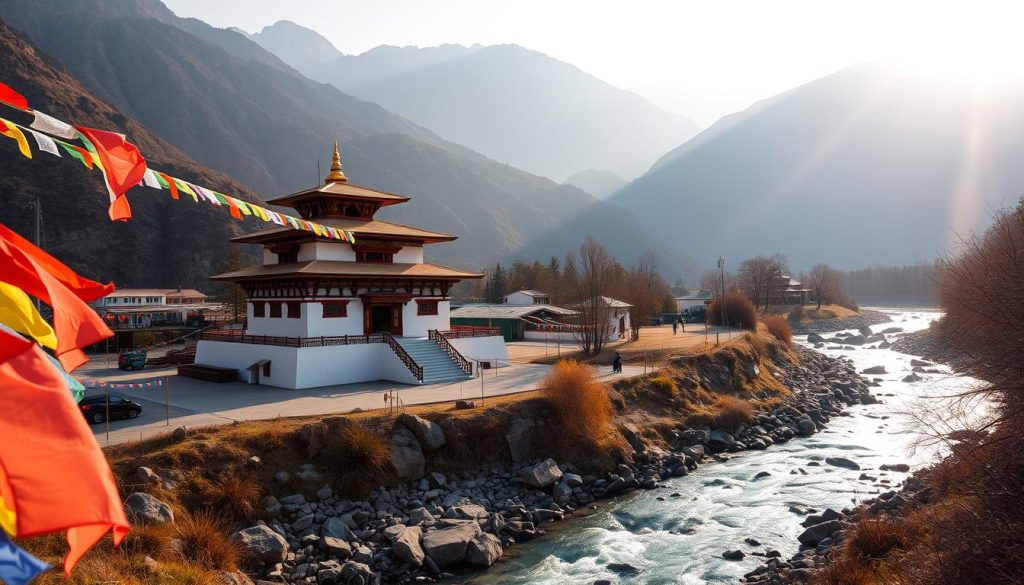
How to Reach Kyichu Lhakhang
Getting to Kyichu Lhakhang is simple, with many ways to travel from Paro. It’s just 4.9 kilometers from Paro’s city center. You can choose what works best for you.
Transportation Options from Paro
Think about taking a taxi or booking a ride through your hotel. Taxis are fast, taking 10 to 15 minutes. Local buses are cheaper and run regularly, taking about the same time.
If you love adventure, biking to the temple is exciting. It adds a fun twist to your trip from Paro.
Best Times to Visit
The best times to visit are from March to May and September to November. The weather is mild, and the views are amazing. Weekdays are quieter, offering a more personal experience.
Visit early mornings or late afternoons for peace. Dress modestly and wear comfy shoes for uneven paths.
Conclusion
Visiting Kyichu Lhakhang is more than seeing Bhutan’s history. It’s a journey into the heart of Bhutan’s spirituality. This ancient temple, the oldest in Bhutan, lets you feel the country’s spiritual roots.
As you pray and participate in rituals, you’ll feel a deep peace. This peace stays with you, long after you leave.
The calm of Kyichu Lhakhang, its beautiful architecture, and detailed paintings, deepen your understanding. It shows the importance of Bhutanese culture and Buddhism’s lasting impact.
Thinking back on your visit, you’ll value Bhutan’s culture, traditions, and spiritual ways more. Let Kyichu Lhakhang’s peace guide you. It will connect you to this special place forever.





