
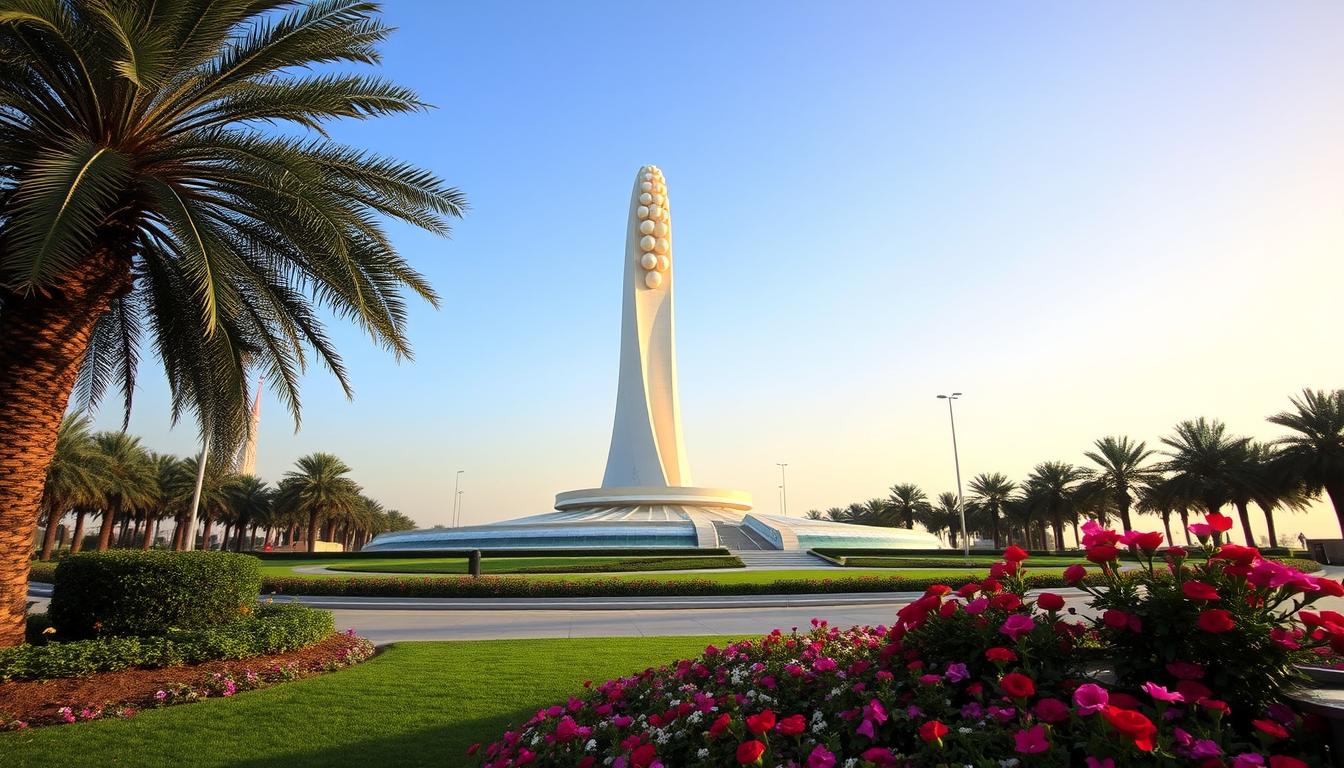
What is the Pearl Monument? A Bahrain Landmark
The Pearl Monument was a famous landmark in Manama, Bahrain’s capital city. It stood in the financial district until 2011. The government demolished it during the Bahraini uprising.
This iconic structure was also called the Pearl Roundabout or Lulu Roundabout. It held great importance in Bahrain’s history and culture.
Built in 1982, the monument marked Bahrain’s hosting of the third Gulf Cooperation Council summit. It featured six dhow-shaped “sails” reaching upwards, supporting a pearl at the top.
This design symbolized the shared heritage of GCC nations and their pearl-diving history. A twelve-sided pool with fountain jets surrounded the base, creating a stunning visual.
Introduction to the Pearl Monument
Location and Significance
The Pearl Monument was a key landmark at the GCC Roundabout in Manama. It stood near Bahrain’s financial district, surrounded by iconic buildings. The monument was a major focal point and transit hub in the capital city.
The Pearl Monument symbolized Bahrain’s rich pearl cultivation history. It represented the unity of Gulf Cooperation Council nations. The monument highlighted Bahrain’s important role in the region’s pearl trading industry.
“The Pearl Monument served as a testament to Bahrain’s enduring connection to its pearl-diving legacy, a reflection of the nation’s cultural identity and prosperity.”
The monument’s location in Manama’s busy commercial district showed its importance. It was a popular gathering place for locals and visitors. Its unique design made it an easily recognized symbol of Bahrain.
The Pearl Monument contributed to Bahrain’s strong sense of pride and identity. Its towering presence made it stand out in the cityscape. It was a cherished symbol of the nation’s cultural heritage.
What is the Pearl Monument?
The Pearl Monument was a famous landmark in Manama, Bahrain. This 300-foot sculpture symbolized the country’s rich history and cultural heritage. It featured six arches resembling “dhow sails” holding a large pearl at the top.
The monument’s six sails represented the six GCC member states. The pearl symbolized their shared history of pearl diving. A twelve-sided pool with fountains enhanced the structure’s beauty.
The Pearl Monument appeared on Bahrain’s half-dinar coin, the highest value currency. This showed its importance as a national symbol. It was a beloved landmark for locals and a must-see for tourists.
“The Pearl Monument was a striking visual representation of Bahrain’s shared past with the other Gulf Cooperation Council (GCC) nations.”
History of the Pearl Monument
The Pearl Monument, an iconic Bahrain landmark, was built in 1982. It celebrated the third Gulf Cooperation Council (GCC) summit in Manama. This monument symbolized the unity and shared heritage of GCC member states.
Construction and Inauguration
The monument’s design featured six “sails” representing GCC countries and a central pearl. It embodied the spirit of cooperation between nations. The structure was officially unveiled in 1982.
The Pearl Monument graced Bahrain’s landscape for nearly 30 years. It even appeared on the half-dinar coin, the country’s highest value currency. The monument honored the region’s rich pearling heritage.
48% of Qatar’s 27,000-strong population in 1907 worked in the pearling industry. However, Qatar’s pearling industry ended abruptly, with no boats leaving Doha harbor in 1958. Today, Qatar revives its pearling legacy through festivals and museum exhibits.
| Year | Event |
|---|---|
| 1982 | The Pearl Monument was erected to commemorate the third summit of the Gulf Cooperation Council hosted by Bahrain. |
| 2011 | The Pearl Monument was demolished by government forces during the Bahraini uprising of 2011. |
For almost 30 years, the Pearl Monument represented unity in the Gulf region. However, government forces demolished it on March 18, 2011, during the Bahraini uprising. This action sparked controversy and international condemnation.
Architecture and Design
The Pearl Monument was a stunning landmark in Bahrain. It captured the essence of the country’s maritime heritage. The design featured six sweeping arched “sails” projecting upwards, resembling traditional dhow sailing vessels.
These sails met at the top to hold a large pearl. This symbolized the unified history of pearl cultivation across the GCC states. The monument’s base had a twelve-sided pool with fountain jets.
This feature enhanced its visual appeal. It also represented Bahrain’s deep connection to the sea.
Symbolic Representation
The Pearl Monument’s design was a powerful symbol of Bahrain’s cultural identity. It represented the shared heritage of the Gulf region. The six sails and central pearl symbolized the unity of GCC member states.
The monument’s location in central Manama highlighted its importance. It stood as a unifying national symbol. The structure celebrated Bahrain’s pride in its maritime traditions.
It blended Bahrain’s architectural legacy with its cultural narratives. The Pearl Monument was a visual landmark that told a story.
“The Pearl Monument was a remarkable feat of engineering and design, capturing the essence of Bahrain’s identity and the shared history of the Gulf region.”
| Architectural Feature | Symbolic Meaning |
|---|---|
| Six Sweeping Arched Sails | Representation of traditional dhow sailing vessels |
| Converging Sails Holding a Large Pearl | Unification of the GCC states’ shared heritage in pearl cultivation |
| Dodecagonal Pool with Fountain Jets | Symbolism of Bahrain’s deep connection to the sea |
Role in the Bahraini Uprising of 2011
The Pearl Monument in Manama was central to the 2011 pro-democracy protests in Bahrain. These demonstrations were part of the Bahraini uprising. Thousands of citizens demanded political reforms and rights for Shiite Muslims.
The Pearl Roundabout, with its iconic monument, became the protesters’ main gathering spot. It was compared to Cairo’s Tahrir Square during the Egyptian revolution. In February 2011, demonstrators occupied the area with tents and projection screens.
The government’s response was harsh and quick. On February 17, security forces attacked protesters, causing deaths and injuries. Tanks were deployed to the roundabout after the crackdown.
On March 18, 2011, the government demolished the Pearl Monument. This action was part of their efforts to stop the uprising. The monument’s destruction has been widely criticized by human rights groups.
“The Pearl Roundabout protests were a pivotal moment in Bahrain’s history, with the Pearl Monument serving as a rallying point for those demanding political reform and greater rights.”

The Pearl Monument became a symbol of Bahrain’s struggle for democracy and human rights. Despite the government’s actions, protests and calls for change have continued. The 2011 events still impact Bahrain’s politics and international relations today.
Demolition of the Pearl Monument
Government’s Justification
On March 18, 2011, the Bahraini government demolished the iconic Pearl Monument. They claimed it was “violated” by anti-government protests. The monument was a symbol of Bahrain’s identity and history.
During the demolition, a migrant crane operator tragically died. A falling cement arch crushed him. This action was part of a broader crackdown on pro-democracy protests at Pearl Roundabout.
The government wanted to remove a “bad memory”. They aimed to stop the roundabout from being a protest site. Many saw this as an attempt to suppress reformist demands.
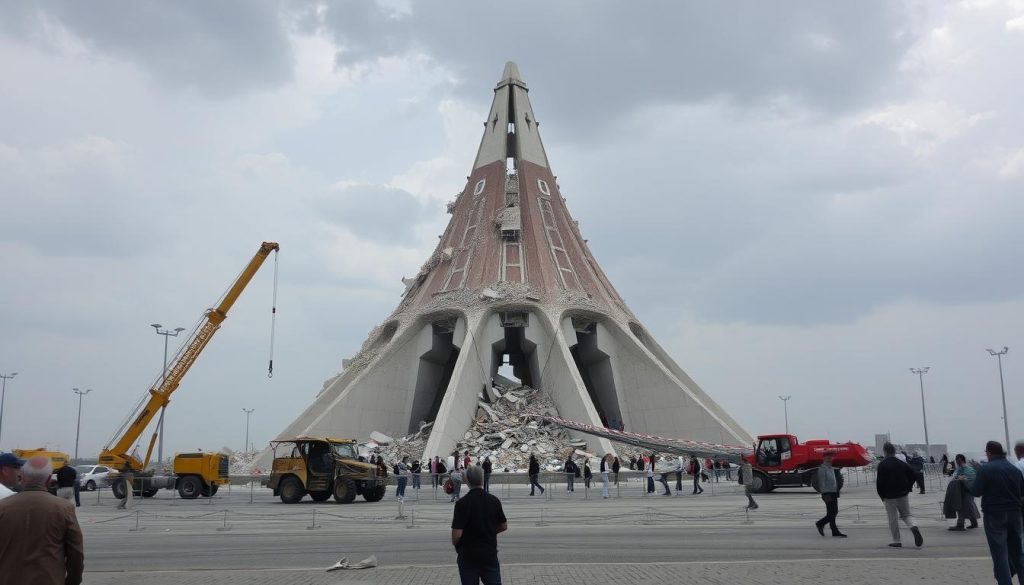
“The destruction of the Pearl Monument was an attempt by the government to symbolically cleanse the city and return it to a pre-uprising state, effectively suppressing the reformist movement.”
International human rights experts condemned the Pearl Monument demolition. They expressed their concerns to Bahraini authorities on July 11, 2014.
Legacy and Impact
The Pearl Monument’s demolition was a heavy blow to Bahrain’s pro-democracy movement. It had become a powerful symbol of the 2011 uprising. The destruction aimed to erase memories of the protests.
The landmark’s loss had cultural and economic effects. It was featured on Bahraini currency and attracted tourists. Its demolition, along with the crackdown, set back the opposition movement.
The monument’s legacy as a symbol of unresolved political tensions lives on. It deprived protesters of a rallying point. The demolition also erased a piece of Bahrain’s cultural heritage.
The Pearl Monument’s symbolic power left a mark on the country’s history. It reminds people of the ongoing struggle for political reform. It also shows the government’s efforts to suppress it.
| Year | Event | Impact |
|---|---|---|
| 2011 | Bahraini Uprising and the Pearl Monument’s prominence as a symbol | The monument became a unifying rallying point for pro-democracy protesters |
| 2011 | Demolition of the Pearl Monument | Symbolic blow to the Bahraini pro-democracy movement, erasing a significant part of the country’s cultural heritage |
| 2011-Present | Enduring legacy of the Pearl Monument as a symbol of Bahrain’s political tensions | The monument’s demolition remains a constant reminder of the ongoing struggle for political reform in the country |
The Pearl Monument’s legacy still echoes in Bahrain today. It shows how symbols can shape political and social movements.
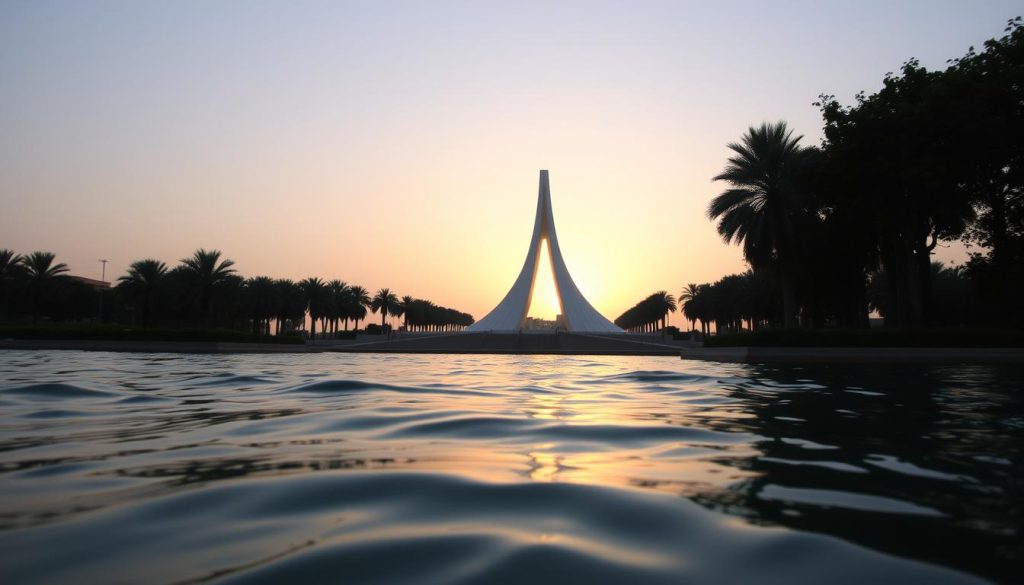
Replacement: Al Farooq Junction
Bahrain’s government replaced the demolished Pearl Monument with a new traffic intersection. They named it “Al Farooq Junction,” after Umar ibn al-Khattab. This historical figure is revered by Sunni Muslims but disliked by Shia Muslims.
Controversy Over the New Name
The name “Al Farooq Junction” sparked intense debate. Many saw it as an insult to Shia-majority protesters from the 2011 uprising. Critics viewed it as a deliberate attempt to antagonize the Shia community.
For years, the junction was closed to the public. Security forces sealed off the area after the 2011 protests. In June 2017, it finally reopened, but tensions remained high.
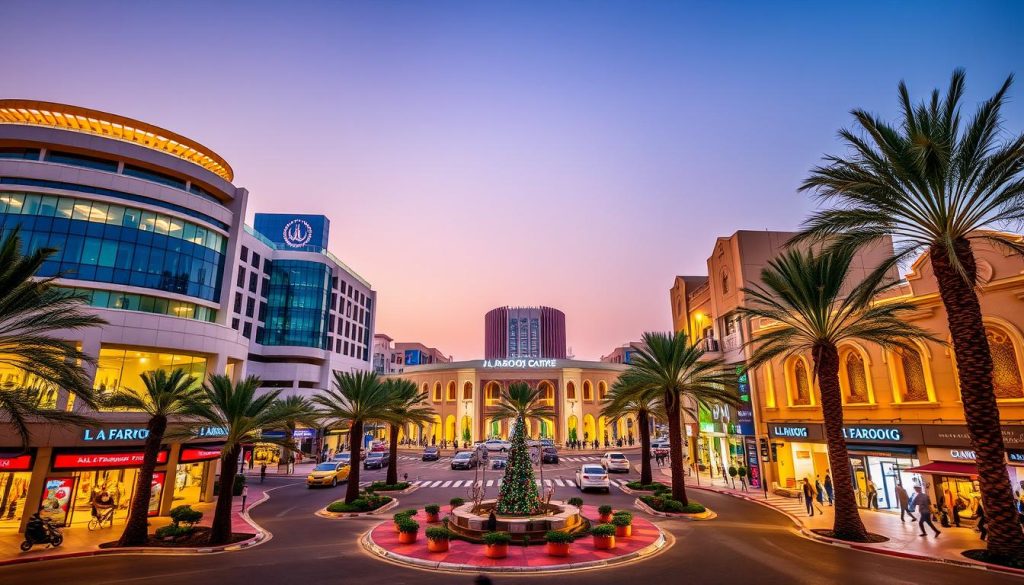
The renaming highlighted the government’s Sunni-centric approach. It was seen as a way to sideline the Shia opposition. This decision deepened the existing sectarian divide in Bahrain.
Cultural and Historical Significance
The Pearl Monument in Bahrain was a symbol of the nation’s rich cultural heritage. Its design featured six sails representing the Gulf Cooperation Council states and a central pearl. This iconic landmark was recognized worldwide for its unique architecture.
The monument’s appearance on Bahraini currency highlighted its deep cultural value. It was a source of national pride and identity. Its destruction during the 2011 uprising was a devastating blow to Bahrain’s cultural heritage.
The Pearl Monument represented the shared identity and unity of the GCC nations. It stood as a symbol of the region’s maritime traditions. The monument also showcased the deep connections between Gulf states.
“The Pearl Monument was more than just a landmark – it was a tangible embodiment of Bahrain’s national spirit and cultural legacy.”
The Pearl Monument’s cultural significance went beyond its architectural beauty. It was a source of national pride for the people of Bahrain. The monument symbolized the country’s pearl diving heritage and the Gulf region’s shared identity.
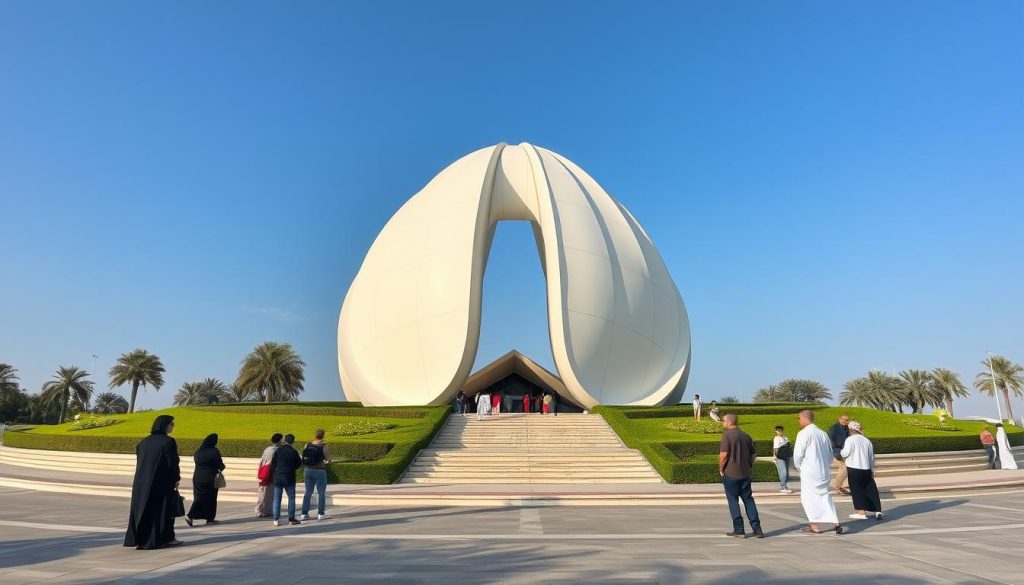
Visiting the Former Site
The Pearl Monument in Manama no longer stands. Its site remains significant for visitors. The Al Farooq Junction now occupies the former monument’s location.
Public access was restricted for years after the 2011 uprising. In June 2017, the junction reopened to the public. However, the area is still closely monitored.
Visitors to visiting Pearl Monument site can view the former location. The landmark is gone, but its history remains. The Pearl Roundabout site represents Bahrain’s cultural heritage and past events.
The site’s legacy continues to influence Bahrain’s present. It serves as a reminder of complex political and social dynamics. These forces have shaped the country’s history.
| Visitor Information | Details |
|---|---|
| Access to the Site | The former Pearl Monument site, now known as the Al Farooq Junction, is open to the public, though it remains under close monitoring by security forces. |
| Nearby Attractions | Visitors can explore the surrounding areas, including the Bahrain National Museum and the Bab al-Bahrain Souq, to gain a deeper understanding of Bahrain’s rich history and culture. |
| Visitor Experiences | While the Pearl Monument itself is no longer present, visitors can reflect on the site’s significance and the events that unfolded there, gaining a deeper appreciation for Bahrain’s complex past. |
The former Pearl Monument site offers a unique experience. It provides insight into Bahrain’s rich history. Visitors can explore the country’s cultural landscape and enduring legacy.
Conclusion
The Pearl Monument was an iconic landmark in Bahrain. It symbolized the country’s pearl diving heritage and Gulf Cooperation Council unity. Its unique design and location made it a source of national pride.
The monument’s demolition in 2011 during the Bahraini uprising was devastating. It damaged the country’s cultural identity. The government’s attempts to erase its memory highlighted unresolved tensions.
The former site remains restricted and controversial. Yet, the monument’s legacy continues as a symbol of Bahrain’s complex history. It represents the ongoing struggle for political and social change.
The Pearl Monument’s destruction wasn’t just about a physical structure. It symbolically erased part of Bahrain’s past. The site’s controversy shows the complex relationship between cultural heritage and politics.





