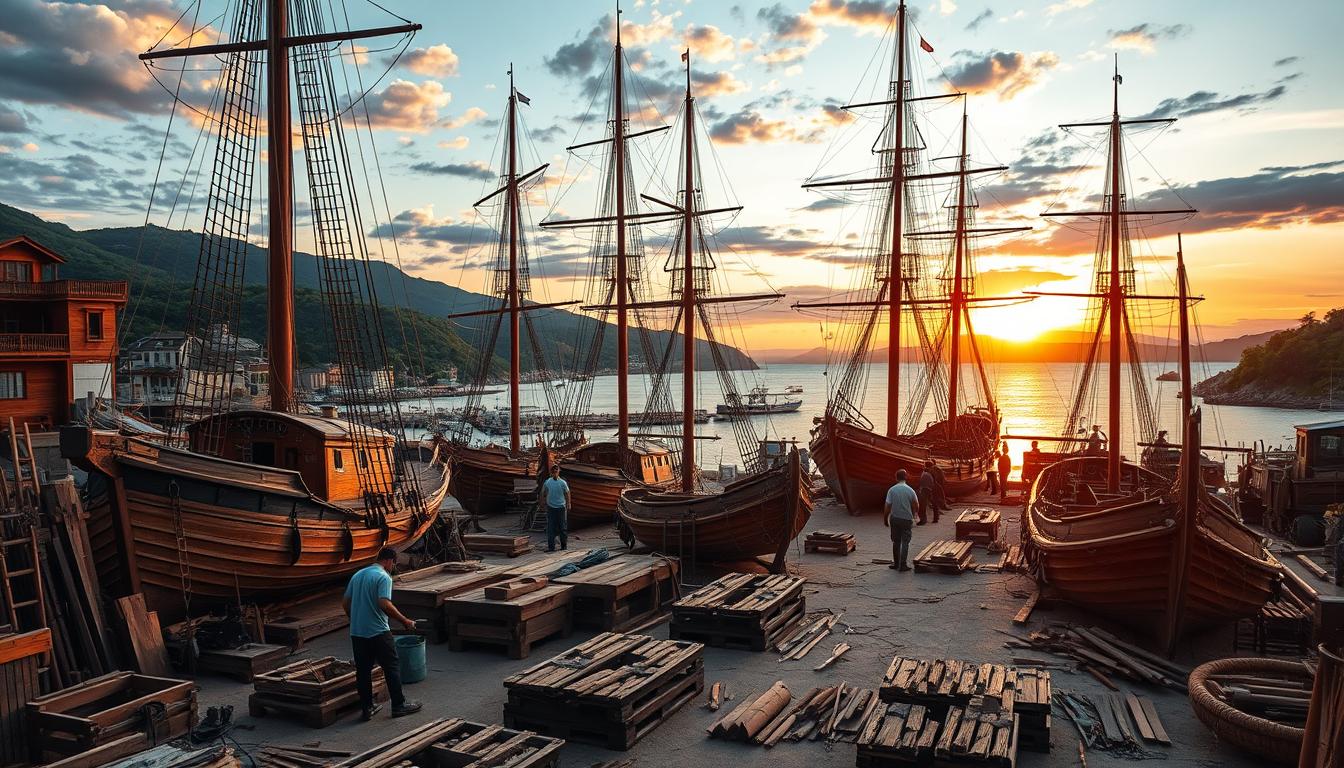
Sur’s Shipbuilding History Unveiled
Ever wondered how Sur became a key spot for shipbuilding in Oman? Its shipbuilding history is a mix of old traditions and new techniques. This town is not just about building ships; it’s about keeping alive Oman’s cultural heritage through dhow construction.
Sur’s shipbuilding story is about families working together for generations. They’ve kept the art of shipbuilding alive, thanks to their community and the sea. You’ll learn how Sur’s shipbuilding has changed over time, the skill that goes into each ship, and its importance in the Middle East’s maritime trade.
Introduction to Sur’s Maritime Heritage
Sur, a coastal city in Oman, is a key part of the country’s maritime history. It has played a big role in the traditional dhow industry for a long time. The city’s shipyards show the skill and artistry in shipbuilding.
For generations, artisans have worked here, creating ships for both use and cultural value. This has made Sur’s maritime heritage rich and diverse.
The history of maritime travel in Sur goes back thousands of years. It shows how ancient civilizations interacted, from Egypt to the Dhofar region. Omani ships started trading as early as 3000 B.C.
Sur became a key place for trading goods from the Far East and East Africa. The city’s artisans are proud of their work, using old techniques in every ship they build.
Even with modern changes, Sur still values its maritime history. People still commission dhows, showing the craft’s importance. Sur shows Oman’s deep connection with the sea.

What is the history of Sur’s shipbuilding?
Sur’s shipbuilding history is a rich tapestry of maritime craftsmanship. This coastal city has been a key center for maritime trade for centuries. Its strategic location made it a hub for dhow construction.
Artisans built vessels that sailed across the Indian Ocean. These ships connected Oman to Africa and the Indian subcontinent.
Origins of Shipbuilding in Sur
The dhow construction in Sur has deep roots in tradition. Local craftsmen used simple tools and techniques passed down through generations. It takes about 1.5 to 2 years to build a ship in Sur.
Artisans choose robust materials like golden-colored teak wood for the exterior. Omani wood is used for the interiors, making them durable against harsh sea conditions. Over 30 ships were named “Fatah Al Khair,” showing the connection between vessels and cultural identity.
Evolution of Techniques and Styles
Shipbuilding techniques in Sur evolved over time. Modern tools like electric drills and saws are now used alongside traditional practices. This has improved precision in their work.
The maritime heritage museum shows this evolution. It highlights the shift from using palm fronds to advanced techniques with nails. Ahmed al Alawi, a renowned ship model maker, creates detailed replicas of ships. His models range from 20 centimeters to 2 meters, showcasing Sur’s maritime craftsmanship.

| Ship Name | Year Built | Notable Features |
|---|---|---|
| Fatah al Khair | 1951 | First diesel engine, ghanja style |
| Built for regional travel and trade |
Sur’s shipbuilding industry has a deep historical connection. It links Oman to India, China, Iraq, and East Africa. This legacy is a key part of Oman’s cultural and economic history.
Sur’s Shipbuilding Industry Today
Sur’s shipbuilding industry is a key part of Oman’s culture and economy. You’ll see modern dhow building that mixes old ways with new ideas. Even though only a few big dhows are made at once, the quality remains high.
These ships, mainly for tourism, are made with great care and detail.
Current Practices in Dhow Construction
The art of building dhows in Sur shows both old and new methods. Shipyards now make only two or three big dhows at a time. Despite fewer people wanting traditional dhows, Sur’s craftsmen keep their skills sharp.
They’ve built famous ships, like an 87-foot replica of an ancient Arab dhow. This ship adds to Sur’s rich maritime history, attracting tourists and sparking interest among scholars.
Role of Craftsmanship in Modern Shipbuilding
Craftsmanship in Oman’s shipbuilding is more than just building. It’s a tradition passed down through generations. Craftsmen are proud to keep the quality and art of Sur’s dhow building alive.
They use both old and new methods to make each boat special. Even though fishing has changed, Sur’s artisans are still crucial. Their skills and culture are what make Sur’s shipbuilding industry special today.
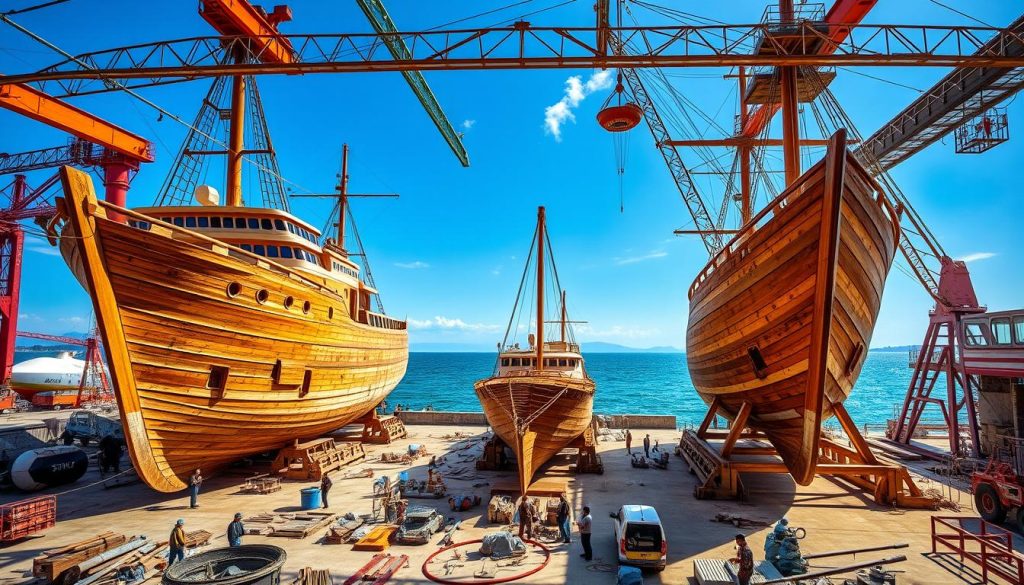
Traditional Shipbuilding Techniques in Sur
Sur is famous for its traditional shipbuilding methods. These create authentic dhows, showing a deep maritime history. The craft uses specific materials for dhows in Sur, blending function with beauty. This process, passed down through centuries, makes vessels that are both stunning and strong against the sea.
Materials Used in Dhow Construction
Traditional dhows mainly use local hardwoods like teak and mahogany. These dhow construction materials are key for withstanding harsh sea conditions. Their strength allows these ships to handle long sea trips, making them popular among fishermen and traders. Using local resources also supports sustainability in Sur.
Comparative Analysis with Other Maritime Cultures
Looking at comparison to global shipbuilding traditions helps us appreciate Sur’s unique methods. Similarities exist with East Africa and India, where crafting shares basic principles. Each tradition, including Sur’s, has developed based on local environments and maritime needs. This shows a rich diversity of practices, highlighting how each region’s materials and techniques fit their unique settings.
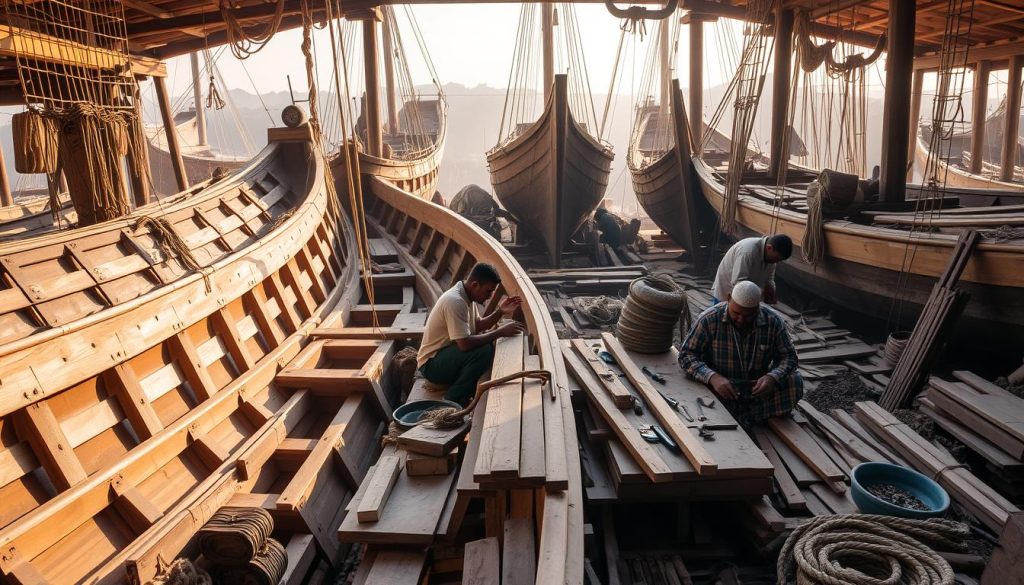
Historical Ships in Sur: A Legacy of Craftsmanship
Sur’s maritime identity shines through its historical ships. These vessels show the town’s skill and tradition. The art of dhow-building is a key part of Sur’s heritage.
Notable Vessels from Sur’s Shipyards
The notable dhows in Sur are truly special. These wooden ships are known for their detailed designs and use. They were key in fishing and trade, helping Oman’s economy grow.
The skill in making these ships has been passed down for ages. It connects Sur to its rich past.
Importance of Dhows in Maritime Trade
Dhows were crucial for moving goods across the Arabian Sea. They played a big role in Sur’s history, like in the frankincense trade. This shows Sur’s importance as a trading port.
The shipbuilding industry was once a big part of Oman’s trade. Knowing about dhows helps us understand Sur’s craftsmanship and maritime culture.
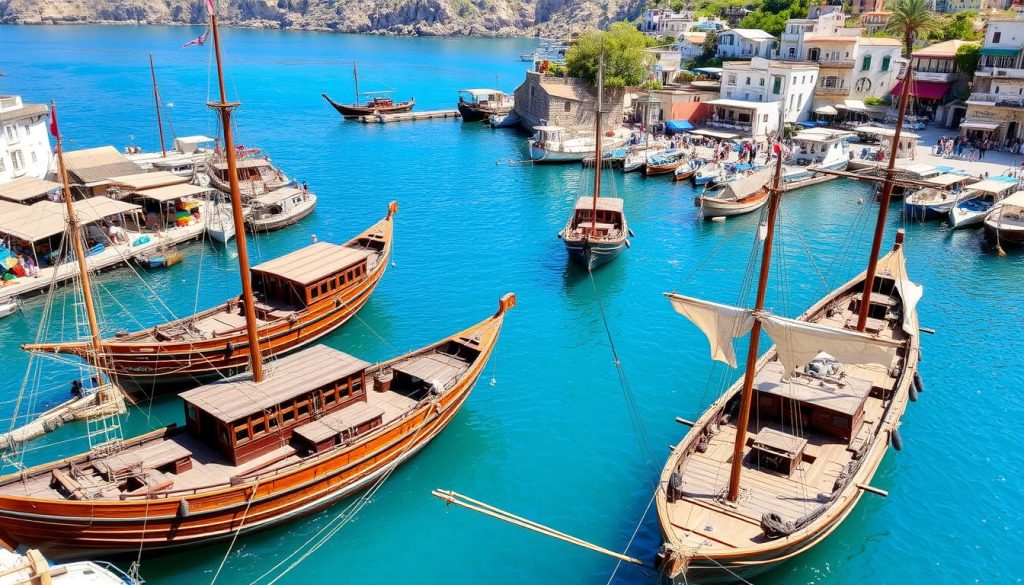
Oman’s Maritime History and Sur’s Role
Sur has made a big impact on Oman’s maritime history. It has been a key center for shipbuilding and trade for centuries. This coastal city became important as early as the 6th century.
Sur is famous for making traditional dhow boats. These boats are known for their skillful design and ability to travel long distances. They helped connect Oman to other cultures across the Indian Ocean.

Historical maritime routes helped trade between Oman and other places. Sur was a key player in this network. It helped export valuable goods like frankincense, which was highly valued in ancient times.
The city has landmarks like the Bilad Sur Castle. Now a museum, it shows what life was like for the people of Sur.
Shipbuilding in Sur is key to understanding Oman’s maritime power. Today, shipyards in Sur still make vessels like the ganjeh and sambouk. These boats are important for their history and can carry a lot of weight.
But, making ships has become harder due to labor shortages and higher material costs. Still, Sur is known for its boat-making legacy.
| Vessel Type | Capacity (tons) | Length (meters) | Historical Usage |
|---|---|---|---|
| Ganjeh | 400 | Up to 50 | Used for various maritime trades |
| Baghlah | 500 | N/A | Oman’s oldest and largest ship |
| Sambouk | 500 | N/A | Voyages to India, Africa, and South Asia |
Exploring Sur’s maritime history shows its lasting impact on Oman. The mix of old traditions and new shipbuilding methods still shapes trade routes today.
Coastal Environmental Preservation Efforts
Sur has made big steps in promoting sustainable tourism and protecting its coast. This effort makes the city more beautiful and keeps the marine life safe. It’s good for both the environment and the local economy.
Initiatives for Sustainable Tourism in Sur
The city values sustainable tourism to honor its maritime history. Tour operators and local businesses now use eco-friendly methods. This way, visitors can enjoy the culture without harming the environment.
These actions also help the local economy. They ensure Sur’s natural beauty and history will be enjoyed by future generations.
Impact of Conservation on Shipbuilding
Conservation is changing shipbuilding in Sur for the better. Shipbuilders now use methods that are kinder to the environment. They use eco-friendly materials and techniques.
This keeps the shipbuilding tradition alive while protecting the local ecosystems. It shows respect for both the craft and nature.
Visit Sur: Exploring the Heart of Shipbuilding
When you visit Sur, the charm of its dhow yards captures the essence of local maritime culture in Sur. This enchanting city offers visitors a unique opportunity to dive into its rich shipbuilding heritage. You can experience the craftsmanship that has defined it for centuries.
What to Expect in Sur’s Dhow Yards
In Sur’s dhow yards, you’ll see skilled artisans crafting these magnificent vessels. The air is filled with the scent of wood and the sounds of tools. This shows the dedication of the craftsmen.
You’ll appreciate the intricate designs and traditional techniques used in creating dhows. These vessels reflect the city’s maritime legacy and the artisans’ expertise. Each dhow has a story and shows the cultural significance tied to Sur’s shipbuilding history.
Experiencing Local Maritime Culture
Exploring Sur’s maritime culture is more than just watching the shipbuilding process. You can engage with local communities through meaningful experiences. This connects you to the sea.
Participate in traditional fishing practices with the locals. This lets you understand their deep-rooted connection to the water. Also, try authentic Omani cuisine inspired by the sea. It showcases flavors and traditions passed down through generations.

Your visit to Sur not only enriches your knowledge but also enhances your appreciation for the local maritime culture. The intertwining of craftsmanship and community creates an unforgettable experience. This experience resonates long after you leave this beautiful coastal city.
Conclusion
Sur’s shipbuilding history shows a vibrant maritime heritage tied to Omani culture. It’s crucial to keep these dhow construction methods alive. They show the skill and identity of Sur.
Visiting the shipyards, you see the craftsmanship passed down through generations. This highlights Sur’s maritime heritage.
Sur is a cultural gem that celebrates its rich past. The ocean views and dhows along the shore tell a story of history and tradition. Preserving these crafts keeps shipbuilding alive for the next generations.
Sur’s effort to keep its shipbuilding legacy alive honors its maritime history. By valuing the craftsmanship and traditions, you help tell Sur’s story. This ensures Sur remains a cultural and maritime landmark.